
Professional Wood Fencing That Stands Up to Connecticut and New York Weather
Tired of wood fences that warp, rot, and fall apart after just a few winters? We install wood fencing the right way the first time, with proper materials and techniques that handle our harsh Northeast climate.


30+
Years of Experience
Why Most Wood Fences Fail in Connecticut and New York
You’ve probably seen them all over your neighborhood. Those sad, sagging wood fences with warped boards, rotting posts, and gaps you could drive a truck through. Maybe you’re dealing with one right now. The truth is, most wood fences in Connecticut and New York fail because they weren’t installed properly from the start.
The problem isn’t wood itself. When done right, wood fencing can last 15 to 25 years and look beautiful the entire time. The problem is contractors who take shortcuts. They dig shallow post holes, skip the gravel drainage, use cheap materials, and ignore the frost line requirements that are critical in our climate.
Our freeze-thaw cycles are brutal on fencing. When water gets into a fence post that’s only 24 inches deep, it freezes, expands, and pushes that post right out of the ground. That’s why we dig every single post hole to at least 36 inches deep, and 42 inches in areas where frost penetration runs deeper. We add gravel drainage at the bottom of every hole because standing water is the enemy of any wood fence.
Then there’s the wood quality issue. You can’t build a lasting fence with construction-grade pine that’s going to split and rot within three years. We use pressure-treated lumber for the structural components and offer premium options like cedar and redwood that naturally resist decay and insects. The upfront cost difference is minimal compared to replacing your entire fence in five years.
What Makes Wood Fencing Right for Your Property
Wood fencing offers something you can’t get with any other material: natural beauty that actually improves with age when properly maintained. While vinyl might be low maintenance and aluminum might be durable, neither one gives you the warm, classic look that complements the colonial and traditional architecture common throughout Fairfield and Westchester counties.
Wood is also completely customizable. Want a privacy fence with decorative post caps? We can do that. Need a picket fence with scalloped tops to match your home’s historic character? No problem. Want to stain it a specific color that matches your shutters? Easy. Try getting that level of customization with pre-manufactured materials.
From a practical standpoint, wood fencing excels at privacy and noise reduction. A solid wood privacy fence doesn’t just block the view into your yard. It actually absorbs sound better than hard surfaces like vinyl or aluminum. If you’re dealing with road noise or want to create a quiet space for your family, wood is your best option.
Wood fencing also handles our variable terrain better than most alternatives. Connecticut and New York properties often have slopes, rocks, and uneven ground. Wood can be custom cut and adjusted on site to follow the natural contours of your land. We use a technique called racking where we cut the fence panels to follow slopes while keeping the posts perfectly vertical.


Our Complete Wood Fencing Process
Every wood fencing project starts with a thorough site evaluation. We don’t just show up and start digging. We walk your entire property line, checking for underground utilities, measuring slopes, identifying potential drainage issues, and discussing your specific needs and preferences.
Once we have a plan, we handle all the permit applications and utility locate requests. In Connecticut and New York, you need permits for most fence installations, and you absolutely must have utilities marked before any digging starts. We take care of all that paperwork so you don’t have to worry about it.
The actual installation begins with precise post hole digging. We use professional equipment to dig holes that are consistently sized and properly aligned. Each hole gets a gravel base for drainage, then we set the posts with concrete that’s formulated for fence applications. We don’t rush this step because everything else depends on posts that are perfectly aligned and rock solid.
While the concrete cures, we prep all the fence materials. We pre-drill screw holes to prevent splitting, apply wood conditioner where needed, and organize everything for efficient installation. When we hang the fence panels, we use construction screws rather than nails because screws won’t work loose over time like nails do.
Every fence gets a complete inspection before we consider the job finished. We check every board, every connection, and every post to make sure everything meets our standards. Then we clean up completely and walk you through proper maintenance procedures to help your fence last as long as possible.


Wood Species and Material Options We Offer
Not all wood is created equal, especially when it comes to fencing in our climate. We offer several different wood options, and we’ll help you choose the right one based on your budget, maintenance preferences, and aesthetic goals.
Pressure-treated pine is our most popular option for good reason. It’s been chemically treated to resist rot and insects, it’s readily available, and it offers excellent value for money. When properly installed and maintained, pressure-treated fencing can easily last 15 to 20 years. The initial greenish tint fades to a natural gray over time, or you can stain it any color you prefer.
Cedar is the premium choice for homeowners who want natural beauty and superior durability. Cedar contains natural oils that repel insects and resist rot without any chemical treatment. It has a beautiful grain pattern and a pleasant natural aroma. Cedar costs more upfront, but it typically lasts longer and requires less maintenance than pressure-treated options.
For the ultimate in longevity and beauty, we also offer redwood fencing. Redwood is naturally resistant to decay, insects, and moisture. It has a rich, distinctive color and grain pattern that many homeowners find irresistible. Like cedar, redwood is a premium option with pricing to match, but it can last decades when properly maintained.
All our lumber is kiln-dried to reduce shrinkage and warping. We inspect every board before installation and reject anything that doesn’t meet our quality standards. We also offer different grade options within each wood species, so you can choose the level of quality that fits your budget and expectations.


Wood Fencing Styles for Every Property

One of the biggest advantages of wood fencing is the variety of styles available. We can build everything from simple post-and-rail farm fencing to elaborate privacy fences with custom details.
Privacy fencing is probably our most requested style. These fences typically stand 6 feet tall with solid boards that completely block the view between properties. We can build them with flat tops, scalloped tops, or decorative post caps, depending on your preferences. Board-on-board construction gives you privacy from both sides while allowing air circulation.
Picket fencing offers a more open, traditional look that’s perfect for front yards and decorative applications. We can build pickets with pointed tops, rounded tops, or decorative cut-outs. Heights typically range from 3 to 5 feet, depending on your needs and local regulations.
Semi-privacy fencing splits the difference between full privacy and open picket styles. These fences might have solid sections alternating with sections that have gaps between boards, or they might feature lattice work at the top for a decorative touch while still providing substantial privacy.
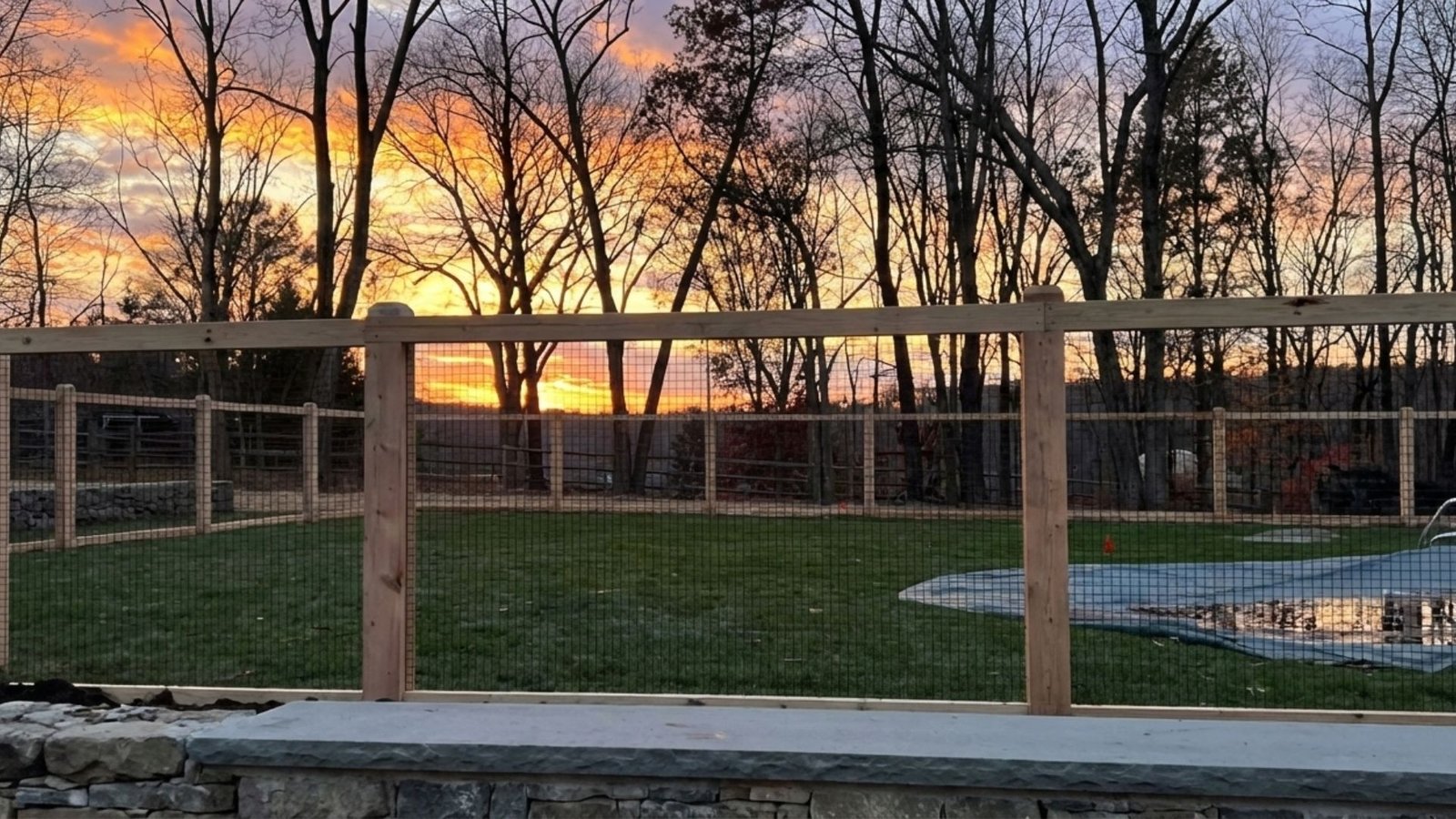
For properties with livestock or large areas to enclose, we build post-and-rail fencing that’s both functional and attractive. These fences can have anywhere from two to five rails, depending on what you’re trying to contain, and they work especially well for properties with a rural or farmhouse aesthetic.
We can also incorporate gates into any fencing style. Single gates for foot traffic, double gates for vehicles, and even automated gate systems for added convenience and security.

Why Choose My Fence Guy for Your Wood Fencing Project


Since 2022, My Fence Guy has been building wood fences that stand the test of time throughout Connecticut and New York. We’re not the biggest fencing company in the region, but we’re definitely one of the most dedicated to quality workmanship and customer satisfaction.
What sets us apart is our attention to detail and our understanding of local conditions. We know that a fence installed in New Fairfield faces different challenges than one installed in Brewster or Danbury. We adjust our techniques and material choices based on your specific location, soil conditions, and exposure to weather.
We’re also available when you need us. While most contractors keep regular business hours, we’re open 24 hours a day, every day. That doesn’t mean we’re installing fences at midnight, but it does mean you can reach us when it’s convenient for you. If a storm damages your fence or you have an urgent question about your project, we’re here to help.
Every member of our team is properly licensed and insured. We carry full liability insurance and workers’ compensation coverage because we believe in protecting both our customers and our workers. We can provide proof of insurance before we start any project, and we’re happy to be added as an additional insured on your homeowner’s policy if your insurance company requires it.
We also stand behind our work with comprehensive warranties. We warrant our workmanship for a full year, and we’ll help you understand and take advantage of any manufacturer’s warranties on the materials we install. If something goes wrong with your fence during the warranty period, we’ll make it right at no charge to you.


The Reality of Wood Fence Maintenance
Let’s be honest about maintenance because too many contractors gloss over this important topic. Wood fencing requires regular maintenance to look its best and last as long as possible. But with proper care, a well-built wood fence can serve your property for decades.
The most important maintenance task is annual inspection and cleaning. Every spring, you should walk your entire fence line looking for loose boards, protruding nails or screws, and any signs of damage from winter weather. A pressure washer or stiff brush with mild detergent will remove dirt, mildew, and surface stains.
Staining or sealing is typically needed every two to three years, depending on your wood species and exposure to weather. Fences that get full sun all day may need more frequent treatment than fences that are partially shaded. We use high-quality stains and sealers that penetrate deep into the wood fiber rather than just sitting on the surface.
Minor repairs should be handled promptly before they become major problems. A loose board is easy to fix with a few new screws. A board that’s been loose for two years might have warped beyond repair and need complete replacement. We’re always available to help with maintenance and repairs, and we can set up regular service schedules if you prefer to leave the maintenance to professionals.
One thing that surprises many homeowners is that properly maintained wood fencing actually becomes more beautiful over time. The wood develops a rich patina, and small imperfections add character rather than detracting from the appearance. Compare that to vinyl fencing, which looks exactly the same the day you install it as it does ten years later.


Wood Fencing Costs and Value
Wood fencing represents excellent value when you consider both the upfront cost and the long-term benefits. While it’s true that wood requires more maintenance than some alternatives, it’s also typically less expensive to install and offers better customization options.
Our wood fencing typically ranges from $25 to $60 per linear foot depending on the style, height, and wood species you choose. A basic pressure-treated privacy fence will be at the lower end of that range, while a custom cedar fence with decorative elements will be toward the higher end. These prices include all materials, labor, permits, and cleanup.
When evaluating cost, it’s important to consider the total cost of ownership over the life of the fence. Yes, you’ll spend money on staining and occasional repairs. But you’ll also have a fence that can be easily modified or repaired rather than completely replaced. Try adding a gate to a vinyl fence five years after installation, and you’ll quickly appreciate the flexibility that wood offers.
Wood fencing also adds real value to your property. Real estate professionals consistently report that well-maintained wood fencing increases property values, especially in areas like ours where traditional architecture is prevalent. The natural beauty and classic appeal of wood fencing complements almost any home style.


Local Regulations and Permits

Installing a fence in Connecticut and New York isn’t just about digging holes and hanging boards. Every municipality has its own regulations about fence height, setback requirements, and permit procedures. We handle all of this for you, but it’s helpful to understand what’s involved.
Most towns limit fence height to 6 feet in back yards and 4 feet in front yards, but there are exceptions and variations. Some historic districts have additional restrictions on materials and styles. Waterfront properties often have special requirements to protect views and access rights.
Setback requirements determine how close to property lines you can build your fence. In some areas, you need to stay several inches back from the actual property line. In others, you can build right on the line if both neighbors agree. We always verify property lines and setback requirements before starting any project.
Permit fees vary by municipality but typically range from $25 to $100 for residential fencing projects. The permit process usually takes one to two weeks, which we factor into our project scheduling. Some areas also require inspections during installation, which we coordinate with local officials.
Utility marking is required by law before any digging project. We contact the state utility marking service (811) at least 72 hours before we plan to start digging. This service is free and helps prevent dangerous and expensive accidents with underground gas, electric, and cable lines.
We’re familiar with the regulations in all the communities we serve, from New Fairfield and Sherman in Connecticut to Brewster and Patterson in New York. We handle all the paperwork and coordinate with local officials so you don’t have to worry about compliance issues.
Our Service Area Throughout Connecticut and New York

My Fence Guy proudly serves an extensive area throughout Connecticut and New York, including all of Fairfield County and the surrounding regions. Whether you’re in New Fairfield, Sherman, Danbury, or Bethel, we bring the same level of quality and professionalism to every project.
In Connecticut, we regularly work in Brookfield, New Milford, Bridgewater, Roxbury, and Washington. We also serve Southbury, Woodbury, Middlebury, Oxford, Naugatuck, Prospect, Watertown, and Thomaston. Our coverage extends to Bethlehem, Kent, Warren, Cornwall, Salisbury, Sharon, Canaan, Falls Village, Goshen, and Litchfield.
Our New York service area includes Brewster, Southeast, Pawling, Patterson, and Carmel. We also work in Dover Plains, Amenia, Millerton, and Wingdale. For clients closer to the coast, we serve Ridgefield, Wilton, Redding, Weston, Easton, Trumbull, Monroe, and Newtown in Connecticut, as well as North Salem, Lewisboro, Bedford, Pound Ridge, South Salem, and Cross River in New York.
Each of these communities has its own character and requirements. The colonial homes in Ridgefield have different fencing needs than the rural properties in Cornwall. The steep terrain in some parts of Kent requires different installation techniques than the flatter areas around Danbury. We understand these local differences and adjust our approach accordingly.
No matter where you are in our service area, we provide the same thorough consultation, quality installation, and ongoing support. We’re familiar with local suppliers, understand regional building codes, and have established relationships with permit offices throughout Connecticut and New York.

Ready to get started on your wood fencing project?
Call My Fence Guy today for a free consultation and estimate. We’re available 24 hours a day, 7 days a week to discuss your fencing needs and answer any questions you might have.