
Custom Estate Gates That Actually Work When You Need Them Most
Stop dealing with gates that sag, stick, or break down in Connecticut and New York winters. Our estate gates are built to last with proper automation, deep foundations, and weather-resistant materials that keep working year after year.


30+
Years of Experience
You Know the Frustration of Gates That Don’t Work
You’ve seen it happen. That beautiful estate gate that looked perfect when first installed now drags on the ground every time you try to open it. Or maybe you’re dealing with an automated gate that works fine in summer but completely fails the first time it snows. Perhaps you’ve called three different contractors about fixing your gate and gotten three different excuses about why it can’t be repaired.
Estate gates in Connecticut and New York face unique challenges that many contractors simply don’t understand. The freeze-thaw cycles here can shift even the most solid-looking foundations. Road salt corrodes metal components faster than you’d expect. And those beautiful wrought iron gates that look so impressive? They can become maintenance nightmares if they’re not properly designed for our climate.
You invested in an estate gate for security, convenience, and curb appeal. Instead, you might be dealing with a gate that’s become an expensive lawn ornament. The good news is that these problems are completely preventable when you work with contractors who understand both the technical requirements and the local conditions that make estate gates succeed or fail.
At My Fence Guy, we’ve been installing estate gates throughout Connecticut and New York since 2022, and we’ve learned exactly what works in our climate and what doesn’t. Every gate we install is designed to handle everything from January ice storms to July heat waves, because we know you need your gate to work reliably every single day.
What Makes a Quality Estate Gate Installation
Most gate failures start with the foundation, literally. You can have the most expensive gate hardware in the world, but if it’s not supported properly, it will fail. That’s why we start every estate gate project with foundations that go 24 to 36 inches deep, well below the frost line that causes so many problems in Connecticut and New York.
The concrete work alone makes or breaks most gate installations. We’re not talking about setting a few fence posts in concrete. Estate gates require engineered foundations that can handle the weight of heavy materials plus the daily stress of opening and closing. When you’re dealing with gates that might weigh several hundred pounds and operate multiple times per day, those foundations need to be absolutely solid.
Material selection matters just as much as the foundation work. We work primarily with powder-coated aluminum and steel that can handle road salt exposure without corroding. For clients who prefer the look of wrought iron, we make sure every component is properly treated and sealed to prevent rust. Wood gates get special attention too, with proper drainage and ventilation to prevent rot in our humid summers.
Automation systems need to be designed for reliability, not just convenience. That means choosing UL 325 certified operators with proper safety features, battery backup systems for power outages, and weatherproof enclosures that keep electronics dry. We’ve seen too many beautiful gates become useless because the automation failed and there was no manual backup option.


Types of Estate Gates We Install
Swing gates are the classic choice for most estate properties, and they work well when you have adequate clearance on both sides. Single swing gates work for openings up to about 12 feet wide, while double swing gates can handle openings up to 20 feet or more. The key is making sure the hinges and automation systems are sized properly for the gate weight and wind loads we get here in the Northeast.
Slide gates are perfect when you don’t have room for gates to swing open, or when you’re dealing with slopes that make swing gates impractical. These gates roll along a track system and can handle very wide openings without the structural stress that affects swing gates. The cantilever-style slide gates we install don’t require tracks across the driveway, which eliminates trip hazards and makes snow removal much easier.
Bi-folding gates offer a compromise between swing and slide gates, requiring less clearance than full swing gates but offering faster operation than slide gates. These work particularly well for curved driveways or properties where space is at a premium. The folding mechanism does add complexity, so proper maintenance becomes even more important.
Pedestrian gates are often overlooked but incredibly important for estate properties. These smaller gates allow foot traffic without opening the main vehicle gate, and they can be automated or manual depending on your needs. We typically integrate pedestrian gates into the overall gate system so everything works together seamlessly.
Each type of gate can be customized with different materials, finishes, and automation levels. The choice usually comes down to your property layout, aesthetic preferences, and how often you’ll be using the gate.


Automation That Actually Works in Connecticut and New York Weather
Gate automation in our climate requires more than just standard equipment. We’ve learned that systems designed for temperate climates often fail when faced with ice storms, heavy snow loads, and the temperature swings that are normal here. That’s why we only use automation systems that are specifically rated for cold-weather operation.
Safety features aren’t optional on automated estate gates. UL 325 certification ensures that your gate system includes proper obstruction detection, emergency stops, and fail-safe mechanisms. These aren’t just regulatory requirements; they’re essential for protecting people and vehicles. We’ve all heard horror stories about automated gates that closed on cars or people, and proper safety systems prevent these incidents.
Battery backup systems keep your gate operational during power outages, which are unfortunately common during storm season. Solar panel options can extend backup operation indefinitely, which is particularly valuable for rural properties where power restoration might take days. The backup systems we install can typically operate your gate 50 to 100 times without external power.
Remote access options range from basic transmitter remotes to smartphone apps that let you operate and monitor your gate from anywhere. Modern systems can send you notifications when the gate opens or closes, alert you to maintenance needs, and even provide video monitoring integration. The key is choosing systems that are reliable rather than just feature-rich.
Weather protection for automation components is critical in our climate. Every motor, control board, and sensor needs to be properly sealed against moisture, and heating elements may be necessary to prevent freeze-ups. We’ve seen too many gate systems fail because moisture got into supposedly weatherproof enclosures.


Why Estate Gates Fail and How We Prevent It

Most estate gate problems stem from poor initial installation rather than equipment failure. Shallow foundations are the number one cause of gate problems. When foundations aren’t deep enough or properly sized, freeze-thaw cycles gradually shift the gate posts out of alignment. This creates binding, uneven wear, and eventually complete failure of the opening mechanism.
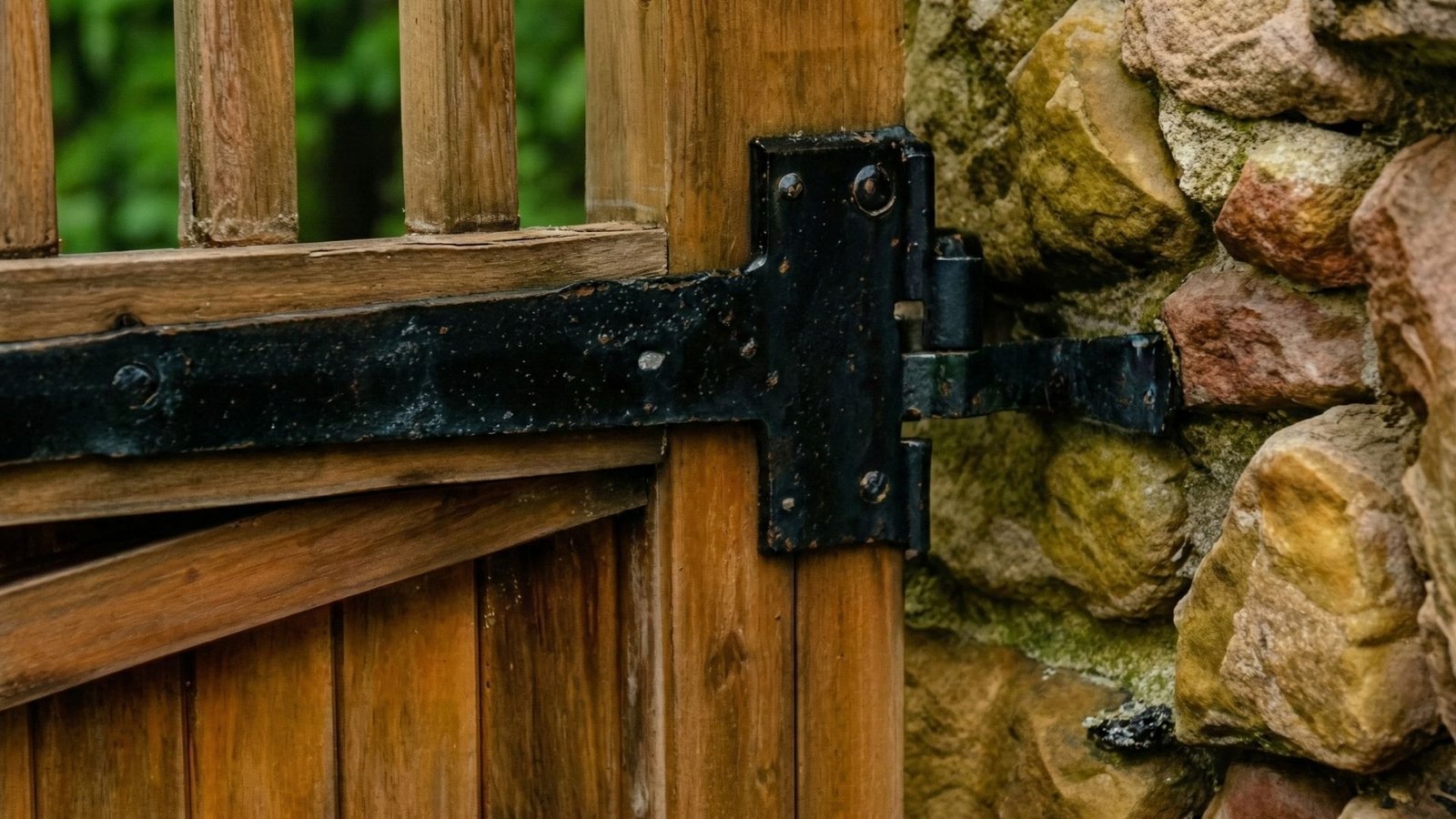
Undersized hardware is another common problem. Many contractors try to save money by using residential-grade hinges, latches, and automation systems for heavy estate gates. These components might work initially, but they wear out quickly under the stress of daily operation. We size all hardware components conservatively because replacement is much more expensive than initial proper installation.
Drainage problems destroy more gates than weather alone. When water pools around gate foundations or automation equipment, it accelerates corrosion and creates ice buildup that can damage mechanisms. Proper drainage design isn’t glamorous, but it’s essential for long-term gate operation. We install French drains and proper grading around every gate installation.
Lack of maintenance is the final piece of the failure puzzle. Even the best-installed gate needs regular lubrication, adjustment, and inspection. We provide detailed maintenance schedules for every gate we install, and we offer ongoing service contracts to keep your gate operating smoothly. An annual maintenance visit typically prevents 90% of the problems that lead to expensive repairs.
Code compliance issues can shut down your gate operation even if everything is working perfectly. Local building departments and zoning boards have specific requirements for estate gates, including setbacks, sight lines, and safety features. We handle all permit applications and inspections to ensure your gate meets all local requirements from day one.

Integrating Estate Gates with Your Existing Fencing
Estate gates need to complement your existing fencing both aesthetically and structurally. Mismatched materials or finishes make even expensive gates look like afterthoughts. We work with you to select gate materials and designs that enhance your property’s overall appearance while providing the security and functionality you need.
Structural integration goes beyond matching materials. The gate posts need to be properly connected to your existing fence line to prevent gaps or alignment issues. This might require modifying sections of the existing fence, but the result is a seamless perimeter system that looks like it was planned from the beginning.
Electrical integration becomes important when you have existing security systems, lighting, or communication equipment. Modern estate gates can be integrated with home automation systems, security cameras, and intercommunication systems. We coordinate with your other contractors to ensure all systems work together properly.
Drainage and landscaping integration prevents the gate installation from creating problems elsewhere on your property. We make sure that excavation work doesn’t disrupt existing drainage patterns, and we coordinate with landscapers to restore or enhance plantings around the gate area.
Future expansion considerations are worth discussing during initial installation. If you’re planning additional fencing, landscaping changes, or property improvements, we can design gate systems that accommodate future modifications without major reconstruction.
Materials and Finishes for Connecticut and New York Climate

Powder-coated aluminum offers the best combination of durability, appearance, and low maintenance for most estate gate applications. The powder coating process creates a finish that’s more durable than paint and available in almost any color. Aluminum doesn’t rust, which is a major advantage in our road salt environment, and it’s light enough to reduce stress on hinges and automation systems.
Steel gates provide maximum security and can handle heavy-duty applications, but they require more careful finishing and maintenance. Hot-dip galvanizing followed by powder coating provides excellent corrosion protection, but the initial cost is higher than aluminum. Steel is the right choice when security is the primary concern or when you need gates that can handle vehicle impacts.
Wrought iron creates the classic estate gate appearance, but it requires ongoing maintenance to prevent rust. Modern wrought iron uses improved alloys and finishing processes that reduce maintenance requirements, but it’s still more demanding than aluminum or powder-coated steel. We recommend wrought iron when appearance is the primary consideration, and you’re willing to invest in regular maintenance.
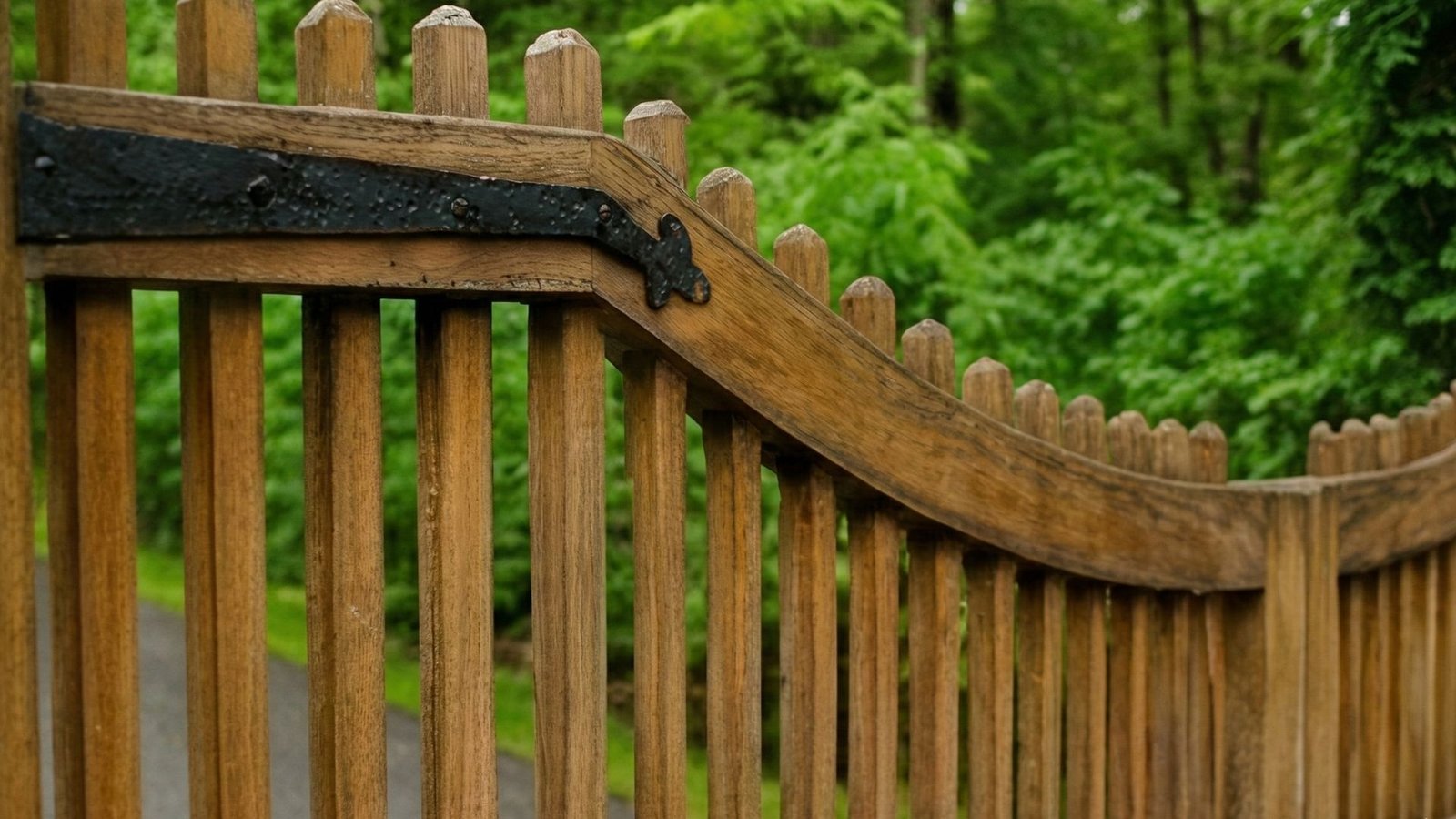
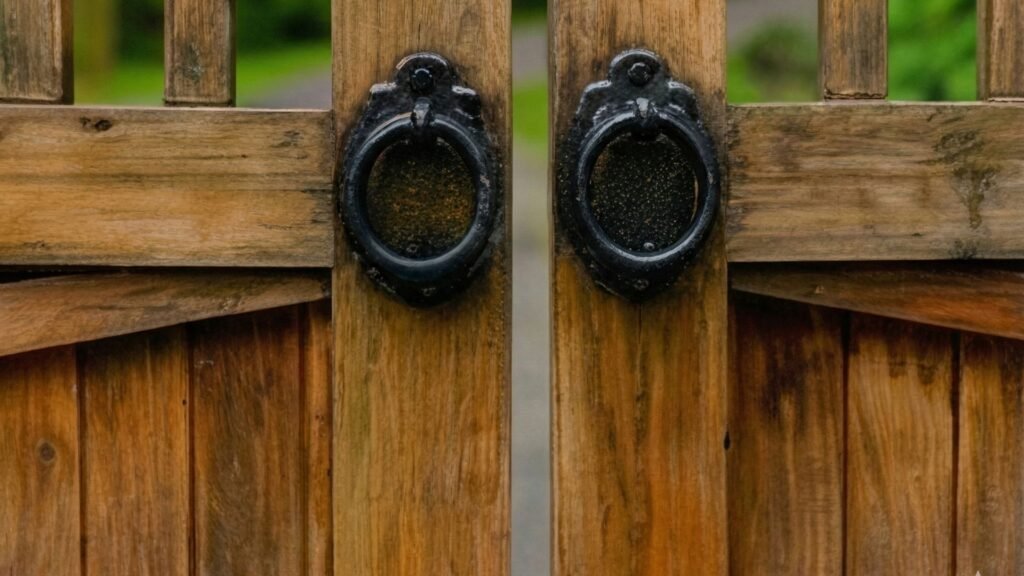
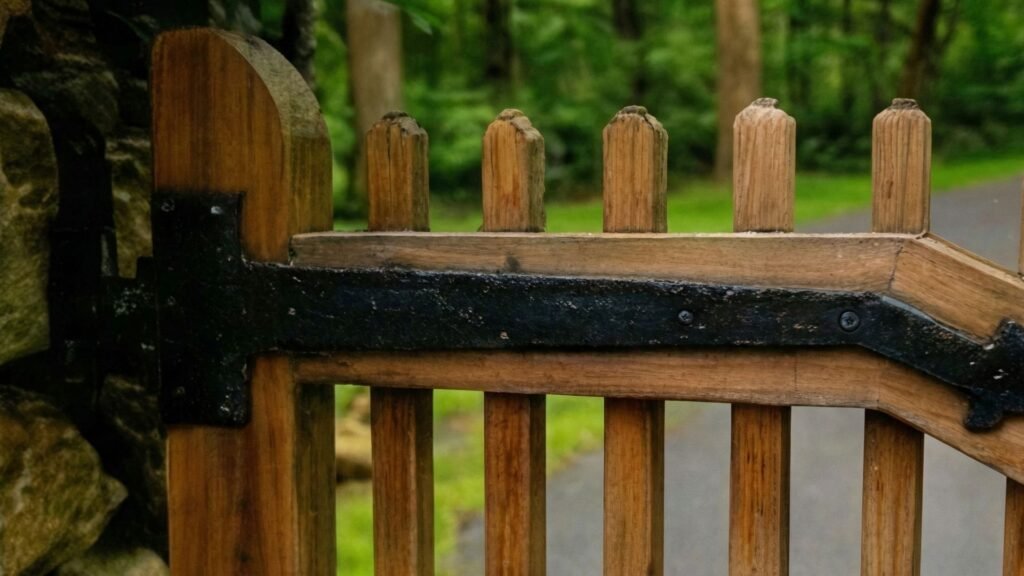
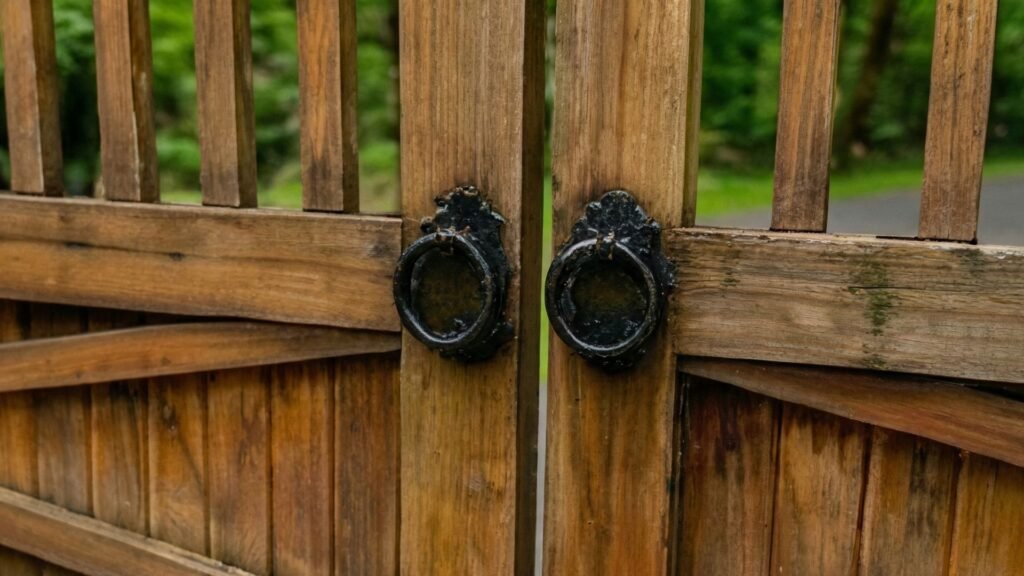
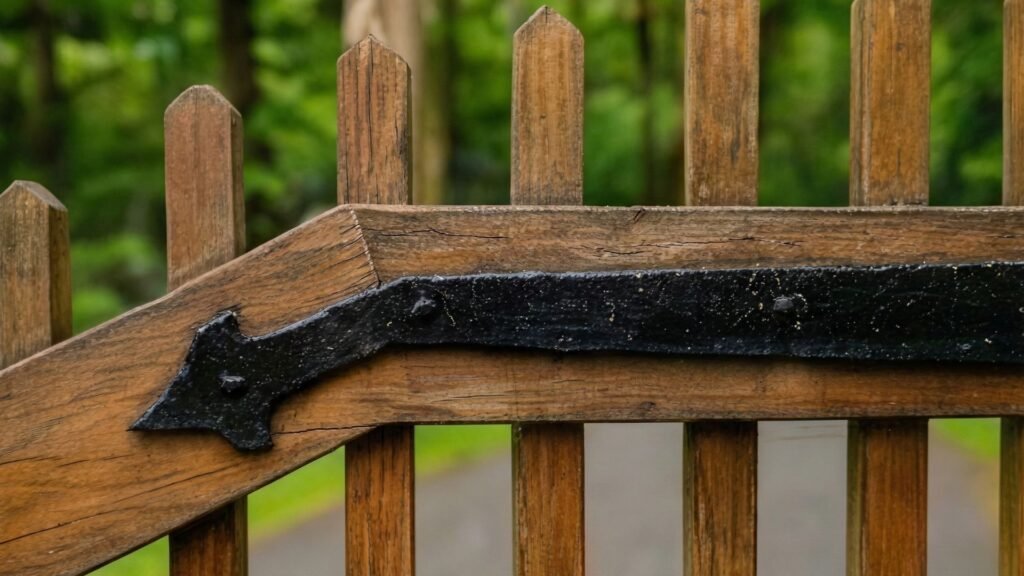
Wood gates offer warmth and natural beauty that complements many estate properties, particularly those with extensive landscaping. Cedar and mahogany are the most popular choices for their natural rot resistance, but any wood gate requires regular maintenance, including staining or sealing. Wood gates work best in combination with steel or aluminum frames for structural support.
Composite materials combine the appearance of wood with reduced maintenance requirements. These materials don’t rot, split, or require regular staining, but they’re more expensive initially and have fewer design options than natural materials. Composite works well for pedestrian gates or when low maintenance is a priority.
Finish selection affects both appearance and longevity. Darker colors show less dirt but absorb more heat, which can affect automatic gate operation. Textured finishes hide minor scratches better than smooth finishes, but can be harder to clean. We help you select finishes that balance appearance, maintenance, and durability for your specific application.
Why Choose My Fence Guy for Your Estate Gate Project
We’ve been serving Connecticut and New York since 2022, and we’ve learned what works in our climate and what doesn’t. Every estate gate we install is designed to handle freeze-thaw cycles, road salt exposure, and the wind loads that are common in our area. This local experience translates into gates that work reliably year after year with minimal maintenance.
Our team includes licensed and insured professionals who understand both the technical and regulatory requirements for estate gate installation. We handle all permit applications, coordinate with utility companies for underground line location, and work with local inspectors to ensure code compliance. This comprehensive approach prevents delays and ensures your gate meets all safety requirements.
We’re available 24 hours a day, every day, because gate problems don’t wait for business hours. When your gate stops working, you need immediate service, especially if it affects your ability to get in or out of your property. Our emergency service commitment means you’ll get a response when you need it, not when it’s convenient for us.


Quality materials and proper installation methods are non-negotiable in our work. We don’t cut corners on foundation depth, hardware sizing, or automation systems because we know that shortcuts lead to callbacks and unhappy customers. Every gate we install is built to provide decades of reliable service with proper maintenance.
Customization options let us create gates that perfectly match your property and lifestyle. Whether you need pedestrian access integration, advanced security features, or specific aesthetic requirements, we can design and build gates that meet your exact needs. Our fabrication capabilities mean we’re not limited to standard designs or sizes.
Ongoing support doesn’t end when installation is complete. We provide detailed maintenance schedules, annual service options, and responsive repair service when needed. Building a long-term relationship with our customers is more important than any single installation project.
Getting Started with Your Estate Gate Project
The first step is a comprehensive site evaluation where we assess your property, understand your needs, and explain your options. This consultation is free and includes measurements, soil assessment, and a discussion of all the factors that affect gate design and installation. We’ll provide a detailed written proposal that explains exactly what’s included and why.
Timeline planning helps you understand when your gate will be operational. Typical projects take 4 to 8 weeks from contract signing to completion, depending on permit requirements, custom fabrication needs, and weather conditions. We’ll provide a detailed schedule and keep you updated on progress throughout the project.
Budget considerations include not just the initial installation cost but also ongoing maintenance and operational costs. We provide transparent pricing that includes all necessary permits, foundation work, and automation setup. Optional features like extended warranties, maintenance contracts, and upgraded remote access systems are clearly explained so you can make informed decisions.

Property protection during installation is something we take seriously. Gate installation involves excavation, concrete work, and heavy equipment that could damage landscaping or existing improvements. We use protective measures and restore any disturbed areas to their original condition or better.
Warranty and service commitments give you confidence in your investment. We provide comprehensive warranties on our installation work and can arrange extended warranties on gate components and automation systems. Our service department is equipped to maintain and repair any gate we install, ensuring long-term reliability.
Ready to stop dealing with gates that don’t work when you need them? Call us at (203) 746-1100 for your free consultation. We serve all of Connecticut and New York, and we’re available 24 hours a day to discuss your estate gate needs. Let’s build you a gate system that enhances your property while providing the security and convenience you deserve.
Ready for an estate gate that works reliably year-round?
Call My Fence Guy at (203) 746-1100 for your free consultation. We’re available 24/7 and serve all of Connecticut and New York with licensed, insured installation and ongoing support.