
Deer Fencing in New Fairfield, CT: The Six-Foot Limit and What Works
By Tony Pellicone11 min readPublished
- farm fencing
- new fairfield ct
- connecticut
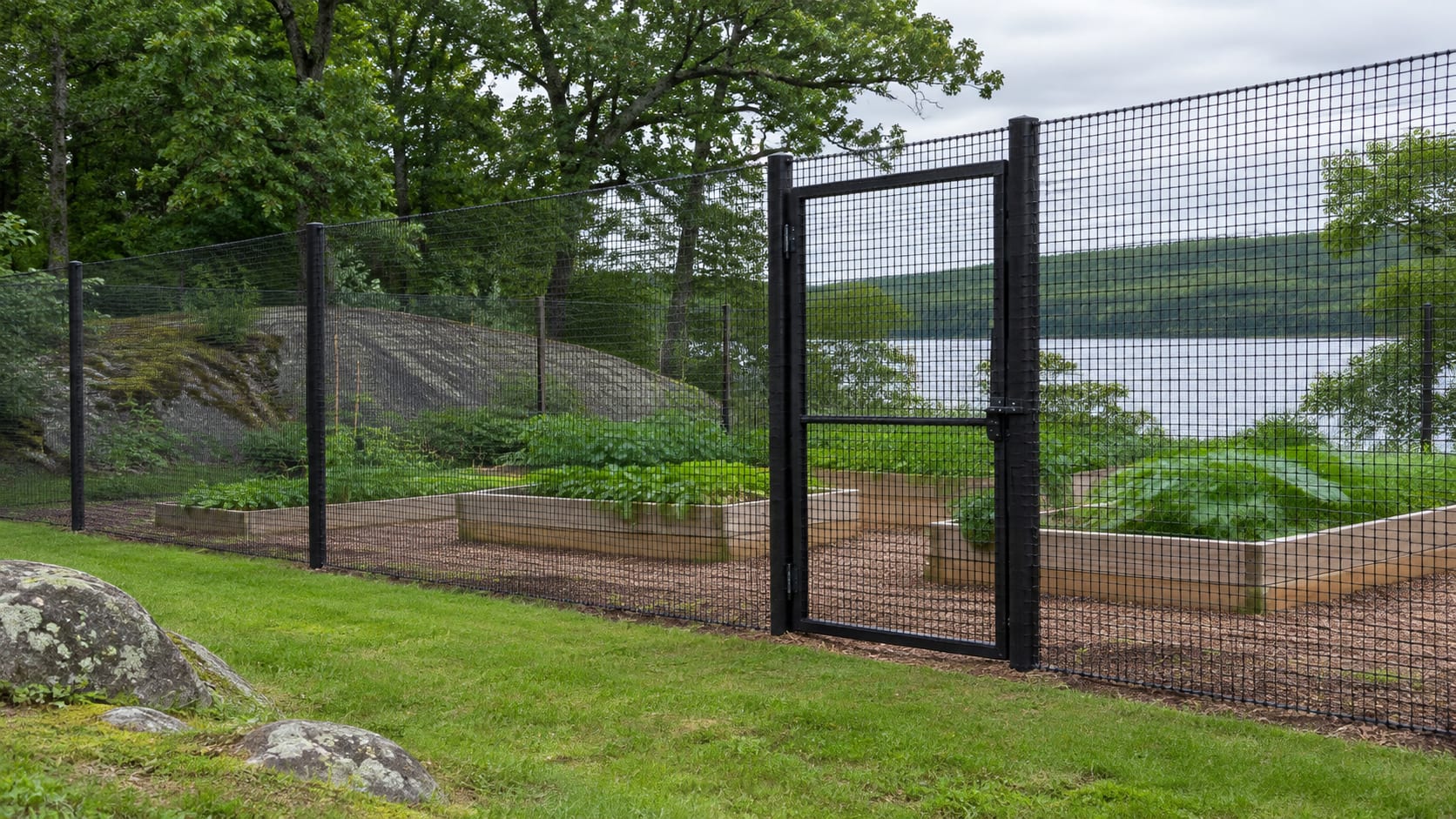
In New Fairfield, the first decision is how much ground you need to protect. An eight-foot mesh or woven-wire enclosure around a garden or orchard is often more practical than fencing the whole lot, and it keeps the footage, and the price, down.
Eight feet is the height DEEP recommends for dependable deer exclusion. The town's ordinary zoning limit is six feet above grade, and a taller fence generally needs a Special Permit from the Zoning Commission. The Building Department's published exemption stops at seven feet, so an eight-foot fence needs both offices before you order materials.
Key Takeaways
Height
DEEP recommends an approximately eight-foot fence for restricting deer activity around homes and plantings.
Zoning
New Fairfield generally limits fences to six feet above grade unless the Zoning Commission approves a Special Permit.
Building permit
The town publishes an exemption for fences not over seven feet, but pool barriers require a permit regardless of height.
Site planning
Wetlands, ledge, slopes and driveways can change the fence route and installation method.
Cost control
Enclosing a garden, orchard or selected plants usually requires less fencing than enclosing the entire property.
New Fairfield's six-foot limit and the Special Permit
New Fairfield's zoning regulations, effective in 2025, state in Section 4.1.D.3 that fences, walls and fence-wall combinations in any district may not exceed six feet in total height above grade unless the Commission approves a Special Permit. Decorative posts may be up to twelve inches higher than the fence, wall or combination.
The same section says that fences on agricultural land do not have to place the finished side toward the abutting property or street. That agricultural exception concerns the finished side of the fence only. A deer, garden or orchard fence over six feet goes through the same Special Permit review.
The regulations identify fences up to six feet and fences taller than six feet in Section 1.3. A fence taller than six feet is therefore a zoning approval question for the New Fairfield Zoning Commission. The town's regulation also states that Section 4.1.D.1 does not apply to fences, so ask Land Use or Zoning how the rule applies to your proposed route and property.
Read the New Fairfield Zoning Regulations with the proposed height and site plan in front of you. The office can tell you what to submit for a Special Permit request and whether another applicable rule affects the project.
Building permit, wetlands and your property line
New Fairfield's Building Department publishes the Connecticut State Building Code R105.2 exemption for "fences not over 7 feet high." The same page states that fences used as swimming pool barriers require a building permit regardless of height. The building-code exemption does not remove zoning requirements.
That creates two separate questions for an eight-foot deer fence. The fence exceeds New Fairfield's ordinary six-foot zoning limit, and it exceeds the town's published building-permit exemption. Ask both departments before construction. For a six-foot fence, the building permit question may be different, but zoning compliance still matters.
If the route may affect a wetland or watercourse, contact the New Fairfield Inland Wetlands and Conservation Commission. The town's wetlands instructions call for a scaled site plan or survey showing wetlands, watercourses, contours, buildings, septic systems, roads, driveways and the closest distance to wetlands. Include the proposed fence line and gate locations.
A fence beside a lake, reservoir or wet area may need a different route even when the planting area looks straightforward. Ledge can change how posts are set. An old stone wall can affect access and property-line layout. A steep slope can affect the finished height measured above grade. These details should be shown before excavation begins.
For a related discussion of wetland routing and approvals, see Building a Fence Near Wetlands, Streams or Lakes in Connecticut. If you are replacing an older fence on a rural property, Agricultural Fencing in New Fairfield, CT: What Fits Your Land covers the planning questions that apply to farm and acreage fencing.
Hover or tap a row to highlight it.
| Project detail | Published rule or planning point |
|---|---|
| Ordinary fence height | Six feet above grade under Section 4.1.D.3 |
| Decorative posts | Up to twelve inches higher than the fence, wall or combination |
| Fence taller than six feet | Ask the Zoning Commission about a Special Permit |
| Fence not over seven feet | Listed under the Building Department's R105.2 exemption |
| Pool barrier | Building permit required regardless of height |
| Wetland or watercourse route | Contact Inland Wetlands and Conservation Commission |
Sizing the protected area and choosing the design
The protected area is the first cost and design decision. A garden, orchard or group of young trees may need a fence, while the rest of the yard can remain open. A smaller enclosure also makes it easier to use a taller barrier where New Fairfield approves it.
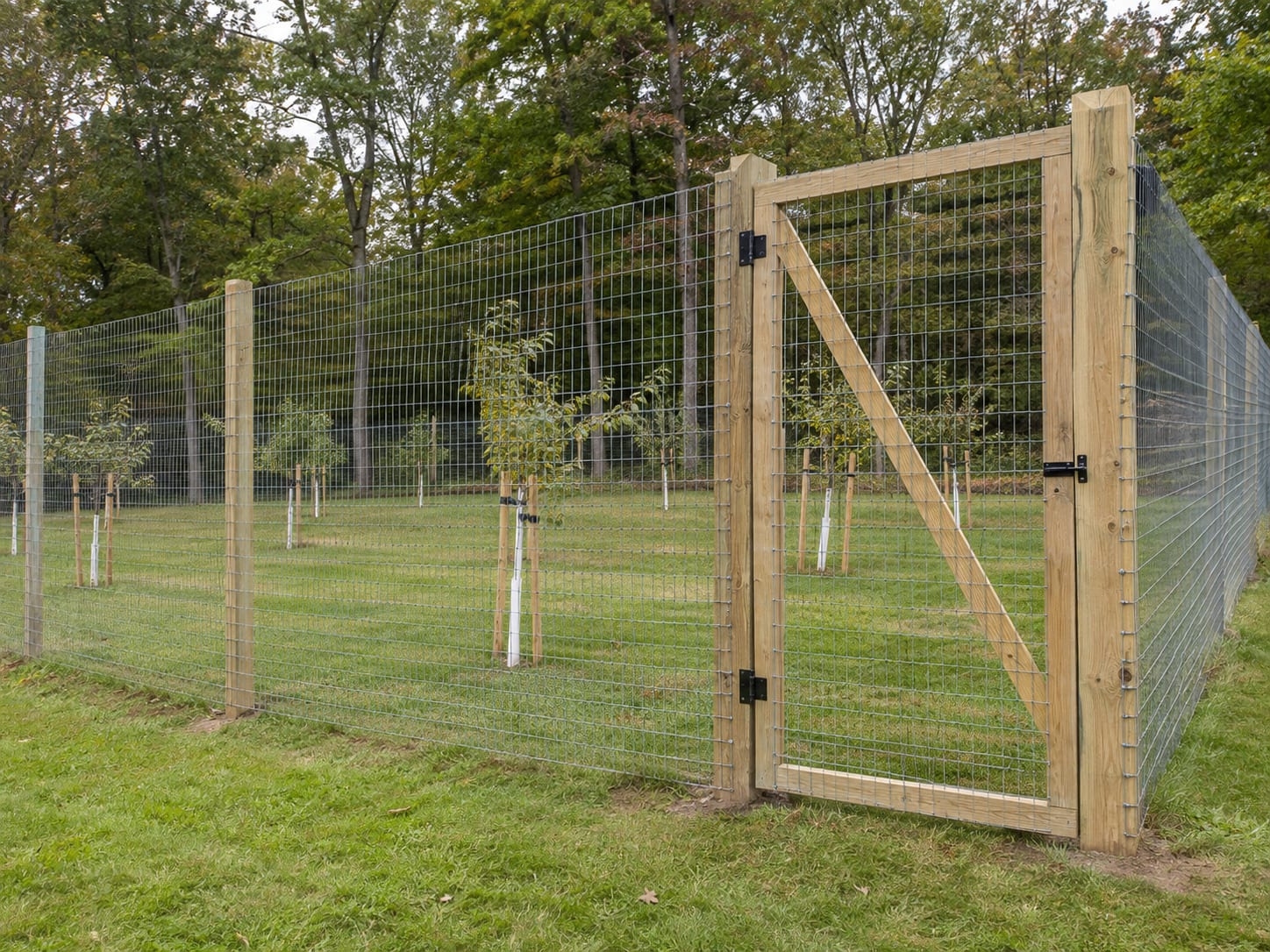
DEEP recommends fencing approximately eight feet high when the goal is to restrict deer activity around houses and reduce damage to plantings. The Connecticut Agricultural Experiment Station describes deer-exclusion fencing as generally seven to ten feet high. Black plastic mesh is usually about eight feet high, lightweight and relatively inconspicuous.
A six- or seven-foot woven-wire fence can deter deer for many homeowners, but it may not provide complete exclusion. If deer pressure continues, the weak point may be the height, the gate, the bottom edge or an opening beside a driveway. Deer can enter under a gap, around an open gate or through a section that has sagged.
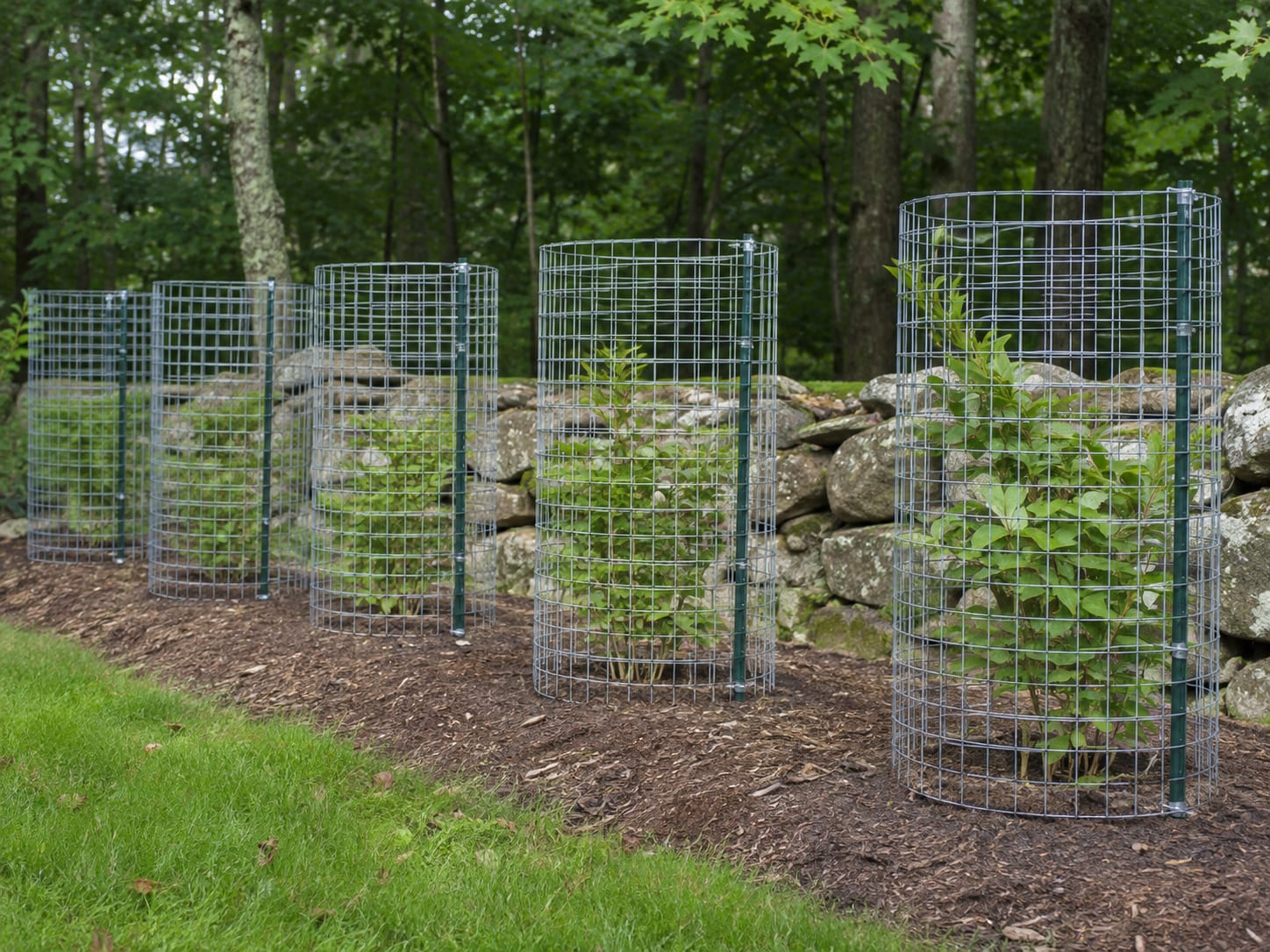
Most homeowners choose among a few designs. Eight-foot polypropylene mesh or woven wire with a tight bottom edge suits a garden or orchard, and chain link or another rigid metal fence fits where durability matters more than material cost. Where the lot permits, a double fence with open space between two lower fences, or an outward-sloping fence, can reduce a clear jump. Individual mesh cages protect selected shrubs, vegetables or young fruit trees.
Electric high-tensile fencing is another option. DEEP describes seven-strand slant-wire and six-wire vertical designs, with wires spaced approximately eight to ten inches apart. Vegetation must be kept away from the wires, and the system needs regular maintenance.
Gates deserve the same attention as the fence line. A driveway opening that stays open is an entry point regardless of whether the fence is mesh, wire or metal. The written plan should state gate height, latch type, opening direction, automatic opener equipment if used, and how the gate meets the fence at each side.
For material choices and agricultural applications, see the agricultural fencing service page.
Deer pressure and plant protection
New Fairfield is in Connecticut Deer Management Zone 11. DEEP's 2024 Connecticut Deer Program Summary reported 35 deer harvested in New Fairfield during 2024, including 32 by archery, 2 by shotgun or rifle, 1 by muzzleloader, and 0 by landowner permit or crop-damage harvest. The harvest table also recorded 0 reported deer-vehicle accidents.
Those figures describe reported harvest by town, not the number of deer living in New Fairfield. DEEP reports that deer populations can double every two to three years, adult does produce an average of two fawns each year, and deer eat approximately five to ten pounds of food daily. Urban and suburban deer home ranges are often approximately 100 to 300 acres, so a fence around one planting area may be more practical than trying to control deer across an entire property.
DEEP states that fencing and repellents have varying effectiveness and require long-term maintenance. UConn Extension groups plants by how often they are damaged, while warning that no plant is completely deer-proof.
Shrubs that UConn describes as rarely damaged include bayberry, boxwood, mountain laurel, Japanese pieris, spicebush, fragrant sumac, sweetbells, sweetfern and sweetgale. Rarely damaged perennials include anise hyssop, bleeding heart, white baneberry, white snakeroot, wild geranium and yarrow. Ornamental grasses and ferns are also generally highly resistant to deer damage.
Deer commonly feed on hosta, daylily, lily, garden phlox, purple coneflower, strawberry, blueberry, apple, pear, plum, rose, azalea, rhododendron, yew and American arborvitae. A planting plan with less-preferred plants can reduce browsing, but fruit trees and orchard plants still make good candidates for physical protection.
What to bring to town before construction
Bring a simple site sketch to New Fairfield Land Use or Zoning. Mark the proposed height, material, fence line, gates, driveway openings and nearby streets or property lines. Identify whether the route is near Candlewood Lake, Ball Pond, Squantz Pond, another water resource, a wetland or a watercourse.
Then ask the Building Department whether a building permit is required. For an eight-foot fence, ask how the building permit process applies because the published exemption covers fences not over seven feet. If the fence will serve as a pool barrier, identify it as such at the start.
If wetlands or watercourses may be affected, bring a site plan or survey to the Inland Wetlands and Conservation Commission. Show property lines, contours, wetlands, watercourses, driveways, septic areas and the proposed fence. Confirm the property line before placing posts near a boundary, especially where an old stone wall, existing fence or deed description creates uncertainty.
Call 811 before excavation. Connecticut's Call Before You Dig program requires notification at least two full working days before excavation with power-operated equipment. The contractor performing the excavation must make the call.
A written quote should state the fence height, mesh or wire specification, post spacing, bottom clearance, gates, driveway closures, clearing, grading, access, restoration, permits and utility marking responsibilities. My Fence Guy can go over those details with you before installation, so the fence is priced around the actual protected area.
If the fence is near a shared boundary, put the location, ownership, maintenance, gate access and cost allocation in writing with the neighbor. Connecticut's fence statutes address division fences, but a disputed property line calls for a Connecticut real estate attorney.
Connecticut zoning rules differ by town because zoning commissions regulate structure height, yards, setbacks and land use under Connecticut General Statutes Section 8-2. New Fairfield generally limits fences to six feet unless the Zoning Commission approves a Special Permit.
For a broader permit overview, read Do You Need a Permit for Fence Installation in CT?.
A practical New Fairfield deer-fence sequence
- 1
Protected area
Decide whether the fence surrounds the whole yard, a garden, an orchard or selected plants.
- 2
Site sketch
Mark the route, height, material, gates, driveways, property lines and nearby water features.
- 3
Town questions
Contact Land Use or Zoning and ask about the six-foot limit and Special Permit process.
- 4
Building review
Ask whether the fence needs a building permit, especially when it exceeds seven feet or serves as a pool barrier.
- 5
Wetland review
Contact Inland Wetlands and Conservation if the fence may affect a wetland or watercourse.
- 6
Excavation planning
Confirm the property line and call 811 at least two full working days before powered excavation.
- 7
Installation
Set posts, attach the barrier, close the bottom edge and install gates that preserve the fence height.
Frequently Asked Questions
How tall does a deer fence need to be in New Fairfield?
The target for reliable deer exclusion is an approximately eight-foot fence. New Fairfield's ordinary zoning limit is six feet above grade, so ask the Zoning Commission about a Special Permit before choosing a taller fence.
Can I put up an 8-foot deer fence in my yard?
An eight-foot deer fence may be possible with town approval. It exceeds New Fairfield's ordinary six-foot zoning limit and the Building Department's published exemption for fences not over seven feet, so contact Land Use or Zoning and the Building Department before construction.
Do deer jump a 6-foot fence?
A six-foot fence can deter many deer but may not provide complete exclusion. A tight bottom edge, a closed gate and a properly maintained barrier matter, while an approximately eight-foot fence gives a garden or orchard a stronger exclusion design.
What is the cheapest deer fence that works?
Polypropylene mesh around a small garden is the lower published DEEP option at approximately $2.00 to $3.00 per linear foot for homeowner materials, plus labor. DEEP lists eight-foot woven-wire fencing at approximately $6.00 to $8.00 per linear foot installed, while the actual project cost changes with gates, clearing, posts, terrain and access.
Will deer jump into a small fenced area?
A small fenced area can still be entered through an open gate, a bottom gap, sagging mesh or a low barrier. An approximately eight-foot mesh fence with a secure gate and a bottom edge close to the ground gives a small garden or orchard the clearest protection.
Do I need a permit for a deer fence?
In New Fairfield, ask before construction because the answer depends on height, zoning approval, location and use. The town lists fences not over seven feet under a building-code exemption, requires a permit for pool barriers regardless of height, and generally limits fences to six feet unless the Zoning Commission approves a Special Permit.
New Fairfield deer fence planning
1. What height does DEEP recommend when the goal is to restrict deer activity around plantings?
2. What is New Fairfield's ordinary zoning limit for a fence above grade?
3. Which fence material is listed by DEEP as a lightweight option usually about eight feet high?
4. What should you do before powered excavation?
Pick an answer to begin.
Final Thoughts
For most New Fairfield properties, the right starting point is a protected area sized to the plants or fruit you need to save. A smaller garden or orchard enclosure can make an approximately eight-foot mesh or woven-wire barrier practical, while individual cages or a lower fence may fit selected plants. The town approval question comes before the material order, especially when the fence exceeds six feet or the route approaches wetlands, a watercourse, ledge or a property line.
A written plan should cover the fence height, bottom edge, posts, gates, driveway openings, route, permits and site restoration. Call us at (203) 746-1100 for a free estimate, or reach out through our contact page.
Deer fencing terms
Tap a term to see what it means.
Above grade. The height measured upward from the ground at the fence location.
More about fences
Agricultural Fencing in New Fairfield, CT: What Fits Your Land
The animal decides the fence, not the catalog. Agricultural fencing in New Fairfield, CT, from woven wire to rails, and how ledge changes post setting.
Read the guide to Agricultural Fencing in New Fairfield, CTDeer Fencing in Southbury, CT: Height, Setbacks and What Works
Deer fencing in Southbury, CT: why an 8-foot fence must meet setbacks a 6-foot fence skips, which reviews apply, and the mesh, wire and metal options that work.
Read the guide to Deer Fencing in Southbury, CTFarm and Livestock Fence Types: What Works for Goats, Sheep, Cattle and Poultry
Fencing for goats, sheep, cattle, pigs and poultry: woven wire, cattle panels, electric netting, predator protection in Connecticut and NRCS cost-share.
Read the guide to Farm and Livestock Fence Types