
Cedar Planters in Sherman, CT: What to Plan Before You Build
By Tony Pellicone20 min readPublished
- cedar planters
- sherman ct
- custom woodwork
- connecticut
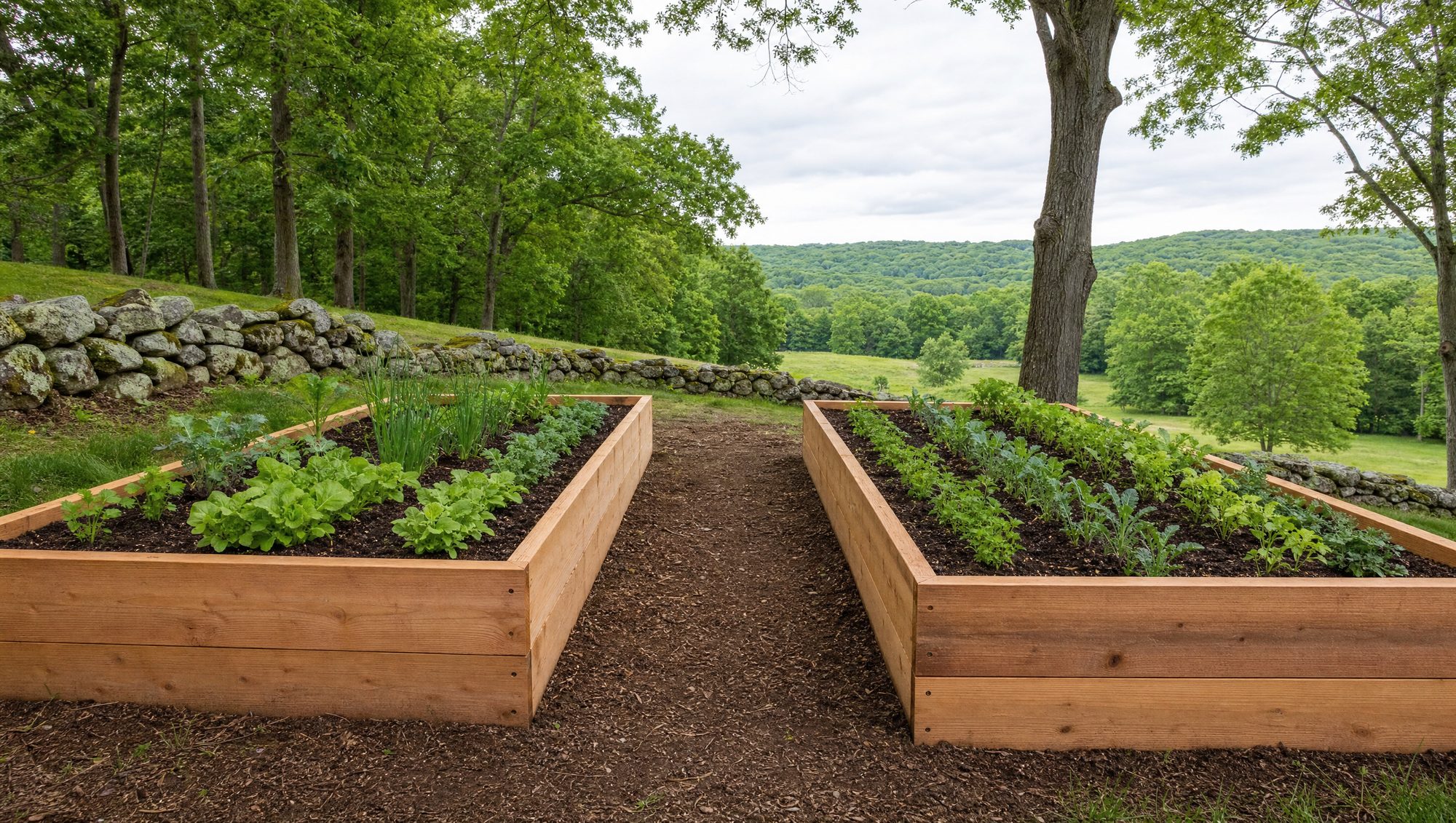
The spot gets decided long before the planter does. A corner of the patio, a sunny strip along the driveway, a run of yard beside the fence where the lawn never really took. What belongs there is a planter that looks built, not bought. So, the shopping starts, and the choices split in two unhelpful directions: thin retail boxes that feel like they will bow by August, or a custom quote with a number on it and no explanation of what the number buys. The honest answer is that cedar planters in Sherman, CT are small structures, not decorations, and almost everything that decides whether one lasts happens before a single board gets cut. Wet soil is heavy, it pushes outward, and it never stops trying to find a way through the bottom of the box. Once you know what actually drives quality, judging a planter and a planter builder gets a lot easier.
Key Takeaways
Design around the plants first
Root depth, mature size, sun, and water access set the dimensions before style ever enters the conversation.
Drainage is the whole ballgame
Holes, spacers, trays, and liners have to move water out, because trapped water rots the wood and drowns the roots.
Cedar is not one product
Species, grade, board thickness, and fastener type separate a planter that holds its shape from one that bows and stains.
Wet soil is heavier than people expect
Elevated planters and anything sitting on a deck need real structural support and a capacity check.
Sherman may want a look at it
A small freestanding box is not the same project as a large built-in, retaining, elevated, or attached planter system.
A Cedar Planter Has a Structural Job to Do
Cedar earns its place in a garden for reasons that go past looks. It is dimensionally stable compared with many softwoods, it carries natural decay resistance, and its warm tone sits well next to a wood fence, a deck, or a New England house. That combination is why so many custom planters get built from it in the first place.
The trouble starts when people treat the box as furniture. A planter has to hold saturated soil, resist the outward pressure that soil creates, drain without wrecking the surface underneath, hold enough root volume for whatever is going in it, and stay square through a full year of swelling, shrinking, freezing, and thawing. A good-looking box still performs badly if it is too shallow, poorly drained, under-braced, built from thin lumber, or set on the wrong surface.
Where the native ground fights you, raising the bed is often the practical fix. Oregon State University's raised bed gardening guidance notes that raised beds can be framed or unframed and can put a high-quality growing medium above poor, compacted, or contaminated soil. On rocky Sherman lots, that is frequently the reason someone calls in the first place.
Cedar Is Not Maintenance Free
Natural decay resistance is not the same as permanent. The USDA Forest Products Laboratory's wood handbook is clear that durability in wood depends on the species and the conditions it lives in, and a planter puts wood in about the harshest condition there is: continuous contact with damp soil.
"Cedar" also covers a range. Species, grade, thickness, moisture content, knot count, and how much sapwood is in the board all change how it performs. Thin boards bow under wet-soil pressure. End grain and lower edges soak up water first. The wrong fasteners corrode and bleed black stains down the face of the wood. Anyone who promises you a specific number of years is guessing, because service life comes from the lumber, the drainage, the soil contact, the finish, the irrigation, and the maintenance, not from the word cedar.
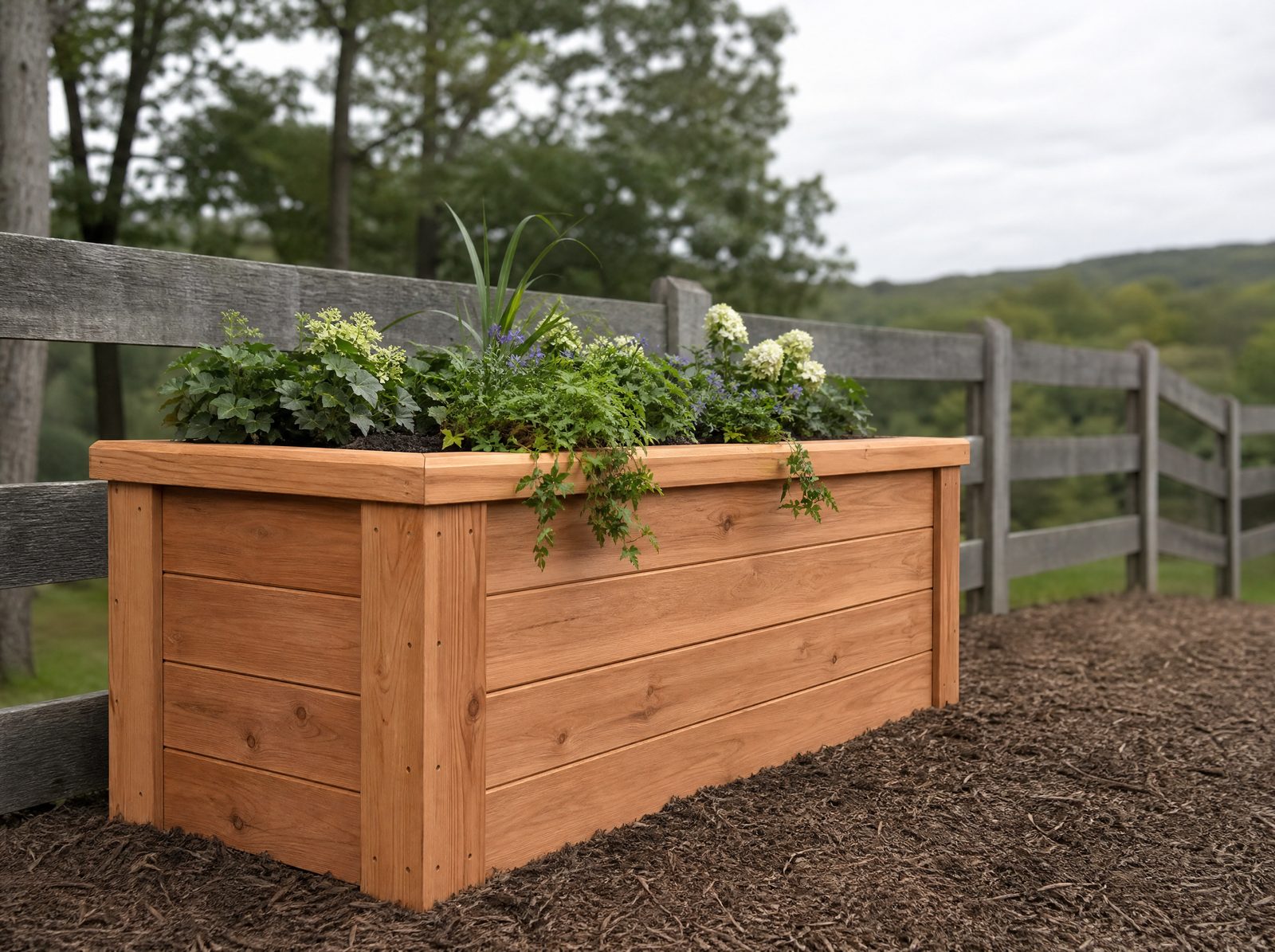
The Planter Type Follows What You Plan to Grow
Before dimensions, before trim, before finish, the question is what kind of planter this actually is. Each type solves a different problem and carries a different set of construction requirements. Getting this wrong is how people end up with a beautiful box in the wrong place doing the wrong job. Here are the forms that come up most often on Sherman properties.
Open-Bottom Raised Beds
These sit directly on prepared soil and let roots, water, and soil life move between the bed and the ground below. They suit vegetables, herbs, flowers, and mixed planting, and they are the simplest to drain because the ground does the work. Where burrowing rodents are a problem, Oregon State recommends lining the bottom with quarter-inch hardware cloth before the soil goes in.
Bottomed Patio Planters
Anything sitting on a patio, deck, walkway, or terrace needs a floor, and the moment there is a floor there has to be a plan for the water. Bottomed patio planters in Sherman need drainage holes or slots, structural support under the floor, and protection for whatever is beneath them. Water should never sit against the wood or pool on the surface below.
Elevated Planters
Raising the growing area on legs or a frame cuts out the bending, which is the whole point for a lot of homeowners. It also puts a large load in the air. Legs, bottom support, cross bracing, and fastener choice all matter more here than on a bed sitting on the ground, because nothing beneath the box is helping to hold it up.
Tiered, Bench, and Trellis Planters
Tiered designs stack growing levels and work well for herbs, flowers, strawberries, or tight spaces, as long as water leaving the upper tier is controlled instead of just dumping on the one below. Bench planters combine seating and soil, which is fine when the design keeps soil moisture away from the load-bearing seat structure. Tall privacy planters can carry a trellis or screen, but wind load, anchoring, and the mature weight of a vine are real forces, not afterthoughts.
Custom Cedar Planters in Sherman Start With Dimensions, Not Trim
Custom work pays off when the planter has to fit a particular spot or match something already in the yard. That is where the visible options live: mitered or capped corners, trim profiles, horizontal or vertical cladding, boards that match an existing wood fence, casters on smaller containers, exterior stain or oil, colors pulled from an existing gate or railing. Those choices are real, and they are the fun part.
They are also the last part. Custom means designing around soil pressure, root volume, drainage, access, and the surface holding the whole thing up. The trim goes on top of that, not instead of it. A builder who leads with corner details before asking what you are planting has the order backwards.
Size, Reach, and Accessibility
A bed you cannot reach into is a bed you will fight for years. Width should let you get to the middle from the side you can actually stand on, and paths between beds need room for a wheelbarrow, not just a person. Elevated planters are not automatically accessible either. Working height, knee clearance, reach depth, path width, and stable footing all decide whether the design works for the person using it.
Root Depth and Soil Volume
There is no single correct depth. Shallow herbs and leafy greens ask for very little. Medium-rooted flowers and vegetables want more. Deep-rooted tomatoes, shrubs, and perennials want more again, and a tree or large shrub is a different conversation entirely about soil volume and structure. A shallow decorative box should never be sold as suitable for everything, and for perennial or specialty planting it is worth checking horticultural guidance before you commit to a depth.
Privacy Screens and Wind Loads
A planter with a six-foot screen on top is a sail with a soil ballast. Wind pushes on it, mature vines add weight, and winter loads test the corners. The screen has to be anchored to a frame that can take that, and the planter body has to be braced for the force the screen creates.
Wood Planters in Sherman: How Cedar Stacks Up
Cedar is a good default, not the only answer, and an honest builder will say so. The right pick depends on the use, the budget, the look, and your own preferences about materials.
- Pressure-treated lumber: Oregon State's guidance on pressure-treated wood in raised beds explains that modern treated wood can be used in raised beds, while noting that some gardeners simply prefer untreated cedar or juniper when they would rather avoid preservative-treated material. Both are legitimate choices.
- Pine or fir: Usually cheaper up front, typically less decay resistant in soil contact, and more likely to need protective finishing or earlier replacement.
- Metal: No wood rot to worry about, thin profiles, often modular. It heats differently in sun, reads very differently next to a wood fence, and depends on edge and coating quality.
- Composite: Reduces decay concerns, but stiffness, expansion, fastening requirements, and appearance vary a lot by product.
- Stone or masonry: Durable and handsome in a garden, but heavy, permanent, and more likely to need different site prep or review.
Drainage Decides Whether the Planter Lasts or Rots
Of every design choice on the table, drainage is the one that quietly determines the outcome. Water that leaves cleanly is a non-issue. Water that lingers rots the bottom boards, drowns the roots, stains the patio, and finds the fasteners. The right approach depends on which kind of planter you are building and what it is sitting on.
Open Bottoms Versus Bottomed Boxes
An open-bottom bed drains through prepared ground, so the soil underneath may need loosening before the frame goes down. Put that same bed on hardpan or a compacted pad and it becomes a bathtub with no plug. A bottomed box needs deliberate outlets, holes or slots placed and sized so water actually leaves rather than pooling in a corner the drill never reached.
When a Liner Helps and When It Hurts
A liner can separate wet soil from the wood and keep fine soil from washing out, which is useful. It is not automatically an upgrade. Permeable garden fabric, rigid plastic panels with drainage, dimpled drainage membrane, and removable grow bags all behave differently, and for edible planting the liner should be appropriate for food contact. The failure mode is the sealed bathtub: a liner with no reliable outlet traps water, hurts roots, and speeds up decay. Anyone claiming every planter needs plastic lining, or that lining means a longer life, is overselling it.
Protecting Decks and Patios
On a hard surface, the planter should not sit flat in its own runoff. Feet or spacers, drainage trays, protective pads, controlled outlet points, and air space beneath the box all help, and the water needs somewhere to go that is not your siding, your door threshold, or the middle of the walkway. Removable liners make the interior serviceable later, which matters more than it sounds.
Soil Mix, Sun, and the Sherman Realities Around the Box
Once the box is right, the growing conditions still have to be. Oregon State's compost guidance advises incorporating compost into raised-bed fill at up to roughly 25 percent by volume rather than filling a bed with compost alone. Expect the fill to settle after the first few waterings, leave room for mulch, and plan to replenish organic matter over time instead of once.
Sherman adds its own conditions. Wooded lots mean shade, and many vegetables want six or more hours of real sun, measured where the planter will actually sit rather than where it would be convenient. Sloped and rocky yards affect leveling and base prep. Deer are a genuine factor, and raised height alone does not stop browsing, so plant selection, fencing, or netting may still be needed. Winter matters too: University of Minnesota Extension notes that raised-bed soil can freeze faster than the surrounding ground, which is worth knowing before you put perennials in an elevated planter exposed on all four sides. Roof runoff, irrigation overspray, plow splash, and road salt near a driveway all belong in the placement conversation as well.
Sherman May Review the Project, Depending on What It Is
Do not assume every planter is automatically permit-free, and do not assume every planter needs approval either. The distinction is what the structure actually is. A small freestanding cedar box is a different animal from a large built-in system, and Sherman's Planning and Zoning Department publishes the current regulations and fee schedules, with zoning regulations listed as revised May 1, 2026. The Building Department is the other half of that conversation. Confirm the current requirements with the town before construction, because local rules change.
When Town Review May Be Appropriate
A property-specific review is worth considering when the planter is large, built in, retaining soil like a wall, elevated, attached to a deck, stair, railing, fence, or building, or topped with a tall privacy screen. Placement raises the same question: work near a setback, a property line, wetlands, a watercourse, or a pool area can matter, and so can anything that changes how water drains across the yard or adds electrical or irrigation work.
Deck and Structural Load Questions
Wet soil is heavy, and a large planter on a deck concentrates that load in one spot. Finished weight, load distribution, drainage, and surface protection all need a look, and a big soil-filled planter on an elevated structure may warrant review by a qualified building professional. It is not safe to assume every deck can carry it.
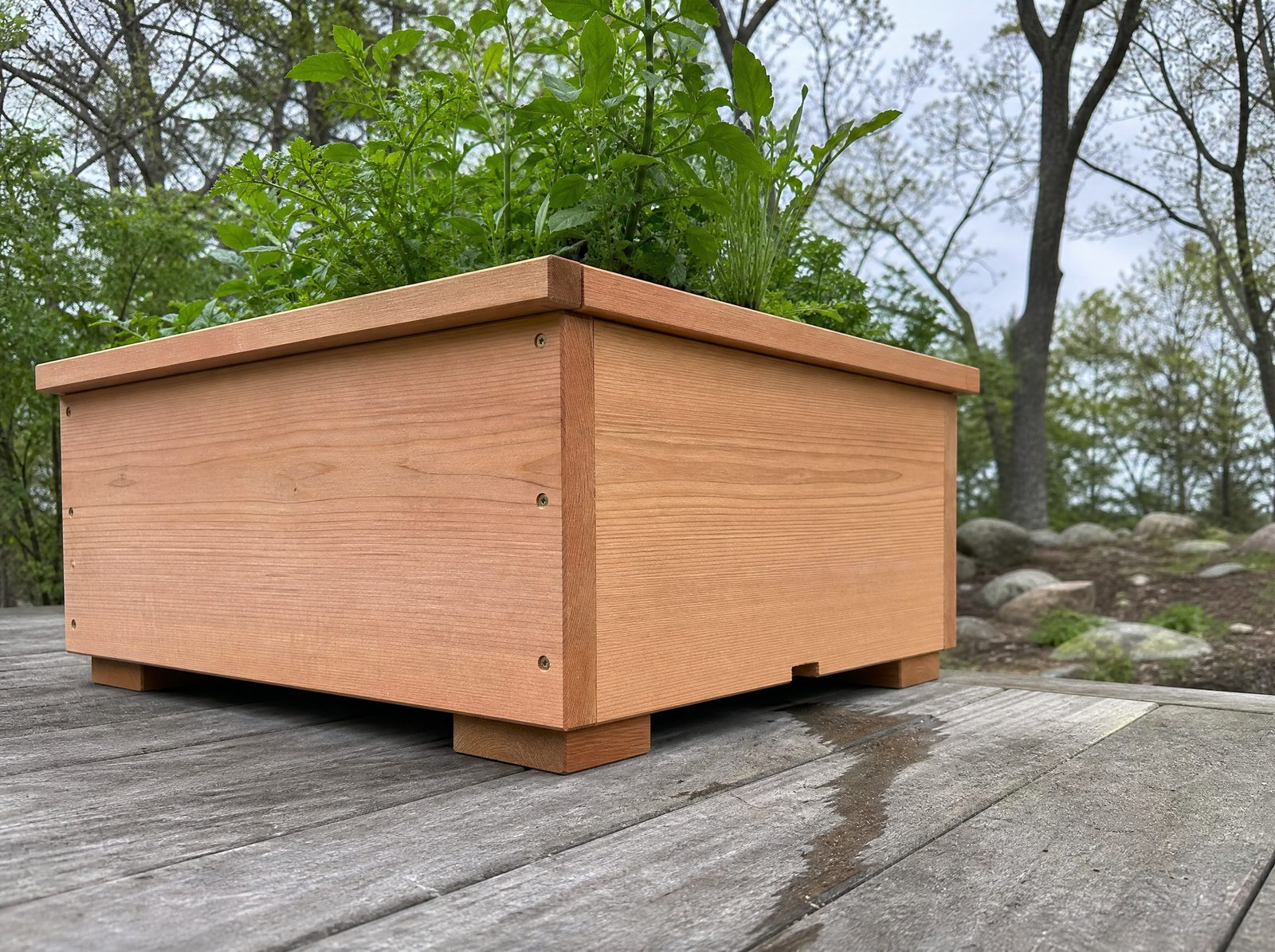
What Actually Drives the Cost of a Custom Cedar Planter
There is no reliable one-price-fits-all figure here, and a retail kit and a custom built-in system are not comparable just because both are called planters. Published retail and DIY prices are broad market context, not a quote for your project, which is why a site visit is the honest way to price anything built in, elevated, large, or coordinated with existing fencing.
What moves the number is the whole system, not the box: size, cedar grade, board thickness, how the bottom is built, whether it stands on legs, the bracing inside it, the drainage and liner, any trellis or bench, the finish, the site prep, and how the material gets to the spot. Soil, irrigation, removing an old planter, and matching an existing fence or gate all land on the estimate too.
Hover or tap a row to highlight it.
| Cost Driver | Why It Matters |
|---|---|
| Dimensions | Length, width, and depth set the lumber, the soil volume, and the labor. |
| Cedar species, grade, and thickness | Thicker, higher-grade boards cost more and are what resist bowing under wet soil. |
| Bottom construction | An open bottom, a bottomed box with drainage, or an elevated frame are three different builds. |
| Bracing and legs | Interior bracing, bottom support, and leg construction are what carry the weight. |
| Drainage, liners, and hardware cloth | Outlets, spacers, trays, liners, and rodent screening each add material and detail work. |
| Trellises, benches, trim, and finish | Screens, seating, caps, and stain are real additions, not just styling. |
| Site prep and surface protection | Leveling, base prep, and protecting a deck or patio add time before the build starts. |
| Delivery and access | Getting a large built planter to a back yard or a tight patio takes crew and time. |
| Soil, compost, and irrigation | Filling and watering the planter can be part of the scope or your responsibility. |
How a Cedar Planter Comes Together
A custom planter should follow a predictable order, and knowing that order helps you spot a builder skipping steps. It starts with what you plan to grow and the spot you have, moves through the design decisions that carry the load, and ends with soil in the box and a walkthrough.
The Cedar Planter Build Process
- 1
Step 1: Consultation and Planting Use
We walk the spot and settle what you plan to grow, the root depth it needs, and how the planter should fit the yard.
- 2
Step 2: Site and Surface Review
We check sun, water access, drainage, grade, deer pressure, and whether it is going on ground, patio, or deck.
- 3
Step 3: Design and Written Estimate
Type, dimensions, cedar and grade, board thickness, bracing, drainage, liner, finish, and who supplies soil all go in writing.
- 4
Step 4: Local Confirmation and Site Prep
We confirm whether the project is the kind Sherman wants to review, then level the base and protect the supporting surface.
- 5
Step 5: Build and Brace
The box is kept square, long walls reinforced, the bottom supported, and the assembly detailed to allow for seasonal wood movement.
- 6
Step 6: Finish, Fill, and Walkthrough
Finish goes on and cures before soil, the fill goes in, and we walk the stability, drainage, edges, and maintenance with you.
The build itself is where the details show. The box has to stay square, long walls need reinforcement, the bottom needs support, and the assembly has to allow for seasonal wood movement instead of fighting it. Fasteners should be specified by type, not called "exterior screws." Stainless steel or approved exterior-coated screws, corrosion-resistant brackets, pre-drilling near board ends, and replaceable bottom supports are the difference between a planter you can maintain and one you replace.
Finish comes before soil. Untreated cedar can be left to weather gray, or it can take a penetrating exterior oil or stain applied per the manufacturer's cure and recoat instructions. For edible gardens, Oregon State's vegetable growing guidance points to untreated cedar or western juniper and advises a food-safe wood stain if the wood is preserved. Nobody should call a product food safe without the manufacturer's documentation saying so.
What Separates a Cedar Planter Builder Worth Hiring
Connecticut requires home improvement contractors to register with the Department of Consumer Protection for covered work, and the state lets you verify a license in a couple of minutes. That plus proof of insurance is the floor, not the selling point. My Fence Guy is licensed and insured, and we give free estimates.
Past the paperwork, listen for whether the builder can answer the structural questions without hedging: cedar species and grade, board thickness, bottom and leg construction, drainage design, liner specification, fastener type, finish product, deck or patio protection, and who is responsible for soil, planting, irrigation, permits, and cleanup. A builder who talks only about looks has not thought about the load.
What the Written Estimate Should Include
A custom estimate that says "cedar planter" and a price is not an estimate. At a minimum it should spell out:
- Dimensions and planter type: Length, width, height, and whether it is open-bottom, bottomed, or elevated.
- Cedar species, product, and grade: Not just the word cedar.
- Board thickness and bracing: Wall thickness, interior bracing, bottom support, and leg construction.
- Fasteners and hardware: The actual fastener type and any brackets.
- Drainage and liner: Outlets, spacers, trays, hardware cloth, and the liner specification.
- Finish: The product, where it is applied, and cure time.
- Site preparation and protection: Leveling, base prep, and deck or patio protection.
- Soil, compost, and irrigation: Who supplies and installs them.
- Delivery, access, and cleanup: How it gets there and who clears the site.
- Permits, timeline, payments, warranty, and change orders: Who handles what, and what happens when something changes.
Frequently Asked Questions About cedar planters sherman ct
Q: Why is cedar a good material for planter boxes?
A: Cedar offers natural decay resistance, good dimensional stability, and an appearance that works next to fences, decks, and New England homes. Performance still depends on species, grade, board thickness, drainage, soil contact, finish, and maintenance, so cedar is a strong starting point rather than a sure thing.
Q: Should a cedar planter be lined?
A: A liner can reduce direct soil contact and help hold soil in place, but it has to allow drainage. A sealed liner that traps water can harm roots and speed up wood decay, so the liner and the drainage path need to be designed together rather than added as an afterthought.
Q: Do cedar planters require a permit in Sherman?
A: Small freestanding planters may not require formal approval, but large, built-in, retaining, elevated, attached, or privacy-screen planter systems may need zoning or building review. Confirm the current requirements with Sherman's Planning and Zoning or Building Department before construction.
Q: Can a large cedar planter go on a deck?
A: Wet soil is heavy, so a large deck planter should be evaluated for finished weight, load distribution, drainage, and protection of the deck surface. Do not assume every deck can carry it. A qualified building professional may need to review the load first.
Q: What soil should go in a raised cedar planter?
A: Use a balanced soil mix suited to what you are growing. Oregon State University advises incorporating compost into the fill, at up to roughly 25 percent by volume, rather than filling the bed with compost alone. Expect settlement and plan to replenish organic matter over time.
Q: Can untreated cedar be used for vegetables?
A: Yes. Oregon State University identifies untreated cedar as an option for raised beds and advises using a food-safe stain if a finish is applied. If you want a finish on a food garden, ask for the manufacturer's documentation rather than taking a general claim at face value.
Q: How long do cedar planters last?
A: There is no universal lifespan for cedar planters in Sherman, Connecticut. Species, grade, board thickness, drainage, soil contact, finish, irrigation, and maintenance all change the answer, which is why a specific number of years from a builder should be treated as a guess.
Q: How much do custom cedar planters cost in Sherman?
A: Cost depends on size, cedar grade, board thickness, bottom construction, elevated legs, bracing, liners, drainage, trellises, trim, finish, site preparation, soil, irrigation, access, and any custom matching. Retail box pricing is not a useful comparison for a custom built system.
Test Your Cedar Planter Knowledge
1. What is the most common reason a cedar planter rots early?
2. Does a sealed liner with no outlet protect a planter?
3. Do all cedar planters in Sherman skip town review?
4. What should you check before putting a large planter on a deck?
5. Should a raised bed be filled entirely with compost?
Pick an answer to begin.
Final Thoughts
Cedar planters reward planning far more than shopping. Start with what you plan to grow and where it will actually sit, size the box to the roots and the reach, design the drainage before the trim, specify the cedar and the fasteners instead of accepting the word cedar, and account for the weight of wet soil anywhere the ground is not doing the holding. Confirm with the town whether your particular planter is the kind that needs a look. Get those in the right order and the appearance takes care of itself.
Done well, a cedar planter quietly earns its keep for a long time: better soil than the native ground gave you, gardening without the bending, seasonal color at the entrance, a screen where you wanted privacy, all still square and draining after years of freeze and thaw. That is what the planning buys.
If you are thinking about custom cedar planters in Sherman, we would be glad to look at the spot and give you a straight answer. My Fence Guy is a family-owned contractor with a local office in Sherman, CT, and along with cedar planters we install residential, commercial, industrial, and agricultural fencing in wood, vinyl, aluminum, chain link, and ornamental styles, plus pool fencing, pet fencing, estate gates, and railings. We can match a planter to an existing fence or gate, design the drainage for your patio or deck, and put the dimensions and materials in writing before anything gets built. Call us at (203) 746-1100 for a free estimate, or reach out through our contact page.
Cedar Planter Key Terms
Tap a term to see what it means.
Open-Bottom Raised Bed. A framed bed with no floor, set on prepared soil so roots, water, and soil life move freely between the bed and the ground.
More about fences
Cedar Planters in Southbury, CT: What to Plan Before You Build
Wet soil is heavy, and a planter carries it every day. The cedar grade, drainage, and joinery behind cedar planters in Southbury, CT that hold their shape.
Read the guide to Cedar Planters in Southbury, CTCedar Planters in New Fairfield, CT: What to Plan First
A cedar planter fails from the inside out. Drainage, soil weight, and cedar grade decide how long a planter in New Fairfield, CT actually lasts.
Read the guide to Cedar Planters in New Fairfield, CTRailings in Sherman, CT: What the Code Actually Requires
Railings almost never break in the middle. They let go where they meet the deck. What that means for railings in Sherman, CT, from ledger to post base.
Read the guide to Railings in Sherman, CT