
Cedar Planters in Southbury, CT: What to Plan Before You Build
By Tony Pellicone20 min readPublished
- cedar planters
- southbury ct
- custom woodwork
- connecticut
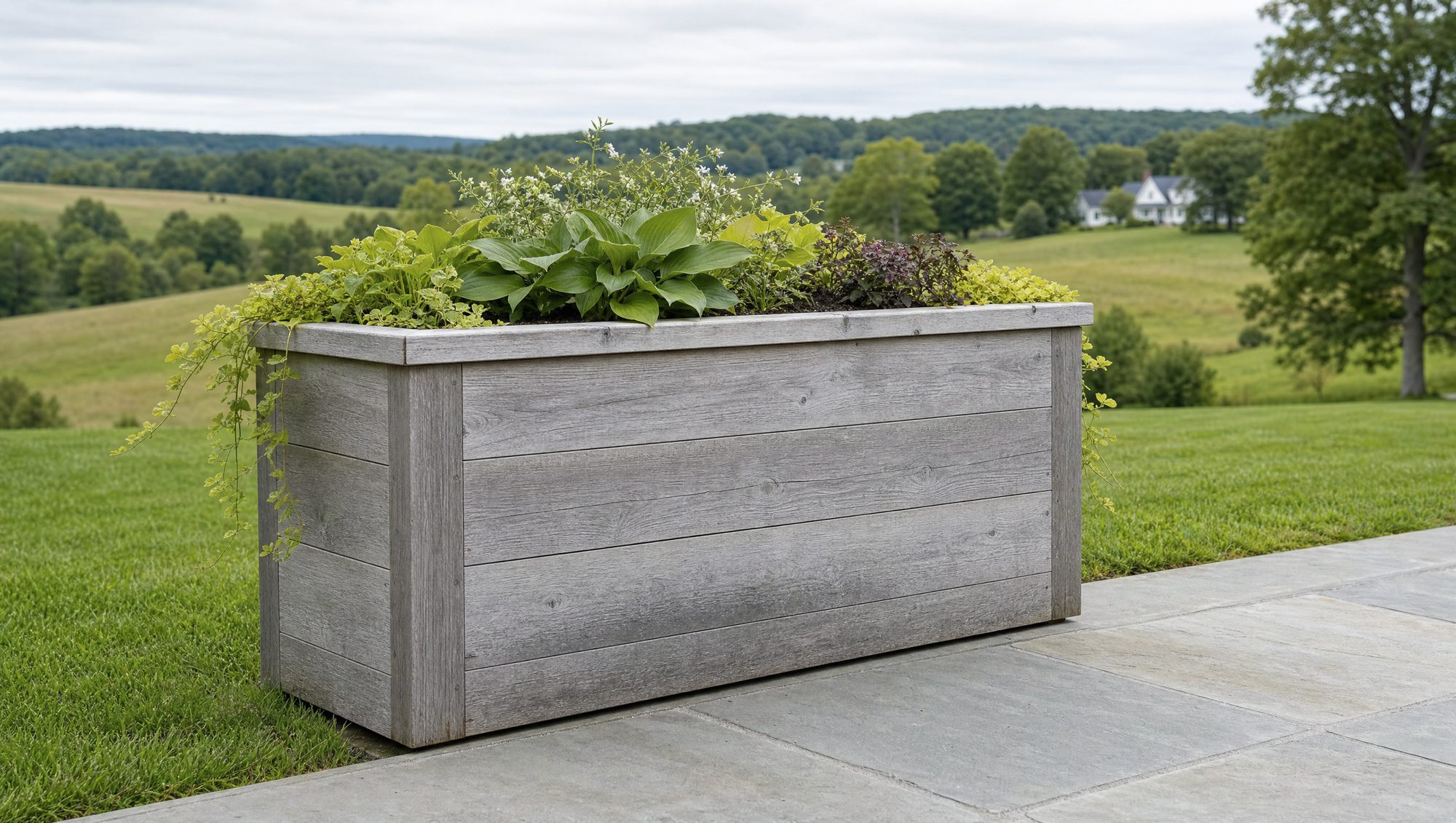
The cedar planter at the garden center probably looked right until you measured the spot you had in mind. Too shallow for tomatoes, too narrow for the patio corner, or built from boards thin enough to flex when you press a thumb against them. That is where most people start with cedar planters in Southbury, CT: you know what you want the thing to do, and nothing on the shelf does it. So, you start thinking about a custom build, and a different worry shows up. What if you pay for something that looks great in May, bows out by the second summer, and stains the deck under it? A planter is a small structure holding a surprising amount of wet soil, and most of what decides whether it lasts gets settled before anyone cuts a board. The questions that matter are knowable, and they are usually not the ones people ask. Here is what shapes a cedar planter on a Southbury property, and what to sort out before you order one.
Key Takeaways
Design around the plants, not the picture
Root depth, mature size, sun, and water access set the dimensions, so the box comes last.
Drainage is the whole ballgame
Holes, spacers, and outlets have to move water out without trapping it against the wood or the patio.
Cedar is not one product
Species, grade, board thickness, and fastener type all change how a planter holds up in soil contact.
Wet soil is heavy
Planters on legs, on decks, or built large need real structural support, and a deck may need its own review.
Southbury review depends on the project
A small freestanding box is a different question than a large built-in, retaining, or privacy-screen system.
Why Do Cedar Planters Work So Well on Southbury Properties?
Cedar earns its place for three plain reasons. It is dimensionally stable compared with many softwoods, so it moves less through wet and dry seasons. It carries natural decay resistance, which matters when a board spends its life against damp soil. And it looks like it belongs next to a New England home, a wood fence, or a stone patio, weathering to a soft gray if you leave it alone. On a lot with rocky, compacted, or poorly drained native soil, a raised bed also solves a growing problem the ground itself cannot. Oregon State University notes that raised beds can be framed or unframed and can put a good growing medium above difficult soil, which is exactly the situation on many Southbury properties.
Cedar Is Not Maintenance-Free
Natural decay resistance is not the same as permanent. "Cedar" covers several species and a wide spread of grades, and the wood handbook from the USDA Forest Products Laboratory makes clear that durability tracks with the actual material, not the label. Thickness, moisture content, knots, and sapwood content all change the answer. Constant soil contact and trapped moisture speed up deterioration on any wood, thin boards can bow under saturated fill, and end grain and lower edges are where water gets in first. Nobody can honestly quote you a fixed lifespan, because service life depends on the lumber, the drainage, the finish, the irrigation, and whether anyone ever clears the outlets.
Which Type of Cedar Planter Fits Your Yard?
The word "planter" covers a handful of genuinely different structures, and picking the wrong one is the most common early mistake. The difference comes down to what sits under the soil and what carries the weight. A box that works on open ground can be the wrong answer on a deck, and a design meant for herbs by the kitchen door will not hold a shrub. Sort out the type before you talk about dimensions or trim.
Open-Bottom Raised Beds
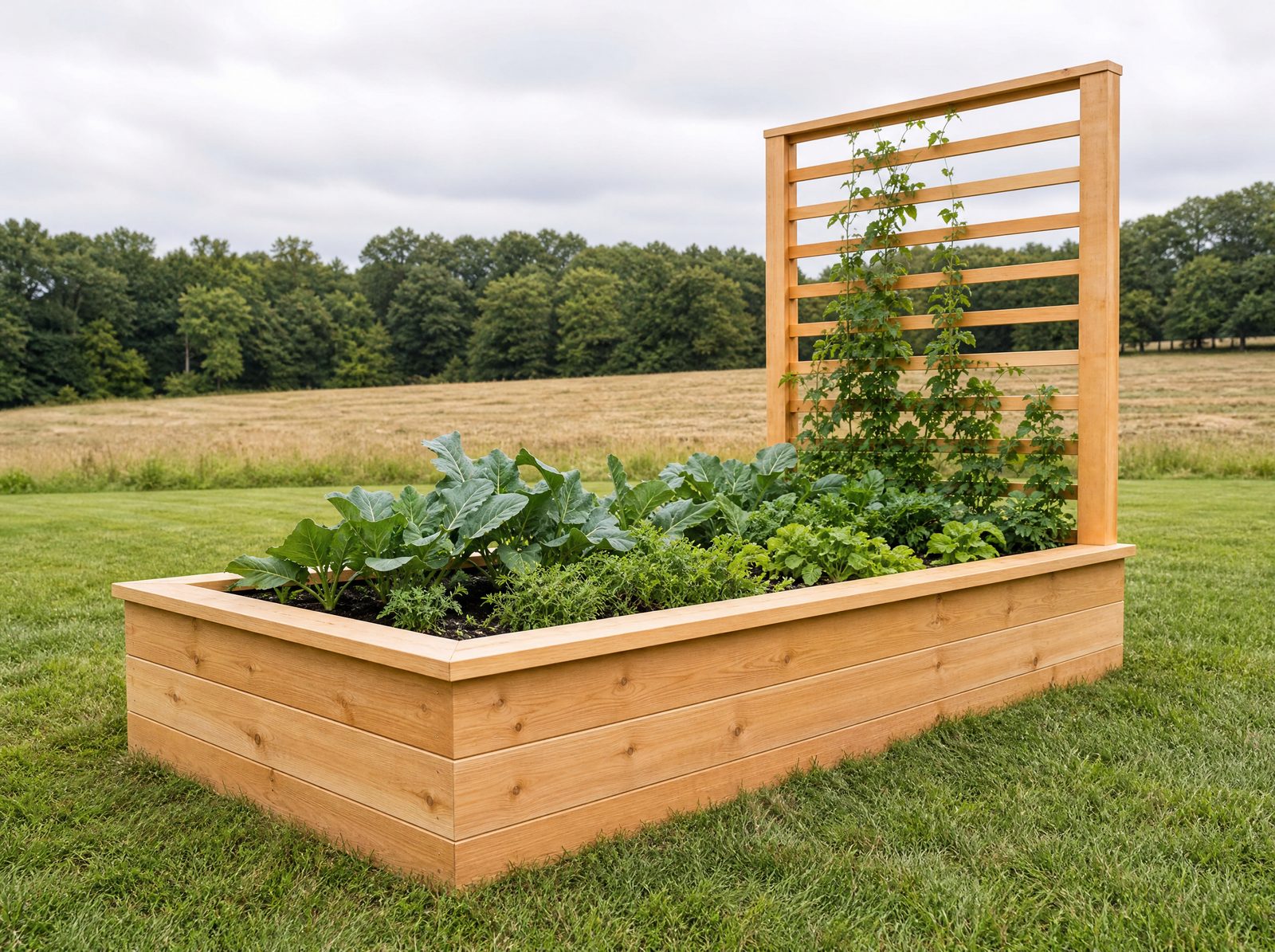
These sit on prepared soil with no floor, so roots, water, and soil organisms move freely between the bed and the ground. They suit vegetables, herbs, and mixed planting, and they are the simplest thing to drain because the ground does the work, though the soil under them usually needs loosening first. Where burrowing rodents are a problem, Oregon State recommends lining the bottom with quarter-inch hardware cloth, which keeps the open-bottom benefit while closing the door on voles.
Bottomed Patio Planters
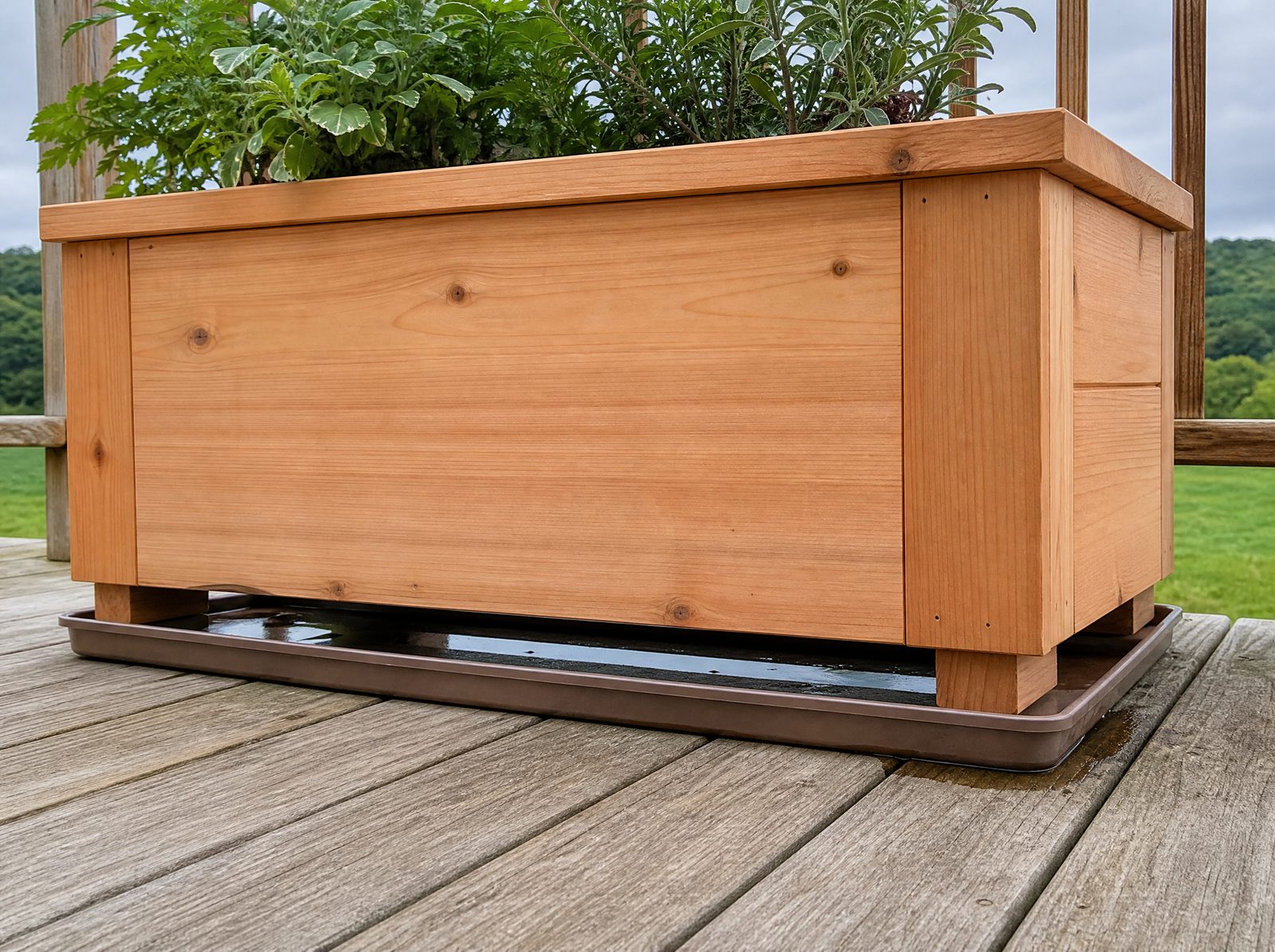
A bottomed box has a floor, which is what makes it usable on a patio, deck, walkway, or pool surround. That floor is also the part people get wrong. It needs drainage holes or slots, air space or spacers beneath it, and a plan for where the water goes, because a bottomed planter parked flat on bluestone will stain the stone and rot its own floor at the same time. Patio and entrance boxes also deal with splash, foot traffic, and seasonal replanting, so mobility matters more here than on a garden bed.
Planters on Legs and Tiered Designs
Raising the growing area onto legs or a frame cuts out the bending, which is a real difference for anyone with a bad back or limited mobility. The tradeoff is structural: wet soil is heavy, and a leg-mounted box carries all of it on four points instead of spreading it across the ground. Tiered designs stack growing levels for herbs or strawberries in a small footprint, and their tricky part is controlling how water moves between levels instead of dumping it.
Privacy, Bench, and Fence-Integrated Planters
A tall planter with a trellis can screen a patio once vines fill in, but wind load and the mature weight of the planting turn it into a small sail that needs anchoring. Bench planters combine seating and soil, so the design has to keep soil moisture out of the load-bearing parts. Planters built to match an existing wood fence look intentional rather than dropped in place, though soil and irrigation should never sit against fence posts or panels.
What Makes a Custom Cedar Planter Different From a Store-Bought Box?
Custom does not mean fancier trim. It means the planter is designed around soil pressure, root volume, drainage, access, and the surface underneath it, and then made to look like it belongs. That is where custom cedar planters in Southbury actually pay off: when the planter has to fit a specific spot or coordinate with what is already there. Dimensions, capped or mitered corners, horizontal or vertical cladding, trellises, bench integration, casters on smaller boxes, irrigation access, and stain matched to your gates, railings, or fence are all on the table. So are the parts nobody photographs, like interior bracing, hardware cloth, removable liners, and drainage trays.
Size, Reach, and Accessibility
Bed width should be set by your arms, not by the lumber. A bed you can reach the center of from both sides keeps you out of the soil, which is the whole point of a raised bed, and a planter against a wall or fence has half the reachable width. Path width between beds matters just as much. A planter on legs is not automatically accessible either: it still needs knee clearance, a comfortable working height, stable footing around it, and a soil depth you can actually reach into.
Root Depth and Soil Volume
There is no single correct planter depth. Shallow herbs and leafy greens are happy in a fraction of what a tomato wants, and deep-rooted vegetables, shrubs, or perennials need considerably more. Trees and large shrubs are a different scale of problem, needing soil volume and structural planning a decorative box will never provide. A shallow patio box sold as suitable for anything is the tell that nobody asked what you wanted to grow.
Fasteners, Finish, and the Details Underneath
Exterior planters need fasteners matched to cedar and to constant moisture, usually stainless steel or approved exterior-coated screws with corrosion-resistant brackets. The wrong fastener leaves black streaks down the boards and gives up long before the wood does. As for finish, untreated cedar can simply weather to gray, and a penetrating exterior oil holds color longer, but no coating makes wood permanent. For edible planting, Oregon State's vegetable growing guidance points to untreated cedar or western juniper and advises a food-safe stain if the wood is preserved. A product only gets called food-safe when the manufacturer documents it.
How Does Cedar Compare With Other Planter Materials?
Cedar is a good default, not the only defensible answer. Wood planters in Southbury usually come down to cedar versus treated lumber versus cheaper softwoods, with metal, composite, and masonry as the non-wood options. Modern pressure-treated lumber can be used in raised beds. Oregon State addresses the pressure-treated wood question directly and notes that some gardeners simply prefer untreated cedar or juniper when they would rather avoid preservative-treated material. That is a preference worth respecting, not a safety verdict. Untreated pine and fir cost less but generally carry lower decay resistance in soil contact, trading upfront savings for shorter replacement cycles. Metal beds sidestep rot and can be thin-profile and modular, though they heat differently in sun and live or die on edge and coating quality. Composite reduces decay worries but varies in stiffness, expansion, and fastening. Stone or masonry is durable and integrates well with hardscape, but it is heavy, effectively permanent, and can bring different site preparation or review requirements.
Where Does the Water Actually Go?
Drainage is the most important design question in a planter, and the one most likely to get a shrug. Water has to leave the soil, leave the wood, and leave the area without wrecking anything on the way out. Get it wrong and you get root problems, decay at the lower edges, and a stained patio, all from the same cause.
When a Liner Helps and When It Hurts
A liner can separate wet soil from wood and hold fill in place. It can also turn a planter into a sealed bathtub if there is no reliable way out for the water, which is worse than no liner at all. Permeable fabric, rigid plastic panels with drainage, dimpled drainage membrane, and removable grow bags all do different jobs. What decides whether it works is the drainage openings, airflow, fastener compatibility, whether you can get the liner back out to replace it, and whether roots ever reach it. For edible planting the liner has to be appropriate for food contact. No liner guarantees a longer life; a badly detailed one shortens it.
Protecting Decks and Patios
On a hard surface, the planter is only half the design. Feet or spacers, drainage trays, controlled outlet points, protective pads, and air space beneath the box keep water off the surface and out of the wood. Outlet direction matters too, since water should be routed away from siding, doors, and walkways rather than left to find its own path. Southbury properties add their own complications: roof runoff, irrigation overspray, patio runoff, pool splash and chemicals, and salt or plow splash near a driveway. A planter under a roof drip line will stay wet no matter how well it was built.
What Should Go Inside the Planter?
Filling a planter is not just dumping in the good stuff. Oregon State's compost guidance points toward native soil amended with compost rather than pure compost, suggesting compost up to roughly 25 percent by volume in raised-bed fill. Filling a bed entirely with compost is a common and expensive mistake. Plan on settlement after the first waterings, leave room for mulch, keep the mix from getting so fine that it drains poorly, and expect to replenish organic matter over time.
Placement decides the rest. Many vegetables want six or more hours of sun, and a wooded Southbury lot may not deliver that where the planter is most convenient. Judge the sun by watching the actual spot across a season, not by where you would like the box to sit. Deer are their own item, and raised height alone does not stop browsing. Winter matters too: University of Minnesota Extension notes that raised-bed soil can freeze faster than surrounding ground, which is a real consideration for perennials and especially for a leg-mounted planter exposed on every side.
Do Cedar Planters Need a Permit in Southbury?
A small freestanding cedar planter box usually is not the same conversation as a large built-in system, and it is worth knowing which one you are having. Southbury takes building and zoning applications through its online permitting system and keeps separate resources for zoning, inland wetlands and watercourses, aquifer protection, and local ordinances. Nobody should tell you every planter is automatically permit-free. Southbury's zoning regulations are also going through a full update, so confirm current requirements with the town rather than relying on older language you found online.
When Town Review May Be Appropriate
A property-specific review makes sense when the project is large, fixed, retaining, raised on a frame, attached, screened, or sitting somewhere sensitive. Triggers worth asking about include built-in planter systems, structures that function as retaining walls, tall privacy screens, planters attached to decks, stairs, railings, fences, or the building, heavy planters set on decks, work near setbacks or property lines, wetlands and watercourses, aquifer protection areas, pool areas, and anything that changes how the property drains.
Deck and Structural Load Questions
Saturated soil is heavier than most people picture, and a planter that is fine on the ground can be a genuine problem on a deck. Dimensions, soil depth, saturated weight, lumber thickness, bottom support, cross bracing, leg size, fasteners, and the deck's own capacity all belong in the same conversation. Do not assume the deck can take it. A large soil-filled planter on a raised deck or similar structure may warrant review by a qualified building professional, and Southbury's building department is where that question starts.
What Drives the Cost of Custom Cedar Planters in Southbury?
There is no reliable one-price-fits-all figure here, and comparing a retail kit with a custom built-in system on price alone tells you nothing. Published retail and do-it-yourself numbers are broad market context, not a quote for your project. What moves the real number is the whole system: dimensions, cedar species and grade, board thickness, open-bottom versus bottomed construction, legs or a structural frame, interior bracing, liners and drainage, hardware cloth, trellises, benches, trim and caps, finish, site leveling, deck or patio protection, delivery and access, soil and compost, irrigation, removal of old planters, any permit or structural review, and matching to existing fencing or gates. A site visit is the honest way to price anything built-in, large, leg-mounted, or coordinated with the rest of the yard.
Hover or tap a row to highlight it.
| Cost Driver | Why It Matters |
|---|---|
| Dimensions | Length, width, and soil depth set the lumber, the fill volume, and the labor hours. |
| Cedar species and grade | "Cedar" spans several species and a wide spread of grades, and the better material costs more. |
| Board thickness | Thicker boards resist bowing under saturated fill, and they are priced accordingly. |
| Bottom construction | Open-bottom, bottomed with drainage, or leg-mounted are three genuinely different builds. |
| Bracing and legs | Interior bracing, bottom support, and leg framing are what carry the weight of wet soil. |
| Liners and drainage | Outlets, spacers, trays, hardware cloth, and a removable liner each add material and detail work. |
| Trellises, benches, trim, and finish | Screens, seating, caps, and stain are real additions, not styling that comes free. |
| Site prep and surface protection | Leveling the base and protecting a deck or patio add time before a board gets cut. |
| Delivery and access | Getting a large built planter to a back yard or a tight patio takes crew and time. |
| Soil, compost, and irrigation | Filling and watering the planter can be in the scope or left to you. |
| Permits and structural review | A built-in, retaining, or deck-mounted planter may need town review or a professional's look. |
| Matching existing fencing or gates | Pulling stain, trim, and board profile to match what is already in the yard is added work. |
How Does a Custom Cedar Planter Come Together?
A good planter project runs in a predictable order, and the order is worth knowing because it tells you when a step got skipped. It starts with what you want to grow and ends with a walkthrough, with the drainage, structural, and local questions handled where they belong rather than after the fact. The sequence below is how a custom build should go on a Southbury property.
The Cedar Planter Build Process
- 1
Step 1: Define the Use and the Site
We talk through the plants, root depth, and mature size, then look at sun, water access, drainage, grade, deck or patio capacity, deer pressure, and access to the spot.
- 2
Step 2: Choose the Type and the Dimensions
Open-bottom, bottomed, leg-mounted, tiered, mobile, or trellised, sized to your reach, the root volume, the finished weight, and the space.
- 3
Step 3: Specify Cedar, Hardware, and Drainage
Species, grade, board thickness, fasteners, and trim, plus the drainage holes, spacers, trays, liners, hardware cloth, and outlet direction, all in writing.
- 4
Step 4: Confirm Local Requirements
We check whether the project is freestanding, attached, retaining, raised on a frame, or otherwise something Southbury should review first.
- 5
Step 5: Prepare the Site and Build
The base gets leveled, the supporting surface protected, and the box built square, braced on the long walls, and detailed for seasonal wood movement.
- 6
Step 6: Finish, Fill, and Walk Through
The finish cures per the manufacturer before soil, the fill goes in with settlement accounted for, and we walk the job with you for stability, drainage, and edges.
What Separates a Cedar Planter Builder Worth Hiring?
Connecticut requires home improvement contractors to register with the Department of Consumer Protection for covered work, and the state makes it easy to verify a registration before you hire. That plus proof of insurance is the floor, not a selling point. My Fence Guy is a licensed and insured family-owned contractor, and we build cedar planters alongside our fencing work, so a planter can be matched to the fence, gate, or railing beside it. Past the paperwork, a cedar planter builder in Southbury worth hiring will answer specifics without hedging: what species and grade, how thick are the boards, what is the bottom, where does the water leave, what fastener, who supplies the soil. Anyone who answers all six with the word "cedar" is guessing.
What the Written Estimate Should Include
A custom estimate that says only "cedar planter" is not an estimate. Hold a bid against Connecticut's guidance on working with a home improvement contractor and expect the scope to spell out:
- Dimensions and planter type: Length, width, height, and whether it is open-bottom, bottomed, or leg-mounted.
- Cedar species, product, and grade: Not just the word cedar.
- Board thickness: The number that decides whether the walls bow.
- Fasteners and hardware: Screw type, brackets, and where they are concealed.
- Bottom, legs, and bracing: How the weight is carried and the floor supported.
- Drainage and liner: Openings, spacers, trays, hardware cloth, outlet direction, and liner type.
- Finish: The product, the faces it goes on, and the cure time before soil.
- Site preparation and surface protection: Leveling, vegetation removal, and what protects the deck or patio.
- Soil and irrigation responsibility: Who supplies and who installs.
- Permits, schedule, and payments: Who confirms local requirements, the timeline, and the terms.
- Warranty and change orders: What is covered and how surprises get priced.
Frequently Asked Questions About cedar planters southbury ct
Q: Why is cedar a good material for planter boxes?
A: Cedar offers natural decay resistance, dimensional stability, and a warm appearance that works next to fences, decks, and New England homes. Performance still depends on species, grade, board thickness, drainage, soil contact, finish, and maintenance, so the label alone does not tell you much.
Q: Should a cedar planter be lined?
A: A liner can reduce direct soil contact and help hold fill in place, but it has to allow drainage. A sealed liner with no reliable outlet traps water, which can harm roots and speed up deterioration of the wood it was supposed to protect.
Q: Do cedar planters need drainage holes?
A: Bottomed planters need a reliable drainage path, whether that is holes, slots, or controlled outlets that send water somewhere safe. Open-bottom raised beds drain into prepared soil underneath instead, which is why the ground below them usually needs loosening first.
Q: Do cedar planters require a permit in Southbury?
A: Small freestanding planters may not require formal approval, but large, built-in, retaining, leg-mounted, attached, or privacy-screen planter systems may need zoning, building, wetlands, aquifer, or other review. Confirm the current requirements with Southbury before construction, since the town's zoning regulations are being updated.
Q: Can a large cedar planter go on a deck?
A: Wet soil is heavy, so a large deck planter should be evaluated for finished weight, load distribution, drainage, and protection of the deck surface. Not every deck can carry one, and a qualified building professional is the right person to answer that.
Q: Can untreated cedar be used for vegetables?
A: Yes. Oregon State University identifies untreated cedar as an option for raised beds and advises using a food-safe stain if the wood is going to be finished. Any product called food-safe should have the manufacturer's documentation behind it.
Q: How long do cedar planters last?
A: There is no universal lifespan, and anyone quoting you one is guessing. Species, grade, thickness, drainage, soil contact, finish, irrigation, and maintenance all move the answer, which is why the build details matter more than the material name.
Test Your Cedar Planter Knowledge
1. What should set the dimensions of a custom cedar planter?
2. Why does a bottomed planter on a patio need spacers or feet?
3. Does a liner automatically make a cedar planter last longer?
4. Should a raised bed be filled entirely with compost?
5. Do all cedar planters in Southbury skip town review?
Pick an answer to begin.
Final Thoughts
Cedar planters in Southbury Connecticut come down to a short list of decisions made in the right order: start with what you are growing and where the sun actually falls, pick the planter type that fits the surface, size it to your reach and the roots, design the drainage before the trim, specify the cedar and the fasteners, and check with the town when the project is large, fixed, attached, or near something sensitive. Get those right and the finish, the corners, and the price start to make sense on their own. The planters that fail rarely fail because of the cedar.
Done right, a cedar planter earns its keep for years: better soil than the ground gives you, gardening without the bending, seasonal color where you want it, and an outdoor space that looks planned instead of assembled. That is the payoff for slowing down at the design stage rather than buying the first box that fits in the car.
If you are thinking about custom cedar planters, we would be glad to look at the spot and give you a straight answer. My Fence Guy is a family-owned contractor with a local office right here in Southbury, CT, and we build cedar planters along with residential, commercial, industrial, and agricultural fencing in wood, vinyl, aluminum, chain link, and ornamental styles, plus pool fencing, pet fencing, estate gates, and railings. We handle the sizing, the drainage details, the surface protection, and the local questions that decide whether a planter lasts. Call us at (203) 746-1100 for a free estimate, or reach out through our contact page.
Cedar Planter Key Terms
Tap a term to see what it means.
Open-Bottom Raised Bed. A framed bed with no floor, set on prepared soil so roots, water, and soil organisms move freely between the bed and the ground.
More about fences
Cedar Planters in Sherman, CT: What to Plan Before You Build
Cedar planters in Sherman, CT: heartwood versus sapwood, why soil weight dictates the frame, and what a built to fit box does that a store bought one cannot.
Read the guide to Cedar Planters in Sherman, CTCedar Planters in New Fairfield, CT: What to Plan First
A cedar planter fails from the inside out. Drainage, soil weight, and cedar grade decide how long a planter in New Fairfield, CT actually lasts.
Read the guide to Cedar Planters in New Fairfield, CTRailings in Southbury, CT: Guards, Handrails, and Safety
Thirty inches off the ground is where a railing stops being optional in Southbury, CT. Guard height, baluster spacing, and how the attachment gets built.
Read the guide to Railings in Southbury, CT