
Industrial Fencing in Southbury, CT: A Facility Manager's Guide
By Tony Pellicone21 min readPublished
- industrial fencing
- southbury ct
- chain link fencing
- connecticut
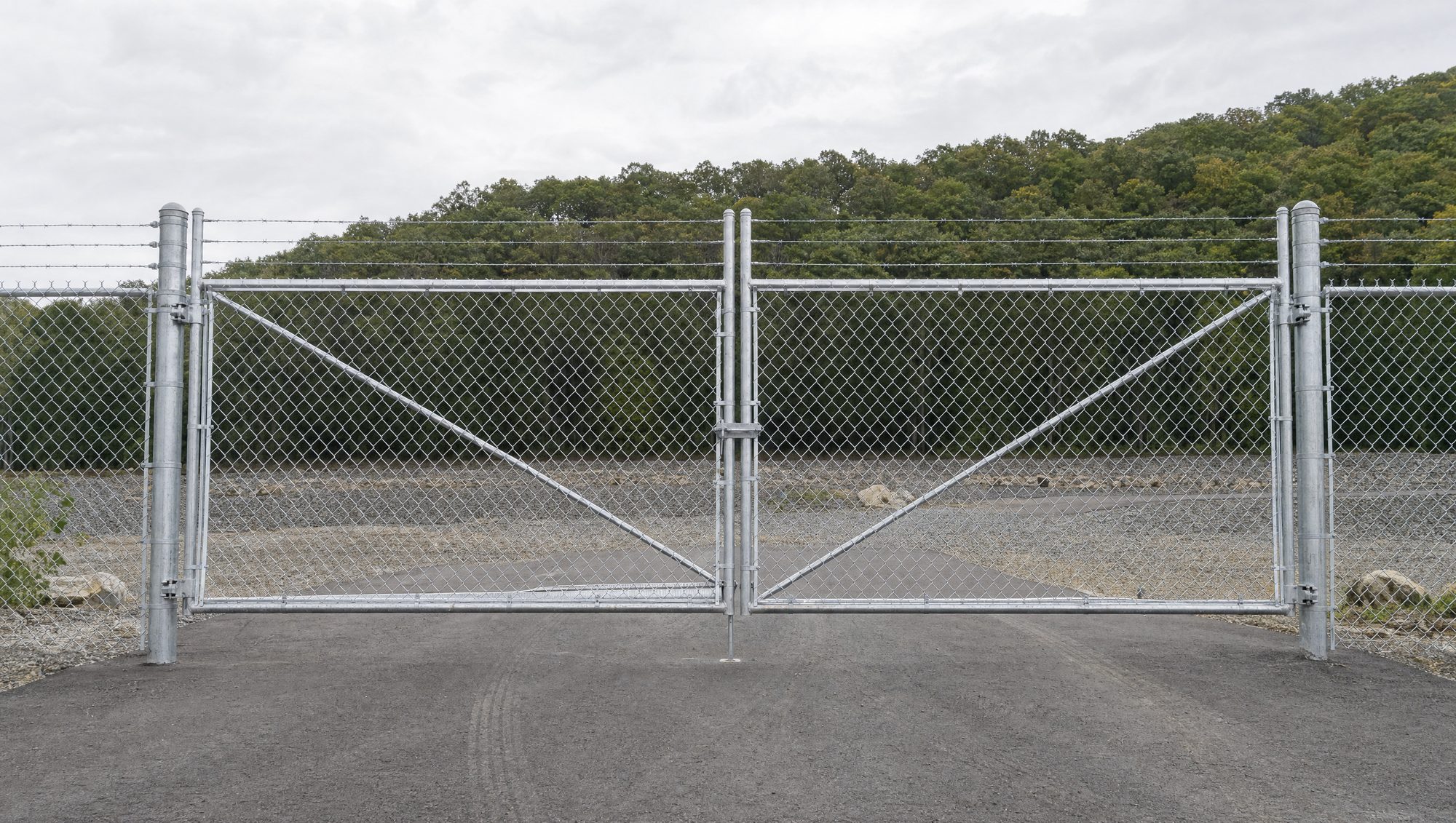
Nobody calls about industrial fencing in Southbury, CT because the fence looks tired. The call usually comes after something happened, or nearly did. A trailer got into the yard that had no business being there. An insurance walkthrough asked a question nobody could answer. The main gate started dragging in March and now two people have to lift it every morning. The awkward part is what comes next, because three proposals land on your desk, they use different words for the same parts, and the cheapest one is cheapest for reasons that are not written down anywhere. A perimeter is a barrier you deliberately cut holes in, and almost everything that decides whether it works, or quietly fails, lives at those holes and in the specification behind them. Height and price are the two easiest things to compare and the two least likely to tell you what you are buying. Here is what to look at instead, on a site that has to keep running while the work happens.
Key Takeaways
The specification is the product
Fabric gauge, mesh size, framing grade, coating, and foundations can each be quietly downgraded without changing the words "six-foot chain link" on a bid.
Gates carry the whole system
Vehicle gates, operators, safety devices, and access control fail first and cost most, so they get designed as one system or they get fixed every season.
A permit answer is not a zoning answer
Southbury reviews industrial sites property by property, so setbacks, site-plan conditions, wetlands, visibility, and gate equipment can all apply.
Continuity is part of the scope
Phasing, temporary security, traffic control, and who owns the open yard overnight belong in writing, not in a conversation on day one.
Compare complete scopes, not cost per foot
Foundations, automation, restoration, and closeout can outweigh the fence footage, so bids missing them are not cheaper, only shorter.
What an Industrial Fence Is Actually Being Asked to Do
A residential fence has one job and all day to do it. An industrial perimeter has several jobs at once, and they pull against each other. It has to define the property, deter the casual attempt, delay the determined one, keep pedestrians away from equipment routes, let trucks in on schedule, let the fire department in immediately, screen what should not be seen from the road, and survive a plow driver working a dark lot in February. Any one of those is easy. The design work is in the fact that a fence which does one perfectly can defeat another completely. A secure line that blocks a delivery route, buries a hydrant, or forces a snowplow to give up on a corner is not a success, it is a problem you now own.
That is why a perimeter fencing plan in Southbury starts with how the site operates rather than with a product. The chain link industry's commercial specification guidance exists because these decisions are componentized: fabric, framing, fittings, and gates are separate choices, and a fence is only as good as the weakest one.
Reading the Site Before You Read a Bid
The most useful hour on an industrial fence project happens before anyone quotes anything, and it is spent walking the property asking who moves through here, when, and in what. Vehicles and pedestrians want different things from a perimeter, and mixing them at a single opening is where both security and safety get thin. Sites change too, so the walk should account for the yard you will have in three years, not just the one out the window today. Below are the questions that tend to reshape a layout once someone actually asks them.
Who Moves Through, and What Are They Driving
Employees, tenants, visitors, deliveries, waste service, contractors, and emergency responders all cross the line, and they do not all deserve the same opening. A tractor trailer needs turning room and a gate that clears it; an employee on foot needs a portal that does not require walking down a truck lane to reach. OSHA's warehousing guidance treats pedestrian and vehicle separation as a safety issue, not a preference, and a fence layout is one of the tools that does the separating. Blind corners, gates that open into a queue, and crossings with no defined path are all designed in at this stage or not at all.
Warehouse Fencing Has to Match the Yard's Real Rhythm
Warehouse fencing in Southbury usually has to coordinate more than a boundary: trailer storage, loading docks, truck queues, employee parking, outdoor inventory, compactors and dumpsters, utility areas, and snow storage. Each of those is a reason a line moves or a gate widens. Snow is the one most often forgotten, because a yard that works in September can lose an entire gate swing to a plow pile in January. If the plan does not say where the snow goes, the plow driver will decide, and the gate will lose that argument.
Security Fencing That Earns What It Costs
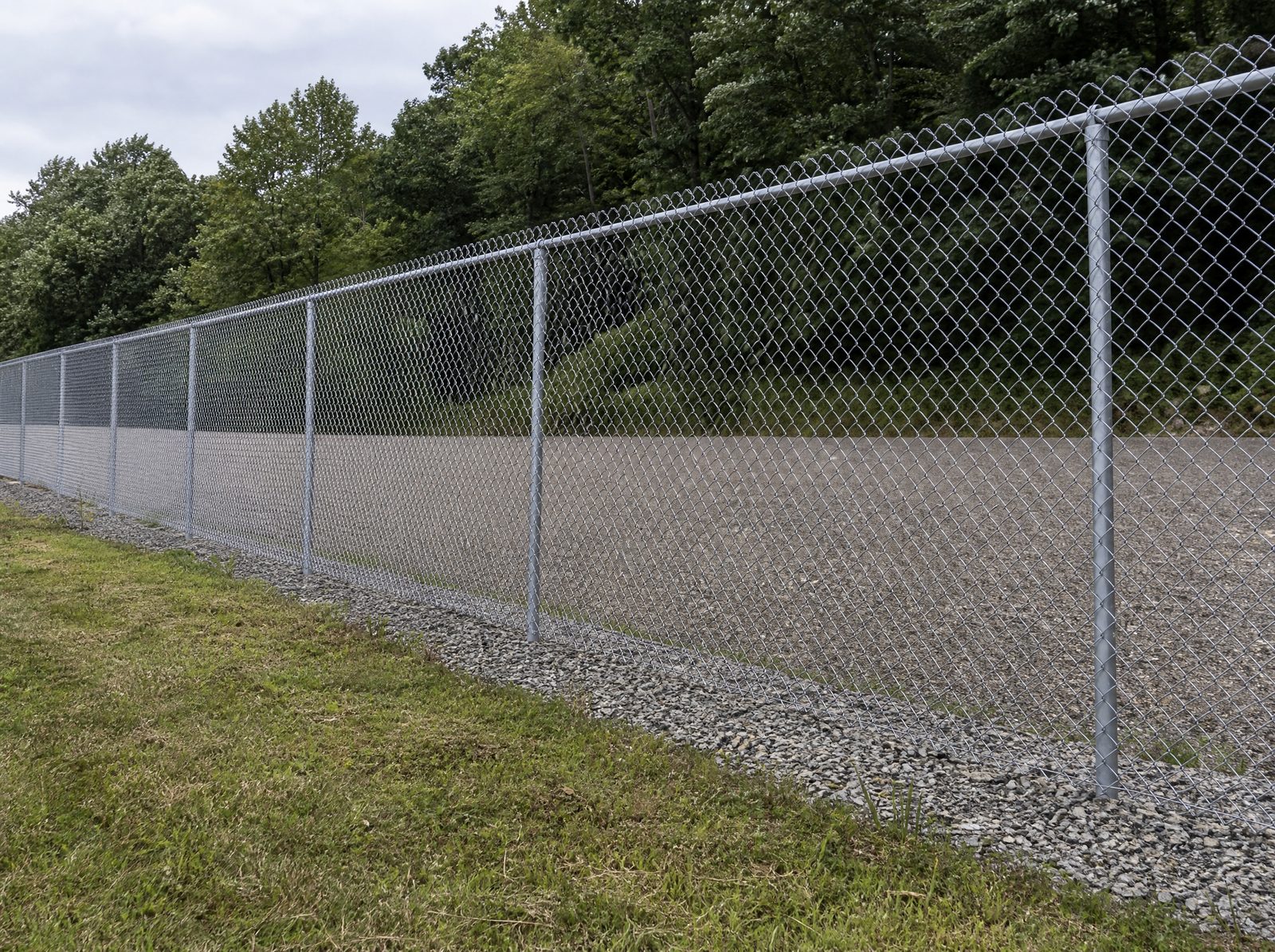
Security fencing in Southbury gets sold on height, which is roughly like buying a lock by weight. Height matters, but it is one variable among many, and a taller fence with light framing and a weak gate is theater. The useful frame is the one physical-security people use: deter, delay, detect, respond. A fence is very good at the first two, contributes to the third, and does nothing at all for the fourth. CISA's physical security resources treat the perimeter as one layer among lighting, cameras, procedures, and access control, and that is the honest way to price it.
So, the question is not "how secure is this fence," it is "what is this fence's job in the system." Deterrence, delay, visibility, privacy, and controlled access are different goals with different answers. Visibility is the one that surprises people: privacy slats screen a yard, and they also blind every camera and passing patrol you were counting on. If surveillance is part of the plan, a fence you can see through is a feature, not a compromise.
What "High Security" Actually Buys
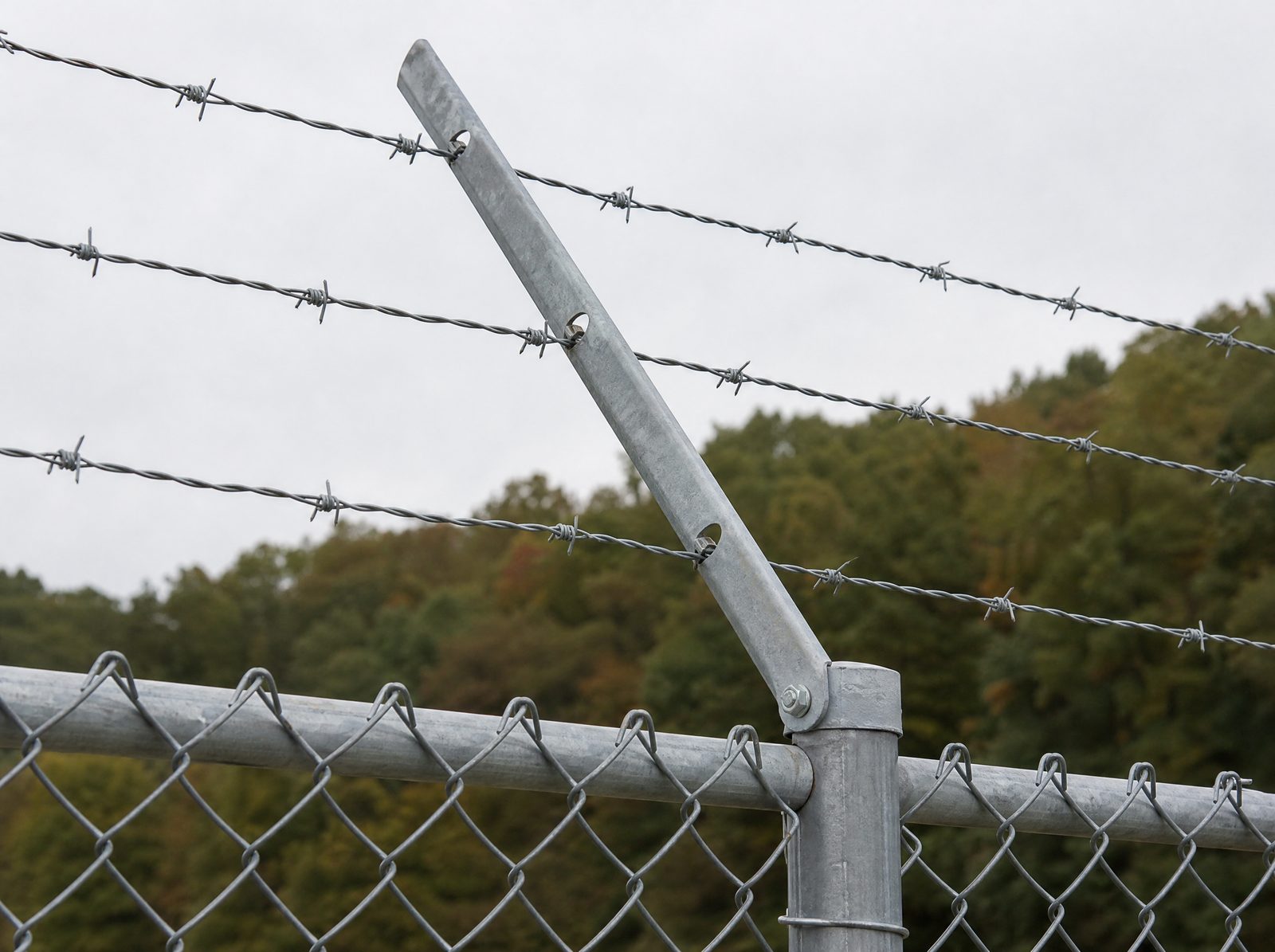
A high security fence in Southbury is a set of specific choices, not a label. Smaller mesh openings resist fingers and footholds. Heavier-gauge fabric resists cutting. Stronger posts and rails resist a vehicle and a ladder. Anti-climb welded-wire panels, expanded-metal systems, and palisade-style systems each attack climbing differently. Reinforced bottom details and anti-dig measures address the direction nobody watches, and tamper-resistant fasteners keep the fence from being disassembled with a socket set. Security toppings can be added where they are lawful for the site and use, which is a question for the town and your counsel, not a catalog. ASTM F1911 is the standard practice for the design and installation of chain-link security fencing, and it is a fair thing to ask a bidder whether they are following it.
Matching the System to the Property
Industrial chain link stays the workhorse for long perimeters, equipment yards, storage, and wide gates, because it gives visibility, airflow, and a range of grades at a sane cost per foot. Ornamental aluminum suits the public-facing edge, an office frontage or an entrance drive, where appearance is part of the job and aluminum's resistance to rust matters. Ornamental steel offers more mass and custom fabrication where impact is a real risk. Screening around dumpsters, mechanical equipment, and service corridors can use vinyl, wood board-on-board, slatted chain link, or composite panels. Plenty of good industrial sites end up hybrid on purpose: ornamental where the public sees it, chain link where the trucks work.
Gates Are Where the Perimeter Lives or Dies
If a fence is going to disappoint you, it will do it at a gate. Gates are the moving part, the used part, the automated part, and the part that has to work in weather, which is a lot of demand on one assembly. They are also where residential thinking gets substituted most often, because a gate can be hung on an undersized post and look completely correct until the first freeze-thaw cycle finds it. ASTM F900 covers industrial and commercial swing gates for exactly this reason. The gate types below all work; they fail differently, and that is what you are choosing between.
Pedestrian Gates and Portals
A walk gate carries the least weight and the most rules. Width, accessibility, panic hardware, self-closing operation, latch type, credential readers, and emergency egress all land here, and egress is the one that cannot be traded away. A portal that locks people in during a fire is a life-safety failure, no matter how good it is at keeping people out.
Swing, Cantilever, and Track Gates
A double swing gate is the common answer for service and vehicle access, and its enemies are wind, snow, grade, and sag across the leaf. It needs real posts, hinges rated to the load, a center stop, and drop rods. A cantilever slide gate earns its keep where there is no room to swing, but it needs a clear slide path, a counterbalance section, serious foundations, and rollers that stay maintained. A track gate is cheaper to support and pays for it every winter, because ground tracks collect snow, ice, gravel, and debris, and a track that does not drain is a track that jams.
Automation Is a System, Not an Accessory
The moment a gate gets an operator, you are no longer buying a fence. You are buying electrical work, an operator, access control, photo eyes, safety loops, edge sensors, an emergency release, battery backup, and a service relationship. Automated gates carry real crush and impact hazards, which is why UL 325 covers gate operators and ASTM F2200 covers gate construction for automated systems. Two questions separate a serious bid: what happens when the power, the network, or the operator fails, and how do emergency responders get in when it does. Electrical and access-control work may require appropriately licensed trades, and Connecticut is specific about which licenses cover which work. A proposal that automates a gate without naming who does the electrical is not finished.
The Southbury Approvals a Site Plan Does Not Excuse
Here is the assumption that costs industrial projects the most: someone hears that fences under a certain height often skip a building permit and concludes the project is unregulated. A building-permit answer settles one question. It does not settle zoning, and on a commercial or industrial parcel, zoning is usually the harder half. Southbury takes applications through its online permitting system and keeps separate resources for zoning, inland wetlands and watercourses, aquifer protection, and local ordinances. Worth knowing before you plan around old language: Southbury's zoning regulations are undergoing a full update, so verify current requirements for your specific parcel rather than relying on what applied to the last project.
The honest instruction is to confirm, property by property, whether zoning, building, wetlands, aquifer, site-plan, gate, lighting, access-control, or other approval applies. On an industrial parcel the live issues tend to be fence height, front and side placement, sight triangles at the driveway, truck and parking circulation, fire and emergency access, utility easements, drainage, security toppings, automated gate equipment, guard structures, and conditions attached to an existing approved site plan. A pool barrier, if the site has one, needs a permit regardless of height. None of that is exotic. It is just a list nobody reads until it stops a job.
The Boundary Is Not Where the Pavement Ends
Commercial parcels are layered with things that do not show up on a walk: utility easements, shared driveways, cross-access agreements, drainage easements, fire lanes, leased areas, and property-management boundaries. Curbs, pavement edges, retaining walls, and old fence lines are not legal boundaries and regularly sit somewhere other than the line. A current survey or civil site plan is the document that answers this, and on a leased site the lease may answer who is even allowed to authorize the work. Moving an industrial fence off an easement after the fact is not a repair, it is a second project.
Call Before You Dig, Then Locate What They Will Not
Connecticut's Call Before You Dig service must be contacted before excavation, and the state's program is the public half of the answer. The private half is where industrial sites get hurt, because public marking generally does not cover privately owned lines, and an industrial parcel is full of them: site and parking lot lighting, fire alarm lines, gate-operator power, communications and fiber, irrigation, private gas, fuel systems, generator feeds, drainage, sewer laterals, private water, security loops, and access-control conduit. OSHA's excavation rules address underground installations directly. The contract should say plainly who obtains public markings and who pays for private locating. If it does not, the answer at post-hole time is "you."
Keeping the Site Open While the Fence Goes In
Industrial fence installation in Southbury usually happens on a site that cannot close, which makes the work plan as important as the fence. Crews will be working around employees, tenants, customers, trucks, deliveries, and sometimes the public. OSHA requires high-visibility garments for workers exposed to public vehicular traffic, and trenching and excavation rules govern the holes themselves. A site-specific plan should cover work-zone barricades, temporary fencing, pedestrian detours, equipment routes, material staging, emergency access, daily cleanup, and how unfinished openings get secured.
That last one deserves its own conversation. When the old fence comes out, the yard is open, and it is open at night unless someone planned otherwise. Temporary security, a maintained active entrance, and a written statement of who is responsible for the perimeter after hours during the cutover are the difference between a phased project and an insurance claim. The phasing plan should also state which entrances stay open, work hours, delivery restrictions, parking impacts, weather contingencies, and the cutover timing for automated gates, because that is the day the site has neither the old system nor the new one.
Foundations, Frost, Ledge, and Everything Under the Yard
Southbury industrial sites bring the hard version of every soil problem: ledge, rocky glacial soil, slopes, retaining walls, pavement and concrete to sawcut and restore, drainage structures, wet ground, and heavy truck traffic over it all. Post and gate foundation design comes out of the whole picture: fence height, wind exposure, whether slats or solid panels are catching that wind, framing grade, gate width and weight, operator load, soil, frost, ledge, pavement, vehicle impact risk, and the manufacturer's or engineer's requirements. ASTM F1043 covers the strength and protective coatings of industrial fence framing, and it is the reference that makes "commercial grade" mean something specific.
Two things reliably get underbuilt. The first is the gate foundation, because wide vehicle gates and automated systems often need substantially more support than anything else on the property, and a gate footing sized like a line post footing will move. The second is privacy: adding slats to a chain link fence changes it from something wind passes through into something wind pushes on, and that surface area has to be answered by posts, rails, tension, and footings chosen for the slatted system, not slats added to a system chosen without them. Retrofitting slats onto an existing fence "for screening" is how a straight line becomes a leaning one.
What Actually Drives Industrial Fence Cost in Southbury
There is no honest one-price-fits-all number for industrial fencing, and anyone who gives you one over the phone has not asked enough questions to be right. Published cost-per-foot guides like Angi's fence cost breakdown and HomeAdvisor's fencing figures are general consumer context; they do not reflect commercial specifications, vehicle gates, automation, or the cost of working around an operating business. Treat them as background, not as a quote.
What moves an industrial number is rarely the fence fabric. It is footage and height, yes, but then it is the grade of the system, the mesh and gauge and anti-climb detailing, the framing size and coating, the gates and their foundations, automation and access control, safety devices, ledge and rock, pavement restoration, removal and disposal, temporary security, traffic control, permits and professional design, and the testing and closeout at the end. This is also why two bids can differ by a third and both be honest. They are not the same scope.
Hover or tap a row to highlight it.
| Cost Driver | Why It Moves the Number |
|---|---|
| Linear footage and height | Sets the baseline material and labor, though it is rarely the biggest line on an industrial job. |
| System grade and coating | Fabric gauge, mesh size, framing dimensions, and protective coating are the difference between commercial and residential parts. |
| Gates and foundations | Vehicle gates, cantilever systems, and their footings often cost more than long stretches of the fence line. |
| Automation and access control | Operators, power, photo eyes, safety loops, edge sensors, credentials, and licensed trades come as a package. |
| Site conditions | Ledge, rock, slopes, wet ground, pavement sawcutting, and restoration add hours that a clean lot never sees. |
| Continuity requirements | Temporary security, phasing, traffic control, and off-hours work protect operations and are real cost. |
How an Industrial Fence Installation Comes Together
An industrial fence installation in Southbury runs in an order, and the order is most of the quality. Knowing it lets you tell whether a bidder is describing a process or improvising one, and it tells you where your own approvals and decisions sit on the timeline. The sequence below compresses the full arc, from defining what the perimeter is for through the closeout documents that let the next facility manager maintain it.
The Industrial Fence Installation Process in Southbury
- 1
Step 1: Define Security and Operations
We identify assets, risks, users, hours, deliveries, emergency access, and screening needs before any product is discussed.
- 2
Step 2: Review Documents and Confirm Requirements
Surveys, site plans, easements, and leases get read, and Southbury zoning, building, wetlands, drainage, and site-plan conditions get verified for the parcel.
- 3
Step 3: Select the System and Write the Specification
Material, height, grade, coating, security features, gates, and screening are documented with ASTM references, foundations, hardware, and warranties.
- 4
Step 4: Coordinate Access Control and Plan Phasing
Operators, power, safety devices, credentials, and licensed trades are defined alongside temporary security, traffic control, and which entrances stay open.
- 5
Step 5: Mark Utilities, Remove, and Prepare
Public marking and private locating are completed, approved fencing comes out, the route is cleared, and foundations are prepared.
- 6
Step 6: Install, Test, Restore, and Turn Over
Posts and framing, then fabric or panels, then gates and controls tested and commissioned, then restoration, then keys, codes, manuals, warranties, and maintenance instructions.
Turnover is the step most often skipped, and it is the one you will want in two years, because operator manuals, test records, and a maintenance schedule are what let the site keep the system working after the crew leaves.
What Separates an Industrial Fence Contractor Worth Hiring
Connecticut requires home improvement contractors to register with the Department of Consumer Protection, and the state is direct that the work needs a written contract and a registered contractor. You can verify any contractor's registration yourself through the state's license verification portal, and on a project this size you should. My Fence Guy is family-owned, works out of a local office right here in Southbury, and is licensed and insured. Registration is the floor, though, not the reason to hire anyone. For an industrial fence contractor in Southbury the real signals are whether they will put the specification in writing without being pushed, whether they have run gates and access control before rather than only fence lines, and whether they can explain how ledge, phasing, and the electrical trade get handled before those become surprises.
The proposal is where this becomes visible. A bid that names materials and a price is not comparable to anything. A complete industrial fence proposal should specify:
- Drawings or layout: The actual run, gate locations, and dimensions, not a description.
- Material and grade: Fabric gauge, mesh size, framing dimensions, coating, manufacturer, and style.
- ASTM references: The standards the framing, gates, and installation practice are being held to.
- Posts and foundations: Post sizes and footing details, including the gate posts specifically.
- Gates, operators, and safety devices: Types, widths, hardware, automation, photo eyes, loops, and edge sensors.
- Access control and electrical coordination: Credentials, wiring, and which licensed trade does what.
- Removal, temporary security, and restoration: What comes out, who secures the gap, and what gets repaired.
- Permits and utility locating: Who applies, who files the 811 request, and who pays for private locating.
- Phasing, schedule, and payments: Work hours, entrance impacts, milestones, and a payment schedule.
- Warranties, closeout, and change orders: Workmanship and manufacturer terms, turnover documents, and how surprises like ledge get priced.
Frequently Asked Questions About industrial fencing southbury ct
Q: What makes a fence industrial-grade?
A: Industrial-grade fencing generally uses heavier fabric or panels, stronger framing, reinforced gates, more substantial foundations, and specifications suited to higher traffic and security demands. The label means nothing on its own; the gauge, mesh, framing dimensions, coating, and footing details in the written specification are what make it real.
Q: Does industrial fencing require a permit in Southbury?
A: Do not assume an industrial fence is permit-free. Southbury reviews projects property by property, and zoning, site-plan conditions, wetlands, aquifer protection, visibility, access, and gate or lighting equipment can all apply even where a building permit may not. Southbury's zoning regulations are being comprehensively updated, so confirm current requirements for your specific parcel with the town before ordering anything.
Q: What is high-security fencing?
A: High-security fencing combines anti-climb design, stronger framing, smaller mesh, controlled gates, limited openings, surveillance compatibility, and site-specific measures intended to deter and delay intrusion. It works as one layer alongside lighting, cameras, procedures, and response, not as a standalone answer.
Q: Can industrial gates be automated?
A: Yes, but the gate, operator, access control, safety devices, power, emergency release, and maintenance plan should be designed, installed, and commissioned as one system. UL 325 covers gate operators and ASTM F2200 covers gate construction for automated systems, and the plan should answer what happens when power, the network, or the operator fails.
Q: What is ASTM F1911?
A: ASTM F1911 is the standard practice for the design and installation of chain-link security fencing. ASTM F1043 covers industrial fence framing strength and coatings, and ASTM F900 covers industrial and commercial swing gates.
Q: Is chain link suitable for warehouse fencing?
A: Yes. Industrial chain link works well for warehouses, trailer yards, outdoor storage, loading areas, and controlled service zones when the fabric, framing, gates, and foundations match the security and traffic the site actually sees. Where appearance matters at a public-facing edge, many sites run ornamental there and chain link everywhere else.
Q: Who handles utility marking before industrial fence installation?
A: Public utilities should be marked through Connecticut's Call Before You Dig process before any excavation. Privately owned lines on an industrial site, including gate-operator power, site lighting, fire alarm, fiber, irrigation, and fuel or generator feeds, are generally not covered by public marking and may require separate private locating. The contract should state who is responsible for each.
Q: Can the work be phased around an operating business?
A: Usually, yes. A phased plan can maintain an active entrance, stage deliveries, use temporary fencing, and time the automated gate cutover to the least disruptive window. What matters is that the plan states which entrances stay open, the work hours, and who is responsible for perimeter security overnight while the old fence is down.
Test Your Industrial Fencing Knowledge
1. On an industrial site, which part of the perimeter usually fails first?
2. Does a building-permit answer settle whether you can install an industrial fence in Southbury?
3. What do privacy slats do to a chain link fence besides screen it?
4. Who marks privately owned lines like gate-operator power and site lighting?
5. What does ASTM F1043 cover?
Pick an answer to begin.
Final Thoughts
Industrial fencing comes down to a handful of decisions made in a sensible order. Define what the perimeter is actually for, read the site the way the trucks and the plow read it, specify the system in writing with real standards attached, treat every gate as a system rather than a hole, verify what Southbury requires for your particular parcel, and plan how the place keeps operating while the work happens. Get those right and the material choice and the price stop being a guess. Get them wrong and you will meet all of them again, one at a time, usually in February.
A perimeter built to the right specification mostly disappears into the background, which is the entire point. It contains what it should, opens when it should, passes an insurance walkthrough without drama, and does not become a standing line item on someone's Monday list. That is a fair return for the planning it takes to get there.
If you are planning industrial fencing in Southbury, we would be glad to walk the property and tell you exactly what we would put in the ground and why. My Fence Guy is a family-owned contractor with a local office right here in Southbury, CT, and we install industrial and commercial fencing in chain link, aluminum, ornamental steel, vinyl, and wood, along with security and privacy systems, estate gates, railings, and the access control that goes with them, for warehouses, yards, utility sites, and facilities across Southbury and the surrounding towns. We are open 24 hours, we are licensed and insured, and estimates are free. Call us at (203) 746-1100 for a free estimate, or reach out through our contact page.
Industrial Fencing Key Terms
Tap a term to see what it means.
Perimeter Fencing. The fence line defining a site's boundary, planned around security, traffic, deliveries, emergency access, and screening rather than appearance alone.
More about fences
Pet Fencing in Southbury, CT: What Actually Holds a Dog
A pet fence keeps your dog in and other animals out. Pet fencing in Southbury, CT: height, dig defense, picket spacing, and a gate a dog cannot nose open.
Read the guide to Pet Fencing in Southbury, CTChain Link Fencing in Southbury, CT: What to Ask For
The fabric is not what fails. Chain link fencing in Southbury, CT lives or dies on line post spacing, terminal bracing, and how the posts were set.
Read the guide to Chain Link Fencing in Southbury, CTIndustrial Fencing in Sherman, CT: A Facility Manager's Guide
Industrial fencing in Sherman, CT is a system, not a barrier. What facility managers should know about security grade, gates, permits, and uptime.
Read the guide to Industrial Fencing in Sherman, CT