
Pet Fencing in Southbury, CT: What Actually Holds a Dog
By Tony Pellicone21 min readPublished
- pet fencing
- southbury ct
- chain link fencing
- connecticut
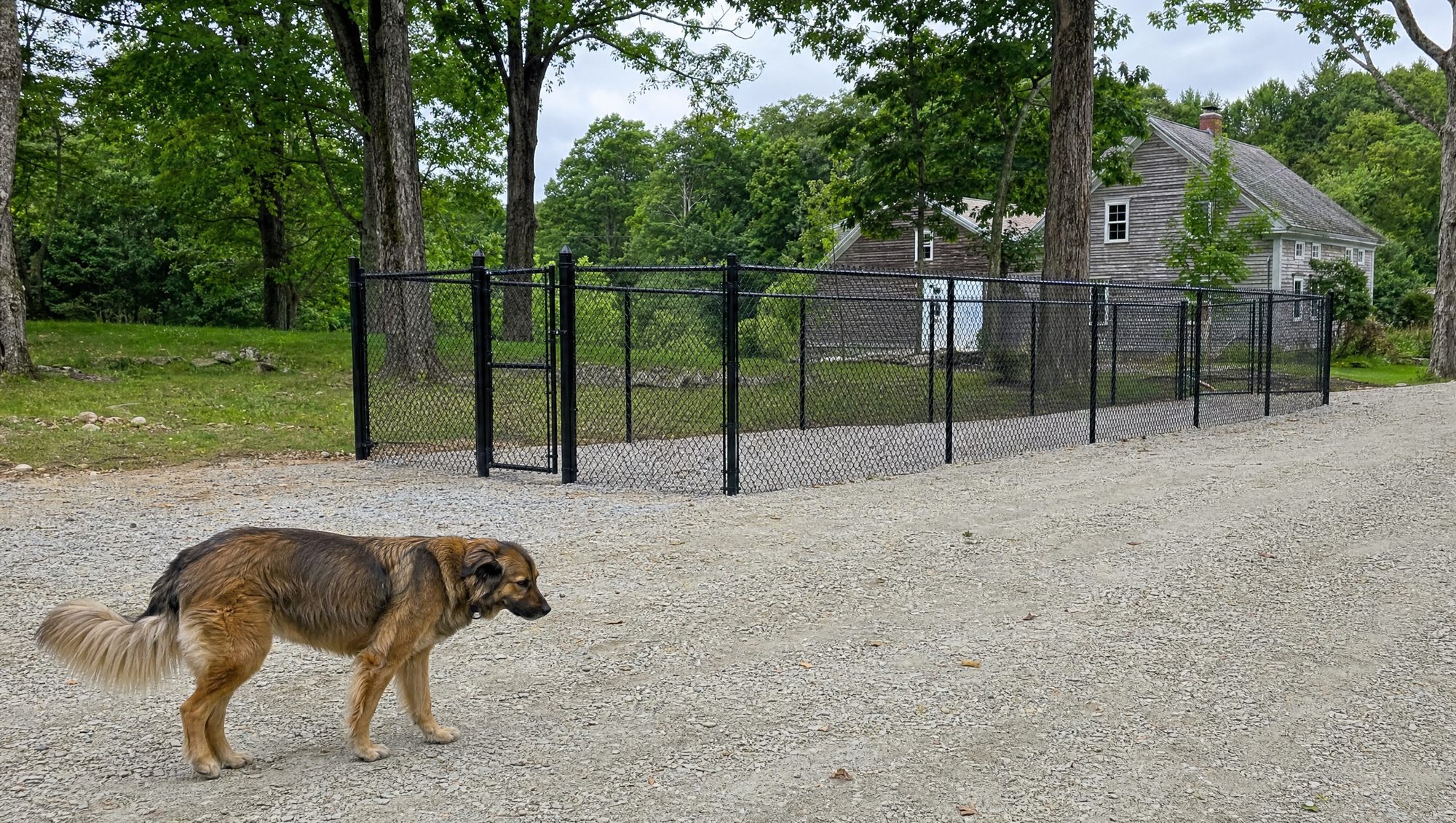
You can pick a fence you love and still watch your dog leave the yard in under a minute. That part rarely comes up while you are deciding between wood and vinyl. Pet fencing in Southbury, CT has less to do with the sample board than with the animal that tests the line every single day, usually at the one spot nobody thought about. A beagle works its nose under a bottom rail. A shepherd goes up and over using the woodpile. A terrier slips between pickets that looked plenty tight from the deck. The fence a homeowner pictures and the fence a dog actually tests are often not the same fence, and the worst way to find the weak point is to find it the day your dog finds it first, out near the road. Dogs are fairly predictable, though, if you watch yours honestly. Here is how a fence really fails, and what changes when you design around your own animal instead of a product line.
Key Takeaways
The animal decides, not the catalog
Size, athleticism, digging, climbing, and escape history should drive height, spacing, and materials before appearance enters the conversation.
The bottom edge fails most often
Slopes, erosion, roots, and a determined digger open gaps under a fence that looked finished on install day.
Gates are the weakest link
Latch quality, hinge and bottom gaps, sag, and a self-closing plan matter more than the panels beside them.
Invisible fencing solves a different problem
It does not keep other animals or people out, and it depends on training, a collar, and a working circuit.
Southbury reviews fences property by property
The town takes building and zoning applications online, a pool barrier needs a permit regardless of height, and current requirements are worth confirming before ordering.
How Does a Dog Actually Get Out of a Fenced Yard?
There are only four ways out, and every one is a design decision you either made on purpose or made by accident. A dog goes over the top, under the bottom, through a gap, or out an opening left unlatched. Watching which one your dog reaches for first tells you more than any brochure will. The American Kennel Club's guidance on dog-proofing a fence puts it another way: design around the most determined behavior your dog shows, not the average one.
Over the Top
Jumping and climbing look similar from the kitchen window and are not the same problem. A jumper needs height and a clear approach, so the fix is usually taller fencing plus removing the launch pad. Climbers do not care much about height at all. They care about footholds, so chain-link mesh, horizontal rails, decorative rings, and a nearby tree or shed can turn a tall fence into a ladder. Smooth surfaces, smaller mesh, and fewer horizontal members do more for a climber than another foot of height. Snow counts too, since a plowed bank against the fence line quietly shortens the fence every winter.
Under the Bottom
This is the one everybody forgets while arguing about height. A gap under a fence can start from the slope, from erosion after heavy rain, from roots or rock that forced a stepped panel, from settlement, or simply from a dog that likes to dig. It also tends to grow. A three-inch gap nobody notices in May becomes an exit in August. Bottom-gap control is not a product, it is a decision made at every grade change, and it is where a pet fence quietly earns or loses its money.
Through the Middle and Out the Gate
Small dogs do not need a hole, they need a slot. Picket spacing that reads as tight from twenty feet can pass a determined ten-pound dog, which is why puppy-picket sections and smaller mesh exist. Gates fail differently. A gate that sags, drops its latch out of alignment, or leaves a wide gap on the hinge side is an escape route that gets used every time someone takes the trash out. Most containment failures are not exotic. They are a gap, a latch, and a dog with time on its hands.
Does Your Dog's Size and Temperament Change the Fence?
Two dogs of the same weight can need two different fences, which is why a fence for dogs Southbury homeowners actually rely on starts with a conversation about the animal. Size sets the baseline for height and spacing, but temperament sets nearly everything else. Prey drive turns a passing deer into a reason to climb, anxiety can produce a digger, and boredom produces a chewer. How much time your dog spends outside unsupervised may matter more than any of it, because a supervised dog rarely gets to finish an escape and an unsupervised one has all afternoon.
Puppies Are Not Small Adults
A puppy fits through openings an adult never will, then grows into a completely different set of skills. Building only for the dog in front of you today often means adjusting the fence in two years. It is usually cheaper to plan the lower spacing for the puppy and the height for the adult it is becoming, especially with a breed known to jump or climb. Age cuts the other way too, since an older dog with stiff hips may need gentler grade transitions and a gate that swings easily.
Reactive Dogs Need Sight Lines Managed
Some dogs are calm until they see something. Pedestrians, delivery trucks, wildlife, and the neighbor's dog can all set off a run at the fence line, and an open style keeps the trigger in view all day. Solid or partially screened fencing can lower the temperature by removing the picture, which is why reactive dogs often do better with reduced visual triggers. Screening changes the engineering, though: a solid panel catches wind, so posts, rails, and footings all carry more load than an open line would.
Which Dog Fence Materials Work on a Southbury Property?
Once you know how your dog operates, the material conversation gets much shorter. No system is automatically the right dog fence Southbury answer, because each one trades privacy, climbability, spacing, and durability differently. Here is how the common choices behave with an animal pushing on them, rather than how they photograph.
Chain Link and Welded Wire
Chain link is durable, visible, adaptable to slope, and it accepts bottom tension wire and anti-dig details readily, which makes it a workhorse for full yards and dog runs. The catch is that standard mesh is climbable for a dog that wants to climb, larger openings may not suit a very small dog, and privacy slats add wind load. Welded wire or farm-style fencing fits larger rural enclosures and pairs with wood posts. On both, mesh opening, gauge, top and bottom support, and finished cut ends decide whether it is pet-safe or just fencing.
Vinyl and Wood Privacy
Solid vinyl blocks the visual triggers a reactive dog reacts to, and its smooth face gives a climber very little, though solid panels carry serious wind load and impact can crack components. Wood lets you set the height you want and control board spacing, and it follows irregular ground better than most systems, but it gives a chewer something to work on and boards can warp enough to open a gap that was not there at install. On either one, the gap beneath the panel and the gate alignment matter more than the panel itself.
Aluminum and Ornamental
Aluminum and ornamental styles look open and rack nicely to follow grade, which suits front yards, gardens, and pool areas. Picket spacing, lower gaps, and climbability are the questions to ask, since the open style that makes them attractive is also what a small dog squeezes through and a reactive dog watches the street through. Small dogs often need a puppy-picket section along the lower run.
Can an Invisible Fence Do the Same Job?
It is a fair question and it deserves a straight answer rather than a sales pitch in either direction. An electronic containment system can suit some properties and some dogs, but it is not a barrier, and it is honest to say so. It relies on training, a collar, a battery, and a circuit that is actually working, and none of those are visible from your kitchen window. A strongly motivated dog can decide the correction is worth it and cross anyway, and a dog that crosses is often reluctant to cross back, which leaves it on the wrong side.
The bigger gap is what an electronic system does not do at all. It does not keep a loose dog, a coyote, or a stranger out of your yard, and it gives your dog no visible boundary anyone else can see. The American Veterinary Medical Association's overview of electronic fences is worth reading before you decide. A physical fence blocks travel in both directions and can be inspected by eye. Choosing between them gets easier once you stop treating them as interchangeable.
Why Do Gates Fail Before the Fence Does?
A gate is the only part of the enclosure that moves, gets used daily, and depends on hardware, so it fails first. The details that matter are the gap beneath it, the gaps at the hinge and latch sides, latch height and quality, sag resistance, swing direction, and whether anything closes it when a person forgets. Self-closing hinges and self-latching hardware take human memory out of the equation, and a secondary clip adds a layer for a dog that has learned to work a latch.
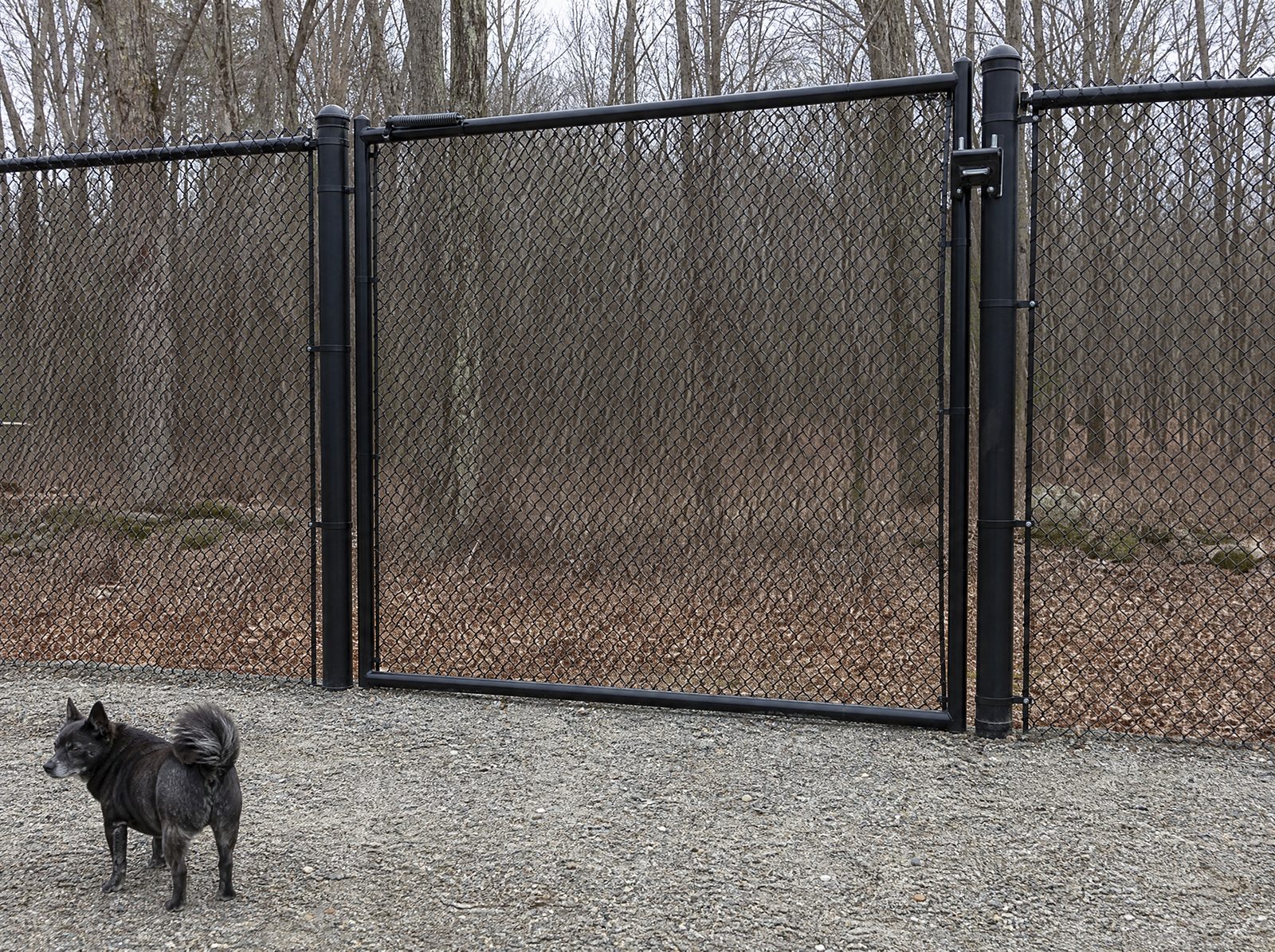
For an escape-prone dog, a busy household, or a run near a road, a double-gate vestibule creates a second containment zone so the dog never faces an open path when someone walks in. Gate width deserves thought too, because a gate wide enough for a mower is also wide enough to sag if it is hung on an undersized post. Match the gate height to the containment height. A six-foot fence with a four-foot gate is a four-foot fence.
What Stops a Digger in Rocky Southbury Soil?
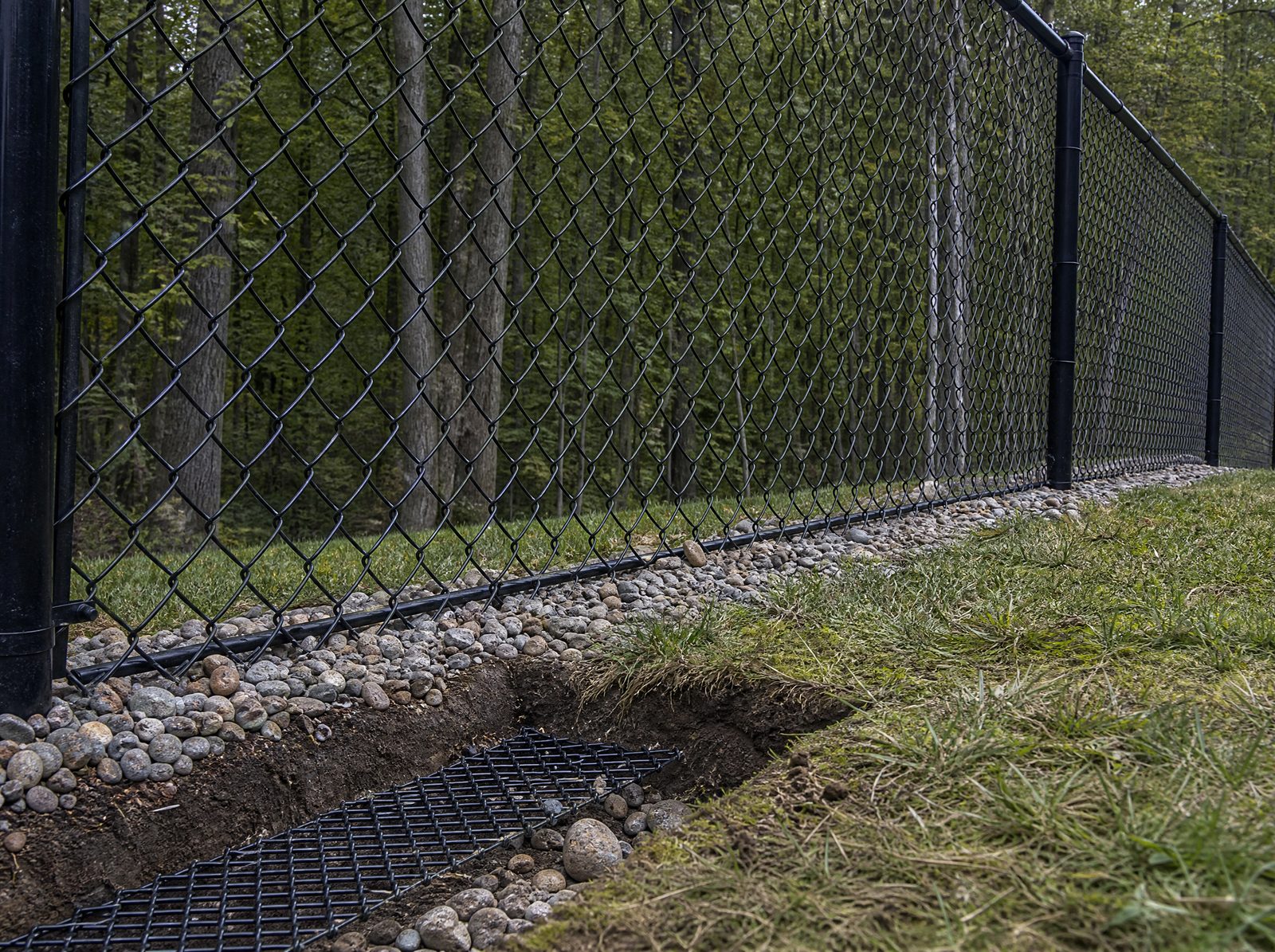
A dig-resistant fence Southbury owners can trust is a set of choices matched to soil and behavior, not one universal trick. Buried vertical mesh extends the barrier below grade and works where the soil actually allows excavation, which is not every lot around here. A horizontal apron of mesh laid inward at or just below grade often works better on ledge and rock, because the dog meets the barrier while digging at the fence line and it needs no deep trench. Bottom tension wire helps chain link resist lift, but it will not stop a committed digger by itself.
A compacted gravel or stone strip along the line can discourage some diggers and makes maintenance easier. A concrete curb may fit a kennel or a controlled run, though drainage, frost, and cost all get weighed first. Dense plantings, raised beds, and interior barriers can keep a dog from reaching the fence line at all, as long as everything you plant is pet-safe. Whatever you choose has to preserve drainage and leave no sharp edges, and any of it that involves digging means the utility question comes first.
Is a Dog Run Better Than Fencing the Whole Yard?
Sometimes, and the honest answer depends on the property. A dog run fence Southbury homeowners install usually makes sense when the full perimeter is impractical, when the terrain is difficult, when only part of the yard drains well, or when dogs need a dedicated space near the house. The ASPCA's guidance on building a dog run covers the planning factors worth settling first: size for the number and size of dogs, shade, water, shelter, drainage, surface, cleaning access, and how the run connects to the house.
Surface is where runs most often go wrong. Grass, compacted stone, pea gravel, pet-rated artificial turf, and concrete in kennel settings all behave differently in mud, snow, and heat, and drainage decides whether the run stays usable in a wet spring. Add a gate you can get a wheelbarrow through, plan where the snow will go, and remember that a run is a containment tool, not a substitute for exercise or company.
What Do Southbury's Wooded and Rocky Lots Change?
Plenty of Southbury properties come with glacial soil, ledge near the surface, roots, slope, wet ground, drainage swales, old stone walls, and wooded boundaries with narrow access. All of it lands on the bottom edge and the posts. On a slope, panels either rack to follow the grade or step down in level sections, and stepping creates a triangular gap at every transition that a small dog treats as a door. That is normal and fixable, but only if somebody plans for it before the panels arrive.
Post depth and footing size are not one number. They follow fence height, material, panel style, wind load from any screening, gate width, soil, ledge, drainage, frost conditions, and the manufacturer's requirements, which is why Connecticut's residential code chapter on foundations frames frost protection the way it does. Gate posts, corners, and terminal posts carry more than line posts and get sized accordingly. Ledge sometimes forces a shifted layout or a different method, and that belongs in the estimate as a real site condition rather than hidden inside a vague number.
Does Southbury Require a Permit for Pet Fencing?
Do not assume a pet fence is automatically permit-free. Southbury accepts building and zoning applications through its online permitting system and reviews fences property by property, so the answer depends on your lot and your design rather than on a blanket rule. The town's zoning resources are the place to start, and the zoning regulations are in the middle of a full update, which is a good reason to confirm current requirements with the town instead of relying on older language you found online. Height, yard placement, road and driveway sight lines, easements, inland wetlands and watercourses, aquifer protection areas, grade changes, a covered dog-run structure, historic district visibility, and private association rules can all trigger review. One rule is not property specific: a fence serving as a swimming pool barrier requires a permit regardless of height, and the whole barrier system gets reviewed, including gate direction, self-closing operation, self-latching hardware, and opening sizes.
An Old Stone Wall Is Not a Property Line
Old fences, hedges, tree lines, stone walls, and mowing edges are not the legal boundary, and a pet fence set in the wrong place is expensive to move and awkward with a neighbor. A survey earns its cost when markers are missing, when the fence will sit close to the line, when the lot is irregular, when a shared driveway or easement is in play, when a wetland is nearby, or when a neighbor has already questioned the route. A fence contractor can lay out the run, and a licensed surveyor establishes the line. Recorded plans often live with the town clerk.
Call 811 Before Any Digging
Setting posts, burying mesh, and trenching an apron all mean excavation, so Connecticut's Call Before You Dig service has to be contacted first. It is free and it is required. Public marking does not cover everything, though. Septic and well lines, irrigation, propane, drainage, low-voltage lighting, pool equipment lines, and existing invisible pet-fence wire are often privately owned and may need a separate private locate. The contract should say plainly who files the 811 request and who handles private lines.
What Drives the Cost of Pet Fencing in Southbury?
There is no one-price-fits-all figure for pet fencing, and anyone quoting one over the phone has not seen your yard or met your dog. National cost guides like Angi's fence installation breakdown work as general market context and nothing more, because the pet-specific work is exactly what a broad average leaves out. Linear footage, height, material, and mesh or picket spacing set the baseline. Then the dog adds line items: anti-dig work, bottom-gap corrections, puppy-picket or custom-height sections, privacy screening for a reactive dog, and better gate hardware.
Site conditions do the rest. Slopes, ledge and rock, roots and clearing, restricted access, existing-fence removal, and any survey or permit work all move the number, and a dog run brings its own surface and drainage costs. When you compare bids, make sure each one handles the anti-dig detail, the gates, and the old fence the same way, or you are not comparing the same job.
Hover or tap a row to highlight it.
| Cost Driver | Why It Matters |
|---|---|
| Linear footage and height | More posts, panels, and labor on longer runs, and taller containment uses more of everything. |
| Material and spacing | Chain link, vinyl, wood, aluminum, and welded wire price differently, and tighter picket or mesh spacing costs more. |
| Dig-resistant work | Buried mesh, an apron, tension wire, or a gravel border is added labor and material below the fence. |
| Gates and hardware | Walk gates, double-gate vestibules, and self-closing hardware each need their own posts, footings, and parts. |
| Terrain and access | Slopes, ledge, rock, roots, wet ground, and a long carry from the truck all add hours. |
| Old-fence removal | Pulling posts and concrete and hauling debris is its own line item. |
How Does Pet Fence Installation in Southbury Come Together?
A pet fence installation Southbury homeowners can count on runs in a predictable order, and knowing the order helps you spot a crew that is skipping steps. It starts with the dog, not the tape measure. Size, jumping, climbing, digging, chewing, reactivity, and escape history get evaluated before anyone decides whether the answer is a full yard, a partial yard, or a run. From there the property gets reviewed for boundaries, slope, ledge, roots, drainage, roads, and gate locations, and local requirements get confirmed with the town.
Only then does material and height selection make sense, followed by the pet-specific details: bottom-gap plan, anti-dig method, gate latches, puppy pickets, and any screening. The written scope documents all of it. A Call Before You Dig request goes in and private lines get identified, posts and framing are set for the material, gates, soil, and frost, panels or fabric go up with gaps controlled at slopes, corners, and transitions, and gates get hung and adjusted for latch operation, bottom clearance, and hinge gaps. The last step matters most and gets skipped most: walking the entire perimeter from the dog's point of view and fixing the escape points before the dog is ever let out.
The Southbury Pet Fence Installation Process
- 1
Step 1: Evaluate the Dog
We talk through size, jumping, climbing, digging, chewing, reactivity, and any escape history before anything is measured.
- 2
Step 2: Review the Property and the Rules
We walk the boundaries, slope, ledge, roots, and drainage, then confirm what Southbury requires for your lot and design.
- 3
Step 3: Design the Enclosure
Full yard, partial yard, or dog run, with material, height, spacing, gates, and any screening chosen around the dog.
- 4
Step 4: Written Scope and Utility Marking
The scope documents materials, gates, anti-dig work, and responsibility, and a Call Before You Dig request goes in.
- 5
Step 5: Posts, Panels, and Bottom-Gap Control
Posts are set for the soil, frost, and gate loads, then panels or fabric go up with the gaps controlled at every transition.
- 6
Step 6: Gates, Dig Barrier, and the Dog's-Eye Walkthrough
Latches and clearances get adjusted, the dig barrier goes in, and we walk the full perimeter looking for escape points before your dog uses it.
What Should You Ask a Pet Fence Contractor in Southbury?
Connecticut requires home improvement contractors, fence installers included, to register with the Department of Consumer Protection and to work under a written contract, so registration and insurance are the floor, not a selling point. Checking any contractor's standing takes a minute on the state's license verification page, and it is worth doing before you sign anything. My Fence Guy is a family-owned contractor with an office right here in Southbury, licensed and insured, and estimates are free. Past the paperwork, the real test is whether the person walking your yard asks about your dog at all.
What the Written Estimate Should Spell Out
A pet fence contractor Southbury residents should hire puts the pet-specific work in writing rather than leaving it to the crew on install day. At a minimum, the scope should cover:
- Fence route and height: The measured run and the finished containment height, gates included.
- Material and spacing: Manufacturer, style, and the actual picket or mesh spacing, not just "chain link."
- Bottom-gap plan and anti-dig details: How gaps at slopes, steps, and corners get handled, which dig method is used, where it runs, and how deep.
- Gates and hardware: Widths, post sizes, hinges, latches, self-closing function, and any double-gate entry.
- Site conditions and removal: How ledge, roots, drainage, and access get priced, and who hauls the old fence.
- Permits and utilities: Who confirms town requirements and who files the 811 request.
- Schedule, payments, and warranty: Timeline, change orders, and workmanship and manufacturer terms in writing.
How Often Should You Walk the Fence Line?
A pet fence is not a set-and-forget purchase, because the yard keeps moving. Walk the line after storms, after yard or utility work, after snow removal, and after any gate repair, looking for fresh digging, erosion, loose boards, broken wire, leaning posts, gate sag, latch failure, chewing damage, snowbanks against the fence, and holes made by wildlife. Watch for anything climbable that has migrated close to the line, since a firewood stack or a new planter is a ladder your dog did not have last month. Ten minutes a few times a year catches nearly all of it while it is still small.
Frequently Asked Questions About pet fencing southbury ct
Q: What type of fence is best for dogs?
A: There is no single best answer. Chain link, vinyl, wood, aluminum, ornamental, and welded wire can all work when the design is built around your dog's size, jumping, climbing, digging, chewing, and reactivity, plus the terrain on your lot.
Q: How tall should a dog fence be?
A: There is no universal height, and any height promised as escape-proof for every dog is a guess. Athletic jumpers may need taller fencing, climbers often need smooth, foothold-free surfaces more than added height, and small dogs need tighter lower spacing more than either.
Q: How do I stop my dog from digging under the fence?
A: Options include buried mesh, a horizontal apron, bottom tension wire, added lower rails, a gravel border, grading corrections, or a curb in specialized settings. The right one depends on soil, ledge, drainage, buried utilities, and how your dog digs.
Q: Can an invisible fence replace a physical fence?
A: It solves a different problem. Electronic containment does not keep other animals or people out, it depends on training, a collar, and a working system, and a highly motivated dog may cross anyway. A physical barrier blocks travel in both directions and can be inspected by eye.
Q: Does pet fencing require a permit in Southbury?
A: Southbury accepts building and zoning applications online and reviews fences property by property, so it depends on your lot and design. A pool barrier requires a permit regardless of height, and since the zoning regulations are being updated, confirm current requirements with the town before ordering.
Q: What picket spacing is safe for a small dog?
A: Small dogs need tighter spacing than a standard picket line usually provides, which is why puppy-picket sections and smaller mesh exist. The lower portion of the fence is where it matters most, along with the gaps at gates and at stepped panels on a slope.
Q: Can pet fencing follow a sloped or rocky Southbury lot?
A: Yes. Panels either rack to follow the grade or step down in level sections, and ledge may change the method or the layout. The important part is planning the bottom gaps those transitions create, since that is where a determined dog looks first.
Test Your Pet Fencing Knowledge
1. Which part of a pet fence fails most often?
2. What does a climbing dog use that a jumping dog does not?
3. Can an invisible fence keep other animals out of your yard?
4. Which fence in Southbury needs a permit regardless of height?
5. What must happen before digging post holes or a dig barrier in Connecticut?
Pick an answer to begin.
Final Thoughts
Pet fencing comes down to a short list handled in the right order: watch how your own dog operates, control the bottom edge, treat the gates as the critical hardware they are, pick a material that answers your dog's specific behavior, plan for slope and ledge and snow, and confirm what Southbury wants for your particular property. Get those right and the material choice stops feeling like a gamble. Skip them and the prettiest fence on the street is still just a suggestion to a dog with an afternoon free.
Done well, a pet fence disappears into the routine. The dog goes out, the gate latches behind you, and nobody stands at the window counting the seconds. That is worth the extra thought at the planning stage.
If you are planning pet fencing in Southbury, we would be glad to walk your property, meet your dog, and give you a straight answer. My Fence Guy is a family-owned contractor with an office here in Southbury, CT, licensed and insured, and we install pet fencing, dog runs, and dig-resistant enclosures in chain link, vinyl, wood, aluminum, and ornamental styles, along with custom gates and railings. We handle the bottom-gap plan, the gate hardware, the ledge and slope details, and the permit and utility questions that come with them. Call us at (203) 746-1100 for a free estimate, or reach out through our contact page.
Pet Fencing Key Terms
Tap a term to see what it means.
Bottom Gap. The space between the bottom of a fence and the ground, created by slope, erosion, roots, or settlement, and the most common way a dog gets out.
More about fences
Chain Link Fencing in Southbury, CT: What to Ask For
The fabric is not what fails. Chain link fencing in Southbury, CT lives or dies on line post spacing, terminal bracing, and how the posts were set.
Read the guide to Chain Link Fencing in Southbury, CTPet Fencing in Sherman, CT: What Actually Holds a Dog
Your dog already knows how it would get out. Pet fencing in Sherman, CT: height for the jumpers, buried edges for the diggers, spacing for the slippers.
Read the guide to Pet Fencing in Sherman, CTPet Fencing in New Fairfield, CT: What Your Dog Will Test
Pet fencing in New Fairfield, CT only works if it matches your dog. How dogs jump, dig, and slip past fences, and what actually holds them in.
Read the guide to Pet Fencing in New Fairfield, CT