Chain Link Fencing in Southbury, CT: What to Ask For
By Tony Pellicone21 min readPublished
- chain link fencing
- southbury ct
- pet fencing
- connecticut
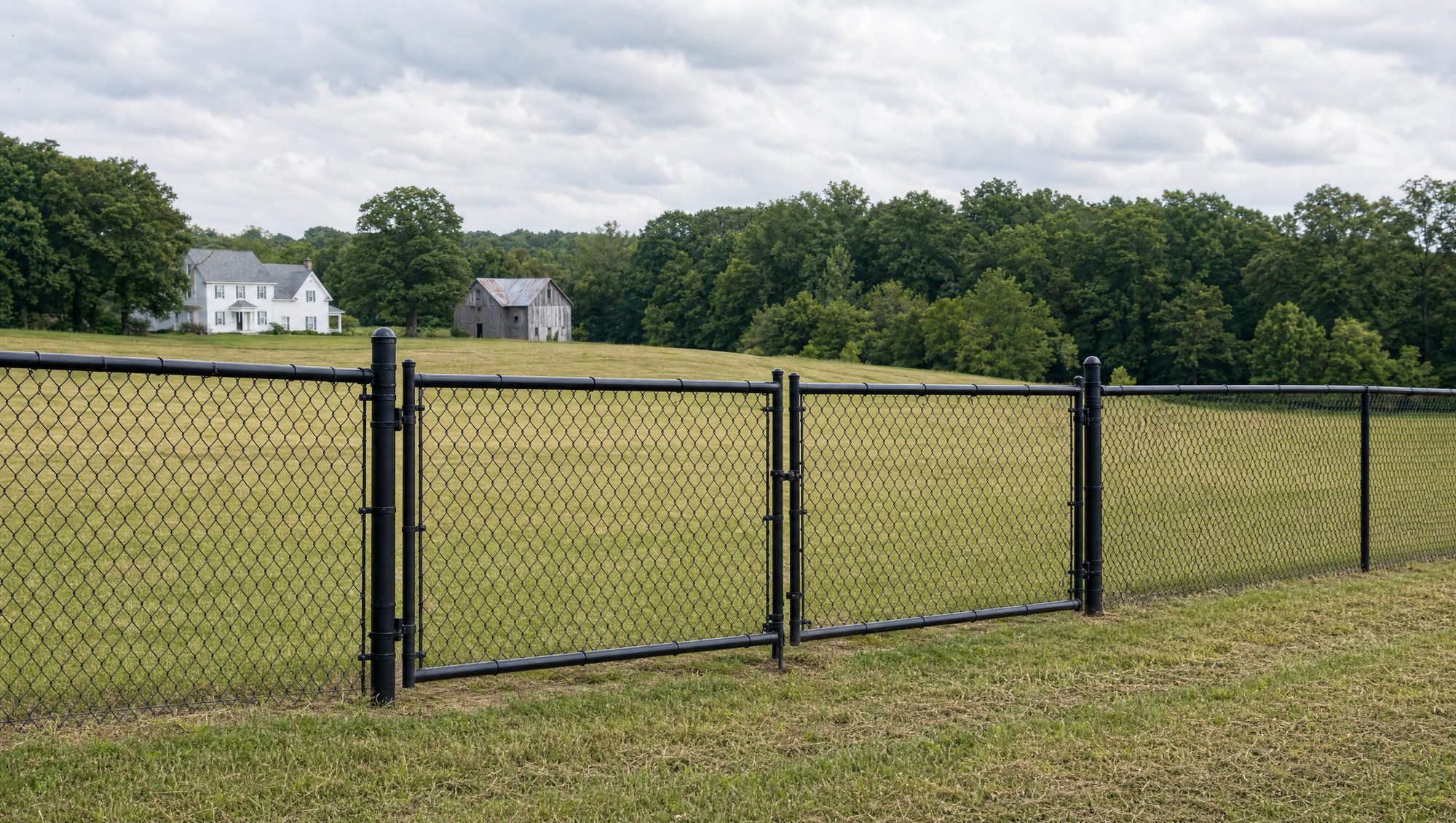
The fabric ripples. The gate drags in the spring. A post leans after one Connecticut winter. None of that shows up on install day, which is why quotes for chain link fencing in Southbury, CT can look almost identical on paper, carry three different numbers, and still leave you picking the middle one and hoping. The trouble is that chain link is not one product, it is a set of parts that can each be specified up or down without changing a single word of "four-foot black chain link." The wire can be thinner, the posts lighter, and the gate can hang on a line post that was never meant to carry it. The differences are written down somewhere, though, and you are allowed to ask for them.
Key Takeaways
Chain link is a system, not a panel
Wire gauge, mesh opening, coating, post and rail sizing, tension wire, and gate support all move independently, so two bids at the same height and color can be very different fences.
Galvanized and black are coatings, not grades
Zinc-coated fabric protects steel from corrosion, while black chain link usually adds a polymer coating over metal fabric and matches the posts, rails, and fittings to it.
Privacy slats change the engineering
Slats cut visibility but add wind load, so posts, rails, fabric tension, and footings need to suit the slatted system rather than have slats added to them later.
Southbury reviews permits property by property
Town materials do not support a blanket exemption for every fence, and a pool barrier needs a permit no matter its height.
Terrain and post setting decide the lifespan
Rocky glacial soil, ledge, slopes, roots, drainage, and freeze-thaw movement shape where posts go, how deep they sit, and whether the line stays straight.
Why Does Chain Link Still Make Sense on Southbury Properties?
Chain link has been around long enough that people assume they already know what it is, which is exactly why it gets bought carelessly. What it offers is woven wire fabric stretched across a line of steel posts and rails, and that combination does a few things well. It contains without blocking the view, lets wind and light through, scales to a long run without a big jump in cost per foot, and can be specified anywhere from a light garden enclosure to a serious security barrier.
Where Open Mesh Earns Its Keep
For residential fencing, open mesh defines a yard while keeping sight lines and airflow intact, which matters on a wooded Southbury lot where a solid fence would feel like a wall. For commercial fencing, the same system scales up with heavier posts and rails, smaller mesh, taller fabric, and access-control gates. For industrial fencing, it goes further, with stronger pipe, anti-climb detailing, and engineering suited to the actual security risk. The material stays the same. The specification is what changes, and the specification is the part worth reading.
Galvanized or Black: Which Chain Link Fits Your Yard?
Almost every chain-link conversation lands here within a minute or two. The honest answer is that galvanized and black are not a good-better pairing, they are two different corrosion and appearance strategies applied to metal fabric. Both can be built well or badly, and the coating tells you almost nothing about the wire underneath it.
Zinc-Coated Galvanized Fabric
Galvanized chain-link fabric uses a zinc coating to protect the steel from corrosion, and ASTM A392 is the standard covering zinc-coated steel chain-link fence fabric, including how it is woven and how the edges are treated. A complete galvanized fence is more than the mesh, though. The terminal posts, line posts, top rail, tension bars and bands, gate frames, and fittings should be galvanized too, or you have protected one part of the system and left the rest exposed.
Do not treat all galvanized fencing as one thing. Wire gauge, mesh opening, zinc-coating weight, post diameter, pipe wall thickness, rail size, and gate reinforcement can all differ between two fences a homeowner would describe with the same three words. A galvanized fence in Southbury tends to be chosen where practical containment, visibility, and budget control matter more than screening.
Polymer-Coated Black Fabric
Black chain link typically uses polymer-coated fabric, and ASTM F934 addresses standard colors for polymer-coated chain-link materials. People choose it because it recedes visually against trees, lawns, gardens, and the house itself, which is why a black chain link fence in Southbury shows up so often along wooded boundaries and around pools.
The questions that separate those bids are specific. Is the fabric polymer-coated over galvanized wire, or coated over bare steel? Are the posts and rails coated to match? Are the fittings and gate frames coordinated, or will you end up with silver hardware on a black fence? What is the underlying wire gauge, and does the warranty treat fading, peeling, corrosion, and impact damage as separate things?
Coating Damage Is Still a Maintenance Item
A black finish is not a promise that you never look at the fence again. Mower impact, plow contact, falling branches, lawn chemicals, abrasion, and cut edges from the install can all damage a coating, and a scratch that reaches the metal is where corrosion starts. Ask what happens when the coating is broken and who touches it up in the first year. It is a small question that tells you a lot about how a contractor thinks.
What Do Gauge, Mesh, and Post Sizing Actually Mean?
This is where most bids go quiet, and it is the heart of the problem. A fence described only by height and color has left out nearly everything that determines how it performs. Fabric should be specified by wire gauge, mesh opening, coating type, coating weight, the difference between core wire and finished coated diameter, the top and bottom edge finish, the height, and the intended use.
Residential Versus Commercial Specifications
Smaller mesh and heavier wire generally change strength, climb resistance, weight, and cost together. Which combination is right depends on what the fence is for: a garden boundary, a dog that tests corners, a pool enclosure, or a site with a real security concern. The supporting steel follows the same logic. ASTM F1043 covers strength and protective coatings for industrial chain-link posts and rails, and ASTM F1083 covers the galvanized steel pipe used in fence structures.
Core Wire Versus Finished Coated Diameter
Here is a detail that quietly rewards whoever wrote the vaguer estimate. On coated fabric, the wire has a core diameter and a finished diameter that includes the coating. Quote the finished number and the wire sounds heavier than it is. If a bid lists a gauge for coated fabric without saying which one it means, that is a fair question, not a nitpick.
Knuckled and Twisted Selvage
Selvage is the finish along the top and bottom edges of the fabric. A knuckled edge loops the wire ends over into a smooth finish, while a twisted edge leaves them cut and pointed, which is deliberate on a security fence and a bad idea around a dog yard. Both are legitimate. The estimate should say which you are getting on which edge.
Do Privacy Slats Really Make Chain Link Private?
Privacy slats are inserted through the mesh to cut visibility, and they are the most common upgrade people ask about. They work, within limits, but slats change the fence rather than accessorize it. Screening depends on the slat profile, the mesh size, the viewing angle, and how far away you stand, so no one should promise complete privacy unless the product and the layout support it.
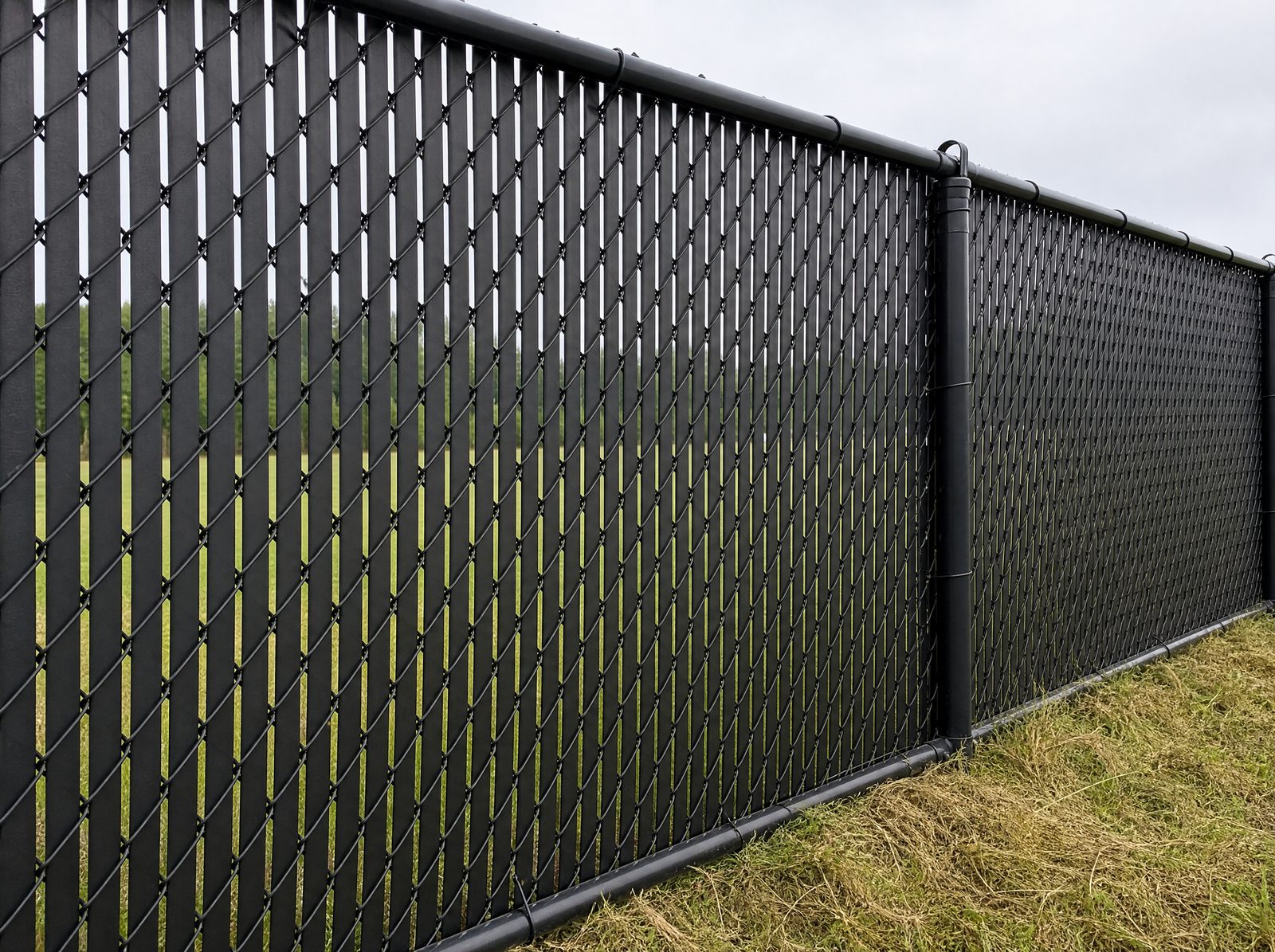
The bigger point is structural. Open chain link lets wind through, which is most of why it survives on exposed runs. Fill that mesh with slats and the fence becomes a surface that catches wind, and that load lands on the posts, rails, fabric tension, gates, and footings. Slats also change snow and debris behavior, maintenance, cost, and whether matching replacements exist in five years. If you want chain link with privacy slats in Southbury, they belong in the plan from the start so the posts and footings are sized for them. Adding them later to a fence never designed for the load is how a straight line becomes a leaning one.
Will Chain Link Work for a Dog, a Pool, or a Work Yard?
Usually yes, with the same qualifier every time: it depends on how the system is built around the actual use. A dog, a pool barrier, and a storage yard each ask different things of the same materials, and height, mesh, bottom clearance, and gate hardware shift for every one of them.
Chain Link for Dogs
Chain link gives many dogs a visible physical barrier they respect, and it takes the pushing and leaning that wears out lighter systems. Designing pet fencing around the animal is the whole job, though. Small dogs slip through larger mesh or under uneven grade, athletic dogs climb standard fabric or clear a fence two feet too short, and diggers go under. Height, mesh size, bottom clearance, bottom tension wire, gate gaps, latch placement, and nearby climbable objects all matter, and a buried apron or another dig deterrent is worth discussing before the posts go in.
Pool Barriers Are Their Own Project
Chain link can serve as a pool barrier, but only when the complete installed system meets the applicable height, mesh opening, bottom clearance, climbability, gate direction, self-closing, and self-latching requirements. Southbury requires a permit for a pool barrier regardless of height, so this is not a case where a standard yard fence quietly qualifies. Treat pool fencing as its own project with its own approval. Mesh dimensions and gate details are where these barriers usually fail review.
Commercial, Industrial, and Agricultural Enclosures
Heavier fabric, smaller mesh, taller runs, stronger gate frames, and access-control gates are all normal on a commercial or industrial site. On rural acreage, chain link handles kennels, equipment areas, gardens, and small livestock enclosures, though larger properties may be better served by agricultural fencing planned around the specific animals and acreage. Wide vehicle openings are their own conversation, and driveway and estate gates need posts and footings sized for the gate, not for the fence line.
Does Southbury Require a Permit for a Chain-Link Fence?
Southbury accepts building and zoning permit applications through its online system, and keeps separate resources for zoning, inland wetlands and watercourses, aquifer protection, and local ordinances. What the available town materials do not support is a blanket statement that every chain-link fence is exempt. The safest read is that approvals depend on your specific property and fence design. Southbury's zoning regulations are also being updated, so older dimensional numbers you find online should not be trusted without checking.
Before installing, confirm with the town whether a zoning permit, building permit, wetlands review, aquifer review, site plan, or another approval applies. Fence height and design, placement in required yards, road and driveway sight lines, boundaries, easements, pool-barrier compliance, slats and wind exposure, security extensions, and gates near roads can all pull a project into review. Southbury's permit page and its zoning department are where you get the current answer for your address.
An Old Stone Wall Is Not a Property Line
Southbury has plenty of old walls, tree lines, hedges, and mowing edges that everyone treats as the boundary, and none of them are. A survey earns its cost when markers are missing, the fence will sit close to the line, the lot has irregular boundaries, a shared driveway is nearby, an easement may exist, a neighbor has questioned the route, or a wetland or watercourse is close. A fence contractor can lay out the run and stake it. Only a licensed surveyor establishes the legal line, and recorded plans often live with the town clerk.
Call 811 Before Any Post Hole
Chain-link posts mean digging, so Connecticut's Call Before You Dig service gets contacted first, by phone at 811 or online. Public marking has a real limit: it does not identify private systems. Septic and well lines, irrigation, yard lighting, pool equipment lines, propane, generator feeds, drainage pipe, and invisible pet-fence wire are often the homeowner's own and may need a separate private locate. The contract should say who submits the utility request and who is responsible for the private lines.
How Do Slopes, Ledge, and Frost Change the Install?
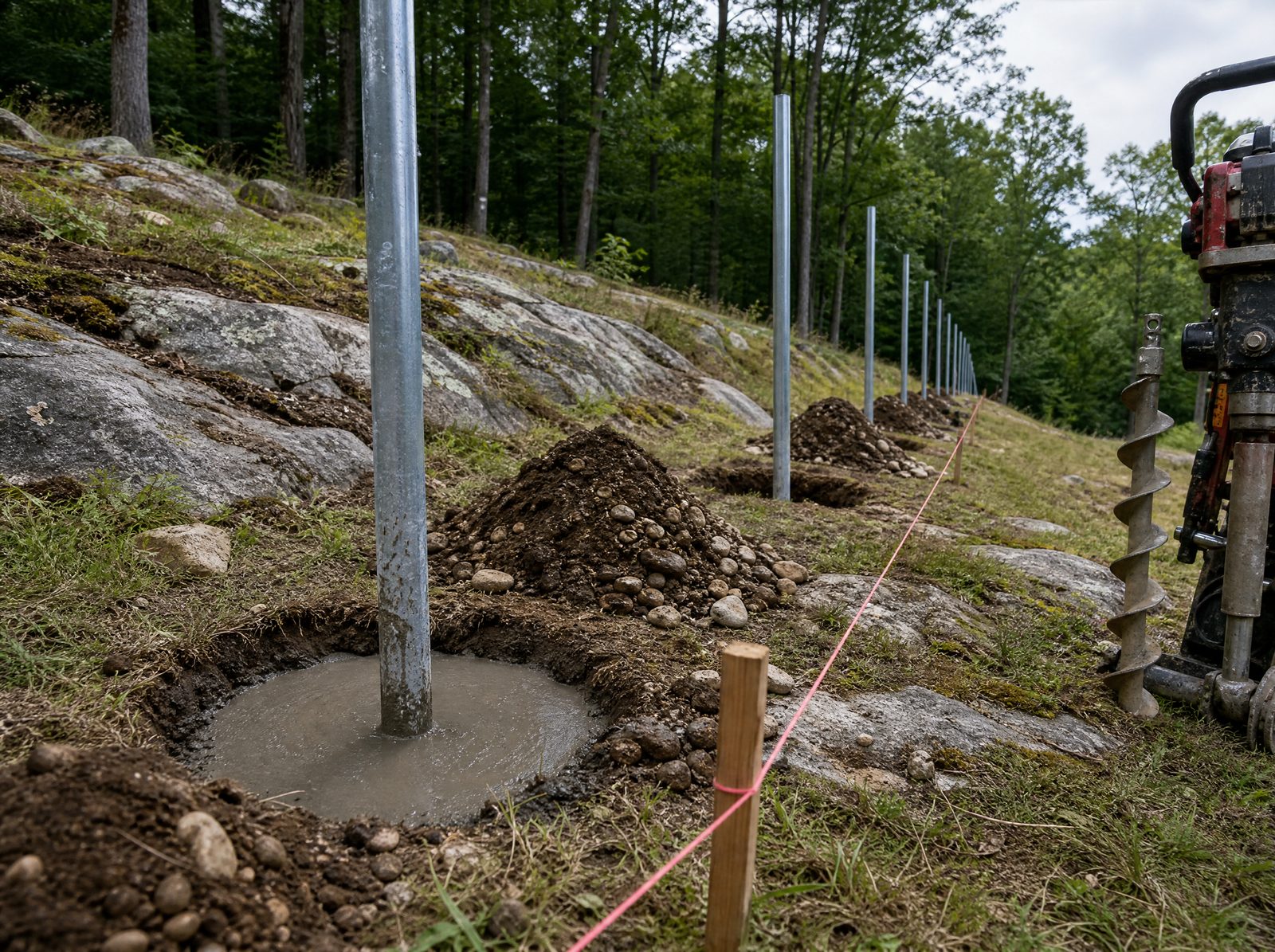
Southbury ground has opinions. Rocky glacial soils, ledge close to the surface, slopes, wooded boundaries, large roots, wet spots, and drainage swales all show up in the same town, sometimes on the same lot. Chain-link fabric handles grade better than rigid panels because it follows the slope more continuously, but steep transitions still demand careful post placement, even stretching, and attention to the bottom gap, which is where a dog finds the weakness. Ledge may call for drilling, different equipment, adjusted post positions, or alternative anchoring, and hidden rock is exactly the condition a change-order procedure exists to handle. Posts and bottom tension wire should not block a swale, and wet low points weaken soil support and pull gates out of alignment.
What Sets Post Depth and Post Sizing
There is no single correct post depth for every chain-link fence, and anyone quoting one number for every job is guessing. Depth, hole diameter, the concrete or approved setting method, and the size of the posts and rails depend on fence height, fabric gauge, mesh size, whether slats are involved, soil and ledge, drainage, wind exposure, gate width and weight, corner conditions, frost, and the manufacturer specification. Connecticut's residential code for foundations frames why frost protection matters here, and drainage under a post matters as much as depth, because water that sits and freezes is what does the lifting.
Gates Need More Than a Line Post
Terminal, corner, pull, and gate posts all carry more load than a line post, and gates carry the most. A walk gate needs its width, hinge direction, latch, and bottom clearance specified. A double swing gate for vehicles needs heavier posts and careful alignment. A cantilever slide gate needs engineered support, counterbalance length, rollers, and a clear path. Automation adds electrical, operator, safety-device, and code considerations and is never ordinary hardware. A sagging gate a year in is almost always one hung on a post chosen for the fence instead of for the gate.
What Moves the Cost of Chain Link Fencing in Southbury?
There is no reliable one-price-fits-all figure for chain-link fence cost in Southbury, and the guides quoting national ranges know it. Treat any online average as broad market background, not a number for your yard. Real pricing follows the specification first: linear footage, height, wire gauge, mesh size, coating type, post and rail sizing and wall thickness, top rail and bottom tension wire, gates and any automation, privacy slats, and any pool or security requirements.
Then the property adds its own line items. Slopes, ledge, roots, wet soil, brush clearing, restricted equipment access, removal and disposal of an existing fence, permits, and custom colors all move the number for reasons that have nothing to do with the fence you picked. That is why a site visit is the only honest way to price the work, and why we give free estimates rather than a number over the phone. References like HomeAdvisor's chain-link cost breakdown are useful for seeing how wide the spread is, not for pricing your run.
Hover or tap a row to highlight it.
| Cost Driver | Why It Matters |
|---|---|
| Linear footage and height | More footage and taller fabric mean more posts, more steel, and more labor. |
| Wire gauge and mesh size | Heavier wire and smaller openings cost more and are the specification most bids leave out. |
| Coating type | Galvanized, aluminized, and polymer-coated fabric price differently, and matching posts, rails, and fittings adds to it. |
| Post and rail sizing | Diameter and wall thickness on line, terminal, corner, and gate posts change both the price and the lifespan. |
| Top rail and bottom tension wire | What supports the top and bottom edges of the fabric is a real line item, not a freebie. |
| Gates and automation | Walk, double swing, and cantilever slide gates each need their own posts, footings, and hardware, and automation adds more. |
| Privacy slats | Slats add material cost and force heavier posts and footings to carry the wind load. |
| Terrain, ledge, and access | Slopes, rock, roots, wet soil, brush, and a long carry from the truck all add hours. |
| Removal, permits, and custom color | Pulling an old fence, hauling concrete, town approvals, and non-standard colors move the number on their own. |
How Does a Chain Link Fence Installation Come Together?
A chain link fence installation in Southbury runs in a predictable order, and knowing the order is how you spot a crew skipping steps. It starts with defining the purpose, because pet, pool, residential, commercial, and security goals each pull the specification in a different direction, then moves through the property review, the local requirements, the written scope, and the utility markings before anyone digs. Only then does steel go in the ground, and it goes in sequence: terminal and gate posts first, then line posts and rails, then fabric, then gates, then slats, then cleanup and a walkthrough. Fabric gets stretched evenly with tension bars, bands, and ties, and proper tensioning is what keeps it from sagging later. Over-tensioning, under-tensioning, missing ties, weak terminals, or poor brace placement all show up within a season.
The Southbury Chain Link Installation Process
- 1
Step 1: Define the Purpose
We settle what the fence is actually for, because a pet yard, a pool barrier, a boundary run, and a security enclosure each pull the specification a different way.
- 2
Step 2: Property and Requirements Review
We walk the lot for slopes, ledge, roots, drainage, and boundaries, and confirm what Southbury wants reviewed for your address.
- 3
Step 3: Written Specification and Estimate
Gauge, mesh, coating, post and rail sizing, top rail, tension wire, gates, and slats go in writing before anything is ordered.
- 4
Step 4: Utility Marking and Layout
A Call Before You Dig request goes in, private lines are identified, and the run is staked so you see the line before we dig it.
- 5
Step 5: Terminal Posts, Line Posts, and Rails
Terminal and gate posts are set first for the soil, frost, and gate loads, then line posts and rails follow the staked line.
- 6
Step 6: Fabric, Gates, Slats, and Walkthrough
Fabric is stretched evenly with tension bars, bands, and ties, gates are hung and adjusted, slats go in, and we walk the finished line with you.
What Separates a Chain Link Fence Contractor Worth Hiring?
Connecticut requires home improvement contractors to register with the Department of Consumer Protection, and the state is direct that the work needs a written contract and a registered contractor. You can check any registration yourself through the state's license verification portal in a couple of minutes, and you should. My Fence Guy is family-owned, works out of a local office right here in Southbury, and is licensed and insured. Registration and insurance are the floor, though, not the reason to hire someone. The real signal is whether a chain link fence contractor in Southbury will put the specification in writing without being pushed, explain how ledge gets handled before it turns up, and answer the gauge question directly.
What the Written Estimate Should Spell Out
A written scope is what turns three interchangeable numbers into a real comparison. Before you sign, the estimate should cover:
- Height and footage: The measured run and the finished height.
- Wire gauge and mesh size: The actual numbers, and whether a coated gauge is core or finished diameter.
- Coating: Galvanized, aluminized, or polymer, and whether posts, rails, and fittings match.
- Post and rail sizing: Diameters and wall thickness for line, terminal, corner, and gate posts.
- Top rail and tension wire: What supports the top and bottom of the fabric.
- Gates and hardware: Widths, swing direction, hinges, latches, and post sizing for each gate.
- Slats or screens: The product, the screening it actually provides, and the wind review behind it.
- Removal and cleanup: Who pulls the old fence, posts, and concrete and hauls the debris.
- Permits and utility responsibility: Who files with the town and who submits the 811 request.
- Ledge and hidden conditions: How rock gets priced when it appears, in writing, in advance.
- Timeline, payments, and warranties: Schedule, payment terms, and material and workmanship coverage.
Where Chain-Link Projects Usually Go Wrong
The failures repeat, and they are almost all decided before the first post hole. Comparing fences only by height and color, never specifying gauge, confusing core wire with finished coated diameter, accepting undersized posts or rails, hanging a gate on weak support, tensioning fabric poorly, and adding privacy slats to a system never sized for the wind are the product-side mistakes. Skipping the survey or the utility marking, assuming an old wall is the boundary, treating a general permit assumption as a zoning answer, assuming standard fabric is pool-compliant, ignoring ledge and drainage, and comparing only the initial price are the process-side ones. Every item on that list is a question you can ask before you sign.
Frequently Asked Questions About chain link fencing southbury ct
Q: What is the difference between galvanized and black chain link?
A: Galvanized chain link uses a zinc coating over steel for corrosion protection. Black chain link typically uses a polymer coating over metal fabric and is often paired with matching coated posts, rails, and fittings for a darker, less visually prominent finish.
Q: Do I need a permit for chain link fencing in Southbury, CT?
A: It depends on the property and the fence. Southbury accepts building and zoning applications online, and the available town materials do not support a blanket exemption for every fence. A pool barrier requires a permit regardless of height, and zoning, wetlands, aquifer, and site-specific requirements may also apply, so confirm your project with the town.
Q: Are privacy slats completely private?
A: No. Slats reduce visibility, but the actual screening depends on the slat style, mesh size, viewing angle, and installation. They also add wind load, which changes what the posts, rails, and footings need to handle.
Q: Is chain link good for dogs?
A: It can be, but the system has to suit the animal. Height, mesh size, bottom clearance, bottom tension wire, gate gaps, and latch placement all matter, and jumping, climbing, and digging behavior should shape the design.
Q: Can chain link be used around a pool?
A: Yes, when the complete installed barrier meets the applicable mesh, height, gate, latch, clearance, and climbability requirements and receives the required approval. Standard chain link is not automatically pool-compliant, and Southbury requires a permit for a pool barrier no matter its height.
Q: What gauge chain link should I choose?
A: The right gauge depends on whether the use is residential, commercial, pet, pool, security, or industrial. Compare the written wire and post specifications between bids rather than relying on a generic grade label like "residential" or "commercial."
Q: How much does chain link fencing in Southbury Connecticut cost?
A: Cost depends on footage, height, gauge, mesh, coating, post and rail sizing, gates, slats, terrain, ledge, removal, access, and permits. A site visit is the only reliable way to price an actual property.
Test Your Chain Link Knowledge
1. Two bids both say "four-foot black chain link." What can still be completely different?
2. Is black chain link a higher grade than galvanized?
3. What do privacy slats do to a chain link fence structurally?
4. Does a pool barrier in Southbury need a permit?
5. Why does a gate sag a year after install?
Pick an answer to begin.
Final Thoughts
Chain link earns its reputation for practicality, but only when someone specifies it honestly. The parts that decide whether your fence still looks right in fifteen years are the ones that rarely appear on a one-line quote: wire gauge, mesh opening, coating and whether it carries through to the posts and fittings, tension wire, gate support, and how the posts were set for the soil and the frost on your lot. Southbury adds its own conditions on top, from ledge and slopes to a permit process that answers by property rather than by rule.
Ask for the specification and the whole conversation changes. You stop comparing three prices and start comparing three fences, and the bid that was quietly cheapest for a reason usually explains itself. That is worth an extra question or two at the estimate stage, because a chain-link fence built right is one you stop thinking about entirely.
If you are planning chain link fencing in Southbury, we would be glad to walk the property and tell you exactly what we would put in the ground and why. My Fence Guy is a family-owned contractor with a local office right here in Southbury, CT, and we install chain link fencing in galvanized, black-coated, and privacy-slat systems for residential, commercial, industrial, and agricultural properties, along with wood, vinyl, aluminum, and ornamental fencing, pool fencing, pet fencing, gates, and railings across Southbury and the surrounding towns. Call us at (203) 746-1100 for a free estimate, or reach out through our contact page.
Chain Link Key Terms
Tap a term to see what it means.
Chain Link Fabric. The woven wire mesh that stretches between the posts, specified by wire gauge, mesh opening, coating, and height rather than by height and color alone.
More about fences
Pet Fencing in Southbury, CT: What Actually Holds a Dog
A pet fence keeps your dog in and other animals out. Pet fencing in Southbury, CT: height, dig defense, picket spacing, and a gate a dog cannot nose open.
Read the guide to Pet Fencing in Southbury, CTPet Fencing in Sherman, CT: What Actually Holds a Dog
Your dog already knows how it would get out. Pet fencing in Sherman, CT: height for the jumpers, buried edges for the diggers, spacing for the slippers.
Read the guide to Pet Fencing in Sherman, CTPet Fencing in New Fairfield, CT: What Your Dog Will Test
Pet fencing in New Fairfield, CT only works if it matches your dog. How dogs jump, dig, and slip past fences, and what actually holds them in.
Read the guide to Pet Fencing in New Fairfield, CT