
Wood vs Vinyl Fence: Cost, Upkeep and Lifespan in Connecticut
By Tony Pellicone12 min readPublished
- wood fencing
- vinyl fencing
- homeowner guide
- connecticut
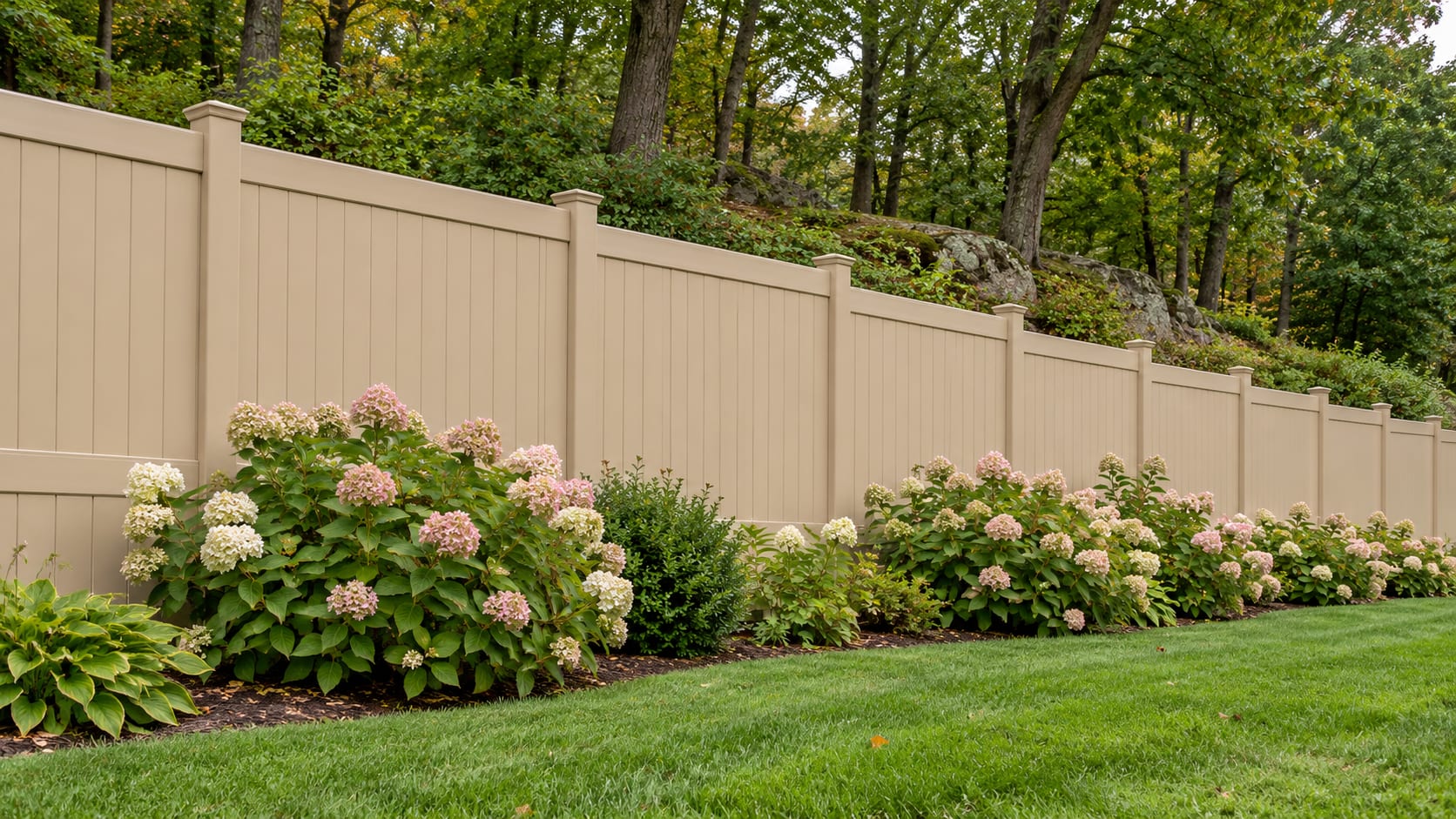
For most Connecticut homeowners, wood is the better fit when you want natural appearance, flexible repairs and the option to stain or change the finish. Vinyl is usually the better fit when you want privacy with less routine maintenance. Installed cost, fence height, gates, ground conditions and the footing design can matter as much as the material itself.
Start with the town’s rules and your property line, then compare dated written estimates for the same length, height, gate count and site conditions. A wood or vinyl privacy fence can last for decades when it is installed correctly, but neither material has one fixed service life for every Connecticut yard.
Key Takeaways
Cost
National installed privacy-fence figures range from $15 to $50 per linear foot, depending on material and style.
Upkeep
Vinyl usually needs less routine care, while wood needs inspection, cleaning and periodic staining or sealing.
Lifespan
Cedar, pressure-treated wood and vinyl have different service-life factors, including moisture, installation, wind and maintenance.
Site conditions
Frost movement, ledge, gates and wind exposure can change the right design and final price.
Local rules
Zoning, permits, setbacks, corner-lot visibility and wetlands review are handled by the town or municipality.
Best choice
Choose the material that fits your budget, appearance preference, maintenance tolerance and expected time of ownership.
Start with the installed cost, not the material label
National figures give you a starting point, but they are not Connecticut bids. Fixr lists wood privacy-fence installation at $17 to $37 per linear foot and vinyl privacy-fence installation at $15 to $40 per linear foot. Its broader national privacy-fence range is $21 to $50 per linear foot installed across multiple materials and privacy styles.
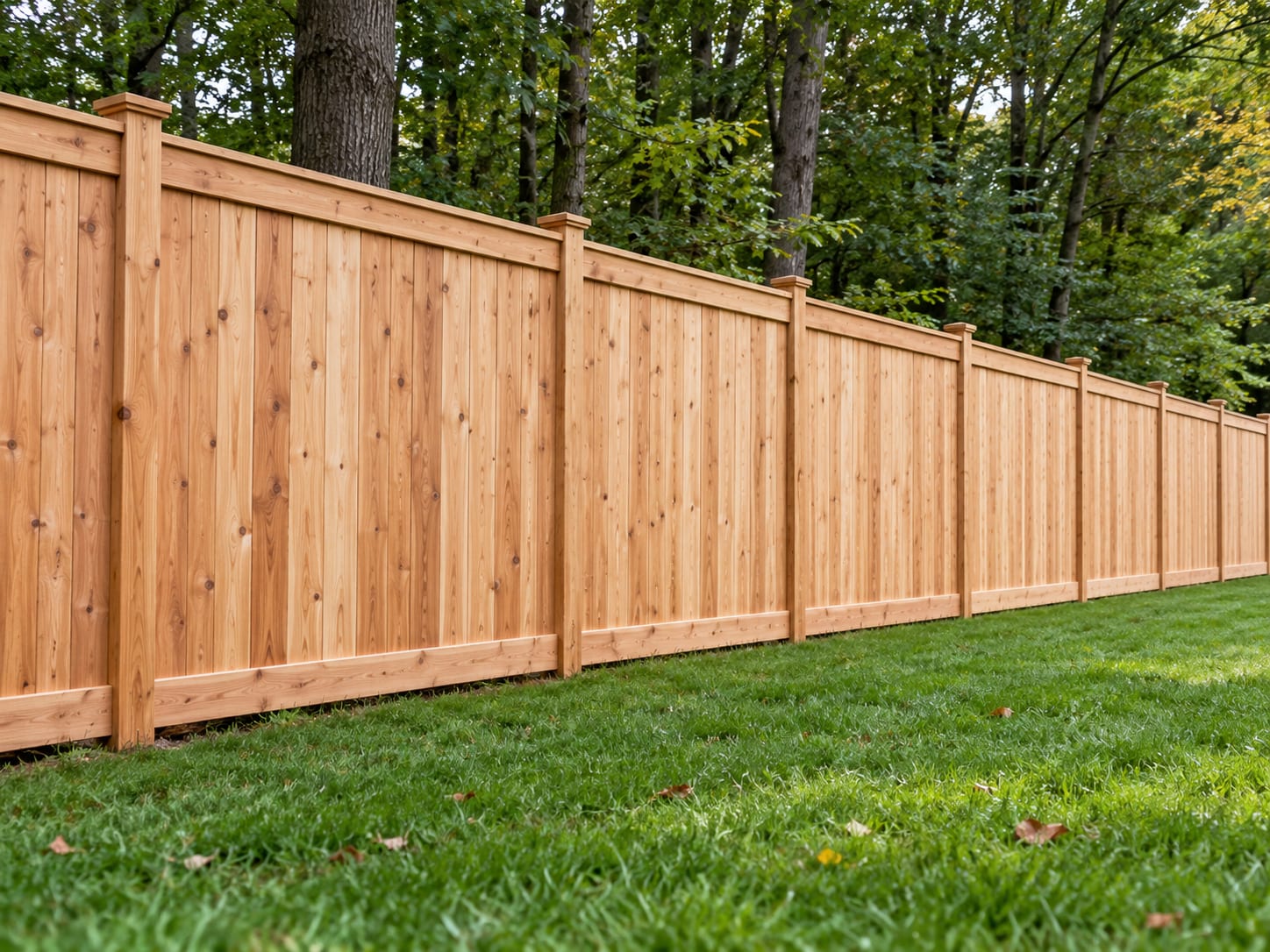
Cedar and pressure-treated wood can also price differently. Fixr lists cedar fencing at $15 to $30 per linear foot and pressure-treated wood at $17 to $45 per linear foot. These figures can change with local labor, terrain, height, gates, removal, post material, footing method and finish.
Hover or tap a row to highlight it.
| Fence type | National installed cost | Source and scope |
|---|---|---|
| Wood privacy fence | $17 to $37 per linear foot | Fixr wood fence cost, updated 2025 |
| Cedar fence | $15 to $30 per linear foot | Fixr wood fence cost, accessed 2026 |
| Pressure-treated wood | $17 to $45 per linear foot | Fixr wood fence cost, accessed 2026 |
| Vinyl privacy fence | $15 to $40 per linear foot | Fixr vinyl fence cost, accessed 2026 |
| Typical national privacy-fence range | $21 to $50 per linear foot installed | Fixr privacy fence cost, updated 2025 |
When you compare estimates, ask every contractor to use the same project unit. The quote should show linear footage, fence height, number and size of gates, removal, posts, footings, hardware, finish, cleanup and permit responsibilities. A price with no date, unit or scope gives you little basis for comparison.
For a rural property, an old stone wall can affect the fence line and installation method. A fence built alongside a wall may need different post placement than a fence installed in open soil. Ledge can also change the labor and footing plan. Read Installing a Fence on Rocky Soil and Ledge in Western Connecticut before you compare a simple per-foot estimate with a difficult site.
Lifespan depends on the material and the ground
The lifespan of cedar, pressure-treated wood or vinyl varies from yard to yard. Wood species, preservative treatment, drainage, soil moisture, installation, shade and maintenance all affect the result. Freeze-thaw movement can loosen posts and stress rails, panels and gates, especially where water remains around the base.
Cedar has natural decay resistance. USDA Forest Products Laboratory field data summarized in an older USDA publication gives untreated red cedar fence-post service lives of approximately 15 to 25 years under tested conditions. That is field data from tested conditions, not a Connecticut prediction for every fence.
Pressure-treated pine intended for ground contact can last substantially longer than untreated pine. USDA material reports more than 30 years for some pressure-treated pine posts under test conditions. Treatment level, cut ends, drainage and installation still matter.
Vinyl does not rot or absorb water like wood. One vinyl manufacturer describes its fencing as lasting a lifetime with little upkeep, and its consumer guidance says a properly installed vinyl fence can last decades. Lowe’s describes vinyl fencing as capable of lasting at least a couple of decades. Those statements are product or retailer guidance, so ask for the exact product warranty and installation requirements.
Hover or tap a row to highlight it.
| Material | Main service-life factors | Practical ownership point |
|---|---|---|
| Cedar | Moisture, ground contact, drainage, insects, shade and finish | Naturally decay resistant, with stain or weathered-gray options |
| Pressure-treated wood | Treatment category, drainage, soil contact, cut ends and maintenance | Ground-contact-rated components can outlast untreated pine |
| Vinyl | Ultraviolet exposure, impact, wind, post stability, footing and product quality | Resists rot and routine refinishing, but damaged parts may be harder to match |
For any material, gates receive repeated movement and are common storm-failure points. A solid privacy fence also catches more wind than an open fence. Post size, spacing, embedment, concrete or other footing design, soil and exposure all affect performance.
Upkeep is where wood and vinyl separate
Wood requires the greater maintenance commitment. Inspect it each year for rot near the ground line, loose fasteners, cracked or cupped pickets, leaning posts and gate sag. Keep grass, leaves, mulch and soil from remaining against the fence base, where moisture can stay against the wood.
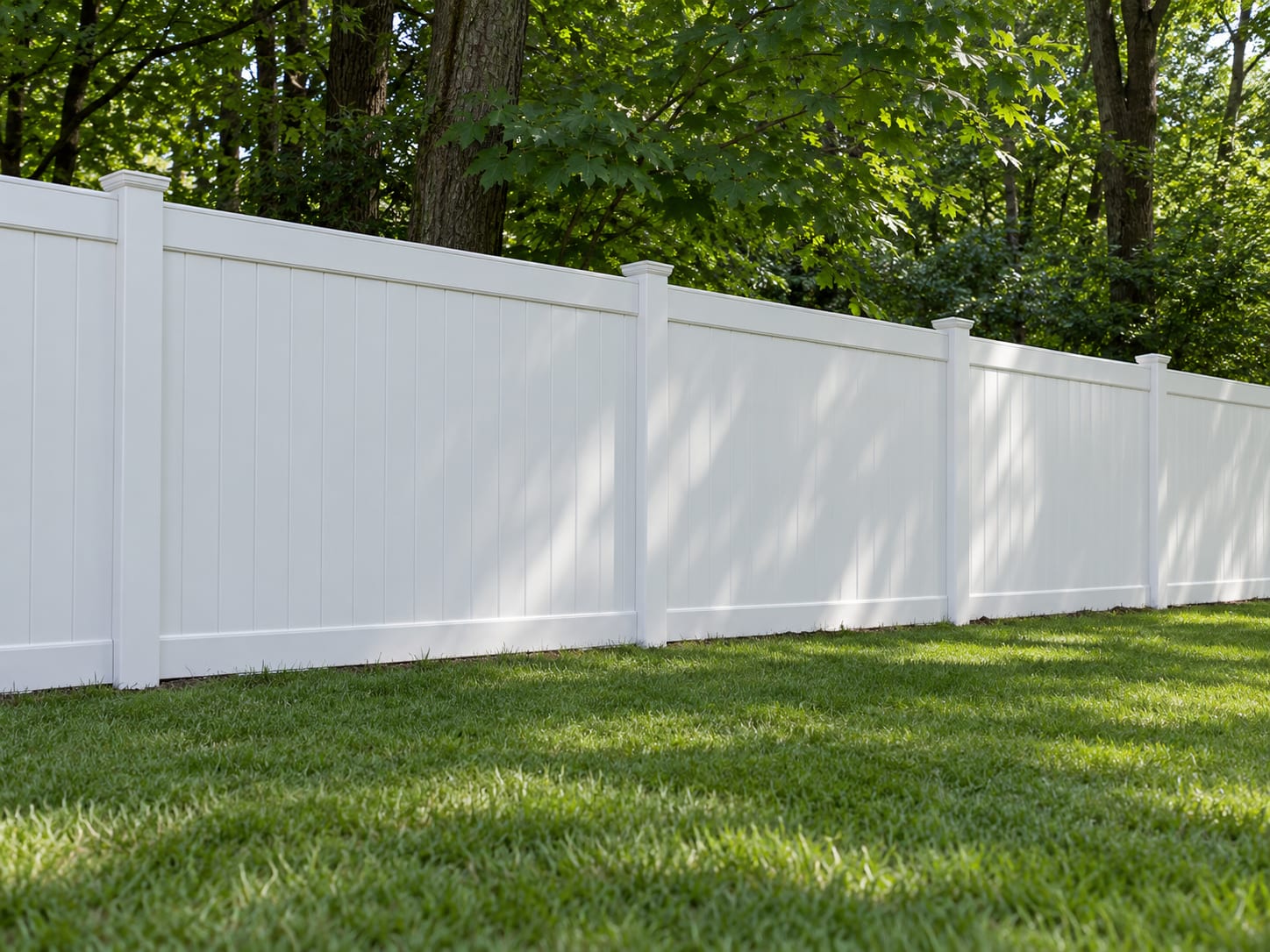
Clean dirt, algae and mildew before refinishing. Excessive pressure can damage the wood surface, so use a cleaning method suited to the fence and finish. Sherwin-Williams recommends staining a wood fence every two to three years, while noting that sun, climate and other conditions affect the interval. Ready Seal recommends light cleaning and recoating every two years on horizontal surfaces and every three to four years on vertical surfaces. Follow the selected product label instead of applying one schedule to every fence.
A penetrating, pigmented stain or stain-sealer can slow moisture and ultraviolet weathering. An uncoated wood fence can gray naturally, and gray color alone does not prove structural failure. Pressure-treated wood may need time to dry before it accepts stain, so follow the treatment and stain manufacturer’s instructions.
Vinyl generally needs no stain, paint or sealant. Rinse it with a garden hose when dirt accumulates, then use mild soap, water and a soft brush or cloth for ordinary cleaning. Shaded, humid areas can develop green mildew. One vinyl manufacturer recommends soap and water for light mildew and a compatible diluted non-bleach cleaner for heavier buildup. Follow the product instructions.
Vinyl still needs an annual inspection. Check posts, panels, gates, hinges and hardware, especially after severe wind or impact. Avoid abrasive pads, harsh solvents and unapproved coatings. Some manufacturers warn that paint can affect warranties or contribute to heat-related warping, especially with dark colors.
If you are deciding between a new installation and a repair, Fence Repair or Replacement? How to Tell Which Your Fence Needs can help you sort out localized damage from a system that needs replacement.
A practical ownership schedule
- 1
Before ordering
Confirm town requirements, the property line, utilities, fence height, gate locations and site conditions.
- 2
During installation
Use the specified posts, footing method, panel system and gate hardware shown in the written quote.
- 3
Each year
Inspect wood or vinyl posts, panels, gates, fasteners and areas where soil or organic material touches the fence.
- 4
Every few years
Clean the fence and refinish wood according to the selected stain or sealer instructions.
- 5
After a storm
Check leaning posts, cracked panels, loose rails, broken pickets, gate alignment and damaged hardware.
Privacy, noise, wind and repairs
A solid privacy fence can interrupt and scatter some line-of-sight sound, but wood and vinyl are not complete sound barriers. Traffic, machinery and voices can pass over, around and through gaps at the ground, gates and panel joints. A heavier, tightly fitted fence generally has more mass than a lightweight fence, but meaningful noise reduction also depends on distance, height, topography and the sound source.
For a road, workshop or mechanical noise concern, ask about the allowed height, the distance from the sound source, ground clearance, gate gaps and wind exposure. Do not expect a standard fence to provide a specific decibel reduction without a site-specific acoustic design.
A solid six-foot privacy fence catches more wind than an open fence. Vinyl panels may flex, crack or pull from posts after impact or severe wind. Wood can flex, split, lose pickets or break rails. Gates need sound framing, suitable hinges and reliable latches because they move more often than fixed sections.
Wood usually allows a single picket, rail, post or gate component to be replaced separately. That can make localized repairs straightforward. Vinyl systems use proprietary panels, rails, posts and connectors. A damaged section may require a matching part, and color or product-line availability can affect the repair.
Cedar and pressure-treated wood show grain and can be stained, painted or allowed to weather gray. Wood may shrink, swell, warp, split, fade and show mildew or finish wear. Vinyl keeps a more uniform manufactured appearance and avoids refinishing, but it can show dirt and mildew, and colored or wood-grain products can fade or discolor. Vinyl also gives you fewer options if you later want to change the color or finish.
Settle the town and site questions before ordering
Call the town’s zoning or planning and zoning office first. Ask about the maximum height in front, side and rear yards, corner-lot visibility, zoning or building permits, setbacks, road rights-of-way, easements, pools, wetlands, watercourses, historic districts and subdivision approvals.
Ask what site plan, survey, photographs, fence specifications and fee are required, and whether the town requires inspection or final approval. Provide the property address, parcel or assessor information, a sketch or survey, proposed fence line, height, material, gate locations and distances from roads, structures, property lines and water features.
The statewide overview Do You Need a Permit for Fence Installation in CT? is a useful starting point, but the town controls the address-specific process. Newington, for example, limits residential fencing to four feet in front yards and six feet in side or rear yards, with separate corner-lot visibility rules. That is a Newington rule, not a statewide rule.
Ridgefield publishes zoning regulations and directs building-permit questions to its Building Department. A Ridgefield property owner should confirm the current requirement with the town. Danbury handles permit applications and enforcement through its Permit Center. New Fairfield, Sherman, Southbury, Newtown, Brookfield, New Milford, Bethel and Wilton can have different zoning districts, corner-lot standards, setbacks, permit procedures or wetlands processes.
Nearby New York municipalities also set their own requirements. The Town of Poughkeepsie’s fence-permit application asks for survey or sketch information, property lines, drainage patterns or swales, easements, trees over eight inches in diameter, fence height, style and material. Its 2025 fee schedule lists a $75 fence-permit fee. A property owner in Putnam, Dutchess or Westchester County should contact the applicable town, village or city zoning or building office.
If excavation, grading or construction may affect wetlands or a watercourse, contact the municipal inland wetlands office. Connecticut DEEP says the municipal inland wetlands agency determines whether an activity is regulated or exempt. Before digging, contact Call Before You Dig at 811 or 1-800-922-4455 and confirm that the ticket covers the proposed fence line.
For additional height questions, see How Tall Can a Fence Be in Connecticut? Height Rules for Front, Back and Corner Lots. For property-line questions, use a survey or other reliable boundary information before placing posts.
Compare the ownership experience
Choose wood when natural grain, flexible design, refinishing options, individual-board repairs or a lower initial material cost matter most. Cedar offers natural decay resistance, while pressure-treated pine can be practical when ground-contact-rated components are specified. Wood also lets you change the appearance later with stain or paint.
Choose vinyl when your priority is minimal routine maintenance, resistance to rot and a consistent manufactured appearance. Vinyl usually removes the recurring stain and seal work, but it can cost more than basic wood and may be harder to repair after impact if matching parts are unavailable.
For a privacy project, review our wood fencing options and vinyl fencing options, then compare the written scope. My Fence Guy can use the site review and quote to identify the fence line, height, gates, posts, footing approach, removal, cleanup and finish so the estimate reflects the actual project.
A fence around a pool has separate safety requirements from an ordinary privacy fence. A dog yard may need closer attention to gaps, digging and gate hardware. A historic property, rural lot or home beside an old stone wall may need a different layout than a level suburban yard. The material decision comes after those site questions are settled.
Frequently Asked Questions
Should I get a wood or vinyl fence?
Choose wood for natural appearance, refinishing flexibility and easier individual-component repairs. Choose vinyl for lower routine maintenance, resistance to rot and a consistent manufactured finish. Your budget, site exposure, desired appearance and expected time of ownership should decide the final choice.
What type of fence has the least maintenance?
Vinyl privacy fencing generally has the least routine maintenance because it does not need regular staining, painting or sealing. You still need to wash dirt or mildew and inspect posts, panels, gates and hardware after storms.
What are the drawbacks of vinyl fencing?
Vinyl can have a higher initial material cost, limited refinishing options and proprietary replacement parts. Panels may crack or break from impact or severe wind, and some products can fade, discolor or collect mildew in shaded areas.
What is the lifespan of a vinyl fence?
A properly installed vinyl fence can last decades, with actual service life affected by ultraviolet exposure, temperature, impact, wind, post stability, footing design, soil movement, gate use and product quality. Ask for the written warranty, including its term, transfer rules, labor coverage and exclusions.
Does a vinyl fence increase property value?
A well-maintained vinyl fence may improve buyer appeal when it fits the property, neighborhood and likely buyer needs. The National Association of REALTORS® reports that curb appeal matters to buyers, while resale results depend on design, quality, location, condition, age and homeowner preferences.
Wood vs. vinyl fence for noise reduction?
Both can interrupt some direct line-of-sight sound when the fence is tall, continuous and tightly fitted. Neither should be treated as soundproofing. Noise can pass over the top, around the ends, under gates and through gaps, so meaningful reduction depends on the site and sound source.
Wood and Vinyl Fence Check
1. Which material generally requires more routine upkeep?
2. What unit should appear in a comparable privacy-fence estimate?
3. Which office should you contact first about local fence height and permit questions?
4. What can affect vinyl fence service life?
5. What should you do before digging the fence line?
Pick an answer to begin.
Final Thoughts
Wood and vinyl can both be good privacy-fence choices in Connecticut. Wood gives you natural character, finish options and straightforward repairs, while vinyl gives you a lower-maintenance ownership routine. The right decision comes from matching the material to the town’s rules, property line, height, gates, soil, wind exposure, budget and expected time of ownership.
Use the same written scope when comparing estimates, confirm the local requirements before ordering materials, and ask how the fence will be supported and repaired later. Call us at (203) 746-1100 for a free estimate, or reach out through our contact page.
Wood and Vinyl Fence Terms
Tap a term to see what it means.
Linear foot. One foot of fence length used to compare installed pricing.
More about fences
Vinyl vs Aluminum Fence: Which Fits Your Connecticut Yard?
Vinyl or aluminum fence for your Connecticut yard? Privacy, strength in wind and cold, pool use, slopes, upkeep, lifespan and installed cost compared.
Read the guide to Vinyl vs Aluminum FenceCedar vs Pressure-Treated Wood Fence: Which Lasts Longer?
Cedar or pressure-treated wood fence? Rot resistance, ground-contact posts, lifespan, cost and when new treated wood can be stained, compared side by side.
Read the guide to Cedar vs Pressure-Treated Wood FenceHow Deep Should Fence Posts Be in Connecticut? Frost Line and Footings
How deep to set fence posts in Connecticut: frost depth, manufacturer depth rules by fence height, concrete or gravel, and how frost heave lifts posts.
Read the guide to How Deep Should Fence Posts Be in Connecticut? Frost Line and Footings