
Vinyl vs Aluminum Fence: Which Fits Your Connecticut Yard?
By Tony Pellicone15 min readPublished
- vinyl fencing
- aluminum fencing
- homeowner guide
- connecticut
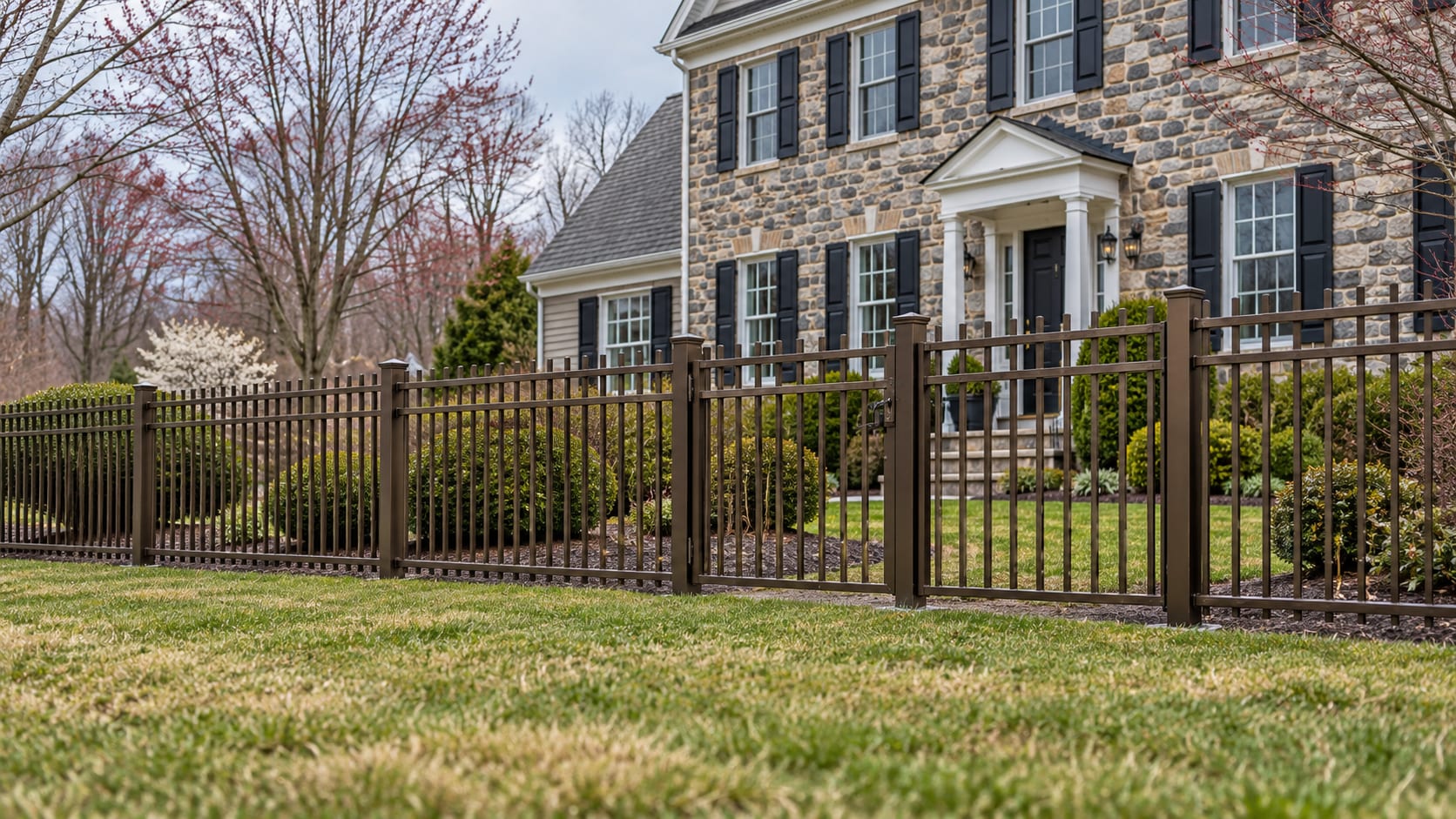
Vinyl is usually the better choice when you need privacy, screening, moisture resistance, and low routine maintenance. Aluminum is usually the better choice when you want open views, an ornamental appearance, pool enclosure, and a lighter visual presence.
The right decision depends on the job your fence must do, the exact product, local rules, and the ground where it will be installed. A six-foot vinyl privacy fence and a short aluminum picket fence solve different problems, even when their national installed price ranges overlap.
Key Takeaways
Privacy
Vinyl is available in solid and semi-private panels, while aluminum pickets preserve views but provide little privacy.
Pool safety
Both materials can be made in pool-compatible designs, but the panel, gate, latch, openings, and installation must meet code.
Pet containment
Picket spacing, gate clearance, latch height, and digging behavior matter more than the material name.
Winter performance
Posts, footings, reinforcement, drainage, and installation affect snow and wind performance more than the label on the fence.
Cost
National estimates for basic installed vinyl and aluminum often overlap, but height, gates, access, ledge, removal, and site conditions change the price.
Local approval
Ask the town about zoning, setbacks, permits, inspections, wetlands review, and property-line requirements before ordering materials.
Start with the job your fence must do
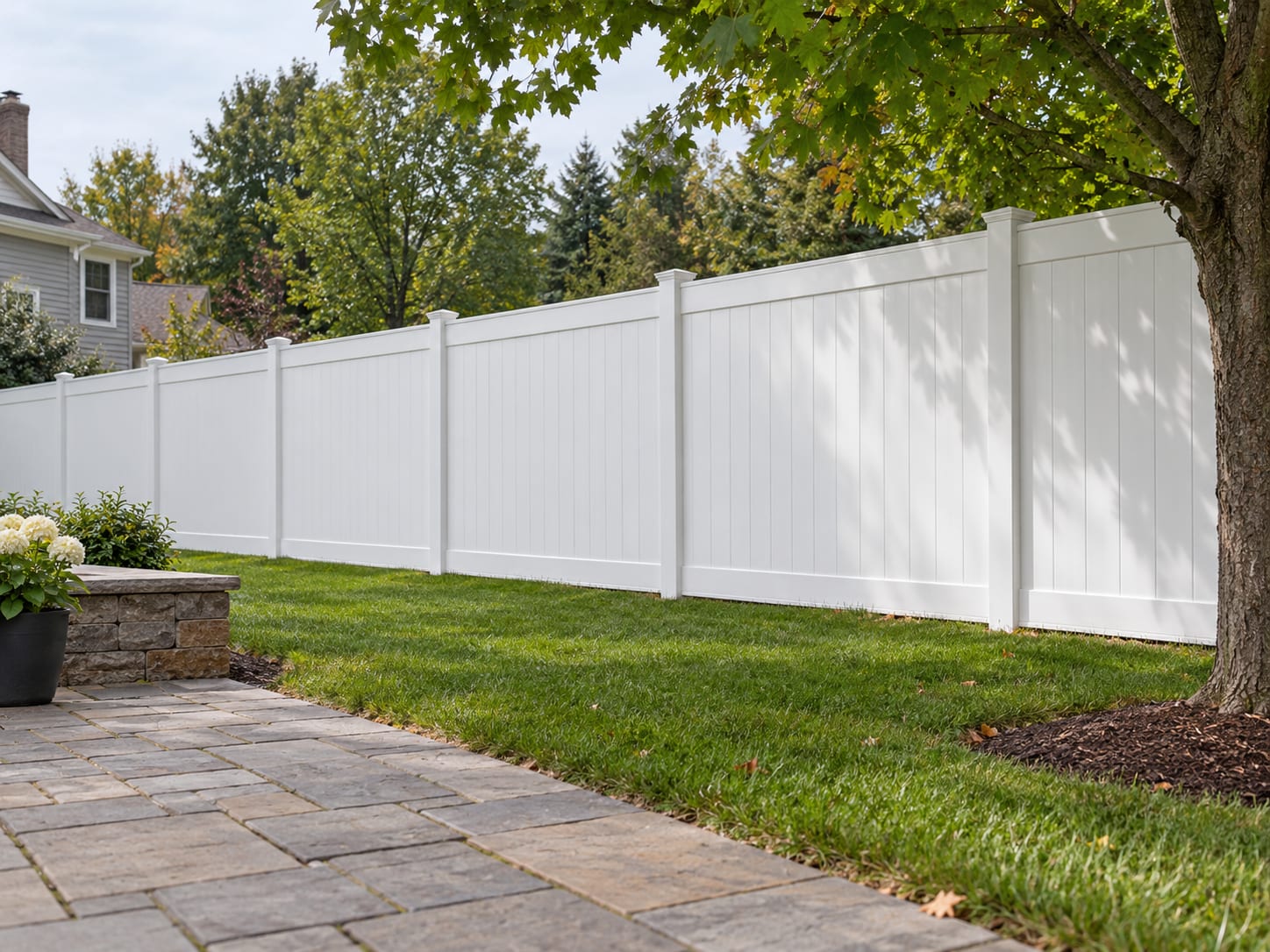
Vinyl PVC fencing gives you a solid or semi-private barrier. That makes it useful when you want to block views into a pool area, backyard, patio, driveway, or neighboring property. Vinyl is also useful where moisture resistance and limited routine upkeep matter. It does not rot, rust, or absorb moisture, and it does not need painting, staining, or sealing.
Aluminum fencing is usually an open picket system. You can see through it, which works well around a pool, along a front yard, or beside a property with a good view. It provides a defined boundary without creating a solid wall. If you need privacy, aluminum usually needs planting, a separate screen, or another enclosure system.
You can review common styles on the vinyl fencing product page, but compare the actual product specifications before choosing. Panel thickness, reinforcement, post size, picket spacing, gate construction, finish, wind testing, slope capacity, and warranty can change the result.
Privacy, pets, and appearance
Choose vinyl when the fence needs to screen activity, reduce views, or create a more enclosed yard. Solid vinyl panels also present more surface area to wind and drifting snow, so the posts, concrete footings, panel reinforcement, and spacing deserve close attention.
Choose aluminum when visibility matters. Aluminum is a rigid metal system with a powder-coated finish. It does not rot, crack, or warp like wood, although it can dent or bend more easily than steel or iron. A scratched finish can expose the metal to corrosion, so impact damage should be repaired.
For dogs, the exact gap between pickets matters more than whether the fence is called aluminum or pet fencing. Narrow spacing can work well for smaller animals, while a large or athletic dog may need a different height, tighter spacing, stronger gates, or a solid panel. A determined dog can dig under either material. The bottom clearance, gate latch, and soil at the fence line all matter. For more planning help, see Choosing the Best Fence for Your Dog.
Pool barriers
For a Connecticut pool, the material is secondary to the design and installation meeting the State Building Code and local requirements. The Connecticut code requires an outdoor pool barrier at least 48 inches high. The bottom of the barrier must be no more than two inches above grade on the outside of the barrier, and openings generally must not permit passage of a four-inch sphere. Rules also apply to vertical members, horizontal members, decorative cutouts, and gates.
Both vinyl and aluminum can be made in pool-compatible designs. Before you purchase, confirm the exact panel, gate, latch, opening dimensions, and installation method. One manufacturer identifies some aluminum styles as BOCA and pool-code compliant, while directing homeowners to confirm local pool requirements.
The Connecticut pool fence requirements guide covers the related questions about height, gates, and approval. An above-ground pool can also have specific barrier questions, addressed in Does an Above-Ground Pool Need a Fence in Connecticut?.
Compare the exact vinyl and aluminum product
Material names are only the starting point. A quality vinyl panel with impact modifiers, UV inhibitors, reinforced rails, and the correct post installation can perform very differently from a thin product with weak connections. The same applies to aluminum, where profile size, powder coating, fasteners, gate construction, and post reinforcement affect the finished fence.
One manufacturer reports that its vinyl panels six feet tall or less were tested for sustained winds of 110 miles per hour and gusts up to 130 miles per hour when installed according to its high-wind instructions. Its vinyl products use impact modifiers and UV inhibitors, and some bottom rails include aluminum reinforcement. These figures apply to the specified products and installation method, not to every vinyl fence.
That manufacturer provides limited lifetime residential material coverage for many vinyl extrusions, with separate periods for hardware and connectors. Its aluminum fencing carries a 10-year residential material warranty. Warranty terms generally address manufacturing defects and may exclude improper installation, impact, soil movement, unusual heat, misuse, and ordinary weathering.
Vinyl strengths and limits
Vinyl is lighter than aluminum and does not rust, rot, or absorb moisture. It is available in privacy, semi-private, picket, pool, and agricultural styles. Its smooth surface normally needs only water and mild soap for routine cleaning.
Vinyl expands and contracts with temperature changes. The installation needs movement allowances and should not use rigid attachments that restrict panel movement. Vinyl becomes less flexible as temperatures fall, although impact modifiers are intended to reduce brittleness and cracking in cold conditions.
Solid panels can take more wind pressure than open pickets. Snow pushed against the fence, frozen-ground movement, vehicle contact, falling branches, and improper attachment can damage panels or posts. Keep grills, reflective surfaces, and unusual heat sources away from the fence because concentrated heat can warp vinyl and may fall outside warranty coverage.
Vinyl also has limits on slopes. Some products can rack, while others need stepped sections. One manufacturer lists different slope capacities for different models, including examples of three or four inches over eight feet for some privacy systems and up to ten inches over eight feet for some picket systems. The selected product instructions control.
Aluminum strengths and limits
Aluminum keeps views open and provides a clean ornamental boundary. It is resistant to rust when the powder-coated finish remains sound, and it does not rot. One manufacturer describes its aluminum fencing as designed for sun, rain, snow, and temperature changes without warping or cracking.
Aluminum can still be scratched, bent, or damaged by impact. A fence beside a driveway, parking area, plowed lane, or sports area may need careful post placement and gate planning. Decorative designs, heavier profiles, reinforced gates, and difficult excavation can also increase the installed price.
Open picket aluminum generally places less continuous surface area in the wind than a solid vinyl panel. That does not remove the need for sound posts and footings. A leaning post, loose fastener, or misaligned gate should be corrected promptly.
Hover or tap a row to highlight it.
| Consideration | Vinyl | Aluminum |
|---|---|---|
| Privacy | Solid and semi-private panels available | Usually little privacy because pickets are open |
| Views | Blocks or limits views, depending on style | Preserves views |
| Moisture | Does not rot, rust, or absorb moisture | Does not rot, and resists rust with sound coating |
| Impact | Can crack or warp from impact or concentrated heat | Can scratch, dent, or bend from impact |
| Winter | Less flexible in cold weather | Rigid metal, with open designs reducing surface area |
| Routine care | Water and mild soap are usually sufficient | Rinsing and pH-neutral, non-abrasive cleaning |
| Privacy cost comparison | Six-foot and eight-foot panels cost more than short sections | Decorative details and gates can raise the price |
Winter, slopes, and maintenance in western Connecticut
Cold weather changes how both materials should be installed. Vinyl remains serviceable when the product and installation are suitable for the conditions, but its lower flexibility in cold temperatures makes clearance and attachment details important.
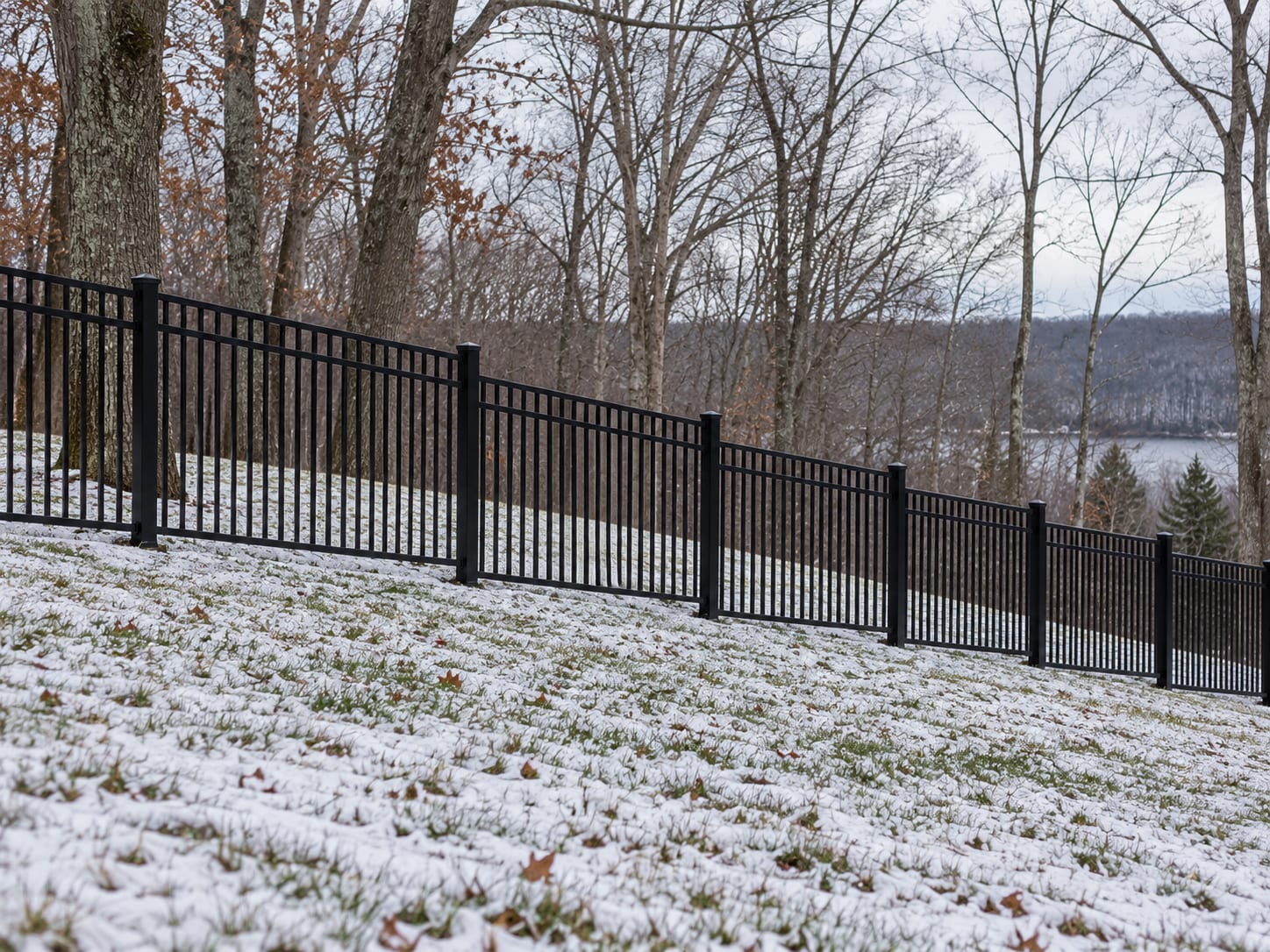
Snow is mainly a structural and installation issue. A solid privacy panel can catch wind and drifting snow, while an open aluminum fence allows more air through. Posts, concrete depth, reinforcement, spacing, drainage, and local soil conditions affect performance more than the material name.
In western Connecticut, frost movement and ledge can change the footing plan. A post installed beside shallow rock or an old stone wall may require a different layout than a post in clear soil. If excavation may encounter ledge, the written estimate should state how rock removal, alternate footing methods, or layout changes will be handled.
For sloped ground, both materials may be stepped or racked when the product allows it. Racking follows the grade through an angled panel or rail. Stepping keeps sections level but creates changes in elevation between posts. The product’s slope limit and the gate location should be settled before installation.
Cleaning and inspection
Vinyl normally needs washing with water and mild soap. Stronger mixtures may be used for difficult dirt, but vigorous scrubbing can damage the finish. Inspect vinyl after storms for cracked rails, damaged posts, loose gates, leaning posts, and soil movement.
Aluminum should be rinsed and washed with a pH-neutral, non-abrasive cleaner. Annual cleaning is a reasonable maintenance point, with more frequent cleaning where salt or other contaminants are present. Avoid harsh solvents, abrasive brushes, and excessive pressure washing. Inspect the powder coat for scratches, bent rails, loose fasteners, and gate alignment.
Both materials need vegetation control, drainage around posts, and prompt correction of leaning posts or gate problems. The fence may not need paint or stain, but the gates, hardware, soil, and drainage still need attention.
A Sound Fence Planning Sequence
- 1
Confirm the function
Decide whether the fence is for privacy, views, a pool, pets, property definition, or another use.
- 2
Check the property
Review the survey or plot plan, driveway, septic system, slopes, and possible property-line questions.
- 3
Ask the town
Contact zoning or planning and zoning about height, setbacks, visibility, rights-of-way, and zoning approval.
- 4
Confirm building requirements
Ask the building department about permits, inspections, and separate pool-barrier approval.
- 5
Mark utilities
Call Before You Dig before excavation involving power or mechanized equipment.
- 6
Settle the product
Confirm height, style, reinforcement, picket spacing, gates, slope method, finish, and warranty.
- 7
Install and inspect
Set posts and footings, install panels and gates, complete cleanup, and address required inspection steps.
What the fence may cost
National cost guides place basic installed vinyl and aluminum fencing in overlapping ranges. Fixr’s 2025 national figures list both materials at $10 to $30 per linear foot for materials only and $15 to $40 per linear foot installed.
HomeGuide’s 2026 national estimate places standard vinyl fencing at about $30 to $60 per linear foot installed. Six-foot privacy fencing commonly falls around $40 to $60 per linear foot, while eight-foot privacy fencing commonly falls around $60 to $85 per linear foot. These are national figures, not Connecticut bids, and they focus on installed residential projects and current market conditions.
Angi’s 2026 national estimate gives vinyl installation at approximately $15 to $40 per linear foot and lists aluminum project totals of approximately $2,430 to $6,500, depending on project size and design. These figures also are national.
Hover or tap a row to highlight it.
| Material and source | Materials only | Installed |
|---|---|---|
| Vinyl, Fixr 2025 national estimate | $10 to $30 per linear foot | $15 to $40 per linear foot |
| Aluminum, Fixr 2025 national estimate | $10 to $30 per linear foot | $15 to $40 per linear foot |
| Standard vinyl, HomeGuide 2026 national estimate | Installed figure only | $30 to $60 per linear foot |
| Six-foot vinyl privacy, HomeGuide 2026 national estimate | Installed figure only | $40 to $60 per linear foot |
| Eight-foot vinyl privacy, HomeGuide 2026 national estimate | Installed figure only | $60 to $85 per linear foot |
The Connecticut fence cost guide explains the site items that affect a local quote. Ask for separate line items for material, posts and concrete, gates, excavation, ledge or rock removal, old-fence removal, grading, permits, survey work, and site restoration.
A short open aluminum fence may compare differently from a six-foot vinyl privacy fence. The useful comparison is between written proposals with the same linear footage, height, gate count, footing method, access, and site conditions.
Local rules come from the municipality
Each Connecticut town sets its own fence rules. Height, setbacks, front-yard and corner-lot visibility, permits, inspections, and zoning review depend on the municipality and sometimes the zoning district.
Ridgefield publishes zoning regulations and states that building permit applications receive zoning review. Ask the Ridgefield land-use office about the current rule for your district and fence location. Newtown publishes separate town and Borough zoning regulations, so first determine whether the property is governed by the Town of Newtown or the Borough of Newtown. The Newtown fence permit guide can help you identify the right office to contact.
Nearby New York municipalities also differ. Putnam Valley requires a building permit for fences, walls, and enclosures within five feet of a property line or roadway. Kent lists fences higher than six feet as requiring a building permit and zoning approval. Yorktown’s fence permit application lists a $75 permit fee, a $20 certificate-of-compliance fee, a property survey, fence specifications, and contractor insurance requirements. Tarrytown requires a permit application with a current survey and states a six-foot maximum under its zoning ordinance.
Each example applies only to its own municipality. Ask the local zoning or planning and zoning office about height, front-yard and corner-lot visibility, setbacks, property lines, rights-of-way, and whether zoning approval is required. Ask the building department about a building permit, inspection, or separate pool-barrier approval. For general Connecticut permit questions, see Do You Need a Permit for Fence Installation in CT?.
If the fence is near wetlands, watercourses, drainage areas, or a regulated buffer, contact the municipal inland wetlands agency before the final layout is signed. Connecticut DEEP states that municipal wetlands agencies regulate activities that may affect inland wetlands and watercourses, and many towns regulate adjacent review areas as well.
Connecticut General Statutes chapter 823 addresses fences and related property matters. A specific boundary or neighbor dispute can involve property rights and should be discussed with a Connecticut real estate attorney.
What to put in the written plan
Before digging, have the property address, parcel information, survey or plot plan, proposed fence line, height, style, gate locations, and distance from roads and property lines ready. Include pool information when relevant. Photos of slopes, ledge, stone walls, drainage, access limits, and existing fence conditions can help define the work.
Call 811 or 1-800-922-4455 through Call Before You Dig before excavation involving power or mechanized equipment. Connecticut PURA states that excavators must notify CBYD so underground utility facilities can be located. A 2025 PURA notice states that notification must occur at least two full business days before digging involving power or mechanized equipment. The Call Before You Dig fence checklist covers the timing and marking step.
If a neighbor is involved, write down the agreed fence location, whether a survey controls the line, access for installation, finished side, gate access, cost sharing, maintenance, repairs, removal, and replacement terms.
Your contractor proposal should identify the exact product line, height, style, color, post size, reinforcement, footing method, gate hardware, slope method, linear footage, exclusions, permit responsibility, utility-marking responsibility, schedule, payment schedule, warranty, cleanup, change orders, and insurance information.
At My Fence Guy, we put those job details into the written quote so you can compare the fence itself with the excavation, gates, access, and site work that affect the finished price.
Connecticut’s Department of Consumer Protection states that fences are included in home improvement, that residential home-improvement contractors must be registered, and that home-improvement work requires a written contract. DCP also recommends verifying registration and insurance.
Frequently Asked Questions
Which is better, vinyl or aluminum fencing?
Neither is universally better. Vinyl is usually the better fit for privacy, screening, moisture resistance, and low routine maintenance, while aluminum is usually the better fit for open views, pool enclosure, ornamental appearance, and resistance to rot.
Is a metal fence cheaper than vinyl?
Aluminum and vinyl often overlap in national installed prices. Fixr’s 2025 national figures place both at approximately $15 to $40 per linear foot installed, but height, style, gates, excavation, access, slope, and removal can change the local result.
What are the disadvantages of an aluminum fence?
Aluminum usually provides little privacy, and it can scratch, dent, or bend from impact. Open picket designs also require careful spacing for small pets, and decorative details or reinforced gates can raise the installed cost.
What are the downsides of vinyl fencing?
Vinyl can receive more wind and snow pressure when used as a solid privacy fence. It becomes less flexible in cold weather, can crack from impact or improper installation, and can warp from concentrated heat. Some products also have limited slope capacity.
Do aluminum fences increase property value?
An aluminum fence may improve a property’s usefulness and appearance, especially around a pool or along a view, but there is no universal value increase attributable to aluminum fencing. The effect depends on design, condition, installation quality, local requirements, and buyer preferences.
What is the average lifespan of a vinyl fence?
A commonly cited national consumer estimate places typical vinyl service life at approximately 20 to 30 years, with some fences lasting longer when the material, installation, drainage, soil, exposure, and maintenance are favorable. A warranty is not the same as a promised service life.
Should a vinyl fence touch the ground?
Generally, no. One manufacturer's installation instructions recommend at least two inches of clearance between the bottom of the panel and the ground, while pool barriers must be evaluated under the Connecticut State Building Code and the selected product instructions.
Vinyl and Aluminum Fence Check
1. Which material usually provides more privacy?
2. What is the Connecticut outdoor pool barrier height in the cited code?
3. What is the Fixr 2025 national installed range for both basic vinyl and aluminum fencing?
4. What should you compare before choosing a fence product?
5. How much clearance does one manufacturer recommend between a vinyl panel and the ground?
Pick an answer to begin.
Final Thoughts
Vinyl fits a Connecticut yard when privacy, screening, moisture resistance, and simple cleaning matter most. Aluminum fits when you want open views, a pool enclosure, a lighter boundary, or an ornamental powder-coated finish. In either case, compare the exact product and settle the town requirements, utility markings, footing plan, gates, and site conditions before ordering.
A sound written quote should make the material choice easier because it separates the fence from the excavation, posts, concrete, gates, access, permits, and repairs to the surrounding ground. Call us at (203) 746-1100 for a free estimate, or reach out through our contact page.
Fence Material Terms
Tap a term to see what it means.
Privacy panel. A solid vinyl panel that blocks most views through the fence.
More about fences
Wood vs Vinyl Fence: Cost, Upkeep and Lifespan in Connecticut
Wood or vinyl fence in Connecticut: installed cost, lifespan in freeze-thaw winters, staining and cleaning, storm repairs and how each looks over the years.
Read the guide to Wood vs Vinyl FenceHow Deep Should Fence Posts Be in Connecticut? Frost Line and Footings
How deep to set fence posts in Connecticut: frost depth, manufacturer depth rules by fence height, concrete or gravel, and how frost heave lifts posts.
Read the guide to How Deep Should Fence Posts Be in Connecticut? Frost Line and FootingsInstalling a Fence on Rocky Soil and Ledge in Western Connecticut
Rocky soil and ledge are common in western Connecticut, and fences still go in. Core drilling, pinned posts, surface mounts, and how ledge affects cost.
Read the guide to Installing a Fence on Rocky Soil and Ledge in Western Connecticut