
Call Before You Dig: Marking Utilities Before a Fence Goes In in Connecticut
By Tony Pellicone10 min readPublished
- fence installation
- homeowner guide
- connecticut
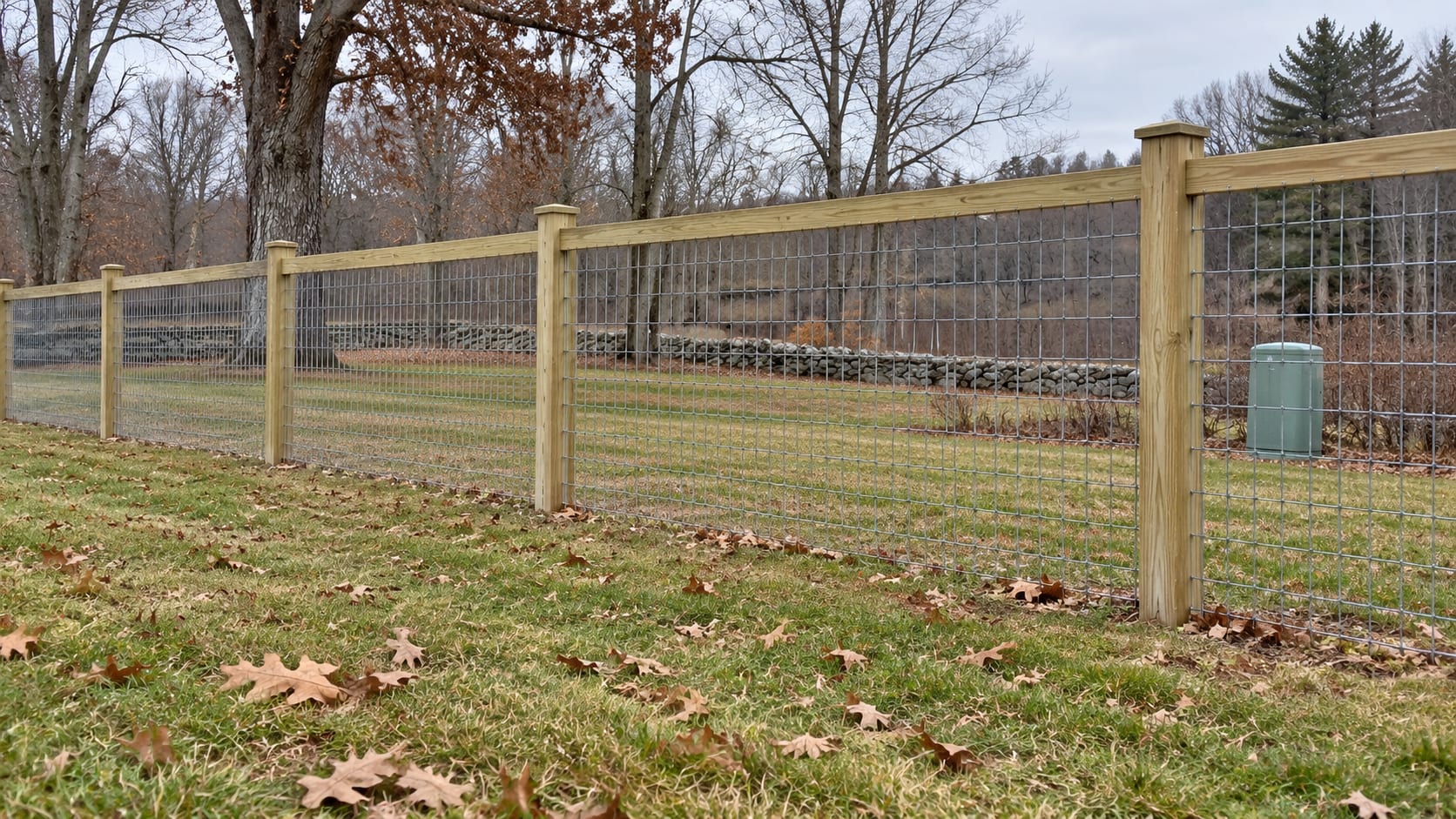
Yes, you should request a Call Before You Dig ticket before fence-post excavation with an auger, excavator, trencher or other powered equipment in Connecticut. The contractor or person doing the digging is responsible for the request, and the notice must be made at least two full days before excavation, excluding Saturdays, Sundays and holidays. The service is free, but public utility marks cover only public facilities, not every private line on your property.
A fence line can cross gas, electric, water or communication facilities, along with private irrigation, septic, pool, propane, lighting or invisible dog-fence lines. Get the CBYD ticket, wait for the legal start date and utility responses, then investigate private systems before post locations are finalized.
Key Takeaways
Who calls
The person performing excavation with powered or mechanized equipment must obtain the CBYD ticket.
When to call
Submit notice at least two full days before digging, excluding Saturdays, Sundays and holidays, and no more than 30 days before excavation.
What gets marked
Participating public utilities mark the facilities they own or operate in the proposed work area.
What you must add
Private irrigation, septic, pool, propane, lighting and invisible dog-fence systems need a separate investigation.
Where rules differ
Connecticut excavation notice is statewide, while fence permits, setbacks and height rules come from the municipality.
The Connecticut rule before fence excavation
Connecticut General Statutes §16-346 requires the location of underground public utility facilities to be ascertained before excavation, demolition or discharge of explosives. The law applies to the person performing the work, not simply the property owner who ordered it. Read the official Connecticut statute and the current PURA CBYD provisions.
RCSA §16-345-4(a)(1) requires notice at least two full days, excluding Saturdays, Sundays and holidays, but no more than 30 days before excavation. If a fence contractor operates the auger or excavator, that contractor must obtain the location request. Put the ticket number and legal start date in the written estimate or contract so everyone knows which request covers the work.
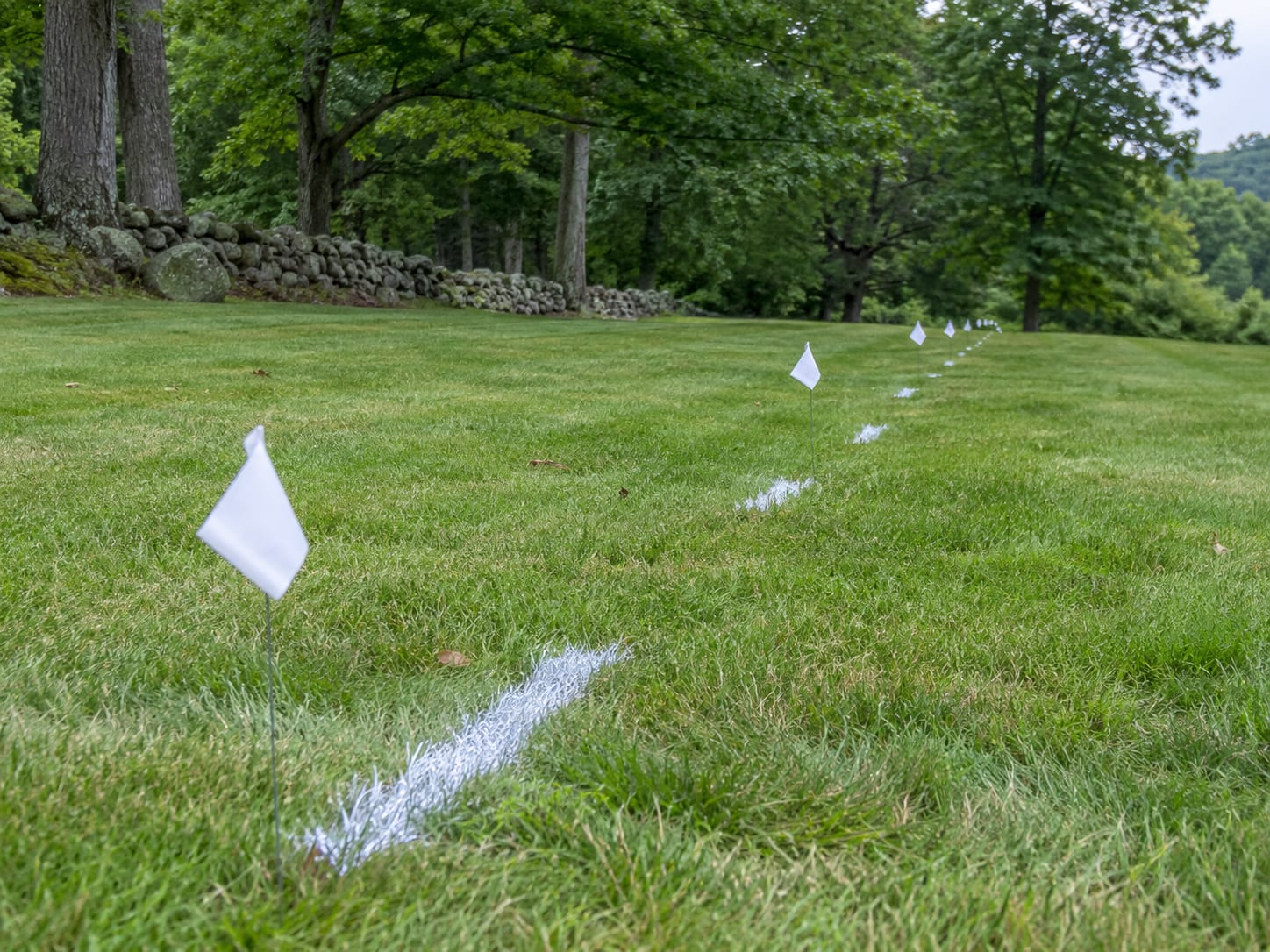
You can call 811, call 1-800-922-4455 or submit a request through the Connecticut CBYD website. Pre-mark the proposed excavation area with white paint, flags or stakes before submitting the request. The location request is valid for 30 calendar days from the notification date. If the work continues beyond that period, renew the ticket and allow the required waiting period again.
Hand tools are treated differently in the CBYD homeowner FAQ. A homeowner using only a shovel or post-hole digger is not required to notify CBYD under that FAQ, but PURA and CBYD encourage a markout because hand tools can still strike buried utilities. For a fence project, calling before any post-hole work gives you a clearer starting point even when the first holes may be dug by hand.
Connecticut fence excavation timeline
- 1
Mark the area
Paint or stake the proposed fence and post-hole locations in white.
- 2
Submit the request
The excavator calls 811, calls 1-800-922-4455 or submits an electronic ticket.
- 3
Wait for the start date
Allow at least two full days, excluding Saturdays, Sundays and holidays.
- 4
Review responses
Confirm the ticket number, notified utilities and marks before excavation begins.
- 5
Expose nearby lines
Hand dig or use soft excavation near marked facilities as required.
- 6
Renew when needed
Obtain a new ticket if the 30 calendar day validity period ends before work is complete.
What the utility colors mean
CBYD is a notification clearinghouse. It sends the request to participating public utility owners, which locate and mark the facilities they own or operate in the proposed work area. A markout shows an approximate location. It is not an exact pipe or cable edge.
Connecticut’s RCSA §16-345-5(i) uses the following color code. The PURA color-code page provides the same marking system.
Hover or tap a row to highlight it.
| Color | Facility or marking |
|---|---|
| Yellow | Gas, oil, petroleum products, steam, compressed air, compressed gases and other hazardous materials except water |
| Red | Electric power lines, conduits and facilities |
| Orange | Communication lines and cables |
| Blue | Water |
| Green | Storm and sanitary sewers, drainage systems and force mains |
| Purple | Reclaimed water, irrigation and slurry lines |
| White | Proposed excavation or demolition area |
| Pink | Survey markings |
The approximate-location strip extends no more than 1.5 feet on either side of the markout line, plus half the facility width where applicable. Treat the marked area as a working zone that needs careful exposure before a post hole is placed.
CBYD homeowner guidance says power tools may not be used within 18 inches of gas markings. Where a fence post must go near a marked gas, electric, communication, water or sewer facility, expose the line by hand or soft digging before powered equipment is used. Follow the instructions on the ticket and the utility’s instructions at the site.
Private lines need a separate plan
A CBYD ticket covers participating public utilities. It does not locate every system installed by a homeowner, private contractor or property owner. Private lines may include sprinkler and irrigation pipes, secondary electric lines, pool plumbing, sewer laterals, septic systems, propane lines, private lighting, security wiring and invisible dog-fence wire.
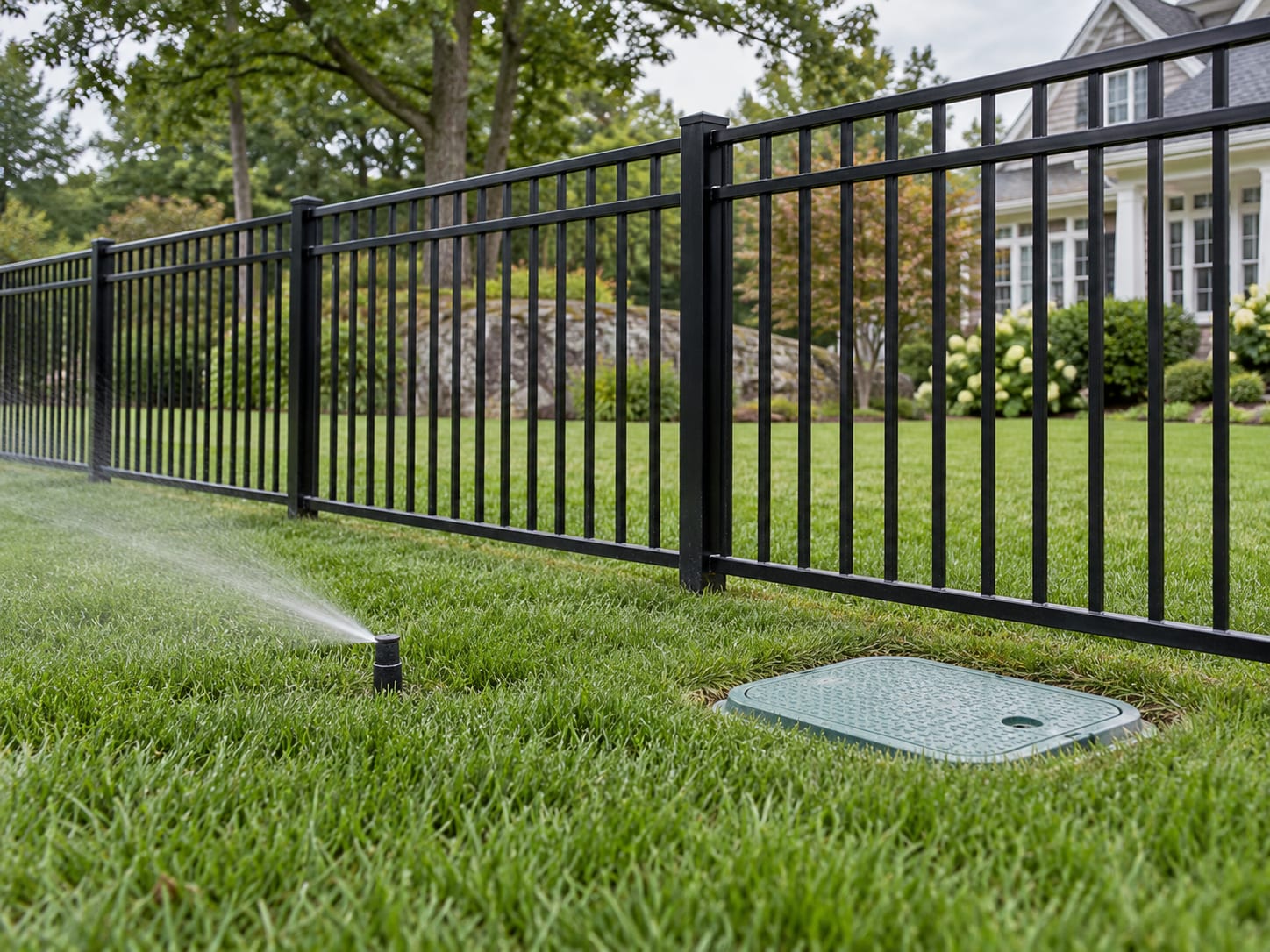
Walk the proposed fence line before the contractor sets post locations. Look for irrigation heads, valve boxes, lighting fixtures, pool equipment, propane tanks, septic covers, cleanouts, wells, generators, outbuildings and dog-fence transmitters. An old stone wall or a change in grade can affect the proposed fence line, but neither tells you where utilities run. Keep the line investigation separate from fence layout decisions.
Gather prior surveys, septic plans, well records, irrigation plans, electrical permits, pool plans and site drawings. Ask the previous owner, property manager, irrigation company, septic contractor, propane supplier and pool contractor where their systems run. The town health department or sanitarian may have available septic or well records. A private utility-locating company can locate privately owned pipes, wires, septic components and other systems outside the CBYD system.
Give the fence contractor a written sketch or marked site plan showing known private systems before post locations are finalized. Private locating supplements the CBYD ticket. It does not replace the required Connecticut notice when powered or mechanized excavation will occur.
For a pool enclosure, review Connecticut pool fence requirements before the fence line is set. For a dog yard, the best fence choices for dogs may affect gate locations, buried wire and the area that needs private locating. A residential fencing plan should account for both the finished fence and the underground systems around it.
What to do if a mark or line is contacted
Stop excavation immediately if a utility is struck, scraped or dented. Connecticut defines contact broadly, including damage to a facility’s coating, housing or protective device. The excavator responsible for the work must immediately and directly report the contact or damage to the affected public utility.
Do not touch, move, cover or repair the facility unless the utility authorizes it. Keep workers and other people away from the area until the utility gives instructions.
If there is a serious electrical short circuit or escaping combustible or hazardous fluid or gas, including natural gas or propane, alert people in the danger area. Contact police, fire or emergency personnel, take feasible steps to remove ignition sources and evacuate employees and the public when needed.
PURA investigates reported damage and violations. The maximum civil penalty listed by PURA is $40,000 for each violation, with the actual penalty based on the circumstances. The PURA monitoring and enforcement information explains the reporting and enforcement process.
Town approvals come after the utility plan
The CBYD notice rule is statewide in Connecticut. Fence permits, zoning setbacks, height limits, corner-lot visibility rules and related approvals are local. Before ordering materials, ask the municipality governing the parcel:
- Which office handles fence zoning questions?
- Is a zoning permit, building permit, zoning compliance review or another approval required?
- What setbacks, height limits, right-of-way restrictions and corner-lot rules apply?
- Is the property near wetlands, a watercourse, septic areas, a historic district, a public road or an easement?
- Does the town require a survey, site plan, permit number or CBYD ticket before excavation?
- Which documents, fees and inspections apply?
Bring the property address, fence sketch, approximate length, gate locations, survey if available, parcel map, site photos, proposed post-hole locations and information about septic, wells, pools, irrigation, propane and private electrical systems. The statewide overview, Do You Need a Permit for Fence Installation in CT?, can help organize the permit questions.
Newtown directs permit and building-code questions to its Building Department and states that permit fees are based on the total cost written on the application. Danbury operates a Permit Center that coordinates building, zoning, engineering, fire, health and public-utility reviews. Those local examples show why you should ask the office governing your own parcel.
The fence contractor should state in writing who submits the CBYD request, who identifies private utilities, who obtains local approvals, where the fence and gates will go and what happens if the crew encounters septic equipment, ledge or an undocumented facility. A written sketch helps when a fence line changes after the original ticket.
For a property near a wetland or watercourse, read Building a Fence Near Wetlands, Streams or Lakes in Connecticut before finalizing the route. If the proposed posts are near exposed rock or ledge, Installing a Fence on Rocky Soil and Ledge in Western Connecticut explains why the excavation plan may need adjustment.
If the fence is on the New York side
A fence project across the state line follows the one-call system serving the actual excavation location. In Connecticut, use CBYD at 811, 1-800-922-4455 or cbyd.com. Notice must be made at least two full days, excluding Saturdays, Sundays and holidays, and no more than 30 days before excavation.
In Putnam, Dutchess and Westchester counties, use UDig NY at 811 or UDig NY. New York requires notice at least two full working days and no more than 10 working days before excavation. Utility responses are provided through New York’s Automated Positive Response system. UDig NY member utilities also require a separate plan for privately owned facilities.
Hover or tap a row to highlight it.
| Excavation location | One-call system | Notice timing |
|---|---|---|
| Connecticut | CBYD | At least two full days, excluding Saturdays, Sundays and holidays, and no more than 30 days before excavation |
| Putnam, Dutchess or Westchester County, New York | UDig NY | At least two full working days and no more than 10 working days before excavation |
Ask the town, city or village governing the property about fence approval, setbacks, height rules and permits. A Connecticut ticket does not cover a New York excavation, and a New York ticket does not replace Connecticut notice.
Frequently Asked Questions
Do I need to call 811 before installing a fence?
Yes, if the fence installation uses an auger, excavator, trencher, skid steer or other powered excavation equipment. The person performing the excavation must request the ticket, while homeowners using hand tools are encouraged to call because shovels and post-hole diggers can damage utilities.
How deep can you dig without calling 811?
There is no Connecticut depth exemption for powered or mechanized excavation. Hand digging has a different rule under the CBYD FAQ, but the practical answer for fence holes is to request a markout at any depth and investigate private lines separately.
How long does Call Before You Dig take in Connecticut?
Plan for at least two full days, excluding Saturdays, Sundays and holidays, before mechanized excavation. Submit the request no more than 30 days before digging, review utility responses and wait for the legal start date before work begins.
Is Call Before You Dig free?
Yes, Connecticut CBYD is free through 811, 1-800-922-4455 or the online request system. A private utility locator may charge to identify irrigation, septic, propane, pool, lighting, security, invisible dog-fence or secondary electrical systems.
Test your fence excavation plan
1. Who is responsible for the Connecticut CBYD request?
2. How far in advance should Connecticut notice be made?
3. Which line may require private locating?
4. What should you do after contacting a utility?
Pick an answer to begin.
Final Thoughts
Call Before You Dig is the first excavation step for a powered fence installation in Connecticut, but it is only one part of the site plan. Pair the ticket with a private-line investigation, confirm the local approvals and put the fence line, post locations and responsibilities in writing. My Fence Guy can help coordinate the excavation plan, utility information and written scope before the fence work begins.
Call us at (203) 746-1100 for a free estimate, or reach out through our contact page.
Fence excavation terms
Tap a term to see what it means.
CBYD. Connecticut’s Call Before You Dig notification clearinghouse for participating public utility facilities.
More about fences
How Deep Should Fence Posts Be in Connecticut? Frost Line and Footings
How deep to set fence posts in Connecticut: frost depth, manufacturer depth rules by fence height, concrete or gravel, and how frost heave lifts posts.
Read the guide to How Deep Should Fence Posts Be in Connecticut? Frost Line and FootingsInstalling a Fence on Rocky Soil and Ledge in Western Connecticut
Rocky soil and ledge are common in western Connecticut, and fences still go in. Core drilling, pinned posts, surface mounts, and how ledge affects cost.
Read the guide to Installing a Fence on Rocky Soil and Ledge in Western ConnecticutFencing a Sloped Yard: Stepped vs Racked Fences
Fencing a sloped yard: stepped or racked panels, which materials rack and how far, handling gaps under the fence for pets and pools, and the cost of a slope.
Read the guide to Fencing a Sloped Yard