
Connecticut Pool Fence Requirements: Height, Gates and Permits
By Tony Pellicone13 min readPublished
- pool fencing
- pool safety
- connecticut
- fence permits
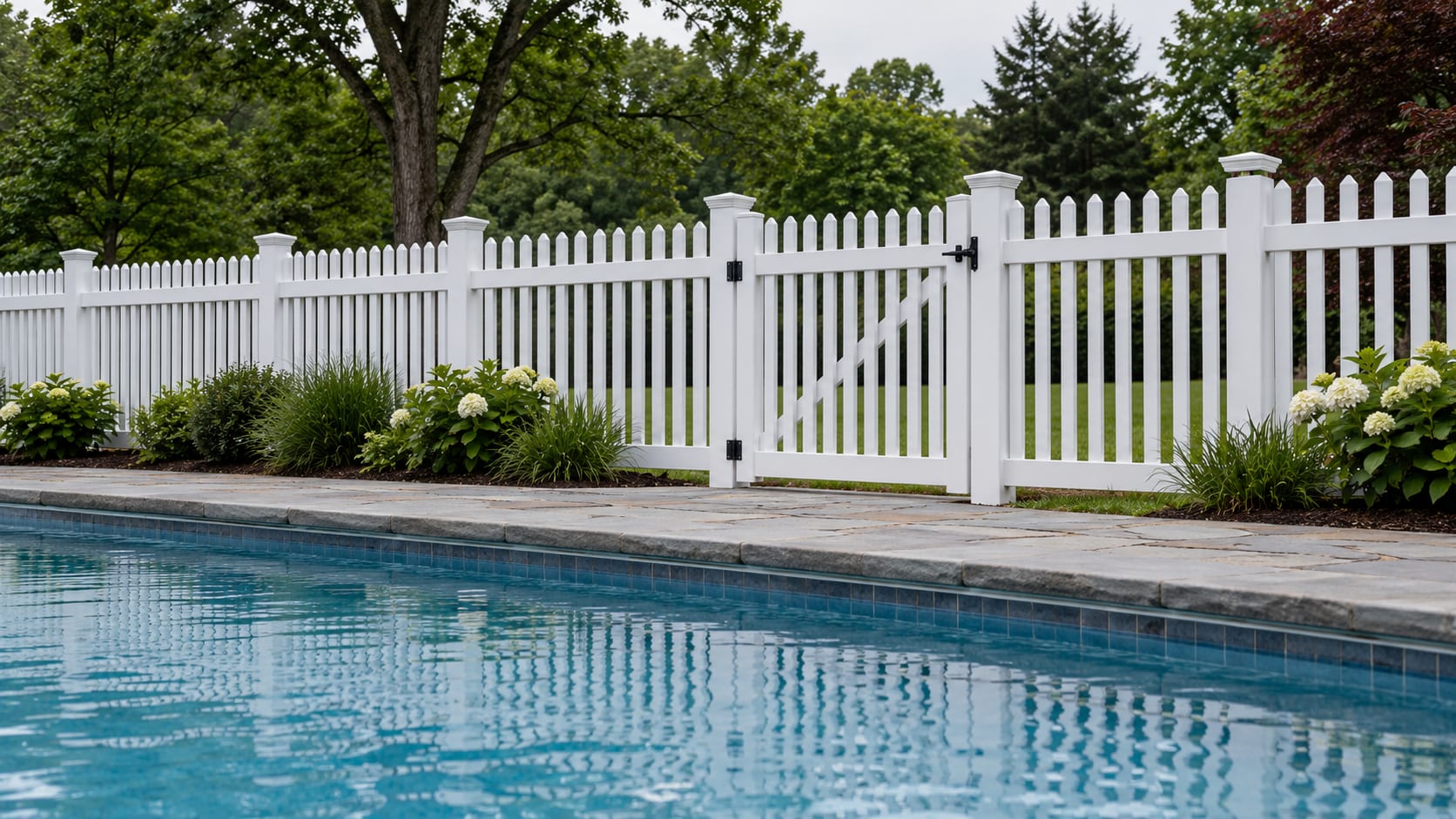
For most residential outdoor pools, spas and hot tubs in Connecticut, the barrier must be at least 48 inches high, with limited bottom clearance, openings smaller than a 4-inch sphere, and a gate that opens away from the pool, closes by itself and latches by itself. The 48-inch rule is only the starting point. Your town also decides which permits, setbacks, zoning approvals and inspections apply.
The current statewide code is the 2022 Connecticut State Building Code. It adopts the 2021 International Swimming Pool and Spa Code and the 2021 International Residential Code. Before materials are ordered, ask the local building department to confirm the code edition, barrier design, gate hardware and inspection schedule for your property.
Key Takeaways
Height
A residential pool barrier generally must be at least 48 inches high when measured from the side facing away from the pool.
Openings
The barrier must prevent passage of a 4-inch-diameter sphere and must limit climbable construction.
Gates
Pedestrian gates must open outward, away from the pool, and be self-closing, self-latching and able to accept a lock.
Permits
Building, fence, zoning, electrical, plumbing, deck and wetlands approvals may depend on the municipality and project scope.
Existing fences
A backyard fence can serve as part of the barrier only when the entire arrangement meets the pool-barrier rules.
Alternatives
A house wall, approved safety cover, above-ground pool wall or another approved protection may form part of the barrier in the right situation.
The Connecticut pool-barrier rules that apply statewide
The 2022 Connecticut State Building Code sets the basic requirements for residential outdoor pools, spas and hot tubs. The barrier must be at least 48 inches above grade, measured from the side facing away from the pool. That measurement matters when the ground changes elevation or the fence sits near a retaining wall.
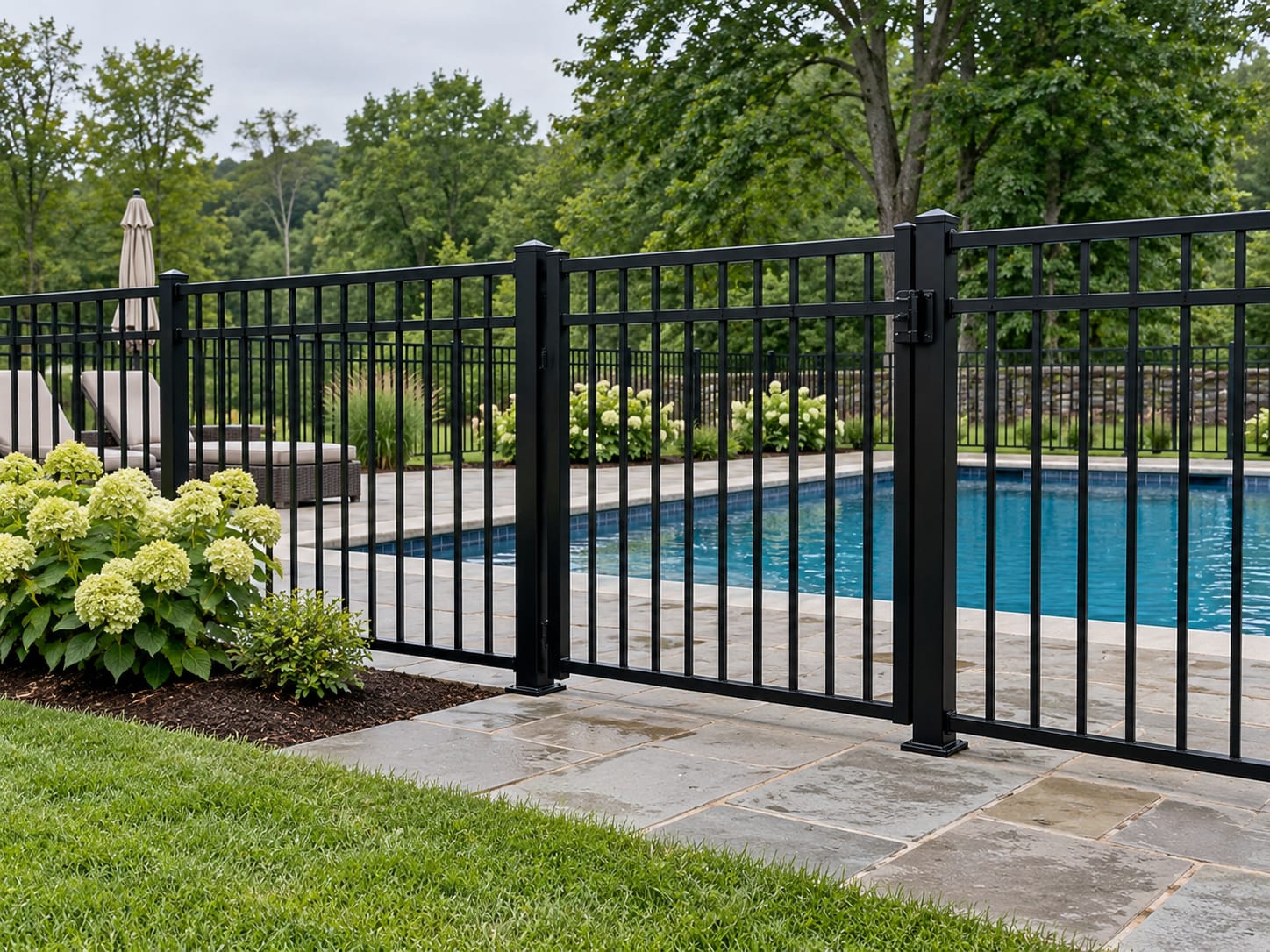
The bottom gap depends on the surface beneath the barrier. The maximum clearance is 2 inches over grass, gravel and other non-solid surfaces, or 4 inches over concrete and other solid surfaces. Openings in the barrier must not allow a 4-inch-diameter sphere to pass through.
The code also controls how a person might climb the barrier. When horizontal members are less than 45 inches apart, they must face the pool side and the vertical spacing cannot exceed 1 3/4 inches. When horizontal members are at least 45 inches apart, vertical spacing may be up to 4 inches. Decorative cutouts and diagonal openings have their own limits, including a 1 3/4-inch maximum for several types of openings.
Connecticut permits chain-link mesh no larger than 2 1/4 inches square when the barrier otherwise meets the code. Slats must reduce the openings to no more than 1 3/4 inches where required. The code also calls for a 3-foot horizontal clear zone outside the barrier. Structures, equipment or similar objects in that area can create a foothold or handhold.
The adopted requirements appear in the Connecticut State Building Code regulations and the 2022 Connecticut State Building Code.
How the barrier relates to the pool
Connecticut’s pool-barrier provisions require the barrier to surround the pool area. The distance between the barrier and the pool water depends on the site, the proposed enclosure and the local approval process.
That gives you some design flexibility. You might use a separate fence around the pool, an existing yard fence, a house wall or an above-ground pool wall. The entire arrangement still has to meet the height, opening, clearance, gate and climbing requirements.
An in-ground pool or spa must have a temporary enclosure at least 4 feet high from the beginning of construction until the permanent barrier is complete. The temporary enclosure must limit openings to less than the size of a 4-inch sphere and have positive latching.
A residential pool is generally a pool capable of containing more than 24 inches of water that is accessory to a residence for household and guest use. The rules apply to in-ground, above-ground and on-ground installations.
For an above-ground pool, the pool wall can serve as the barrier if it meets the applicable height and opening requirements. Ladders and steps must be secured, locked or removed, or separately enclosed. If your project involves that type of pool, read Does an Above-Ground Pool Need a Fence in Connecticut? before choosing the barrier plan.
Gate swing, latch placement and house-wall barriers
A pedestrian pool gate must open outward, away from the pool. It must be self-closing, self-latching and able to accommodate a locking device. The gate must meet the same height, opening and climbability rules as the rest of the barrier.
The latch release has additional requirements. If the release mechanism is less than 54 inches above the bottom of the gate, it must be on the pool side and at least 3 inches below the top of the gate. Within 18 inches of that release mechanism, openings in the gate and barrier may not be larger than 1/2 inch.
The code states that pedestrian access doors or gates “shall open outward away from the pool and shall be self-closing and have a self-latching device.” Gates other than pedestrian gates must have a self-latching device and comply with the applicable release-mechanism provisions.
A dwelling wall may form part of the pool barrier when direct-access doors, gates and qualifying operable windows have the required protection. The 2021 International Swimming Pool and Spa Code allows listed and labeled audible alarms on doors and operable windows that provide direct access to the pool area. In ordinary dwelling units, alarm deactivation switches must be at least 54 inches above the threshold or finished floor. For accessible, Type A and Type B units, the switch may be between 48 and 54 inches.
A listed and labeled safety cover complying with ASTM F1346 may also be part of an approved protection plan. Another protective method may be accepted when it provides equivalent protection and the code official approves it.
Connecticut separately requires a pool alarm for residential pool construction or substantial alteration. The alarm must produce at least 50 decibels when a person or object weighing 15 pounds or more enters the water. Hot tubs and portable spas are exempt from that state pool-alarm requirement under the cited provisions. The statute is Connecticut General Statutes §29-265a.
Hover or tap a row to highlight it.
| Requirement | Statewide residential standard |
|---|---|
| Barrier height | At least 48 inches above grade |
| Bottom gap over grass or gravel | No more than 2 inches |
| Bottom gap over concrete or another solid surface | No more than 4 inches |
| General opening limit | Must not pass a 4-inch-diameter sphere |
| Horizontal members less than 45 inches apart | Face the pool side, with vertical spacing no greater than 1 3/4 inches |
| Latch release below 54 inches | Pool-side release, at least 3 inches below the gate top |
| Clear zone outside barrier | 3 feet horizontally |
Permits and inspections depend on the town
Connecticut towns set local zoning, setbacks, permit and inspection procedures. The statewide code establishes the pool-barrier standards, but the town still determines how the project moves through its local process.
Wilton’s pool packet requires a building permit and uses the instruction “NO FENCE, NO INSPECTION” for the temporary pool enclosure required before certain in-ground pool inspections. Its materials also reproduce the state rules for residential pools, spas and hot tubs. If your property is there, the town’s published materials are the place to start, along with Fence Permits in Wilton, CT: Height Limits, Zoning and Who to Call.
South Windsor’s swimming-pool agreement requires a building permit and an electrical permit for every swimming-pool installation. It calls for a 48-inch barrier, temporary fencing before excavation for an in-ground pool and a final inspection of swimming-pool access protection before the pool may be used. Pool decks require additional permits and inspections.
Before work begins, ask the town building or zoning office which of these apply:
- A building permit for the pool.
- A separate fence or zoning permit.
- Electrical, plumbing or mechanical permits.
- A temporary-barrier inspection.
- A final pool-barrier inspection or certificate of use.
- Inland-wetlands review.
- Deck permits and inspections.
- Bonding and electrical inspections.
A site plan, survey or plot plan should show the house, lot lines, pool, deck, equipment, proposed barrier and gate. If the property is near a wetland, stream or lake, ask the town whether regulated-area review applies. The Connecticut DEEP land-use guidance explains why local land-use approvals can affect a project.
The state’s next code editions have been delayed pending Legislative Regulation Review Committee approval. Recent proposals include 2024 H.B. 5169, 2025 H.B. 6825 and proposed 2026 amendments concerning pool-wall and natural barriers. Confirm the code edition based on the permit-application date with the local building official before relying on a future change. The current adoption information is posted by DAS Building and Fire Code Adoption Process.
A practical order for planning pool fencing
- 1
Site plan
Mark the pool, house, lot lines, decks, equipment, proposed barrier and gate.
- 2
Town questions
Confirm building, fence, zoning, electrical, plumbing, deck, wetlands and inspection requirements.
- 3
Utility marking
Call 811 or submit a Call Before You Dig ticket at least two full working days before mechanized excavation.
- 4
Temporary barrier
Install the required temporary enclosure before the pool reaches the inspection stage that requires it.
- 5
Fence layout
Set the posts and gate so the height, clearance, openings, latch and clear zone meet the approved plan.
- 6
Final inspection
Complete the town’s access-protection, electrical, bonding and other required inspections before use.
Before digging, use Call Before You Dig: Marking Utilities Before a Fence Goes In in Connecticut. A pool project can involve several contractors, so have the pool installer, electrician and fence contractor work from the same approved layout.
Choosing a fence that can meet the pool rules
The cheapest material is not always the lowest-cost completed project. The total price depends on linear footage, gate hardware, excavation, slopes, ledge, existing concrete, permits, inspections and corrections.
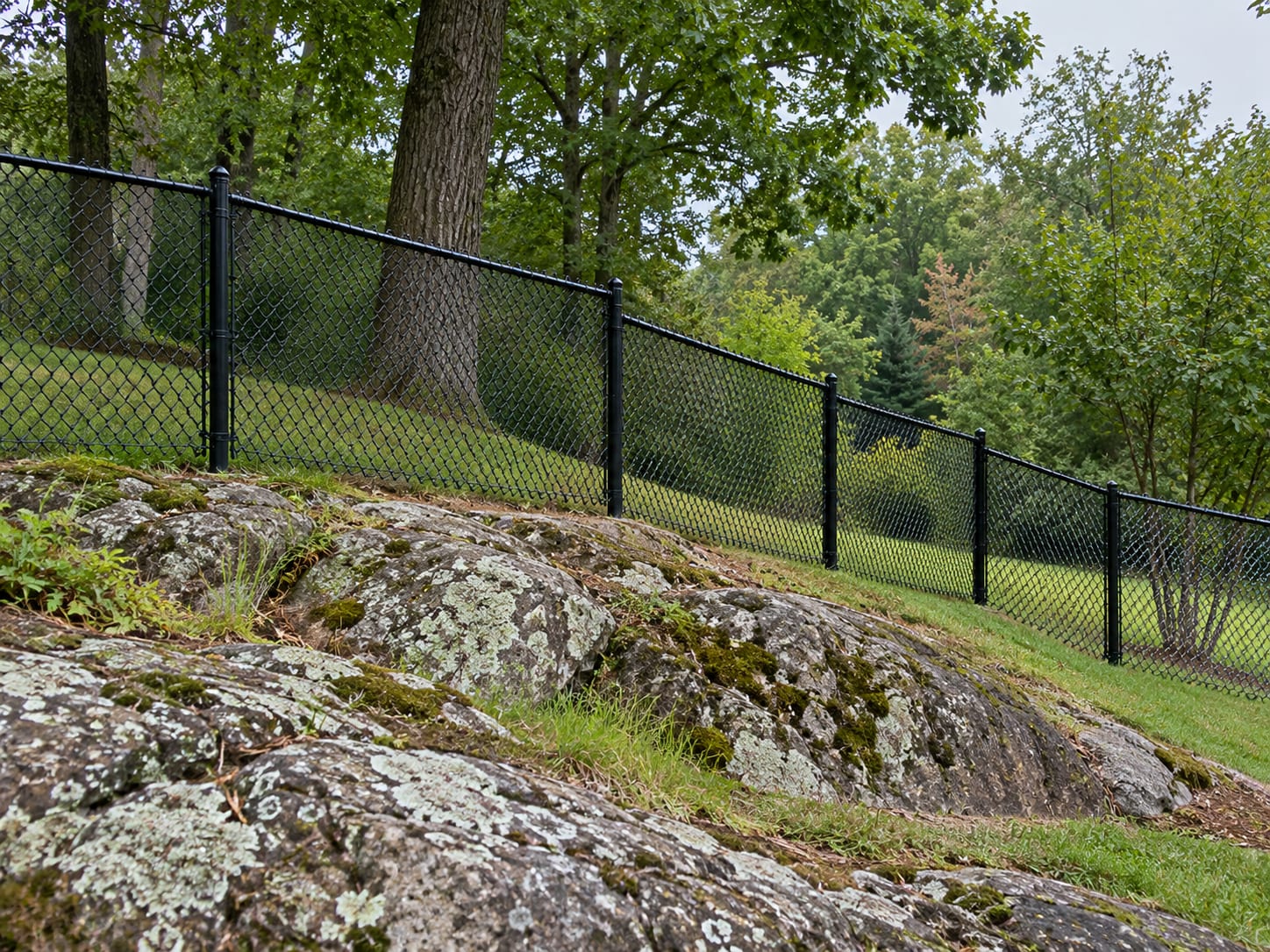
National cost data from 2025 and 2026 places installed mesh fencing at about $7 to $10 per linear foot and chain-link fencing at about $5 to $12 per linear foot, according to Fixr. The same national source places aluminum at about $15 to $35 per linear foot. Angi’s national 2026 data places pool-fence installation overall at about $15 to $25 per linear foot. These are national figures, not a Connecticut quote.
Mesh and chain link can be economical, but the openings, mesh size, gate hardware and climbable features still have to meet Connecticut’s rules. Aluminum may provide a clean barrier with fewer solid panels, but decorative details and rail spacing require review. Vinyl or wood can work when the design limits openings and climbing points. A separate pool fencing system can make the barrier line easier to inspect and maintain.
A western Connecticut lot may add excavation work when ledge or an old stone wall affects the proposed fence line. That changes the answer because posts may need a different layout, drilling method or footing detail. Read Installing a Fence on Rocky Soil and Ledge in Western Connecticut if ledge is part of your site plan.
For a written estimate, ask for the material, linear footage, number of gates, latch and hinge hardware, post depth or footing method, permit responsibility, inspection-related work and correction responsibility. My Fence Guy can prepare a project scope around the approved barrier line, including the gate hardware and the work needed to coordinate the fence with the pool area.
Which municipality's pool rules apply to your property
A property in Connecticut follows the local Connecticut municipality’s zoning, permit and inspection process. A fence that works in one town may need different approval or gate details in another.
New York State guidance generally calls for a complete barrier at least 48 inches high, self-closing and self-latching gates, and possible pool, door or gate alarms. If you are working near the border, ask the municipality where the property is located before carrying over a Connecticut design or permit assumption.
Safety layers beyond the minimum code
The U.S. Consumer Product Safety Commission recommends several layers of protection for residential pools, spas and hot tubs. Its guidance includes a barrier at least 48 inches high, openings that do not pass a 4-inch sphere, limited bottom clearance, no climbable footholds or handholds, and outward-opening, self-closing, self-latching pedestrian gates.
CPSC guidance also recommends chain-link mesh no larger than 1 1/4 inches unless slats reduce the openings to 1 3/4 inches, secured or removable ladders for above-ground pools, close supervision, rescue equipment, a nearby phone and CPR preparedness. These are safety recommendations. Connecticut’s adopted code and the local permit requirements control legal compliance.
A house wall, compliant safety cover, above-ground pool wall or another approved protection may reduce the need for a separate isolation fence in some designs. A manual cover is not automatically a substitute for a required barrier. Ask the building official which option applies to your pool, doors, windows and permit.
Frequently Asked Questions
What are the legal requirements for a Connecticut pool fence?
A residential pool barrier generally must be at least 48 inches high, limit bottom clearance to 2 inches over non-solid surfaces or 4 inches over solid surfaces, and prevent passage of a 4-inch sphere. It must also control climbable features, and the pedestrian gate must open away from the pool, close by itself and latch by itself. Your town determines the permits, setbacks, zoning approvals and inspections for the project.
Is a 4-foot fence tall enough for a Connecticut pool?
A 4-foot barrier meets the statewide minimum height when measured from the side facing away from the pool. It still needs compliant openings, bottom clearance, gate hardware, climbability controls and a 3-foot clear zone, and the town may require a different design for the site.
Does my backyard fence count as a pool fence?
A backyard fence can count when it completely forms the required pool barrier and meets the height, opening, clearance, gate and climbing rules. Check the gate swing, latch location, nearby retaining walls, furniture, equipment and other possible footholds with the local building official.
Which way should a pool gate open?
A pedestrian pool gate must open outward, away from the pool. It must be self-closing, self-latching and able to accept a locking device, with the release mechanism placed according to its height.
Does a fenced yard eliminate the need for a pool barrier?
A fenced yard eliminates the need for a separate pool fence only when the yard fence itself forms a compliant barrier around the pool area. If the house is part of the barrier, direct-access doors and qualifying windows need the required alarms, cover or another approved protection.
What is the cheapest pool-fence option?
National 2025 figures place chain link at about $5 to $12 per linear foot installed and mesh at about $7 to $10 per linear foot installed. Your Connecticut project price depends on footage, gate hardware, permits, inspections, excavation, slopes, ledge and whether the material meets the pool-barrier rules.
What are the alternatives to pool fencing?
Possible alternatives or supporting protections include a house-wall barrier with compliant alarms, an ASTM F1346 safety cover, an above-ground pool wall with secured steps, a permitted natural barrier or another method approved by the code official. Pool alarms and door alarms add protection but do not automatically replace a required barrier.
Connecticut Pool Fence Check
1. How high must a residential pool barrier generally be in Connecticut?
2. Which way must a pedestrian pool gate open?
3. What is the maximum bottom clearance over grass or gravel?
4. What must a pedestrian pool gate do?
5. Who confirms local permits and inspections?
Pick an answer to begin.
Final Thoughts
Start with the approved barrier line, then coordinate the fence, gate, pool equipment, house doors, electrical work and inspection schedule around it. Ask the town about every permit that may apply, confirm the code edition for your application date, and request a written project scope that keeps the barrier details clear.
For a new barrier or a correction to an existing one, My Fence Guy can help organize the fence layout, materials, gate hardware and installation details around the town’s requirements. Call us at (203) 746-1100 for a free estimate, or reach out through our contact page.
Pool Fence Terms
Tap a term to see what it means.
Barrier. The fence, wall or approved enclosure that restricts access to the pool area.
More about fences
Does an Above-Ground Pool Need a Fence in Connecticut?
Above-ground pools in Connecticut: when the pool wall counts as the barrier, the 24-inch water depth rule, ladders and decks, and when a permit applies.
Read the guide to Does an Above-Ground Pool Need a Fence in Connecticut?Pool Fencing in Southbury, CT: Code, Gates, and Child Safety
The gate is what fails an inspection. Pool fencing in Southbury, CT: self closing hardware, latch height, the 4 inch rule, and clearance underneath.
Read the guide to Pool Fencing in Southbury, CTPool Fencing in Sherman, CT: Code, Gates, and Child Safety
Pool fencing in Sherman, CT is a life safety barrier, not a yard fence. The permit rules, gate hardware, and openings that decide whether it passes.
Read the guide to Pool Fencing in Sherman, CT