
Pool Fencing in Sherman, CT: Code, Gates, and Child Safety
By Tony Pellicone20 min readPublished
- pool fencing
- sherman ct
- pool safety
- connecticut
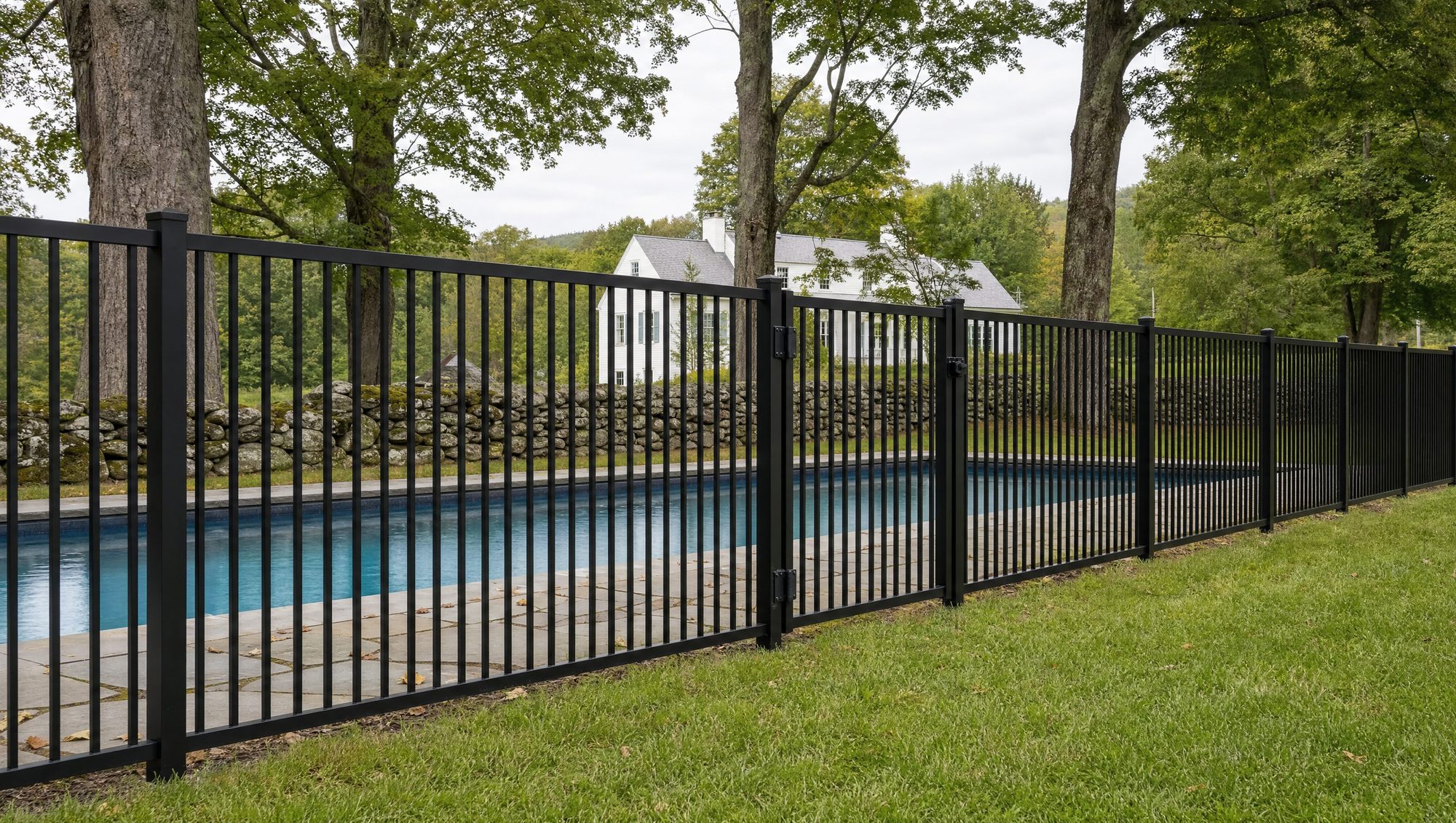
The fence around your pool is the only thing in the yard with a job that serious. Pool fencing in Sherman, CT is not really fencing at all in the way a property-line fence is fencing. It is a barrier, and the code treats it that way, as a system that has to keep a small child away from the water at the exact moment nobody is watching and nobody expects anything to happen. That is a hard standard for something that looks finished the day it goes in and then quietly changes every season after. Gates wear. Ground shifts. A patio chair gets dragged six inches too close to a panel. Most of the pool owners we talk to in Sherman are not worried about which panel style to buy; they are worried they will not find out they got it wrong until it is too late. So, here is what a pool barrier actually has to do, what Sherman reviews before you use the pool, and where these systems tend to come apart.
Key Takeaways
A pool barrier needs a permit regardless of height
Sherman requires a permit for a fence used as a swimming pool barrier no matter how tall it is, so the usual fence-permit shortcuts do not apply to this project.
The whole system gets reviewed, not just the fence
Panels, openings, bottom clearance, climbability, gate direction, hinges, latches, house doors, and deck access are all part of the barrier.
Gates carry most of the risk
A pedestrian pool gate has to self-close and self-latch from every normally open position, and it is the part that wears, sags, and gets propped open.
Not every fence product is pool-compliant
The 2021 pool and spa code limits chain-link openings to 1 3/4 inches unless slats reduce them, and decorative rails can hand a child a foothold.
Approval is not permanent protection
Erosion, frost movement, gate sag, and furniture set near the fence can turn a barrier that passed into one that no longer works.
What Makes a Pool Fence Different From the Fence Along Your Driveway?
A property-line fence has to look right, stand up straight, and stay where you put it. A pool safety fence in Sherman has to do all of that and then perform under the worst circumstances anyone can imagine, without an adult present and without a second chance. That difference is why the code stops caring about the fence and starts caring about the barrier, which is a much bigger object than the panels you picked out. Understanding that distinction early saves people from buying a fence that looks like a pool fence and functions like a yard fence.
The Barrier Is Everything the Water Touches
The barrier includes the panels, the posts, the space under the bottom rail, the openings between pickets or in the mesh, the gates and their hardware, any connection to the house or a deck, grade transitions, retaining walls, an above-ground pool wall if one is being used, and whatever climbable object happens to be sitting nearby. A fence can look complete and still fail as a pool barrier because one of those pieces is wrong. Oversized openings, a gate that does not self-close, a latch that does not engage, too much space under the panel, climbable horizontal rails, a gap beside a deck, or a section pushed out of line by settlement will each undo the rest of a good installation. The International Swimming Pool and Spa Code barrier provisions regulate the arrangement, not the brand.
The Fence Is One Layer, Not the Plan
The U.S. Consumer Product Safety Commission recommends layers of protection around a residential pool rather than a single line of defense. A compliant barrier is the first layer. Door and pool alarms, safety covers, swimming lessons, rescue equipment, CPR knowledge, and active adult supervision are the others, and the CPSC drowning prevention materials are clear that a fence reduces unsupervised access without replacing an adult. We build the barrier. It works best when the household treats it as one part of a plan instead of the reason to relax.
Does Pool Fencing in Sherman, CT Require a Permit?
Yes, and this is the part worth reading twice. Sherman requires a permit for a fence used as a swimming pool barrier regardless of its height, which puts pool fencing in a different category from a fence you might put along a boundary. Whatever you have heard about fences and permits in other towns or from a neighbor who put one in years ago, do not carry it over to this project. Confirm the current requirements with the town before you order anything, because a barrier that has to be corrected after the fact is the most expensive fence anyone buys.
Sherman Runs Fences Through Planning and Zoning
Sherman's Planning and Zoning Department handles the land-use side of fence applications, and the town's fee schedule lists fences under miscellaneous structures with a zoning permit fee. Placement, height, setbacks, property lines, and driveway sight lines all live on that side of the review. So do inland wetlands and watercourses, septic and well locations, easements, and any private association restrictions on the property. None of that goes away because the fence happens to be protecting a pool.
The Barrier Is Reviewed as Part of the Pool Project
The Building Department reviews building-code compliance, and a pool barrier belongs to the pool, not to the yard. Sherman pool barriers must comply with the Connecticut State Building Code and the current pool and spa code provisions that apply to the project, and the Office of the State Building Inspector is where the adopted code lives. Code editions, amendments, interpretations, and your permit date can all affect what applies to your specific job, which is exactly why we tell people to confirm current requirements with the town rather than trust anything they read online, including this. Electrical bonding, deck and stair access, wetlands, septic, and site-specific approvals may be reviewed alongside the barrier.
What Does the Pool Barrier Code Actually Regulate?
The concepts below are the ones that decide whether a barrier passes, and they are worth knowing before you shop. They are also the ones people get wrong, because most of them are invisible in a photo. What follows is the shape of the requirements, not a substitute for the adopted text and the local interpretation that apply to your permit. Confirm the exact numbers for your project with Sherman.
Height, Openings, and Bottom Clearance
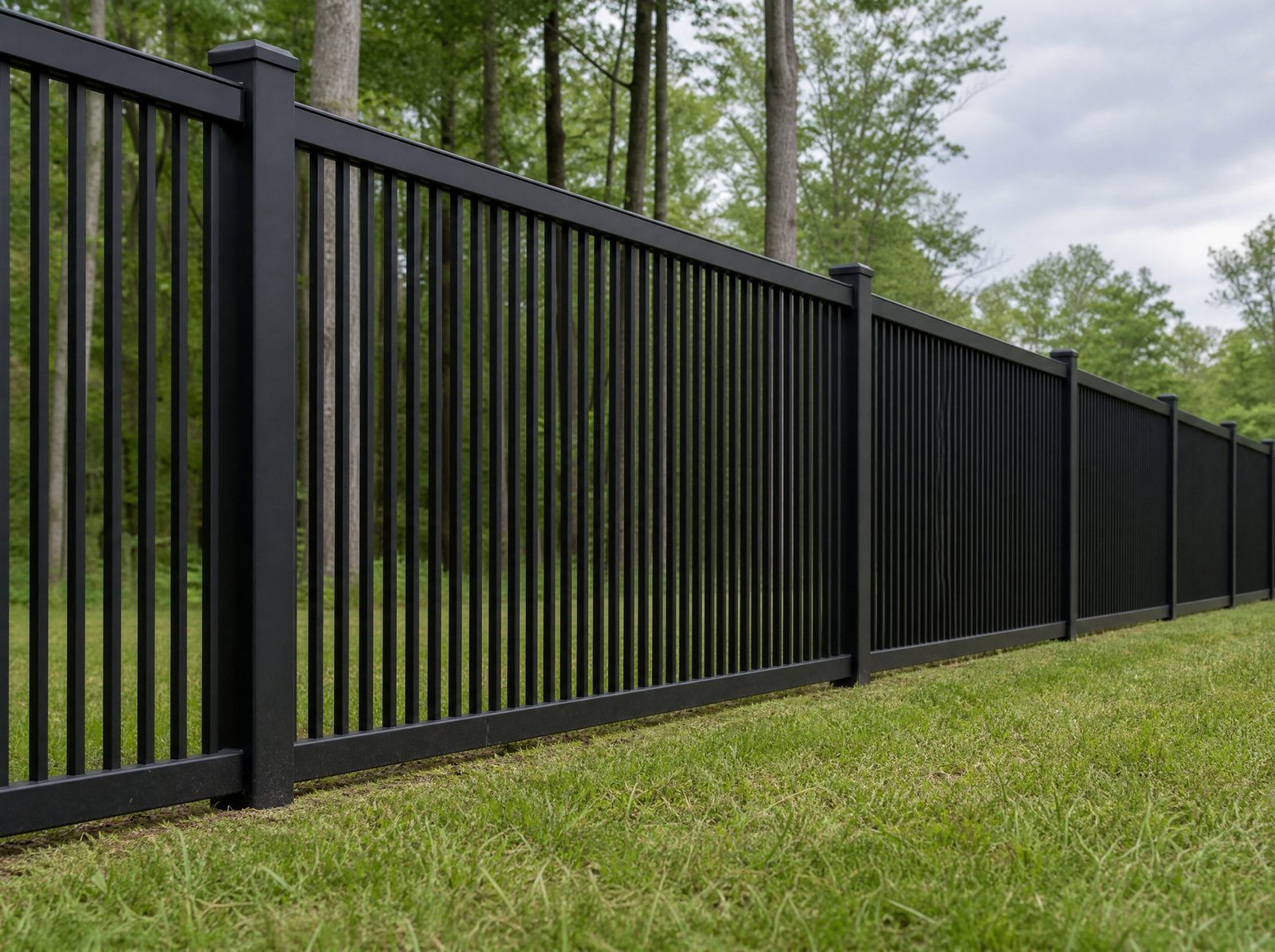
Residential pool barriers are generally required to be at least 48 inches high, measured on the side facing away from the pool, which matters more than it sounds on a sloped Sherman lot. The space between the finished ground and the bottom of the barrier is limited, and the surface type and the barrier configuration can change what is allowed. Openings have to be small enough to keep a young child from passing through. Those three together explain why a barrier that measured correctly at the gate can fail thirty feet down the run where the ground falls away.
Climbability and Chain-Link Mesh
Horizontal and vertical members are regulated to reduce footholds, so a fence style with wide, reachable horizontal rails on the pool side can be a ladder with a nice finish. Chain link gets its own rule: the 2021 pool and spa code limits chain-link openings to 1 3/4 inches unless slats fastened at the top and bottom reduce the openings to the permitted dimension. Standard fabric off the shelf is not automatically pool mesh. Decorative rings, picket spacing, and lower panel details on ornamental fences deserve the same scrutiny, because a decorative panel is not a compliant panel just because it is sold for backyards.
Why Do Pool Gates Fail More Often Than the Fence?
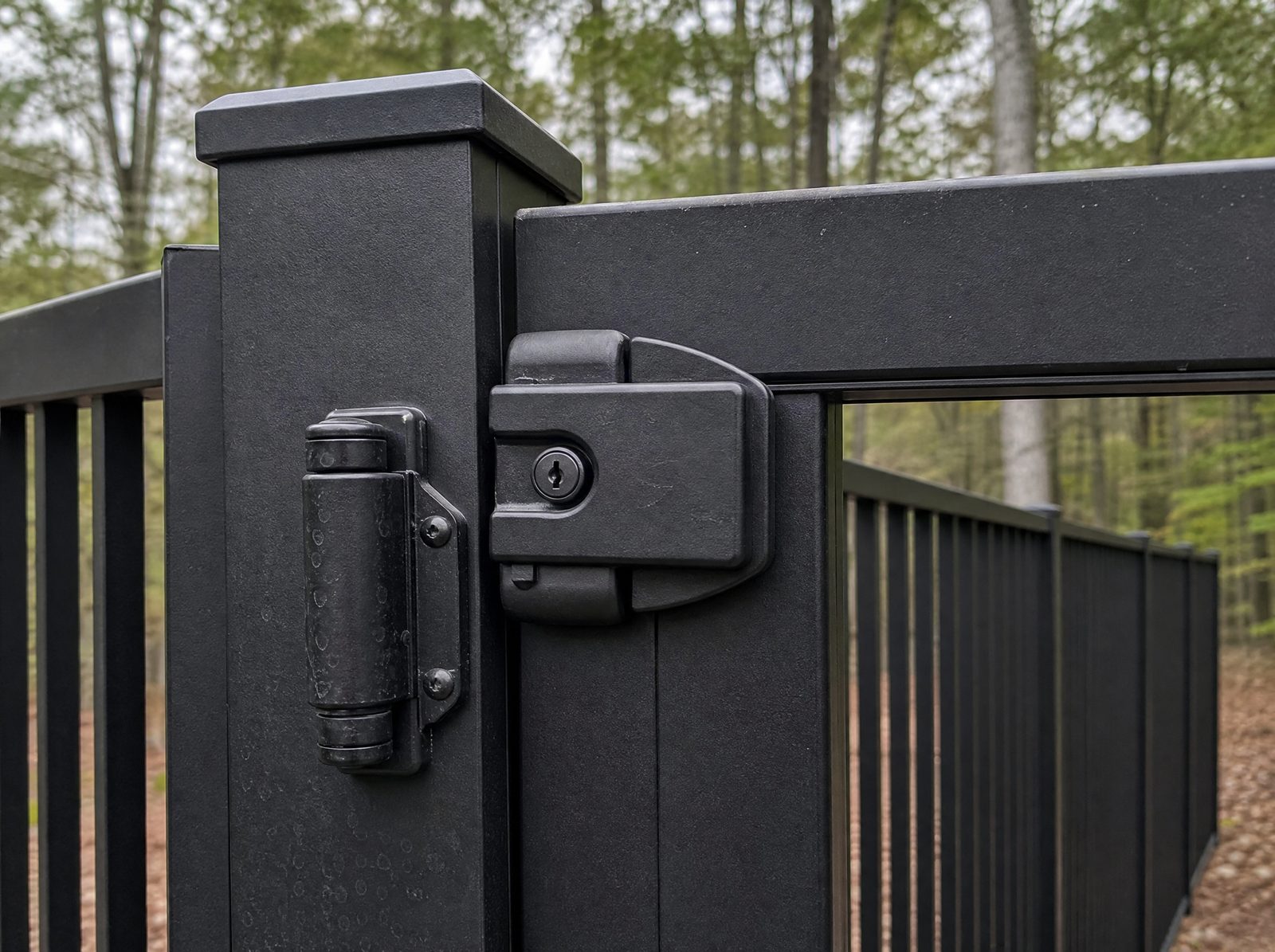
The panels are a static object. The gate is a machine, used every day, hung on hardware, sitting outside through a Connecticut winter. That is why gates are where pool barriers actually fail, and why we spend more time on a gate than on a hundred feet of fence. Pedestrian access gates have to meet the barrier requirements and use self-closing and self-latching hardware, and both gate direction and latch location are regulated. Confirm those specifics with the town for your project.
Self-Closing Is a Test, Not a Product
Buying a self-closing hinge does not give you a self-closing gate. The gate has to close and latch from every normally open position without anyone touching it, including from a few inches ajar, which is the position it is usually left in. That standard depends on hinge quality, the closer's adjustment, the post it is hung on, the width and weight of the gate, and whether the ground under the swing stays clear. The CPSC safety barrier guidelines are worth reading on this point alone.
Where Gates Break Down
Undersized hinges, a latch drifting out of alignment, a post that moved with frost, gate sag, gravel or ice under the swing, a closer that got adjusted too weakly, plantings grown into the path, a gate propped open on a busy afternoon, and a latch tied back "just for the party" are the failures we find. Most of them arrive months after a barrier passed inspection. Test the gate the boring way, from a few inches open, on the first warm weekend of every year.
How Do You Plan a Complete Pool Enclosure?
A pool enclosure in Sherman is a route-mapping exercise before it is a fencing exercise. The CPSC recommends a barrier that completely surrounds the pool and separates it from the house and yard when that is practical, which is the four-sided isolation approach and the one that removes the most risk. The alternative arrangements are legitimate, but each one adds a seam that has to be handled deliberately. Map every path to the water from the house, yard, driveway, garage, deck, patio, walkway, stairs, a retaining wall, and a neighboring property before deciding where the fence goes.
House Walls, Decks, and Above-Ground Pools
When a building wall forms part of the barrier, doors and windows that give access to the pool area may trigger additional protective requirements such as alarms, self-closing and self-latching doors, or other approved protection. Do not assume a powered safety cover substitutes for fencing; requirements and interpretations change, so confirm the rule that applies to your permit date with the town. An above-ground pool wall may serve as part of the barrier only when the entire arrangement, ladder and stair access included, meets the applicable code, and a removable ladder is not automatically enough. Connecticut has long treated pools able to hold more than 24 inches of water as triggering permit and barrier requirements, which catches more spas, hot tubs, and portable pools than people expect.
Which Fence Material Works Around a Sherman Pool?
Once the enclosure plan and the code concepts are settled, material becomes a preference question instead of a gamble. Every one of these can work when the specific product and the installation meet current barrier requirements, and every one of them has a detail that decides it. What follows is how they tend to land on Sherman properties.
Ornamental Aluminum and Steel
Aluminum fencing is the common pool choice for open sight lines, corrosion resistance, and low routine upkeep, and many systems rack to follow a slope. Ornamental styles in steel bring heavier construction and custom fabrication, with corrosion protection, coating damage, and gate weight as the things to watch. Picket spacing, rail placement, bottom clearance, and latch position still decide compliance on both.
Vinyl, Wood, and Pool-Specific Chain Link
Vinyl fencing gives privacy and a smooth, hard-to-climb face, with wind load, bottom gaps, and gate sag as the trade-offs. Wood fencing allows custom height and coordinates with decks, but boards shrink, warp, and loosen, and a barrier that develops openings is no longer a barrier. Chain-link fencing offers visibility and adapts well to grade, provided the mesh, slats, selvage, and bottom restraint are specified for pool use.
What Do Slopes, Ledge, and Frost Do to a Pool Barrier?
Sherman properties bring sloping yards, retaining walls, raised patios, decks, ledge, boulders, and drainage swales to the job. Grade is not a cosmetic problem here. It can create excessive bottom gaps, shorten the effective height of a barrier, misalign a gate, and turn a retaining wall into a climbing aid on the outside of the fence. Racked panels, stepped sections, custom transitions, and grade correction all solve pieces of it, and the finished barrier has to be evaluated from the side facing away from the pool and at every transition.
Stability comes from the posts. Height, material, gate width, wind load, soil, ledge, drainage, frost, and manufacturer specifications all factor into how a post is set, and gate posts, corners, and terminal posts generally need more support than line posts. Ledge may call for drilling, specialty anchoring, or adjusted post locations. The state's residential code for foundations frames why frost matters, and water that sits and freezes is what leans posts and pulls latches out of line. Before any of it, a Call Before You Dig request is required by law, and private lines like septic, irrigation, propane, and pool plumbing often need separate locating.
What Drives the Cost of Pool Fencing in Sherman?
There is no honest one-price figure for a pool barrier. A short aluminum enclosure on level ground and a large privacy enclosure with multiple gates, ledge, retaining walls, and deck transitions are different projects with different crews and different days. Published consumer guides like Angi's pool fence cost overview give broad market context and nothing more; they cannot see your grade. The drivers below are where the money actually goes.
Linear footage and barrier height set the baseline. Material and the pool-compliant configuration of that material come next, since a compliant product is not always the shelf product. Gates matter out of proportion to their size, because each one needs its own posts, footings, self-closing hinges, self-latching hardware, and locks. Site conditions carry the rest: slopes and custom transitions, ledge and drilling, retaining-wall and deck connections, patio core drilling, removal of an existing fence, permits and inspections, and a survey or site plan where the boundary is unclear.
Hover or tap a row to highlight it.
| Cost Driver | Why It Matters |
|---|---|
| Linear footage and height | Longer runs and taller barriers use more posts, more panels, more hardware, and more labor. |
| Pool-compliant configuration | The compliant version of a product is not always the shelf version, and that changes the material cost. |
| Gates and hardware | Each gate needs its own posts, footings, self-closing hinges, self-latching hardware, and locks. |
| Slopes, ledge, and transitions | Racking, stepping, drilling, and deck or retaining-wall connections all add hours. |
| Permits, inspection, and removal | Approvals, the inspection, and taking out an existing fence are their own line items. |
How Does a Pool Fence Installation in Sherman Come Together?
A pool fence installation in Sherman runs in an order, and the order is the quality control. Compliance gets confirmed before material gets ordered, utilities get marked before anything is dug, and the gate gets tested before anyone calls the job finished. Knowing the sequence helps you spot a crew skipping a step.
The Sherman Pool Fence Installation Process
- 1
Step 1: Confirm the Code and the Permit
We confirm the current Connecticut pool-barrier requirements and Sherman's permit process before anything is ordered.
- 2
Step 2: Review the Pool and the Property
We map the pool, patio, deck, house doors, retaining walls, utilities, septic, well, and property lines.
- 3
Step 3: Choose the Enclosure and Material
We settle four-sided isolation or another approved configuration, then pick a product that is genuinely pool-compliant.
- 4
Step 4: Design the Gates
Location, swing direction, width, self-closing hinges, self-latching hardware, locks, and bottom clearance all get specified in writing.
- 5
Step 5: Mark Utilities, Then Set Posts and Panels
A Call Before You Dig request goes in, private lines are located, then posts and panels are set for the grade and the soil.
- 6
Step 6: Test, Inspect, and Walk It With You
Gates are adjusted and tested from every open position, every transition is checked, and the municipal inspection is completed.
The last step is the one people rush. Do not treat the pool area as ready for use until the required approvals are complete, no matter how good the fence looks.
What Should You Ask a Pool Fence Contractor in Sherman?
Connecticut law requires home improvement contractors, fence installers included, to register with the Department of Consumer Protection, and DCP advises consumers to use a registered contractor and a written contract for covered work. Verifying a registration takes about a minute through the state's license verification tool, and the state's home improvement contract guidance is a good checklist to hold any bid against. Do that for every contractor you call, ours included. My Fence Guy is a family-owned contractor with an office right here in Sherman, licensed and insured, and we give free estimates.
Past the paperwork, a pool fence contractor in Sherman should be able to talk about gates and grade before talking about panels. Ask how they handle self-closing and self-latching testing, what they do where the barrier meets a deck or a retaining wall, how they set posts in ledge, who files the utility request, and who is responsible for the inspection.
What the Written Proposal Should Cover
- Material and model: The specific product, not just "aluminum" or "vinyl."
- Height and openings: Barrier height plus picket, mesh, or opening dimensions in writing.
- Rail arrangement and bottom clearance: How the fence resists climbing and what sits under it.
- Gates: Locations, widths, swing direction, self-closing hinges, self-latching hardware, and locks.
- Posts and foundations: Sizes, footings, and how ledge or wet ground will be handled.
- Transitions: Slopes, deck connections, retaining walls, and masonry.
- Permit, utility, and inspection responsibility: Who files, who calls 811, who is present for the inspection, and who corrects anything flagged.
- Schedule, payments, and change orders: Including how ledge gets priced when it shows up.
- Warranty: Workmanship and manufacturer terms, plus gate adjustment support.
Does a Pool Barrier Stay Compliant on Its Own?
No, and this is the quiet one. A barrier that passed on install day is a barrier that passed on install day. Check it before you open the pool, through the season, and after storms, snow, yard work, or any repair. Look at gate self-closing and latch engagement first, then hinge wear, gate sag, bottom clearance, picket spacing or mesh, leaning posts, erosion, deck and retaining-wall transitions, and anything climbable that has migrated toward the fence. A gate that does not close and latch reliably is not a maintenance item to schedule; it is a reason to keep the pool area closed until it is fixed.
Frequently Asked Questions About pool fencing sherman ct
Q: Does pool fencing in Sherman require a permit?
A: Yes. Sherman requires a permit for a fence used as a swimming pool barrier regardless of height, and the barrier is reviewed as part of the complete pool project. Confirm the current building, zoning, wetlands, electrical, deck, and site-specific requirements with the town before installation.
Q: How high must a pool fence be in Sherman?
A: Residential pool barriers are generally required to be at least 48 inches high, measured on the side facing away from the pool. Because code editions, amendments, and your permit date can change what applies, confirm the current adopted requirement with Sherman for your project.
Q: Does a pool gate have to self-close and self-latch?
A: Yes. Pedestrian pool-barrier gates must use self-closing and self-latching hardware under the applicable barrier provisions, and gate direction and latch location are regulated. The gate should close and latch on its own from every normally open position.
Q: Can chain link be used around a pool?
A: Yes, when the complete system complies. The 2021 pool and spa code limits chain-link openings to 1 3/4 inches unless slats fastened at the top and bottom reduce the openings, so standard fabric may need pool-specific mesh or properly attached slats.
Q: Can the house form one side of the pool enclosure?
A: It may be allowed, but doors and windows that give access to the pool can trigger additional protective requirements such as alarms or self-closing, self-latching doors. Confirm the current code with the town, and understand that a four-sided barrier separating the pool from the house removes more risk.
Q: Can a powered safety cover replace a pool fence?
A: Do not assume that it can. Connecticut requirements and interpretations can change, so confirm the rule that applies to your permit date with Sherman before planning around a cover.
Q: Does an above-ground pool need a barrier?
A: Often, yes. Connecticut has long treated pools able to hold more than 24 inches of water as triggering permit and barrier requirements, and an above-ground wall may serve as part of the barrier only when the whole arrangement, including ladder or stair access, meets the applicable code.
Q: What is the best fence material for pool fencing in Sherman, Connecticut?
A: Aluminum, ornamental steel, vinyl, wood, and pool-specific chain link can all work when the exact product and the installation meet current barrier requirements. The right pick depends on whether you want sight lines or privacy, how the grade runs, and how the enclosure meets your deck and house.
Test Your Pool Barrier Knowledge
1. Does a fence used as a pool barrier need a permit in Sherman?
2. How high is a residential pool barrier generally required to be?
3. What must a pedestrian pool gate do without anyone touching it?
4. Can standard chain-link fabric be used as a pool barrier?
5. What can turn a barrier that passed inspection into one that fails?
Pick an answer to begin.
Final Thoughts
A pool barrier is a system, and it is only as good as its weakest connection. Confirm the permit and the current code with Sherman before you order anything, plan the enclosure by mapping every route to the water, choose a product that is actually pool-compliant rather than pool-adjacent, set the posts for the grade and the frost, and then treat the gate as the part most likely to let you down. Height, openings, and clearance are what the inspector measures. The gate, the ground, and the years after are what protect a child.
Done right, the barrier disappears into the yard and does its job without anybody thinking about it, season after season, which is exactly the point. It is the rare purchase where the best outcome is that nothing ever happens.
If you are planning pool fencing in Sherman, we would be glad to walk the property and give you a straight answer about what your enclosure needs. My Fence Guy is a family-owned contractor with an office here in Sherman, CT, licensed and insured, and we install pool fencing, self-closing gates, and residential, commercial, industrial, and agricultural fencing in aluminum, ornamental, vinyl, wood, and chain link, plus pet fencing, estate gates, and railings. We handle the layout, the permit and utility questions, the gate hardware, and the grade transitions that decide whether a barrier holds up. Call us at (203) 746-1100 for a free estimate, or reach out through our contact page.
Pool Fencing Key Terms
Tap a term to see what it means.
Pool Barrier. The complete system that limits unsupervised access to a pool, including panels, posts, openings, bottom clearance, gates, hardware, and any connection to a house, deck, or wall.
More about fences
Connecticut Pool Fence Requirements: Height, Gates and Permits
Connecticut pool fence requirements under the 2022 State Building Code: 48-inch height, gaps, self-closing and self-latching gates, alarms and town permits.
Read the guide to Connecticut Pool Fence RequirementsDoes an Above-Ground Pool Need a Fence in Connecticut?
Above-ground pools in Connecticut: when the pool wall counts as the barrier, the 24-inch water depth rule, ladders and decks, and when a permit applies.
Read the guide to Does an Above-Ground Pool Need a Fence in Connecticut?Pool Fencing in Southbury, CT: Code, Gates, and Child Safety
The gate is what fails an inspection. Pool fencing in Southbury, CT: self closing hardware, latch height, the 4 inch rule, and clearance underneath.
Read the guide to Pool Fencing in Southbury, CT