
Does an Above-Ground Pool Need a Fence in Connecticut?
By Tony Pellicone13 min readPublished
- pool fencing
- pool safety
- connecticut
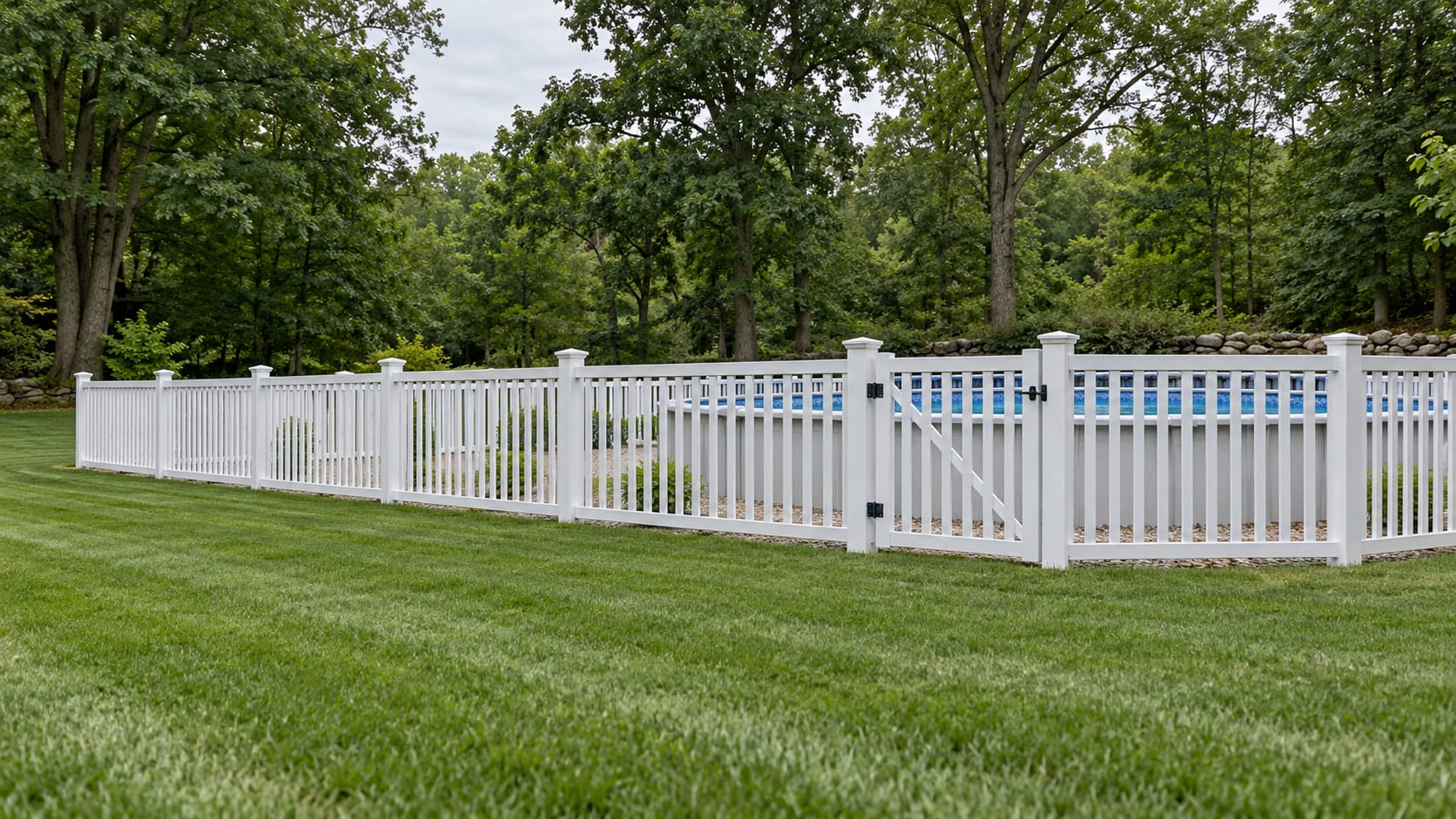
Usually, yes. In Connecticut, an above-ground pool capable of holding more than 24 inches of water generally needs a building permit and a compliant barrier at least 48 inches high. The pool wall may serve as the barrier if it meets the code around the entire perimeter, but the ladder or steps must be secured, removed or enclosed.
A prefabricated pool may qualify for a building-permit exemption when it is no more than 24 inches deep, holds no more than 5,000 gallons and is installed entirely above ground. That exemption leaves local zoning, wetlands, septic, electrical and safety requirements in place. Your first call should be to the building department in the town where the pool will be installed.
Key Takeaways
Water depth
A pool capable of containing more than 24 inches of water is generally subject to Connecticut pool permit and barrier rules.
Permit exemption
A prefabricated pool must be no more than 24 inches deep, no more than 5,000 gallons and entirely above ground to qualify for the state building-permit exemption.
Barrier height
A pool barrier is generally at least 48 inches high, with openings too small for a 4-inch sphere to pass.
Pool wall
An above-ground pool wall may serve as the barrier when it reaches at least 48 inches above grade and meets the code.
Local review
Town zoning, wetlands, septic, health, electrical and inspection requirements must be confirmed locally.
The Connecticut rule starts with water depth
Connecticut’s current building code as of 2026 is the 2022 Connecticut State Building Code. A newer edition was still awaiting approval in 2026. Check the Connecticut State Building Code regulations when you are ready to apply, since the code edition that applies can depend on when the application is filed.
The state code exempts some prefabricated pools from a building permit when all three conditions are met:
- The pool is no more than 24 inches deep.
- The pool holds no more than 5,000 gallons.
- The pool is installed entirely above ground.
These conditions work together. A pool that is 24 inches deep but installed partly below grade does not meet the full exemption. A pool that is entirely above ground but deeper than 24 inches also falls outside the exemption.
For a pool capable of containing water more than 24 inches deep, the building code generally requires a permit and a barrier. The State Building Inspector has warned that this rule applies to portable, inexpensive, inflatable and temporary pools when they can hold more than 24 inches of water. The product label alone does not decide the question.
Hover or tap a row to highlight it.
| Item | General Connecticut rule |
|---|---|
| Permit-exempt pool depth | No more than 24 inches |
| Permit-exempt pool capacity | No more than 5,000 gallons |
| Permit-exempt installation | Entirely above ground |
| General pool-barrier height | At least 48 inches |
| Maximum opening size | A 4-inch sphere cannot pass |
| Ground clearance under a barrier | Generally no more than 2 inches |
| Residential deck guard height | Generally at least 36 inches where required |
The state code supplies the building-code rules, but the town decides how permits and related approvals are handled. Before ordering the pool or fence, ask whether the project needs a building permit, zoning approval, wetlands review, health or septic approval, electrical permits and a final inspection. You can also review Do You Need a Permit for Fence Installation in CT? for the separate questions that apply to fence work.
The pool wall may be the barrier
You do not always need a separate fence around an above-ground pool. The pool wall may serve as the barrier when it is at least 48 inches above grade around the entire perimeter and complies with the applicable pool-barrier requirements.
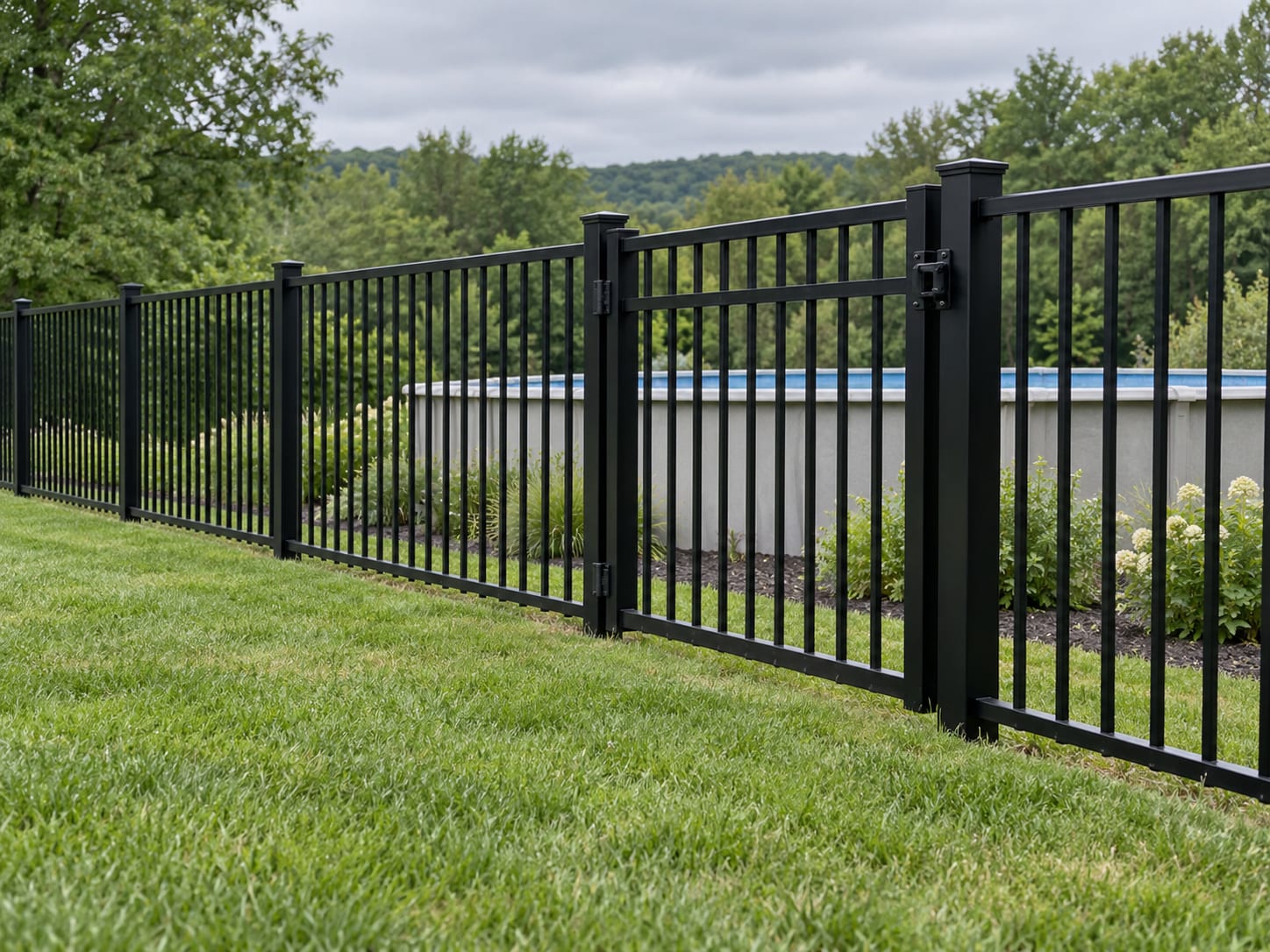
The barrier must generally have openings that do not allow passage of a 4-inch sphere. A ground-level barrier generally has no more than 2 inches of clearance beneath it. Additional rules apply to chain-link mesh, lattice, horizontal members, vertical spacing and the location of climbable features.
If the pool wall is below 48 inches, you generally need another compliant barrier. That barrier may be installed around the pool or mounted on top of the pool wall if the finished arrangement reaches the required height and follows the code and the pool manufacturer’s instructions.
The access point matters as much as the wall. A ladder or steps must be capable of being secured, locked or removed so that a child cannot reach the water. If the ladder or steps remain in place, they must be enclosed by a separate code-compliant barrier. Openings created by securing, locking or removing the ladder or steps must still meet the opening rules.
For a separate barrier, a pedestrian gate generally must open outward, self-close and self-latch. The latch and release arrangement also has specific requirements. These details should be shown to the building official before installation, especially when the pool is close to a deck, retaining wall, shed or fence.
A pool fence should be designed as a complete access system, not selected by height alone. The wall, fence, gate, ladder, steps and nearby deck should work together so there is no easy way to climb over, through or around the barrier. The pool fencing options that work for a yard fence may need different gate hardware and clearances when they form part of a pool barrier.
An attached deck creates a second code question
A deck beside or attached to an above-ground pool can create two separate review points. The first concerns the pool barrier. The second concerns the deck itself.
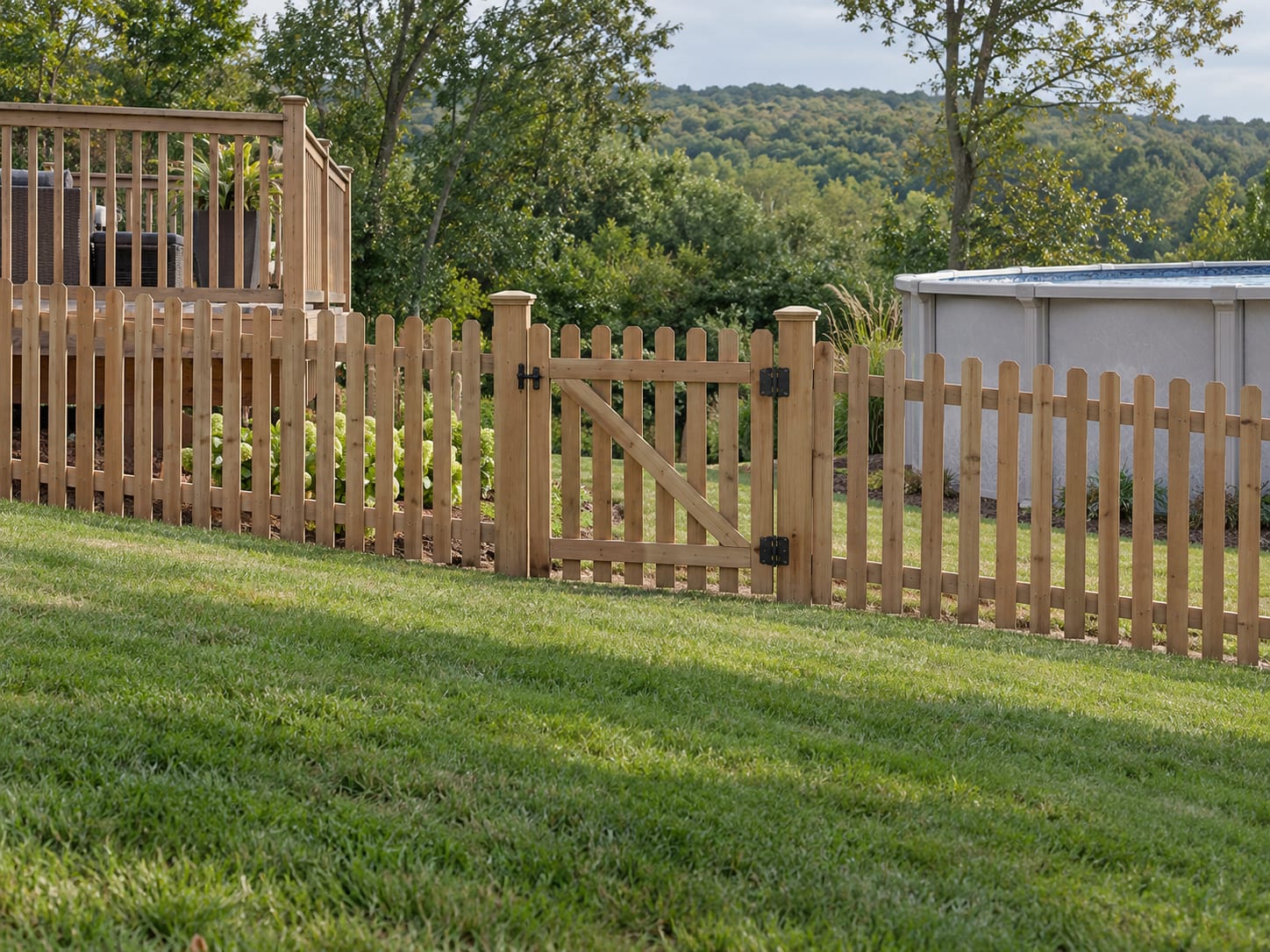
A deck railing is not automatically a compliant pool barrier. Residential deck guards are generally at least 36 inches high where the walking surface is more than 30 inches above the floor or grade below. Their openings are generally limited so a 4-inch sphere cannot pass, subject to the applicable residential-code provisions.
The pool barrier is generally at least 48 inches high. That means a 36-inch deck railing may satisfy a deck fall-protection requirement while remaining too low to protect the pool. The height difference is one of the most common design points to settle before posts, stairs or gates are installed.
The building official may also review the deck height, footing and attachment, the location of stairs, the distance between the deck and pool wall, climbable surfaces, the gate position and how the ladder is reached. If the deck is attached to the home, ledger connections and the structure’s relationship to the house may also be part of the permit review.
Connecticut’s 2022 code deleted Section 306 of the International Swimming Pool and Spa Code. Residential pool-deck step risers and treads are addressed through the Connecticut Residential Code. That does not remove the pool-barrier requirement. It means the deck and pool may be reviewed under related but separate code provisions.
A deck on a sloped or rocky western Connecticut lot can also change the finished-grade measurement around the pool. The barrier height is measured from the relevant grade, so a wall that appears tall from one side of the yard may be lower on another side. A site sketch showing existing grade, proposed fill, the pool wall, deck and fence gives the town a better basis for review.
Local permits vary from town to town
Connecticut towns use the state building code, but each municipality administers its own permits and local land-use rules. The state threshold is only the starting point.
New Fairfield states that fences used as swimming-pool barriers require a permit regardless of height. Its building-permit information also says that a permit exemption does not authorize work that violates town or state requirements.
Brookfield’s published building-permit records include permits for above-ground pools, including permits issued in 2021. If your property is in Brookfield, ask the Building Department for the current application, fee, site-plan and inspection requirements for your pool.
New Milford identifies inspection of above-ground and in-ground swimming pools as part of the building official’s duties. Its wetlands information also identifies installing a pool or another structure on or above the surface as an activity that may require wetlands review in regulated areas.
Ridgefield distinguishes between prefabricated pools no more than 24 inches deep and other outdoor recreation facilities. Ridgefield also publishes swimming-pool requirements based on the 2022 state code.
Danbury publishes a swimming-pool guide and pool-barrier information through its Building Department. Its environmental-health materials identify a 10-foot separation requirement for an above-ground pool from specified septic-system features.
These examples show why the property address matters. A pool under the state permit threshold may still require local zoning, wetlands, septic, health, property-maintenance or electrical review. Ask the town to confirm the requirements for your exact model, location and installation method.
Pool permit steps your building department may add
Town procedures may add site-plan, building, plumbing, electrical and zoning requirements. Confirm the local rule for the pool depth, enclosure, ladder, deck, plumbing, electrical work and final inspection.
New York’s sanitary code requires swimming pools to be enclosed by a fence or other barrier at least 4 feet high, with self-closing and positive self-latching gates. If the property is in New York, contact the town or village building department before using Connecticut’s 24-inch permit threshold.
What to prepare before you call the town
Give the building department enough detail to classify the actual project. A product name such as “summer pool” or “inflatable pool” is not enough by itself.
Have these details ready:
- Property address and parcel identification, if available
- Manufacturer and model
- Pool diameter or dimensions
- Maximum water depth and capacity
- Pool construction, such as inflatable, soft-sided or metal-walled
- Pool-wall height above finished grade
- Ladder or step design
- Proposed fence and gate details
- A sketch showing the house, property lines, pool, deck and equipment
- Existing septic system, well, wetland, watercourse or lake
- Proposed electrical, gas, plumbing or drainage work
- Whether the pool or deck will be temporary or seasonal
Ask in writing whether the project needs a building permit, zoning permit or clearance, wetlands review, health or septic approval, electrical or plumbing permits, a pool-barrier inspection and a final inspection. Ask whether the pool wall can serve as the barrier and what the town requires for the ladder, steps, gate and deck.
If a fence will be near a property line, confirm the line before excavation. A written neighbor agreement can address access, maintenance, drainage and gate orientation, but it does not replace a survey or municipal approval. A specific boundary dispute is a matter for a Connecticut real estate attorney.
A registered home-improvement contractor should use a written contract for work covered by Connecticut’s home-improvement law. The Department of Consumer Protection includes fences and swimming pools in its home-improvement category. Verify the registration and identify who will obtain permits, submit barrier details, schedule inspections and correct work that does not pass review.
Before digging fence posts, pool preparation, electrical work or drainage, contact Connecticut Call Before You Dig at 811 or through Connecticut Call Before You Dig. Underground utilities are not always where an old site sketch suggests, and a pool project often involves more excavation than the fence alone.
Questions to Settle Before Installation
- 1
Classify the pool
Confirm the maximum water depth, capacity, construction and whether it is entirely above ground.
- 2
Call the town
Ask the building department about permits, zoning, wetlands, septic, electrical work and inspections.
- 3
Plan the barrier
Decide whether the pool wall, a mounted barrier or a separate fence will provide the required protection.
- 4
Review access
Confirm the ladder, steps, gate, latch, self-closing feature and nearby deck arrangement.
- 5
Mark the site
Show the house, property lines, pool, utilities, septic features, wetlands and proposed fence.
- 6
Build and inspect
Install to the approved details, then complete the inspections required by the municipality.
What a fence contractor should include in the written scope
A pool-barrier quote should identify more than the fence material and total length. It should describe the barrier height, opening limits, gate direction, self-closing and self-latching hardware, ladder or step enclosure and the relationship to any deck.
The scope should also state who confirms the property line, who contacts Call Before You Dig, who supplies the site sketch, who applies for permits and who schedules inspections. If the town requires changes, the written agreement should explain how those changes are handled.
On a western Connecticut property, ledge can affect post placement and the path of a barrier. That changes the installation plan, but it does not change the 48-inch pool-barrier requirement. The building official should review the proposed arrangement before the crew sets posts.
My Fence Guy can help measure the proposed barrier, coordinate gate and access details, and prepare a written scope that identifies the fence material, dimensions, hardware and permit responsibilities. The town building department remains the office that confirms municipal requirements.
Frequently Asked Questions
Can I put a pool up without a fence?
Sometimes, but only under limited conditions. A prefabricated pool no more than 24 inches deep, no more than 5,000 gallons and entirely above ground may qualify for the state building-permit exemption, while a deeper pool generally needs a compliant barrier. An above-ground pool wall may serve as that barrier when it is at least 48 inches above grade and meets the code.
Do I legally need a fence around my pool?
You generally need a compliant barrier for a Connecticut residential pool capable of containing more than 24 inches of water. The barrier may be a separate fence, a qualifying pool wall, a mounted barrier or another approved arrangement, but the ladder and steps must also be secured, removed or enclosed.
Why can't you bury an above-ground pool?
You should not bury an above-ground pool unless the manufacturer permits that installation for the exact model and the local building official approves it. Burial changes soil pressure, drainage, corrosion exposure, frost movement and support conditions, and it may void the manufacturer’s warranty.
What is the legal height of a fence around a pool?
The Connecticut pool barrier is generally at least 48 inches high, with openings that do not allow a 4-inch sphere to pass. A deck guard that is 36 inches high may satisfy a deck-safety rule but still be too low to serve as the pool barrier.
Is it a legal requirement to have a fence around a pool?
A qualifying pool must have a compliant barrier, but that barrier does not always have to be a separate fence. The pool wall may qualify when it meets the height, opening and access requirements, and the local town may require a permit or additional review.
Connecticut Above-Ground Pool Rules
1. What is the state permit-exemption depth for a prefabricated pool?
2. What is the general Connecticut pool-barrier height?
3. Which pool may qualify for the state building-permit exemption?
4. What must happen to an above-ground pool ladder or steps?
5. Who confirms local permit and inspection requirements?
Pick an answer to begin.
Final Thoughts
The practical answer is to measure the pool by its maximum water depth, capacity, construction and installation, then ask the local building department to confirm the permits and inspections. If the pool is deeper than 24 inches, plan for a compliant barrier at least 48 inches high and design the wall, fence, gate, ladder, steps and deck as one access system. My Fence Guy is licensed and insured, and we can help prepare the fence and gate details for the permit conversation.
Call us at (203) 746-1100 for a free estimate, or reach out through our contact page.
Pool Barrier Terms
Tap a term to see what it means.
Above-ground pool. A pool installed above the surrounding grade, subject to its construction and the manufacturer’s installation requirements.
More about fences
Connecticut Pool Fence Requirements: Height, Gates and Permits
Connecticut pool fence requirements under the 2022 State Building Code: 48-inch height, gaps, self-closing and self-latching gates, alarms and town permits.
Read the guide to Connecticut Pool Fence RequirementsPool Fencing in Southbury, CT: Code, Gates, and Child Safety
The gate is what fails an inspection. Pool fencing in Southbury, CT: self closing hardware, latch height, the 4 inch rule, and clearance underneath.
Read the guide to Pool Fencing in Southbury, CTPool Fencing in Sherman, CT: Code, Gates, and Child Safety
Pool fencing in Sherman, CT is a life safety barrier, not a yard fence. The permit rules, gate hardware, and openings that decide whether it passes.
Read the guide to Pool Fencing in Sherman, CT