
Pool Fencing in Southbury, CT: Code, Gates, and Child Safety
By Tony Pellicone19 min readPublished
- pool fencing
- southbury ct
- pool safety
- connecticut
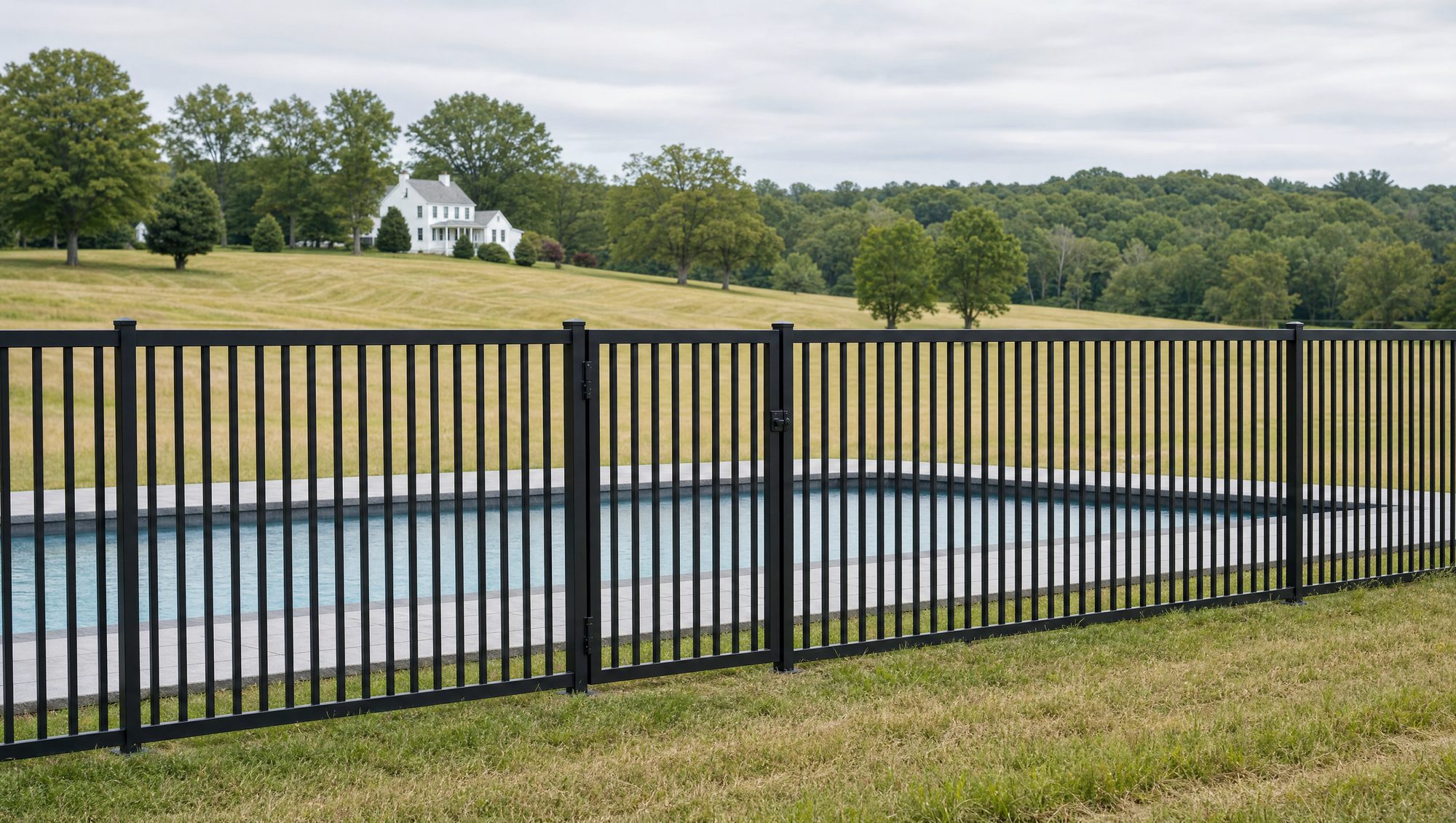
Pool fencing in Southbury, CT is the one fence project where getting it almost right is not good enough. A privacy fence that leans a little is an annoyance. A pool barrier with a gate that does not latch is the reason a child gets to the water in the four minutes nobody was watching. That is the part homeowners feel in their stomach, and it sits right next to a much more ordinary worry: paying for a fence, failing the inspection, and being told to redo it while the pool sits unusable in July. Both of those fears trace back to the same misunderstanding, which is that a pool fence is a fence. It is not. It is a barrier system, and the building official looks at all of it: the panels, the openings, the ground underneath, the gate hardware, and whatever a determined four-year-old could climb. Here is how that system works in Southbury, what the code actually reviews, and what to confirm with the town before anyone orders a panel.
Key Takeaways
A pool barrier needs a permit regardless of height
Whatever general rules may apply to ordinary yard fences, a fence serving as a pool barrier is reviewed through the town's permit process as part of the pool project.
The whole system is reviewed, not the fence
Panels, openings, bottom clearance, climbability, gate direction, hinges, latches, house walls, and deck access are all part of the barrier.
Gates fail more often than fences
A pedestrian pool gate has to self-close and self-latch reliably from every position it normally opens to, and hardware wears.
Not every fence product is pool-compliant
Standard chain-link mesh, decorative horizontal rails, and some picket spacings can disqualify a panel that looks perfectly good.
Confirm current requirements with Southbury
Code editions, amendments, and interpretations change, and this is one topic where a wrong answer has real consequences.
A Pool Barrier Does a Different Job Than a Yard Fence
A yard fence marks a line. A pool barrier is a life-safety device whose only job is to keep a child who is not being watched from reaching the water. That difference explains almost everything else about this project, including why the review is stricter, why the hardware costs more, and why a contractor who builds beautiful privacy fences may still hand you something that does not pass. The U.S. Consumer Product Safety Commission's barrier guidelines treat the enclosure as a complete system, and so does the code.
What Counts as Part of the Barrier
The barrier is not just the fence you paid for. It includes the panels or fabric, the posts, the space under the bottom rail, every picket or mesh opening, the gates, the hinges, the latches, the locks, any point where the fence ties into a building, deck access, grade transitions, retaining walls, an above-ground pool wall if one is being used, anything climbable standing nearby, and the condition all of it is in today. Change any one of those and you may have changed whether the enclosure complies.
How a Finished Fence Still Fails
This is the part worth sitting with, because these are not exotic failures. They are Tuesday. A gate that does not swing back and catch on its own. A latch that engages nine times out of ten. Ground that eroded under a panel and left a gap a toddler can roll through. Horizontal rails on the outside face that work as a ladder. Chain-link mesh with openings big enough for a sneaker toe. A patio chair, a cooler, or the pool pump parked against the fence. A gap where the fence meets the house, the deck, or a retaining wall. A cracked panel nobody replaced. A gate propped open with a rock because it was annoying during a party. Every one of those can exist on an enclosure that passed inspection on day one.
The Layers That Protect a Southbury Pool
A pool safety fence in Southbury is the strongest single layer of protection, and it is still only one layer. The CPSC recommends layers of protection precisely because any one of them can fail on the day it matters. A compliant barrier with self-closing and self-latching gates does the heavy lifting, and door alarms, pool alarms, a safety cover, swimming lessons, CPR knowledge, rescue equipment near the water, and a clear rule about who is watching all stack on top of it.
None of that replaces an adult with eyes on the pool. The honest way to think about a barrier is that it buys time and removes the easy path to the water. It does not turn a pool into something that supervises itself.
What Pool Fence Code in Southbury Actually Reviews
Southbury applies the Connecticut State Building Code, which is administered by the Office of the State Building Inspector, along with the pool and spa code provisions that apply to the project. The concepts below are the ones that decide compliance, and they are worth understanding before you shop. What they are not is a substitute for the town's answer. Code editions, amendments, and interpretations change, and the requirement that applies is the one in force for your permit, so confirm the current requirements with Southbury's Building Department before you select or install anything.
Barrier Height Is Measured From the Outside
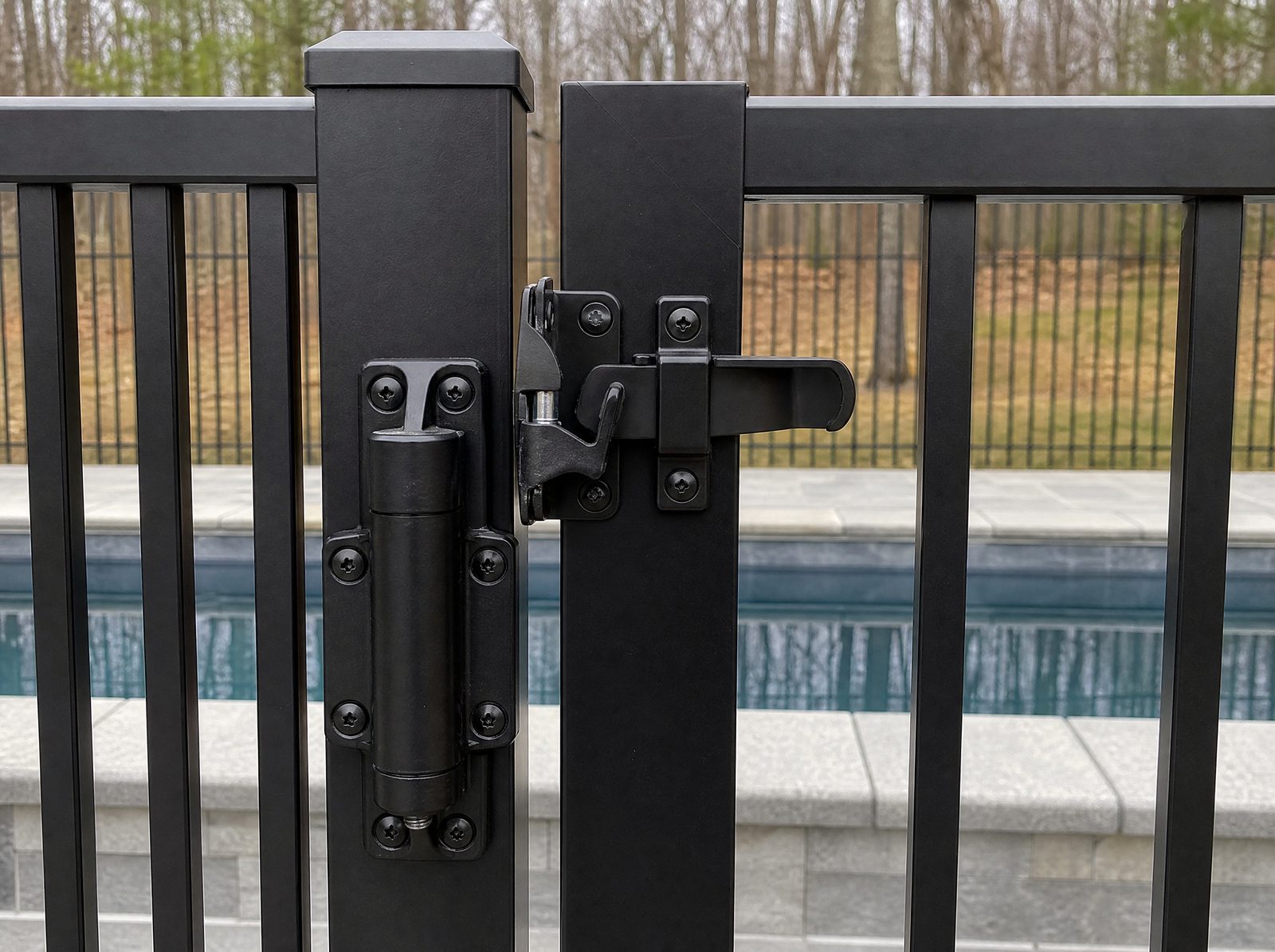
Residential pool barriers are generally required to be at least 48 inches high, measured on the side facing away from the pool, under the applicable pool and spa code provisions. That "facing away" detail matters more than people expect on a Southbury lot. If the ground outside the fence is higher than the ground inside it, or a retaining wall or a berm gives a child a head start, the effective height on the outside is what counts, not the height you measured from the pool deck.
Openings, Clearance, and Climbability
Three related things get looked at. Openings in the barrier have to be small enough to keep a young child from passing through. The gap between the finished ground and the bottom of the barrier is limited, and the surface type and the barrier configuration can affect what is allowed. And the arrangement of horizontal and vertical members is regulated to cut down on footholds. The specific dimensions belong to the adopted code and the local interpretation for your project, which is exactly why "it looks about right" is not a standard anyone should build to.
Chain-Link Mesh Has Its Own Limit
Standard chain-link is the classic surprise. The applicable pool and spa code provisions limit chain-link openings to 1 3/4 inches unless slats fastened at the top and bottom bring the openings down to the permitted dimension. Plenty of perfectly good chain link on the market has larger mesh than that, so a chain-link pool barrier means either pool-specific mesh or properly attached slats, decided on paper before it is ordered rather than after it is up.
Gates Are Where Compliance Is Won or Lost
Pedestrian access gates have to meet the barrier requirements and use self-closing and self-latching hardware. The code also regulates which way the gate swings and where the latch is located, so confirm both for your project rather than assuming. The plain-English test is simple and unforgiving: the gate should close and latch by itself, without a hand helping it, from every position it normally gets opened to. Hinge-side gap, latch-side gap, bottom clearance, sag, wind, snow, ice, gravel, and a closer adjusted too weakly all conspire against that. Gate posts and footings do more work than line posts, which is why an undersized gate post shows up as a latch that stops lining up by the second season.
House Walls, Doors, and Deck Access
When a building wall forms part of the barrier, the doors and windows that open toward the pool can trigger additional protective requirements, since a slider off the kitchen is a door in the barrier. Door alarms, self-closing and self-latching doors, and other approved protection may come into play, and the specifics depend on the current code for your permit. Do not assume a powered safety cover is a universal substitute for fencing. That is a question for the town, not for a blog post or a salesperson.
Above-Ground Pools, Spas, and Hot Tubs
Connecticut has long treated pools able to hold more than 24 inches of water as triggering permit and barrier requirements, per the state building inspector's guidance on portable pools, which catches above-ground pools, on-ground pools, portable pools, swim spas, and hot tubs that people assume are exempt. An above-ground pool wall can serve as part of the barrier only when the complete arrangement meets the applicable code, and the ladder or stair is the whole question. A ladder you can remove or lock is not automatically enough by itself.
Southbury Permits: The Barrier Rides With the Pool Project
Here is the single most important permitting point on this page. A pool barrier needs a permit regardless of its height. Whatever general expectations exist about ordinary yard fences, do not carry them over to a pool. The barrier is part of a regulated pool project, and it should be reviewed through Southbury's building and zoning permit process as part of that project.
Southbury takes building and zoning applications through its online permitting system, and the Building Department reviews applications against the building and fire codes and town ordinances. The town looks at fences property by property rather than applying one blanket answer to every lot, and Southbury's zoning regulations have been going through updates, which is another reason to confirm rather than assume. Depending on the property, a pool barrier project can pull in zoning review, a site or plot plan, setbacks and property lines, inland wetlands and watercourses, aquifer protection, septic and well considerations, deck permits, and electrical permits.
One Southbury-specific item catches people off guard. The town's Historic District rules treat visible fences, walls, pools, and other fixed improvements as structures that may require Historic District review when they sit within the district and are visible from a public street, way, or place. If your property is in the district, that review can shape the enclosure before the code conversation even starts. A private association may add its own requirements on top.
Designing a Pool Enclosure Around a Southbury Property
Southbury yards bring sloping ground, retaining walls, walk-out basements, raised patios, decks, ledge, boulders, drainage swales, and wooded edges. A pool enclosure has to hold its line across all of that, and grade is where good intentions turn into gaps. A slope can open excessive bottom clearance under a panel, a retaining wall can quietly shorten the effective barrier height from the outside, step transitions can create openings at every jog, and erosion can produce a gap a year after approval. Racked panels, stepped sections, custom transitions, masonry connections, grade correction, and custom gate fabrication are the tools, and the finished barrier gets judged from the side facing away from the pool at every one of those transitions.
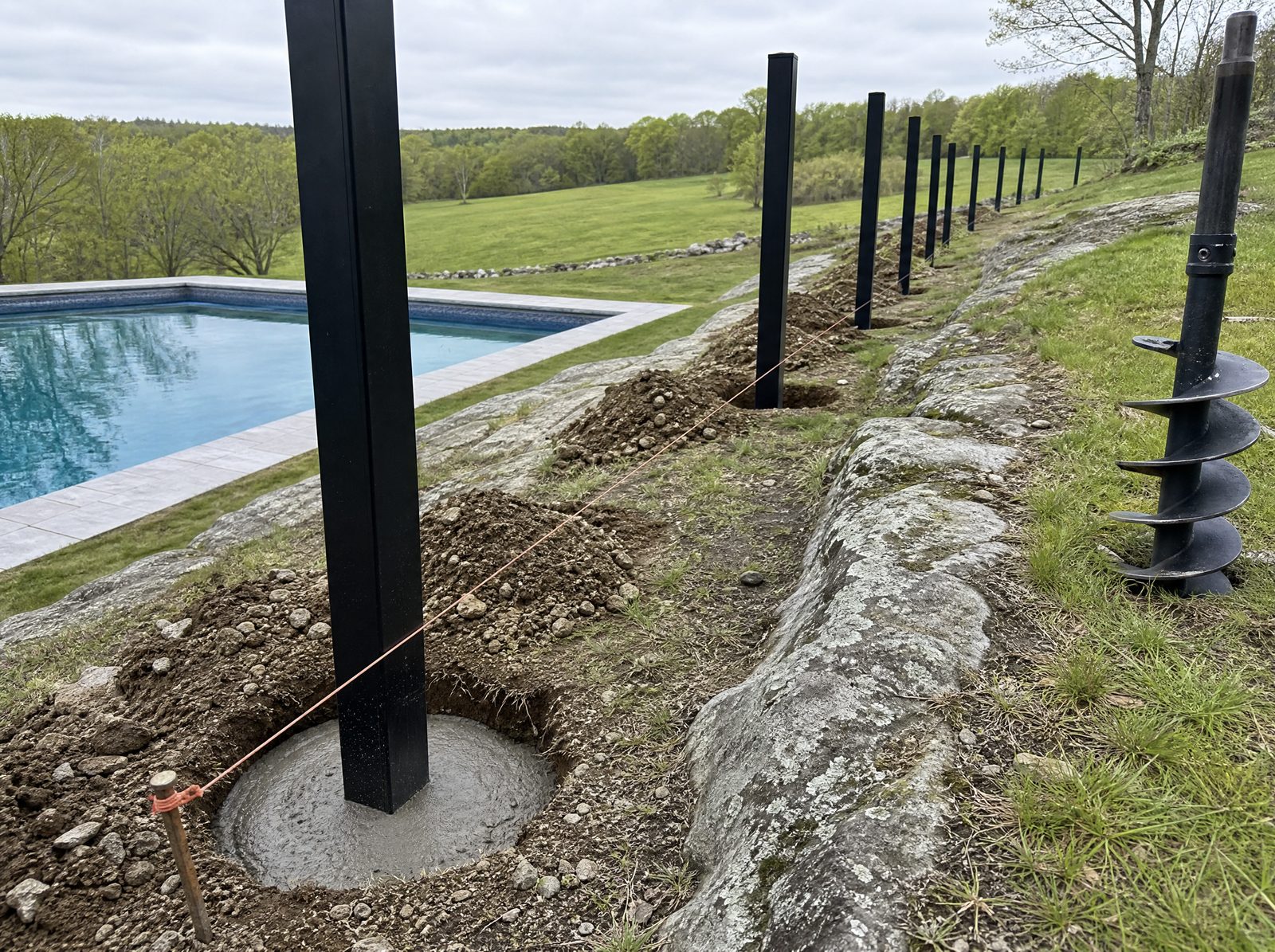
Underneath, the posts decide whether any of it stays true. Fence height, material, panel type, gate width, wind load, solid privacy panels, soil, ledge, drainage, frost, and the manufacturer's specifications all feed post depth and support, and Connecticut's residential code for foundations frames why frost protection matters here. There is no single correct depth for every fence, and anyone who quotes one number for every yard is guessing. Ledge may call for drilling, specialty anchoring, shifted post locations, or core drilling into a concrete patio. Drainage should never get blocked, because water that sits and freezes is what heaves a post, leans a panel, and pulls a gate out of alignment.
Before any of it, the digging rules apply. A Call Before You Dig request is free and required by law in Connecticut ahead of excavation, and around a pool the private lines are the ones that bite: pool plumbing, pool electrical, irrigation, septic, propane, and well lines are often privately owned and may need a separate private locate.
Choosing a Material That Can Actually Be a Pool Barrier
Once you understand what the barrier has to do, the material conversation gets easier, because the question is no longer which fence you like. It is which product, in which exact configuration, does the job on your lot. Every material below can work, and every one of them has a version that does not comply.
Aluminum pool fencing is the workhorse for a reason: open sight lines so you can see the water from the house, corrosion resistance, low routine upkeep, and panel configurations made for pools. Do not assume every ornamental panel is pool-compliant, though. Decorative rings, picket spacing, rail placement, and lower decorative sections all affect openings and climbability. Ornamental steel offers a heavier, more traditional look with strong gate frames, and asks for attention to coating damage and corrosion protection. Most fences people call wrought iron are actually ornamental steel or aluminum.
Vinyl buys privacy and a smooth, unclimbable face, and brings wind load, bottom gaps, gate sag, and slope transitions along with it. Wood gives custom height and design flexibility that ties into a deck, and it has to be maintained, because shrinking, warping, rot, or a loose board can open a prohibited gap on a barrier that was fine last summer. Chain link stays practical and adapts to grade, with the mesh limit above as the gate-keeper. Whatever the material, this is pool fencing first and a fence second.
What Drives the Cost of Pool Fencing in Southbury
There is no honest one-price-fits-all figure here. A short aluminum barrier on level ground and a large enclosure with multiple gates, ledge, retaining walls, and deck transitions are different projects that happen to share a name. Published consumer price guides give broad market context and nothing more; treat them as background reading, not as a quote for your yard. What actually moves the number is the site and the specification.
The pool-compliant configuration itself is a cost driver people miss. Pool-rated mesh, tighter picket spacing, self-closing hinges, self-latching hardware, and locks cost more than the standard versions of the same parts, and that is the part you are least entitled to cheap out on.
Hover or tap a row to highlight it.
| Cost Driver | Why It Matters |
|---|---|
| Linear footage and barrier height | More posts, panels, and labor, and taller barriers use more of everything. |
| Material and pool-compliant configuration | Pool-rated mesh, picket spacing, and panel grade cost more than standard product. |
| Gates and hardware | Each gate needs its own posts and footings, plus self-closing hinges, self-latching hardware, and locks. |
| Slopes, ledge, and transitions | Racking, stepping, custom transitions, drilling, and core drilling into patios all add labor. |
| Retaining wall and deck connections | Tying the barrier into walls, decks, and masonry is custom work, not a catalog panel. |
| Removal, access, and restoration | Taking out an old fence, tight access, and putting the ground back are their own line items. |
| Permits, survey, and inspection | Site plans, permit review, Historic District review, and inspection coordination take time. |
How a Pool Fence Installation in Southbury Comes Together
A pool fence installation in Southbury runs in a specific order, and the order is the safeguard. The compliance questions get answered before anything is ordered, because a panel that is already on the truck has a way of becoming the answer. Knowing the sequence also helps you spot a crew that plans to skip a step.
The Southbury Pool Barrier Process
- 1
Step 1: Confirm the Code and the Permit Path
We verify the current pool-barrier requirements with Southbury and the permit and zoning review the project needs.
- 2
Step 2: Review the Pool and Property Plans
The pool, patio, deck, house, retaining walls, utilities, septic, well, and property lines get mapped before layout.
- 3
Step 3: Choose the Enclosure Strategy and Material
Four-sided isolation fencing, perimeter integration, or a deck-connected plan, then the product that suits it.
- 4
Step 4: Design the Gates and Address Climbability
Locations, swing, widths, self-closing hinges, self-latching hardware, locks, clearances, and anything nearby that could be climbed.
- 5
Step 5: Mark Utilities and Set Posts and Panels
The Call Before You Dig request goes in, private lines are located, then posts and panels go up to spec.
- 6
Step 6: Hang Gates, Inspect, Then Pass Municipal Inspection
Gates are adjusted and tested from every normal position, we walk the whole barrier, then the town inspects. The pool area is not ready until the approvals are done.
Keeping the Barrier Working After the Inspection
Approval is a moment. The child is there all summer. A pool barrier is one of the few things on a property that should be checked on a schedule: before the pool opens, through the season, after storms, after snow or ice, after yard work or plantings, after any fence or gate repair, and after construction nearby.
The short list is the gate list. Does it self-close from every normal position, does the latch engage every time, does the lock work, are the hinges worn, is the gate sagging, has the bottom clearance grown. Then walk the rest: picket spacing, mesh, loose boards, cracked panels, leaning posts, corrosion, coating damage, erosion at the low spots, retaining-wall and deck transitions, and anything climbable that migrated toward the fence since June. Furniture and pool equipment are the usual culprits. A gate that does not close and latch reliably is not a maintenance item to schedule, it is a barrier that is not working right now.
What to Ask a Pool Fence Contractor in Southbury
Registration and insurance are the floor, not a selling point. Connecticut requires home improvement contractors to register with the Department of Consumer Protection, and the state's contract guidance and its license verification tool let you check any contractor in a couple of minutes. Do that for whoever you hire, including us. My Fence Guy is a family-owned local contractor with an office right here in Southbury, licensed and insured, and we give free estimates.
Past that, ask about pool-barrier experience specifically, current code familiarity, who pulls the permit, who calls 811, who coordinates the municipal inspection, and how ledge and slope get priced when they show up. The written proposal is where the answers live. It should spell out material and model, height, picket or mesh opening dimensions, rail arrangement, bottom clearance, gate locations and widths, self-closing hinges, self-latching hardware, locks, posts and foundations, slope transitions, deck and wall connections, permit and utility responsibility, inspection responsibility, removal and cleanup, schedule, payments, warranties, and how change orders get handled. A bid that will not put the opening dimensions in writing is telling you something.
Frequently Asked Questions About pool fencing southbury ct
Q: Does pool fencing require a permit in Southbury?
A: Yes. A pool barrier requires a permit regardless of its height and should be reviewed through Southbury's building and zoning permit process as part of the complete pool project. Do not apply general fence assumptions to a pool barrier, and confirm the current requirements with the town.
Q: How high must a pool fence be in Southbury?
A: Residential pool barriers are generally required to be at least 48 inches high, measured on the side facing away from the pool, under the applicable pool and spa code provisions. Confirm the current adopted requirement with Southbury for your project's permit date and design.
Q: Does a pool gate have to self-close and self-latch?
A: Yes. Pedestrian pool-barrier gates must use self-closing and self-latching hardware under the applicable barrier provisions, and gate direction and latch location are regulated as well. The working test is that the gate closes and latches on its own from every position it normally opens to.
Q: Can chain link be used around a pool?
A: Yes, when the complete system complies. The applicable pool and spa code provisions limit chain-link openings to 1 3/4 inches unless slats fastened at the top and bottom reduce the openings to the permitted dimension, so a standard mesh may not qualify on its own.
Q: Can the house form one side of the pool enclosure?
A: It may be allowed, but doors and windows that provide access to the pool can trigger additional protective requirements such as alarms or self-closing and self-latching doors. Confirm the current code with Southbury before planning around a house wall.
Q: Can an above-ground pool wall serve as the barrier?
A: It may serve as part of the barrier when the wall and the access system meet the applicable code. The ladder or stair is the deciding factor, and a removable or lockable ladder is not automatically sufficient on its own.
Q: Does a safety cover replace a pool fence?
A: Do not assume that it does. Requirements and interpretations can change, so confirm the rule that applies to your permit with Southbury rather than treating a cover as a universal substitute for fencing.
Q: How much does pool fencing in Southbury, Connecticut cost?
A: It depends on footage, barrier height, material, the pool-compliant configuration, the number and size of gates, hardware, slopes, ledge, patio and retaining-wall connections, removal, permits, surveys, and inspections. A site-specific estimate is the only reliable answer, which is why the on-site visit is free.
Test Your Southbury Pool Barrier Knowledge
1. Does a pool barrier in Southbury need a permit?
2. Where is a residential pool barrier's height measured?
3. What must a pedestrian pool gate do?
4. Is standard chain-link mesh automatically fine around a pool?
5. What most often makes a compliant pool fence stop being a barrier?
Pick an answer to begin.
Final Thoughts
Pool fencing in Southbury, CT comes down to a few decisions made in the right order. Confirm the permit path and the current code with the town before you buy anything, treat the enclosure as a system rather than a fence, design the gates as the most important component instead of an accessory, plan for the slope and the ledge your yard actually has, and then keep checking the barrier long after the inspector has gone home. Every number that matters belongs to the town and the code in force for your permit, and that is worth one phone call before it is worth a rework.
Done right, a pool barrier stops being something you think about. It sits there being boring for years while the kids grow up around it, the gate swings shut behind every guest, and the water stays something you enjoy rather than something you watch with your shoulders up. That is the whole return on doing it carefully.
If you are planning a pool enclosure, we would be glad to walk your property and give you a straight answer. My Fence Guy is a family-owned contractor with a local office in Southbury, licensed and insured, and we install pool barriers and self-closing gates in aluminum, ornamental, vinyl, wood, and chain link, plus residential, commercial, and custom enclosure systems across Connecticut and New York. We handle the layout, the permit and utility questions, the gate hardware, and the site conditions that decide whether a barrier holds up. Call us at (203) 746-1100 for a free estimate, or reach out through our contact page.
Pool Barrier Key Terms
Tap a term to see what it means.
Pool Barrier. The complete enclosure that separates a pool from the house and yard, including panels, posts, openings, clearances, gates, hardware, and any wall or deck that forms part of it.
More about fences
Connecticut Pool Fence Requirements: Height, Gates and Permits
Connecticut pool fence requirements under the 2022 State Building Code: 48-inch height, gaps, self-closing and self-latching gates, alarms and town permits.
Read the guide to Connecticut Pool Fence RequirementsDoes an Above-Ground Pool Need a Fence in Connecticut?
Above-ground pools in Connecticut: when the pool wall counts as the barrier, the 24-inch water depth rule, ladders and decks, and when a permit applies.
Read the guide to Does an Above-Ground Pool Need a Fence in Connecticut?Pool Fencing in Sherman, CT: Code, Gates, and Child Safety
Pool fencing in Sherman, CT is a life safety barrier, not a yard fence. The permit rules, gate hardware, and openings that decide whether it passes.
Read the guide to Pool Fencing in Sherman, CT