
Cedar vs Pressure-Treated Wood Fence: Which Lasts Longer?
By Tony Pellicone13 min readPublished
- wood fencing
- homeowner guide
- connecticut
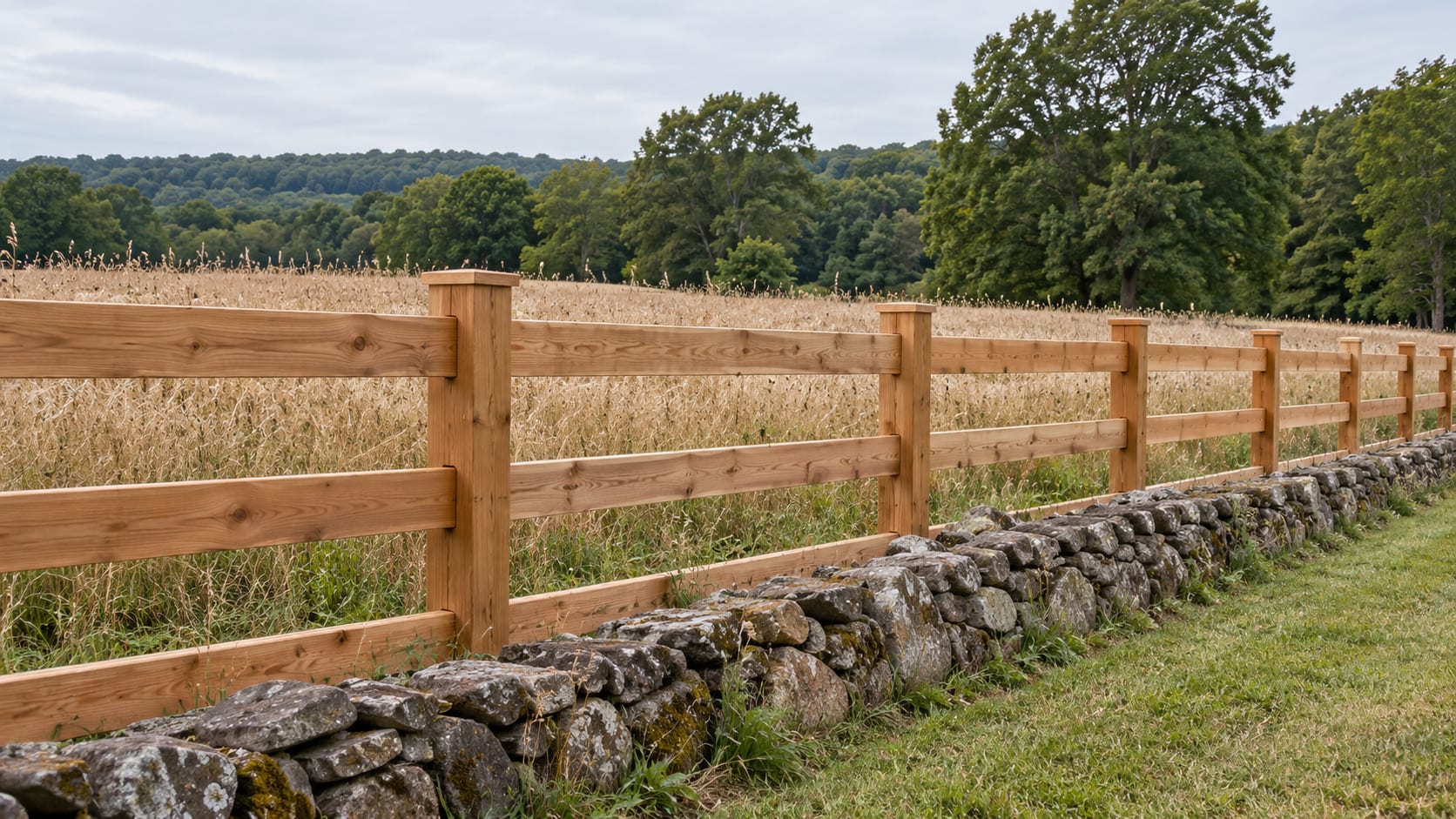
A properly specified pressure-treated southern yellow pine fence usually gives you the stronger ground-contact service life, while cedar often gives you the better natural appearance and above-ground decay resistance. For most Connecticut properties, the best long-term choice is based on the whole fence system, especially the posts, drainage, installation details and maintenance, not the board species alone.
Cedar boards and rails paired with UC4A pressure-treated posts can balance appearance and durability. Pressure-treated pine costs less for materials in many cases, but it can show more checking, cracking and color change as it dries.
Key Takeaways
Service life
Pressure-treated ground-contact posts can last approximately 30 to 40 years under suitable treatment and installation conditions.
Cedar appearance
Cedar has a more uniform natural look and can weather gray without a finish.
Post choice
Fence posts installed in soil should generally be specified as AWPA UC4A ground-contact material.
Cost
National 2026 material estimates place pressure-treated pine at about $5 to $7 per linear foot and cedar at about $8 to $10 per linear foot.
Maintenance
Both materials benefit from water-repellent finishing, good drainage and protection of cut ends.
Cedar and Pressure-Treated Pine Do Different Jobs
Western red cedar and northern white cedar are naturally decay-resistant woods. Western red cedar has strong resistance to moisture, decay and insects, along with low shrinkage and good dimensional stability. Northern white cedar is rated durable to very durable against decay and resists termites and powder-post beetles.
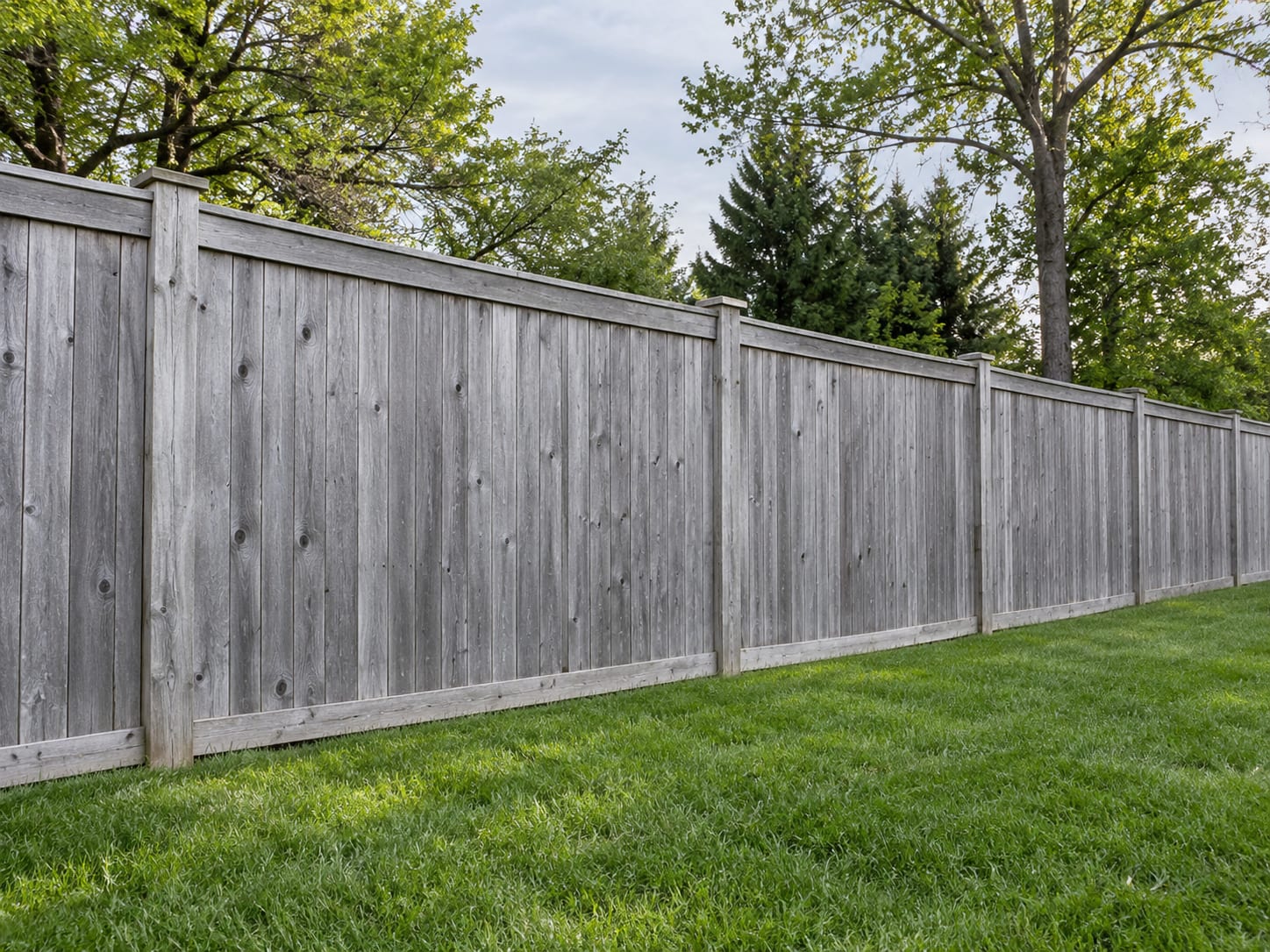
Cedar is lightweight, soft and easy to work. That makes it pleasant to cut and install, but it also has lower strength and screw-holding ability than pine. A cedar fence still needs properly sized rails, sound fasteners and posts suited to the soil exposure.
Pressure-treated southern yellow pine uses preservative forced into the wood under pressure. The treatment protects against fungal decay and termites, including in exterior and ground-contact applications. It does not stop moisture-related cracking, checking, warping or color change.
Cedar generally has a more uniform natural appearance. Left unfinished, it weathers to gray. Pressure-treated pine commonly has a green or brown treatment color and may show more drying movement, especially when installed while still wet. Kiln-dried-after-treatment pine is more stable than conventionally air-dried treated lumber.
The wood fencing options can be specified with different board, rail, post and finish combinations. When you compare estimates, make sure you are comparing the same fence height, board thickness, post material, gate count and site work.
The material price is only one part of the estimate
National material-only pricing published in 2026 places pressure-treated pine at approximately $5 to $7 per linear foot and cedar at approximately $8 to $10 per linear foot. These are national material estimates, not Connecticut installation prices.
Angi gives a national installed range of $10 to $45 per linear foot for wood fencing. Style, height, gates, labor, access, removal and ground conditions can change the actual project price.
A fence across ledge may require more layout and installation work than a similar length in open, level soil. Rocky soil can affect post placement and equipment needs, and persistent wetness can change the post specification.
Hover or tap a row to highlight it.
| Feature | Cedar | Pressure-treated southern yellow pine |
|---|---|---|
| National material estimate | $8 to $10 per linear foot | $5 to $7 per linear foot |
| Natural decay resistance | Strong, especially suitable heartwood above ground | Comes from preservative treatment |
| Typical appearance | Natural wood tones, gray weathering if unfinished | Green or brown treatment color, more visible drying movement |
| Ground-contact use | Requires careful species, heartwood and site selection | UC4A is commonly used for ordinary fence posts |
| Moisture movement | Generally low shrinkage and good stability | Can check, crack, warp and change color as it dries |
| Maintenance | Finish can preserve color and reduce moisture cycling | Finish helps with weathering, checking and color change |
Why the Posts Often Matter More Than the Boards
A fence post is exposed to soil organisms, recurring moisture, freeze-thaw cycles and the wet-dry boundary near grade. That is why posts are often pressure-treated even when the boards and rails are cedar.
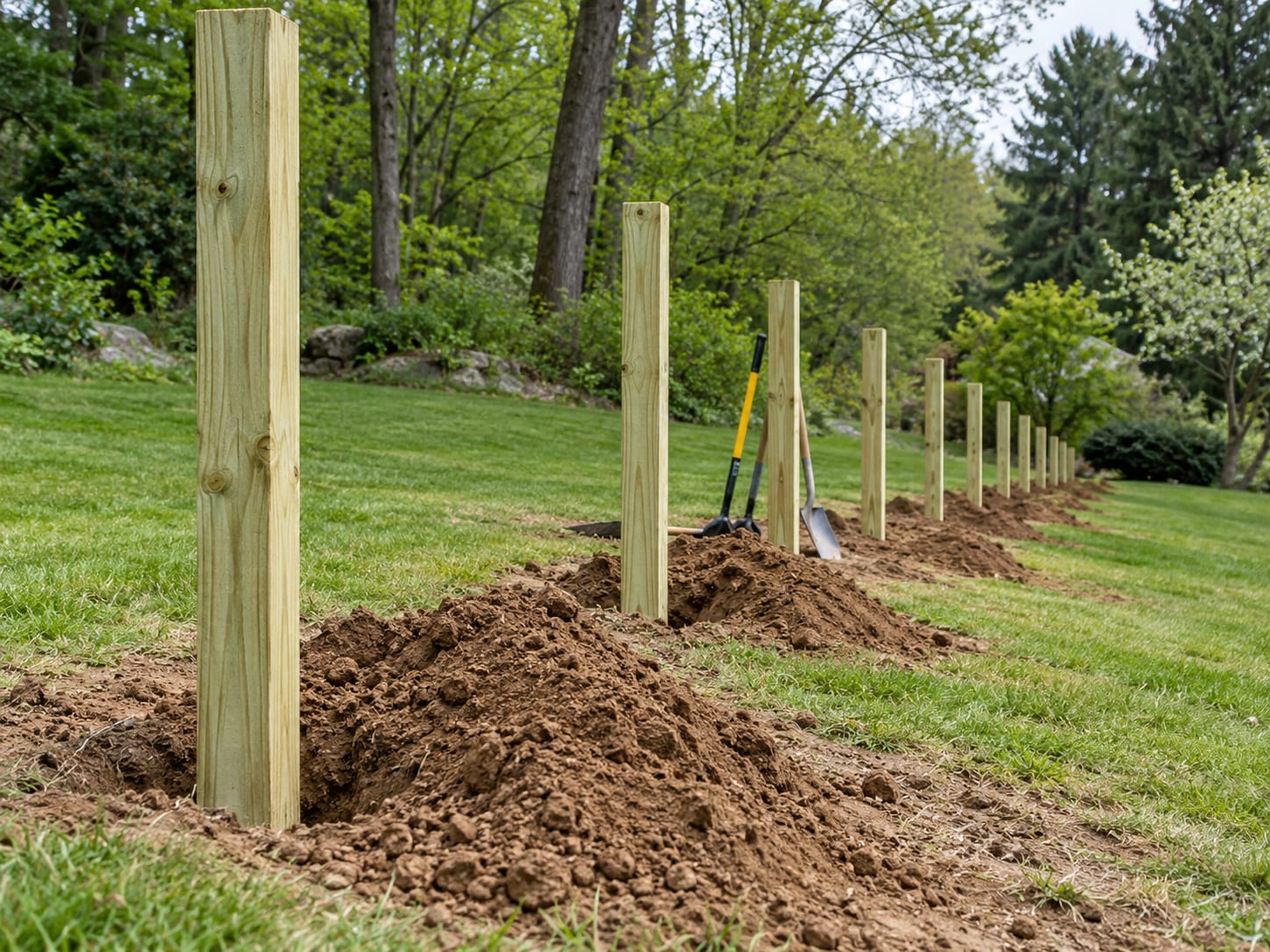
AWPA Use Category UC4A means ground-contact general use. It applies to wood in contact with soil or fresh water under normal deterioration conditions, and AWPA specifically lists sawn fence posts and round fence posts as UC4A examples.
UC4B means ground-contact heavy duty. It is intended for severe environments, high deterioration potential, critical components, moist temperate climates and other demanding conditions. UC4B is not automatically required for an ordinary residential fence post, but it may fit a site with persistent wetness, poor drainage, severe decay exposure or unusually important structural needs.
AWPA UC3B is the exposed-above-ground category and specifically includes fence pickets. A post installed in soil should be specified for ground contact rather than treated as above-ground material.
Field-cut ends and drilled areas of treated posts should receive a compatible brush-on preservative according to the treatment manufacturer’s instructions. Fasteners and connectors should resist corrosion and be approved for treated wood. Treated Wood provides installation guidance for field treatment of end cuts and hardware.
A mixed-material fence can be a sound choice
You do not have to choose one wood for every component. Cedar boards and rails with UC4A pressure-treated pine posts are a common way to use cedar where appearance matters while giving the highest-moisture component preservative protection.
That specification still depends on post depth, drainage, ground-line detail, post spacing and construction quality. Cedar’s natural durability is strongest in suitable heartwood above ground. Sapwood, poor drainage, cut ends and recurring wetting can shorten the life of a cedar component.
Ask the contractor to write the post material and AWPA Use Category into the estimate. A phrase such as “treated posts” is less useful than a clear specification identifying ground-contact use, preservative treatment and field-cut protection.
How Long Can Each Fence Last?
Post life has stronger published evidence than board life. USDA Forest Products Laboratory guidance states that pine posts pressure-treated for ground contact should last approximately 30 to 40 years anywhere in the United States, based on field-test results.
Separate USDA research on treated southern yellow pine fence posts reported estimated average lives of approximately 25 to 42 years for several preservative systems. Treatment level, preservative system, installation, drainage and soil exposure affect performance.
The USDA Wood Handbook states that untreated western redcedar used as poles has an average life somewhat less than 20 years. That figure applies to untreated poles, not necessarily to a well-built cedar fence board above ground. A cedar post in soil may fail earlier or later depending on heartwood, drainage, the ground-line detail and the local decay environment.
Fence boards and rails face sun, rain, snow, wind and freeze-thaw cycles. There is no single service-life number that applies to every cedar or pressure-treated pine fence. Board thickness, grade, water drainage, shade, vegetation, sprinklers, field cuts, fasteners and maintenance all affect performance.
USDA guidance states that in dry areas with low decay risk, moderately resistant woods can last almost as long as western redcedar in above-ground fence parts. In areas with moderate decay risk, rails should be pressure-treated or naturally decay-resistant. Where decay risk is high, above-ground fence wood should be naturally decay-resistant or pressure-treated.
For more general comparisons, see How Long Does a Fence Last? Lifespan by Material in New England.
What this means for your estimate
A realistic service-life discussion should identify the component being discussed:
- Pressure-treated ground-contact posts may last approximately 30 to 40 years under suitable conditions.
- Untreated western redcedar poles have an average life somewhat less than 20 years in the cited USDA source.
- Cedar boards and rails can provide long service above ground, but their life depends on exposure and maintenance.
- Pressure-treated boards and rails can perform well, but treatment does not prevent weathering, cracking, checking or color change.
- A fence may need board, rail or gate repairs before its posts fail.
The written estimate should state the board grade, thickness, rail dimensions, post type, treatment category, finish, drainage detail and maintenance expectations. That gives you a better comparison than a broad statement that one material lasts longer.
Finishing Cedar and Pressure-Treated Wood
Cedar can be left unfinished and allowed to weather naturally to gray. If you want to preserve more of its color, a penetrating water-repellent stain with UV protection can reduce moisture cycling and slow color change. Semi-transparent finishes show the grain and suit cedar’s natural appearance.
Apply finish to exposed faces, edges, ends and field-cut areas according to the product instructions. End grain absorbs moisture quickly, so it deserves the same attention as the broad face of the board.
Pressure-treated wood also benefits from a water-repellent or exterior stain with UV protection. Pressure treatment protects against decay and insects, but it does not prevent weathering, checking, cracking or color change. Treated Wood identifies oil-based and water-based stains, exterior wood sealers and semi-transparent finishes as options.
New waterborne pressure-treated wood should dry before staining. Treated Wood states that it is typically ready for finishing about 60 days after installation, but the actual time depends on when it was treated, sun exposure, temperature and recent weather.
Place a few drops of water on the surface. If the water absorbs readily, the wood is porous enough to accept a finish. If it beads on the surface, wait and test again. The selected stain’s label controls, and some labels call for approximately two to four months of weathering before application.
Finish recommendations vary. Treated Wood cites annual application recommendations for many water-repellent coatings, while other products specify longer intervals. Follow the product instructions for reapplication.
Permits and Town Rules Come Before Materials
Connecticut has a statewide building code administered through local building officials, but zoning and land-use requirements are local. The State Building Code currently exempts fences other than swimming-pool barriers that are not over 7 feet high from the building-permit requirement. Local zoning rules can still regulate height, location, setbacks, visibility and permits.
Start with the town’s Planning and Zoning Department. Ask about fence height, front-yard and corner-lot rules, setbacks, visibility triangles, zoning permits and design requirements. Contact the Building Department about a building permit, especially if the fence is over 7 feet high, is part of a pool barrier or is associated with another regulated structure.
You can review the statewide basics in Do You Need a Permit for Fence Installation in CT?.
Ridgefield’s Planning and Zoning Department states that fences may require a zoning permit, a building permit or more, depending on the project. Planning and Zoning, Inland Wetlands, the Building Department, the Historic District Commission and the Health Department are separate authorities with potentially separate requirements.
Danbury publishes its own zoning regulations, including district-specific requirements and use-specific fence or screening provisions. A residential fence, commercial screening fence, athletic-field fence or refuse-area enclosure may be treated differently within the same municipality.
Nearby New York towns also use local zoning and building rules. Putnam County legislative minutes from 2017 identified the Town of Patterson’s maximum fence height as 6 feet in a dangerous-dog fencing discussion and stated that an 8-foot fence could require a variance. That local record should not be treated as a current rule for every New York town.
For a property in Putnam, Dutchess or Westchester County, contact the specific town, city or village where the property sits. Ask that municipality about current height, setback, permit and variance requirements.
Wetlands, utilities and site conditions
If the property is near wetlands, a watercourse, a lake, drainage area or regulated buffer, contact the town’s Inland Wetlands Agency or Inland Wetlands Agent before locating the fence. Connecticut DEEP states that activities likely to impact or affect inland wetlands or watercourses require review by the municipal inland wetlands agency. The agency determines whether an activity is regulated or nonregulated.
Before using power-operated excavation equipment, contact Call Before You Dig. Connecticut requires notification two full working days before excavation. Call 811 or 1-800-922-4455. Public utility marking may not identify private electric, sprinkler, sewer lateral or security-system lines.
A western Connecticut lot with ledge or an old stone wall can change the fence line and post layout. Ask for the proposed location to be marked before work begins, especially where the fence must pass near a boundary, driveway, wetland or existing wall.
A Practical Fence Planning Sequence
- 1
Confirm the property line
Use a current survey or plot plan when the location is near a boundary, road or old wall.
- 2
Call Planning and Zoning
Ask about height, setbacks, front and corner lots, visibility triangles, zoning permits and design rules.
- 3
Contact other town offices
Ask Building about permits, Inland Wetlands about regulated areas and Historic District staff about protected properties.
- 4
Call Before You Dig
Notify Connecticut’s utility marking service two full working days before excavation.
- 5
Specify the fence
Put board material, post category, dimensions, gates, finish, removal and restoration in the written estimate.
- 6
Install and inspect
Set posts, build panels and gates, complete finish work and follow the town’s inspection instructions.
Questions to Ask Before You Sign
A contractor’s written estimate should identify more than cedar or pressure-treated pine. Ask what is included for post excavation, rocky soil, gates, old fence removal, disposal, finish and site restoration.
At My Fence Guy, a written quote for this type of work should make the material comparison clear, including the board and rail species, post treatment category, fasteners, gate construction, finish and site conditions. If the fence is near a pool, wetland, driveway or property line, those details belong in the project discussion before materials are ordered.
For a replacement fence, ask whether existing posts will be removed, whether new posts will use the same alignment and how the crew will handle grade changes. A sloped yard may need stepped or racked construction. A site with ledge may need a revised post layout after excavation.
If you are sharing a fence with a neighbor, put the location, height, finished side, access, cost sharing and maintenance responsibilities in writing. For a specific property-line dispute, speak with a Connecticut real estate attorney.
Frequently Asked Questions
Is cedar better than pressure treated for a fence?
Neither is universally better. Cedar is usually the better choice for natural appearance, above-ground decay resistance and dimensional stability. Pressure-treated southern yellow pine usually costs less initially and provides preservative protection where wood is exposed to soil, recurring moisture or insects.
How long does a pressure-treated fence last?
Pressure-treated ground-contact posts can last approximately 30 to 40 years under suitable treatment and installation conditions. Above-ground boards and rails may need attention sooner because sun, moisture, wind, checking, fasteners and physical damage affect their service life.
How long does a cedar fence last?
Cedar boards and rails can provide long service above ground, but the life depends on heartwood, thickness, drainage, shade, vegetation, finish and construction. Untreated western redcedar poles have an average life somewhat less than 20 years in the cited USDA source, and that figure is not a service life for every cedar fence board.
Should fence posts be pressure treated?
Posts installed in soil should generally be pressure-treated ground-contact material. AWPA identifies sawn and round fence posts as UC4A components, while UC4B may fit severe environments, persistent wetness or critical structural applications.
When can you stain a pressure-treated fence?
Stain a pressure-treated fence after the wood is dry enough to absorb the finish. Treated Wood states that treated wood is typically ready about 60 days after installation, but weather and the product label control. If water beads on the surface, wait and test again later.
Cedar and Pressure-Treated Fence Quiz
1. Which AWPA Use Category generally applies to ordinary fence posts installed in soil?
2. What is a national 2026 material estimate for cedar fencing?
3. What does pressure treatment protect against?
4. When should new treated wood be stained?
5. Which town office should you contact first about fence height and zoning rules?
Pick an answer to begin.
Final Thoughts
Cedar is a strong choice when you want a natural appearance and decay resistance above ground. Pressure-treated pine is often the practical choice for ground-contact posts and a lower initial material price. The most durable fence is built from a complete specification that matches the wood, post treatment, drainage, site exposure and maintenance plan to the property.
My Fence Guy can help you compare the materials and put the post type, finish, gates and site work into a written estimate. Call us at (203) 746-1100 for a free estimate, or reach out through our contact page.
Cedar and Pressure-Treated Fence Terms
Tap a term to see what it means.
Western red cedar. A naturally decay-resistant wood with low shrinkage and good dimensional stability.
More about fences
Wood vs Vinyl Fence: Cost, Upkeep and Lifespan in Connecticut
Wood or vinyl fence in Connecticut: installed cost, lifespan in freeze-thaw winters, staining and cleaning, storm repairs and how each looks over the years.
Read the guide to Wood vs Vinyl FenceHow Deep Should Fence Posts Be in Connecticut? Frost Line and Footings
How deep to set fence posts in Connecticut: frost depth, manufacturer depth rules by fence height, concrete or gravel, and how frost heave lifts posts.
Read the guide to How Deep Should Fence Posts Be in Connecticut? Frost Line and FootingsInstalling a Fence on Rocky Soil and Ledge in Western Connecticut
Rocky soil and ledge are common in western Connecticut, and fences still go in. Core drilling, pinned posts, surface mounts, and how ledge affects cost.
Read the guide to Installing a Fence on Rocky Soil and Ledge in Western Connecticut