
How Tall Can a Fence Be in Connecticut? Height Rules for Front, Back and Corner Lots
By Tony Pellicone13 min readPublished
- fence permits
- zoning
- connecticut
- privacy fencing
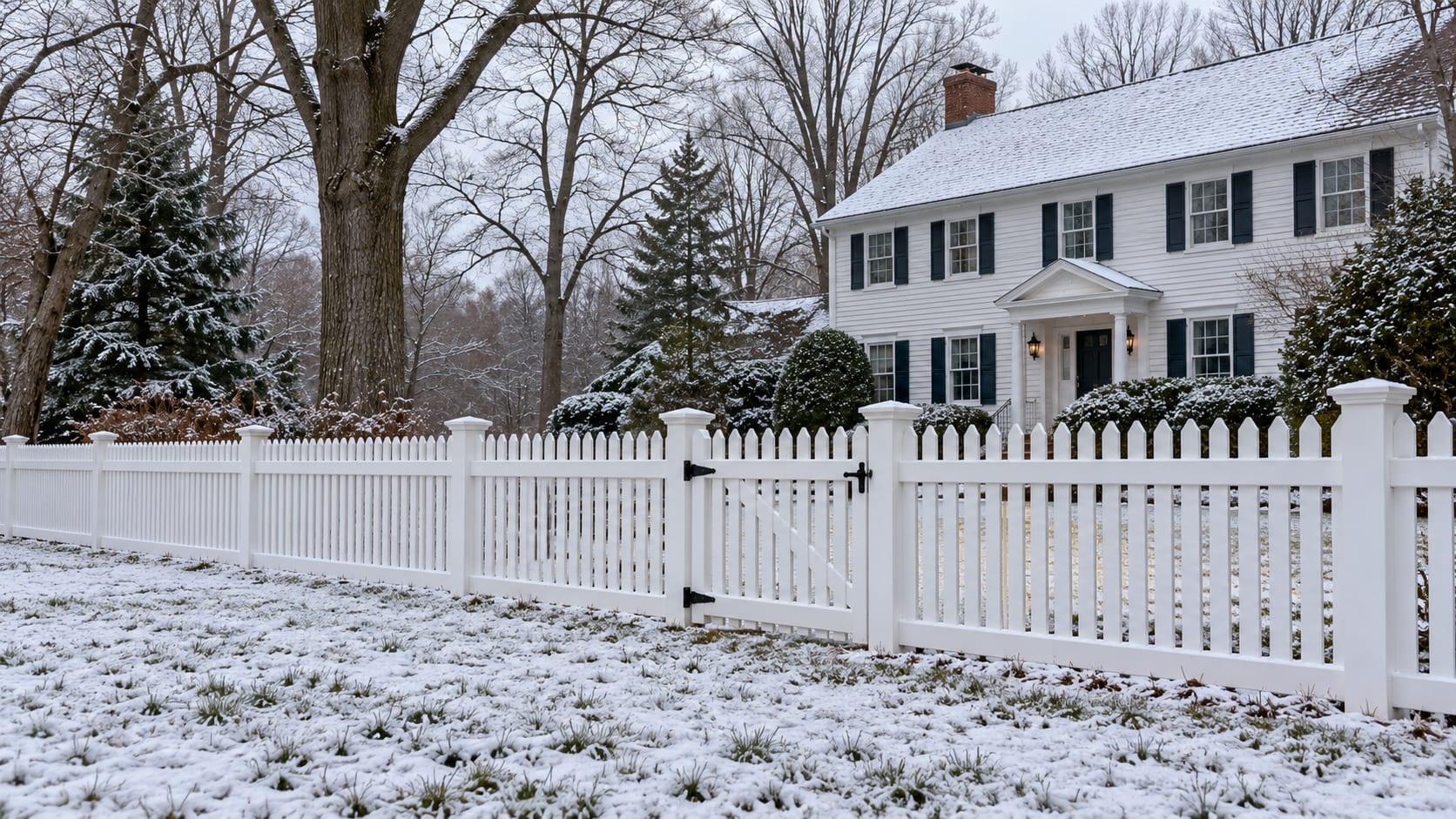
In most Connecticut towns, a backyard fence can be about 6 feet tall, and front yards and street corners usually get a lower limit. Each town sets its own numbers in its zoning regulations, so the exact height depends on the municipality, zoning district, yard location, setbacks, grade, and sight-line rules. An ordinary fence up to 7 feet may be exempt from the state building-permit requirement under the 2022 Connecticut State Building Code, but local zoning approval can still apply.
The first question is which town rule applies to your parcel. A side or rear privacy fence may have one limit, while a front-yard fence, corner-lot fence, pool barrier, or fence near a driveway may have a lower limit or a separate review process.
Key Takeaways
Town by town
Each Connecticut town sets its own fence heights in its zoning regulations.
Common height
Six feet is common for residential fencing, but it is not a universal Connecticut maximum.
Building code
Ordinary fences not over 7 feet are exempt from the state building-permit requirement under the 2022 code.
Corner lots
A fence can meet the ordinary yard limit and still violate a lower sight-line rule near an intersection.
Total height
Lattice, trellis, caps, retaining walls, and grade changes can affect how the town measures height.
First call
Ask the zoning office and building department about the exact property, location, design, and approval requirements.
The height depends on the town and the yard
Connecticut municipalities set many of the rules that control fence height, setbacks, visibility, and local permits. The same 6-foot privacy fence can be treated differently in Enfield, New Fairfield, Norwalk, Danbury, Ridgefield, Newtown, or Milford.
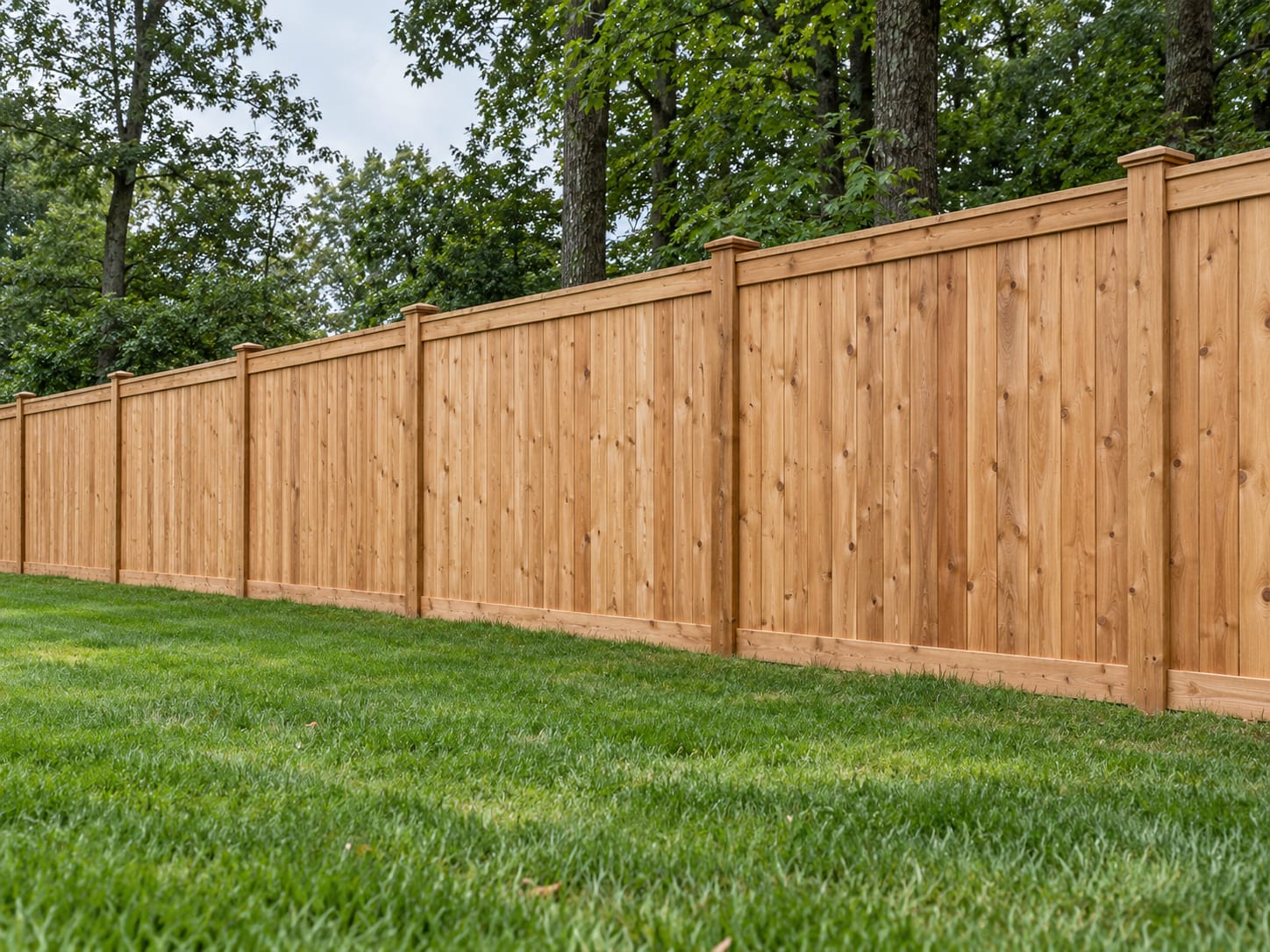
Enfield’s residential regulation states that fences in a residence district may not exceed 6 feet in height. It also requires the finished side to face the abutting property, except for agricultural land. The town’s residential-fence handout is dated 2025. You can read the Enfield residential fence regulations before speaking with the town.
New Fairfield’s 2021 zoning regulations treat fences over 6 feet as structures. They also limit obstructions over 3 feet in a corner-lot visibility triangle. New Fairfield identifies zoning regulations effective in 2025, so ask the zoning office to confirm the current text before ordering a taller fence.
Norwalk uses district-specific standards. One 2024 industrial-district table lists walls and fencing at a maximum of 6 feet, measured from the average undisturbed grade of the adjacent property at the property line. That measurement can matter when the two sides of a fence sit at different elevations.
Danbury, Newtown, Ridgefield, and Milford also use their own zoning regulations and district classifications. Ridgefield’s regulations were amended through 2026 and should be checked by zoning district and location. Newtown’s regulations establish district-specific area, height, and yard requirements. A single townwide residential answer should not be assumed for any of these municipalities.
Hover or tap a row to highlight it.
| Municipality or rule | Published standard | What to confirm |
|---|---|---|
| Enfield residence district | Fences may not exceed 6 feet | Finished-side direction and corner or driveway visibility |
| New Fairfield residence district | Fences over 6 feet are treated as structures | Current zoning text, setbacks, and the 25-foot corner triangle |
| Norwalk industrial district example | Walls and fencing listed at 6 feet | Zoning district, location, and measurement from adjacent-property grade |
| Connecticut State Building Code | Ordinary fences not over 7 feet are exempt from the state building-permit requirement | Local zoning approval and pool-barrier requirements |
A practical starting point is to identify whether the fence is in the front, side, rear, or corner portion of the lot. Front-yard fences are often lower or more open than side and rear privacy fences. That is a local zoning question, not a statewide rule.
If you are choosing a design for a residence, review the residential fencing options after you know the height and location the town will allow.
Corner lots, driveways, and sight lines
Corner-lot rules can create a lower height limit near the street even when the rest of the yard allows a taller fence. The ordinary fence-height limit and the sight-line limit are two separate questions.
Enfield creates a triangular visibility area at a street corner. No fence, wall, hedge, structure, or planting over 3 feet may be placed within the triangle formed by the intersecting street lines and a line connecting points 50 feet from the intersection along each street line.
New Fairfield uses a smaller corner triangle in its 2021 regulation. On a corner lot in a residence district, an obstruction over 3 feet may not be placed within the triangle formed by points 25 feet from the intersection along each street line.
Enfield also addresses interior lots. Visual obstructions within 10 feet of a motor-vehicle driveway must be maintained so they do not create a hazard to pedestrians or vehicles. A fence near a driveway may therefore need a lower or more open design even when the side-yard limit is higher.
Your fence location should be marked on a survey, plot plan, or GIS map. Include intersections, sidewalks, driveways, and the public right-of-way. If the project is near a property line, the rules for building a fence on the property line may affect the layout before height is settled.
How height is measured on slopes and near grade changes
Height measurement differs by municipality and by the type of structure. Norwalk’s 2024 zoning regulations include a fence standard measured from the “avg. undisturbed grade of Adjacent property at property line.” That means the adjacent property’s grade can matter, rather than only the grade on the fence owner’s side.
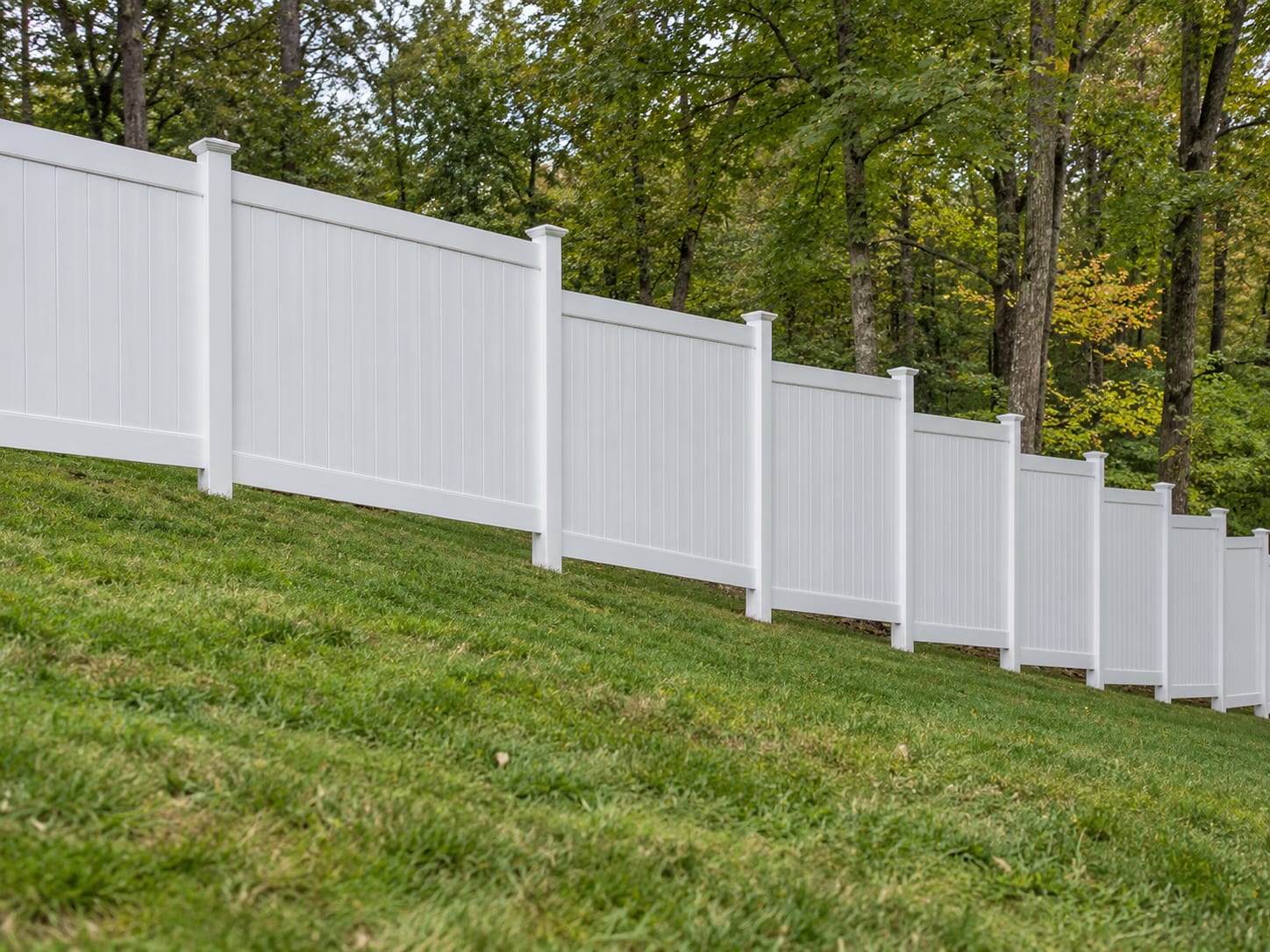
On a sloped western Connecticut lot, a 6-foot panel does not always produce a uniform 6-foot height above both sides of the ground. Posts may sit at different elevations, and a stepped or racked layout can change the visible height from one section to the next. The finished height should be checked at each section or post. The difference between a stepped and racked design is explained in Fencing a Sloped Yard: Stepped vs Racked Fences.
Treat lattice, trellis panels, decorative toppers, and post caps as part of the visible fence assembly when asking the town about total height. A 6-foot fence with a 2-foot trellis may be evaluated as an approximately 8-foot fence for local zoning purposes.
A retaining wall beneath the fence adds another measurement issue. Show existing grade, the bottom and top of the wall, finished grade on both sides, the fence height above the wall, the combined elevation, and the distance to property lines.
Norwalk lists retaining walls separately from walls and fencing. Its cited district table allows retaining walls up to 5 feet in front or side yards and up to 10 feet in rear yards when the wall retains grade from the abutting property and meets additional standards. Those figures apply to that table and should not be carried into another town.
The 2022 Connecticut State Building Code exempts retaining walls not higher than 3 feet, measured from finished grade at the bottom to finished grade at the top, unless the wall supports a surcharge. A taller retaining wall may require building-code review. Local zoning may also regulate the wall and fence together for visual height, screening, structures, drainage, or grade changes.
Hover or tap a row to highlight it.
| Site detail | Why it matters |
|---|---|
| Yard location | Front, side, rear, and corner areas may have different standards |
| Existing and finished grade | Height may be measured from a specified grade reference |
| Fence panels, trellis, and caps | The complete visible assembly may control total height |
| Retaining wall | Wall and fence may be reviewed separately or together |
| Driveways and intersections | A lower sight-line limit may apply |
| Pool location | Pool barriers follow separate height and opening rules |
Permits, zoning approval, and taller fences
Under the 2022 Connecticut State Building Code, ordinary fences other than swimming-pool barriers are exempt from the state building-permit requirement when they are not over 7 feet high. A fence over 7 feet generally requires building-code review.
That state exemption does not decide whether the fence is allowed. A town may require a zoning permit, fence permit, zoning clearance, or other approval for a fence below 7 feet. Front-yard rules, corner visibility, wetlands, historic districts, setbacks, and pool regulations can create additional requirements. The Connecticut fence permit overview explains how the state building rule and local zoning review fit together.
Swimming-pool barriers follow a different rule. The 2022 Connecticut code requires the top of a pool barrier to be at least 48 inches above grade, measured on the side facing away from the pool. Bottom-clearance and opening-size requirements also apply. A pool fence is not handled under the ordinary fence exemption. Review the Connecticut pool fence requirements before selecting a panel or gate.
A fence that exceeds the local maximum, violates a setback, enters a visibility triangle, or conflicts with another zoning rule may require a variance. Connecticut General Statutes §8-6 authorizes a zoning board of appeals to vary zoning requirements when special parcel conditions create exceptional difficulty or unusual hardship. A desire for more privacy by itself does not establish that a variance will be granted. The statute is available through the Connecticut General Statutes.
The usual variance process starts with the zoning office. Obtain the town application and filing requirements, submit the site plan or survey with the proposed fence dimensions and materials, pay the local fee, provide required notice, attend the hearing, and present the parcel-specific hardship required by §8-6. An approved variance may also need to be recorded in the land records under §§8-3d and 8-7.
What to settle before construction
- 1
Confirm the parcel
Give the zoning office the property address and ask for the zoning district and yard classification.
- 2
Mark the location
Provide a survey, plot plan, or GIS map showing the fence, roads, sidewalks, driveways, and property lines.
- 3
Show the full design
Include total height, lattice, trellis, caps, gates, material, opacity, and any retaining wall.
- 4
Ask about approvals
Confirm zoning, building, wetlands, historic-district, pool, and variance requirements.
- 5
Call before digging
Contact 811 or 1-800-922-4455 before excavation through Connecticut’s Call Before You Dig program.
- 6
Put the work in writing
Identify height, location, materials, permits, utility marking, drainage, fees, and change-order terms.
Connecticut’s Department of Consumer Protection states that residential fence work is home improvement work and that contractors performing this work for consumers generally must be registered as home improvement contractors. A written proposal should identify who obtains permits, who calls 811, and who pays permit or survey costs.
For a fence with a wall beneath it, ask the zoning and building offices to review the cross-section before construction. This is especially useful where the lot slopes toward a wetland, watercourse, driveway, or neighboring property. A wall and fence can affect drainage and erosion review as well as height.
Fence height standards in Enfield, New Fairfield, Norwalk and Ridgefield
Connecticut towns can set different standards for the same fence design. Enfield uses a 6-foot residential limit and a 3-foot, 50-foot corner visibility triangle. New Fairfield treats fences over 6 feet as structures and uses a 3-foot, 25-foot corner visibility triangle. Norwalk uses district-specific standards and measures at least one cited fence standard from the average undisturbed grade of the adjacent property at the property line.
Ridgefield’s regulations were amended through 2026 and should be checked by zoning district and location. Newtown, Danbury, and Milford also apply their own zoning regulations and classifications. Contact the zoning office for the exact municipality where the fence will stand.
For a project with an old stone wall, show whether the posts will sit beside the wall, behind it, or on top of it. The fence and old stone wall guidance covers the layout questions that can affect footing location, ownership, drainage, and total height.
Nearby New York towns are governed by New York municipal zoning codes, not Connecticut law. A Connecticut 6-foot rule, 7-foot building-code exemption, or corner-lot standard cannot be carried over to a New York property.
Frequently Asked Questions
How tall can a fence be in Connecticut without a permit?
An ordinary fence not over 7 feet high is exempt from the state building-permit requirement under the 2022 Connecticut State Building Code. Local zoning approval can still be required below that height, and swimming-pool barriers follow separate rules.
Can my neighbor put up a 7-foot fence?
Possibly, but the answer depends on the town, zoning district, yard location, setbacks, and sight lines. Enfield limits residence-district fences to 6 feet, while New Fairfield treats fences over 6 feet as structures. If the dispute involves a specific property or alleged malicious purpose, speak with a Connecticut real estate attorney. General Statutes §§52-480 and 52-570 address structures erected maliciously with intent to annoy or injure an adjacent owner or lessee.
Is an 8-foot privacy fence too high?
It may be too high for the local zoning rule and it exceeds the state’s 7-foot ordinary-fence building-permit exemption. The zoning office and building department should review the town, district, yard location, grade, and complete fence design before materials are ordered.
Can I put a trellis on top of my 6-foot fence?
A trellis can raise the regulated height of the fence. Ask the zoning office whether the trellis is included in the maximum height, how the height is measured, and whether the combined design needs local approval. The connection also needs to support the added wind load.
Can I put up a 10-foot fence?
A 10-foot fence is outside the state’s ordinary-fence building-permit exemption and may exceed the local residential height limit. Building-code review, zoning approval, engineering, and a variance may be required, depending on the use and property.
What is a cheap way to extend fence height?
A lightweight open trellis or lattice topper supported by extensions of sound existing posts is often less costly than replacing the whole fence. The existing posts, rails, panels, and footings must support the added height, and the combined design still has to meet local zoning rules.
National cost context from Angi, dated 2026, places overall fence installation at approximately $6 to $50 per linear foot, with an average of $23 per linear foot. That is a national range, not a Connecticut quote or a price for a specific extension.
Should I use 2 or 3 rails in a 6-foot privacy fence?
Three rails generally provide more support for a 6-foot privacy fence, especially for wide wood pickets, heavy boards, windy sites, or long spans. Two rails may suit some lighter systems. Follow the manufacturer’s specifications for vinyl or aluminum, and ask for the rail size, post spacing, footing design, and layout in a site-built wood proposal.
Connecticut Fence Height Check
1. What is the common residential fence height in many Connecticut towns?
2. What is the state building-permit exemption height for an ordinary fence under the 2022 code?
3. What is the height limit for obstructions in Enfield’s corner visibility triangle?
4. What separate rule applies to swimming-pool barriers?
5. What should be included in a fence height review on a slope?
Pick an answer to begin.
Final Thoughts
The right height is the height allowed for your town, zoning district, yard location, grade, and full fence assembly. Before you order panels, ask about the ordinary yard limit, corner and driveway sight lines, total height with trellis or caps, pool rules, retaining walls, and every permit or approval tied to the property.
A clear proposal should show the fence location, height, materials, gates, posts, rails, footing plan, utility marking, and responsibility for local approvals. At My Fence Guy, we can review those details with you and prepare a written estimate around the conditions of your property. Call us at (203) 746-1100 for a free estimate, or reach out through our contact page.
Fence Height Terms
Tap a term to see what it means.
Ordinary fence. A fence that is not a swimming-pool barrier and is subject to the regular fence rules.
More about fences
Do You Need a Permit to Replace a Fence in Connecticut?
Replacing a fence in the same spot in Connecticut: when towns treat it as new work, what happens to a grandfathered fence, and what to check before you start.
Read the guide to Do You Need a Permit to Replace a Fence in Connecticut?Is a Fence Considered a Structure in Connecticut Zoning?
Whether a fence counts as a structure under Connecticut zoning changes its setbacks and permits. How towns define it, with retaining walls and gates compared.
Read the guide to Is a Fence Considered a Structure in Connecticut Zoning?Fences in Connecticut Historic Districts: What Needs Approval
Fences in Connecticut historic districts need a certificate of appropriateness when seen from the street. How commissions review materials, height and style.
Read the guide to Fences in Connecticut Historic Districts