
Fences and Old Stone Walls: Building Alongside, Behind or On Top
By Tony Pellicone11 min readPublished
- fence installation
- homeowner guide
- property lines
- connecticut
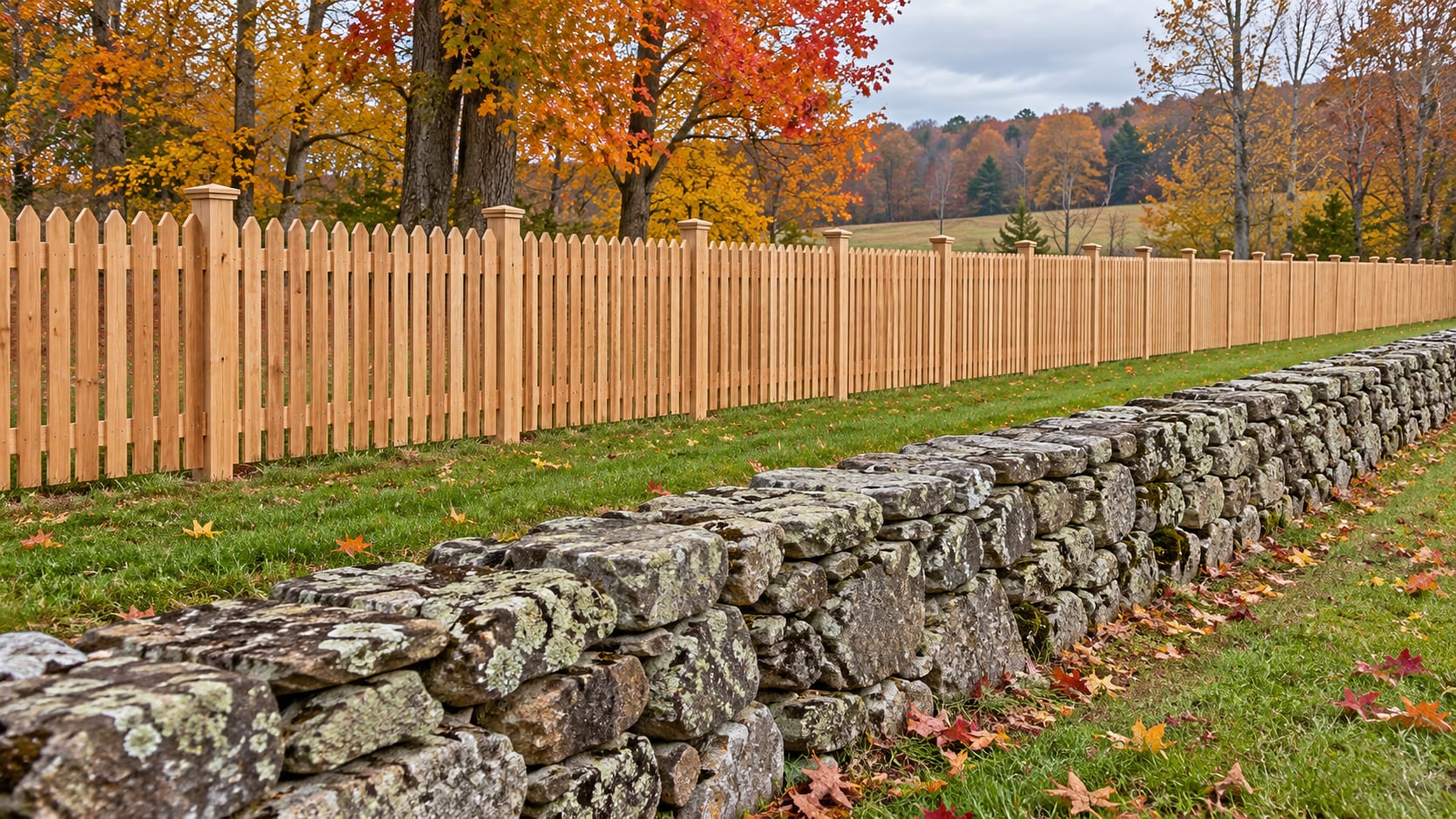
In most cases, the best fence location is beside an old stone wall, with posts set in undisturbed soil and enough space for maintenance. A fence can sometimes go behind or above a stable wall, but the wall itself does not prove where the property line runs, and attaching posts directly to an old dry-stacked wall can loosen stones.
Start with the deed, land records and a licensed boundary survey when the line matters. Then ask your town about zoning, scenic roads, wetlands and permits before choosing the fence line or removing any stones.
Key Takeaways
Boundary
An old wall may mark a historic boundary, but a survey determines the current legal line.
Fence location
Beside or behind the wall is usually easier to maintain than mounting posts into the wall.
Ownership
Deeds, surveys, recorded documents and easements determine who has rights in the wall.
Local rules
Connecticut fence requirements vary by municipality, and nearby New York towns follow their own codes.
Excavation
Call Connecticut 811 at least two full days before digging, not counting weekends or holidays, and plan for buried stones or ledge.
Why Old Stone Walls Are Everywhere
Old stone walls are common across Connecticut and New England because generations of farmers cleared forest, uncovered glacial stones and moved them to field edges, property divisions and livestock areas. Many walls accumulated between approximately 1750 and 1850. Some were rebuilt during the period from the American Revolution through the opening of the Erie Canal in 1825.
The UConn Stone Wall Initiative estimates approximately 240,000 miles of stone walls across New England. Oliver Bowles estimated more than 259,000 miles in the northeastern United States in 1939. Those figures show how widespread these walls are, but they do not tell you where your property line runs.
A wall could have separated fields, contained animals, marked a road, divided a farm operation or simply stored stones removed from cultivated ground. A wall that appears to run straight toward a neighboring parcel may be a boundary feature, but it may also be a former field divider. The wall’s appearance and position alone cannot settle ownership.
Hover or tap a row to highlight it.
| Detail | What it tells you |
|---|---|
| Approximately 240,000 miles | UConn’s estimate for stone walls across New England |
| More than 259,000 miles | Oliver Bowles’s 1939 estimate for the northeastern United States |
| Approximately 1750 to 1850 | Main period when many walls accumulated |
| 1825 | Opening of the Erie Canal, a reference point for the period when many walls were rebuilt |
When a fence will follow the wall, use the deed, recorded surveys, land records and a licensed boundary survey to locate the legal line. This matters even more if the wall is shared, has shifted over time, or sits close to a driveway, road or proposed gate.
Can You Build Beside, Behind or Above the Wall?
You have four practical design choices, and the right one depends on the wall, the property line, the fence purpose and local rules.
Place the fence on your side
A fence on your side of the wall, with a deliberate maintenance gap, is often the simplest arrangement. It keeps excavation away from the wall and gives you room to inspect posts, trim vegetation and repair panels.
The fence line should be measured from the surveyed boundary, not estimated from the wall face. If the wall sits entirely on your property, the gap can be a site-design decision. If the wall is near the boundary or may be shared, confirm the line and any access rights before installation.
Place the fence behind the wall
A fence can sit behind the wall with posts installed in soil on one side. The required clearance depends on the wall’s width and stability, the fence material, gate hardware, maintenance access and the town’s rules.
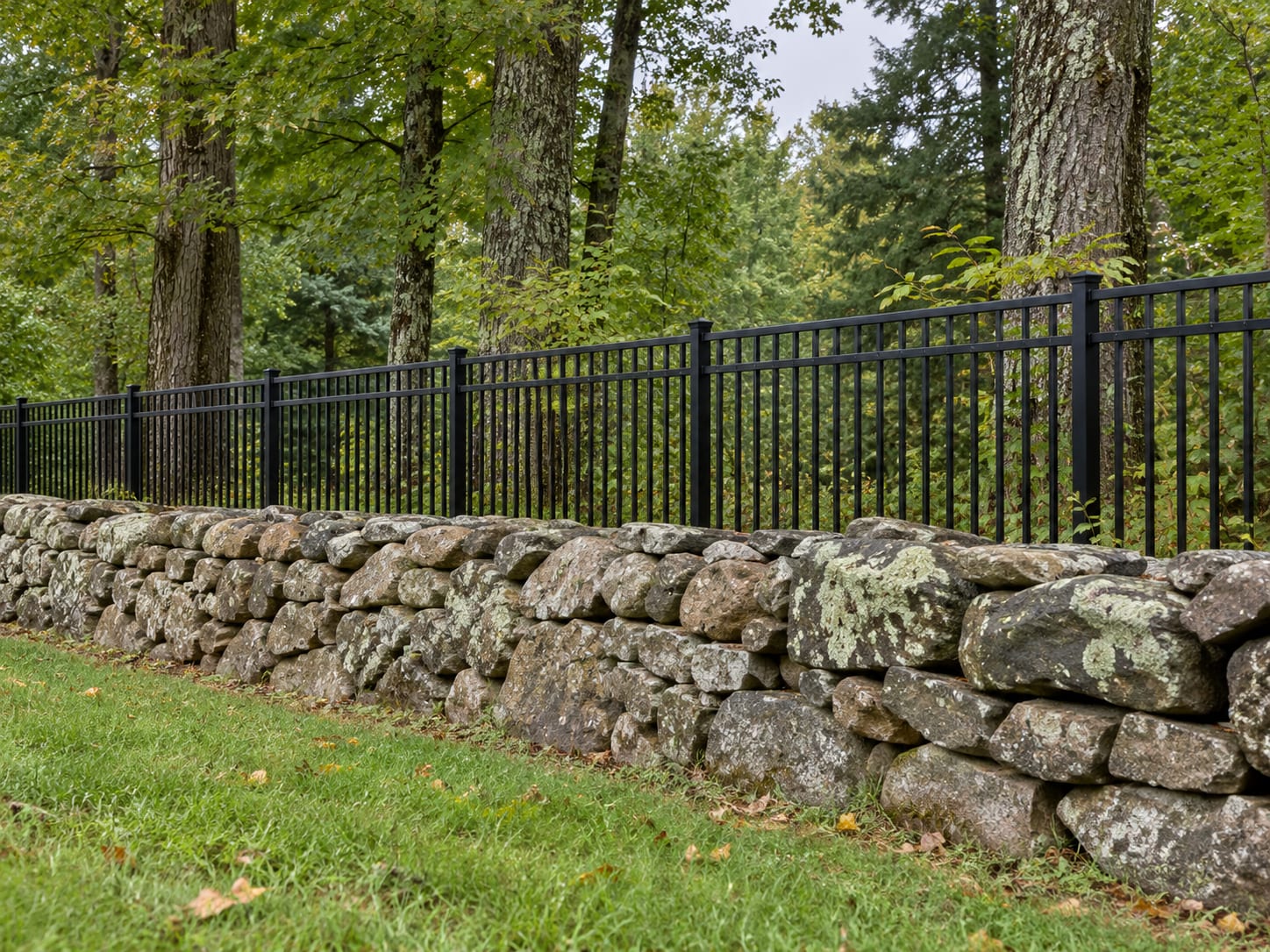
A low transparent or ornamental fence may suit a front yard or rural property where you want a boundary without hiding the wall. The fence still needs independent support, and the finished height must fit local zoning.
Put a fence above the wall
A fence above or immediately behind a stable wall may work when the wall and fence are designed together. An old dry-stacked wall is not the same as an engineered concrete footing. Posts attached to stones can shift the wall, concentrate loads and make future repairs harder.
For pool safety, a wall with a fence on top is not automatically a compliant barrier. The Connecticut State Building Code requires a pool barrier at least 48 inches high, limits openings to prevent passage of a four-inch sphere, and includes requirements for clear areas, gates and structural configuration. Review the state code and the article on Connecticut pool fence requirements, including height, gates and permits before selecting this arrangement.
Use an opening or natural break
A gate can sometimes fit through an existing opening or at a natural break in the wall. Plan the opening before construction so stones are not removed casually. Gate posts should normally stand in independent soil holes or engineered footings rather than relying on loose wall stones.
A driveway gate may require extra room for swing, vehicles, drainage and sight distance. If the gate is near a public road, ask the town whether the proposed location falls within a right-of-way or sight triangle.
How to Protect the Wall During Installation
The fence line and construction method should be written into the estimate before work begins. A good site plan shows the wall, property line, fence, gates, posts, house, driveway, road and nearby water features.
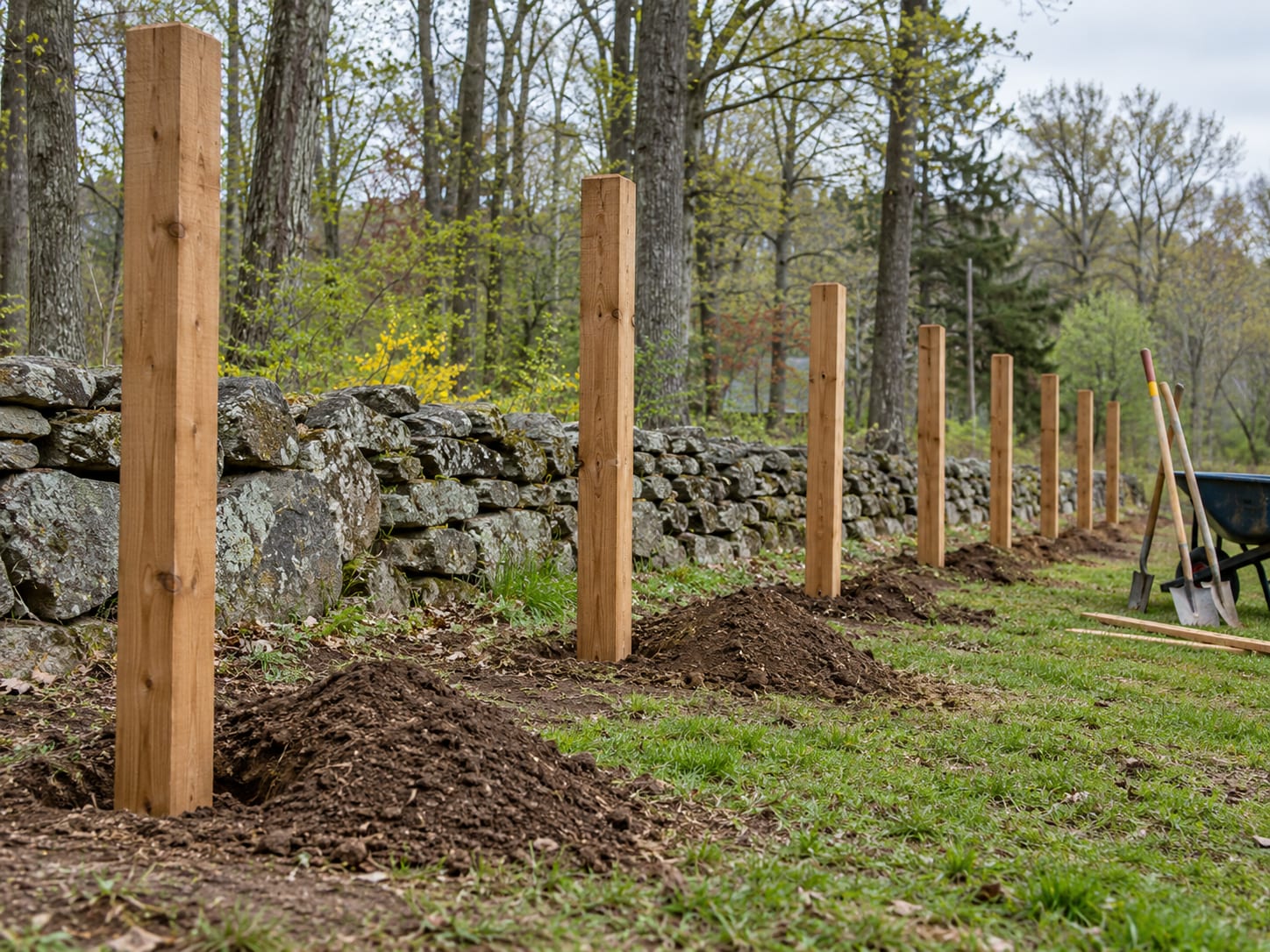
Photograph the wall before work. Mark the surveyed fence line. Keep equipment, concrete and excavated soil away from the stones. Where the wall foundation, large roots or buried stones are close to the proposed post holes, hand digging or small equipment may be appropriate.
Do not pry against the wall, pull stones out with equipment or stack excavated material against it. Posts should be installed in independent holes or engineered footings. The selected fence manufacturer’s installation instructions should control post spacing, hole size, embedment and concrete requirements.
Western Connecticut yards often have rocky soil and ledge. If buried stone or ledge prevents ordinary post holes, the contractor should provide a site-specific method or involve an engineer where needed. Drilling into the wall is not a default solution.
Call Connecticut Call Before You Dig at 811 or submit a ticket online through Connecticut Call Before You Dig at least two full days before excavation, not counting weekends or holidays. Fence-post installation is included among the work requiring an 811 ticket.
A written estimate from My Fence Guy should identify the fence line, gate locations, clearance from the wall, excavation method, treatment of unexpected ledge or buried stone, wall protection, restoration work and the total price or pricing method. If the work changes after digging begins, put the change in writing before proceeding.
Ownership, Boundaries and Wall Removal
There is no universal ownership rule for a stone wall on or near a boundary. The wall may be entirely on one parcel, centered on the legal line, or located on one owner’s land while historically used by both properties. It may also be affected by an easement, right-of-way, conservation restriction or recorded agreement.
Connecticut General Statutes § 47-43 addresses division fences between adjoining proprietors, including shared responsibility and the middle line of a divisional fence. Review Connecticut General Statutes Chapter 823, including sections 47-43 and 47-50 for the statutory language. The statute concerns division fences and does not decide ownership of every old stone wall.
Before moving or removing a wall, review the deed, survey and land records. Have a Connecticut licensed land surveyor locate the boundary when the line is uncertain. If the wall may be shared or lie on the boundary, obtain the adjoining owner’s written agreement covering removal, rebuilding, relocation, stone storage, access and future maintenance.
For a specific boundary, encroachment or ownership dispute, speak with a Connecticut real estate attorney. A contractor can build to an agreed line, but a contractor cannot decide who owns the wall.
Questions to Ask the Town Before Building Along a Stone Wall
Connecticut fence rules are set town by town. Ask the local zoning or land-use office these questions before ordering materials:
- Is zoning approval, a zoning permit, certificate of zoning compliance or building permit required?
- What height, setback, finished-side, visibility and material rules apply in this zoning district?
- Is the wall or road within a designated scenic road?
- Is the property in a historic district?
- Is the proposed fence within a road right-of-way or sight triangle?
- Is the work within a wetlands or watercourse review area?
- Does the town require a survey, site plan, sketch or neighbor authorization?
- Are separate building, wetlands, highway or health approvals required?
- Are there local rules for agricultural fencing, livestock, pool barriers or gates?
For a general permit starting point, see Do You Need a Permit for Fence Installation in CT?.
Brookfield’s zoning regulations state that residential fences under six feet may be built without zoning approval. Fences six feet or higher require zoning approval before construction and a certificate of zoning compliance after construction, with a site-plan sketch documenting that the fence is on the subject lot.
New Milford’s public-works information states that the distance from a road varies by road and directs homeowners to contact the department. New Milford also identifies designated scenic roads and provides zoning-permit guidance that recommends contacting building, inland wetlands, health and sewer departments when separate approvals may apply.
Danbury publishes zoning regulations by district and subject, so the applicable rule depends on the property’s zoning district and the work proposed. A fence rule from Brookfield, New Milford or Danbury should not be carried over to another Connecticut town.
Putnam Valley requires a building permit for fences, walls and enclosures within five feet of a property line or roadway. Pound Ridge zoning-board records show that a proposed fence and wall above a stone wall required variances because the proposed heights exceeded local limits.
A Practical Order for the Work
- 1
Confirm the line
Review the deed and survey, and hire a Connecticut licensed land surveyor when the boundary is uncertain.
- 2
Ask the town
Confirm zoning, building, wetlands, scenic-road, historic-district, highway and pool-barrier requirements.
- 3
Draw the fence
Show the wall, surveyed line, clearance, posts, gates, road, driveway and water features.
- 4
Call 811
Submit a Connecticut Call Before You Dig ticket at least two full days before excavation, not counting weekends or holidays.
- 5
Write the estimate
Identify the fence system, excavation method, wall protection, ledge treatment, restoration and price.
- 6
Install independently
Set posts in soil or designed footings, keeping loads and equipment off the old wall.
- 7
Inspect the result
Check gates, clearances, finished side, drainage, wall condition and any required town sign-off.
Scenic Roads, Historic Districts and Wetlands
Connecticut General Statutes § 7-149a authorizes a town, city or borough to designate a highway or part of a highway as a scenic road and regulate future alterations. The statute specifically includes removal of stone walls among the alterations that may be regulated. Read Connecticut General Statutes section 7-149a and ask your town whether the road is designated and what local ordinance applies.
A scenic-road designation applies to the designated road and the scope of the local ordinance. It does not create one statewide rule for every wall in the municipality.
Local historic-district rules may affect fence height, materials, visibility and wall changes. A property may also have conditions from a subdivision approval, conservation restriction or easement.
Wetlands review is another separate issue. Connecticut DEEP states that municipal inland wetlands agencies regulate activities that affect wetlands and watercourses, including construction, alteration, obstruction and removal or deposition of material. Review areas outside the wetland boundary vary by municipality. If the wall or fence is near a stream, pond, wet area or drainage path, ask the local inland wetlands agency before digging. The post on building a fence near wetlands, streams or lakes covers the related planning questions.
Frequently Asked Questions
Can I remove a stone wall on my property in Connecticut?
Possibly, but property ownership is only one part of the answer. Confirm the boundary and ownership, then ask the zoning, building, wetlands and highway offices whether scenic-road, historic-district, right-of-way, easement or wetlands rules apply. If another owner may have rights in the wall, obtain written consent or speak with a Connecticut real estate attorney.
Who owns a stone wall on the property line?
The deed, survey, recorded boundary description, historic conveyances and easements determine ownership. A wall may be centered on the boundary, entirely on one parcel, or on one parcel but historically used by both owners. A licensed land surveyor should locate the line when the fence or a disagreement depends on it.
Can you put a fence on top of a stone wall?
Sometimes, if the wall is stable, the fence meets local requirements and the support system is designed for the arrangement. Independent posts behind the wall or a planned low rail may be safer than drilling into stones. A pool barrier must meet the Connecticut State Building Code, so a fence on top of a wall needs a separate code review.
Are stone walls protected in Connecticut?
Some walls receive protection through scenic-road ordinances, historic-district rules, preservation restrictions, conservation easements, subdivision conditions, rights-of-way or wetlands regulation. Connecticut has no general statewide law automatically protecting every old stone wall, so ask the municipality about the particular wall and property.
Final Thoughts
An old stone wall can remain the defining feature of a property while a new fence provides privacy, pet control, pool safety, livestock containment or security. The safest sequence is to locate the boundary, confirm town requirements, call 811, design independent post support and put the wall protection plan in writing.
If the line or ownership is disputed, involve a surveyor and a Connecticut real estate attorney before construction. Call us at (203) 746-1100 for a free estimate, or reach out through our contact page.
Stone Wall and Fence Terms
Tap a term to see what it means.
Dry-stacked wall. A stone wall built without mortar, using the placement and weight of stones for stability.
More about fences
How Deep Should Fence Posts Be in Connecticut? Frost Line and Footings
How deep to set fence posts in Connecticut: frost depth, manufacturer depth rules by fence height, concrete or gravel, and how frost heave lifts posts.
Read the guide to How Deep Should Fence Posts Be in Connecticut? Frost Line and FootingsInstalling a Fence on Rocky Soil and Ledge in Western Connecticut
Rocky soil and ledge are common in western Connecticut, and fences still go in. Core drilling, pinned posts, surface mounts, and how ledge affects cost.
Read the guide to Installing a Fence on Rocky Soil and Ledge in Western ConnecticutFencing a Sloped Yard: Stepped vs Racked Fences
Fencing a sloped yard: stepped or racked panels, which materials rack and how far, handling gaps under the fence for pets and pools, and the cost of a slope.
Read the guide to Fencing a Sloped Yard