
Building a Fence on the Property Line in Connecticut: Setbacks, Surveys and Neighbors
By Tony Pellicone12 min readPublished
- property lines
- neighbors
- connecticut
- fence permits
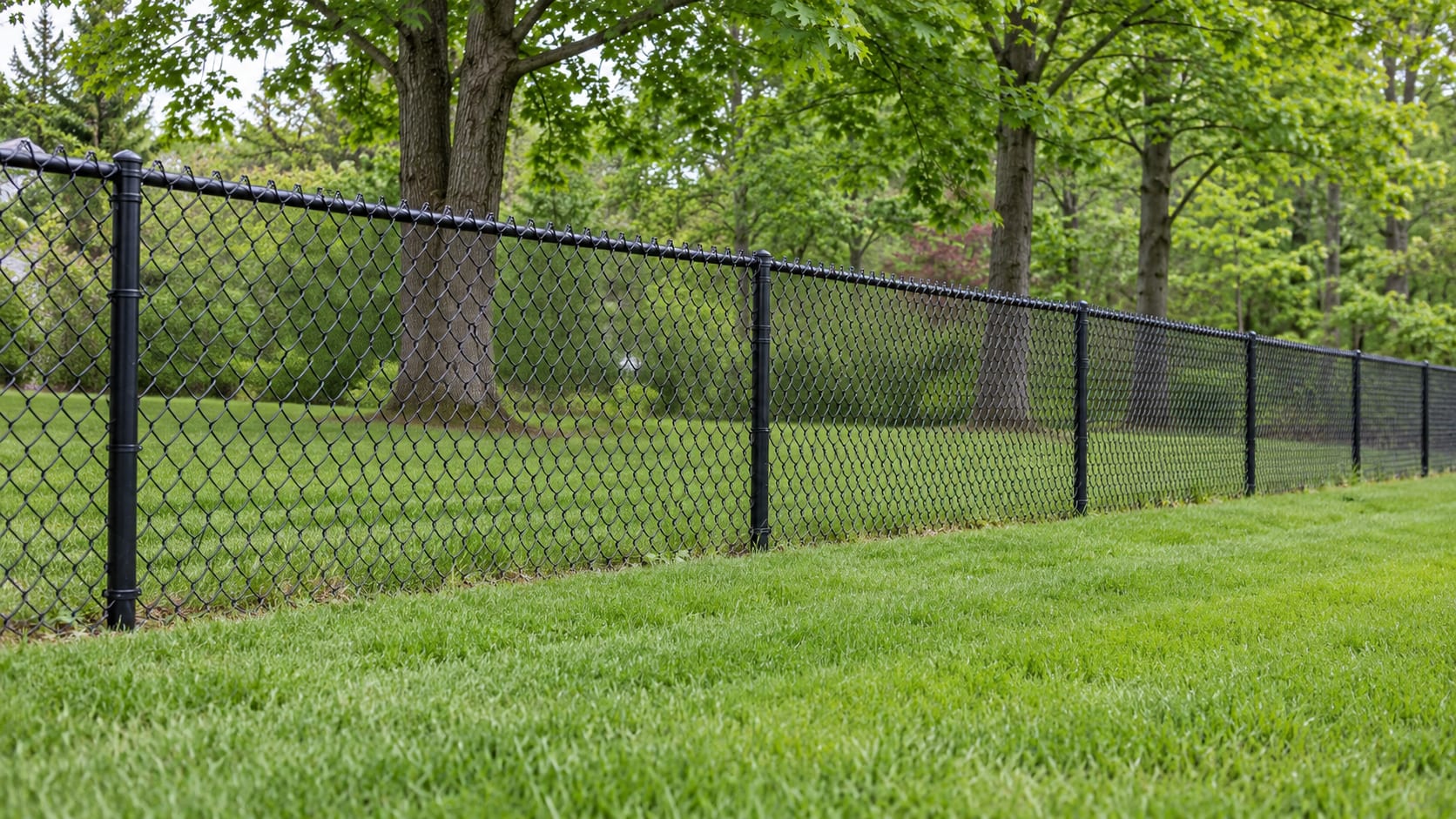
You may be able to build a fence directly on your property boundary, depending on your town: each Connecticut town sets its own fence setback rules for ordinary residential fences. The town, zoning district, yard location, fence height, property use and permit requirements determine how close you can build. Before setting posts, confirm the boundary through your deed, recorded land records or a licensed land surveyor, then ask the local Planning and Zoning or Zoning Enforcement office what placement the town allows.
A visible fence, stone wall, hedge or mowing line may not be the legal property line. A fence placed a few inches or feet over the boundary can create a dispute, while a fence placed inside your property may leave a maintenance strip. The right answer depends on the records, the town rules and the agreement between adjoining owners.
Key Takeaways
Town by town
Each town sets its own residential fence setback.
Boundary proof
Use the deed, recorded maps and a licensed land surveyor when the line is uncertain.
Local approval
Ask the town about zoning, building, wetlands, historic-district and other reviews before ordering materials.
Maintenance strip
A fence inside the boundary may leave room for repairs and vegetation control, and its width depends on the site.
Neighbor agreement
A shared fence needs written terms for location, ownership, costs, access, repairs and future changes.
Connecticut fence setbacks are decided locally
The practical answer starts with the municipality where the property is located. Towns can set different requirements for front, side and rear yards, corner lots, fence height, opacity, materials and special property uses. A pool, livestock enclosure, wetland area, historic district, commercial site or easement can add another layer of review.
New Milford’s zoning permit instructions require an application to show “the placement of the proposed structure” and “the distances from said structure to all property lines.” That means the proposed fence location must be documented for the application, and the required distance comes from the zoning rules for your district.
Ridgefield’s Planning and Zoning Department states that “fences … MAY ALL require a Zoning Permit, and/or a Building Permit,” depending on the project. Ridgefield also separates zoning, building, wetlands, historic-district and health requirements. A fence that is acceptable under one review may still need another approval.
Ridgefield has a special livestock rule for certain residential uses involving hooved animals. The fencing must be five feet from adjacent property lines, but a solid board fence may be placed on the property line when it is high enough to prevent the animals from crossing. That is a livestock-enclosure rule, not a general setback for every residential fence.
Brookfield’s zoning regulations, revised through 2024, define a fence over eight feet high as a “building” for certain zoning purposes. That classification can affect how the project is reviewed, so ask Brookfield which side-yard and rear-yard distances apply to your lot.
Before construction, contact the local Planning and Zoning or Zoning Enforcement office and ask:
- Can the fence be placed on the surveyed boundary?
- If it must be set back, what distance applies?
- Is the measurement from the property line, street line, right-of-way, sidewalk or another reference?
- Does the rule change by front, side, rear or corner yard?
- What height, opacity, material and finished-side rules apply?
- Is a zoning permit or building permit required?
- Are wetlands, watercourses, floodplain, historic-district, conservation or easement reviews required?
- What survey, plan, fee and inspection documents are needed?
You can also review the Connecticut fence permit overview before calling the town.
Find the boundary before you plan the fence line
Start with your deed and the town’s recorded land records. The deed may describe the parcel by metes and bounds, a subdivision map, lot number, prior deed reference or recorded survey. A map specifically referenced in the deed can become part of the legal property description.
The town clerk maintains recorded deeds, subdivision maps and survey maps. Connecticut General Statutes § 7-31 permits qualifying survey maps to be filed with the town clerk and requires certified copies upon request. Section 7-32 requires an index of surveys and maps containing the map title, owners, filing date, survey date and a description of the surveyed parcel.
Connecticut’s GIS Office identifies municipal clerk survey maps as a high-accuracy parcel source and states that survey maps often form the basis of a parcel’s legal boundary description. GIS and tax maps can help you locate records and see an approximate parcel shape. They are not a boundary determination.
A licensed Connecticut land surveyor generally reviews the deed, prior deeds, recorded maps and title information. The surveyor searches for iron pins, pipes, monuments, stone walls, fences and other physical evidence. The surveyor then compares record distances and bearings with adjoining descriptions and field conditions.
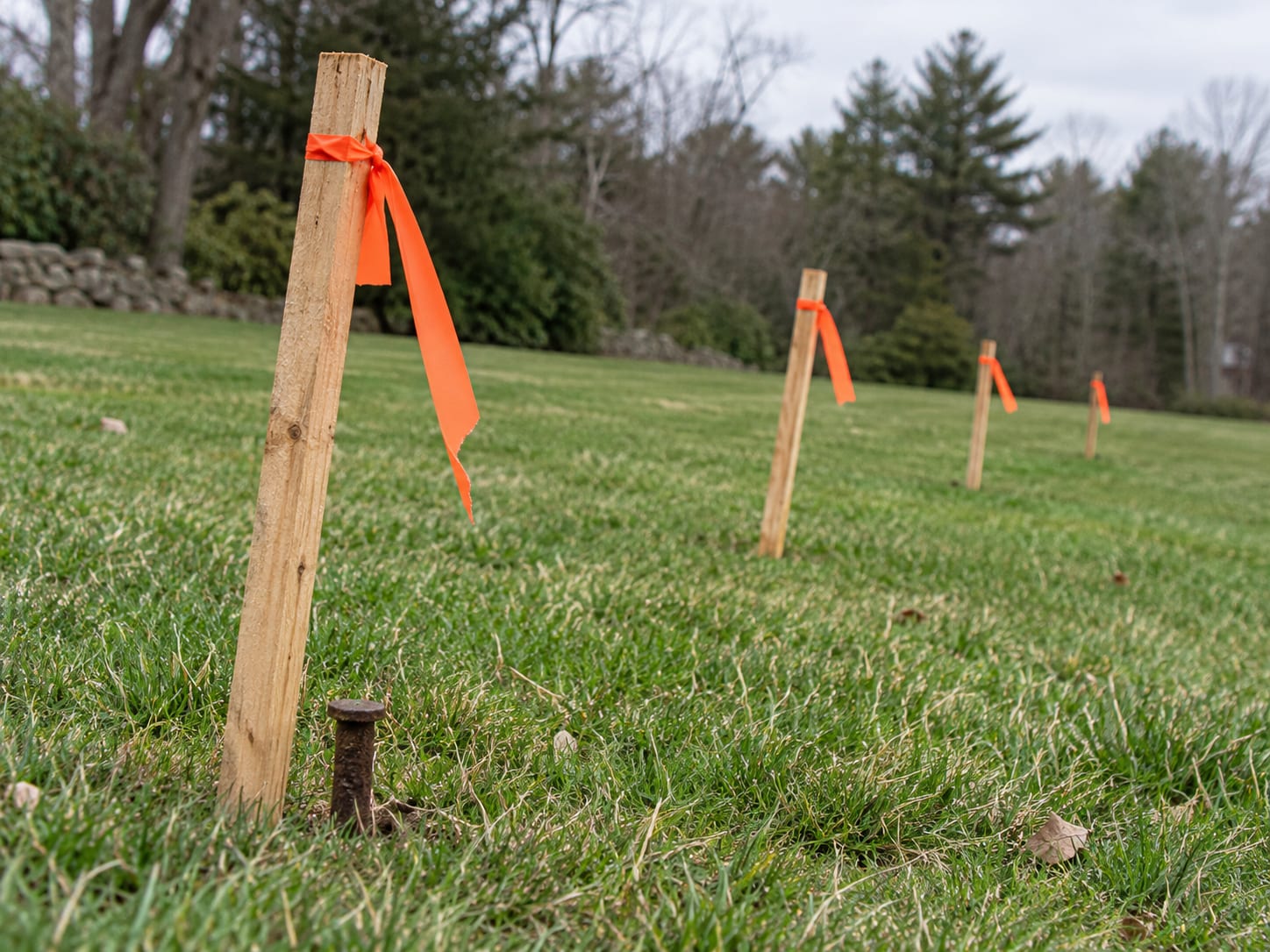
When appropriate, the surveyor marks corners or lines with stakes, flags, pins or monuments and prepares a signed plan or boundary opinion. Connecticut regulations require additional investigation when a surveyor encounters a vague or conflicting description, an unrecorded map or physical evidence of an easement that is not shown in the records.
A 2026 cost reference from ProMatcher lists an average residential boundary survey price of $822.60 for a parcel up to one-half acre, with a reported range of $544.52 to $1,100.68. This is a statewide cost-report estimate, not a quote for your property. Ask a Connecticut-licensed land surveyor for a written scope and price, especially if you need pins set, monuments replaced, stakes along the proposed fence line, a signed and sealed plan or a written boundary opinion.
Hover or tap a row to highlight it.
| Item | Why it matters |
|---|---|
| Deed and prior deeds | They may identify the legal description and referenced maps. |
| Recorded survey or subdivision map | It may show bearings, distances, lot lines and monuments. |
| Physical pins and monuments | They can help a surveyor retrace the boundary. |
| Existing fence or stone wall | It may be an occupation line rather than the legal boundary. |
| GIS or tax map | It helps locate the parcel but is approximate. |
| Proposed fence stakes | They show where construction will occur after the line is established. |
What Connecticut law says about division fences
Connecticut General Statutes Chapter 823 addresses fences, livestock containment and division fences. It is not a statewide zoning code that sets the setback for every residential privacy fence.
Section 47-43 provides that landowners must maintain sufficient fences for certain livestock-containment purposes. It also states that adjoining proprietors shall each make and maintain half of a divisional fence, with the middle line on the dividing line. The statute gives maximum widths for certain divisional fences, including two feet for a straight wood fence or hedge, three feet for a brick or stone fence, six feet for a crooked rail fence and eight feet for a ditch, excluding the bank.
Section 47-49 provides a mechanism for an adjoining owner who encloses land after another owner has built a division fence to purchase the other owner’s interest by paying a proportionate amount based on the fence’s value and condition.
Sections 47-50, 47-51 and 47-53 address division by local officials, repair and apportionment in certain circumstances. Section 47-48 concerns barbed wire along sidewalks. Read the full current statute before applying a division-fence rule to your property.
These statutes do not mean that every modern residential fence must be on the boundary or that every neighbor must pay half of every fence. The application depends on the fence type, land use, local rules and facts.
Choosing between the boundary and an inside line
A fence placed entirely inside your property can leave a narrow maintenance strip between the fence and the legal boundary. The purpose is practical. You may need room to paint, repair, replace posts, control vegetation or clear snow without entering the neighbor’s land.
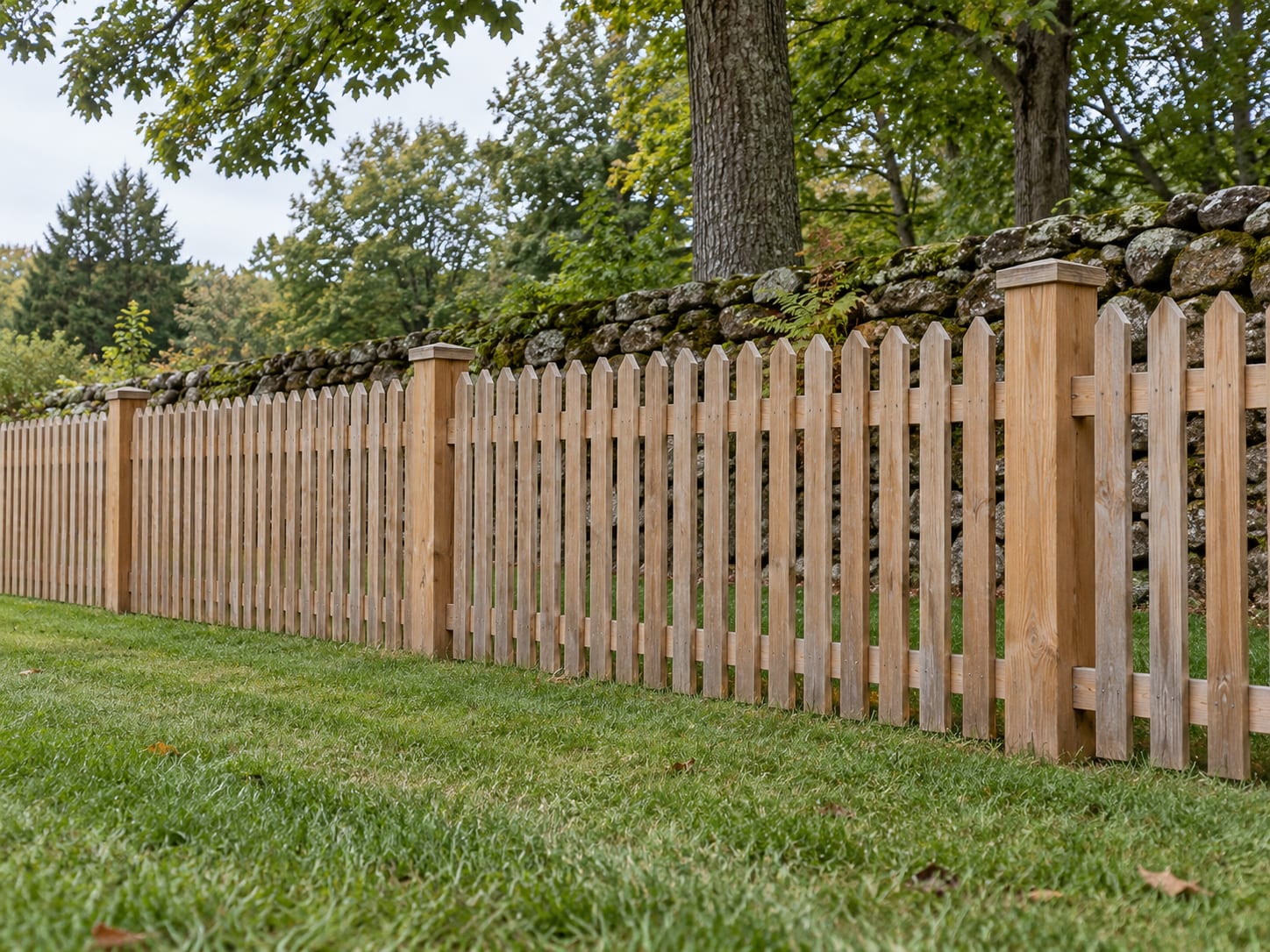
The right maintenance-strip width depends on the town’s rules, fence design, terrain, access needs, easements and any agreement with the neighbor.
A narrow strip can be useful beside an old stone wall, wooded edge or sloped area where access is limited. In western Connecticut, ledge can also affect post placement. If the fence must be shifted to avoid rock or preserve access, the change should be shown on the plan and confirmed before installation.
The strip should be identified on the fence plan. Its ownership should not be confused with the fence location. A fence set inside your boundary does not transfer that strip to the neighbor.
A fence that crosses the true boundary can create an encroachment or trespass dispute. Connecticut Judicial Branch Law Library materials identify cases holding that the claimant must establish the boundary and that a court may order relief concerning an encroachment. One cited case involved a fence found to have been erected on the boundary. Another involved a disputed four-foot strip acquired through adverse possession.
Connecticut General Statutes § 52-575 establishes a 15-year limitation period for entry onto land and includes a written notice and recording procedure intended to interrupt adverse possession in appropriate circumstances. Connecticut’s Office of Legislative Research describes adverse possession as requiring open, visible, exclusive and uninterrupted possession for 15 years under a claim of right and without the owner’s consent.
The risk is fact-specific. A misplaced fence can still lead to relocation costs, title complications, negotiation or court action. If the line is disputed, do not move or damage the fence without advice from a Connecticut real estate attorney.
Put a shared fence agreement in writing
A neighbor usually does not need to approve a fence built entirely on your property, provided the fence follows local zoning, building, wetlands, easement and other requirements. Neighbor involvement becomes necessary when the fence will sit on the boundary, use the neighbor’s land, require access for construction or maintenance, or be jointly owned and funded.
A written agreement should identify:
- The full names and mailing addresses of both owners.
- The property addresses and parcel identifiers.
- The boundary reference, preferably tied to a signed survey or recorded map.
- Whether the fence is centered on the boundary or entirely on one owner’s land.
- The exact fence line, length, gates and access points.
- Height, material, finished-side orientation and construction specifications.
- Initial construction costs and each owner’s percentage.
- Fence ownership.
- Repair, replacement, snow removal, vegetation control and painting duties.
- Permission to attach items, install locks or make changes.
- Permission to enter the other property for construction or maintenance.
- What happens if either owner sells the property.
- Whether the agreement may be recorded in the town land records.
- How disagreements will be handled.
A contractor estimate is not a boundary agreement or recorded easement. If the agreement changes ownership, grants access, resolves an encroachment or affects title, each owner should obtain independent advice from a Connecticut real estate attorney.
My Fence Guy can build from a confirmed fence line, stakes or survey plan, and a written quote should identify the fence length, gates, materials, finished side, layout responsibility and any access assumptions.
A practical order for a boundary-near fence
- 1
Review records
Gather the deed, prior survey, subdivision map and town land-record references.
- 2
Confirm the line
Ask a licensed land surveyor to retrace or mark the boundary when the line is uncertain.
- 3
Call the town
Confirm setbacks, height, yard, permit, wetlands, historic-district and inspection requirements.
- 4
Mark the layout
Show the fence line, gates, maintenance strip and access points on a plan.
- 5
Call Before You Dig
Have underground utilities marked before excavation begins.
- 6
Build and inspect
Set posts, install panels or rails, hang gates and complete any required inspection.
Permit, survey and height rules in New Milford, Ridgefield and Danbury
Connecticut towns differ in permits, documents, yard standards, height rules and treatment of special uses.
New Milford requires a survey or plot plan showing the proposed structure and distances to property lines for a zoning permit. Ridgefield says fences may require zoning and/or building permits and treats zoning, building, wetlands, historic-district and building-department review as separate matters. Danbury publishes zoning regulations organized by district, including separate yard and height requirements. The city states that the printed regulations and adopted amendments are the official references.
For a fence type that fits a typical home, review residential fencing options after the town confirms the permitted line and height. If the fence is for a pool, dog, livestock or commercial use, ask the town about the use-specific review before choosing materials.
Nearby New York towns set their own terms, such as Putnam Valley’s building permit for fences within five feet of a property line or roadway. A rule from a New York town cannot be used as a Connecticut rule, so contact the municipality where the property is located.
Frequently Asked Questions
How close to the property line can I build a fence in CT?
The answer depends on the municipality, zoning district, yard location, fence height and property use. Ask the town whether the fence may be on the surveyed boundary and whether the measurement starts at the property line, street line or another reference.
Can I put a fence on the boundary line?
Possibly, but local zoning and permit rules control the project. Confirm the boundary through a deed, recorded survey or licensed surveyor, then put ownership, costs, access and maintenance terms in writing.
Do you have to ask your neighbors to put up a fence?
Usually, you do not need permission for a compliant fence built entirely on your own property. You should involve the neighbor when the fence is shared, sits on the boundary, requires access or affects an easement, shared driveway or drainage area.
How close can a neighbor put a fence to your property line?
A neighbor may generally build a compliant fence on the neighbor’s own property, subject to that town’s setback and permit rules. A fence crossing the legal boundary can create an encroachment or trespass dispute, so compare the deeds and hire a licensed surveyor when the line is contested.
Do I need a survey to put up a fence?
Connecticut does not require a survey for every fence, but a survey is strongly advisable when the fence is close to the boundary, pins are missing, the deed is unclear or the existing fence may be misplaced. New Milford requires a survey or plot plan showing the proposed structure and distances to property lines for a zoning permit.
What is an assumed property line?
An assumed property line is a working line based on features such as an old fence, hedge, stone wall, driveway edge, GIS display or visible pin before the legal boundary has been established. It may be wrong, so identify the line through the deed, recorded map or licensed land surveyor before ordering materials or setting posts.
Boundary Fence Check
1. Who decides the local fence setback?
2. Which document may identify a parcel by lot number or a recorded map?
3. What may a maintenance strip provide?
4. What should a shared fence agreement identify?
Pick an answer to begin.
Final Thoughts
Building close to the property line starts with two separate questions: where the legal boundary is, and what the town allows at that location. Confirm both before excavation. A clear survey reference, written neighbor terms and a permit plan can prevent the fence line from becoming a property dispute later.
If the project includes a pool, livestock, a wetland or a shared access area, bring those facts to the town before you approve the layout. Call us at (203) 746-1100 for a free estimate, or reach out through our contact page.
Boundary Fence Terms
Tap a term to see what it means.
Assumed property line. A working line used before the legal boundary has been established.
More about fences
Which Side of the Fence Faces the Neighbor in Connecticut?
Which side of a fence faces the neighbor in Connecticut: the towns that require the finished side out, common practice, and styles finished on both faces.
Read the guide to Which Side of the Fence Faces the Neighbor in Connecticut?Neighbor Fence Questions in Connecticut: Shared Costs, Repairs and Removal
Shared costs, repairs, removal and spite fences: what Connecticut law says about fences between neighbors and the practical steps that settle most questions.
Read the guide to Neighbor Fence Questions in ConnecticutDo You Need a Permit to Replace a Fence in Connecticut?
Replacing a fence in the same spot in Connecticut: when towns treat it as new work, what happens to a grandfathered fence, and what to check before you start.
Read the guide to Do You Need a Permit to Replace a Fence in Connecticut?