
Which Side of the Fence Faces the Neighbor in Connecticut?
By Tony Pellicone11 min readPublished
- property lines
- neighbors
- connecticut
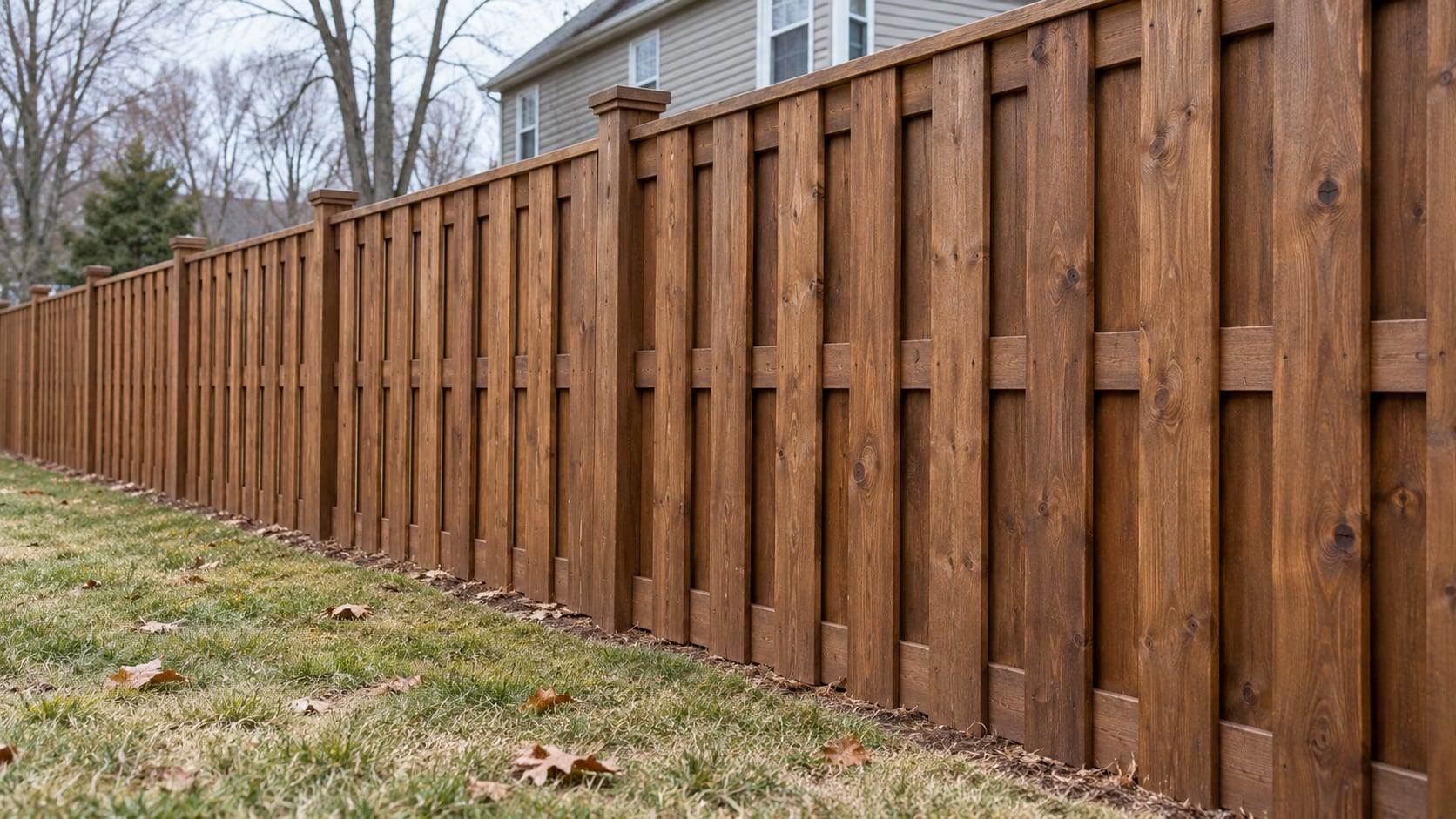
In Connecticut, your town decides which side of a fence faces the neighbor, based on the fence location, the zoning district, and any subdivision or private property agreement. Several towns require the finished side to face the neighbor or street. Where no local rule controls, the usual practice is to place the finished face toward the neighbor or street and keep posts and rails on the installing owner’s side.
Before you order materials, ask the town whether its rule applies to your front, side, rear, corner, wetlands, agricultural, or road-frontage location. Put the finished-side direction, post placement, maintenance duties, and access rights in writing with the contractor and neighbor.
Key Takeaways
Local rule
Connecticut fence orientation requirements are set by each municipality.
Common practice
The finished face usually points toward the neighbor, street, or other visible side.
Two-sided styles
Shadowbox wood, some vinyl and composite systems, and open ornamental fences can look finished from both sides.
Ownership
The post side does not by itself decide who owns or maintains the fence.
Written scope
Your contract should identify the fence face, posts, rails, gates, property line, and maintenance access.
Connecticut fence orientation is decided town by town
Norwalk’s zoning standards state that the finished side must face adjacent property, a street, path, passage, or watercourse. The same standards list a six-foot maximum in many side and rear applications, while height and placement still depend on the zoning district. The online document identifies the regulations as amended through 2024. Norwalk zoning regulations are the place to start for a Norwalk property.
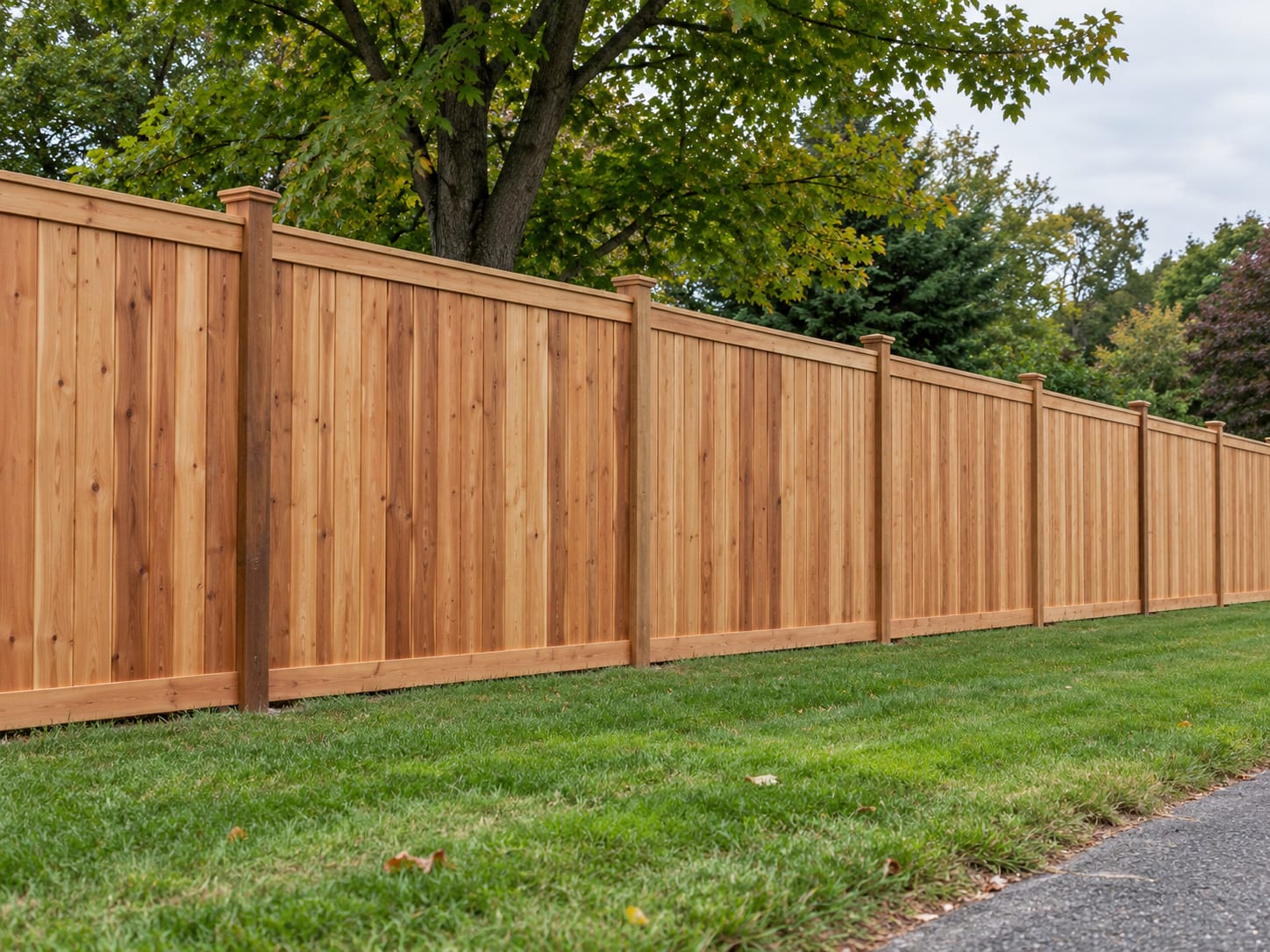
Westport’s zoning amendment requires the finished side to face the adjacent lot or street, with exceptions along a lot line adjoining a nonresidential lot or directly adjacent to wetlands. The amendment also explains that, in most cases, the finished side is opposite the fence post. You can read Westport Text Amendment 806 before discussing the design with your contractor.
Granby’s Building and Zoning Enforcement FAQ says a fence within 10 feet of a property line must have the finished side facing the property line. The same FAQ states that residential fence permits are not required there, while other location and height requirements still apply. Granby’s fence FAQ gives the local starting point.
Bridgeport requires the good, decorative, or finished side to face outward and requires most fences to be at least four inches inside the lot line. Bethel requires the finished or more attractive side to face the neighboring property or street when a fence is in a required yard. Canton uses similar language for fences within required minimum yard setbacks.
Those examples show why the exact town and fence location matter. A rule for a rear yard in one municipality may not apply to a corner lot, road frontage, wetland edge, or agricultural use in another.
Questions to ask the municipal offices
Give the Planning and Zoning office and Building Department the property address, fence height, material, proposed line, and distance from the boundary. Ask:
- Must the finished, decorative, or good side face the neighbor or street?
- Does the rule apply to this yard, zoning district, corner lot, road frontage, wetland edge, or agricultural use?
- Is a zoning permit or building permit required?
- Is a plot plan, survey, site plan, or boundary-staking document required?
- Is a setback required from the property line, road, sidewalk, watercourse, or wetlands?
- Are there height, opacity, gate, material, or corner-visibility restrictions?
- Which office issues the approval and performs any inspection?
For a general permit overview, see Do You Need a Permit for Fence Installation in CT?. Ridgefield states that a fence may require a zoning permit, building permit, or another approval depending on the project.
The usual practice when the town allows a choice
When the town regulation, subdivision approval, or private covenant leaves the orientation open, the common residential arrangement is simple. The finished face points toward the neighbor, street, or other visible side. The posts, rails, and structural framing remain toward the installing owner’s yard.
That arrangement gives both properties the more attractive public-facing side. It also leaves the structural side accessible to the owner for fastening, staining, inspection, repair, and replacement. A neighbor looking across the boundary is less likely to see exposed rails and posts.
For a conventional wood fence, the pickets usually face outward and the rails remain inside. Post placement helps with maintenance access, but it does not settle ownership or payment responsibility. A fence entirely on one parcel is different from a fence centered on the boundary or treated as a shared divisional fence.
A written contract should state which face points outward. Use a sketch or product drawing when the fence includes gates, return sections, stepped panels, or changes in direction. A clear drawing can prevent a disagreement after the posts are set.
The quote should also identify the assumed property line, who supplies a survey or plot plan, who handles permits, how utility locating will be handled, and whether workers may need access from either property. For this type of work, My Fence Guy can include the proposed face, post side, gates, materials, access needs, and maintenance expectations in the written scope.
A practical installation sequence
Settling Fence Orientation Before Installation
- 1
Confirm the town
Ask Planning and Zoning and the Building Department which orientation, height, setback, and permit rules apply.
- 2
Confirm the boundary
Use the available survey, plot plan, or boundary information before placing the fence line.
- 3
Mark utilities
Contact Connecticut’s Call Before You Dig service before excavation. Connecticut PURA provides 811 and 1-800-922-4455 for utility locating.
- 4
Agree on the design
Put the finished side, post side, gates, access doors, color, and maintenance duties in writing.
- 5
Set the posts
Install posts on the agreed side and account for soil and ledge at the actual fence line.
- 6
Install panels and gates
Check the face direction, gate swing, latch access, and clearances before final fastening.
- 7
Complete the work
Follow any municipal inspection or approval step and provide the owner with the agreed product and care information.
A western Connecticut property with shallow ledge can change the post installation method and cost because the crew may need different excavation or footing work. That condition changes how the fence is built, but it does not decide which face belongs toward the neighbor.
Fence styles that look finished on both sides
You do not always have to choose between an attractive side and an accessible structural side. Several fence styles are designed to give both properties a finished or nearly matching appearance.
Shadowbox wood fencing alternates pickets on opposite sides of the rails. One manufacturer's installation instructions describe the style as a good-neighbor fence with the same look on both sides and increased air circulation. A shadowbox design still needs a clear plan for posts, rails, staining, and repairs.
Some shadowbox vinyl panels are marketed as having a finished appearance from both sides. Interlocking composite privacy systems can also provide a board-on-board appearance and full privacy from both sides. Some vinyl board-on-board products use overlapping boards to create a semi-private pattern while allowing air to pass through.
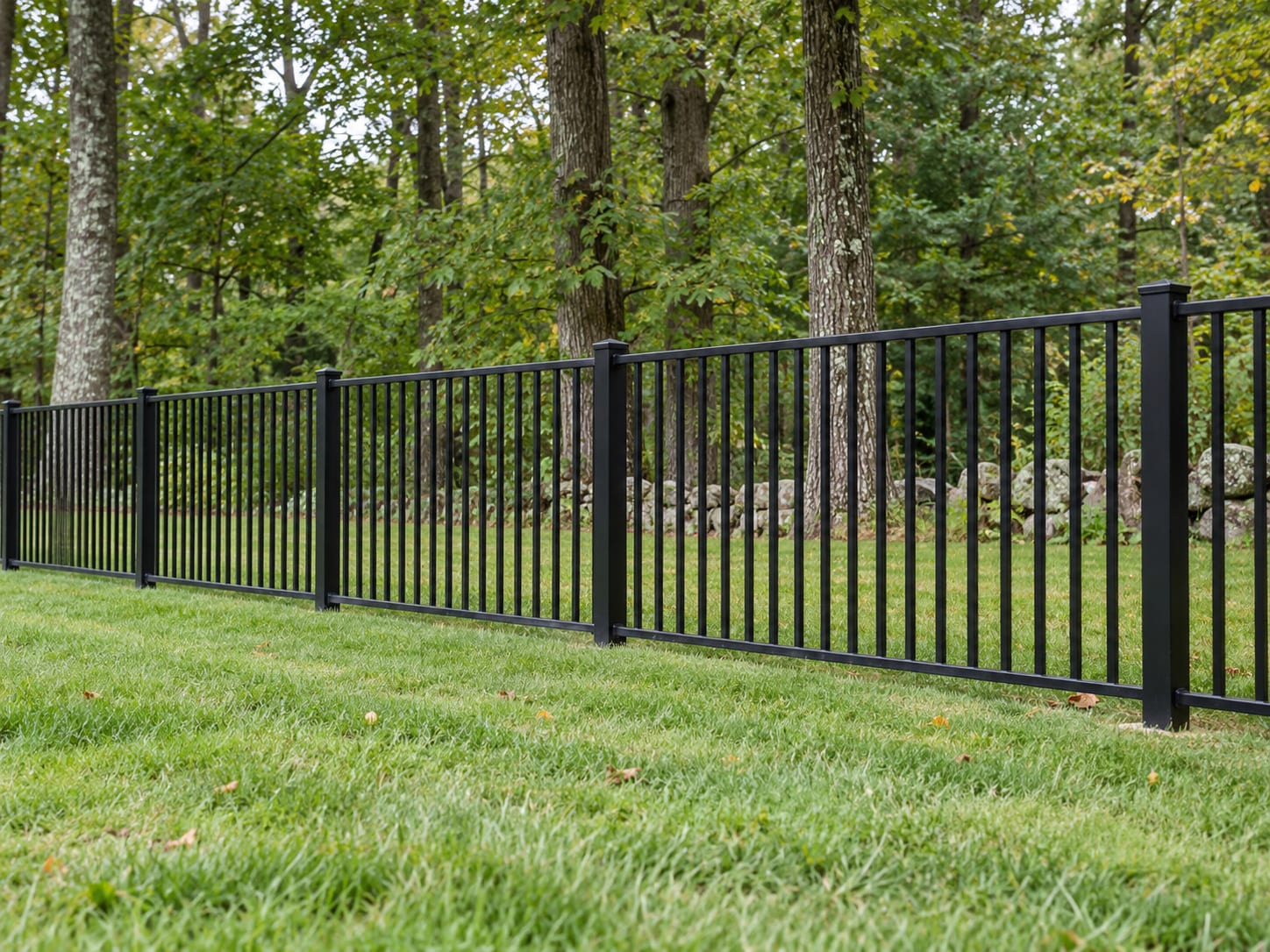
Many aluminum and ornamental metal picket fences look substantially similar from either side because the pickets and rails remain visible through the open pattern. Confirm the actual panel and bracket design before ordering. A product drawing or sample is more useful than relying on a style name alone.
Custom two-sided wood or composite construction is another option. Boards or panels can be installed on both faces of a frame, but the material quantity, weight, fasteners, and price depend on the design. For a conventional wood privacy fence, compare the choices on the wood fencing product page and ask for a drawing showing both faces.
“Board-on-board” does not mean the same thing in every product catalog. Ask whether the boards overlap on one face, alternate on two faces, or create a fully finished surface on both sides.
Ownership, repairs, painting, and attachments
Post placement does not by itself determine who owns or maintains a fence. The important facts include whether the fence is entirely on one owner’s parcel, whether it is immediately beside or centered on the boundary, whether the neighbors agreed to share costs, and whether a covenant, easement, subdivision approval, or recorded agreement applies.
Connecticut General Statutes §47-43 addresses divisional fences and states that adjoining proprietors each make and maintain half of a divisional fence, with the middle line on the dividing line. Sections 47-50, 47-51, and 47-54 address procedures involving selectmen or designated fence viewers for division and repair disputes. The statute also separates fence disputes from disputed property boundaries. Read Connecticut General Statutes Chapter 823, including §§47-43 and 47-49 through 47-54, when a boundary fence becomes a shared property issue.
Your written agreement should cover:
- The exact fence line and whether the fence is on one parcel or treated as divisional.
- The finished-side and post-side direction.
- Construction, repair, replacement, and routine maintenance costs.
- Permission to enter the other property for staining, repair, or replacement.
- Whether either owner may paint, stain, drill, attach items, alter, or remove any part.
- Responsibility for damage from trees, animals, vehicles, or later construction.
Ask permission before painting or staining a fence owned by the neighbor. Get the color, preparation, product, access, overspray, cleanup, and future maintenance terms in writing. Paint or stain can affect the fence material, appearance, warranty, and drainage around the boards.
The same applies to attachments. A sign, planter, trellis, light, animal device, gate, or screening panel can puncture or overload posts and rails, trap moisture, interfere with repairs, or create a climbing hazard. Written permission should identify who pays for damage and who removes the attachment later. For a disputed ownership or access question, speak with a Connecticut real estate attorney.
Finished-Side Rules in Norwalk, Westport and Granby
The local rule changes across municipal lines. Norwalk, Westport, Granby, Bridgeport, Bethel, and Canton provide Connecticut examples where the finished side must face outward in specified locations. Ridgefield directs property owners to determine which type of permit or approval applies to the project.
Hover or tap a row to highlight it.
| Municipality | Published orientation detail | Other detail to confirm |
|---|---|---|
| Norwalk, Connecticut | Finished side faces adjacent property, street, path, passage, or watercourse | Height and placement depend on the zoning district |
| Westport, Connecticut | Finished side faces the adjacent lot or street, with stated nonresidential and wetlands exceptions | The amendment describes the finished side as generally opposite the post |
| Granby, Connecticut | Within 10 feet of a property line, finished side faces the property line | Residential permit and other location rules apply under the town FAQ |
The fence property-line rules post can help you organize the boundary questions before contacting the town. If wetlands, a stream, or a pond is nearby, review Building a Fence Near Wetlands, Streams or Lakes in Connecticut before choosing the line.
Nearby New York municipalities use their own finished-side rules, with Pleasant Valley requiring the finished side outward and posts and supports facing inward. A county name does not replace the controlling town, village, or city code.
Frequently Asked Questions
Do you have to give your neighbor the good side of the fence?
The answer depends on the local municipality and fence location. Norwalk, Westport, Granby, Bridgeport, Bethel, and Canton are examples where local rules require the finished or more attractive side to face outward in specified situations. If the local rule allows a choice, the usual practice is still to face the finished side toward the neighbor or street and record that choice in the contract.
Which side of the fence is my responsibility?
Responsibility depends on ownership, the fence location, written agreements, and whether the fence is a divisional fence. Connecticut General Statutes §47-43 addresses shared maintenance for a divisional fence, while the finished side and post side are design details rather than a complete ownership test.
Can I paint my neighbor's fence on my side?
Ask the fence owner for written permission before painting or staining. The agreement should cover preparation, color, product, access, overspray, cleanup, future maintenance, and any effect on the fence warranty.
Can my neighbor attach things to his side of my fence?
Your neighbor should obtain written permission before attaching signs, planters, lights, trellises, animal equipment, screening, or other objects. The agreement should address fasteners, weight, damage, maintenance, removal, and access.
What is a good neighbor fence?
A good neighbor fence is designed to give both properties a finished or substantially similar appearance. Shadowbox wood, some vinyl and composite privacy systems, custom two-sided construction, and many open ornamental picket fences can fit that description, but the style does not decide ownership or maintenance responsibility.
Fence Orientation Check
1. What controls whether the finished side must face outward in Connecticut?
2. Where are posts and rails usually placed on a conventional wood fence?
3. Which style is commonly designed to look finished from both sides?
4. What should you do before attaching a planter or light to a neighbor-owned fence?
5. What does Connecticut General Statutes §47-43 address?
Pick an answer to begin.
Final Thoughts
Choose the fence face after you confirm the town rule, fence location, property line, and product design. Then put the finished side, posts, rails, gates, maintenance, access, and cost responsibilities in writing so the installation matches the agreement.
My Fence Guy can help organize those details into a clear fence scope before work begins. Call us at (203) 746-1100 for a free estimate, or reach out through our contact page.
Fence Orientation Terms
Tap a term to see what it means.
Finished side. The more attractive or decorative face of a fence.
More about fences
Neighbor Fence Questions in Connecticut: Shared Costs, Repairs and Removal
Shared costs, repairs, removal and spite fences: what Connecticut law says about fences between neighbors and the practical steps that settle most questions.
Read the guide to Neighbor Fence Questions in ConnecticutBuilding a Fence on the Property Line in Connecticut: Setbacks, Surveys and Neighbors
How close a fence can sit to the property line in Connecticut, how to find the line with a survey, and what to put in writing with your neighbor first.
Read the guide to Building a Fence on the Property Line in ConnecticutFences and Old Stone Walls: Building Alongside, Behind or On Top
Fencing beside an old Connecticut stone wall: placing posts without disturbing it, fencing behind or on top, gates through gaps, and who owns a boundary wall.
Read the guide to Fences and Old Stone Walls