
Do You Need a Permit to Replace a Fence in Connecticut?
By Tony Pellicone13 min readPublished
- fence permits
- zoning
- connecticut
- fence replacement
Maybe. Each Connecticut town decides how it treats a replacement fence, including whether your project needs zoning approval, a building permit, wetlands review, or more than one type of approval. Replacing a fence in the same location, with the same height and material, can still need approval.
West Hartford requires a permit for all new or replacement fencing and asks for a surveyed plot plan showing the fence location. Newtown exempts some fence construction connected to a permitted use when earthwork stays within its stated limit. Granby states that permits are not required for fences, subject to its height, location and finished-side rules. Ridgefield says a fence may require a zoning permit, building permit or additional review. Start with your town and the exact scope of work. A statewide Connecticut fence permit overview can help you prepare for that conversation.
Key Takeaways
Town rules
Connecticut fence replacement requirements are set by the municipality.
Same location
Keeping the existing line, height and style may simplify review, but it does not automatically remove a permit requirement.
Old fences
Ask whether the existing fence is lawful, nonconforming, and documented in the town property file before removing it.
Pool barriers
A replacement fence serving as a pool barrier requires a building permit under the State Building Inspector’s interpretation.
Property lines
Use a current survey or plot plan because an old fence may not mark the legal boundary.
Written answer
Give the town the address, dimensions, materials and photographs, then ask whether the work is repair, replacement or new construction.
The town controls the answer
The first fact to establish is the municipality. Fence rules can change when you cross a town line, even when the properties look similar and the replacement work is identical.
West Hartford states that all new or replacement fencing needs a permit. Its application requires a surveyed plot plan showing where the fence will go. The town also states that property files may be checked, which makes old permits, plot plans, certificates and violations worth reviewing before you remove the existing fence. See the West Hartford Planning and Zoning FAQ and West Hartford Building FAQ.
Newtown’s zoning regulations, effective in 2023, exempt construction of a fence when it accompanies a permitted use and does not add or remove more than 100 cubic yards of earth. That exemption applies under the conditions stated in the town regulations. Ask Newtown whether your specific replacement fits that provision before ordering materials. The Newtown fence permit information may also help you organize the questions for the town.
Granby states that permits are not required for fences, while still applying rules for location, height and the finished side. Ridgefield states that fences may require a zoning permit, a building permit, or both, and it advises applicants to confirm the requirements before starting. Its permit page also identifies zoning, wetlands, historic-district and building approvals as separate matters when they apply.
Hover or tap a row to highlight it.
| Town or municipality | Published direction | What you should ask |
|---|---|---|
| West Hartford, Connecticut | New and replacement fencing requires a permit, with a surveyed plot plan | What application, survey and inspection requirements apply to this address? |
| Newtown, Connecticut | Qualifying fence construction connected to a permitted use may be exempt from a zoning permit when earthwork stays within 100 cubic yards | Does this replacement meet the exemption conditions? |
| Granby, Connecticut | Permits are not required for fences, subject to height, location and finished-side rules | Does the proposed fence meet the town’s location and height rules? |
| Ridgefield, Connecticut | A fence may require zoning, building or additional approval | Which offices must review this project before work begins? |
Keeping the same fence line, height and style may make the review easier, but it does not decide the permit question. Moving posts, changing the material, increasing the height, adding a gate, changing the side facing the neighbor, or altering a pool barrier can change how the town classifies the work.
Same place does not always mean same approval
A replacement project can look simple from the yard and still involve several separate questions. The old fence may have been installed under an earlier zoning rule. The property may have changed ownership. A pool, wetland, historic district, corner-lot sight line or commercial use may add another review.
Ask the town these questions in writing:
- Is a permit required for a full replacement in the same location, height and material?
- Is replacing a few posts or sections treated as repair, replacement or new construction?
- Which office handles the project, zoning, building, wetlands, engineering, or more than one?
- Are there rules for height, setback, material, gates and the finished side?
- Will an inspection or certificate of compliance be required?
- What survey, plot plan, photographs, fee and contractor information must accompany the application?
Give the office enough detail to classify the work. Include the address, parcel or map and lot number if available, the existing and proposed fence length and height, material, style, gate details, distance from property lines and streets, and whether the fence serves a pool, spa, hot tub, farm area, dog run or business property.
For a replacement near an old stone wall, confirm the fence line before excavation. The wall may sit on or near the boundary, but it is not automatically proof of the legal property line. If the fence has leaned because of frost heave or the posts are set in rocky soil, those conditions affect the installation method and the written scope, and the town's answer on the permit stands apart from them.
A written quote from My Fence Guy should identify the proposed line, height, material, gates, removal of the old fence, utility marking, restoration and any permit responsibility assigned to the contractor or owner. Permit responsibility should be clear before work begins.
Check the old fence before taking it down
A nonconforming fence is an existing structure that was lawful when installed but does not meet a later zoning rule, such as a current height or setback requirement. Connecticut General Statutes § 8-2 limits a municipality’s ability to terminate a nonconforming building or structure solely because it is no longer conforming or has not been used for a period of time. The statute also states that demolition or deconstruction alone is not evidence that the owner intended not to reestablish the nonconforming structure. Read the current Connecticut General Statutes § 8-2.
That protection does not create an automatic right to rebuild every removed fence exactly as it stood. Local rules may distinguish between repair, partial replacement, demolition, reconstruction and a new structure. A complete removal and replacement may require current compliance or local approval, especially when the new fence changes the footprint, height or design.
Before removing the old fence, ask the town in writing:
- Is the existing fence treated as a lawful nonconforming structure?
- Is there an old permit, plot plan, certificate or violation on file?
- Does full removal affect the fence’s nonconforming status?
- Can the replacement remain in the same location and height?
- What approval is required before demolition, removal or reconstruction?
If the town’s answer affects a boundary dispute, property sale or disagreement with a neighbor, talk with a Connecticut real estate attorney. A permit office classifies the work under local rules; ownership and recorded rights are questions for an attorney.
Surveys, utilities, wetlands and pool barriers
A current survey or plot plan is one of the best documents to have before replacing a fence. Do not assume that the existing fence marks the legal boundary. West Hartford requires a surveyed plot plan for fencing permits, and Granby encourages owners and contractors to obtain a survey or plot plan before installation.
If the fence is close to a wetland, stream or other watercourse, contact the municipal inland wetlands agency before excavation. Connecticut’s municipal wetlands permitting rules apply through local agencies. A fence project can involve review when construction, grading or earthwork may affect regulated areas.
Connecticut also requires excavators using power-operated equipment to contact Call Before You Dig at least two full working days before excavation. Use the state’s Call Before You Dig provisions before posts, gates or equipment enter the ground.
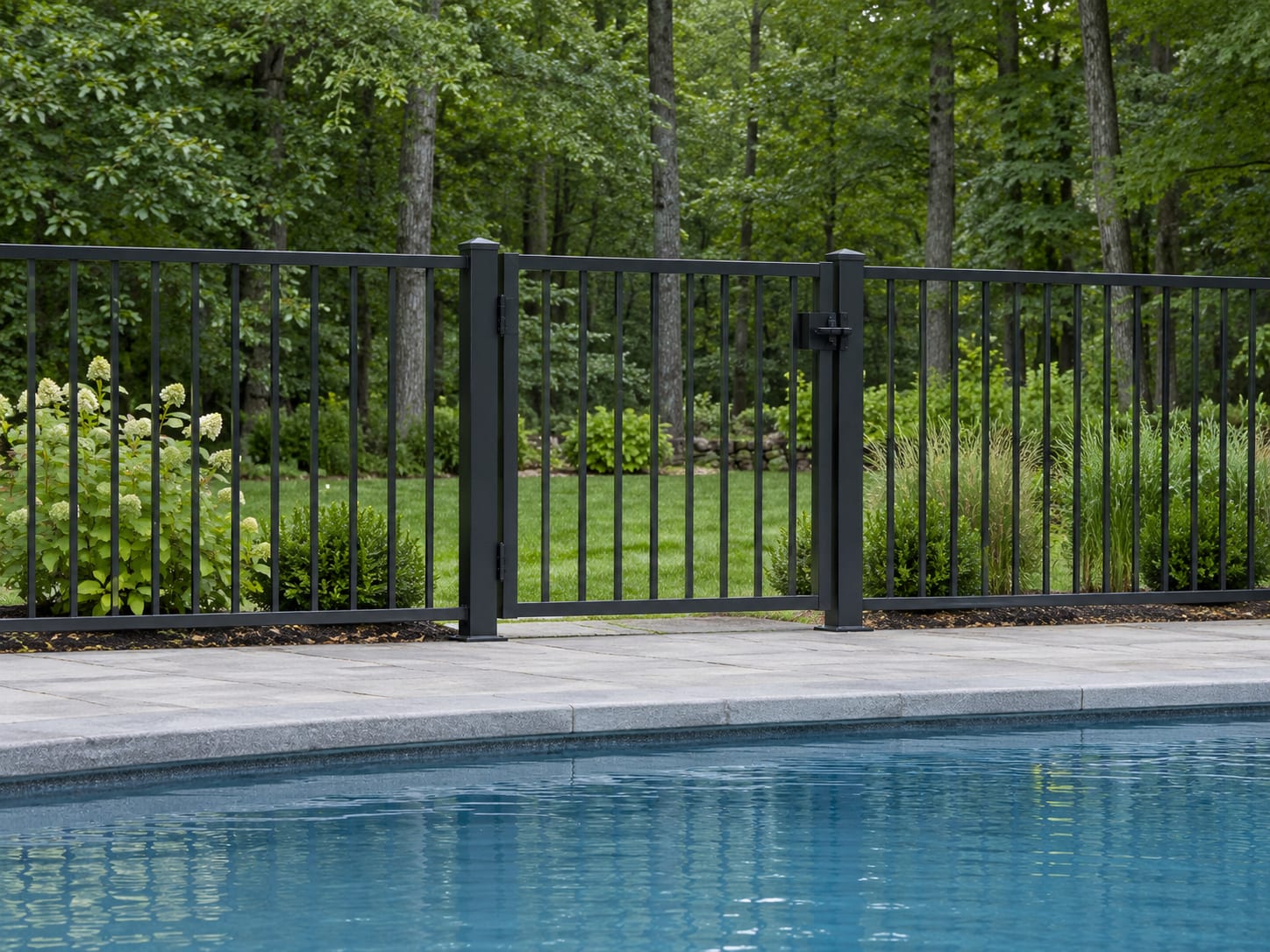
Pool fencing has a separate safety issue. If the fence encloses or serves an in-ground, above-ground or on-ground pool, spa or hot tub, it may be a required barrier. The Connecticut State Building Code generally requires a barrier at least 48 inches high, with a maximum 4-inch opening in many configurations and specific rules for gates, mesh and clearances. The State Building Inspector has stated that a replacement pool-barrier fence requires a building permit. Review the Connecticut pool barrier provisions and State Building Code Interpretation I-22-12.
If your project involves a pool, read the Connecticut pool fence requirements post before discussing the layout with the installer. An above-ground pool can also have barrier requirements, so the fence question should be settled before the old barrier comes down.
Before the old fence comes down
- 1
Identify the municipality
Confirm the town, property address and exact scope of replacement.
- 2
Check property files
Ask zoning and building offices about permits, plot plans, certificates and violations.
- 3
Confirm the boundary
Obtain a current survey or plot plan instead of relying on the existing fence.
- 4
Ask about special review
Confirm pool, wetlands, historic-district, corner-lot and commercial-property requirements.
- 5
Mark utilities
Contact Call Before You Dig at least two full working days before powered excavation.
- 6
Confirm the classification
Ask whether the work is repair, replacement, reconstruction or new construction.
- 7
Schedule the work
Set the fence line, materials, gates, inspection duties and restoration in writing.
Repairing posts is not the same everywhere
There is no uniform Connecticut rule for minor fence repairs. West Hartford requires permits for all new or replacement fencing. Its published rule includes replacement fencing, so ask whether replacing only a few posts or sections is treated as repair or replacement.
Granby states that permits are not required for fences, subject to its location and height rules. Newtown’s regulations exempt qualifying fence construction connected to a permitted use when earthwork stays within the stated 100-cubic-yard limit. Ask the local office how those rules apply to partial replacement.
Use this wording when contacting the town:
> I am replacing ___ posts and ___ feet of fence, without moving the line or changing the height or material. Is this repair, replacement or new construction, and do I need written zoning or building approval?
Include photographs and measurements. If the fence line is near a neighbor, provide the survey or plot plan and state whether the work will cross onto either property. A short written answer can prevent a repair from becoming a larger approval question after materials are delivered.
For material choices, the installation details can change the scope even when the line stays put. Wood panels, vinyl sections, aluminum pickets, chain link mesh and ornamental metal each use different posts, fasteners and gate hardware. Review the residential fencing options that fit the project, then give the town the exact proposed material and height.
Replacement Fence Permit Checks by Connecticut Town
A New York rule does not answer a Connecticut permit question, and one Connecticut town’s rule does not answer the question for another Connecticut town.
Hover or tap a row to highlight it.
| Project question | Connecticut example |
|---|---|
| Full replacement | West Hartford requires a permit for replacement fencing |
| Height | Town rules control, with different standards by municipality |
| Property line | A survey or plot plan may be required or encouraged |
| Extra review | Pool, wetlands, historic district and building review may apply |
Kent, New York, states that a fence up to 6 feet high in a side or rear yard does not require a permit, while a fence over 6 feet requires building and zoning approval, as the town’s fence requirements explain. Yonkers, New York, limits front-yard fences to 4 feet and side or rear-yard fences to 6 feet in its zoning rules, as the Yonkers Housing and Buildings FAQ explains.
Responsibility, insurance and neighbor agreements
Responsibility for replacement depends on ownership, the fence location, written agreements, the cause of damage and whether the fence is a statutory division fence.
Connecticut General Statutes § 47-43 states that adjoining proprietors each make and maintain half of a divisional fence when the fence’s middle line is on the boundary. Sections 47-51, 47-53, 47-54 and 47-56 address repair, allocation, new division fences and shared expenses. Read Connecticut General Statutes Chapter 823.
Fence viewers under these statutes cannot settle disputed lines or bounds. If the line is disputed, obtain a survey and talk with a Connecticut real estate attorney.
A written neighbor agreement should state where the fence will be located, who pays, the height and material, which side faces each property, gate access, future maintenance and what happens if the town requires a change. The neighbor fence questions post covers shared costs, repairs and removal.
Homeowners insurance may cover fence damage caused by a covered event, such as certain wind, fire or tree losses. The Connecticut Insurance Department identifies fencing as an example of an “other structure” covered under homeowners insurance. Coverage depends on the policy, covered peril, exclusions, limit, valuation method and deductible. The Connecticut Insurance Department homeowners insurance information explains the general coverage category.
Age, rot, deferred maintenance and ordinary wear are generally different from sudden accidental damage. If a neighbor’s tree destroys the fence, the Insurance Department states that the owner’s own policy generally covers the loss, while the insurer may seek recovery from the neighbor’s insurer when negligence caused the damage. Ask your insurer whether replacement cost or actual cash value applies before filing a claim.
Frequently Asked Questions
Do I need a permit to replace a fence?
Maybe. The answer depends on the municipality, the fence location, the proposed height and material, and whether the work involves a pool, wetlands, historic district or other regulated area. Ask the local zoning and building offices before removing the old fence.
Do you need a permit to replace an existing fence?
An existing fence is not automatically exempt. West Hartford requires permits for replacement fencing, while Newtown and Granby publish exemptions or different requirements under stated conditions. Give the town the existing and proposed dimensions and ask whether the work is repair, replacement, reconstruction or new construction.
Is fence replacement covered by insurance?
Fence replacement may be covered when a covered event causes the damage, but ordinary rot, age and wear may not qualify. Review the policy’s deductible, exclusions, coverage limit and valuation method with your insurer before making a claim.
Who is responsible for fence replacement?
Responsibility depends on ownership, the fence’s location, agreements, the cause of damage and whether it is a division fence. Connecticut statutes address shared duties for some boundary fences, but a survey and legal advice may be needed when the property line or responsibility is disputed.
Fence Replacement Permit Check
1. Which office or offices may need to review a Connecticut fence replacement?
2. What document may West Hartford require with a fencing permit application?
3. What should you ask when replacing a few posts and sections?
4. What generally applies to a replacement fence serving as a pool barrier?
5. What should you do before powered excavation for fence posts?
Pick an answer to begin.
Final Thoughts
Before replacing an old fence, confirm the municipality, document the proposed scope and ask the town for a written answer. Check the property file, boundary, pool, wetlands and utility questions before the first post comes out. A clear plan also gives you a better basis for comparing repair with full replacement and assigning permit duties in the contract.
We can help turn the town’s requirements into a clear fence scope covering the line, materials, gates, removal and restoration. Call us at (203) 746-1100 for a free estimate, or reach out through our contact page.
Fence Replacement Terms
Tap a term to see what it means.
Building permit. Approval connected to construction and the Connecticut State Building Code.
More about fences
Is a Fence Considered a Structure in Connecticut Zoning?
Whether a fence counts as a structure under Connecticut zoning changes its setbacks and permits. How towns define it, with retaining walls and gates compared.
Read the guide to Is a Fence Considered a Structure in Connecticut Zoning?Fences in Connecticut Historic Districts: What Needs Approval
Fences in Connecticut historic districts need a certificate of appropriateness when seen from the street. How commissions review materials, height and style.
Read the guide to Fences in Connecticut Historic DistrictsCan You Put a Fence in Your Front Yard in Connecticut?
Planning a front yard fence in Connecticut? Typical height and openness limits, corner-lot sight lines, the street edge and styles that fit low front limits.
Read the guide to Can You Put a Fence in Your Front Yard in Connecticut?