
Can You Put a Fence in Your Front Yard in Connecticut?
By Tony Pellicone12 min readPublished
- fence permits
- zoning
- connecticut
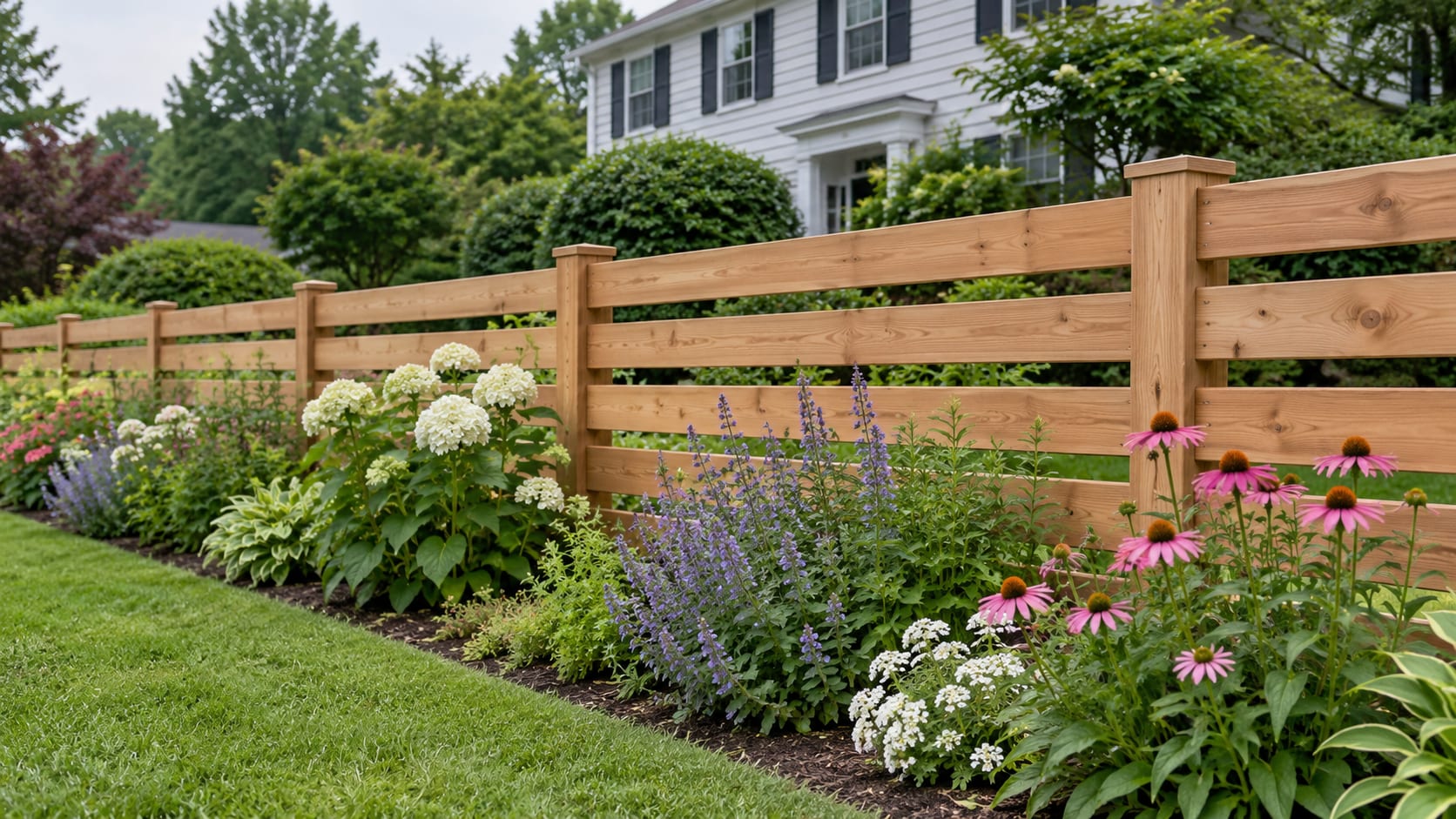
Yes, you may be able to put a fence in your front yard in Connecticut, but the allowed height, openness, setback and permit requirements come from the town where the property sits. Connecticut General Statutes §8-2 authorizes each municipal zoning commission to regulate the height and location of structures and the size of yards and open spaces. (Connecticut General Statutes §8-2)
Before choosing wood, vinyl, aluminum or another material, confirm whether the proposed fence is in a front yard, required front-yard setback, corner side yard, public right-of-way or easement. A low, open fence around 3 to 4 feet is often easier to fit within front-yard rules, but your town’s zoning office makes the project-specific decision.
Key Takeaways
Local rules
Connecticut towns set their own front-yard fence height, opacity, setback and corner requirements.
Common height
A low, open fence around 3 to 4 feet is a practical starting point, subject to local approval.
Corner lots
A corner lot may have two front yards, so both street-facing sides can have front-yard restrictions.
Property lines
The edge of pavement is not necessarily the property line or road right-of-way line.
Privacy fences
Solid or opaque front-yard fencing is restricted in several Connecticut examples because of visibility concerns.
Before digging
Confirm zoning, right-of-way limits and utility locations before materials are ordered or posts are installed.
Connecticut Front-Yard Fence Rules Come From the Town
Connecticut does not have one statewide front-yard fence rule. State law gives municipal zoning commissions authority to regulate structures, yards and open spaces, while the Connecticut Department of Energy and Environmental Protection explains that local regulations may control how close a fence can be placed to a lot line. (Connecticut DEEP land-use regulation information)
That means a fence allowed in one Connecticut town may need a different height, material or setback in another. The rule may apply to the required front-yard setback, the area near the street, or both. Your zoning district and lot shape also matter.
Wethersfield defines the front-yard setback as the area between the street line and the front-yard building line. Its 2024 draft regulations allow an open front-yard fence up to 4 feet high, provided it does not obstruct visibility and is no more than 50 percent solid. Side and rear-yard fences may be solid or opaque up to 6 feet. (Wethersfield Zoning Regulations)
Stonington requires a fence proposed within a front yard to be at least 0.5 feet from the approximate or surveyed property line. Within 50 feet of a corner, a fence or wall over 2 feet high is prohibited unless it is transparent and no more than 5 percent solid. (Stonington Zoning Regulations)
New Britain limits fences in required front yards and street-facing side yards of corner lots to no more than 50 percent opaque. It also prohibits galvanized silver chain link in those locations, while listing dark green or black vinyl-coated chain link, wrought iron or simulated wrought iron, and wood or vinyl picket fencing as permitted examples. (New Britain Zoning Ordinance §230-100)
Why Towns Limit Height and Opacity
Front-yard restrictions commonly protect driver and pedestrian sight lines near driveways, intersections and corner lots. They also preserve visibility between the street and nearby homes and maintain the visual character of residential streets.
A solid 6-foot panel can block a driver’s view of a child, cyclist, vehicle or pedestrian entering a driveway. An open picket or ornamental fence may provide a boundary while leaving more of the frontage visible. The exact balance depends on the town’s written rules and the location of the fence.
Connecticut General Statutes §47-43 describes a 4-foot open picket fence with openings no greater than 4 inches and a 4-foot slat-rail fence with openings no greater than 6 inches as examples of sufficient fences in specified situations. That statute is not a universal zoning height for every residential fence. (Connecticut General Statutes §47-43)
Start With the Property Line and Road Right-of-Way
A fence should not be placed in a public street right-of-way, state highway right-of-way, drainage area, sidewalk area or other public easement unless the responsible agency authorizes it.
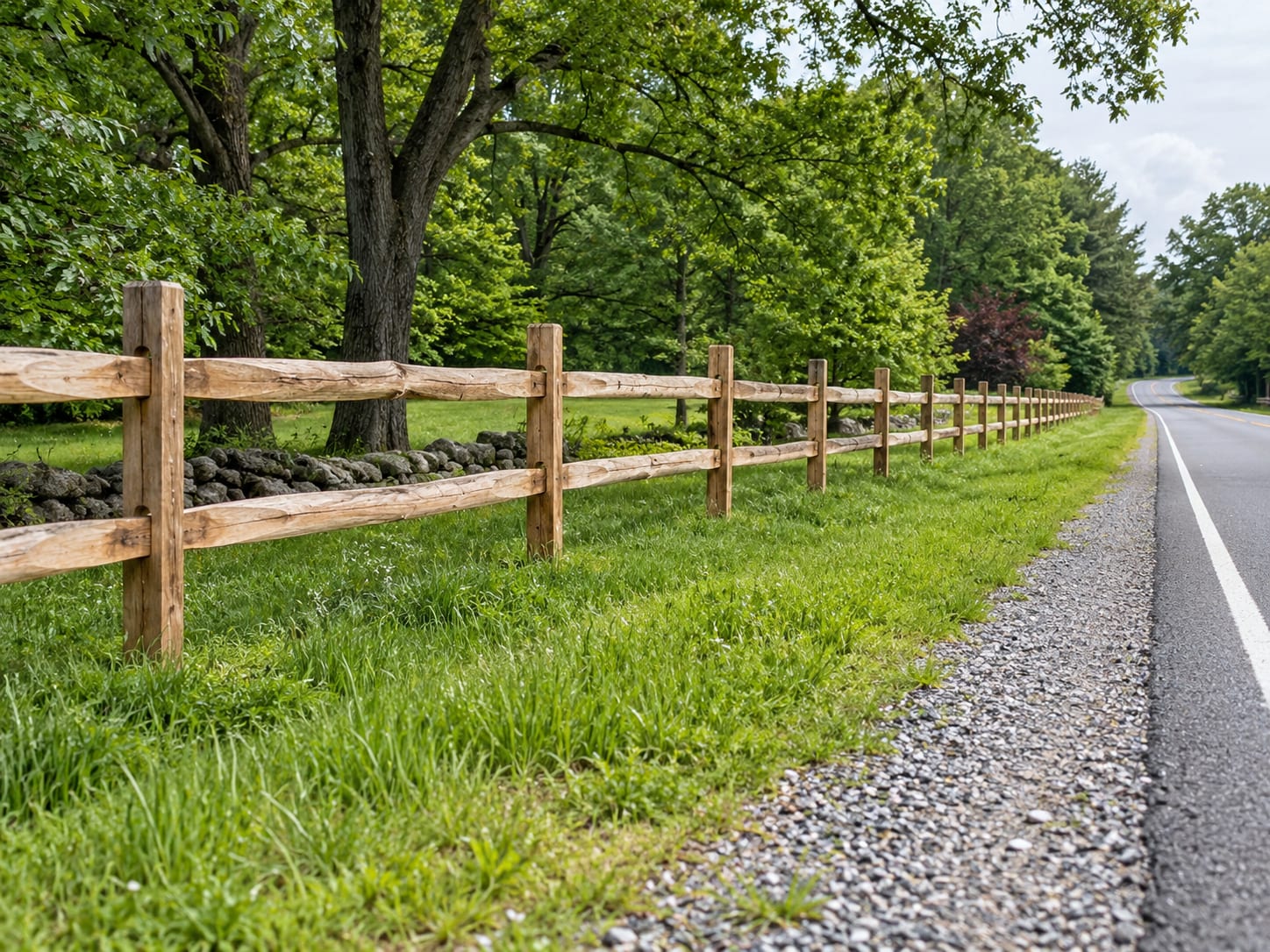
CTDOT states that a state highway right-of-way can include pavement, drainage facilities, guide rails, utility poles, sidewalks and driveways. Specified work within a state highway right-of-way requires an encroachment permit. CTDOT’s Highway Design Manual says private fencing should generally be near, but not improperly across, the right-of-way line. (CTDOT Encroachment Permit information, CTDOT Highway Design Manual, §15-6)
For a town road, the relevant boundary may be called the street line, road right-of-way line, taking line or property line. These lines are not necessarily located at the edge of pavement, curb or gravel shoulder.
Review your deed, recorded subdivision map, prior survey and town land records. Ask the town assessor or land-use office for available parcel and zoning information. Also ask whether the road is town-owned, state-owned or private, and which line controls the fence location.
When the boundary is uncertain, disputed or close to the proposed fence, hire a Connecticut-licensed land surveyor to locate and mark it. Connecticut General Statutes §13a-39 addresses highway-boundary maps when a landowner adjoining a highway has uncertain or lost boundaries. (Connecticut General Statutes §13a-39)
For more detail about setbacks, surveys and neighbor coordination, see Building a Fence on the Property Line in Connecticut: Setbacks, Surveys and Neighbors.
Before You Order Fence Materials
- 1
Confirm the town
Identify the municipality, zoning district and whether the lot is a corner lot.
- 2
Locate the boundary
Review the deed and survey, then ask about the street line and road right-of-way.
- 3
Sketch the project
Show the house, driveway, streets, proposed fence, gates, corners, wetlands and nearby structures.
- 4
Ask about approvals
Contact zoning or land use, then ask whether building, wetlands, historic district, highway or CTDOT review applies.
- 5
Mark utilities
Contact Call Before You Dig at least two working days before mechanized excavation.
- 6
Finalize the quote
Put the fence line, finished height, material, gates, permits and site conditions in writing.
Front-Yard Fence Styles That May Fit Low Limits
Low, open designs are generally easier to adapt to front-yard height and visibility restrictions than solid privacy panels. The town still decides whether the proposed height, spacing, opacity, setback and gate design are allowed.
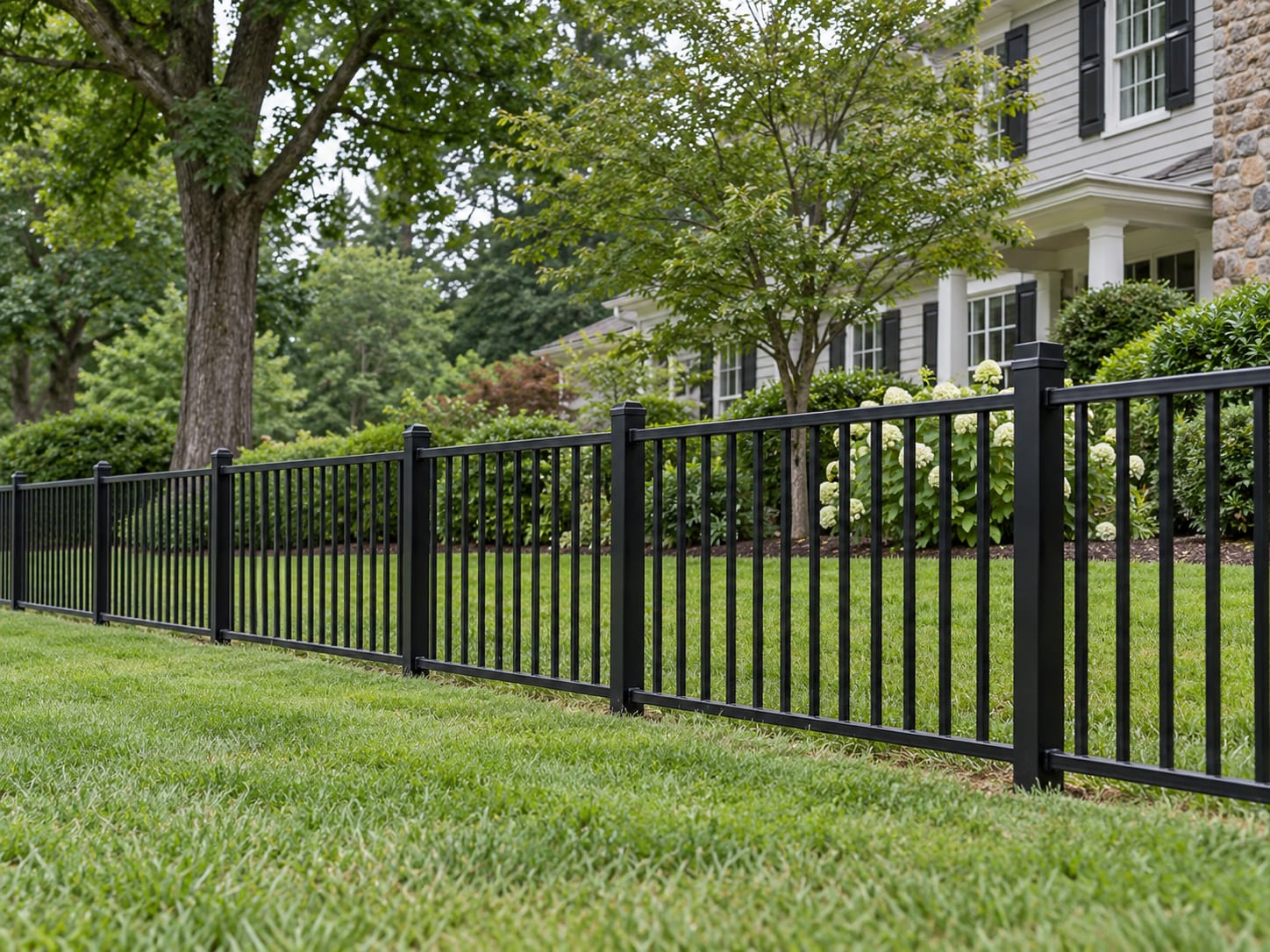
A wood picket fence is a common choice for a front boundary. Manufacturer specifications show picket products available at approximately 3 to 4 feet, with spaced boards and dog-ear, pointed or capped tops. A 4-foot picket product is listed by Doman. (Doman fence pickets)
Split rail or ranch rail uses horizontal rails and can define the boundary without creating a solid wall. If you need dog containment, wire mesh may be added, but the mesh must still fit the town’s visibility and material requirements. A split rail with mesh can work well where appearance and containment both matter. See Split Rail Fence With Wire Mesh: Uses, Costs and How It Is Built.
Ornamental aluminum or metal can provide a formal boundary with open picket spacing. Ameristar lists residential ornamental panels in heights from 3 to 6 feet, with standard 4-inch picket airspace and 3-inch pet, pool and play airspace. (Ameristar Montage Residential)
Spaced vinyl picket panels are another option. Southern Vinyl Manufacturing lists traditional picket panels in 3, 4, 5 and 6-foot heights. The available product height does not determine what your town permits. (Southern Vinyl Manufacturing traditional picket fencing)
For a front boundary, ask about finished height, percentage of solid area, picket spacing, gate height and visibility from driveways and intersections. A dog, child or pool may also change the opening and gate requirements.
Hover or tap a row to highlight it.
| Location | Front-yard or corner rule |
|---|---|
| Wethersfield | Open fence up to 4 feet, no visibility obstruction and no more than 50 percent solid |
| Stonington | At least 0.5 feet from the approximate or surveyed property line |
| Stonington corner area | Within 50 feet of a corner, over 2 feet requires transparency with no more than 5 percent solid area |
| New Britain | No more than 50 percent opaque in required front yards and street-facing corner side yards |
| Kent, New York | No 6-foot fence within front-yard setbacks |
Corner Lots Need a Separate Check
A corner lot may have two front yards because both street-facing sides can be treated as front-yard or front-yard setback areas. A fence permitted beside a neighboring lot may therefore be restricted along the second street frontage.
Wethersfield expressly treats corner lots as having two front yards and limits fencing in both front yards to a maximum of 4 feet, subject to the open-fence requirements. Stonington applies special visibility rules within 50 feet of an intersection. New Britain applies its front-yard opacity rule to the required side yard of a corner lot along the street.
Ask the local zoning office:
- Is the second street side classified as a front yard?
- What is the corner visibility area?
- Is height measured from existing grade, finished grade or street grade?
- Does the rule apply to the full street-facing side or only a distance from the intersection?
- Are gates, posts, landscaping or retaining walls included in the height or visibility calculation?
A low fence can still create a sight-line problem if it is placed directly beside a driveway or intersection. Posts, gates and landscaping should be shown on the sketch submitted to the town.
Permits, Wetlands and Installation Details
The first office to contact is normally the town zoning or land-use office. Depending on the property and project, you may also need the building department, inland wetlands agency, historic district commission, highway department or CTDOT.
You should provide the property address, owner name, zoning district if known, deed or survey, and a sketch showing the house, driveway, streets, fence line, gates, corners, wetlands and nearby structures. Include the proposed height, material, opacity, post locations and photos of the frontage.
Ask the town whether the location is inside the property and outside the public right-of-way, whether it is a front yard or corner side yard, what maximum height and opacity apply, and whether a zoning permit, building permit, variance or other approval is required. Ask about wetlands, watercourses, historic-district rules, subdivision restrictions and homeowners-association requirements.
For a basic overview of the approval question, see Do You Need a Permit for Fence Installation in CT?. A pool barrier must also meet the Connecticut State Building Code, and work near inland wetlands or watercourses may require municipal wetlands review. (Connecticut State Building Code regulations, DEEP inland wetlands permitting)
Connecticut Department of Consumer Protection states that residential home-improvement contractors must be registered and that home-improvement projects require a written contract. The contract should identify the scope, materials, schedule, price, payment terms and changes. (Connecticut DCP home improvement information)
A written quote from My Fence Guy should identify the fence line, linear footage, finished height, material, gates, removal, survey needs, permits and site conditions. Ledge near the fence line can change post locations, excavation, labor and the final price, so the quote should address it up front.
Before mechanized excavation, Connecticut’s Call Before You Dig program requires notice at least two working days before digging. (Connecticut Office of Consumer Counsel, CBYD)
National cost references reported installed fence prices of $6 to $50 per linear foot in 2026, with a national average of $23 per linear foot. Angi listed national installed ranges of $5 to $30 per linear foot for picket and rail, $17 to $90 for aluminum, $15 to $40 for vinyl and $10 to $45 for wood. These are national figures, not Connecticut prices. (Angi national fence installation costs)
Checking the Front-Yard Rule for Your Own Town
A Connecticut rule cannot be carried across the state line, and one Connecticut town’s rule cannot be treated as the rule for New Fairfield, Sherman, Southbury, Danbury, Ridgefield or another municipality without checking that town’s regulations.
If you are near the Connecticut and New York border, contact the office in the municipality where the property is located. Nearby towns can use different terms for a front yard, street line, setback or visibility area.
For a broader look at height rules, see How Tall Can a Fence Be in Connecticut? Height Rules for Front, Back and Corner Lots.
Kent, New York, states that fences up to 6 feet do not require a permit when located in side or rear yards, while a 6-foot fence is not allowed within front-yard setbacks. (Town of Kent, New York, fences) Westchester County municipal examples include a 4-foot limit for fences within 35 feet of a front division line in certain jurisdictions. (Westchester County Local Ordinance Guide)
Frequently Asked Questions
Can you put a fence in your front yard?
Usually, yes, if the fence complies with the town’s zoning, setback, visibility and permit requirements. The local zoning or land-use office decides whether the proposed height, opacity, material, location and gates are allowed.
Why can’t you have a privacy fence in your front yard?
A privacy fence is not automatically prohibited statewide. Some towns restrict solid or opaque front-yard fencing because it can obstruct views near streets and driveways and change the appearance of the street frontage.
What is a good height for a front fence?
A practical starting point is a low, open fence around 3 to 4 feet. Wethersfield allows an open front-yard fence up to 4 feet, while Stonington applies a 2-foot limit near certain corners unless the fence meets its transparency rule.
What kind of fence can I put in my front yard?
Common choices include open wood picket, split rail, ranch rail, ornamental aluminum, ornamental metal and spaced vinyl picket. The town’s height, opacity, setback and visibility rules determine whether a particular style is allowed.
Can I put a 6-foot fence in my front yard?
Sometimes, but a 6-foot front-yard fence is not a statewide entitlement and is often restricted by local zoning. It may be possible if the area is legally a side or rear yard, if the town allows it, or if the required local approval is granted.
What can I do instead of a fence?
You may be able to use a compliant low fence, move the enclosure farther back, place it in a side or rear yard, add landscaping, install a trellis where allowed, or use a combination of plantings and an open fence. Ask the town before placing shrubs, walls or other structures near a driveway or intersection.
Front-Yard Fence Check
1. Who sets most front-yard fence height and opacity rules in Connecticut?
2. What is a common starting height for a low, open front-yard fence?
3. What may a corner lot have?
4. What should you confirm before digging fence posts?
5. Which of these cost figures is a national figure?
Pick an answer to begin.
Final Thoughts
The answer to your front-yard fence question starts with the location, not the material. Confirm the front-yard or corner classification, property line, road right-of-way, height, opacity, visibility and approvals with the town before ordering materials. Then choose a fence style that serves the purpose while fitting those rules.
My Fence Guy can help turn the town’s requirements into a written project scope with the fence line, height, gates, materials and site conditions clearly identified. Call us at (203) 746-1100 for a free estimate, or reach out through our contact page.
Front-Yard Fence Terms
Tap a term to see what it means.
Front yard. The portion of a lot treated by local zoning as the yard facing a street.
More about fences
Do You Need a Permit to Replace a Fence in Connecticut?
Replacing a fence in the same spot in Connecticut: when towns treat it as new work, what happens to a grandfathered fence, and what to check before you start.
Read the guide to Do You Need a Permit to Replace a Fence in Connecticut?Is a Fence Considered a Structure in Connecticut Zoning?
Whether a fence counts as a structure under Connecticut zoning changes its setbacks and permits. How towns define it, with retaining walls and gates compared.
Read the guide to Is a Fence Considered a Structure in Connecticut Zoning?Fences in Connecticut Historic Districts: What Needs Approval
Fences in Connecticut historic districts need a certificate of appropriateness when seen from the street. How commissions review materials, height and style.
Read the guide to Fences in Connecticut Historic Districts