
Wood Fencing in Southbury, CT: What the Estimate Leaves Out
By Tony Pellicone22 min readPublished
- wood fencing
- southbury ct
- privacy fencing
- connecticut
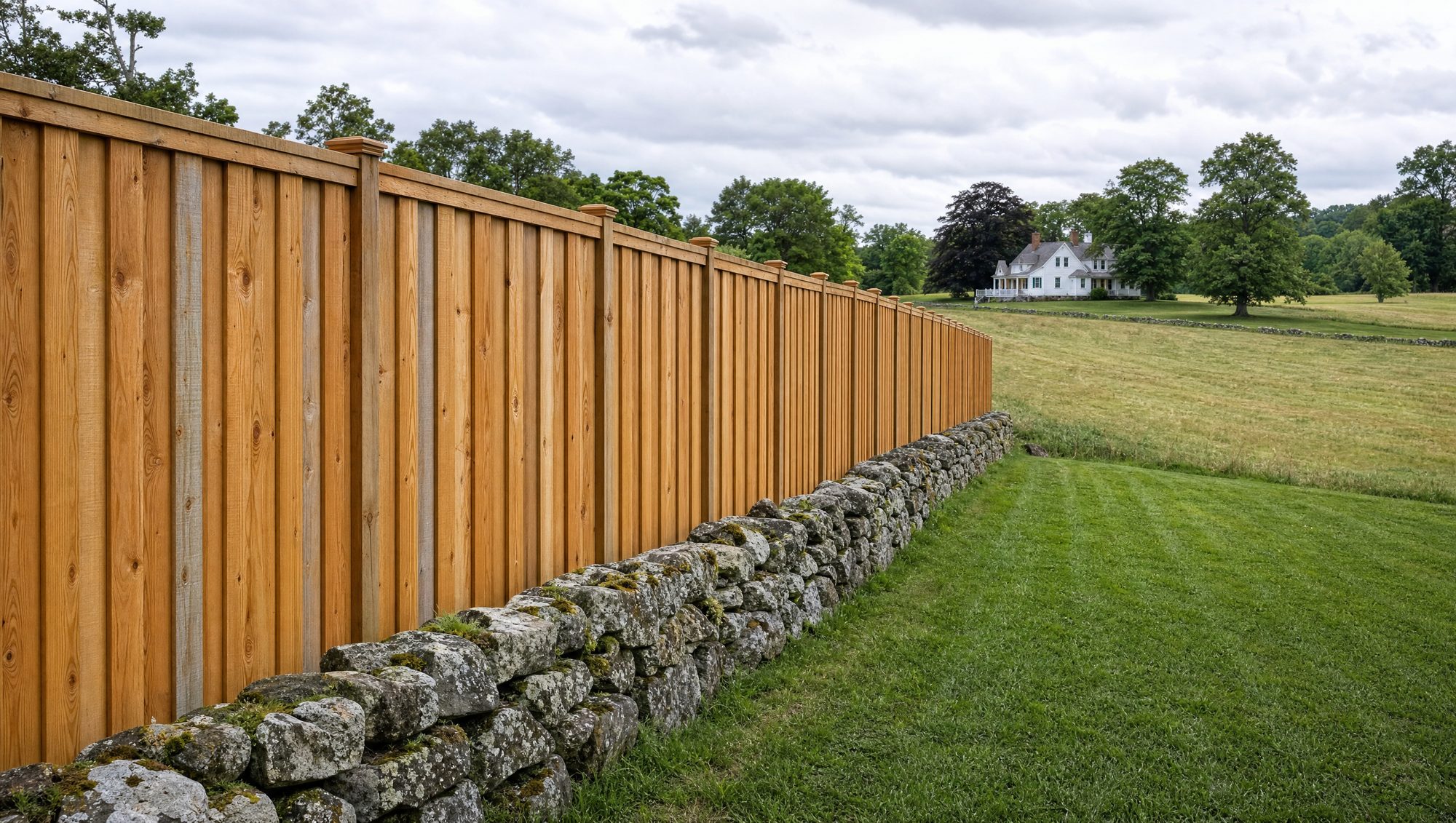
Wood fence. So many linear feet. A number at the bottom. That is the entire description on most of the bids a homeowner gets handed, and when one of them comes in noticeably cheaper than the others there is no honest way to tell whether that is a better price or a worse fence, because nothing on any of those pages describes what you would actually be buying. That is the uncomfortable part of shopping for wood fencing in Southbury CT: the words on the estimate are not a specification, they are a category. Species, grade, treatment rating, fastener metal, and how the posts shed water are all decided by somebody, and none of those decisions are written down where you can see them. They are invisible on the bid, invisible on install day, and expensive to correct once the fence is standing. The good news is that you can force every one of them into the open with questions a real contractor will answer without blinking.
Key Takeaways
A wood fence estimate is a spec sheet
Species, grade, post treatment rating, fasteners, and drainage are separate decisions that a two-word estimate leaves entirely unspecified.
Species is a per-component choice
Cedar heartwood resists decay above grade, while only pressure treated lumber carrying a ground-contact rating belongs in the soil, which is why many durable fences use both.
Grade decides what happens by year two
Thin, knotty, wet stock in a prebuilt panel looks fine on the rack and cups, loosens, and works its staples free after a couple of winters.
The wrong fastener stains the fence permanently
Preservative-treated wood corrodes incompatible metal, and that corrosion is what bleeds the black streaks running down old boards.
Southbury reviews fences property by property
The town takes building and zoning applications online and its zoning regulations are mid-update, so confirm current requirements before you order material.
Read the Estimate Like a Spec Sheet, Not a Price Tag
The reason three bids can look interchangeable is that most of them are written to be compared on price, not on content. A fence estimate is a specification document, and almost nobody reads it as one. Once you know which decisions are hiding behind the phrase "wood fence," the vague number stops being reassuring and starts looking like what it is, which is a blank space where the details should go.
The Same Two Words Can Describe Very Different Fences
Wood is not really one product. It is a system of posts, rails, boards, fasteners, gates, and finish, and it almost always fails where two of those meet rather than because wood was the wrong call. A fence built from ground-contact-rated posts, clear cedar boards, and stainless fasteners and a fence built from wet knotty panels stapled to undersized posts both get written on an estimate as "wood fence, 6 feet, 180 linear feet." One of them will be standing straight in fifteen years. The other is a repair bill with a delivery date.
Wood Moves, and Good Estimates Expect It
Wood is the only common fence material that is still, in a sense, responsive to weather. It takes on moisture when the air is damp and gives it back when the air is dry, every season, for the life of the fence. The Forest Products Laboratory's wood handbook documents that movement in detail, and the short version is that boards shrink, swell, cup, twist, split, and check as they weather. Boards move mostly across their width, not their length, which is why a stockade run installed tight off a damp lumber pile in June can show daylight by the following spring. A good wood fence does not prevent that. It was built expecting it.
Make the Estimate Name the Species, Component by Component
The species question usually gets framed as a fight, cedar against pressure treated, better against cheaper. That framing is wrong, and it is the single most useful thing to correct before you compare bids. The two woods are good at different jobs, and the most durable fences on Southbury properties routinely use both. A post buried in wet soil lives a completely different life than a board four feet up in the air, and it should not be expected to be the same piece of wood.
Where a Cedar Fence Earns Its Price
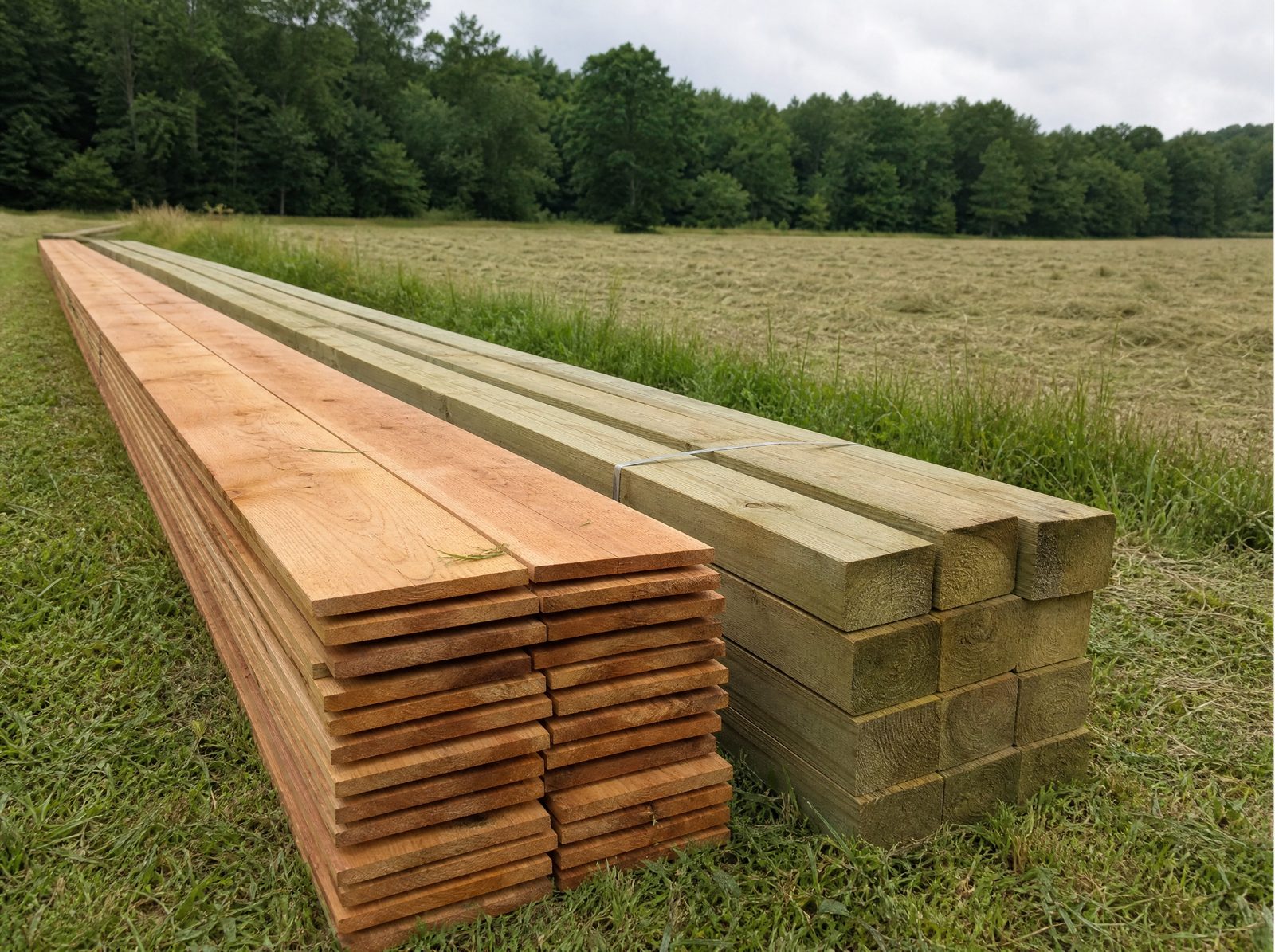
Cedar, western red or eastern white, gets chosen for appearance, workability, light weight, and the natural decay resistance in its heartwood. It takes stains and sealers well and gives you the grain and color people picture when they picture a wood fence. The caveats are real, though. That decay resistance lives in the heartwood, and the paler sapwood does not share it, so what arrives on the truck depends on the grade you paid for. Cut ends and end grain need attention, because that is where water gets in. And cedar still moves with moisture like any other wood, since natural durability is not the same thing as dimensional stability.
Pressure Treated Is a Category, Not a Product
The biggest misconception about a pressure treated fence in Southbury is that all treated lumber is the same lumber. It is not. Treated wood is classified by use category, and the American Wood Protection Association's use category system exists precisely because material rated for above-ground use is not rated to sit in soil. A post needs ground-contact-rated treatment. A rail four feet up does not. Species, treatment retention, moisture content, and grade all vary underneath that one label, which is exactly why two estimates can both say "pressure treated" and describe different fences. Fresh treated lumber also often arrives wet and shrinks as it dries, cut ends may need field treatment, and the surface usually needs time before it will accept a stain. The EPA's overview of wood preservative chemicals is a useful primer on what is actually in the wood.
Grade and the Panel That Looks Like a Bargain
Pressure-treated spruce, pine, and fir products all show up in fence panels, and the prebuilt panel is where grade quietly does its damage. A cheap stockade panel can be built from thin, knotty, wet stock, stapled together, and it will look perfectly acceptable leaning against the rack. Two winters later the knots have loosened, the thin boards have cupped, and the staples have worked free. This is the easiest place in the whole project to buy the fence twice, which is why grade and board dimensions belong on the estimate in writing.
The Hybrid Most Good Fences Actually Use
Put those constraints together and a sensible system builds itself. Ground-contact-rated treated posts go in the dirt, where decay pressure is highest and nobody sees them anyway. Cedar boards and rails go above grade, where appearance matters and cedar's natural resistance is enough. You get durability where it counts and the look where you want it, without paying cedar prices for buried lumber nobody will ever admire. That mixed approach is common on wood fencing projects for exactly that reason, and an estimate worth trusting will name the species for the posts and the boards separately.
Pick a Wood Privacy Fence Style That Stays Private
Style is the one decision most homeowners do engage with, because it is what you look at every day. It is also where moisture movement quietly decides whether you got what you paid for. A wood privacy fence in Southbury has to survive wind, since a solid panel is a sail, and it has to handle grade, since some styles follow a slope gracefully and others fight it the whole way.
Stockade sets vertical boards closely side by side. It is straightforward, economical, and private on day one. Its weakness is exactly the shrinkage described earlier: as boards dry, gaps open, and you end up seeing your neighbor through a fence that was solid when it was built. Board-on-board fixes that by overlapping the boards, so a board can shrink a meaningful amount and the screening never opens up. It uses noticeably more lumber and costs more, and it is the honest answer for anyone whose actual priority is privacy that stays private.
Shadowbox alternates boards side to side, giving partial privacy from straight on, airflow through the fence, and the same finished look from both sides, which neighbors appreciate. Horizontal fencing reads contemporary but asks more of the structure, because horizontal boards want to sag over a span and need careful support and post spacing. Tongue-and-groove interlocks for tight screening, so drainage and movement allowance have to be planned deliberately. Lattice-top softens the wall effect on a long run. And not every wood fence is trying to hide anything: split rail and post-and-rail define a boundary, suit the older stone-wall character of a lot of Southbury land, carry almost no wind load, and have far less to go wrong.
Ask Which Metal Is Touching the Wood
Those black or blue-black streaks running down from every nail on an aging fence are not dirt, and the wood is not staining itself. That is fastener corrosion bleeding into the surrounding wood, the most visible symptom of a mismatch nobody thought about on install day. Wood preservatives are chemically aggressive toward the wrong metal, and the reaction runs faster wherever the wood stays wet. It is also permanent. You cannot stain your way out of it.
Fasteners have to match the species, the preservative treatment, and the exposure. Hot-dipped galvanized nails and screws are a common baseline, stainless steel is frequently preferred with cedar and in the wettest locations, and coated fasteners specifically approved for treated lumber are the other accepted route. Gate hardware follows the same logic. The American Wood Council's prescriptive residential deck guide covers the same corrosion principles in a related exterior application, and the reasoning transfers directly. This is a small line item that decides how your fence looks in year eight, which makes it a fair question to put to anyone bidding the job.
Find Out How the Post Sheds Water
Wood does not rot evenly. It rots in one specific place, and once you know where, most of the maintenance advice you have heard finally makes sense. Decay concentrates in the narrow band where soil, water, and oxygen all meet the post, right around grade. Above that line, wood dries out between rains and generally survives. Well below it, oxygen is limited. That band at the surface is what does the killing, and it is why a post can look fine from the yard and snap off at the ground when you lean on it.
The Concrete Bowl Problem
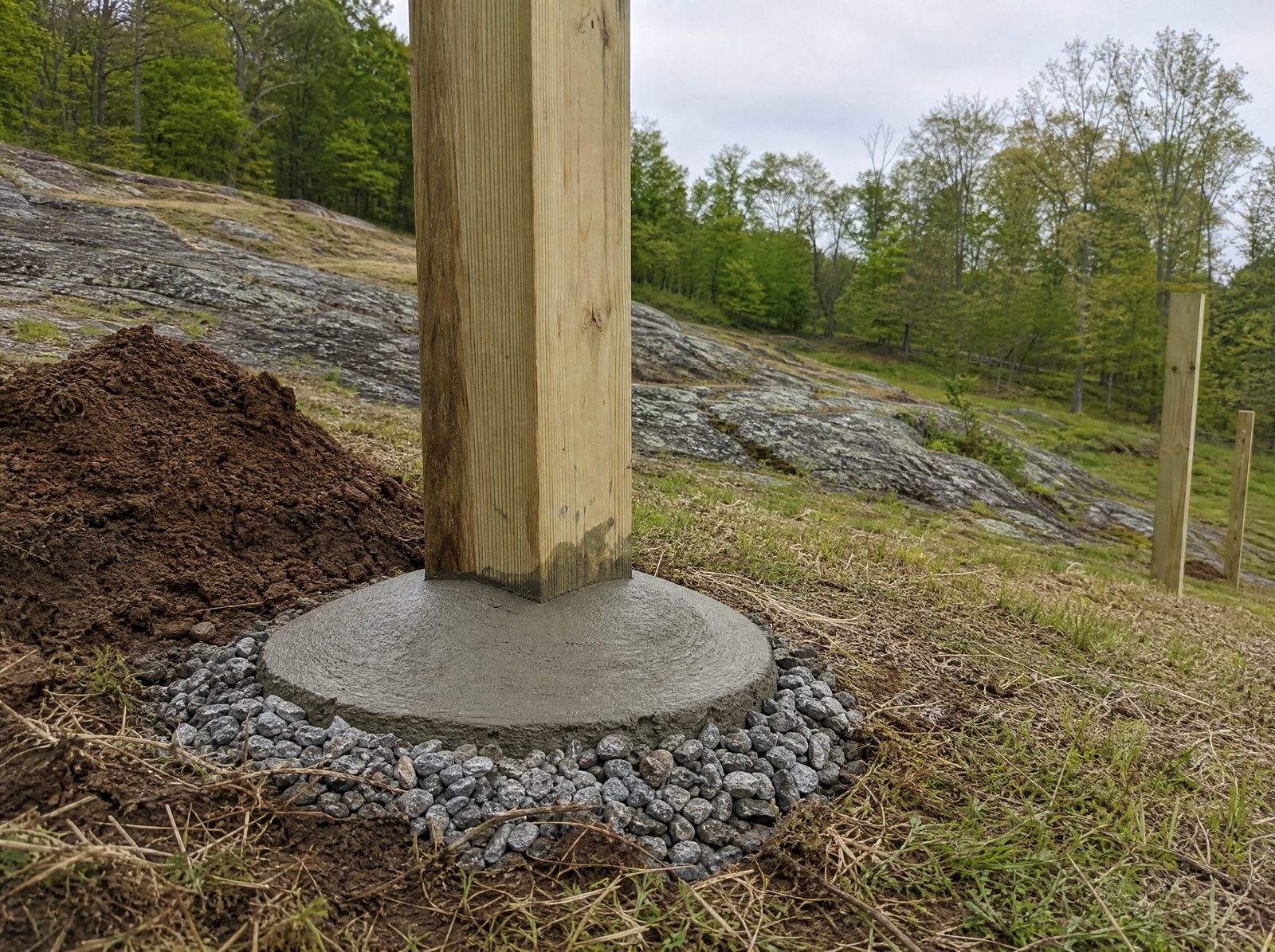
Concrete around a post is not automatically protection. Poured carelessly, it forms a basin that collects water and holds it against the wood, which is close to the worst thing you can do to a post in a freeze-thaw climate. The setting method has to move water away from the post rather than cup it, whether through how the concrete is shaped and crowned, drainage below the post, or a setting approach suited to the soil. Getting the treatment rating right does not excuse trapping water against the wood.
Why One Post Depth Never Fits Every Fence
Southbury gets real winter, with repeated freeze-thaw cycles that push on anything set shallow or poorly drained. Connecticut's residential code for foundations requires permanent supports of regulated structures to be protected from frost, and while a typical fence is not always regulated like a building footing, the principle explains why shallow or wet posts heave and lean. There is no single correct depth for every fence, and anyone quoting one number for every job is guessing. Height, solid versus open design, post size, soil and ledge, drainage, wind exposure, gate loads, and manufacturer specifications all feed into it. Corner posts, end posts, gate posts, and any post carrying a solid privacy panel need more than a light in-line post.
Keep the Dirt Off the Wood
The cheapest thing you can do for a wood fence costs nothing: keep soil, mulch, and vegetation away from the boards and rails. A mulch bed piled against the bottom of a fence holds moisture against wood designed to dry out between rains, turning an above-ground board into a ground-contact component that was never rated for the job. The same goes for a garden bed built up against the fence line. Wood gates deserve the same attention, since gate width, diagonal bracing, hinge and latch post support, and bottom clearance all decide whether the gate still latches after a wet season. Wide gates may need steel frames or internal reinforcement, which is true of most estate gates hung in wood.
Put Southbury's Ledge and Slopes on the Estimate by Name
Southbury properties are not uniform. Wooded edges, exposed ledge, rocky soil, sloped yards, drainage swales, roots and stumps, old stone walls, long rural driveways, and uneven grade near water all turn up on the same town's fence jobs. This is where wood has a genuine advantage over panel systems, because it can be cut, stepped, and contoured on site to follow whatever the land is doing. That flexibility only helps if the layout accounts for the ground before anyone orders material.
On a slope, a wood fence either steps down in level sections or follows the grade more continuously, and the right choice depends on appearance, the severity of the grade, bottom gaps, and whether you are containing a dog that will happily use a triangle of daylight. Ledge and rock slow excavation and can force a different tool or a shifted post layout, and that belongs on the estimate as a named site condition rather than buried in a round number or sprung on you mid-job. Drainage is the other one. A fence should never dam a swale or create a spot where soil builds against wood, because that manufactures the ground-contact problem the whole design was trying to avoid.
Decide the Staining Cadence Before You Sign, Not After
Here is the straight answer the internet usually dodges. Finishing a wood fence is optional. Left unfinished, cedar and most softwoods weather toward a silver grey, and that is ultraviolet light breaking down surface fibers, a color change rather than a structural failure. Plenty of Southbury homeowners like the weathered look and let it happen on purpose. What actually shortens a fence's life is decay, which needs sustained moisture against wood that is not resistant to it. So, a grey fence can be perfectly sound, and a freshly stained fence can be quietly rotting at the base where nobody looks.
What a finish buys you is control over color and some protection from ultraviolet exposure, and the moment you choose to finish, you have signed up for maintaining it, because a neglected finish looks worse than none at all. Clear and semi-transparent finishes show the grain and need the most frequent attention. Solid-color stains offer more ultraviolet protection and hide color variation between boards, which helps with knotty grades or mixed material. Paint gives an opaque finish but will peel if moisture gets trapped behind it, making it the least forgiving choice on something that lives outdoors and moves with the seasons. Timing matters too, since fresh treated lumber often needs to dry before it will take a finish. Deciding honestly at the start beats drifting into it.
What Actually Moves Wood Fence Cost in Southbury
No single number honestly represents every wood fence project, and anyone who has collected a few bids already knows it. Connecticut cost guides show wide installed ranges because species, grade, layout, gates, terrain, and removal swing so much from lot to lot, so treat any published average, including Angi's fence cost breakdown, as market context rather than a quote for your yard. The useful move is not hunting for an average. It is knowing which drivers each bid did or did not account for.
Hover or tap a row to highlight it.
| Cost Driver | Why It Matters |
|---|---|
| Linear footage and height | Longer and taller runs need more posts, more boards, and more labor. |
| Species and grade | Cedar, pressure treated pine, and spruce price differently, and clear grades cost more than knotty. |
| Style | Board-on-board uses noticeably more lumber than stockade for the same run. |
| Posts and treatment | Post size and a ground-contact rating are separate decisions from the boards above grade. |
| Gates | Width, bracing, reinforcement, and hardware make each gate its own line item. |
| Terrain and access | Ledge, slopes, roots, wet ground, and a long carry all add hours. |
| Old-fence removal | Pulling posts and concrete and hauling debris is priced on its own. |
| Finish | Stain, sealer, or paint is added scope, and treated lumber may need to dry first. |
When you compare estimates, make sure they all handle the old fence and the site conditions the same way, or you are not comparing the same job. A bid that is silent on ledge is not a bid without ledge. It is a bid that will discover ledge later.
Confirm Southbury's Requirements Before You Order Material
The town does not have an opinion about cedar versus pine, but it does have one about height, placement, and what the fence is for, and those rules can quietly redirect your design after you have already fallen in love with it. Southbury takes building and zoning applications through its online permitting system, and the town's zoning resources are the place to start. Fences get looked at property by property rather than under one blanket rule, and the town's zoning regulations are in the middle of a full update, so do not lean on older dimensional language you found somewhere else. Confirm the current requirements with the town before anything gets ordered.
Height, front and side yard placement, road and driveway sight lines, easements, inland wetlands and watercourses, aquifer protection areas, historic-district visibility, gates near the road, and solid privacy panels where wind exposure is a factor can all trigger a closer look. Pool barriers are their own project entirely. A fence used as a pool barrier requires a permit regardless of height, and the whole system gets reviewed, including gate direction, self-closing operation, self-latching hardware, and opening sizes, so pool fencing should never be treated as a yard fence that happens to sit near water. Two more things settle before anyone digs. A licensed surveyor establishes the property line, not the crew laying out the run, since an old mowing line, hedge, or stone wall is not a legal boundary. And a Call Before You Dig request is free and required by law in Connecticut. Public marking does not cover private septic, irrigation, propane, well, or pet-fence lines, which may need a separate locate.
How a Southbury Wood Fence Installation Comes Together
A clean wood fence installation in Southbury runs in a predictable order, and knowing the order helps you spot a crew skipping steps. It starts with a walk of the property and ends with a walkthrough, with the compliance and utility checks built in where they belong rather than bolted on afterward. Nothing in the sequence is exotic. Each step just depends on the one before it, which is why shuffling them is how projects go sideways.
How a Southbury Wood Fence Goes In
- 1
Step 1: Walk the Property
We walk the line to settle the purpose, the route, approximate footage, gate locations, and the slopes, ledge, and drainage the design has to work around.
- 2
Step 2: Boundary and Town Review
Surveys, property lines, and Southbury's zoning, wetlands, and pool-barrier requirements get confirmed before any material is ordered.
- 3
Step 3: Species, Grade, and Written Scope
The estimate names the species and grade for posts and boards separately, plus the style, gates, fasteners, removal, and who is responsible for what.
- 4
Step 4: Utility Marking and Site Prep
A Call Before You Dig request goes in, private lines like septic and irrigation are identified, and the fence path is cleared.
- 5
Step 5: Posts Set for the Soil
Holes are dug to suit the height, soil, ledge, and gate loads, and each post is set so water drains away from it rather than pooling around it.
- 6
Step 6: Boards, Gates, and Walkthrough
Rails and boards go up with spacing that allows for moisture movement, gates are hung and braced, bottom gaps checked, the site cleaned, and the job walked with you.
Questions That Turn a Vague Bid Into a Real Scope
Connecticut law requires home improvement contractors, including fence installers, to register with the Department of Consumer Protection, and the state explains why that registration protects you. Verifying any contractor's status takes a few minutes and is worth doing before you sign anything. We are a family-owned fence contractor with an office right here in Southbury, we are licensed and insured, and we give free estimates. Past the paperwork, though, the questions that separate a real wood fence bid from a pile of lumber are specific to wood, and they are the ones that make a vague number turn into a scope.
Ask which species and grade, for the posts and the boards separately. Ask what treatment category the posts carry and whether it is rated for ground contact. Ask what fasteners and gate hardware are being used and why they suit that wood. Ask how the posts are set and how water gets away from them. Ask how ledge gets priced if the crew hits it. Connecticut's contracting guidance is a solid checklist to hold any bid against, and a written scope should name:
- Species, grade, and dimensions: Not just "wood," but what wood, what grade, and what board and post sizes.
- Post treatment and setting method: Ground-contact rating, hole depth and diameter, and how the post drains.
- Fasteners and hardware: The fastener type and gate hardware, matched to the wood and the exposure.
- Style and gate details: Board-on-board, stockade, or shadowbox, plus gate widths, bracing, and hardware.
- Removal, permits, and utility marking: Who takes out the old fence, who confirms the town requirements, and who files the Call Before You Dig request.
- Change orders and warranty: How ledge and other surprises get priced, plus workmanship and manufacturer terms in writing.
Frequently Asked Questions About wood fencing southbury ct
Q: Is cedar better than pressure treated wood for a fence?
A: They are good at different things. Cedar heartwood offers natural decay resistance and a look that takes finish well, while pressure treated lumber can be rated for ground contact, which cedar is not. Many durable fences use treated posts below grade and cedar above it. Grade, treatment category, moisture, fasteners, and maintenance affect both.
Q: Does wood fencing require a permit in Southbury?
A: Southbury takes building and zoning applications through its online permitting system and reviews fences property by property rather than under one blanket rule, and its zoning regulations are currently being updated. A fence used as a pool barrier requires a permit regardless of height. Confirm the current height, placement, setback, wetlands, and site-specific requirements with the town before installation.
Q: What is the best wood privacy fence style?
A: Board-on-board keeps its privacy as boards shrink because the boards overlap, stockade is straightforward and economical but can open gaps as wood dries, shadowbox allows airflow and looks the same from both sides, and horizontal reads contemporary but needs more support. The right pick depends on privacy, wind exposure, grade, and budget.
Q: How long does a wood fence last?
A: There is no single honest number. Service life varies widely with species, treatment, grade, ground contact, drainage, fasteners, finish, maintenance, and exposure. A treated post that drains well and a cedar board kept out of the dirt will outlast the same materials installed carelessly by a wide margin.
Q: Why do wood fence boards warp, split, or streak?
A: Warping, cupping, checking, and twisting come from moisture movement, and grain orientation, species, grade, fastener placement, and sun exposure all influence it. The dark streaks running down from fasteners are a different problem: that is fastener corrosion bleeding into the wood, usually from metal that was not compatible with the preservative treatment.
Q: Should a cedar fence in Southbury be stained?
A: It is optional. Unfinished cedar weathers toward grey without losing structural soundness, and many homeowners prefer that. Stain gives you control over color and some ultraviolet protection, but it commits you to maintaining it. Product choice, moisture content, surface preparation, and a realistic maintenance schedule matter more than the brand.
Q: Can wood fencing be installed on a slope in Southbury?
A: Yes, and wood adapts to irregular grade better than most panel systems because it can be cut and contoured on site. Sections either step down in level increments or follow the grade more continuously. Bottom gaps, board lengths, rail spans, gates, and drainage all need to be planned rather than improvised.
Q: How much does wood fencing in Southbury Connecticut cost?
A: It depends on footage, height, species, grade, style, post size and treatment, gates and gate reinforcement, finish, slopes, ledge, wet ground, access, old-fence removal, permits, and custom details. Published averages are market context, not a quote. A site visit is the only reliable way to price a specific yard.
Test Your Wood Fence Knowledge
1. What does "pressure treated" on an estimate tell you about where the wood can go?
2. What causes the black streaks running down from the nails on an old wood fence?
3. Why does a stockade fence sometimes open gaps after the first year?
4. How does Southbury handle fence review?
5. Does a grey, weathered cedar fence mean it is rotting?
Pick an answer to begin.
Final Thoughts
The difference between the cheap bid and the good one is almost never visible on the page, which is exactly why the page needs to say more. Get the species named for the posts and the boards separately, so ground-contact-rated material goes in the dirt and cedar goes where you can see it. Get the grade and board dimensions in writing. Get the fastener named. Get an answer about how the post sheds water, and get ledge and slopes on the estimate as real conditions instead of a surprise waiting to happen.
Do that and wood stops being the risky choice and becomes what it has always been on New England properties: a fence you can repair board by board, that adapts to whatever the land is doing, and that looks better at fifteen years than most alternatives look at five. The homeowners who ask the specific questions before signing are the ones who never think about their fence again.
If you are weighing wood fencing in Southbury and want a straight answer about your species, your grade, your slope, and your soil, we would be glad to walk the property. My Fence Guy is a family-owned contractor with an office here in Southbury, CT, and we install residential, commercial, industrial, and agricultural fencing in wood, vinyl, aluminum, chain link, and ornamental styles, plus pool fencing, pet fencing, gates, and railings. We are licensed and insured, and we handle the layout, the town requirements, the utility marking, and the details that keep a wood fence straight through Connecticut winters. Call us at (203) 746-1100 for a free estimate, or reach out through our contact page.
Wood Fence Key Terms
Tap a term to see what it means.
Heartwood. The older, inner wood of a tree, which in cedar carries the natural decay resistance that the paler outer sapwood does not.
More about fences
Wood Fencing in Sherman, CT: What Lasts and What Warps
Wood fencing in Sherman, CT: cedar, spruce, and pressure treated do not age the same. Grades, fasteners, and the drainage that decides how long it stands.
Read the guide to Wood Fencing in Sherman, CTWood Fencing in New Fairfield, CT: What Lasts and What Warps
Cedar or pressure treated? Wood fencing in New Fairfield, CT, plus the privacy styles, fasteners, and the staining cadence that keeps a fence straight.
Read the guide to Wood Fencing in New Fairfield, CTVinyl Fencing in Southbury, CT: What Separates Good From Bad
Vinyl does not rot, but it does sag, yellow, and crack. What separates vinyl fencing in Southbury, CT that lasts: thickness, additives, and gate steel.
Read the guide to Vinyl Fencing in Southbury, CT