
Wood Fencing in New Fairfield, CT: What Lasts and What Warps
By Tony Pellicone20 min readPublished
- wood fencing
- new fairfield ct
- privacy fencing
- connecticut
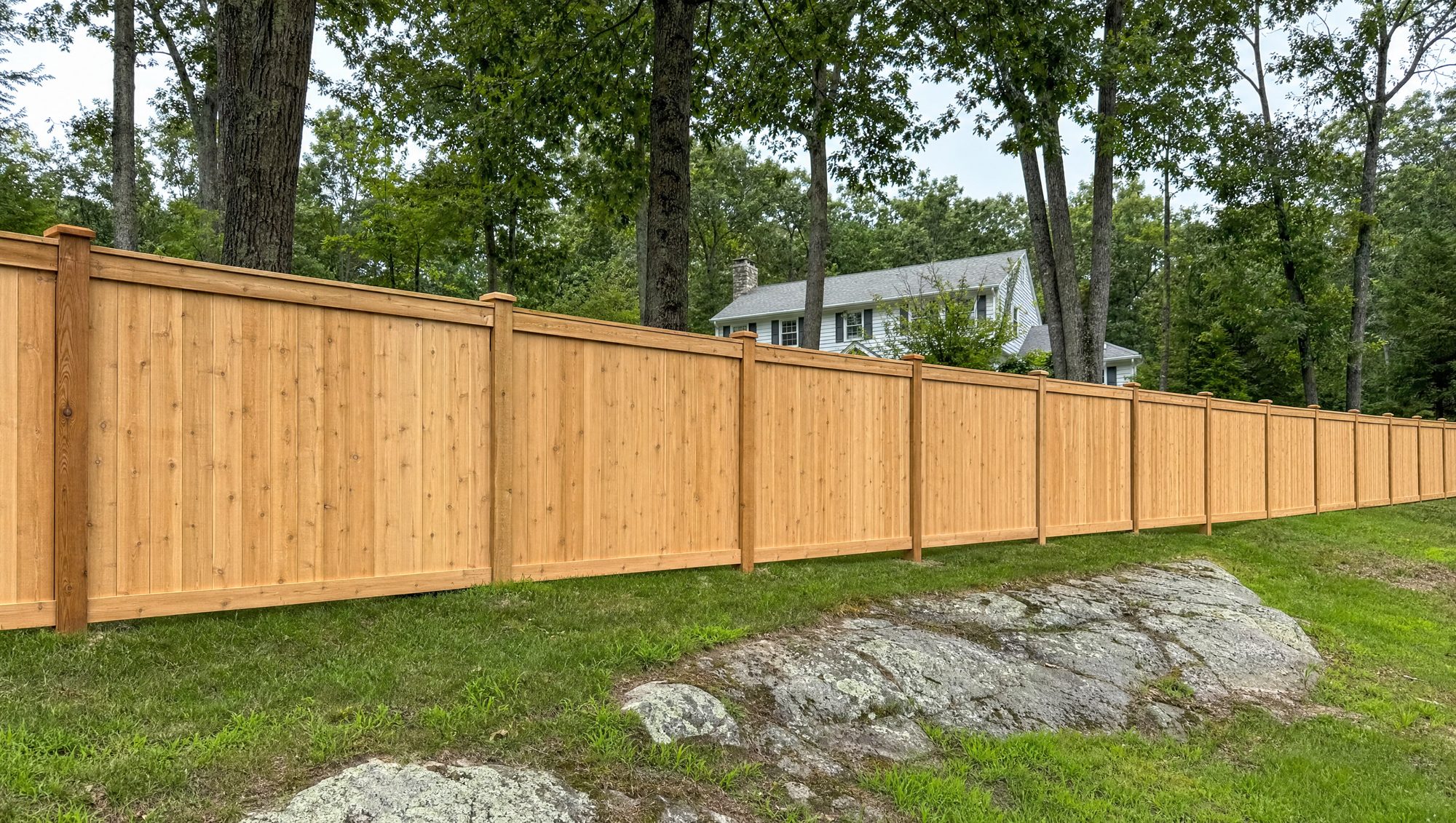
Cedar or pressure-treated. Knotty or clear. Board-on-board or stockade. Stain it the first spring or let it go grey on its own. If you have already decided you want wood fencing in New Fairfield, CT, none of that helps you read the estimate sitting on your kitchen table. What you want to know is whether the fence you are paying for will still look like a fence in ten years, or whether it will end up like the one two streets over: boards cupped and split, rust streaks running down from every nail head, one gate dragging in the dirt. That fence and a good one often look identical the week they go in. The difference shows up later, and it usually traces back to decisions nobody explained at the time. Wood is not a product you pull off a shelf. It is a material with behavior, and it moves whether or not anyone planned for it.
Key Takeaways
Species is not the whole answer
Grade, heartwood content, and treatment category matter as much as whether the tag says cedar or pressure-treated.
Wood moves across the grain
Boards shrink, swell, cup, and check with moisture, so the style and spacing should be picked around that movement, not against it.
Fasteners decide the stains
Hot-dipped galvanized or stainless steel are the safe answers, and the wrong metal against cedar or treated lumber can streak a fence in one season.
Posts fail at the ground line
Ground-contact treatment and whether the concrete sheds water matter more than an extra inch of depth.
Greying is not rot
Unfinished wood weathers to grey without losing strength, so staining is a color and UV decision on a cadence you pick.
Wood Moves, and Almost Everything Else Follows From That
Every complaint people have about wood fences comes back to one habit of the material. Wood takes on moisture from the air and the ground, gives it back when things dry out, and changes size while it does. It does this forever, not only in the first year. The USDA Forest Products Laboratory's wood handbook is the plain reference on how this works, and once you know the pattern, most of the mystery goes out of a fence estimate.
Heartwood Resists Decay, Sapwood Does Not
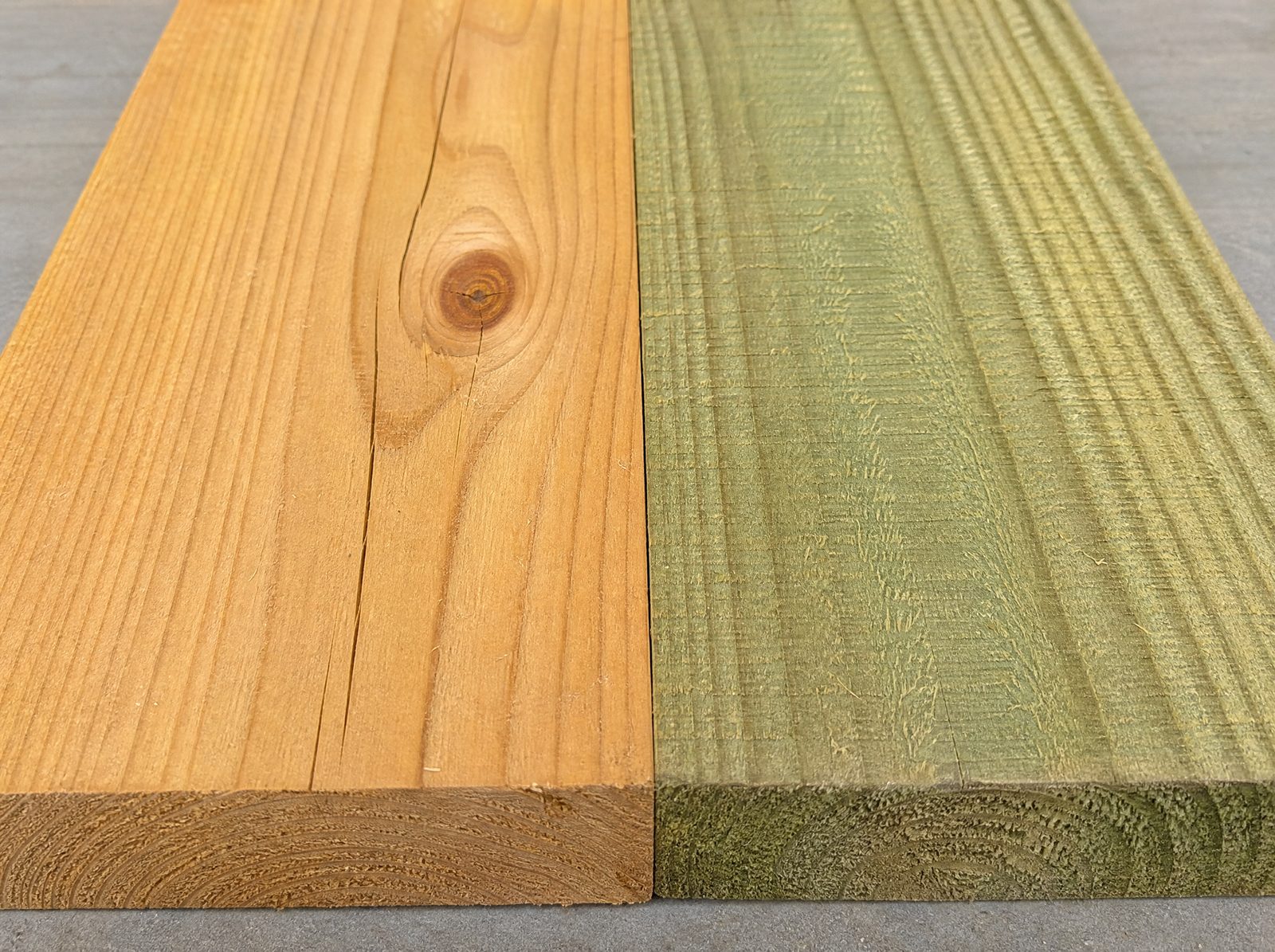
A cedar board is not uniformly cedar in the way people mean it. The dark inner heartwood carries the natural extractives that resist decay. The pale outer sapwood, cut from the same log, does not carry them in any useful amount. That is why two boards off the same pile can behave differently against wet ground. When someone says western red cedar is naturally rot-resistant, they mean the heartwood is.
Boards Shrink Across the Grain, Not Along It
A six-foot board will not get shorter. It will get narrower. Wood shrinks and swells across its width and thickness while barely moving along its length. That single fact explains the gappy stockade fence: the boards went up wet and tight against each other, then dried and pulled back, opening a gap every twelve inches. Go the other way and fasten kiln-dry boards hard together, and a wet spring can buckle them or work the fasteners loose. Neither is bad wood. Both are installations that ignored what the wood was going to do next.
Cedar and Pressure-Treated Are Doing Different Jobs
People talk about these two like rival teams, and that framing costs homeowners money. They are materials with different strengths, and plenty of good fences use both in the same run. Cedar handles the visible boards and treated lumber handles the parts buried in wet soil. What matters is that the right one is doing the right job, and that the quote says which is which.
What a Cedar Fence Does Well Here
A cedar fence in New Fairfield earns its place on appearance and workability. It is lighter than most treated products, it cuts and fits cleanly around stone walls and irregular grade, it takes stain well, and its heartwood resists decay without chemical treatment. The trade is that it still moves with moisture, its cut ends need attention, its sapwood is vulnerable, and clear grades cost noticeably more than knotty ones. Cedar also does not love sitting in soil, which is why treated posts under cedar boards is such a common build.
Where Pressure-Treated Earns Its Place
Pressure-treated lumber carries preservative driven into the wood, which makes it the sane choice for posts, rails, gate frames, and anything in ground contact. The detail that gets skipped is that "pressure-treated" names a process, not a species. It may be southern pine, or it may be spruce, pine, or fir, and those do not take treatment or hold a fastener identically. Treatment is also sold in use categories, and the AWPA use category system is what separates a board rated for above-ground use from one rated for ground contact. A post rated only for above-ground exposure, set in a wet hole, is a slow failure with a receipt. Fresh treated stock also often arrives wet from the treatment process, so it can shrink as it dries, and cut ends may need field treatment.
Grade and Dimensions Move More Than the Species Name Does
Two quotes can both say "cedar" and describe very different fences, and neither one has told you whether it is western red or eastern white. Clear grade versus knotty grade, board thickness, board width, whether the boards are rough or surfaced, and how much heartwood is in them all change the price and how the fence ages. Knots are not automatically a problem, but a large knot near a fastener is a split waiting for the first hard freeze. When two bids are far apart, the gap is usually hiding in grade and dimensions rather than in labor.
The Privacy Style You Pick Decides Where the Gaps Show Up
A wood privacy fence in New Fairfield is not one thing. The styles differ in how much they screen, how much wind they catch, how they handle grade, and, for a material that shrinks, where the gaps end up once the boards dry. Wind matters more than people expect on an exposed lot, since a solid fence is a sail. Here is how the common builds actually behave.
Stockade Is Simple, and It Shows Its Shrinkage
Closely spaced vertical boards, one layer, straightforward to build, and the most affordable privacy build. It screens well the day it goes up. Because there is only one layer, every bit of shrinkage turns directly into a sight gap, which is why older stockade fences look striped when the sun is behind them.
Board-on-Board Buys Privacy That Survives Drying
Overlapping the boards front and back means shrinkage happens behind an overlap instead of in open air. It uses more material, so it costs more, and that is the honest answer to whether the upcharge is worth it: you are buying privacy that still exists in year five. It also reads heavier and more finished from both sides.
Shadowbox, Horizontal, Tongue-and-Groove, and Lattice-Top
Shadowbox alternates boards side to side, which gives partial screening, lets wind pass through, and looks the same from your yard and the neighbor's. Horizontal boards read modern but put every board where gravity and moisture work together, so support spacing and board selection have to be right or it will sag. Tongue-and-groove screens tightest but needs room to move and somewhere for water to go. Lattice-top puts a solid lower section under a decorative top, lightening the wind load and the look at once.
Split Rail and Post-and-Rail Are Not Privacy
Worth saying plainly, since people ask for both in the same conversation. Split rail and post-and-rail define a boundary, hold a line along a field or a driveway, and keep the view. They are not screening, and they are not pet containment on their own. If a dog is part of the plan, the rail fence is the frame and something else does the containing.
The Wrong Fasteners Will Streak a Fence in One Season
This is the cheapest part of the fence and one of the most common ways it goes wrong. Fasteners have to match the wood, the preservative, and the exposure. Get it wrong and the metal corrodes, the corrosion bleeds down the board, and every fastener draws a black or rust-colored line under it. In treated lumber, the wrong metal does not just stain, it loses section and grip over time.
Hot-Dipped Galvanized and Stainless Are the Two Safe Answers
Hot-dipped galvanized nails and screws, stainless steel fasteners, and coated fasteners approved for treated lumber are the options that hold up outdoors. The same goes for hinges, latches, and brackets, since a stainless screw in a plain steel hinge has solved nothing. Cedar's own extractives are corrosive to some metals and the preservatives in treated lumber are corrosive to others, which is why "whatever was in the truck" is not a specification. The American Wood Council's residential deck guide covers the same fastener and preservative compatibility logic that applies to a fence.
Placement Decides Whether Boards Split
Where the fastener goes matters as much as what it is made of. Too close to an end or an edge, or driven into a knot, and the board splits, if not on install day then on the first cold snap when it shrinks and the fastener will not let it. Enough of that and the fence looks neglected while the wood is still perfectly sound.
Wood Posts Fail at the Ground Line
Dig up a failed wood fence post and the pattern is almost always the same. The top is fine. The buried bottom is often fine. The few inches right at grade, where soil, water, and air all meet, are gone. That narrow band decides the life of the fence, and it gets the least thought.
Ground-Contact Rating Is Not Optional Down There
A post in a hole is in ground contact, which means it needs lumber treated for ground contact, not the lighter above-ground rating. The EPA's overview of wood preservative chemicals explains what those treatments are doing. Cut ends made on site often need field treatment, because cutting a post exposes wood the treatment never fully reached.
Concrete Can Shed Water or Trap It
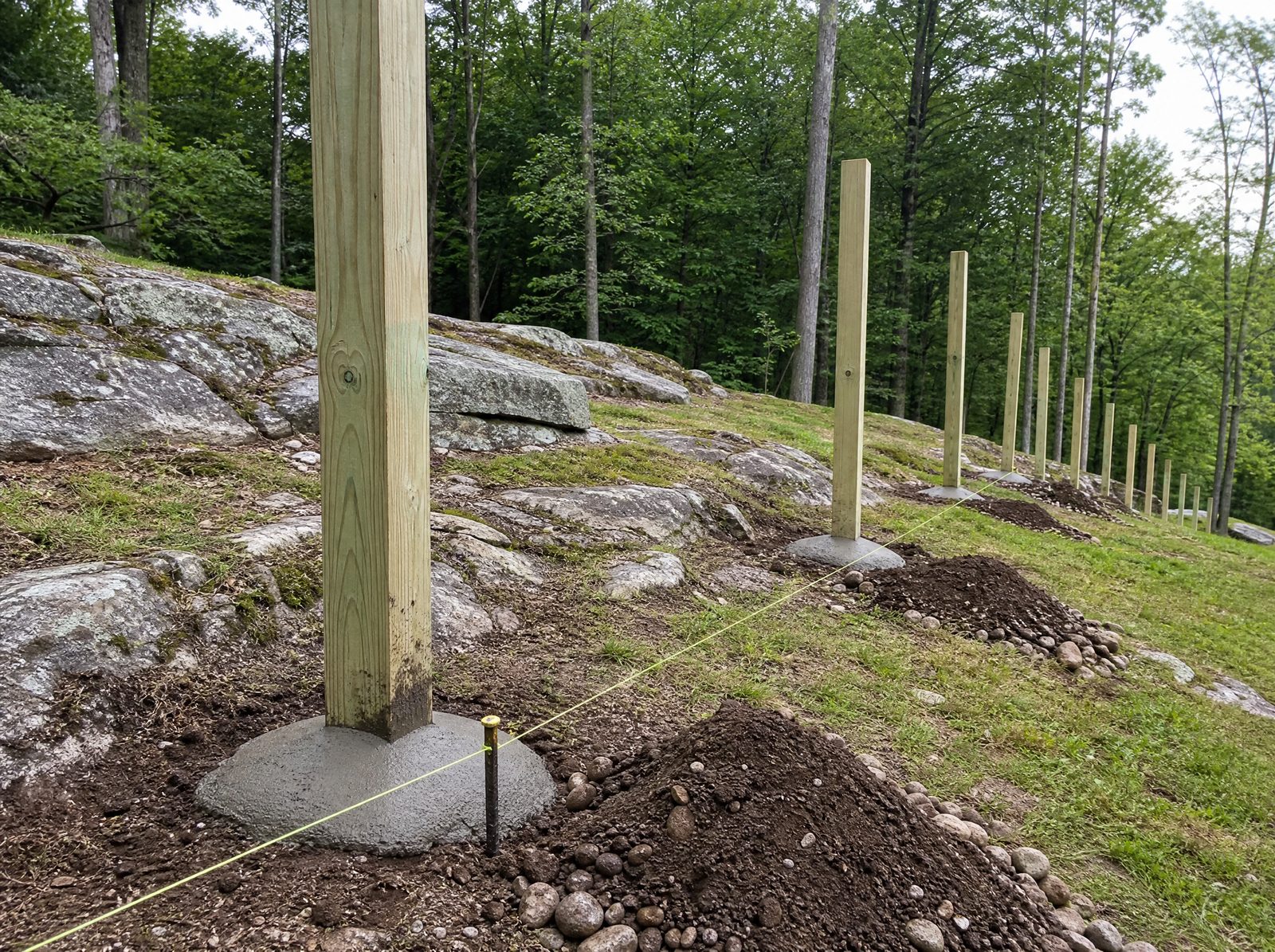
Concrete around a post is not automatically good. Poured so it forms a bowl, with the top flat or dished, it holds water against the wood at exactly the height where rot starts. Sloped away from the post so water runs off, with drainage under the post rather than a sealed cup, it does the opposite. That detail, not an extra inch of depth, is often what separates a fifteen-year post from a six-year one.
Frost Depth Has No Single Right Number
New Fairfield gets real winter and repeated freeze-thaw cycles, and anything set shallow or sitting in trapped water gets pushed. Connecticut's residential code requires permanent supports of regulated structures to be protected from frost by extending below the frost line or another approved method. A yard fence is not always regulated like a building footing, but the principle is why shallow posts heave. Proper depth comes from the whole picture: fence height, solid or open design, post size, soil and ledge, drainage, wind exposure, gate loads, and the manufacturer's specifications. Anyone who quotes one depth for every fence on every lot is guessing.
Gates Are Where a Wood Fence Gets Tested
A wood gate is a heavy rectangle hanging off one post, and it wants to become a parallelogram. Diagonal bracing, a proper frame, a hinge post sized and set for the load, decent hinges and latches, and honest bottom clearance are what stop that. Wide gates often need a steel frame or internal reinforcement, because wood alone at that span will sag. Frost movement in the hinge post is what throws a latch out of line every spring on a gate that was fine in October.
New Fairfield Ground Decides How the Fence Follows It
Yards here are not interchangeable. Ledge sits close to the surface on plenty of lots, grade runs down toward the water, wooded edges stay damp, and old stone walls and roots complicate a line. On grade, wood either steps down in level sections, leaving a triangular gap under each step, or follows the ground more continuously with custom rail and board work. Which one is right depends on the look you want, how much bottom gap you can live with, whether a dog will test those gaps, and how steep the run is. Wood is more adaptable here than panel systems, and that is one of the better reasons to pick it on an irregular lot. Rock can slow excavation or shift a post location, and it should show up in the estimate as a real site condition rather than hiding inside a vague number. One more is quiet but constant: keep mulch, soil, and leaf litter off the boards and rails, because anywhere landscaping buries wood you have created a new ground line, and that is where it will rot.
Wood Fence Cost in New Fairfield Comes From the Site, Not a Price Per Foot
No single number describes every wood fence project here, and published Connecticut ranges swing wide for a reason. Fence cost breakdowns are useful as general market context and useless as a quote for your yard. Linear footage and height set the baseline. Species, grade, and board dimensions stack on top, and so does style, since board-on-board uses noticeably more material than stockade over the same run. Gates are their own line, each needing posts, footings, hardware, and sometimes reinforcement. Then come the site conditions: slopes, ledge and roots, wet ground, restricted access, brush clearing, and pulling an old fence including its posts and concrete. Finish is a real cost too, whether it happens at install or later. When you compare bids, make sure they all handle removal and disposal the same way, or you are not comparing the same job.
Hover or tap a row to highlight it.
| Cost Driver | Why It Matters |
|---|---|
| Linear footage and height | More posts, more boards, and more labor on a longer or taller run. |
| Species and grade | Cedar or pressure-treated, clear or knotty, and heartwood content all price differently. |
| Privacy style | Board-on-board uses noticeably more material than stockade over the same run. |
| Gates | Each gate needs its own posts, footing, and hardware, and a wide one may need a reinforced frame. |
| Site conditions | Slopes, ledge, roots, wet ground, and restricted access all add labor. |
| Old-fence removal | Pulling posts and concrete and hauling the debris is its own line item. |
| Finish | Stain or sealer is a real cost whether it happens at install or a season later. |
A Wood Fence Is Finished on a Cadence, Not Once
Here is the part that gets oversold in both directions. Wood is not maintenance-free, and it is also not the constant chore people describe. It needs a rhythm, and the rhythm depends on the finish you choose and how much you care about color.
Left alone, wood weathers toward silver-grey. That is UV breaking down the surface fibers, not rot, and plenty of homeowners want exactly that look on a cedar fence. If you want the color to stay, a clear or semi-transparent finish shows the grain but needs redoing more often, a solid stain gives more UV protection and hides color variation, and paint is opaque but will peel if it traps moisture or goes over poor prep. Fresh treated lumber usually needs to dry before it will take a finish at all, which is why staining is often a next-season job rather than an install-day one. Past that, maintenance is small stuff done occasionally: keep vegetation off it, check the fasteners, adjust a gate, swap a split board, pull the soil back off the bottom rail, and walk the line after a bad storm.
Permits, Property Lines, and Utilities Get Settled Before the Wood Is Ordered
Three things get sorted before anyone buys a board, and none of them are about wood specifically. New Fairfield states that fences not over seven feet high are generally exempt from a building permit, with one carve-out: a fence used as a swimming pool barrier needs a permit regardless of height, and the whole system gets reviewed, including gates and opening sizes. Wood can serve as a pool barrier when the installed pool fencing meets those requirements, but treat it as its own project. A permit exemption is also not a zoning exemption, since placement, sight lines, easements, and wetlands setbacks can still apply. New Fairfield's building permit page and its zoning department are where you confirm what your lot needs, since local rules change.
The other two are the line and the lines. An old hedge or stone wall is not the legal boundary; we can lay out the run, but a licensed surveyor establishes where your land ends, and recorded plans often live with the town clerk's land records. And because setting posts means digging, Connecticut's Call Before You Dig service is free and required by law before excavation, with a request going in by calling 811. Public marking does not cover private septic, irrigation, propane, well, or pet-fence lines, which may need a separate locate.
How Wood Fence Installation in New Fairfield Comes Together
A clean job runs in a predictable order, and knowing the order helps you spot a crew that skips a step. It starts with a walk of the property and ends with a walkthrough, with the boundary, permit, and utility questions handled where they belong rather than after the posts are in. The wood-specific parts, choosing species and grade, setting posts for the real soil, and spacing boards for the movement they will make, sit in the middle of a sequence that looks like this.
How a New Fairfield Wood Fence Gets Built
- 1
Step 1: Property Walk and Wood Selection
We walk the line and settle the goal, footage, height, and style, then talk through species, grade, and board dimensions.
- 2
Step 2: Boundary and Compliance Review
Surveys, property lines, zoning, easements, wetlands, and pool rules get reviewed before any wood is ordered.
- 3
Step 3: Written Scope and Materials
The estimate names the species, grade, post treatment rating, fasteners, gates, finish, removal, and who is responsible for what.
- 4
Step 4: Utility Marking and Site Prep
A Call Before You Dig request goes in, private lines are identified, and the fence path gets cleared.
- 5
Step 5: Posts Set for the Real Ground
Posts go in for the actual soil, ledge, drainage, and gate loads, with the concrete finished to shed water instead of holding it.
- 6
Step 6: Rails, Boards, Gates, and Walkthrough
Boards go up spaced for the movement they will make, gates are hung and adjusted, and we walk the finished line with you.
What to Ask a Wood Fence Contractor in New Fairfield
Connecticut law requires home improvement contractors, including fence installers, to register with the Department of Consumer Protection, so registration and insurance are the floor, not a selling point. The state explains why that registration protects you, and checking any contractor's status takes a couple of minutes. Beyond the paperwork, three questions tell you most of what you need to know about a wood fence bid. Ask what species and grade the boards are, and what the posts are treated for. Ask what the fasteners are made of. Ask how the concrete is finished around the post and where the water goes. A contractor who answers those cleanly is thinking about the fence in five years. One who waves them off as details is quoting a fence that looks great in June.
What a Written Wood Fence Contract Should Cover
Connecticut's contracting guidance is a good checklist to hold any bid against. At a minimum, the scope should spell out:
- Contractor identity and registration: The registered name, address, and registration number.
- Footage, height, and style: The measured run, the finished height, and the exact build.
- Wood specifics: Species, grade, board dimensions, and whether boards are rough or surfaced.
- Post and gate specifications: Post size, treatment rating, footing method, gate widths, and hardware.
- Fasteners and hardware: The metal, not just the count.
- Finish: Whether stain or sealer is included, and when.
- Removal and disposal: Who pulls the old fence, posts, and concrete, and hauls it away.
- Permit and utility responsibility: Who confirms zoning and who files the 811 request.
- Schedule, payments, and change orders: Timeline, lead times, payment terms, and how a surprise like ledge gets priced.
- Warranty: Workmanship and manufacturer terms in writing.
Frequently Asked Questions About wood fencing new fairfield ct
Q: Is cedar better than pressure-treated wood for a fence?
A: They are better at different jobs. Cedar's heartwood resists decay naturally and it looks and works well above ground, while pressure-treated lumber rated for ground contact is the sound choice for posts and anything sitting in soil. Many wood fences use treated posts under cedar boards for exactly that reason.
Q: What is the best wood privacy fence style?
A: Board-on-board holds its privacy as the boards shrink, stockade is the simplest and most affordable, shadowbox lets wind through and looks the same from both sides, and horizontal reads modern but needs careful support. The right pick depends on privacy, wind exposure, grade, and budget.
Q: How long does a wood fence last?
A: There is no single honest number. Service life depends on species, grade, treatment category, ground contact, drainage, fasteners, finish, maintenance, and exposure, which is why two fences installed the same week can age a decade apart.
Q: Why do wood fence boards warp, split, or grey?
A: Moisture change is behind almost all of it. Boards shrink and swell across the grain, so grain orientation, grade, fastener placement, spacing, and sun exposure decide whether that movement shows up as cupping, checking, or splits. Greying is separate, and it is UV weathering the surface, not decay.
Q: Should a cedar fence be stained?
A: Stain is optional. Unfinished cedar weathers to grey without losing strength, so staining is about keeping the color and adding UV protection. If you do stain, moisture content, surface prep, and a maintenance rhythm matter more than the brand.
Q: How much does wood fencing cost in New Fairfield?
A: It depends on footage, height, species, grade, board dimensions, style, posts, gates, finish, slopes, ledge, removal, access, and permits. A site visit gives a far more reliable number than an online average, which is why the estimate is free.
Q: Can wood fencing be installed on a slope?
A: Yes, and wood is one of the more adaptable materials for it. The fence either steps down in level sections or follows the grade more continuously with custom rail work. Bottom gaps, pet containment, and how the run looks should guide which method fits your yard.
Test Your Wood Fence Knowledge
1. Which part of a cedar board carries the natural decay resistance?
2. What does the label "pressure-treated" actually tell you?
3. Which privacy style keeps screening as the boards shrink?
4. Which fasteners are safe with cedar and treated lumber?
5. A wood fence weathering to silver-grey means what?
Pick an answer to begin.
Final Thoughts
A wood fence is a system, not a species. The posts have to be rated for the ground they sit in, the concrete has to shed water instead of holding it against the wood, the fasteners have to match the lumber, the boards have to be spaced for the movement they will make anyway, and the gate has to be built for the load it carries. Get those right and cedar or pressure-treated both give you a fence that ages the way it should. Get them wrong and the best lumber on the truck will not save it.
Done well, a wood fence quietly does its job for a very long time, holding a straight line through New England winters, giving you privacy that does not open up as the boards dry, and weathering into a look that suits the property instead of fighting it. That is what the planning buys you.
If you are thinking about wood fencing in New Fairfield, Connecticut, we would be glad to walk your property and give you a straight answer about your soil, your grade, and your gates. My Fence Guy is a family-owned contractor with our office right here in New Fairfield, licensed and insured, and we build residential, commercial, industrial, and agricultural fencing in wood, vinyl, aluminum, chain link, and ornamental styles, plus pool fencing, pet fencing, cedar planters, estate gates, and railings. Call us at (203) 746-1100 for a free estimate, or reach out through our contact page.
Wood Fence Key Terms
Tap a term to see what it means.
Heartwood. The darker inner wood of a log, which in species like cedar carries the natural extractives that resist decay.
More about fences
Wood Fencing in Southbury, CT: What the Estimate Leaves Out
A two word estimate hides most of the fence. Wood fencing in Southbury, CT: what cedar, grade, post treatment, and fasteners mean before you sign.
Read the guide to Wood Fencing in Southbury, CTWood Fencing in Sherman, CT: What Lasts and What Warps
Wood fencing in Sherman, CT: cedar, spruce, and pressure treated do not age the same. Grades, fasteners, and the drainage that decides how long it stands.
Read the guide to Wood Fencing in Sherman, CTVinyl Fencing in New Fairfield, CT: Not All Vinyl Is Equal
Vinyl fencing in New Fairfield, CT comes in real grades. Wall thickness, UV package, gate reinforcement, and post setting decide how long it lasts.
Read the guide to Vinyl Fencing in New Fairfield, CT