
Chain Link Fence Privacy Options: Slats, Fabric and Coated Mesh
By Tony Pellicone12 min readPublished
- chain link fencing
- privacy fencing
- homeowner guide
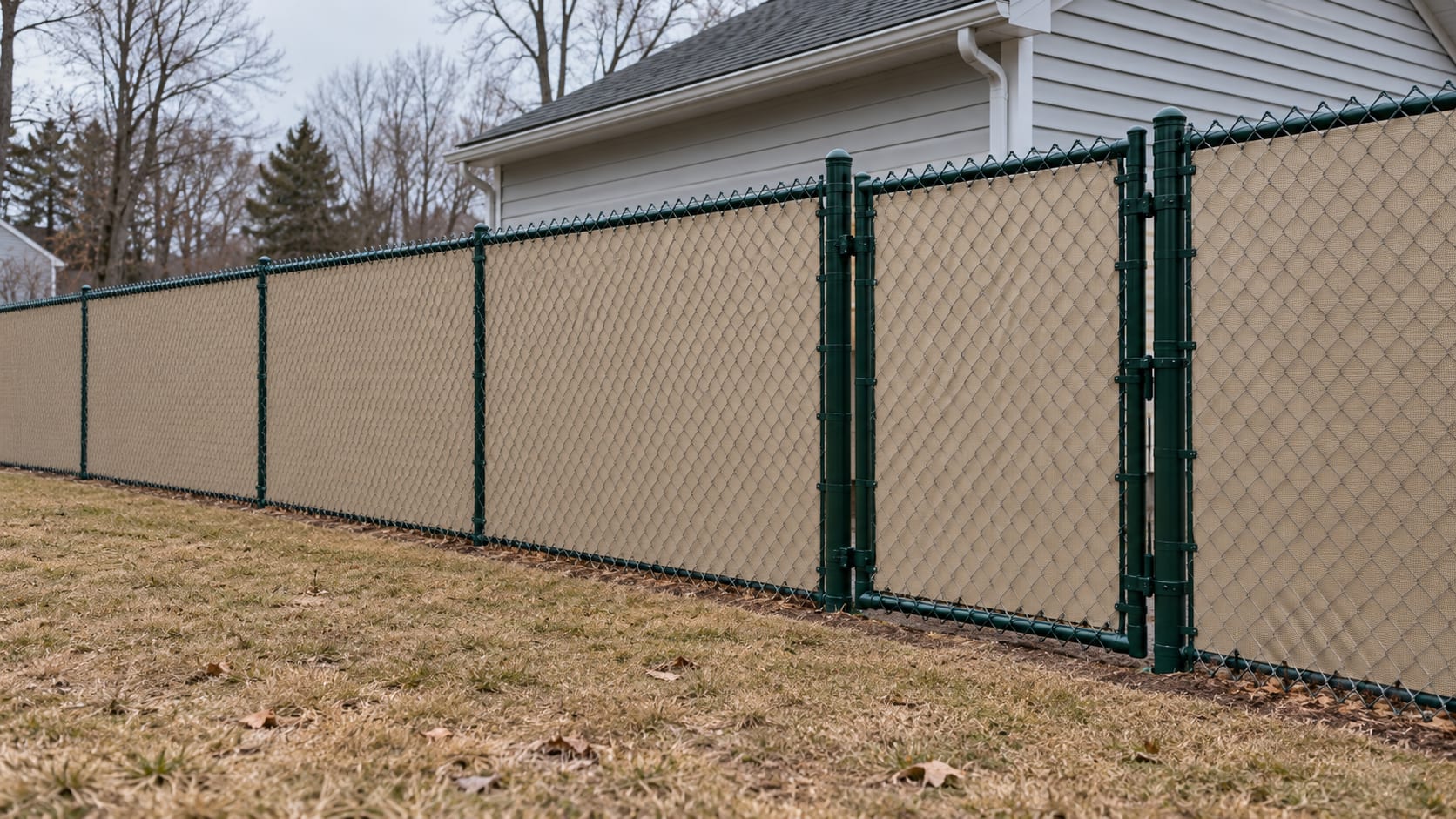
The best chain link privacy choice depends on how much visibility you want, how much airflow you need, and whether the existing posts and footings can carry added wind force. Fence weave and standard slats usually provide moderate screening at a lower cost, while locking slats and dense screen fabric can reach roughly 90% to 100% privacy. Black or green vinyl-coated mesh improves appearance, but the open chain-link pattern remains visible unless you add slats or fabric.
Before you order materials, confirm the fence height, mesh size, wire gauge, post spacing, footing condition, and local town requirements. In western Connecticut, an existing fence may look sound while frost movement affects whether it can support a full privacy retrofit.
Key Takeaways
Privacy level
Published screening figures range from approximately 60% for basic slats to approximately 100% for hedge slats and dense fabric.
Wind load
Slats and screen fabric reduce airflow and transfer more force to posts, rails, braces, gates, and concrete footings.
Retrofit
Many products fit existing chain link, but the mesh gauge, diamond size, post spacing, and structural condition must match the product.
Cost
National estimates list privacy slats at $3 to $10 per linear foot and privacy screens at about $3 per linear foot.
Local rules
Fence height, permits, setbacks, wetlands approvals, and pool-barrier rules are decided by the municipality where the property sits.
Choosing the right privacy material
Chain link can be screened in several ways. The practical choice comes down to privacy percentage, airflow, appearance, permanence, and the strength of the fence underneath.
Slats and fence weave
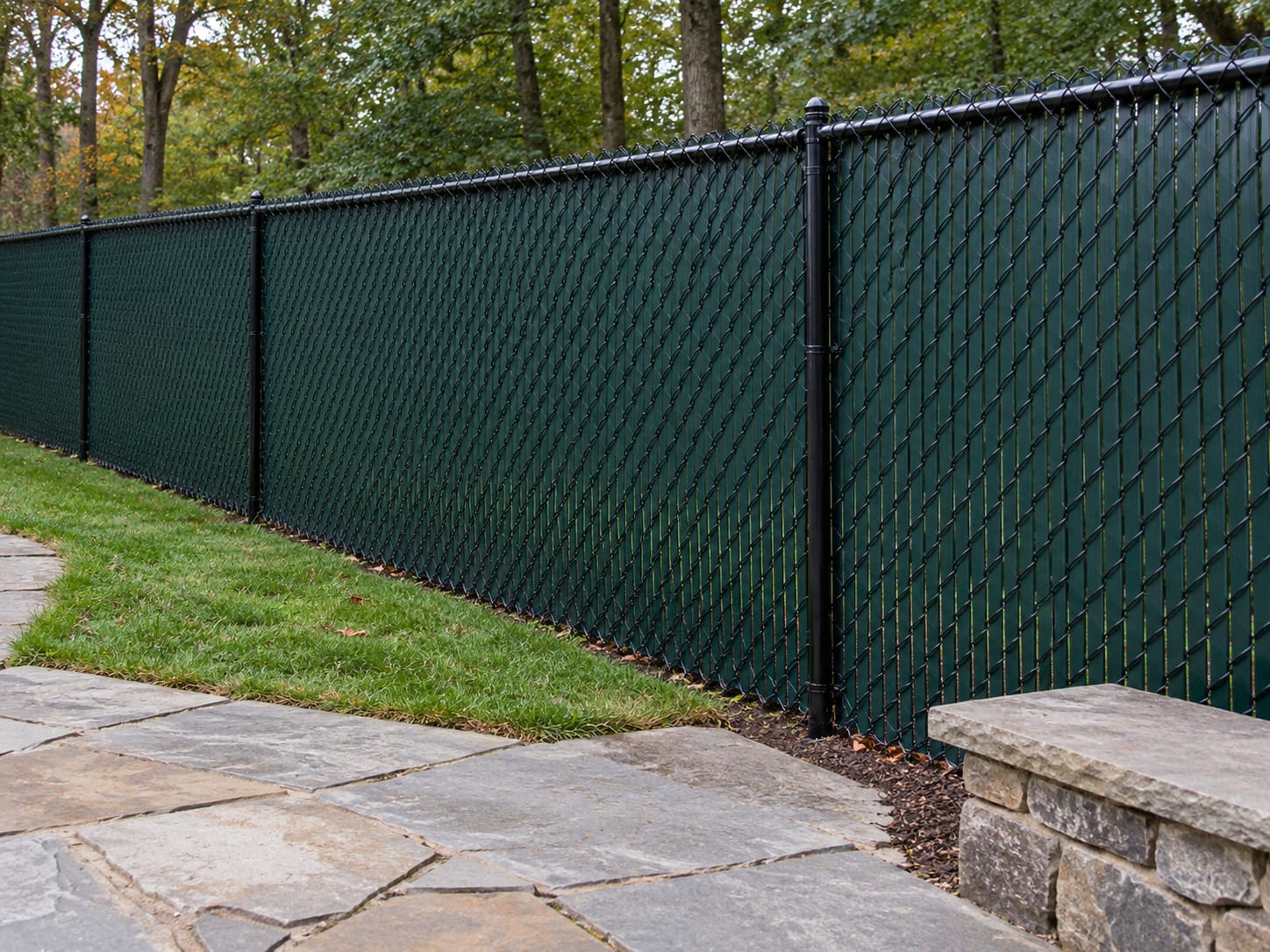
Fence weave uses flat polyethylene strips woven diagonally through the chain-link diamonds. It is flexible and often costs less than rigid inserts. Published privacy figures are approximately 70% to 80%, depending on the product.
Lite or standard slats are narrow vertical inserts made for existing chain link. Published figures commonly fall between approximately 60% and 75%. Top-lock or winged slats use a locking design and more coverage, with published figures around 75% to 90%.
Hedge slats use leaf-like or textured surfaces. They can provide approximately 90% to 100% screening and soften the industrial appearance of chain link. High-coverage or aluminum slats are rigid or double-wall inserts designed for maximum screening, with published figures up to approximately 95% to 98%.
Pexco FinLink is specified for 2-inch chain link in 11, 11.5, or 12 gauge and publishes approximately 90% privacy. Its published warranty is a 25-year pro-rata warranty against breakage under normal conditions. Pexco's Winged Slat product is marketed at approximately 90% privacy and is specified for 9-gauge chain link. Those fit requirements apply to the slat and mesh combination; the posts and footings need their own check for the added wind force.
Screen fabric and coated mesh
Privacy screen fabric is usually knitted or woven HDPE, polypropylene, or coated polyester. It attaches with grommets, ties, or hog rings. Published screening figures range from approximately 80% to 100%, depending on the material.
Ball Fabrics PrivaScreen 90 is knitted HDPE with 90% opacity. CoverSports lists screen products ranging from approximately 85% to 100% shade or visibility blockage. AmeriPacific lists knitted screens at approximately 80% blockage and woven screens at approximately 95% blockage.
A knitted screen may pass more wind than a dense woven screen, but the exact result depends on the product. Fabric is useful when you want a temporary or removable screen, such as around a sports area, dog run, patio, or business perimeter. Reinforced edges, properly spaced fasteners, and UV-resistant material matter when the fabric will remain in place through winter.
Black or green vinyl-coated chain-link mesh is mainly an appearance and corrosion-resistance choice. Merchants Metals describes colored chain link as a way to keep landscaping and architecture visible through the fence. The open mesh still allows substantial visibility. Add slats or fabric when you want actual privacy.
See chain-link fencing options and construction details when you are comparing a new fence with a retrofit.
Hover or tap a row to highlight it.
| Option | Typical published privacy or screening figure | Best fit |
|---|---|---|
| Fence weave | Approximately 70% to 80% | Flexible, lower-cost screening |
| Lite or standard slats | Approximately 60% to 75% | Moderate privacy with some airflow |
| Top-lock or winged slats | Approximately 75% to 90% | More consistent vertical coverage |
| Hedge slats | Approximately 90% to 100% | Dense screening with a textured appearance |
| High-coverage or aluminum slats | Up to approximately 95% to 98% | Maximum screening with rigid inserts |
| Privacy screen fabric | Approximately 80% to 100% | Temporary, removable, or fabric-based screening |
| Colored chain-link mesh alone | No published privacy percentage | Finished appearance while retaining visibility |
Can you retrofit an existing chain-link fence?
Many hand-inserted and locking slat systems are made for existing chain link, and some screen fabrics attach without removing the fabric. A retrofit works when the product fits the mesh and the fence can handle the added force.
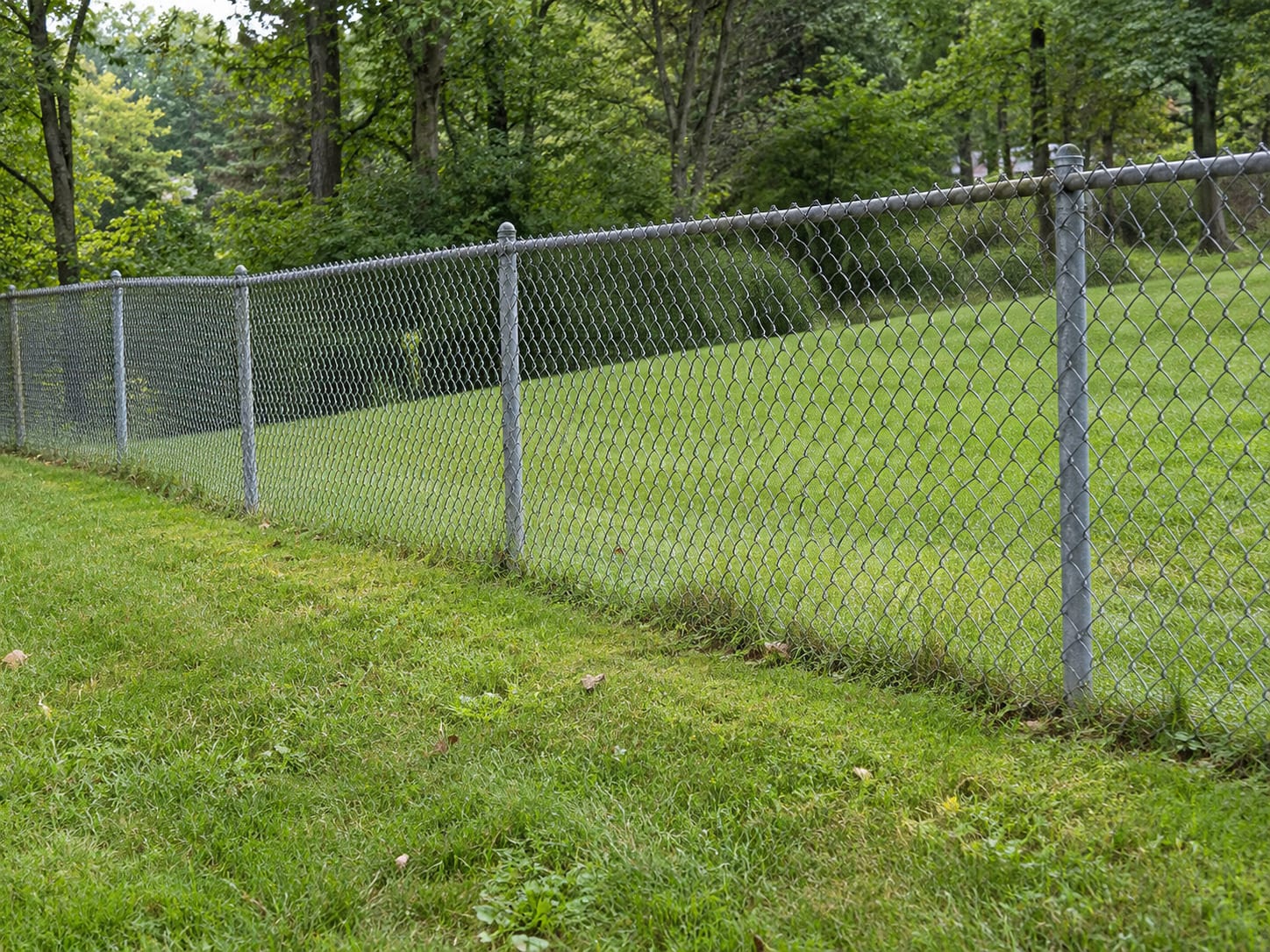
Start by measuring the chain-link diamond size and identifying the wire gauge. Then check the fence height, line-post spacing, terminal posts, corner posts, gate posts, rails, braces, fittings, visible corrosion, leaning, and concrete footings. A 2-inch mesh system designed for 11-gauge chain link is a different installation from a product made for 9-gauge mesh.
A retrofit may need repairs, added posts, tighter spacing, heavier rails, added bracing, or replacement of the existing fence. In western Connecticut, ledge or rocky soil can affect the cost of adding posts or enlarging footings. Ask for the proposed post locations before approving the work.
The privacy material should be treated as part of the fence system. A slat that fits the mesh can still place too much force on undersized or widely spaced posts. Ask the contractor to document the proposed post spacing, post gauge, rail specifications, footing diameter and depth, and wind-load basis in the written quote.
Wind load changes the installation
Open chain link allows substantial airflow. Slats and screen fabric interrupt that airflow, increasing the force transferred to the fabric, rails, line posts, terminal assemblies, gates, braces, and concrete.
The Chain Link Fence Manufacturers Institute product manual states that chain-link fences containing windscreens or privacy slats require a wind-load force-strength analysis for post size and post spacing. It also identifies privacy slats and fences higher than 8 feet as conditions requiring special wind-load consideration.
CoverSports says suitability depends on post depth, post gauge, concrete quantity, wire gauge, wind direction and intensity, and the selected screen's wind passthrough. In some cases, an engineer may need to assess the fence.
There is no single post diameter, gauge, footing depth, or spacing for every property. A contractor should look at the existing line posts, terminal posts, corner posts, gate posts, rails, braces, mesh gauge, concrete, corrosion, and spacing before recommending dense slats or full-height fabric.
Some installation recommendations use closer post spacing when privacy materials are added. Those recommendations are product or installer guidance, not one universal Connecticut rule. A warranty may also require a particular maximum spacing or mesh gauge. Request the exact product warranty before selecting the material.
A contractor should answer these questions in writing:
- What are the existing mesh gauge and diamond size?
- What are the line-post and terminal-post diameters and wall thicknesses?
- How far apart are the posts?
- How deep and wide are the concrete footings?
- What wind-load basis applies to this property?
- Are additional posts, larger posts, heavier rails, braces, or deeper footings needed?
- Does the product warranty impose a maximum post spacing?
- Will the existing gates still operate correctly after screening?
Cost, warranty, and service life
National pricing gives you a starting point, but it is not Connecticut contractor pricing. Angi's 2026 national cost guide lists privacy slats at $3 to $10 per linear foot and privacy screens at about $3 per linear foot. It lists faux ivy at $0.50 to $1 per linear foot, a colored vinyl coating upgrade for new chain link at $10 to $30 per linear foot, chain-link installation at $8 to $40 per linear foot, and chain-link removal at $3 to $5 per linear foot.
Those figures are national estimates. A local proposal may also include inspection or repair of the existing fence, fasteners, grommets, post reinforcement, excavation, concrete, gate changes, removal, disposal, permits, difficult digging, ledge, engineering, taxes, and labor.
Home Depot listed an M-D 6-foot by 10-foot composite privacy-slat package at $89.88 when accessed in 2026. That works out to approximately $8.99 per linear foot for the material package before shipping, taxes, labor, and structural work. Retail prices can change by height, color, stock, and location.
A quote should identify whether each price is per linear foot, per package, or per project. It should also state the product name, fence height, installation labor, structural work, removal, permit responsibilities, quote date, and warranty terms.
Hover or tap a row to highlight it.
| Item | Published cost | Unit and scope |
|---|---|---|
| Privacy slats | $3 to $10 | Per linear foot, national estimate |
| Privacy screens | About $3 | Per linear foot, national estimate |
| Colored vinyl coating for new chain link | $10 to $30 | Per linear foot, national estimate for coating upgrade |
| Chain-link fence installation | $8 to $40 | Per linear foot, national installed range |
| Chain-link fence removal | $3 to $5 | Per linear foot, national estimate |
| M-D composite privacy slat package | $89.88 | One 6-foot by 10-foot retail package, accessed in 2026 |
A warranty gives you a documented coverage period, not a promised service life. Published examples include a 25-year pro-rata warranty for Pexco FinLink, a 30-year pro-rated warranty for SoliTube slats, and a 10-year warranty for FenPro Natural Hedge Slats. Ball Fabrics PrivaScreen 90 publishes a 4-year warranty. CoverSports products range from approximately 3 to 5 years depending on the product, and Acadian publishes a 5-year UV-degradation warranty. Merchants Metals NatureLink lists a 15-year limited warranty for its vinyl-coating system.
Actual service life depends on ultraviolet exposure, snow and ice, wind, abrasion, installation, drainage, tree contact, animals, corrosion, and whether the supporting fence is adequate. A warranty may cover material defects, breakage, UV degradation, color, or coating performance. It may have separate conditions for wind damage, storm damage, improper installation, excessive post spacing, or use outside the product specification.
Local permits and town rules
Start with the zoning or land-use office and building department in the town where the fence is located. Connecticut zoning authority is local. Connecticut General Statutes §8-2 authorizes municipal zoning regulations governing structures, yards, locations, uses, and special permits.
You can review the statewide permit overview, Do You Need a Permit for Fence Installation in CT?, then confirm the current requirements with your municipality.
Ask whether the town requires a zoning permit, building permit, zoning-compliance approval, inspection, survey, plot plan, or approval for adding slats to an existing fence. Ask about height in the front, side, and rear yards, corner-lot sight lines, property-line setbacks, wetlands, drainage easements, septic systems, historic districts, and pool barriers.
Brookfield states in its zoning regulations that fences under 6 feet may be built in residential zoning districts without zoning approval, while fences 6 feet or higher require prior zoning approval and a certificate of zoning compliance after construction. Brookfield also states that fences designed to inhibit visibility, including slats, panels, and boards, may not exceed 8 feet, while other fence types may reach 12 feet. Its FAQ describes a different permit threshold, so confirm the current requirement with the Brookfield Building Department before ordering materials. See the Brookfield fence permit overview for related local questions.
New Milford states that no fence over 8 feet may be erected on a residential lot. Its zoning-permit guidance asks for a survey or plot plan showing the proposed structure, dimensions, and distances to property lines, and recommends contacting Building, Inland Wetlands, Health, and Sewer departments when additional approvals may apply.
Nearby New York towns have their own rules. Kent, New York, states that a fence up to 6 feet may be exempt from a permit when it is in a side or rear yard, while a 6-foot fence is not allowed within front-yard setbacks. Kent also lists sight-distance restrictions near street intersections. The Town of Poughkeepsie requires a fence-permit application with a survey or similar sketch, property lines, drainage patterns or swales, easements, trees over 8 inches in diameter at breast height, nearby structures, fence height, style, and material. The application accessed in 2026 lists a $75 fee.
A permit exemption, height limit, setback, or application checklist from one town should not be carried into another town. Confirm the rule with the local zoning or land-use office, then contact the building department when the town identifies a building permit or inspection requirement.
Before digging, call Connecticut Call Before You Dig at 811 or 1-800-922-4455. If the fence is near inland wetlands or a watercourse, contact the town inland-wetlands agency before excavation. If the fence will serve as a pool barrier, confirm the applicable State Building Code edition and local enforcement requirements. The current 2022 Connecticut State Building Code includes a 48-inch minimum barrier height, limits on openings, self-closing and self-latching gate requirements, and special chain-link rules for openings larger than 2 1/4 inches.
A practical order for a privacy retrofit
- 1
Confirm the town
Ask the zoning or land-use office and building department about height, permits, setbacks, wetlands, and pool-barrier rules.
- 2
Locate utilities
Call 811 before any post excavation.
- 3
Inspect the fence
Measure mesh, gauge, height, post spacing, gates, braces, rails, corrosion, and concrete.
- 4
Select the material
Compare privacy percentage, airflow, color, product fit, warranty, and permanence.
- 5
Set the structure
Repair or reinforce posts, rails, braces, gates, and footings as the written proposal requires.
- 6
Install the screen
Place slats or fabric according to the product instructions and approved spacing.
- 7
Close out the work
Confirm inspections, collect the warranty, and keep the final itemized proposal.
Frequently Asked Questions
Can privacy slats be added to an existing chain-link fence?
Yes, many hand-inserted and locking slat systems are made for existing chain link without removing the fabric. The mesh opening, wire gauge, fence height, post spacing, footing condition, and product warranty must match the retrofit.
Do privacy slats affect wind load?
Yes, privacy slats reduce open area and transfer more wind force to the fence system. Higher screening, taller fences, rigid inserts, exposed locations, and weak or widely spaced posts increase the need for a structural review.
What is the best privacy screen for a chain-link fence?
The best screen depends on the needed privacy percentage, wind exposure, appearance, budget, and permanence. A lighter knitted screen may suit a windy location, while rigid locking slats or dense fabric may suit a permanent installation where stronger screening is needed.
How long do chain-link privacy slats last?
Published warranties for selected slat systems range from 10 years to 30 years. Actual service life depends on UV exposure, winter weather, abrasion, vegetation, corrosion, installation, mesh compatibility, post spacing, and footing strength.
Chain Link Privacy Decisions
1. Which option usually provides the highest published screening?
2. What should happen before digging new or reinforced fence posts?
3. What is black or green vinyl-coated chain link primarily used for?
4. Which cost is a national estimate from Angi's 2026 guide?
Pick an answer to begin.
Final Thoughts
A chain-link privacy retrofit can be a practical way to screen a patio, pool area, dog run, garden, farm area, sports area, or business perimeter without replacing the entire fence. Start with the town requirements, then match the privacy material to the existing mesh and supporting posts. A written proposal should show the product, privacy percentage, wind-load assumptions, structural work, price unit, permits, and warranty.
My Fence Guy can inspect the existing fence, discuss the right level of screening, and put the proposed materials and structural work in writing. Call us at (203) 746-1100 for a free estimate, or reach out through our contact page.
Chain Link Privacy Terms
Tap a term to see what it means.
Fence weave. Flexible polyethylene strips woven diagonally through chain-link diamonds.
More about fences
Privacy Fence Ideas Between Neighbors That Fit Connecticut Rules
Privacy fence ideas between neighbors that fit Connecticut height limits: board on board, shadowbox, toppers where allowed, plantings and patio screens.
Read the guide to Privacy Fence Ideas Between Neighbors That Fit Connecticut RulesHow Deep Should Fence Posts Be in Connecticut? Frost Line and Footings
How deep to set fence posts in Connecticut: frost depth, manufacturer depth rules by fence height, concrete or gravel, and how frost heave lifts posts.
Read the guide to How Deep Should Fence Posts Be in Connecticut? Frost Line and FootingsInstalling a Fence on Rocky Soil and Ledge in Western Connecticut
Rocky soil and ledge are common in western Connecticut, and fences still go in. Core drilling, pinned posts, surface mounts, and how ledge affects cost.
Read the guide to Installing a Fence on Rocky Soil and Ledge in Western Connecticut