
Commercial Fencing in Sherman, CT: Security, Gates, Costs
By Tony Pellicone22 min readPublished
- commercial fencing
- sherman ct
- chain link fencing
- connecticut
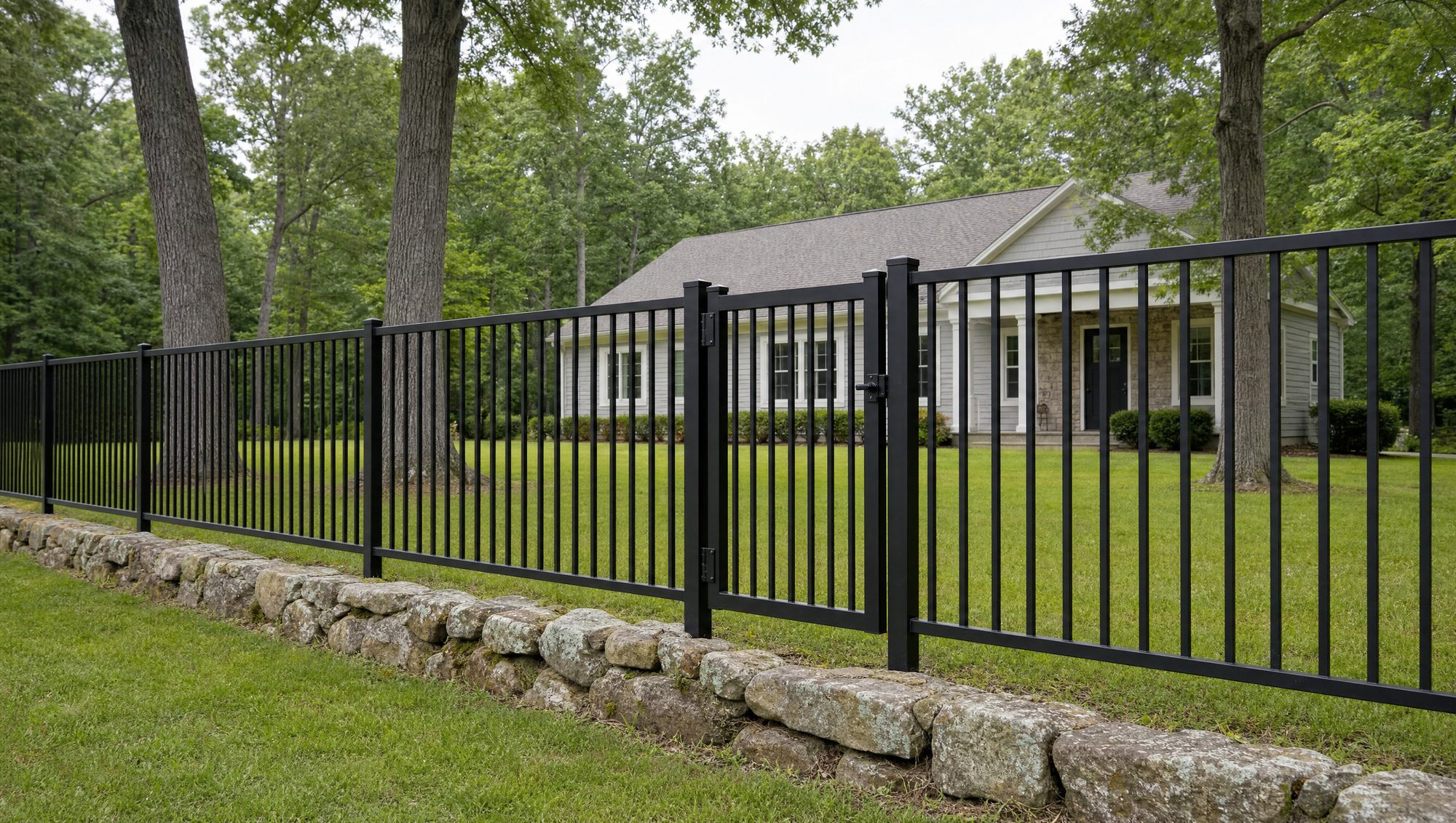
Something usually forces the conversation. A trailer walks off the yard overnight, an insurer starts asking what secures the property, a tenant complains about who is cutting through the parking lot, or a vehicle gate finally quits in the middle of a delivery. So, you start collecting bids for commercial fencing in Sherman, CT, and they come back as a price per foot with almost nothing behind it. No gate foundation. No mention of who calls in the utility markings. No plan for keeping the loading dock open while the old fence comes out. That is the part that should worry you, because a commercial fence is not a product you buy off a shelf, it is a system that has to work with how your property actually runs every day. A fence that stops a thief but blocks a fire lane or strands a box truck has not solved anything, it has just moved the problem. The good news is that most of this gets decided on paper, long before anyone digs, and the questions are not complicated once you know which ones to ask.
Key Takeaways
Start with the operation, not the fence
Security risk, vehicle and pedestrian flow, deliveries, snow removal, and emergency access should decide height, material, grade, and gate placement.
Gates are the project
Vehicle gates, operators, safety devices, access control, and their foundations often drive more cost and more risk than the fence line itself.
A building permit is not a zoning answer
Sherman lists a zoning permit for fences on its fee schedule, and commercial sites can still face site-plan, visibility, wetlands, and access review.
Commercial grade is a written spec
ASTM F1043, F900, and F567 give you real references to hold a bid against instead of the word "heavy duty."
Plan to stay open
Phasing, temporary security, traffic control, and restoration belong in the scope, or they become surprises and change orders.
What Is a Commercial Fence Actually Supposed to Do?
A residential fence usually has one job. A commercial fence has six or seven at once, and they sometimes pull against each other. It may need to deter theft, delay entry long enough for a response, keep pedestrians away from truck traffic, screen a dumpster from the street, define a leased boundary, control which employees reach which areas, and still let a fire truck in at two in the morning. Before anyone talks about mesh size or picket spacing, the honest first question is which of those jobs matters most on your property.
That answer changes everything downstream. If surveillance cameras cover the yard, privacy slats may work against you by blinding them. If the goal is deterrence at a public-facing entrance, an open ornamental line may do more than a taller solid wall that just hides what is happening behind it. If the real risk is a truck backing into the corner post every winter, mass and foundation matter more than height. Business fencing in Sherman also has to survive a working site: plow trucks, pallet jacks, delivery drivers in a hurry, and snow piled against the fabric for three months.
The planning list is longer than most people expect. Property use, hours of operation, public access, delivery routes, waste service, equipment storage, snow storage, employee credentials, emergency response, future expansion, and who is responsible for maintenance all shape the design. Skip that conversation and you end up with a fence that is technically correct and operationally wrong.
Which Fence Fits Your Sherman Business Property?
There is no single commercial fence, because there is no single commercial property. What works around a contractor's equipment yard would look wrong across the front of a professional office, and what suits an office entrance would not last a season around a storage yard. The useful way to sort this is by how the property is used and who is on it. Here is how the common property types tend to land.
Retail and Office Properties
These sites usually lead with appearance and pedestrian safety. The fencing work tends to concentrate on service areas rather than the perimeter: dumpster enclosures, mechanical equipment screening, controlled back-of-house access, and keeping customer circulation clear of deliveries. An open ornamental line out front with chain link behind the building is a common and sensible split.
Multifamily and Association Properties
Apartment and association properties often need pool enclosures, pet areas, parking boundaries, playground separation, and utility screening, each with its own rules. Pool barriers in particular are their own project with their own code requirements, not a section of yard fence. Controlled access for residents adds gates, credentials, and a maintenance obligation somebody has to own.
Schools and Childcare Facilities
Fencing here separates play areas from parking, service zones, and public access, and gate operation carries real weight. Emergency egress, gate direction, latch height, and who can open what during an incident all need deliberate answers. These projects reward planning and punish improvisation.
Contractor Yards and Service Businesses
Equipment, vehicles, materials, and trailers need durable containment and wide gates, which usually points toward heavy chain link or steel. This is where residential-grade components fail fastest, because the fence gets hit, leaned on, and plowed against. Gate width and foundation size matter more here than almost anywhere else.
Warehouses and Light Industrial Properties
Taller fences, heavier framing, controlled vehicle access, anti-climb design, and integration with cameras or gate operators are common needs. Industrial fencing is a different specification from a commercial office line, not the same fence made taller. Truck movement patterns should drive gate placement before aesthetics do.
Restaurants and Hospitality Properties
Patio boundaries, dumpster enclosures, employee service areas, and delivery access are the usual list. Appearance matters on the customer side and durability matters on the service side, which often means two different systems on one property. Municipal and institutional sites add another layer, since their projects may require detailed submittals, ASTM references, bonds, or public bidding.
What Makes a Commercial Security Fence Different?
Height is the first thing people reach for and the least useful thing on its own. A commercial security fence in Sherman should be selected by threat and operational need: is the goal deterrence, delay, visibility, privacy, or controlled access? Are vehicles or pedestrians the concern? Is climbing realistic here? Must cameras see through the line? Answer those and the specification starts writing itself.
Commercial Chain Link
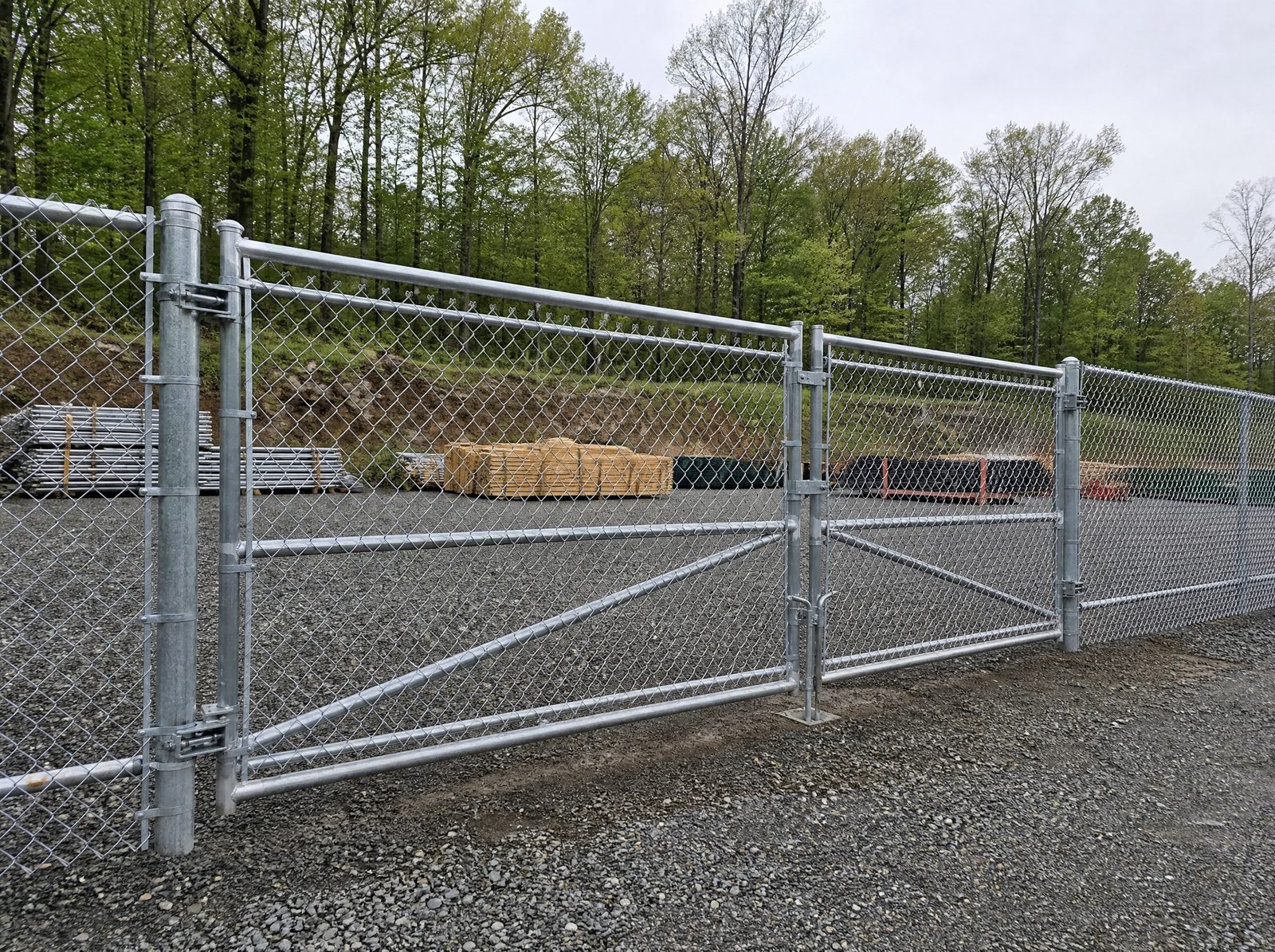
Chain-link fencing stays the workhorse for long perimeters, equipment yards, utility areas, and wide gates, because it gives visibility, airflow, and flexible heights at a reasonable cost. The quality lives in the specification, not the word "chain link": fabric gauge, mesh size, coating, terminal and line post dimensions, top rail, bottom tension wire, brace rails, tension bars and bands, fittings, and gate hardware. Smaller mesh resists climbing and cutting better than standard fabric. ASTM F1043 covers strength and protective coatings for steel industrial fence framing, and ASTM F567 is the standard practice for chain-link installation, which gives you two references a serious bid can name.
Ornamental Aluminum
Aluminum fencing suits offices, multifamily properties, entrances, pools, and any public-facing boundary where the fence is part of how the property reads. It does not rust the way carbon steel can, and it racks to follow grade. Height, picket spacing, rail count, post dimensions, panel grade, and gate reinforcement are what separate a commercial panel from a residential one.
Ornamental Steel
Steel offers more mass and more custom fabrication than aluminum, which matters where impact risk, long spans, or a specific fabricated detail is in play. Ornamental styles in steel can carry a heavier gate leaf and take more abuse. The trade is maintenance of the coating over time.
Privacy and Screening
Screening around dumpsters, mechanical equipment, outdoor storage, loading areas, and employee yards can use chain link with privacy slats, vinyl fencing, board-on-board wood fencing, composite panels, or masonry combined with fencing. The catch is wind. Privacy increases wind load, so slats or solid panels demand posts, rails, and footings sized for the added surface area, not the same footings a see-through line would use. It is also worth being honest about gaps: a slatted fence is visual screening, not a sealed wall.
Hybrid Systems
Most commercial properties end up hybrid, and that is the right answer rather than a compromise. Ornamental across the public-facing frontage, chain link around the service and storage perimeter, screening at the dumpster, and the appropriate gate at each opening. One material for the whole site usually means you overspent on the back or underbuilt the front.
How Should Gates and Access Control Be Planned?
Gates are where commercial fence projects succeed or fail. They are the only moving part, they take the most abuse, they carry the liability, and they are the piece most likely to be missing from a thin bid. Treat every opening as its own small system with a post, a foundation, hardware, a swing or slide path, and a plan for snow. Get the fence line wrong and you have a cosmetic problem; get the vehicle gate wrong and you have a truck idling in the road.
Pedestrian Gates
Width, accessibility, panic hardware, self-closing operation, latch type, credentials, and emergency egress all belong in the specification. A gate people use fifty times a day needs hinges and a latch chosen for that cycle count. If it is on an egress path, the hardware is a life-safety decision, not a preference.
Double Swing Gates
These are the common answer for service and vehicle access. Leaf size, post dimensions, hinges, a center stop, drop rods, wind exposure, snow, and grade all decide whether the gate still lines up in year three. ASTM F900 is the standard specification for industrial and commercial swing gates, and it is a fair thing to ask a bidder to meet.
Cantilever and Track Gates
Cantilever slide gates work where there is no room to swing, but they need a clear slide path, a counterbalance section, real foundations, and quality rollers. Ground track gates cost less but fight snow, ice, gravel, and debris in a Connecticut winter, so drainage and maintenance become part of the decision. Neither is a small pour and a hope.
Automated Gates
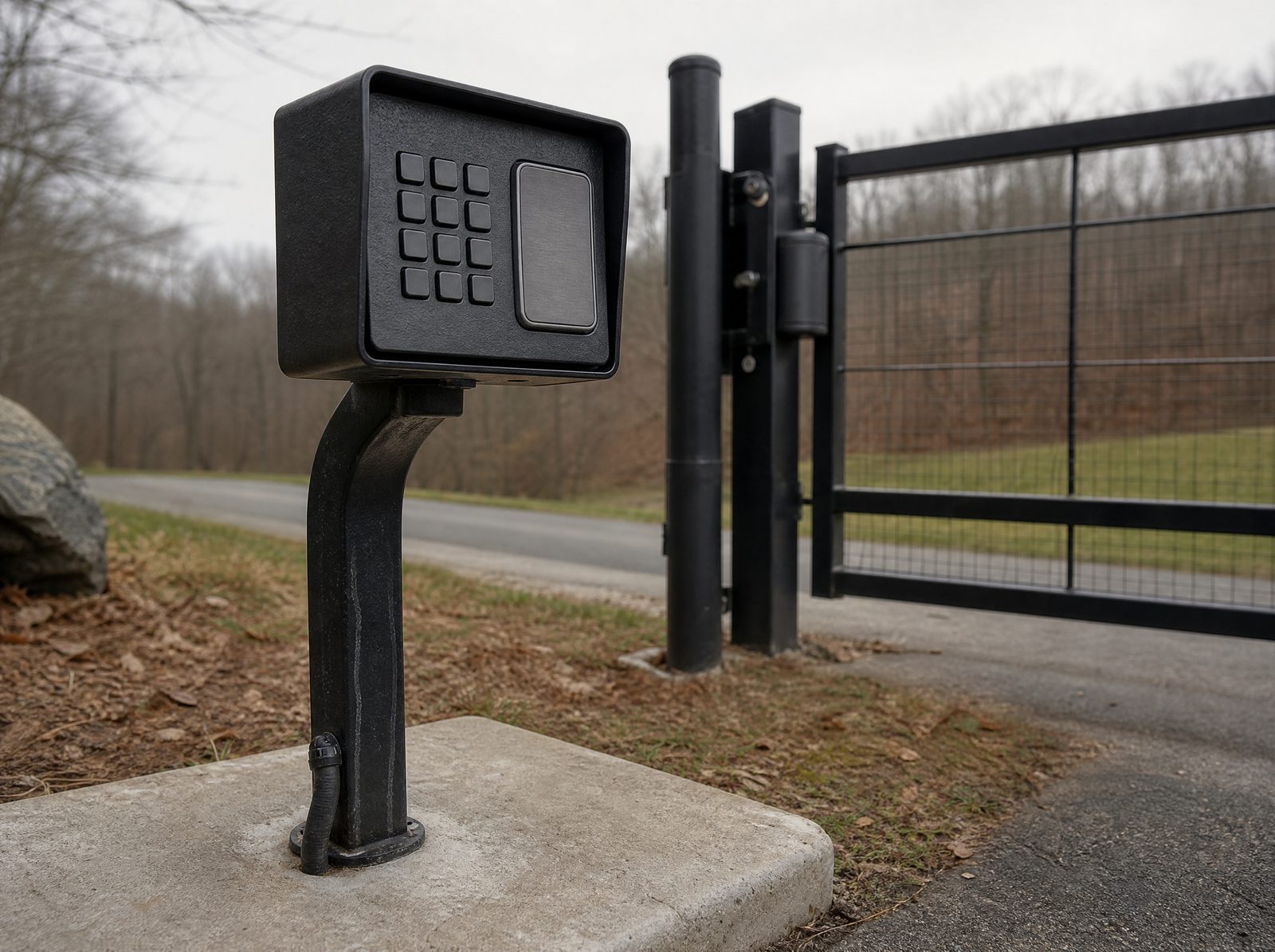
Automation is a trade in itself. It brings electrical work, a gate operator, access control, photo eyes, safety loops, edge sensors, emergency release, battery backup, intercoms, keypads or card readers, and vehicle detection, plus ongoing service. ASTM F2200 covers automated vehicular gate construction and UL 325 covers the operators and their safety requirements. Electrical and low-voltage work may require separately licensed trades, and the coordination between those trades is exactly where projects stall. Estate and driveway gates on commercial entrances follow the same logic.
Safety and Emergency Access
Fire and emergency responders have to get in, and that has to be settled at design, not discovered during an incident. Knox box, key switch, siren detection, or a staffed answer, whatever the local expectation is, gets confirmed before the gate is ordered. And a safety device that fails should be repaired, never bypassed, because a defeated photo eye is a liability sitting in your driveway waiting for a bad day.
Does Sherman Require a Permit for Commercial Fencing?
Sherman processes fence work through its Planning and Zoning Department, and the town's fee schedule lists a zoning permit for fences under miscellaneous structures and equipment. Sherman lists a zoning permit for fences on its current fee schedule, and a pool barrier requires a permit regardless of height. The mistake commercial owners make is treating that building-permit exemption as the whole answer. It settles one question and leaves several open, especially on a commercial site with an approved site plan behind it. Confirm the current requirements with Sherman Planning and Zoning before ordering materials, since the town's regulations and fee schedule do get revised.
Surveys, Easements, and Site Plans
Commercial parcels are busy underneath. Utility easements, shared driveways, cross-access agreements, drainage easements, fire lanes, leased areas, and property-management boundaries all constrain where a fence can go. A current survey or civil site plan is often the right starting point, because curbs, pavement edges, retaining walls, and the old fence line do not necessarily mark the legal boundary. Recorded plans typically live with the town clerk.
Fire, Delivery, and Circulation
A fence that meets every dimensional rule can still fail the site. Fire apparatus routes, delivery truck turning paths, parking circulation, and snow storage are real constraints, and they are cheaper to respect on paper than to fix in concrete. Existing site-plan conditions may already dictate some of this.
Wetlands, Drainage, and Visibility
Sherman properties can involve wetlands and watercourse setbacks, drainage structures, and sight triangles at driveways and corners. Height limits near a street, driveway visibility, security toppings, automated gate equipment, lighting, and access control can all draw review. Private lease or association requirements sit on top of the town's rules, not instead of them.
Call 811 and Private Utilities
Every post hole is an excavation, so a valid Call Before You Dig request goes in before digging, as Connecticut requires. Public marking is only half the picture on a commercial site. Parking lot lighting, fire alarm lines, gate operator power, communications, irrigation, private gas, fuel systems, generator feeds, sewer laterals, security loops, access-control conduit, and fiber are often privately owned and may need a separate private locate. The contract should name who obtains public markings and who arranges private locating.
How Do You Keep the Business Open During Installation?
Most commercial projects cannot go dark while a fence goes up. That means the schedule is a design problem, not just a calendar. Phasing typically runs through temporary security, delivery and staging, removal of the old fence, keeping one active entrance, installing perimeter sections, hanging gates, coordinating electrical and access control, testing, and turnover. The written plan should say which entrances stay open, what the work hours are, how deliveries are handled, who is responsible for security after hours, what happens to parking, and how emergency access is preserved throughout.
Safety planning matters more when the work happens around your employees, tenants, customers, and the public. Work-zone barricades, pedestrian detours, equipment routes, excavation protection, material staging, dust and noise, daily cleanup, and securing unfinished openings overnight all belong in the plan. OSHA requires that workers exposed to public vehicular traffic wear suitable high-visibility garments, and its excavation rules address underground installations, water, access, and inspection. A contractor who cannot describe how they will protect your traffic has not thought about your site.
What Holds a Commercial Fence Up in Sherman Soil?
Sherman sites bring ledge, rocky soil, slopes, retaining walls, pavement, drainage structures, wet ground, snow storage, curbs, and truck traffic, sometimes all on one parcel. Foundation design is not one number. It depends on fence height, wind exposure, whether slats or solid panels are in play, framing grade, gate width and weight, operator load, soil, frost, ledge, pavement, vehicle impact risk, and the manufacturer's or engineer's requirements. Connecticut's foundation code frames why frost protection matters even where a fence is not regulated like a building footing.
Wide vehicle gates and automated systems usually need substantially more support than anything else on the property. A twenty-foot gate leaf multiplies every force at the hinge post, and an operator adds cycling load on top. That is why undersized gate footings are the single most common commercial failure we see: the fence is fine and the gate is dragging by spring. Drainage under a post matters as much as depth, because water that sits and freezes is what moves things.
What Drives Commercial Fence Cost in Sherman?
There is no honest one-price-fits-all figure for commercial fence cost in Sherman, and any bid that arrives as a single per-foot number is hiding the parts that matter. Published cost-per-foot guides like Angi's fence cost breakdown are general consumer context and may not reflect commercial specifications, gates, automation, or the cost of working around an operating business. Linear footage and height set a baseline, then the real drivers stack on: material and grade, mesh, gauge, rails or panel construction, privacy slats, pedestrian gates, vehicle gates, cantilever hardware, automation, access control, electrical and low-voltage coordination, and foundations.
The site adds its own line items. Ledge and rock, pavement sawcutting and restoration, removal and disposal of the old fence, traffic control, phased work, permits, professional design, security toppings, bollards, special coatings or colors, public-bid or prevailing-wage requirements, and closeout documentation with testing all carry cost. On many commercial projects, the gates and their foundations outweigh the entire fence line. That is not padding, it is where the engineering is. The way to compare bids is to make them scope the same items, then look at the differences.
Hover or tap a row to highlight it.
| Cost Driver | Why It Matters |
|---|---|
| Footage, height, and grade | Longer, taller, and commercial or security grade means more framing, more posts, and more labor than a residential line. |
| Gates and hardware | Pedestrian, double swing, and cantilever gates each need their own posts, foundations, and hardware sized for real cycles. |
| Automation and access control | Operators, photo eyes, safety loops, edge sensors, keypads, and the licensed electrical work behind them add a whole trade. |
| Screening and wind load | Privacy slats and solid panels raise wind load, which drives bigger posts, more rails, and deeper footings. |
| Site conditions | Ledge, rock, pavement sawcutting, drainage, and restoration turn an easy run into a slow one. |
| Removal, phasing, and traffic control | Taking out the old fence, keeping the business open, and protecting traffic are real line items, not rounding. |
What Does Commercial Fence Installation in Sherman Look Like?
A commercial fence installation in Sherman follows a predictable order, and knowing that order helps you spot a crew that plans to skip steps. It starts with goals and documents, not with materials. Compliance and utility checks land before excavation, gates and controls get tested before turnover, and the site gets restored to what the scope promised. The sequence below is roughly how a project should run.
How a Sherman Commercial Fence Project Runs
- 1
Step 1: Define Security and Operations
We walk the site to pin down the security goal, traffic flow, deliveries, emergency access, screening needs, and hours of operation.
- 2
Step 2: Review Documents and Town Requirements
Surveys, site plans, easements, and leases get reviewed alongside Sherman's zoning, site-plan, wetlands, and visibility requirements.
- 3
Step 3: Select the System and Write the Spec
Material, height, grade, coating, gates, operators, safety devices, and foundations are documented with ASTM references and warranties.
- 4
Step 4: Plan Phasing, Safety, and Utilities
Work hours, open entrances, temporary security, and traffic control are set, and public marking plus private locating are arranged.
- 5
Step 5: Remove, Prepare, and Set Framing
Approved fencing comes out, the route is cleared and sawcut where needed, and terminal, corner, line, and gate posts are set to spec.
- 6
Step 6: Gates, Controls, Restoration, and Turnover
Fabric or panels go up, gates and access control are aligned, wired, and tested, the site is restored, and keys, codes, manuals, and records are handed over.
How Do You Vet a Commercial Fence Contractor in Sherman?
Registration and insurance are the floor, not a selling point. Connecticut requires home improvement contractors, including fence installers, to register with the Department of Consumer Protection, and the state is direct that projects require a contract and a registered contractor. Verifying any contractor's registration takes a couple of minutes on the state portal, and it is worth doing every time. Past that floor, a commercial fence contractor in Sherman should be able to talk about commercial project experience, written specifications, ASTM references, a safety plan, utility marking, subcontractor and electrical-trade coordination, permit responsibility, phasing, traffic and pedestrian control, cleanup and restoration, warranty, maintenance support, closeout documentation, and how change orders get priced.
What the Written Proposal Should Include
The proposal is the product. Before work starts, hold any bid against this list:
- Drawings or layout: The fence route, gate locations, and openings, not a verbal description.
- Material and grade: Manufacturer, style, coating, and commercial or industrial grade, not just "chain link."
- ASTM references: The standards the framing, gates, and installation are built to.
- Posts and foundations: Terminal, line, corner, and gate post sizes with footing detail.
- Gates and operators: Type, width, leaf construction, hardware, and operator model.
- Safety devices and access control: Photo eyes, loops, edge sensors, emergency release, credentials.
- Electrical coordination: Who runs power and low voltage, and under which license.
- Removal and temporary security: What comes out, who hauls it, and what protects the site overnight.
- Traffic control and phasing: Which entrances stay open and when work happens.
- Permits and utility locating: Who files, who arranges private locates.
- Restoration: Pavement, curbing, and landscaping repair included in the scope.
- Schedule, payments, and warranty: Timeline, lead times, payment schedule, workmanship and manufacturer terms.
- Closeout and change orders: Keys, codes, manuals, test records, and how surprises like ledge get priced.
Where Commercial Fence Projects Go Wrong
The failures repeat, and they are avoidable. Choosing by height and price alone, undersizing gate foundations, using residential-grade components on a site with commercial traffic, and adding privacy slats without a wind review are near the top of the list. The rest are planning gaps: no snow plan, no temporary security during removal, unmarked private utilities, ignored easements, automated gates installed without safety coordination, no restoration scope, and bids compared against each other when they describe different jobs. A commercial fence company in Sherman worth hiring should raise most of these before you do.
Once the fence is up, inspection keeps it working. Look at posts, fittings, fabric tension, rails, coatings, gate alignment, hinges, latches, operators, photo eyes, safety loops, edge sensors, locks, credentials, bottom gaps, slats, vegetation, drainage, and impact or plow damage on a schedule and after storms, break-ins, or gate faults. Automated gates need manufacturer-directed service and testing, and a broken safety device is never a permanent repair.
Frequently Asked Questions About Commercial Fencing in Sherman, CT
Q: What type of commercial fence is best?
A: There is no single best system. The right one depends on security risk, visibility, privacy, gates, traffic, appearance, site conditions, and budget. Chain link is flexible for long perimeters and wide gates, while ornamental aluminum or steel often suits public-facing areas better.
Q: Does commercial fencing require a permit in Sherman?
A: Sherman lists a zoning permit for fences on its current fee schedule, and a pool barrier requires a permit regardless of height. Commercial projects can still face zoning, site-plan, visibility, wetlands, or access review, and Sherman's fee schedule lists a zoning permit for fences, so confirm current requirements with the town.
Q: Can a commercial gate be automated?
A: Yes, but the gate, operator, access control, electrical work, safety devices, emergency release, and maintenance plan have to be coordinated as one system. ASTM F2200 and UL 325 cover the construction and operator safety side, and the electrical work may need a separately licensed trade.
Q: What is ASTM F1043?
A: ASTM F1043 is a standard specification covering strength and protective coatings for steel industrial fence framing. Naming it in a bid tells you the framing is built to a defined standard rather than to whatever was on the truck.
Q: What is ASTM F900?
A: ASTM F900 is the standard specification for industrial and commercial swing gates. It is a useful reference when you are comparing gate construction between bids.
Q: How much does commercial fencing cost in Sherman?
A: Cost depends on footage, height, material, grade, screening, gates, automation, access control, foundations, ledge and site conditions, removal, traffic control, phasing, permits, and restoration. Consumer per-foot averages rarely reflect commercial specifications, which is why a site-specific estimate is the only reliable number.
Q: Can commercial fence installation be phased?
A: Yes. Phasing can keep an entrance open, protect deliveries and emergency routes, and provide temporary security while the work progresses. The phasing plan should be written into the scope, including work hours and after-hours security responsibility.
Q: Who handles utility marking on a commercial fence project?
A: The party doing the digging should make sure there is a valid Connecticut Call Before You Dig request is complete before excavation. Privately owned site utilities like gate power, lighting, irrigation, and access-control conduit are often not covered by public marking and may need a separate private locate, so the contract should say who arranges it.
Q: How often should commercial gates be inspected?
A: Inspect gates routinely and after impacts, storms, snow events, or faults. Automated systems should follow manufacturer service intervals and safety-device testing requirements, and a failed safety device should be repaired rather than bypassed.
Test Your Commercial Fencing Knowledge
1. What should decide a commercial fence design first?
2. In Sherman, does the building permit question settle a commercial fence project?
3. Which ASTM standard covers industrial and commercial swing gates?
4. What happens when you add privacy slats to a chain-link fence?
5. A photo eye on an automated gate stops working. What is the right move?
Pick an answer to begin.
Final Thoughts
Commercial fencing in Sherman, Connecticut comes down to a short sequence done in the right order. Define what the fence has to accomplish for the operation, pick a system and a grade that match the traffic and the risk, plan every gate as its own system with foundations and safety devices sized for real use, confirm the town's zoning and site-plan requirements instead of stopping at the building-permit exemption, mark the utilities including the private ones, and write it all down before anyone digs. Get that far and the material choice and the price start to make sense on their own.
The written specification is the product you are actually buying. A proposal that names material grade, framing, foundations, gate hardware, safety devices, utility locating, temporary security, restoration, phasing, and warranty is a plan you can hold someone to, and it lets you compare bids that are genuinely the same job. Done right, the perimeter quietly does its work for decades while deliveries, plows, and fire access all keep moving.
If you are planning commercial fencing for a Sherman property, we would be glad to walk the site and give you a straight answer. My Fence Guy is a family-owned, licensed and insured contractor with an office right here in Sherman, and we install commercial, industrial, and agricultural fencing in chain link, aluminum, ornamental, vinyl, and wood, plus security and privacy systems, gates, and railings. We handle the layout, the permit and utility questions, the gate and access-control coordination, and the site conditions that decide whether a fence holds its line. Call us at (203) 746-1100 for a free estimate, or reach out through our contact page.
Commercial Fencing Key Terms
Tap a term to see what it means.
ASTM F1043. The standard specification covering strength and protective coatings for steel industrial fence framing, a real reference a commercial bid can name.
More about fences
Pet Fencing in Sherman, CT: What Actually Holds a Dog
Your dog already knows how it would get out. Pet fencing in Sherman, CT: height for the jumpers, buried edges for the diggers, spacing for the slippers.
Read the guide to Pet Fencing in Sherman, CTChain Link Fencing in Sherman, CT: Beyond Height and Color
Chain link fencing in Sherman, CT is mostly framing you never see. Gauge, mesh, coating, and terminal posts decide whether the fence stays tight.
Read the guide to Chain Link Fencing in Sherman, CTIndustrial Fencing in Sherman, CT: A Facility Manager's Guide
Industrial fencing in Sherman, CT is a system, not a barrier. What facility managers should know about security grade, gates, permits, and uptime.
Read the guide to Industrial Fencing in Sherman, CT