
Deer Fence Guide for Connecticut Yards and Gardens: Height, Materials and Cost
By Tony Pellicone12 min readPublished
- farm fencing
- agricultural fencing
- homeowner guide
- connecticut
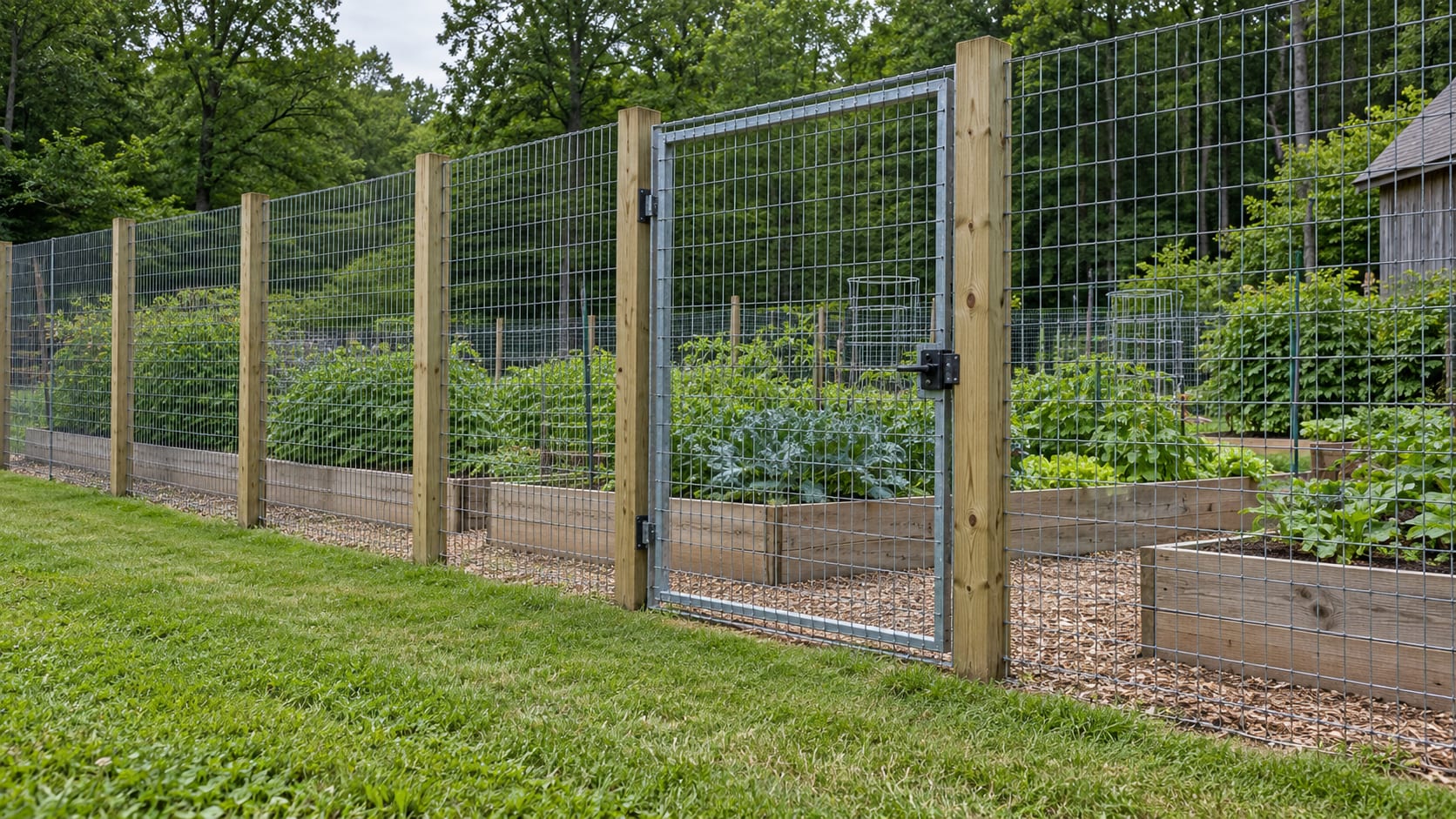
An 8-foot fence is the usual target for keeping deer out of a Connecticut yard, garden, orchard, or planting area. Connecticut DEEP says deer can jump up to 8 feet, while the Connecticut Agricultural Experiment Station recommends deer-exclusion fences from 7 to 10 feet high. The fence must reach close to the ground, include a secure gate, and fit your town's zoning rules.
The least expensive physical option is often polypropylene mesh, while woven wire costs more but provides a stronger year-round barrier. Electric fencing can cost less at the start, but it needs grounding, vegetation control, inspection, and maintenance. Your final price depends mostly on linear footage, height, gates, and how much site work the fence line needs.
Key Takeaways
Recommended height
An 8-foot fence is the common Connecticut target for passive deer exclusion.
Ground contact
Keep the bottom close to ground level because deer may crawl beneath a gap.
Material choice
Plastic mesh costs less historically, while woven wire provides a durable physical barrier.
Electric systems
High-tensile electric fencing can work well when properly grounded, marked, and maintained.
Local approval
Town zoning decides height, setbacks, materials, and permits for many deer-fence projects.
Gates matter
A gate should be about as tall and secure as the adjoining fence, with no large gap below it.
How tall should a deer fence be?
Connecticut DEEP recommends an 8-foot fence when it is properly installed and maintained. CAES gives a broader recommendation of 7 to 10 feet and states that an 8-foot fence is sufficient in most situations, although deer can occasionally jump that high. The bottom should sit close to ground level because deer may crawl underneath a raised edge.
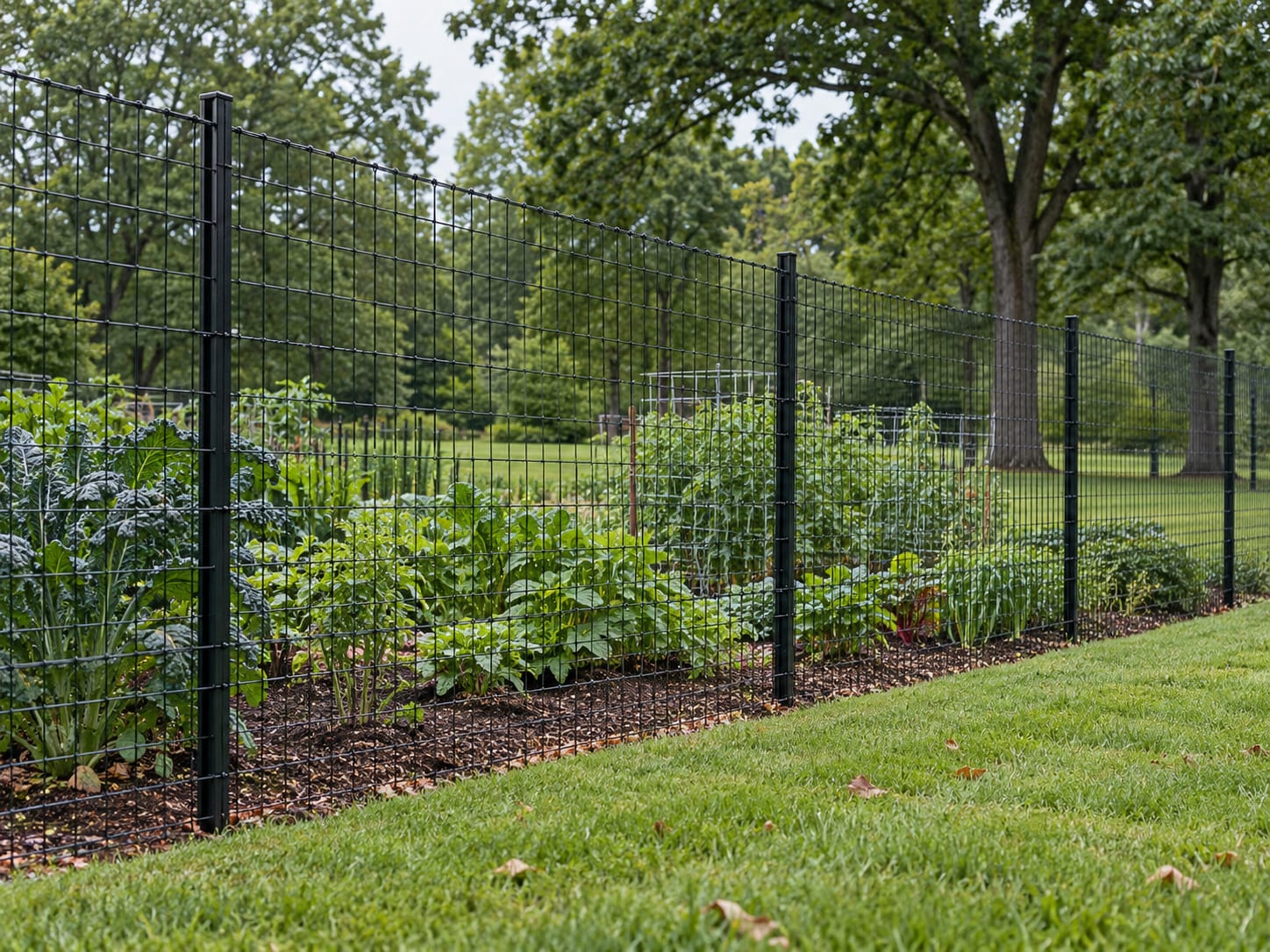
A 6-foot fence may reduce deer entry in some settings, especially when it is opaque or paired with an offset or electric design. It is less dependable as a passive barrier than an 8-foot fence. A 5-foot fence should not be treated as a reliable way to keep Connecticut deer out.
The height recommendation is a wildlife-management guideline. Your town still decides whether the fence is allowed at that height, in that location, and with that material. Start with the zoning office or zoning enforcement officer before ordering materials.
Connecticut DEEP's non-lethal deer management guidance and CAES deer damage management guidance both support planning around height, ground contact, maintenance, and fence design.
Choose the area you actually need to protect
You may need to enclose the entire property, or only a vegetable garden, orchard, flower bed, shrubs, or a group of individual plants. A smaller enclosure can lower the material and gate cost, but it still needs a complete perimeter. Deer will use the easiest opening, including an unprotected corner or a space beside a gate.
If the fence also needs to contain a dog, livestock, children, or vehicles, the deer solution may need a different mesh, stronger posts, a wider gate, or a separate fence system. A garden fence designed only to deter deer is not automatically a safe pool barrier, pet enclosure, or livestock fence.
For a farm or rural lot, compare a permanent physical barrier with an electric system. For a smaller residential garden, polypropylene mesh may be easier to install and less noticeable. A permanent 8-foot mesh or woven-wire enclosure is usually the simpler choice when you want a passive barrier that does not depend on a charger.
Hover or tap a row to highlight it.
| Fence type or design | Height or cost | Unit and source |
|---|---|---|
| DEEP recommended fence | 8 feet | Properly installed and maintained, Connecticut DEEP |
| CAES recommended range | 7 to 10 feet | Deer-exclusion fence, CAES |
| Polypropylene plastic mesh | $0.75 to $1.50 | Installed per linear foot, historical CAES estimate revised 2007 |
| High-tensile wire | $0.75 to $2.00 | Installed per linear foot, historical CAES estimate revised 2007 |
| Woven wire | $2.00 to $4.00 | Installed per linear foot, historical CAES estimate revised 2007 |
| 8-foot woven wire | $5.00 to $7.00 | Installed per linear foot, national extension estimate |
The historical prices in the table are planning references, not current Connecticut quotes. Ask for a written local estimate that separates fence length, posts, gates, site work, permits, and maintenance.
Which deer-fence material fits your property?
Polypropylene mesh
Polypropylene plastic mesh is lightweight, relatively inexpensive, easy to install, and visually unobtrusive. CAES reports a historical installed estimate of $0.75 to $1.50 per linear foot in Bulletin 1005. Black mesh can be difficult for deer to see, so temporary high-visibility flagging should be tied to the fence during the acclimation period.
Use sturdy end and corner posts so the mesh does not sag. Smaller support poles should be placed every 20 to 30 feet, with ground staples approximately every 12 feet. Keep the mesh close to the ground and add a top support wire to reduce sagging and help protect the fence from falling branches.
CAES recommends tying temporary flagging approximately every 10 feet and about 4 feet above ground. After deer become accustomed to the fence, the flagging may be removed if the barrier remains easy to recognize.
Woven or welded wire
Woven wire provides a durable physical barrier and is suited to larger areas or heavy deer pressure. CAES describes woven wire as the strongest year-round option for large areas, although it costs more and is harder to install. Welded wire can also provide a firm barrier when the height, posts, bottom edge, and gate are designed for deer exclusion.
A permanent wire enclosure may make sense when you are protecting an orchard, nursery, large garden, or valuable shrubs for many years. The cost per linear foot is only one part of the project. Posts, corners, gates, brush clearing, and access for equipment can change the total.
You can read more about agricultural applications on the agricultural fencing product page.
High-tensile electric wire
High-tensile electric fencing can work well around gardens, orchards, and fields when it is properly designed, grounded, insulated, and maintained. DEEP identifies seven-strand slanted and six-wire vertical designs, with wires spaced approximately 8 to 10 inches apart.
Keep brush and weeds away from the wires so vegetation does not short the system. The charger, grounding system, warning signs, and inspection routine belong in the project budget. Electric fencing may also be restricted by local rules, especially in residential areas.
A slanted seven-wire fence set at approximately 45 degrees creates a three-dimensional barrier. CAES describes this design for large fields, orchards, nurseries, and other high-value crops. Double or offset electric fences use two separated fence lines to change the deer's depth perception and can suit gardens, nurseries, and truck farms with moderate deer pressure.
What makes a deer fence work?
The fence must form a continuous enclosure. An opening under the gate, beside the latch, or at a corner can defeat an otherwise tall fence. The gate should be about as tall and secure as the adjoining fence, with no large opening beneath it or beside the hardware.
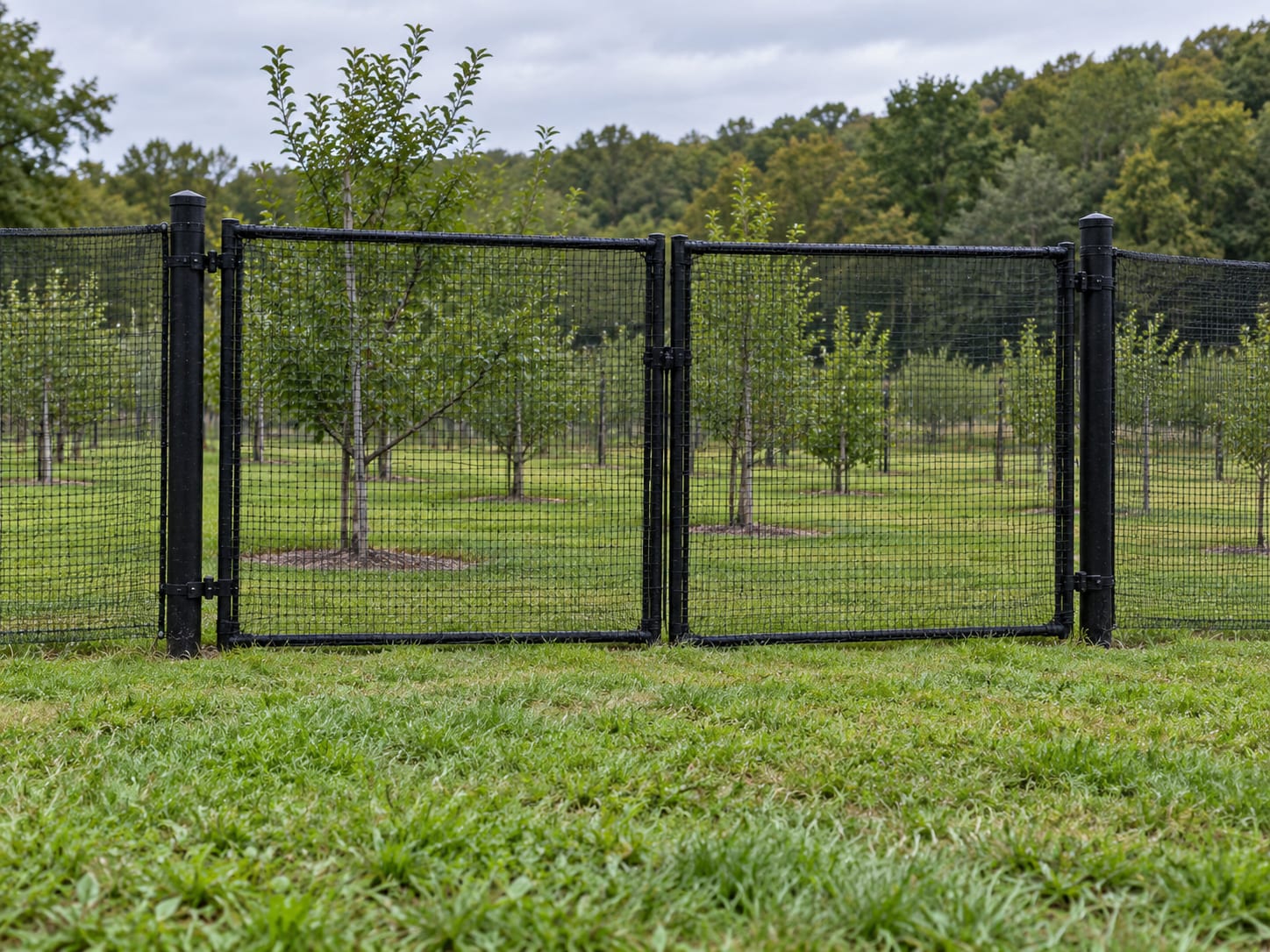
Vehicle access may require a wider gate for a mower, truck, tractor, or delivery vehicle. A full-property enclosure needs at least one gate, and the gate location should be planned before posts are installed. If you are protecting an orchard or garden, place the gate where you can bring in soil, compost, equipment, and replacement plants.
For plastic mesh, use sturdy end and corner posts, support poles every 20 to 30 feet, ground staples about every 12 feet, and a top support wire. Keep branches trimmed where they could fall onto the mesh. After storms, inspect the corners, bottom edge, gate, and areas where branches may have pulled the fence out of shape.
For electric wire, check the charger, grounding, insulation, wire tension, vegetation, and warning signs. Keep the gate closed, repair gaps promptly, and maintain the system throughout the growing season.
A written quote should spell out the height, material, posts, gates, site work, permits, and maintenance responsibilities, and My Fence Guy can lay out the fence line and prepare one.
Planning a Connecticut deer fence
- 1
Confirm the goal
Decide whether you are protecting the full property, a garden, an orchard, individual plants, or an area that also contains pets or livestock.
- 2
Ask the town
Confirm height, setbacks, materials, permits, wetlands review, and any front-yard or corner-lot rules.
- 3
Draw the enclosure
Mark the fence line, gates, property lines, roads, wetlands, watercourses, and equipment access on a sketch.
- 4
Call before digging
Submit a CBYD ticket or call 811 at least two full working days before excavation with power-operated equipment.
- 5
Set the posts
Install sturdy corners and ends first, then place intermediate supports for the chosen mesh or wire system.
- 6
Close the gaps
Finish the gate, bottom edge, corners, latch area, and any opening where deer could crawl or walk through.
- 7
Maintain the barrier
Inspect mesh after storms, control vegetation near electric wire, keep gates closed, and repair damage promptly.
What does a Connecticut town allow?
Your town's zoning decides whether an 8-foot deer fence is allowed where you want it. The State Building Code exempts fences other than swimming-pool barriers from a building permit when they are not over 7 feet high, but local zoning may still regulate height, location, materials, setbacks, and zoning permits. Read the Connecticut fence permit overview before you plan the work.
Lyme permits dark, open-mesh deer fences up to 8 feet within property-line setbacks when approved through a zoning permit. Easton allows certain animal-security fencing that permits light and air to pass through up to 8 feet, subject to its local provisions. These examples apply to those towns. They do not create a statewide exemption.
Ask the zoning office or zoning enforcement officer:
- What is the maximum fence height in the proposed yard area?
- Is an 8-foot deer fence allowed?
- Is a zoning permit, building permit, site plan, or other approval required?
- Are there front-yard, corner-lot, road-visibility, or setback restrictions?
- Are dark mesh, polypropylene, welded wire, woven wire, or electric fencing allowed?
- Does the fence need to be inside the property line?
- Are inland wetlands or watercourses near the fence line?
- Does the town require a survey, site plan, photos, or a material sample?
- Are there separate rules for agricultural land, gardens, orchards, or temporary fencing?
Bring a sketch with the property, proposed fence line, gates, road and property-line distances, approximate height, material, and nearby wetlands or watercourses. If the fence is close to a boundary, a survey may be appropriate.
Wetlands and watercourses can affect the layout and approval path. Review Connecticut's inland wetlands information for property owners and ask the town whether the proposed fence line needs additional review.
Nearby New York towns use different approaches. Putnam Valley limits fences along front property lines to 4 feet and applies added restrictions near intersections. Poughkeepsie requires a fence permit and prohibits electric fencing under its current fence rules. Irvington permits certain deer-exclusion fences up to 8 feet with black coated wire or black coated woven wire, a post spacing limit of 8 feet, and an Architectural Review Board application. Tuxedo Park permits deer fences up to 8 feet with an application to the Building Inspector and approved black plastic mesh.
If your property is in Putnam, Dutchess, Westchester, or another New York municipality, contact the municipality where the fence will be installed. County location alone does not determine the applicable rule.
What should the contract and site plan cover?
Before excavation, submit a Call Before You Dig request through Connecticut PURA. Connecticut requires notice at least two full working days before excavation with power-operated equipment. A contractor performing the excavation must make the notification.
A written agreement should identify the fence type, height, length, posts, gates, ground clearance, site preparation, permits, price, payment schedule, start and completion dates, maintenance responsibilities, warranty terms, and change-order process. Ask a licensed and insured contractor to separate the fence price from gates, clearing, rocky soil, electrical equipment, and permit-related work.
A property near an old stone wall may require a different fence line or post layout. Do not assume posts can be set directly on top of the wall. Discuss whether the fence will run alongside it, behind it, or at another location, and confirm the property boundary before installation.
If the fence is near a shared boundary, put ownership, access, maintenance, gate use, and cost sharing in writing with the neighbor. Connecticut General Statutes §§47-43 and 47-44 address divisional fences. For a specific boundary dispute, speak with a Connecticut real estate attorney.
Frequently Asked Questions
Is a 6-foot fence high enough to keep deer out?
Not reliably as a passive deer barrier. DEEP says deer can jump up to 8 feet, and CAES recommends a fence from 7 to 10 feet, so a 6-foot fence carries a greater risk of being jumped.
What is the recommended height for a deer fence?
The usual passive-fence target is 8 feet. CAES gives a broader range of 7 to 10 feet, while DEEP recommends 8 feet when the fence is properly installed and maintained.
Will deer jump over a 5-foot fence?
Yes, deer can jump over a 5-foot fence. Lower fences may help in some electric or three-dimensional designs, but a 5-foot fence is not a dependable passive barrier for Connecticut deer.
What is the cheapest type of fencing for deer?
Polypropylene plastic mesh is one of the least expensive physical barriers listed by CAES, with a historical installed estimate of $0.75 to $1.50 per linear foot in Bulletin 1005, revised 2007. Electric wire can also have a low initial material cost, but charger equipment, grounding, signs, vegetation control, and maintenance add to the project.
Can deer see black netting?
Black polypropylene netting can be difficult for deer to see. CAES recommends temporary high-visibility flagging about every 10 feet and roughly 4 feet above ground while deer become accustomed to the barrier.
What is the most effective fence to deter deer?
For passive exclusion around a Connecticut yard or garden, a properly installed and maintained 8-foot woven-wire, welded-wire, or polypropylene mesh fence with a secure gate is a strong general choice. For larger fields, orchards, and gardens, a properly designed and maintained high-tensile electric system can also work well.
Deer Fence Planning Check
1. What height does Connecticut DEEP recommend for a properly maintained deer fence?
2. How far apart should smaller support poles generally be placed for polypropylene mesh?
3. What should be done before excavation with power-operated equipment in Connecticut?
4. Which material does CAES describe as the strongest year-round option for large areas?
5. What should a deer-fence gate avoid?
Pick an answer to begin.
Final Thoughts
Start with the town, then choose the fence system. An 8-foot passive barrier is the common target, but plastic mesh, woven wire, high-tensile electric wire, and offset designs each fit different properties and maintenance plans. Put the fence line, gates, ground clearance, site conditions, permits, and future repairs into the written scope before work begins.
For a property in western Connecticut or a nearby New York town, the local approval and the site itself control the practical answer. Call us at (203) 746-1100 for a free estimate, or reach out through our contact page.
Deer Fence Terms
Tap a term to see what it means.
Deer exclusion. A fence or deterrent system designed to keep deer outside a protected area.
More about fences
Farm and Livestock Fence Types: What Works for Goats, Sheep, Cattle and Poultry
Fencing for goats, sheep, cattle, pigs and poultry: woven wire, cattle panels, electric netting, predator protection in Connecticut and NRCS cost-share.
Read the guide to Farm and Livestock Fence TypesHorse Fence Options: Board, Vinyl, Wire and Electric
Horse fence options compared: board, vinyl rail, no-climb wire, high-tensile and electric tape, with safe heights, visibility, post spacing, gates and costs.
Read the guide to Horse Fence OptionsElectric Fencing for Horses and Livestock: How It Works and What It Takes
How electric fencing for horses and livestock works: energizers, joules and ground rods, warning signs and town rules, common faults and cost compared to wire.
Read the guide to Electric Fencing for Horses and Livestock