
Electric Fencing for Horses and Livestock: How It Works and What It Takes
By Tony Pellicone13 min readPublished
- farm fencing
- agricultural fencing
- connecticut
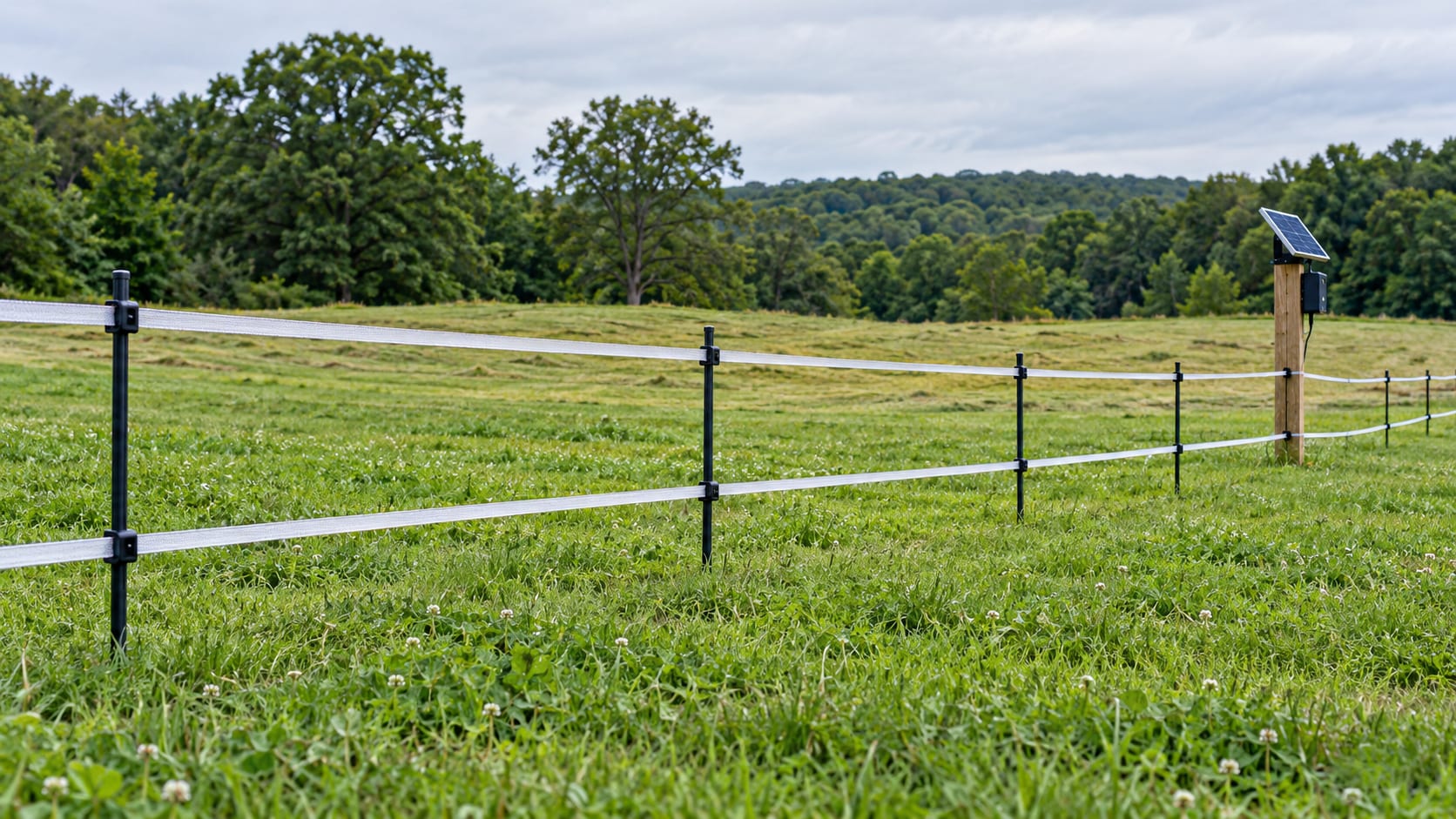
Electric fencing can serve as a main perimeter, a temporary grazing fence, an interior pasture divider, or an offset wire attached to a physical fence. It works when the energizer, hot conductor, insulators, grounding system, and maintenance all match the animals, wire length, soil, and vegetation. Whether it is allowed on your property depends on your town, zoning district, fence type, and permit requirements.
For a western Connecticut property, the first decision is whether the electric fence will contain animals by itself or work with a visible physical fence. Trained horses, cattle, sheep, goats, and other livestock may respect a properly installed electric fence, but a physical fence gives you containment if power fails. Frozen ground and snow in winter can change the design.
Key Takeaways
Circuit
An animal completes the circuit by touching the hot wire and returning current through soil or a dedicated ground wire.
Sizing
Energizer size depends on total energized wire, so four hot strands around one mile represent four energized miles.
Grounding
A practical starting point for many one-mile agricultural fences is about one output joule per energized mile and at least three properly spaced ground rods.
Local rules
Connecticut electric-fence requirements can vary by town, zoning district, property use, and fence type.
Maintenance
Vegetation, damaged insulators, weak grounding, broken conductors, and snow can reduce voltage.
How an Electric Livestock Fence Works
An energizer changes AC, battery, or solar power into brief, high-voltage pulses. Insulated lead-out cable carries those pulses to the hot fence wire, tape, or other conductor.
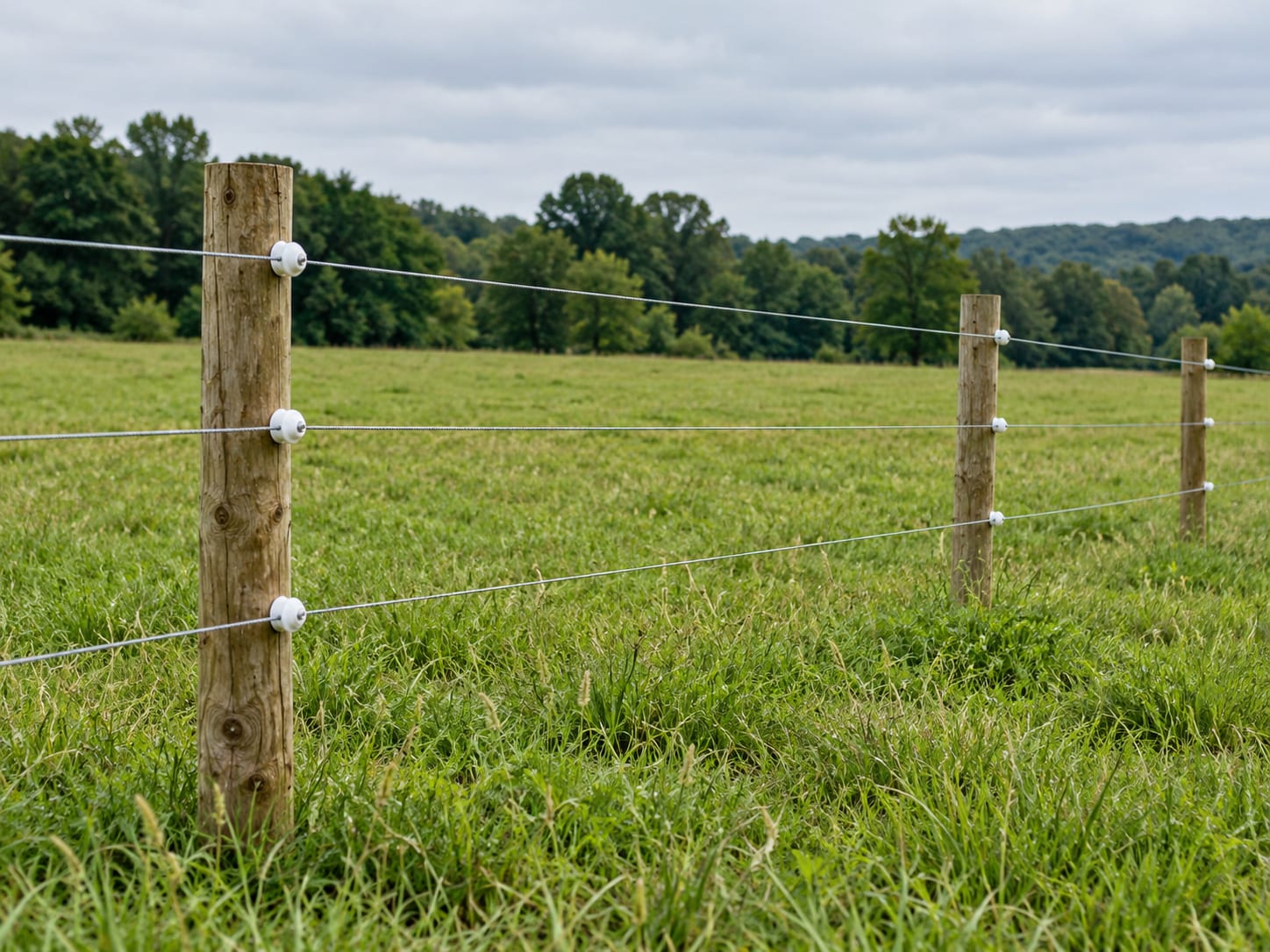
When an animal touches the hot wire while standing on the soil, current travels through the animal, into the soil, through the grounding rods, and back to the energizer. The completed circuit produces the shock. The wire itself does not need to form a physical loop. The electrical circuit needs a return path.
A second design uses alternating hot and ground wires. When an animal touches both, current returns through the dedicated ground wire instead of relying mainly on soil conductivity. This arrangement can perform better in dry, rocky, sandy, or frozen ground, where an earth-return system may lose effectiveness.
Virginia Cooperative Extension states that a low-impedance energizer should use pulses lasting no more than 0.0003 seconds. USDA Natural Resources Conservation Service guidance recommends at least 5,000 volts, 35 to 65 pulses per minute, pulse duration of no more than 0.0003 seconds, and pulse intensity below 300 milliamps. You can review the Virginia Cooperative Extension explanation of electric-fence operation and the USDA NRCS electric-fencing publication.
The parts that make the system work
A complete installation generally includes:
- Energizer
- Hot conductor wire or tape
- Insulators
- Posts and corner assemblies
- Ground rods and clamps
- Insulated lead-out cable
- Gate handles and underground gate connections
- Warning signs where required
- Fence-voltage and ground-system testing equipment
Lead-out cable deserves attention at gates, driveways, and traffic areas. Virginia Cooperative Extension recommends insulated high-voltage cable, with conduit or double insulation where buried cable passes under gates or other areas that may be disturbed.
Typical Electric-Fence Circuit
- 1
Power
AC, battery, or solar power feeds the energizer.
- 2
Pulse
The energizer sends a brief high-voltage pulse through insulated lead-out cable.
- 3
Contact
An animal touches the hot wire while standing on soil, or touches both hot and ground wires.
- 4
Return
Current travels through the soil and ground rods, or through the dedicated ground wire.
- 5
Test
You measure voltage and inspect the fence, grounding system, gates, and insulation.
Choosing the Energizer and Grounding System
Energizer sizing is based on total energized wire, not only the perimeter. A one-mile perimeter with four hot strands represents four energized miles. A rough agricultural rule is approximately one output joule per mile of energized wire.
That means a one-mile perimeter with one hot strand may start around one output joule. Two hot strands represent about two energized miles, three strands about three miles, and four strands about four miles. Heavy vegetation, several gates, long lead-out runs, netting, dry soil, or difficult livestock can call for more capacity.
University of Missouri Extension gives the one-joule-per-mile figure as a rough rule and explains that vegetation, poor insulators, and soil conditions reduce effective length. USDA NRCS guidance also uses about one mile per joule for a typical single-wire fence. Manufacturer mileage ratings are not directly comparable because some list stored joules while others list output joules. Compare output joules when evaluating chargers.
Hover or tap a row to highlight it.
| Fence design | Approximate energized length for a one-mile perimeter | Starting sizing reference |
|---|---|---|
| One hot strand | 1 energized mile | About 1 output joule |
| Two hot strands | 2 energized miles | About 2 output joules |
| Three hot strands | 3 energized miles | About 3 output joules |
| Four hot strands | 4 energized miles | About 4 output joules |
These figures are starting references, not a final equipment selection. The animal type, wire height, vegetation, gates, soil, seasonal conditions, and energizer instructions all matter.
Grounding rods need a clear path back to the energizer. University of Maine Cooperative Extension commonly recommends at least three galvanized rods, each at least 6 feet long and driven about 5.5 feet into the soil, with rods spaced at least 10 feet apart. Some one-joule units may need only one rod, so follow the energizer instructions and test the system.
Other extension guidance uses at least 3 feet of ground-rod length per output joule. A practical starting point for a one-mile, single-wire agricultural fence is a low-impedance energizer around one output joule with at least three properly spaced ground rods, subject to site conditions and the equipment rating.
Where the soil stays dry or freezes, alternating hot and ground wires may give the animal a better return path. University of Maine guidance also describes connecting ground rods to a ground wire at about 1,500-foot intervals, or about 3,000-foot intervals where soil remains moist year-round.
Decide Whether Electric Wire Is the Main Fence
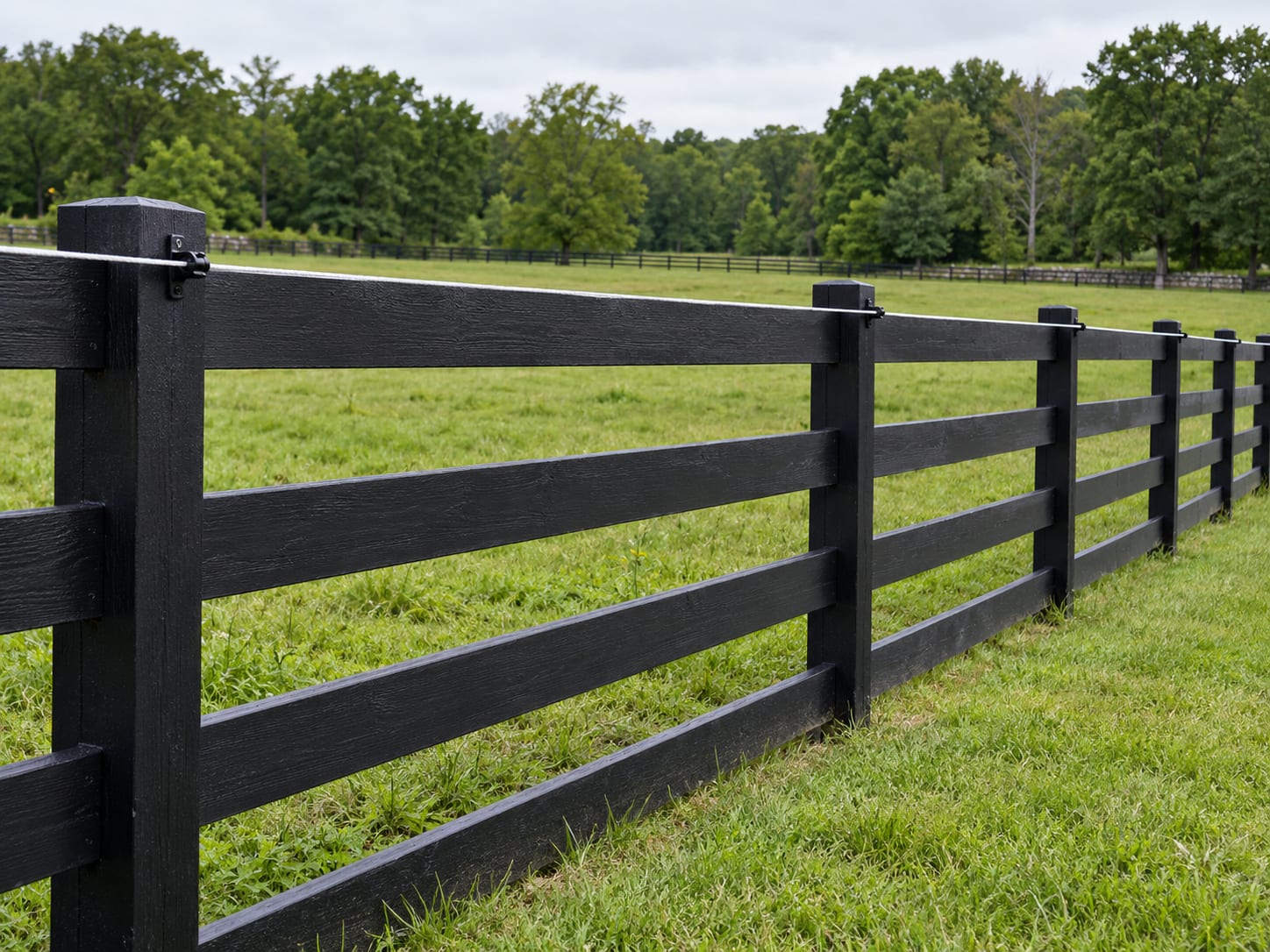
Electric fencing can be the main perimeter for trained livestock, but it may be better as part of a larger system. A physical board, woven-wire, chain-link, or other visible fence can contain animals when the energizer is off. An offset wire can keep horses from leaning on boards, discourage cattle from pushing against woven wire, or help protect a conventional fence from climbing animals.
Temporary and rotational-grazing systems often use fewer posts and lighter materials. They still need a dependable energizer, visible conductors, secure corners, reliable gate connections, and regular testing. A permanent perimeter may need stronger posts, better corner assemblies, more gates, and a design that handles snow and seasonal vegetation.
For horses, wire visibility and training matter. For goats and cattle, wire placement and animal behavior matter. Sheep may require a different conductor arrangement from horses. The right design follows the species, age, temperament, and reason for the fence.
A physical fence with an electric offset is often a sensible choice where the fence borders a road, public path, neighboring property, or area used by visitors. It gives you a visible barrier and an electric deterrent. If you are comparing the system with other farm options, review Farm and Livestock Fence Types: What Works for Goats, Sheep, Cattle and Poultry and Horse Fence Options: Board, Vinyl, Wire and Electric.
Electric fence rules in Southington, Ridgefield, Newtown and other towns
Height, setback and permit rules for an agricultural electric fence come from your town. Local zoning, building, and ordinance rules can differ.
Connecticut General Statutes § 7-152g addresses certain battery-charged security fences. Qualifying fences must be on property not zoned exclusively for residential use, use a commercial storage battery of no more than 12 volts DC, sit behind and interior to a nonelectric fence, wall, or barrier at least 5 feet high, and meet height conditions of at least 10 feet or at least 2 feet higher than the nonelectric barrier. The statute also requires conspicuous warning signs at intervals of no more than 30 feet stating that the fence is an electric fence. Read Connecticut General Statutes § 7-152g.
That statute concerns qualifying security fences. It should not automatically be treated as the rule for an agricultural livestock fence.
Southington has a specific local rule. Its Code of Ordinances § 236-2 prohibits electrically charged fencing unless the Building Inspector issues a permit for animal retention or repulsion on a parcel of at least three acres, after determining that the fence meets state standards and will not be hazardous to life. Read the Southington Code of Ordinances, Chapter 236.
Ridgefield publishes zoning regulations amended through 2026 and directs property owners to its Planning and Zoning and Building Department offices for current regulations and permits. Newtown publishes zoning regulations addressing zoning districts, setbacks, agricultural uses, and property improvements. The treatment of an electric livestock fence depends on the parcel, zoning district, and current town interpretation. Review the Ridgefield zoning regulations page and the Newtown zoning regulations.
Ask the town about agricultural electric fencing, not only ordinary fences.
Bedford states that fences must be installed and used in accordance with the New York State Electrical Code. If your property is in Putnam, Dutchess, Westchester, or another nearby New York county, contact the specific town zoning or code-enforcement office.
What to Ask Before Installation
Start with the town Planning and Zoning Department and Building Department. Contact the Inland Wetlands Agency if wetlands or a watercourse may be affected. Contact Public Works or the Highway Department if the fence may be near a road right-of-way. Ask the Fire Marshal or emergency-services office about access when gates or energized wires could affect emergency response.
Ask these questions:
- Is an electric livestock fence allowed in this zoning district?
- Is it treated differently from a conventional fence or an electric security fence?
- Is a zoning permit, building permit, or separate electric-fence permit required?
- Are there minimum acreage, height, setback, frontage, or visibility requirements?
- Are warning signs required, and what wording and spacing apply?
- Are there restrictions near roads, sidewalks, trails, residences, or public areas?
- Does the property require inland-wetlands review?
- Is a survey, site plan, or sketch required?
Prepare a property map showing the fence line, gates, energized strands, energizer, ground rods, wet areas, driveways, roads, and neighboring structures. Include the total fence length and the total energized wire length.
Before digging posts or grounding rods, use Connecticut’s Call Before You Dig program. The state program requires notification before excavation with power-operated equipment. Contact CBYD at 811 or 1-800-922-4455 at least two full working days before digging. Private septic, propane, irrigation, pool, and private electric lines may need a private utility locator. Read Call Before You Dig: Marking Utilities Before a Fence Goes In in Connecticut.
If permits are part of the project, review Do You Need a Permit for Fence Installation in CT?. A written estimate should state the fence length, wire count, energizer output joules, ground rods, gates, lead-out cable, vegetation clearing, site conditions, testing, payment schedule, and warranty. My Fence Guy can prepare a written project scope that you can compare with the town's requirements.
A fence near wetlands, a stream, or a lake may need another review before construction. Read Building a Fence Near Wetlands, Streams or Lakes in Connecticut when water or regulated areas may affect the route.
Maintenance and Troubleshooting
Vegetation shorts happen when grass, weeds, vines, branches, or wet foliage touch an energized wire. Mow or clear the area below and beside the hot wires. Inspect insulators for cracks, dirt, arcing, and improper wire contact. Repair broken or sagging conductors, and divide long fences into sections so you can isolate a fault.
Poor grounding can come from rods that are too short, too few, too close together, corroded, or poorly connected. Rocky, sandy, dry, or frozen soil can also reduce earth-return performance. Add galvanized rods where needed, space them at least 10 feet apart, use compatible clamps and wire, and place rods in consistently damp soil where practical. Test the ground system separately from the fence wire.
Snow can cover lower wires and weigh down temporary fencing. Frozen soil can interrupt the earth-return path. Raise or adjust lower wires for expected snow depth, inspect conductors after storms, and consider ground-return wires where winter conditions make soil return unreliable.
Lightning, damaged lead-out cable, poor gate connections, rust, and low-quality insulators can also reduce voltage. Keep a digital fence voltmeter available and test the energizer, far end of each section, gates, and ground system. The Virginia Cooperative Extension troubleshooting guidance describes practical testing and fault-isolation steps.
Hover or tap a row to highlight it.
| Cost reference | Figure | Source and scope |
|---|---|---|
| Single-wire agricultural fence | About $1,600 per mile | Historical USDA NRCS Missouri publication |
| Four-strand barbed-wire fence | About $5,000 per mile | Historical USDA NRCS Missouri publication |
| Additional electric wires | About $0.10 per linear foot | Historical USDA NRCS Missouri publication |
| Aboveground electric fence | $2 to $6 per linear foot installed | National Angi 2026 data |
| Average electric-fence installation | $1,337 per project | National Angi 2026 data |
| One-thousand-foot electric fence | $2,000 to $6,000 installed | National Angi 2026 data |
These figures are context, not Connecticut quotes. Angi's aboveground category can include residential electric-fence projects and is broader than a farm-grade high-tensile livestock system. Local cost changes with corners, gates, vegetation clearing, grounding, backup power, physical backing fence, and the total energized wire.
Electric fencing is often less expensive than a conventional wood, board, woven-wire, or chain-link livestock enclosure because it can use fewer posts and less structural material. It still requires power, grounding, testing, vegetation control, and animal training. For the product side of an agricultural project, see Agricultural Fencing.
Frequently Asked Questions
Does an electric fence have to make a complete loop?
No. The wire can be a straight run, an open-ended temporary fence, or another layout. The electrical circuit is completed when the animal touches the hot wire and the current returns through soil and ground rods, or when the animal touches both hot and grounded wires.
What are the downsides of electric fencing?
Electric fencing requires a functioning energizer, adequate grounding, vegetation control, regular voltage testing, and trained animals. Power outages, lightning, frozen soil, snow, broken insulators, and thin conductors can reduce performance, while a shock-only fence may not physically contain an animal when the power is off.
Is it illegal to have an electric fence on your property?
Not automatically. The answer depends on the municipality, zoning district, property use, fence type, permit process, and safety conditions. Ask your town Planning and Zoning Department and Building Department whether the proposed agricultural fence is allowed and what permits, signs, setbacks, acreage, or site-plan conditions apply.
Is an electric fence cheaper than wire?
Usually, an agricultural electric fence costs less than a conventional multi-strand fence because it may use fewer posts and less structural material. Historical USDA NRCS figures put a typical single-wire agricultural electric fence at about $1,600 per mile and a four-strand barbed-wire fence at about $5,000 per mile, while national Angi 2026 data lists aboveground electric fencing at $2 to $6 per linear foot installed.
What are common electric-fence problems?
Common problems include vegetation touching the hot wire, weak grounding, dry or frozen soil, damaged insulators, loose connections, damaged lead-out cable, poor gate connections, an undersized energizer, snow, and lightning. Test the energizer and each fence section, clear vegetation, inspect connections, test the ground system, and add ground-return wires where soil conditions call for them.
Electric Fence Planning Check
1. What determines energizer sizing?
2. What can improve performance in dry or frozen soil?
3. How far apart should many ground rods be spaced as a starting reference?
4. Which office should you contact about whether the fence is allowed in your zoning district?
5. What can cause a vegetation short?
Pick an answer to begin.
Final Thoughts
Electric fencing can be a practical choice for horses and livestock when the design matches the animals, the wire length, the soil, and the way you use the property. Decide whether you need a self-contained electric perimeter, a temporary grazing system, a pasture divider, or an offset wire on a physical fence. Then confirm the town's rules, mark utilities, plan the grounding system, and put the full scope in writing.
My Fence Guy can help you plan the fence line and any physical fence that goes with the electric wire. Call us at (203) 746-1100 for a free estimate, or reach out through our contact page.
Electric Fencing Terms
Tap a term to see what it means.
Energizer. The power unit that sends brief high-voltage pulses through the fence.
More about fences
Farm and Livestock Fence Types: What Works for Goats, Sheep, Cattle and Poultry
Fencing for goats, sheep, cattle, pigs and poultry: woven wire, cattle panels, electric netting, predator protection in Connecticut and NRCS cost-share.
Read the guide to Farm and Livestock Fence TypesHorse Fence Options: Board, Vinyl, Wire and Electric
Horse fence options compared: board, vinyl rail, no-climb wire, high-tensile and electric tape, with safe heights, visibility, post spacing, gates and costs.
Read the guide to Horse Fence OptionsDeer Fence Guide for Connecticut Yards and Gardens: Height, Materials and Cost
Deer fencing for Connecticut yards and gardens: why eight feet is the usual height, mesh, welded wire and electric options, gates, town rules and cost per foot.
Read the guide to Deer Fence Guide for Connecticut Yards and Gardens