
Horse Fence Options: Board, Vinyl, Wire and Electric
By Tony Pellicone12 min readPublished
- farm fencing
- agricultural fencing
- connecticut
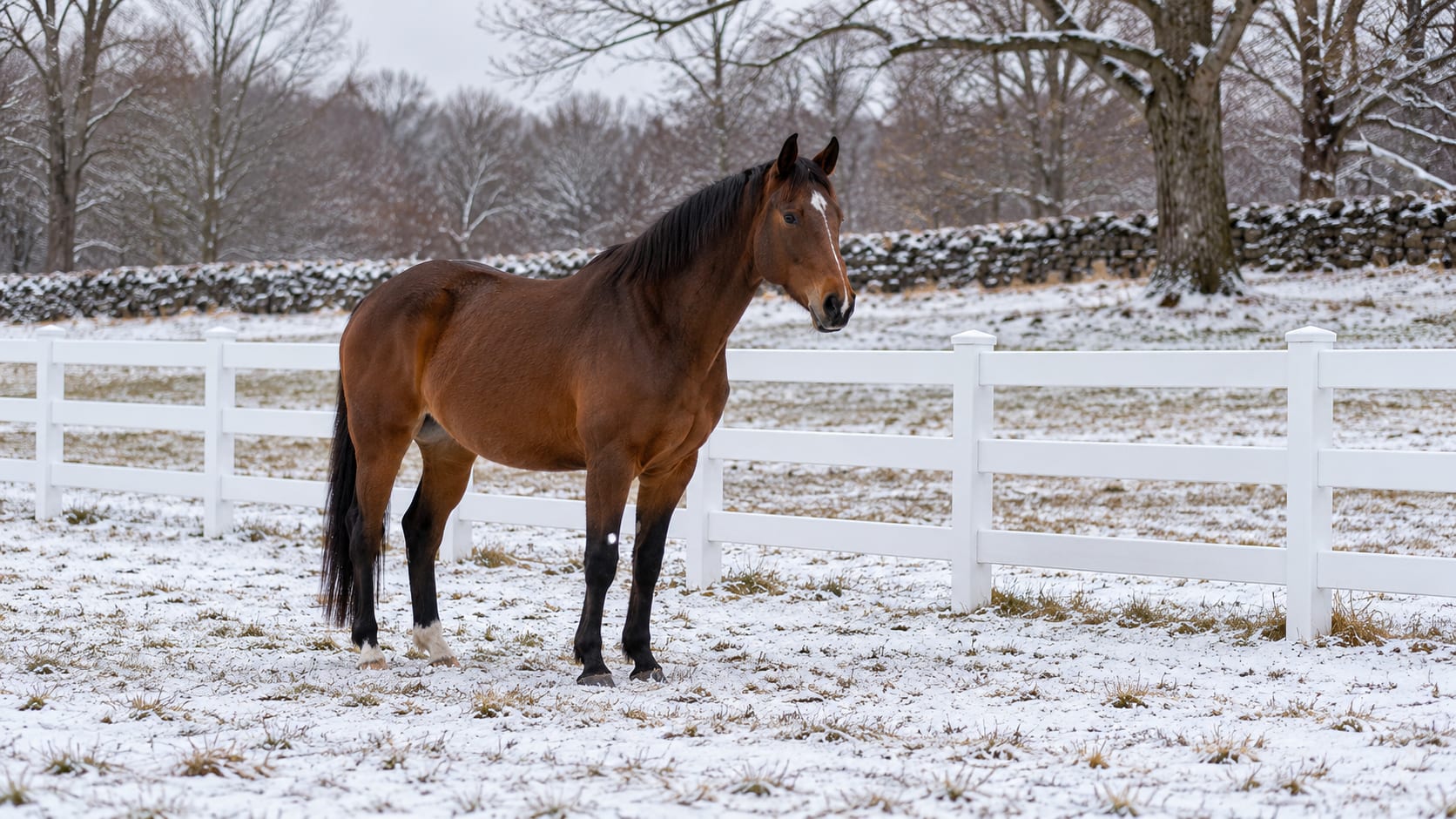
For most horse properties, the safest starting point is a highly visible perimeter fence about 5 feet high, with no sharp projections, no hoof-catching openings and gates built for both horses and equipment. Board, vinyl rail and woven 2-by-4-inch no-climb mesh are common permanent choices. Electric tape or coated wire can work well for interior cross-fencing when it is visible, energized and maintained.
The right choice depends on your horses, fence length, terrain, gates, maintenance capacity and local rules. A lower initial price does not always mean a lower project cost once gates, corner assemblies, grounding, clearing, rock and installation are included.
Key Takeaways
Best general baseline
Use visible fencing about 5 feet high for a permanent perimeter.
Safer wire choice
Heavy-gauge woven no-climb mesh with small openings helps prevent hoof entrapment.
Electric fencing
Use visible electric tape or coated wire with a reliable energizer and grounding system.
Avoid barbed wire
Barbed wire can cause cuts, punctures and entanglement and should not be used around horses.
Gate planning
Use at least 4 feet for a horse-and-handler gate and 12 to 16 feet for equipment access.
Local rules
Ask the exact town about height, setbacks, permits, wetlands and agricultural-fence requirements before ordering materials.
Choosing a Permanent Horse Fence
A horse fence has two jobs. It must contain the horse, and it must be easy for the horse to see before contact. Extension guidance from UConn, the University of Georgia and the University of Minnesota points toward sturdy, visible fencing with smooth edges and openings small enough to keep a hoof from passing through.
Board and rail fencing
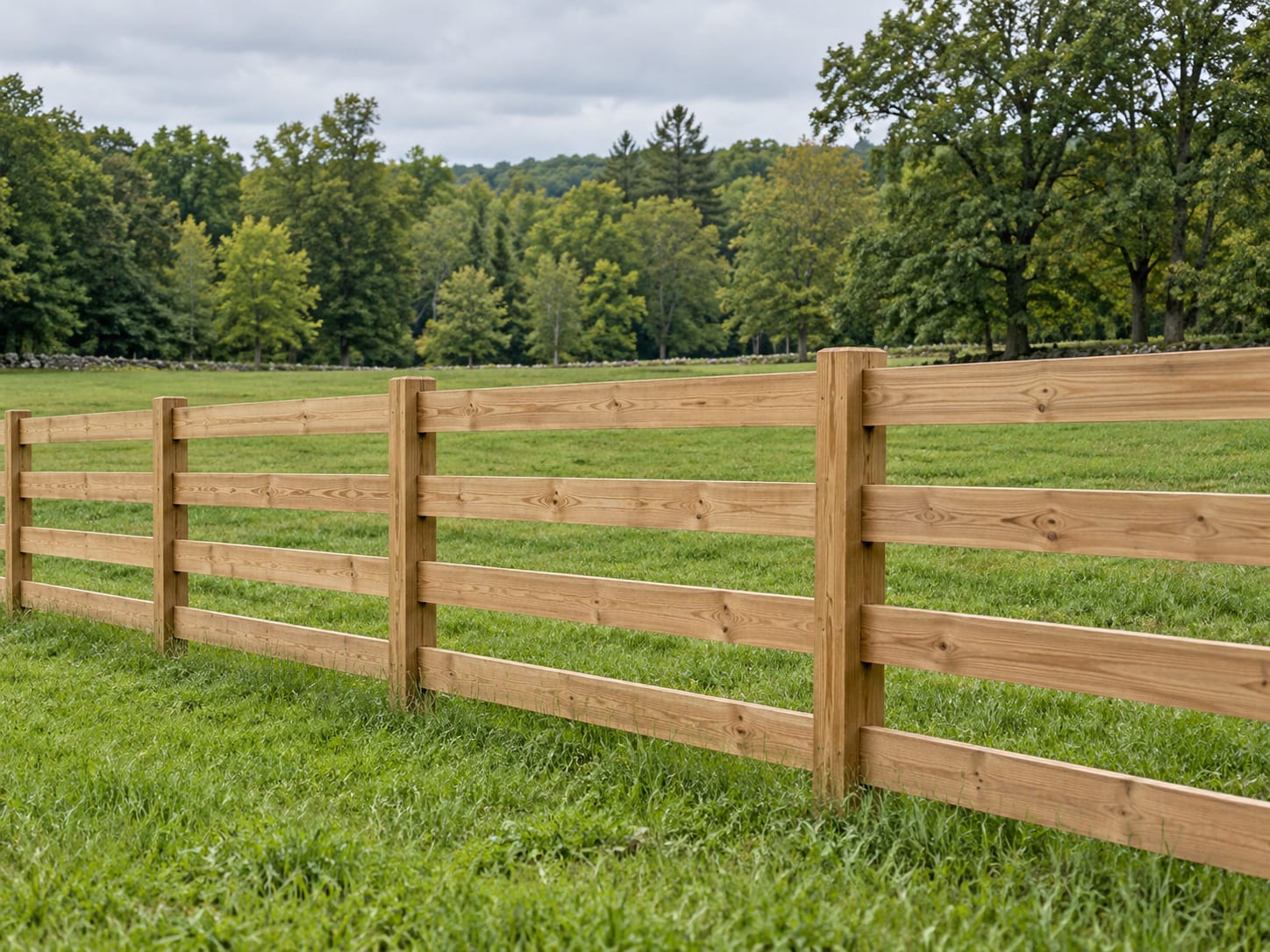
Board fencing is highly visible and gives a paddock a traditional appearance. A horse is less likely to catch a hoof on a broad rail than on an almost invisible wire. A four-rail board fence commonly uses posts about 8 feet apart, according to the University of Georgia comparison table.
Wood also needs regular inspection and maintenance. A broken board, exposed nail, loose staple or splinter can injure a horse. Wood is among the more expensive choices in the national cost figures provided below, but some owners choose it for visibility and appearance around paddocks, arenas and entrances. If wood is under consideration, compare species and maintenance needs in Cedar vs Pressure-Treated Wood Fence: Which Lasts Longer?.
Vinyl and polymer rail
Vinyl or PVC rail is visible, low-maintenance and shaped more like board fencing than rigid wire. It can be a good fit when you want a clean paddock boundary without recurring painting or staining. Its initial cost is usually higher, and a hard impact can crack or break a rail.
Some polymer rail systems contain high-tensile wire. That means the system still needs proper tension, visible components and regular inspection. Ask for the rail construction, wire arrangement, post spacing and repair plan in writing rather than treating every vinyl rail product as the same.
Woven no-climb mesh
Heavy-gauge woven mesh with openings commonly around 2 by 4 inches is one of the more practical wire choices for horses. The small openings make it less likely that a hoof will pass through. Choose mesh with smooth, protected edges and secure every end, corner and gate connection.
Standard welded wire deserves more caution. The University of Georgia advises against it for horse fencing because welded joints may fail under field conditions. Woven mesh can be paired with a visible top rail or board to make the fence easier to see from a distance.
For a farm or pasture project, you can compare mesh and other agricultural layouts on the agricultural fencing page.
High-tensile wire
High-tensile wire can be economical and durable on long runs, with fewer intermediate supports than some other systems. Its weakness around horses is visibility. Smooth, uncoated wire can disappear in poor light, vegetation or uneven ground.
Use a highly visible coated strand, polymer rail or vinyl tape with the system. Strong corner and brace assemblies carry the main structural load. The University of Georgia describes intermediate posts about 25 feet apart when those assemblies support high-tensile wire. The intermediate posts maintain wire spacing, while corners and braces hold tension.
High-tensile wire also needs periodic retensioning. A sagging strand can create a dangerous opening or change the height and shape of the fence.
Height, Spacing and Fence Details
A common extension baseline is approximately 5 feet for perimeter fencing and 4.5 to 5 feet for cross-fencing. Penn State horse-show guidance gives a minimum of 4 to 4.5 feet for an outdoor arena, but pasture and perimeter fencing generally use more height.
The final measurement should reflect the horses and the ground. Tall horses, jumpers, stallions, foals and highly reactive animals may require a different design. Measure from the horse side when the ground changes, especially on a slope or near a downhill approach.
Fence bottoms and openings
Fence and gate bottoms should either sit about 8 to 12 inches above grade or extend completely to the ground. An intermediate gap can create a place for a hoof to become trapped. The same check applies where a gate meets a hinge post, latch post or adjoining fence.
Avoid large mesh openings, protruding staples, exposed wire ends, broken rails and sharp hardware. A fence should be firm enough to contain the horse but not built with unnecessary projections that can catch a halter, leg or blanket.
Hover or tap a row to highlight it.
| Area | Common recommendation | Planning note |
|---|---|---|
| Perimeter fence | Approximately 5 feet high | Adjust for the horses and terrain |
| Cross-fence | Approximately 4.5 to 5 feet high | Useful for paddock or grazing divisions |
| Outdoor arena | Minimum 4 to 4.5 feet | Pasture fencing is commonly taller |
| Fence bottom | 8 to 12 inches above grade or fully to ground | Avoid intermediate hoof-catching gaps |
| Four-rail board posts | About 8 feet apart | University of Georgia comparison example |
| High-tensile intermediate posts | About 25 feet apart | Requires strong corners and brace assemblies |
Electric Fencing and Unsafe Materials
Electric fencing can work well for temporary cross-fencing, rotational grazing and discouraging horses from leaning on a permanent fence. Wide electric tape is easier to see than smooth wire. A permanent perimeter may use electric components, but temporary tape should not be treated as the only perimeter barrier unless the complete system is designed and maintained for that purpose.
The system needs a horse-appropriate energizer, sound grounding, continuous power and regular inspection. Keep vegetation from shorting the fence, and check it after storms, fallen branches and snow. Protect wire ends, tensioners and other hardware.
A permanent visible fence is often the better choice for foals, horses unfamiliar with electric fencing, highly reactive animals or a site where a fence failure could lead to a road. A common combination is woven mesh or board fencing around the outside with electric tape used for interior divisions.
Barbed wire should not be used around horses. A horse that panics or runs into barbs can suffer deep lacerations, punctures or entanglement. UConn Extension states that barbed wire should never be used around horses, and the University of Minnesota gives the same safety direction. Connecticut’s Chapter 823 fence statutes also address barbed wire in relation to adjoining premises and public areas.
Cattle guards are another poor substitute for a horse gate. Penn State reports that horses may jump or attempt to cross them, creating a risk of tangled or broken legs.
Gates for Horses, Handlers and Equipment
A horse-and-handler gate should be at least 4 feet wide, while Penn State prefers 5 feet for easier passage. Equipment gates should be at least 12 feet wide, with 14 to 16 feet often used for pasture equipment. The University of Minnesota recommends 16-foot gates for dry-lot or equipment passages.
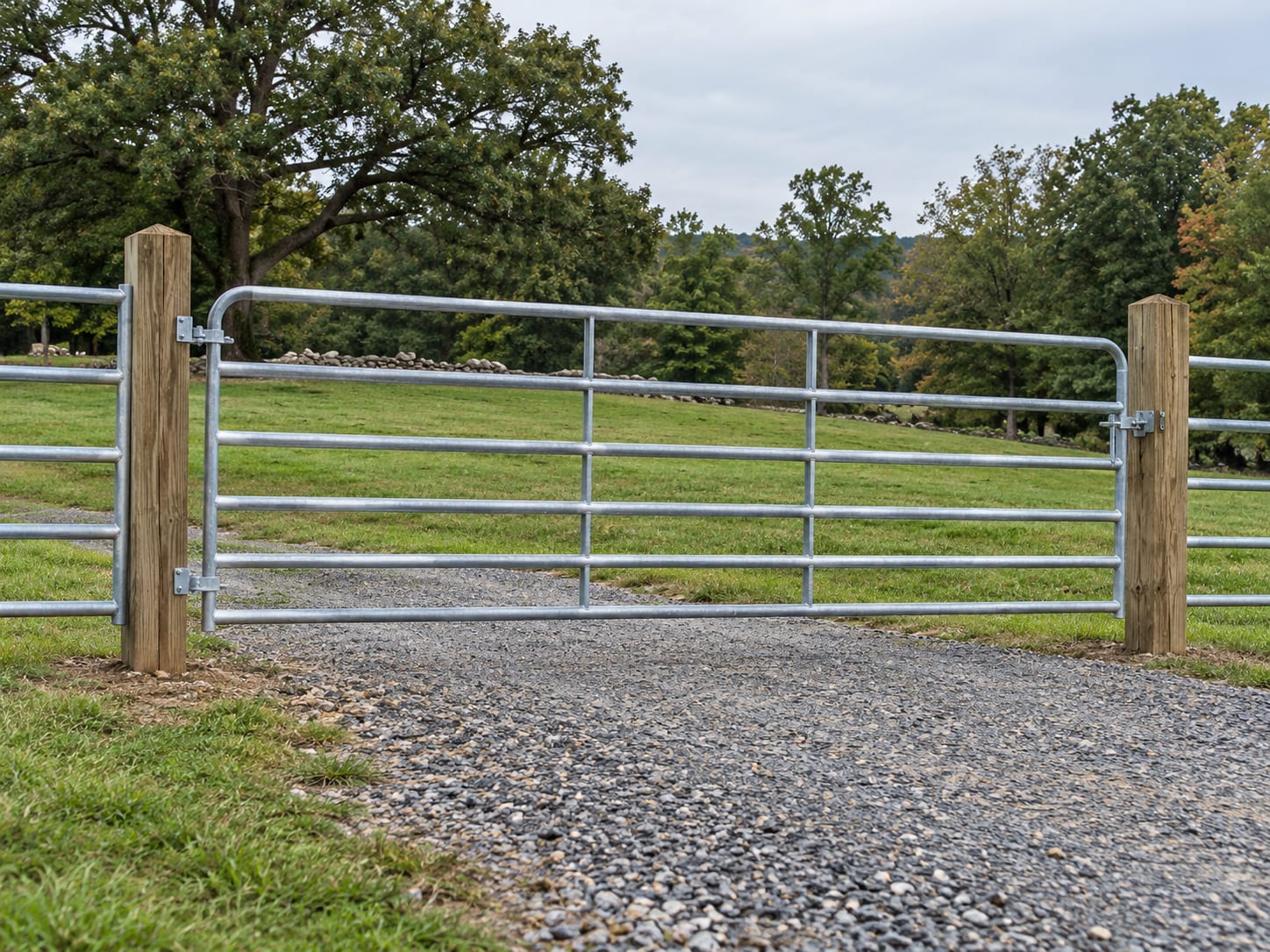
Match the gate height to the adjoining fence. A short gate can encourage a horse to reach over it or attempt to jump it. Use sturdy steel tubing, pipe or another comparably strong horse-rated gate. Check the space between the gate and hinge or latch posts so a hoof cannot become trapped.
A latch combined with a chain, clip or secondary securing device adds protection if one part fails. The latch should be operable with one hand while you hold a horse. Gates may swing inward, outward or in both directions, depending on the layout. A gate that rests against the latching post when closed can reduce the chance of a horse pushing it open.
Place gates near the direction of travel and in corners where practical. Avoid low areas where water and mud collect. In western Connecticut, frost heave can shift posts and make a gate drag or fail to latch. A site with deep frost movement may need a different footing and gate-post plan than a level, well-drained paddock.
Horse Fence Installation Planning
- 1
Confirm the use
Decide whether the fence serves a perimeter, paddock, dry lot, arena or interior cross-fence.
- 2
Check the town
Ask zoning or land-use staff about classification, height, setbacks, permits and wetlands.
- 3
Mark the route
Show gates, roads, driveways, property lines, wetlands, watercourses and existing structures.
- 4
Call before digging
Contact [Call Before You Dig Connecticut](https://www.cbyd.com/) before excavation.
- 5
Set the structure
Install corners, braces and posts to match the material, terrain and expected tension.
- 6
Build and inspect
Install rails or mesh, secure gates and inspect bottoms, openings, latches and visibility.
Horse Fence Costs
The figures below are national context, not Connecticut contractor pricing. Each figure below is a national figure with its unit and year. A local estimate can change with fence length, gates, post depth, access, clearing, slope, rock or ledge, drainage, removal, energizer and grounding.
Hover or tap a row to highlight it.
| Fence type | National installed cost | Source and unit |
|---|---|---|
| Basic wire fencing | $1 to $3 | HomeGuide, 2026, per linear foot |
| Coated wire | $1 to $2 for five wires | HomeGuide, 2026, installed per linear foot |
| Coated electric fencing | $1.50 to $3 for five wires | HomeGuide, 2026, installed per linear foot |
| No-climb mesh | $3 to $5 | HomeGuide, 2026, installed per linear foot |
| Flexible horse rail | $4 to $8 for three rails | HomeGuide, 2026, installed per linear foot |
| Wood board | $6 to $10 | HomeGuide, 2026, installed per linear foot |
| Vinyl split rail | $15 to $30 | HomeGuide, 2026, installed per linear foot |
| Premium vinyl or pipe fencing | $15 to $40 | HomeGuide, 2026, installed per linear foot |
The University of Georgia also gives relative material-cost indexes rather than dollar prices. Its 2024 comparison places board at 200 to 350, PVC rail at 500 to 600, mesh wire at 150, four-strand high-tensile electric at 20 and heavy-duty 1.5-inch electric tape, two strand, at 33. Electric controller costs are excluded from those indexes.
Ask for a written proposal that separates linear-foot fencing, gates, corner and end assemblies, posts, hardware, energizer, grounding, clearing, excavation, ledge or rock work, removal and installation. My Fence Guy can review the route, plan the gate locations and identify those items in a written estimate so you can compare proposals on the same terms.
Local Rules for Horse Fences in Brookfield, New Milford and Other Towns
Fence rules are set locally and can differ between towns. Start with the exact municipality, even when the property is rural or used for agricultural purposes. Ask whether the proposal is treated as a fence, agricultural fence, accessory structure or another category. Ask about height, front-yard, side-yard, rear-yard and corner-lot rules, along with zoning approval, building permits, certificates of zoning compliance and inspection.
Also ask whether the route affects a road or driveway sightline, right-of-way, easement, neighboring property, inland wetland or watercourse. Historic-district, conservation, floodplain and subdivision restrictions may affect the plan. Bring the parcel address, a site sketch, fence height and materials, gate locations, nearby roads, property-line information and wetlands or watercourse locations.
The statewide permit overview, Do You Need a Permit for Fence Installation in CT?, can help organize the questions, but the town decides how its rules apply to a particular parcel. Before excavation, use Call Before You Dig. Connecticut’s service is free and required by law.
Brookfield’s zoning regulations effective in 2024 state that fences under 8 feet may be constructed in residential zones without zoning approval. Fences 8 feet or higher require zoning approval and a certificate of zoning compliance. The regulations prohibit barbed wire and razor wire and separately address suitable animal fencing. For a Brookfield parcel, ask the town about the current rule and how it applies to the proposed horse enclosure.
New Milford’s zoning regulations amended in 2024 prohibit residential fences over 8 feet and prohibit razor wire and similar hazardous fencing in residential zones. They also address sightlines and traffic safety. A reader planning there can review Fence Permits in New Milford, CT: Height Limits, Zoning and Who to Call and then confirm the current requirements with the town office.
For a route near a stream, pond or wetland, read Building a Fence Near Wetlands, Streams or Lakes in Connecticut and ask the local wetlands office whether a jurisdictional ruling or permit is needed. If the fence is near an old stone wall, Fences and Old Stone Walls: Building Alongside, Behind or On Top covers the boundary and construction questions worth raising before posts are set.
In nearby New York, Putnam Valley’s zoning code requires a building permit for fences, walls and enclosures within 5 feet of a property line or roadway, with an agricultural exception for barbed wire. That is a Putnam Valley rule, not a general New York standard.
Frequently Asked Questions
What is the best fence for horses?
The best fence is visible, durable, free of sharp projections and designed without hoof-catching openings. Board, vinyl rail and woven no-climb mesh are practical permanent choices, while visible electric tape is useful for interior cross-fencing.
How tall should a horse fence be?
A horse fence is commonly about 5 feet high for a perimeter and 4.5 to 5 feet high for dividing fences. The final height should account for the horses, terrain and town rules, and gates should generally match the adjoining fence.
Is electric fence safe for horses?
Electric fence can be safe when it is visible, continuously energized, properly grounded and regularly inspected. Use wide tape or coated wire, control vegetation and consider a stronger permanent perimeter for foals, reactive horses or sites near roads.
Why is barbed wire bad for horses?
Barbed wire can cut, puncture and entangle a horse that runs into it. UConn Extension and the University of Minnesota advise against using barbed wire around horses.
What is the cheapest horse fence?
Electric wire or tape generally has the lowest initial cost in the national figures, especially for temporary cross-fencing. It still requires an energizer, grounding, vegetation control and maintenance, so a low-cost permanent design may combine no-climb mesh or visible rail with electric interior divisions.
Horse Fence Planning Check
1. What is a common perimeter fence height for horses?
2. Which wire option helps reduce hoof entrapment?
3. What width is commonly recommended for an equipment gate?
4. What should be added to smooth high-tensile wire?
5. What should you do before excavating fence posts in Connecticut?
Pick an answer to begin.
Final Thoughts
Choose the fence around the horses you have, the work the property needs to handle and the conditions along the route. Put visibility, safe openings, strong corners and dependable gates ahead of a low material price. Then confirm the town’s requirements and get a written estimate that identifies the fence, height, posts, gates and site work.
My Fence Guy can help you turn that information into a practical fence plan for a paddock, dry lot, arena or pasture. Call us at (203) 746-1100 for a free estimate, or reach out through our contact page.
Horse Fence Terms
Tap a term to see what it means.
Cross-fencing. Interior fencing used to divide pasture, paddock or grazing areas.
More about fences
Farm and Livestock Fence Types: What Works for Goats, Sheep, Cattle and Poultry
Fencing for goats, sheep, cattle, pigs and poultry: woven wire, cattle panels, electric netting, predator protection in Connecticut and NRCS cost-share.
Read the guide to Farm and Livestock Fence TypesElectric Fencing for Horses and Livestock: How It Works and What It Takes
How electric fencing for horses and livestock works: energizers, joules and ground rods, warning signs and town rules, common faults and cost compared to wire.
Read the guide to Electric Fencing for Horses and LivestockDeer Fence Guide for Connecticut Yards and Gardens: Height, Materials and Cost
Deer fencing for Connecticut yards and gardens: why eight feet is the usual height, mesh, welded wire and electric options, gates, town rules and cost per foot.
Read the guide to Deer Fence Guide for Connecticut Yards and Gardens