
Farm and Livestock Fence Types: What Works for Goats, Sheep, Cattle and Poultry
By Tony Pellicone15 min readPublished
- farm fencing
- agricultural fencing
- connecticut
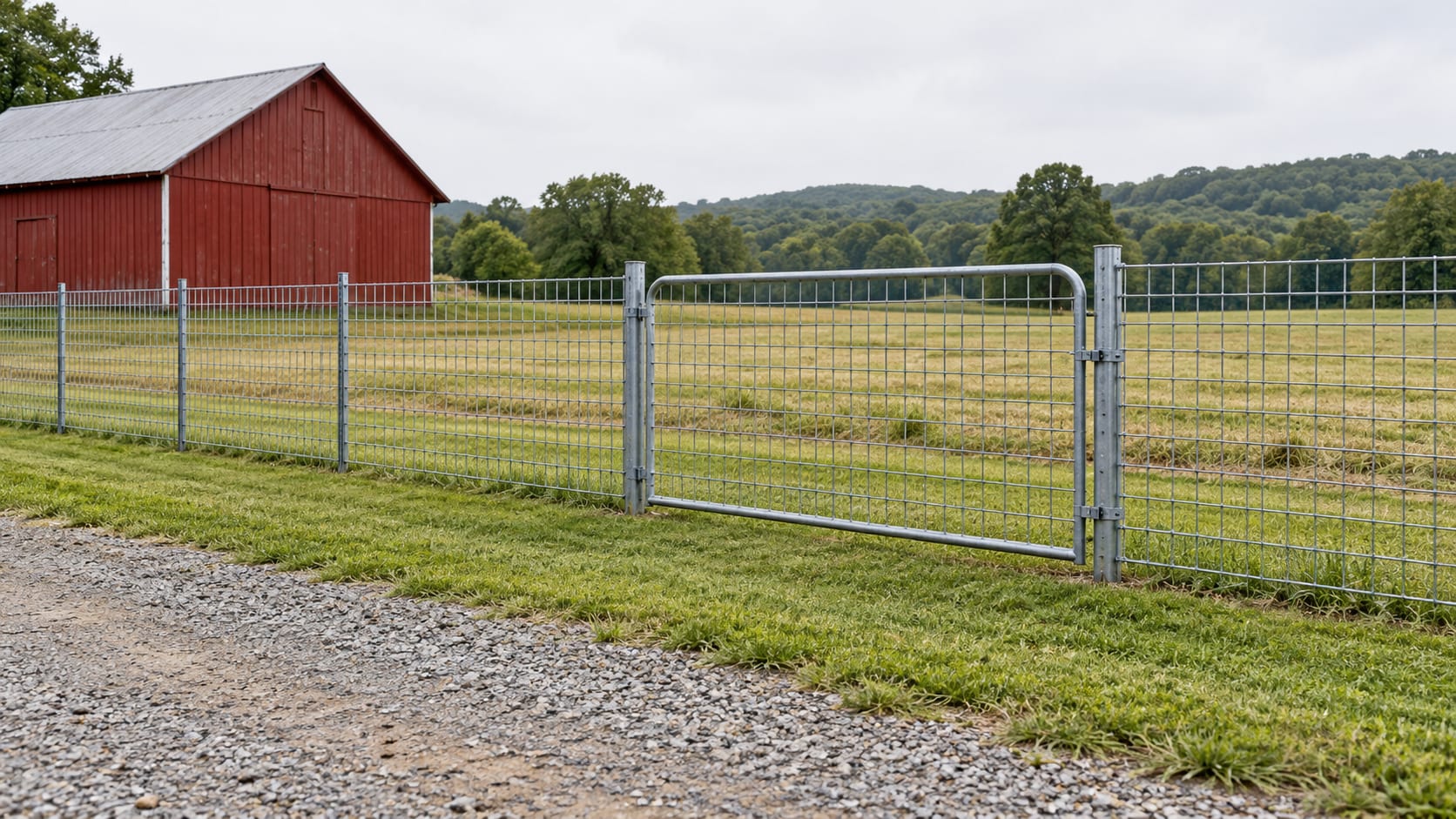
The best farm fence matches the animal’s behavior, size, pressure on the fence, and whether you need a permanent perimeter or a temporary interior fence. Goats usually need goat-tight woven wire or three energized wires in a five- or six-strand high-tensile system. Sheep often do well with four-foot woven wire, cattle need strong multi-strand wire or heavy panels, and chickens need small-mesh hardware cloth with protection above and below.
Your animal’s habits decide more than the fence label. Goats climb and reach, pigs root, cattle push, and poultry face digging, climbing and aerial predators. Start with the animal, then set the fence height, mesh opening, post spacing, gates, power supply and maintenance plan.
Key Takeaways
Goats
Use goat-tight woven wire, high-tensile electric fencing or continuously energized electric netting.
Sheep
A four-foot woven-wire fence is a practical starting point for a permanent perimeter.
Cattle
Strong high-tensile wire, woven field fence or heavy cattle panels can contain cattle when properly designed.
Poultry
Use hardware cloth, a secure roof or run, and buried or outward-turned mesh for predator protection.
Budget
National installed prices vary by fence type, with gates, ledge, clearing, energizers and terrain changing the total.
Permits
Connecticut fence requirements are set mainly by the town, so contact the proper offices before ordering materials.
Choose the Fence by Animal Behavior
A fence that works for adult cattle may leave a gap large enough for poultry predators. A sheep fence may contain mature sheep but fail with goats that climb and push. Mixed livestock usually need a physical perimeter fence plus separate interior fencing for animals with different habits.
Goats
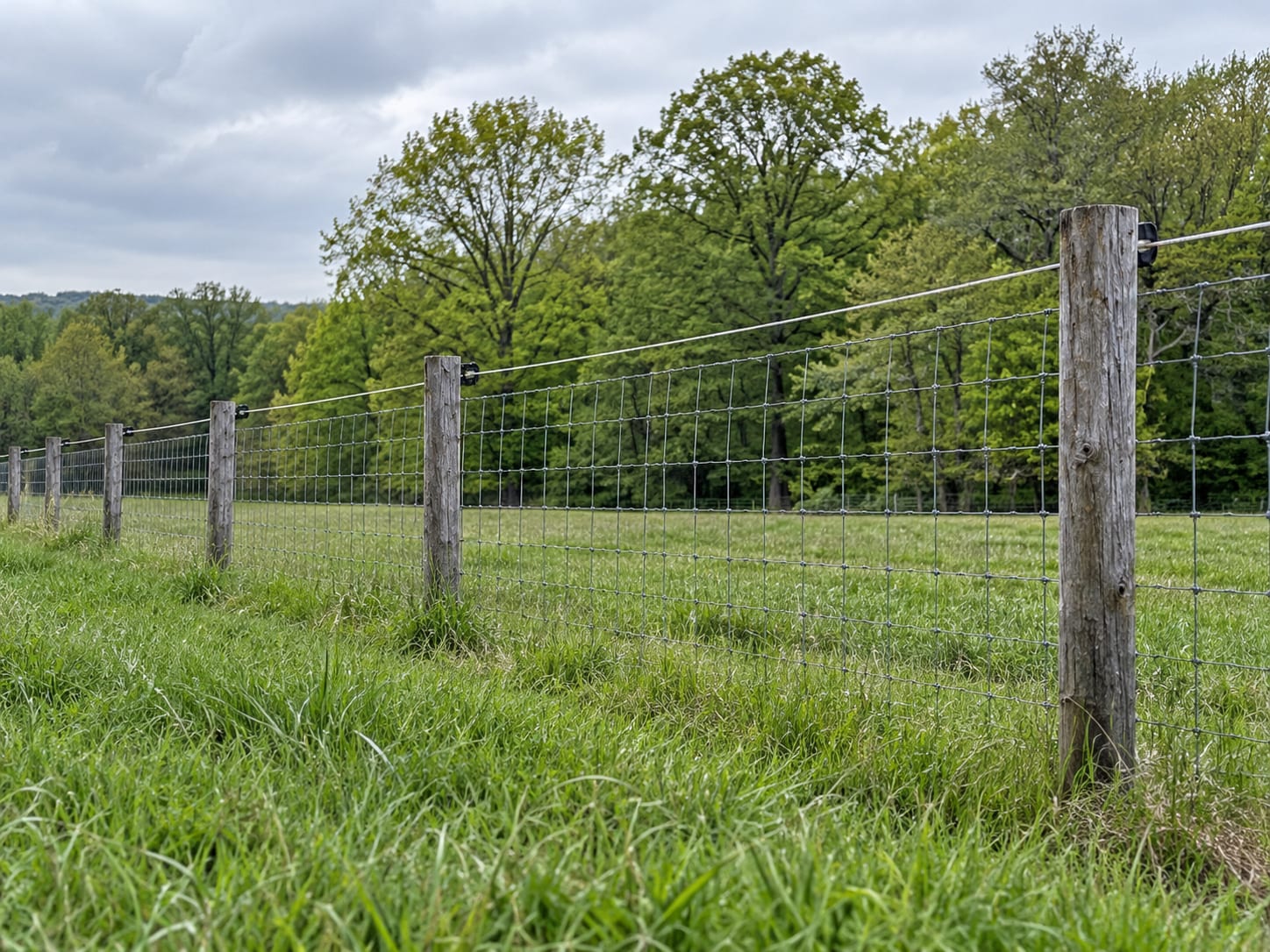
For most goat enclosures, start with goat-tight woven wire and add an interior electric strand to discourage climbing, rubbing and reaching through the mesh. Penn State Extension identifies five- or six-strand high-tensile fencing as an effective goat fence when the first, third and top wires are electrified.
Woven wire should have small openings, commonly about 4 inches square. Smaller openings are useful for kids and animals with horns. A single interior electric strand can help prevent climbing and head entanglement, but it must be placed where the goats contact it before they can press against the main fence.
A permanent goat perimeter is commonly about 48 inches high. Temporary electric netting can work for pasture subdivision when it remains continuously energized and vegetation is kept away from the conductors. Netting needs regular checks after storms, mowing and heavy plant growth.
Sheep
A four-foot woven-wire fence is a practical starting point for sheep. Utah State Extension recommends outdoor dry-lot fencing at least 48 inches high, while Penn State lists 42 to 48 inch handling panels for sheep and goats.
Smooth woven wire is generally more suitable than barbed wire for sheep because it reduces the chance of cuts and entanglement. High-tensile electric fencing or electric netting can work when the sheep are trained to respect the fence and the system stays powered.
Lambs need closer attention than adult sheep. Mesh openings, gates and the bottom edge should prevent small animals from slipping through or becoming caught. If coyotes are active, a physical woven-wire fence with an electric offset may provide better protection than a single low wire.
Cattle
Cattle can be contained with five-strand high-tensile electric fencing, four- or five-strand smooth or barbed wire, woven field fence, or heavy cattle panels. High-tensile electric fencing works best when the cattle are trained, the energizer is reliable, the grounding system is installed correctly, and vegetation does not short the wires.
Iowa State Extension describes high-tensile electric steel posts at 25-foot spacing in one fencing example. Its guidance also uses wider spacing for some non-electric systems and closer spacing where the fence needs more support. Corners, ends and changes in direction need bracing because cattle pressure concentrates at those points.
A four- to five-foot wire fence is a common starting range. Iowa State’s cited lawful-fence dimensions place the top wire between 48 and 54 inches for certain four-wire systems. Treat those figures as design references, not as a Connecticut zoning rule.
Heavy cattle panels are useful for corrals, loading areas, handling pens and smaller enclosures. Panels are commonly about 16 feet long and 4 to 5 feet high, although dimensions vary by manufacturer. Their rigid construction makes them practical where cattle will press against gates or where equipment needs to work close to the enclosure.
Pigs
Pigs need a strong exterior barrier because they root, push and test the bottom edge of a fence. Penn State Extension recommends a strong, reliable woven exterior fence. An interior electric strand at ground level can discourage digging under the fence.
For pigs, the bottom of the fence deserves as much attention as the top. Set the wire close to the ground, brace corners firmly, and inspect areas where wet soil lets animals push under the line. Hog panels or cattle panels can work in smaller pens, but the posts and gates still need to handle concentrated pressure.
Poultry
Chickens and other poultry need a different system from cattle or sheep. Use small-mesh hardware cloth for the sides, doors, corners and roof seams of the run. Lightweight chicken wire can hold birds inside, but it is not a reliable predator barrier.
Utah State Extension recommends burying wire at least 12 inches and turning the lower portion outward about 6 inches. Penn State describes an exterior electric wire about 4 inches above ground and approximately 1 foot outside the main pen. A roof or overhead mesh is needed where hawks, owls or climbing predators are present.
A secure coop closed at night, tight door hardware, protected feed storage and regular inspection all matter. Check after snow, storms, digging and rodent activity because small openings can become escape routes for predators.
Hover or tap a row to highlight it.
| Animal or system | Starting dimension or detail | Use |
|---|---|---|
| Sheep and goat perimeter | About 48 inches high | Permanent woven-wire or similar perimeter |
| Sheep and goat handling panels | About 42 to 48 inches high | Pens and handling areas |
| Cattle wire systems | Commonly 48 to 54 inches high | Multi-strand wire fencing |
| Poultry predator barrier | Bury mesh at least 12 inches or turn it outward about 6 inches | Digging protection |
| Poultry exterior electric wire | About 4 inches above ground and 1 foot outside the main pen | Predator deterrence |
| High-tensile electric cattle posts | About 25 feet apart in an Iowa State example | Spacing between brace assemblies |
These are livestock-management dimensions. Your town sets its own rules for height, setbacks, permits and location, so confirm them with the town.
For a product overview focused on farm enclosures, see agricultural fencing options.
Permanent Perimeters and Temporary Interior Fences
The main perimeter fence protects the property and animals from outside pressure. It may need to stop livestock from leaving, predators from entering, and vehicles or people from crossing the enclosure. Interior cross-fences divide pasture, create rotation areas or separate animals with different needs.
Temporary electric polywire and electric netting can be useful for rotational grazing. They are lighter and easier to move than a permanent woven-wire fence, but they depend on power, grounding, vegetation control and animal training. A temporary fence is not automatically suitable as the only boundary around poultry, pigs or untrained livestock.
NRCS Conservation Practice Standard 382 treats fence height, wire number and spacing, vertical stay spacing, electric components, terrain, post spacing, durability and maintenance as design factors. High-tensile smooth wire may be used for many animals when it is properly spaced. Livestock must be trained to respect electric fencing.
Gates should match the work done inside the enclosure. A walk-through gate may be enough for a chicken run, while a cattle area may need a wider opening for a tractor, hay wagon or livestock trailer. Put gates where the ground drains well and where animals cannot crowd into a corner. If the line crosses a slope, a stepped or racked layout may be needed. Read about stepped and racked fences on sloped yards before finalizing the line.
An old stone wall can also change the installation. Posts may need to be set beside or behind the wall rather than through it, and the wall may affect access for equipment. See how fences can be built alongside old stone walls when a wall is near the proposed enclosure.
Predator Protection for Poultry and Small Livestock
Coyotes prey on small livestock and poultry, and Connecticut DEEP identifies sheep and fowl as particularly vulnerable. DEEP recommends fencing livestock and identifies electric fencing as the best option because it can also deter black bears and other predators.
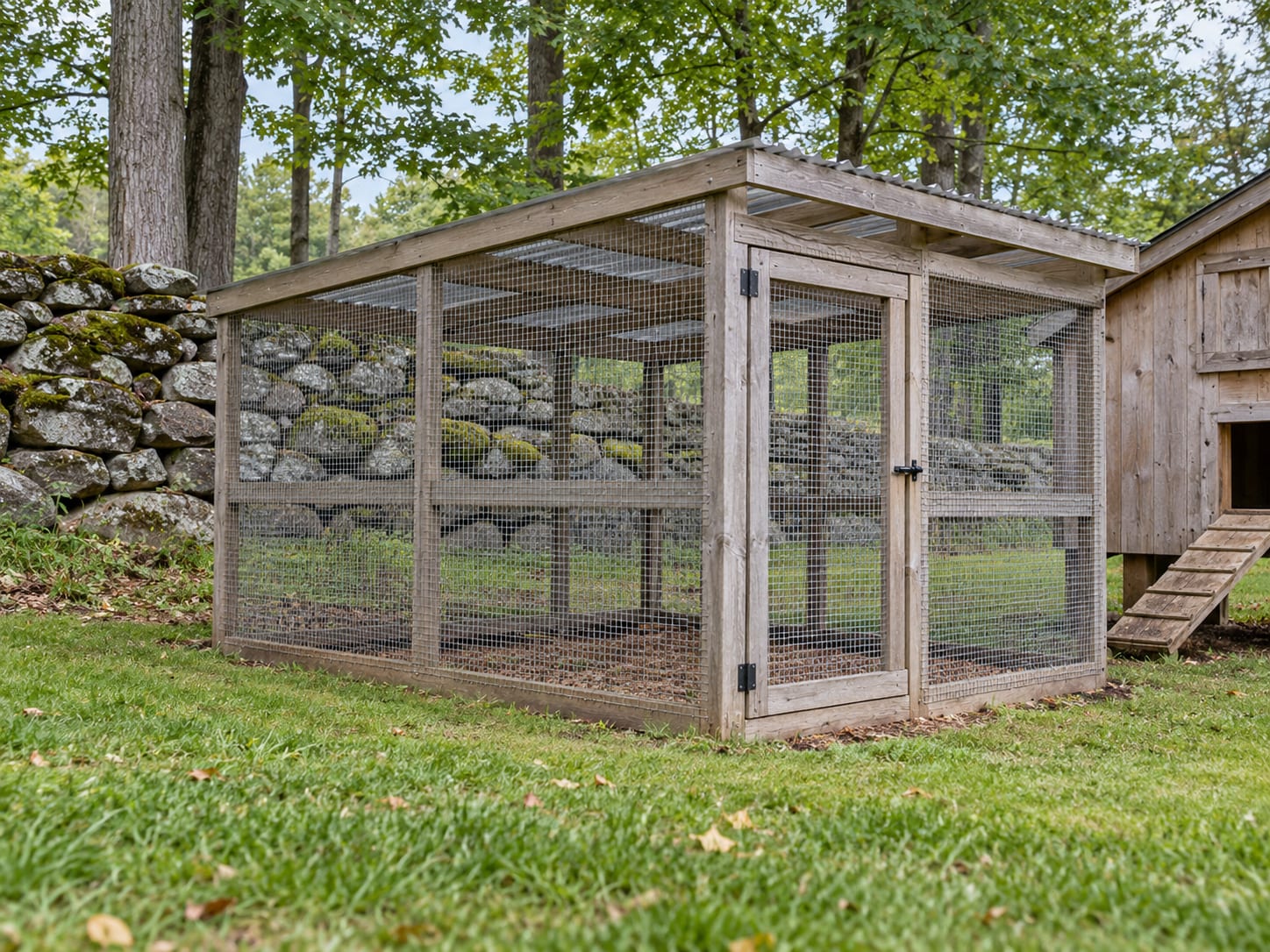
A poultry run should address the top, sides and bottom at the same time. Raccoons can climb conventional fences, foxes can dig or squeeze under poorly maintained fences, and hawks and owls can attack from above. Hardware cloth must be secured at doors, windows, corners and roof seams.
Keep poultry in a secure coop at night. Remove spilled feed, dead birds and fallen fruit that can attract predators. Inspect the fence after weather, digging, rodents and snow. A buried perimeter or outward-turned apron helps stop animals from digging directly against the run.
Where appropriate and legal, a low exterior electric wire can add distance between the predator and the main mesh. The wire is a deterrent, not a replacement for secure doors, small mesh and overhead protection.
Black bears need stronger deterrence than ordinary livestock fencing. Connecticut DEEP advises contacting its Wildlife Division when bears damage livestock or agricultural products. The state agricultural damage permit program requires proof of damage and prior reasonable nonlethal efforts.
What Livestock Fencing Costs
The following figures are national installed-price ranges unless identified as an extension construction estimate. They are budgeting figures, not Connecticut contractor quotes. Gates, ledge, steep terrain, clearing, energizers and wetland-related work can change the total.
Hover or tap a row to highlight it.
| Fence type | Cost | Source and date |
|---|---|---|
| Woven or field fence | $1.50 to $6 per linear foot installed | HomeAdvisor, national range, 2026 |
| Chicken wire | $2 to $4 per linear foot installed | HomeAdvisor, national range, 2026 |
| Cattle wire or heavy livestock wire | $2.50 to $7.50 per linear foot installed | HomeAdvisor, national range, 2026 |
| Electric wire | $1 to $6 per linear foot installed | HomeAdvisor, national range, 2026 |
| Welded wire, including some cattle-panel uses | $3.50 to $10 per linear foot installed | HomeAdvisor, national range, 2026 |
| Barbed wire | $1.25 to $6 per linear foot installed | HomeAdvisor, national range, 2026 |
| High-tensile non-electric wire | About $1.92 per linear foot | Iowa State Extension construction estimate, 2024 |
| High-tensile electrified wire | About $1.21 per linear foot | Iowa State Extension construction estimate, 2024 |
| Temporary electrified polywire | About $0.50 to $1.50 per linear foot installed | FenceCalc national range, 2026 |
| Electric netting | About $0.90 to $1.15 per linear foot | Michigan State Extension example, 2017, energizer excluded |
The Iowa State figures come from 1,320-foot examples that include materials, labor and equipment. The electrified example includes one-quarter of an energizer. The Michigan State electric-netting figure is historical and is not a current Connecticut price.
Ask for an itemized estimate showing:
- Fence material, height, mesh opening and wire gauge.
- Number of electric strands and the energizer.
- Posts, post spacing, insulators and corner bracing.
- Gates, latches and equipment access.
- Clearing, rock or ledge work.
- Installation labor and removal of an existing fence.
- Sales tax and permit-related fees.
My Fence Guy can prepare a written quote that separates the fence line, gates, site work, electric components and other cost drivers so you can compare the design with your animal plan.
Connecticut farm properties often have ledge or shallow rocky soil that changes post installation. If excavation reaches rock, the work may require different equipment, wider access or a revised post layout. Read about fence installation on rocky soil and ledge before pricing a long perimeter.
Farm Fence Funding and Local Rules
Connecticut agricultural producers can apply to the USDA Natural Resources Conservation Service Environmental Quality Incentives Program, or EQIP. Fence is addressed through NRCS Conservation Practice 382 when it supports an eligible conservation objective such as grazing management, erosion reduction, water-quality protection, livestock exclusion or improved resource management.
Connecticut NRCS accepts EQIP applications year-round, but applications should be submitted by the state ranking date to compete for the current funding cycle. The Connecticut EQIP page lists September 30, 2026, as the fiscal year 2026 application date.
NRCS develops a conservation plan, determines whether the producer and land are eligible, ranks applications, and provides standards and specifications if an application is funded. Before starting a possible EQIP project, ask the local USDA Service Center:
1. Is the fence eligible under Practice 382 or another practice? 2. What resource concern must the fence address? 3. Is the project perimeter fencing, cross-fencing, livestock exclusion or wildlife exclusion? 4. What Connecticut payment rate applies per linear foot? 5. Can work begin before a contract is signed? 6. What inspection and maintenance period applies?
Do not order materials before confirming the funding process. Use the Practice 382 standard adopted for Connecticut and ask the local field office for the design that applies to your project.
Connecticut fence rules are primarily local. Before construction, contact Planning and Zoning about height, setbacks, zoning permits, agricultural use, property-line location and district rules. Contact the Building Department about a building permit or inspection. Contact the Inland Wetlands Agency if the proposed line is in or near a wetland or watercourse. The Highway or Public Works Department may address rights-of-way, driveway sight lines and work near a town road. A Health Department review may matter if the line affects septic areas, wells or regulated setbacks.
For a statewide overview of the permit questions to ask, read Do You Need a Permit for Fence Installation in CT?.
Ridgefield states that fences may require a zoning permit and that some projects may also require a building permit. Newtown’s zoning regulations contain special agricultural and agritourism provisions, with area, height, yard and supplemental rules applying to those uses. Danbury organizes requirements by zoning district and section. Ask your town for a written determination because a livestock perimeter, poultry run, road-facing fence and agricultural use may be treated differently.
Nearby New York towns use their own local rules. Dutchess County explains that local zoning codes are enacted by towns, villages and cities, while state-certified agricultural districts provide additional protections for qualifying farm operations. New York Agriculture and Markets Law Section 305-a addresses unreasonable local regulation of accepted farm operations in agricultural districts. Farm fence design there follows the town's rules and the protections that apply to the agricultural district.
If the fence is near a wetland or watercourse, contact the municipal Inland Wetlands Agency before layout and excavation. Read about fences near wetlands, streams and lakes when water is part of the site.
A Practical Preconstruction Sequence
A livestock fence project goes more smoothly when the line and approval questions are settled before posts arrive.
Before the Fence Goes In
- 1
Define the animal and purpose
Decide whether the fence is for a permanent perimeter, cross-fence, temporary paddock, poultry run, predator exclusion or handling area.
- 2
Confirm the property line
Use a survey when the fence is near a boundary, stone wall, road or easement.
- 3
Contact town offices
Ask Planning and Zoning, Building, Inland Wetlands, Highway or Public Works, and Health as the site requires.
- 4
Check funding
Contact USDA NRCS and the local Farm Service Agency before beginning a potential EQIP project.
- 5
Mark utilities
Contact Call Before You Dig at least two full working days before excavation with power-operated equipment.
- 6
Price the full system
Separate linear footage, posts, bracing, gates, energizer, grounding, clearing, rock, ledge and permit fees.
- 7
Install and inspect
Set posts, install wire or panels, test gates and electric components, and inspect the bottom edge and corners.
Connecticut’s Call Before You Dig process applies before excavation with power-operated equipment. When you hire a contractor, the contractor is responsible for the notification. Read what to mark before a fence goes in before digging.
A residential fence contract should identify the parties, materials, height, linear footage, gates, price, payment schedule, start date, completion date, change-order process, permit responsibility and warranty terms. Connecticut DCP includes fencing within home-improvement work and advises consumers to verify a contractor through the state eLicense system.
Frequently Asked Questions
What is the best fence for goats?
The best starting choice is goat-tight woven wire with an interior electric offset, or a properly designed five- or six-strand high-tensile electric fence. Use small openings, about 4 inches square as a common reference, and about 48 inches of height for a permanent perimeter.
What kind of fence keeps cattle in?
A properly braced high-tensile electric fence, strong smooth-wire fence, woven field fence or heavy cattle panels can keep cattle contained. Use a common starting height of 48 to 54 inches for wire systems, then match the wire count, post spacing and bracing to the cattle, terrain and gate pressure.
What fence keeps chickens safe from predators?
A fully enclosed run with small-mesh hardware cloth, secure doors, protected corners, overhead mesh and buried or outward-turned lower mesh gives chickens the strongest basic protection. A low exterior electric wire may add deterrence, but it does not replace a secure coop and roofed run.
What is the cheapest livestock fence?
Temporary electric wire is often the lowest installed-cost option, with a national 2026 range of about $0.50 to $1.50 per linear foot installed. The complete cost also includes an energizer, grounding, insulators, power, vegetation control, animal training and maintenance.
What are the types of agricultural fencing?
Common types include woven wire, high-tensile smooth wire, electric wire, electric netting, cattle panels, hog panels, barbed wire, hardware cloth, board or rail fencing, and combination systems. The right type depends on the species, pressure on the fence, predator exposure, terrain, gates and maintenance plan.
Livestock Fence Planning Check
1. Which fence is a practical starting point for a permanent goat perimeter?
2. What should protect the lower edge of a poultry run?
3. Which detail belongs in an itemized fence estimate?
4. Which office should you contact about fence height and zoning setbacks?
5. When should you contact Call Before You Dig?
Pick an answer to begin.
Final Thoughts
The right agricultural fence starts with the animal, not the material catalog. Plan the mesh, height, electric components, posts, gates and predator protection around how the animals move and how the property will be used. Then confirm the town’s requirements, wetlands questions, utility markings and any EQIP conditions before construction.
A written estimate should show the full fence system and the site conditions that affect the price. My Fence Guy can help organize the fence line, gates and installation details into a practical plan. Call us at (203) 746-1100 for a free estimate, or reach out through our contact page.
Livestock Fence Terms
Tap a term to see what it means.
Goat-tight woven wire. Woven mesh with openings selected to contain goats and reduce climbing or head entanglement.
More about fences
Horse Fence Options: Board, Vinyl, Wire and Electric
Horse fence options compared: board, vinyl rail, no-climb wire, high-tensile and electric tape, with safe heights, visibility, post spacing, gates and costs.
Read the guide to Horse Fence OptionsElectric Fencing for Horses and Livestock: How It Works and What It Takes
How electric fencing for horses and livestock works: energizers, joules and ground rods, warning signs and town rules, common faults and cost compared to wire.
Read the guide to Electric Fencing for Horses and LivestockDeer Fence Guide for Connecticut Yards and Gardens: Height, Materials and Cost
Deer fencing for Connecticut yards and gardens: why eight feet is the usual height, mesh, welded wire and electric options, gates, town rules and cost per foot.
Read the guide to Deer Fence Guide for Connecticut Yards and Gardens