
Estate Gates in Sherman, CT: Swing, Slide, Safety, and Cost
By Tony Pellicone21 min readPublished
- estate gates
- sherman ct
- automatic gates
- connecticut
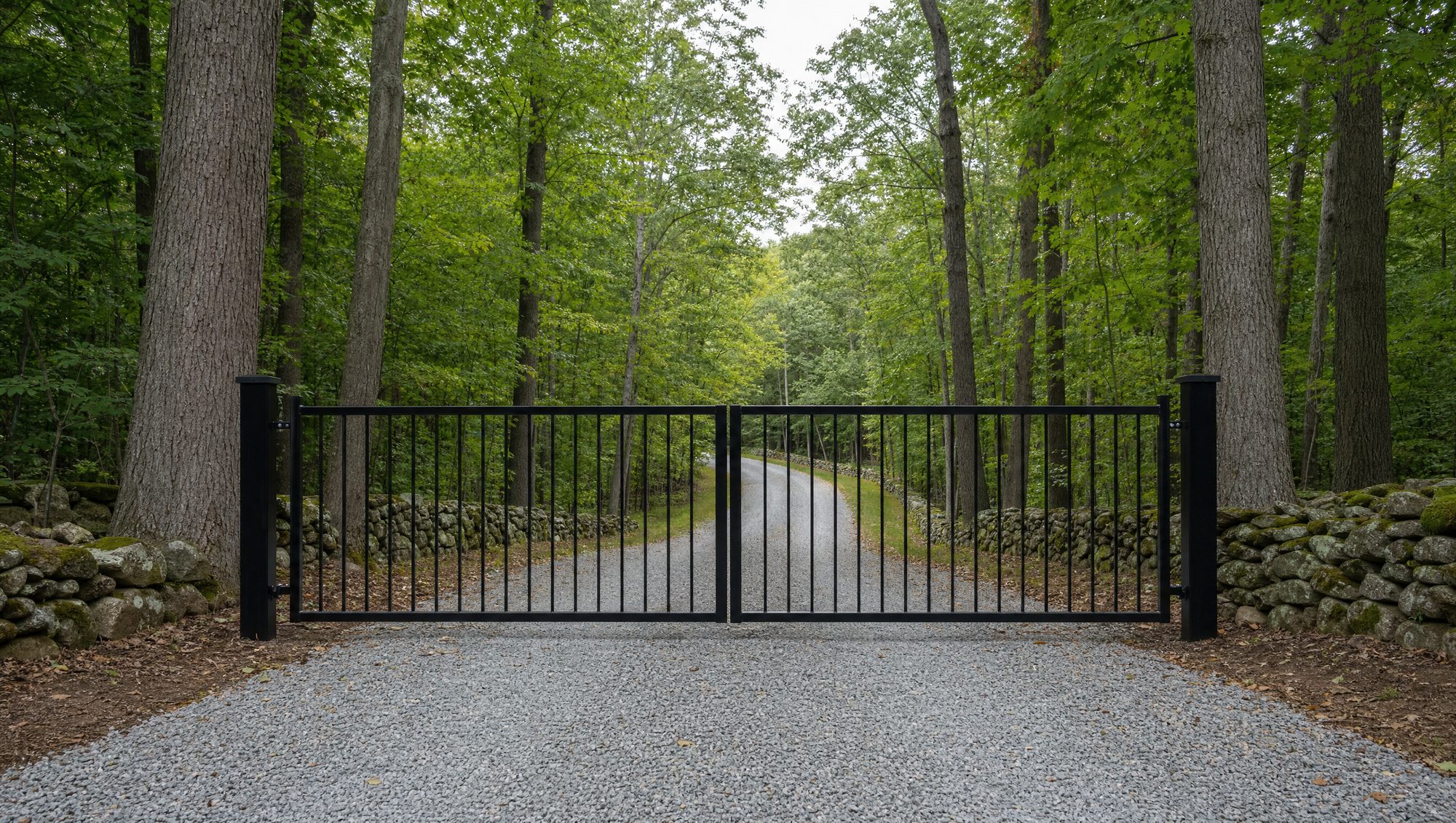
You have been saving photos of entrances, and every one of them is a beautiful panel between two stone columns. Here is what the photos leave out: an estate gate is the only thing on your property that is both architecture and machinery. It is a few hundred pounds of steel or aluminum that moves on its own, sits where cars pull in and kids walk out, and has to do it every day through a Sherman winter. Estate gates in Sherman, CT fail for boring reasons far more often than pretty ones: the leaf was too heavy for its posts, the driveway was too steep for the swing, the operator got picked before the gate, or nobody planned what happens when the power drops. Almost all of it gets settled before anyone picks a finish, standing at the end of your own driveway with a tape measure. Those are decisions, not luck. Let's walk your entrance the way we would if we were standing there together.
Key Takeaways
The driveway picks the gate
Opening width, grade, side clearance, turning radius, and where the plow puts snow rule out gate types before style ever enters the conversation.
An automated gate is a safety system
ASTM F2200 covers how an automated vehicular gate is built and UL 325 covers the operator and its hazards, including entrapment, so the two get designed as one machine.
Foundations carry a moving load
Leaf weight, wind, operator force, frost, drainage, and ledge decide the posts and columns, and a support that settles or heaves is what makes a gate bind.
Plan for the day it does not work
Power outages, manual release, backup power, a separate walk gate, and emergency-services access belong in the design, not in a later phone call.
Sherman routes fences through Planning and Zoning
The town's fee schedule lists a zoning permit for fences, and a gate near the road adds sight-line, setback, driveway, masonry, and electrical questions, so confirm current requirements with the town.
Start at the Road, Not at the Gate
The most useful thing you can do before spending a dollar is measure your own entrance. A gate that photographs beautifully on a flat, wide approach can be physically unusable at the bottom of a sloped Sherman driveway with a stone wall on one side. The geometry either allows a gate type or it does not, and no amount of design talent moves a property line or flattens a hill. This is the order the conversation should go in.
The Clear Opening and the Vehicles That Actually Come
The clear opening is what fits between the posts or columns when the gate is fully open, not the width of the pavement. It has to serve everything that realistically comes up your driveway: your own vehicles, pickups, a landscaper's trailer, oil or propane delivery, a moving truck, the plow, and fire apparatus. Owners of larger parcels sometimes forget the equipment or horse trailer that shows up twice a year, then live with a pinch point forever. Columns are the usual culprit, because an oversized column pair looks impressive and quietly eats both the useful opening and the turning path.
Where the Gate Sits Relative to the Road
A gate set too close to the road is a safety problem before it is an inconvenience. When a vehicle cannot pull fully off the pavement while it waits for the gate to open, you have created a stopped car in a travel lane, in the dark, in February. That waiting space is called vehicle stacking, and it can push a gate well farther up the drive than you pictured. Sight lines matter for the same reason: columns, walls, and landscaping should not blind you to traffic when you pull out.
Grade, Turning Radius, and Where the Snow Goes
A rising driveway is the natural enemy of a swing gate, because the leaf has to clear ground that climbs as it opens. Snow is the other local reality, and it is not a footnote. The design should account for where the plow pushes the pile, whether it lands in the swing arc or across a track, whether the photo eyes stay aligned, and whether anyone can reach the operator in a storm.
Matching the Gate Type to the Entrance You Have
Once the measurements are on paper, the shortlist usually writes itself. Each type trades space, cost, and maintenance differently, and ASTM F2200, the standard specification for automated vehicular gate construction, addresses several of these types and their safety-related construction requirements. Here is how the common options tend to land on Sherman properties.
Swing Gates, Single and Double
A single leaf pivots from one side and suits moderate openings with level or gently sloped approaches and real swing clearance. The whole load lands on one hinge post or column, so leaf weight, wind, sag, and operator force all concentrate in one place. A double swing splits the opening into two lighter leaves, which is why wider estate entrances usually go that way, but you take on two hinge supports, center alignment, a drop rod or center stop, and two operators that have to work together.
Cantilever and Track Slide Gates
A cantilever gate slides parallel to the fence on roller posts, with a counterbalance section extending past the opening, so nothing crosses the driveway on the ground. That makes it strong on snowy or uneven approaches and on wide openings. The catch is space: the gate plus its counterbalance needs real room to one side, and a pinched entrance will not fit one. A track gate rolls on a track and suits level, well-drained driveways where someone will actually keep the track clear of snow, ice, gravel, and leaves.
Bi-Fold Gates and the Pedestrian Gate
Bi-fold gates fold as they open, shrinking the swing depth for a constrained entrance, at the cost of more hinges, more moving joints, and a specialized operator. A separate walk gate is not an upsell: a vehicular gate should not be the normal way people walk onto the property, which is one of the core ideas behind gate construction standards. It gives visitors, kids, and dog walkers a path that is not in the way of a moving leaf, and it is where an intercom or keypad usually belongs anyway.
Designing a Custom Entrance Gate That Still Opens Every Morning
Design is where most owners want to start, and it is genuinely the fun part. The constraint is simple: every decorative choice adds weight, wind load, or maintenance, and all three land on the posts and the operator. A gate designed with those consequences in mind stays beautiful, and one that is not becomes a gate that sags, binds, or needs a bigger operator than it should.
Aluminum, Steel, and Wood Infill
Aluminum is lighter, resists corrosion, pairs naturally with aluminum fencing, and asks less of the operator for a comparable design, though thin or poorly reinforced frames can flex. Steel brings mass and takes custom fabrication further, which is why heavy ornamental work lives there, with corrosion protection and heavier foundations as the trade. Wood infill on a metal frame gives warmth and privacy and coordinates with wood fencing, while adding moisture movement, weight, and refinishing to your life.
Open Versus Solid, Columns, and the Matching Fence
An open picket design lets you see through the entrance and lets wind pass through it, which is a structural gift. A solid gate gives privacy and turns your entrance into a sail, so the frame, hinges, foundations, and operator all have to be sized for a load that shows up on the worst day of the year. Masonry columns need their own foundations, reinforcement, drainage, and conduit routed through them before the mason finishes, not after. Lighting, house numbers, and an intercom pedestal are easier to place now than to retrofit, and the ornamental fencing running off each side should be planned with the gate rather than matched to it later.
What Holds a Moving Gate Up
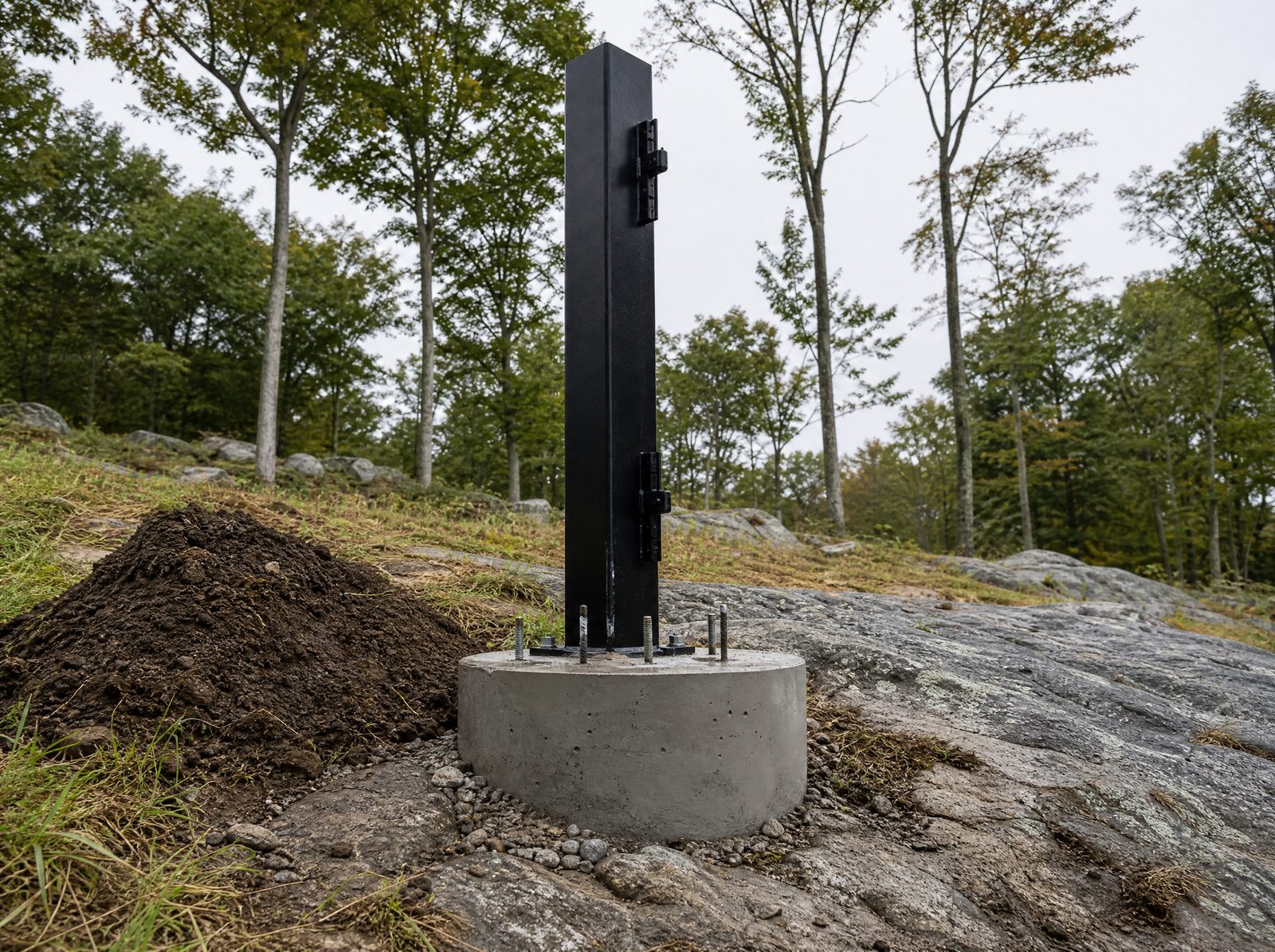
A fence post carries a static load. A gate post carries that plus a swinging one, plus whatever the operator pushes against, plus wind, thousands of cycles a year. That is why gate supports are their own problem and why the failures are so predictable. Frost is the other half of the story here, and the state's residential code for foundations frames why frost protection matters even where a gate is not regulated like a building footing.
Swing Supports and Slide Supports Fail Differently
A hinge post or column has to resist vertical weight, sag, wind, and operator force, and when it is undersized the gate drops at the latch and drags. Cantilever roller posts and the operator pad have a different job: staying in alignment with each other, since a little settlement is enough to make a slide gate bind or chew rollers. The gap under the leaf belongs to this conversation too. It should be a designed number that accounts for grade, snow, and the standard's guarding requirements, never whatever the ground happened to leave.
Ledge, Drainage, and the Things You Cannot See
Sherman ground can hand you ledge at an inconvenient depth, which may mean drilling, specialized anchoring, adjusted foundations, or engineering, and that belongs in the estimate as a real site condition rather than hidden inside a round number. Drainage deserves equal attention, because water that collects around an operator, a track, a loop, or an electrical enclosure is a repair bill with a delay fuse. Water that collects around a footing and freezes is how a support moves.
Automation Is Where Safety Stops Being Optional
This is the section that separates a gate from a fence panel. A powered gate is a machine with enough force to injure someone, which is exactly why standards exist for it. Two of them matter to you as an owner, and a competent gate contractor should be able to talk about both without looking them up.
The Operator Comes After the Gate, Never Before
Operator selection follows from the gate: its type, weight, leaf length, wind exposure, duty cycle, and the class of application. Picking a model first and designing a gate to suit the box is backwards, and it is one of the most common pitfalls in this work.
UL 325 and ASTM F2200 in Plain Language
UL 325 is the safety standard covering door and gate operators and systems, addressing hazards including entrapment, fire, electric shock, and casualty. ASTM F2200 governs construction of the gate itself across horizontal slide, swing, vertical lift, vertical pivot, and other types under its applicable provisions, and ASTM has written directly about the hidden dangers of gates that drove that work. The practical takeaway is that they are one system: guarding or screening of entrapment zones, positive stops, protection against protrusions, the correct operator class, warning signs, and testing all belong to the same conversation.
Photo Eyes, Edge Sensors, and Vehicle Loops
External entrapment protection devices such as photo eyes and edge sensors exist to detect an obstruction or an entrapment condition, and UL publishes guidance on external entrapment protection devices specifically. Vehicle loops in the driveway are a different animal, detecting vehicles for free exit, safety, or opening logic. Keep the categories straight: a keypad is security, a photo eye is safety. And the rule that matters most, because it is the one that hurts people, is that a device which keeps faulting is telling you something. Bypassing it is not a repair.
The Day the Power Goes Out
Sherman loses power, sometimes for a while, and a gate with no plan becomes a wall. The system should have a documented answer: manual release, battery backup, solar capacity where the site supports it, a key override, or the separate pedestrian gate. The release point should be secure but genuinely reachable, and someone in the house should know how to use it before they need to.
Deciding Who Gets In
Access control is the part owners enjoy specifying, and it is where a system gets over-bought. The question is not which features exist, it is who actually arrives at your entrance in a given week. Remotes suit residents, with a plan for lost ones. Keypads give code-based access, ideally with separate codes for family, vendors, and temporary users. Intercoms let a visitor call the house over a wired, cellular, or internet connection, and telephone entry can route that call to your phone and let you release the gate from anywhere. Card or fob readers make sense for staff or multiple residences, and smartphone control can add remote operation, user management, and activity logs, depending on the product and the signal at the end of your driveway, which is worth checking before it is designed in.
Deliveries and emergency services deserve their own thinking rather than an assumption. Temporary codes handle the delivery driver cleanly, and fire, ambulance, and police access should be coordinated deliberately, which is a fair question to ask the town rather than to guess at.
Sherman Permits, Zoning, and the Site Review Nobody Expects
Sherman handles fence-related land-use applications through its Planning and Zoning Department, and the town's fee schedule lists fences under miscellaneous structures and equipment with a zoning permit fee. An estate gate is rarely just a fence question, though. Columns and masonry, foundations, electrical work, automated equipment, driveway changes, drainage, wetlands or watercourses, easements, a pool barrier, and private association rules can each pull in their own review, and a gate near the road raises sight-line and setback questions regardless of what the fence itself needs. Confirm current requirements with the town before anything is fabricated, since local rules change and the dimensional details should come from the town, not from an article.
Boundaries and Easements Come First
Estate gates tend to land right where the complications live: property lines, stone walls, driveway easements, shared drives, utility easements, road rights-of-way, and drainage easements. A current survey is often worth it before columns, foundations, or gate posts go in near a boundary, and recorded plans commonly live with the town clerk. A contractor can lay the project out, but a licensed surveyor establishes the legal line.
Call Before You Dig, Then Locate the Private Lines
Posts, columns, foundations, operator pads, loops, and conduit all mean digging, so Connecticut's Call Before You Dig service has to be contacted before excavation. Public marking will not find everything at an estate entrance: gate power, low-voltage control wiring, yard lighting, irrigation, well lines, septic, propane, drainage, security cable, and invisible pet-fence wire are frequently private. The written scope should name who handles public marking and who arranges the private locate.
Licensed Electrical Work Is Not a Detail
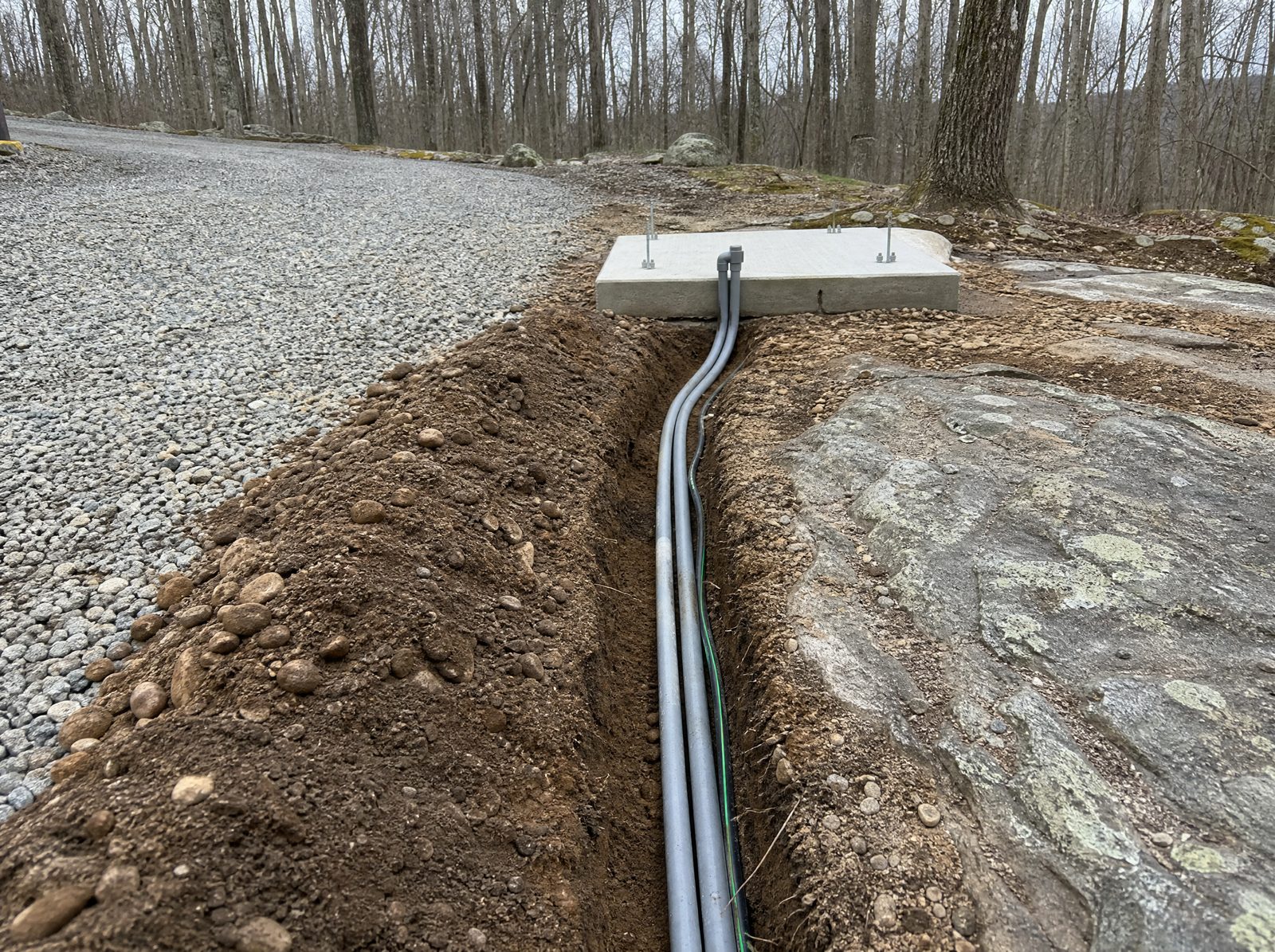
An automated gate may need branch-circuit power, a disconnect, grounding, surge protection, conduit, low-voltage runs, and often a trench from the house to the road that is a small project of its own. Connecticut is clear that skilled work such as electrical work requires the appropriate trade license. Your proposal should say plainly which work is included and which licensed trade performs the electrical connections.
What Actually Drives Estate Gate Cost in Sherman
There is no honest single price for an estate gate, and anyone who gives you one over the phone is guessing. A manual aluminum swing gate and a custom automated steel entrance with masonry columns, an intercom, loops, lighting, and backup power are not the same purchase in any meaningful way. Published consumer figures from general guides like Angi are broad market context, not a quote for your driveway.
The clear opening and the gate type set the baseline, since width drives leaf size and design drives everything downstream. Material and infill come next, because open aluminum and solid steel ask different things of every component that touches them. Then come the parts owners forget: foundations sized for the real load, ledge and excavation, masonry columns, drainage, the operator, the safety devices, access control, the electrical and communications work, backup power, matching fence, lighting, permits, pavement restoration, removing an existing gate, and commissioning. The most common bid-comparison mistake is not about price at all: it is holding two proposals side by side when they carry different operators, different safety devices, and different electrical scopes.
Hover or tap a row to highlight it.
| Cost Driver | Why It Matters |
|---|---|
| Clear opening and gate type | Width drives leaf size, and swing, cantilever, track, or bi-fold changes every component downstream. |
| Material and infill | Aluminum, steel, and wood infill differ in weight and finish work, and a solid gate loads the frame, hinges, and operator far harder than an open one. |
| Foundations, columns, and ledge | Posts and piers are sized for a moving load, and ledge can mean drilling, anchoring, or engineering. |
| Operator and safety devices | The operator class, entrapment protection, warning signs, and commissioning are part of the machine, not add-ons. |
| Access control and electrical | Keypads, intercoms, loops, backup power, and the trench and licensed electrical work to feed them. |
How an Estate Gate Installation Comes Together
A clean estate gate installation in Sherman runs in an order, and the order is itself a quality signal. Steps get skipped in a predictable sequence when a crew is in a hurry, and the skipped ones are almost always the invisible ones: the document review, the private utility locate, and the commissioning at the end. Two of those steps deserve a note. Everything gets committed to written specifications before anyone digs, and the system is tested at the end rather than simply switched on, which means travel, stops, entrapment devices, emergency release, access control, and backup power all get proven while the crew is still standing there. Turnover is a real step too, covering remotes, codes, keys, manuals, warranties, maintenance instructions, and safety training for the people who live with the gate.
How an Estate Gate Installation Comes Together
- 1
Step 1: Define Access and Security Goals
We identify who uses the entrance, what vehicles and deliveries come, what emergency access requires, and what you want to control.
- 2
Step 2: Measure the Entrance and Review Documents
Driveway width, road setback, grade, turning radius, side clearance, and stacking, checked against the survey, easements, and zoning.
- 3
Step 3: Select the Gate and Design It
Swing, cantilever, track, or bi-fold follows the geometry, then frame, infill, finish, columns, lighting, and the matching fence.
- 4
Step 4: Design Automation, Safety, and Power
Operator, entrapment protection devices, loops, controls, backup power, and the electrical and communications scope, all in written specifications.
- 5
Step 5: Mark Utilities, Then Build
Call Before You Dig plus the private locate, then foundations, conduit, loops, drainage, and the gate hung or set.
- 6
Step 6: Commission and Turn Over
Travel, stops, entrapment devices, emergency release, access control, and backup power are tested, then remotes, codes, manuals, warranties, and safety training.
Choosing a Gate Contractor in Sherman
A gate contractor is doing fence work, structural work, sometimes masonry, and machinery installation, while coordinating a licensed electrician on top of it. That is a wider job than a fence install, and the vetting should reflect it. Connecticut requires home improvement contractors to register with the Department of Consumer Protection, and the state's license verification portal makes checking anyone's registration a two-minute job. Ask any gate contractor in Sherman how they handle ASTM F2200 gate construction, how they select and commission an operator under UL 325, who performs the electrical work, and how they test entrapment protection at closeout. We work out of our Sherman office, we are family-owned, licensed and insured, and we would rather answer those questions than dodge them.
The written proposal is where this becomes real, and Connecticut's guidance on what belongs in a home improvement contract is a good checklist to hold a bid against. It should cover:
- Clear opening and gate type: The measured opening and whether it swings, slides, cantilevers, or folds.
- Frame, infill, and finish: Material, style, color, and the finish system, not just "aluminum" or "steel."
- Posts, columns, and foundations: Sizes, footings, reinforcement, and how ledge gets handled if it appears.
- Operator and safety devices: The operator model and class, plus entrapment protection devices and warning signs.
- Access control and communications: Remotes, keypads, intercom or phone entry, loops, and what connection they need.
- Power and backup: Electrical scope, who is licensed to do it, and the battery, solar, or manual release plan.
- Permits, utility locating, and drainage: Who files what, who calls 811, and who arranges the private locate.
- Commissioning and turnover: Testing, training, remotes and codes, manuals, restoration, and cleanup.
- Warranty, maintenance, and change orders: Workmanship and manufacturer terms, a service plan, and how surprises get priced.
Ask about service before you sign, because a gate is the only part of your fence with a maintenance schedule. It should be inspected routinely, and specifically after storms, heavy snow, a vehicle impact, an outage, or any operator fault, with the manufacturer's schedule setting the interval rather than a guess.
Frequently Asked Questions About estate gates sherman ct
Q: Should I choose a swing or slide gate?
A: The driveway usually decides. Swing gates need clear arc space and a grade that does not fight the leaf, while cantilever slide gates need real side clearance for the gate plus its counterbalance. Measure width, grade, and side room before choosing a style.
Q: Does an estate gate require a permit in Sherman?
A: Sherman routes fences through its Planning and Zoning Department, and the town's fee schedule lists a zoning permit for fences. An estate gate can also pull in columns, masonry, electrical work, automated equipment, driveway changes, wetlands, or pool-barrier review, so confirm current requirements with the town before construction.
Q: What is UL 325?
A: UL 325 is the safety standard for door and gate operators and systems. It addresses hazards including entrapment, fire, electric shock, and casualty, which is why the operator and its safety devices get specified together rather than chosen separately.
Q: What is ASTM F2200?
A: ASTM F2200 is the standard specification for automated vehicular gate construction. It covers several gate types, including horizontal slide, swing, vertical lift, and vertical pivot, along with safety-related construction requirements such as guarding entrapment zones and positive stops.
Q: Can an automated gate work during a power outage?
A: It can when the system was designed for it, through battery backup, solar capacity, a manual release, a key override, or another planned method. Backup capability depends on the operator and accessories selected, so it belongs in the specification rather than in a hopeful assumption.
Q: Can an electric gate in Sherman run on solar power?
A: In suitable conditions, yes. Usage, operator load, battery capacity, shade, panel orientation, winter sunlight, and accessory draw all have to be evaluated honestly, because a shaded entrance with a heavy gate and a busy household is a different math problem than a sunny one.
Q: Who performs the electrical work on a gate?
A: Connecticut requires appropriately licensed tradespeople for electrical work. The proposal should identify who performs it, who permits it, and where the gate contractor's scope ends and the electrician's begins.
Test Your Estate Gate Knowledge
1. What should decide whether you install a swing gate or a slide gate?
2. Do fences under seven feet get an automatic pass on permits in Sherman?
3. What does UL 325 cover?
4. When should the gate operator be selected?
5. A photo eye on your gate keeps faulting. What is the right response?
Pick an answer to begin.
Final Thoughts
An estate gate is a system, and the order of the decisions is what makes it work: measure the entrance, let the geometry pick the gate type, size the foundations for a moving load in frost-prone ground, select the operator after the gate, build the safety package as part of the machine rather than as an accessory, and plan the day the power fails. Sherman's own requirements run through Planning and Zoning, and the details that vary property to property are the ones to confirm with the town. Do those in order and the finish, the finials, and the stone columns become what they should be, which is the fun part at the end.
Get it right and a gate quietly earns its keep for decades. It closes behind you in the rain without you touching a thing, and it holds its line through every freeze-thaw cycle without a service call.
If you are planning an entrance in Sherman, we would be glad to stand at the end of your driveway and give you a straight answer. My Fence Guy is a family-owned contractor with an office right here in Sherman, CT, licensed and insured, and we build estate gates and driveway gates, automated entrances, pedestrian gates, and the matching estate fencing that runs off them, along with residential, commercial, industrial, and agricultural fencing in wood, vinyl, aluminum, chain link, and ornamental styles. We handle the layout, the foundations, the permit and utility questions, and the operator and safety coordination that decide whether a gate lasts. Call us at (203) 746-1100 for a free estimate, or reach out through our contact page.
Estate Gate Key Terms
Tap a term to see what it means.
Estate Gate. A driveway entrance gate and its full system: the leaf, posts or columns, foundations, hardware, operator, safety devices, access control, and power.
More about fences
Estate Gates in Southbury, CT: Plan the System, Not the Panel
Estate gates in Southbury, CT: who opens it, how it fails safe, and what happens in a power cut. Operators, access control, and entrapment protection.
Read the guide to Estate Gates in Southbury, CTEstate Gates in New Fairfield, CT: A Machine, Not a Panel
A driveway gate is a machine that moves half a ton, every day, for years. Estate gates in New Fairfield, CT: swing or slide, foundations, and safety.
Read the guide to Estate Gates in New Fairfield, CTDriveway and Estate Gates: Swing vs Slide, Automation and Safety
Driveway and estate gates: swing or slide for your driveway, UL 325 safety for automatic gates, power and snow needs, permits and national 2026 cost ranges.
Read the guide to Driveway and Estate Gates