
Fence Installation in Sherman, CT: Permits, Cost, and Ledge
By Tony Pellicone19 min readPublished
- fence installation
- sherman ct
- fence permits
- connecticut
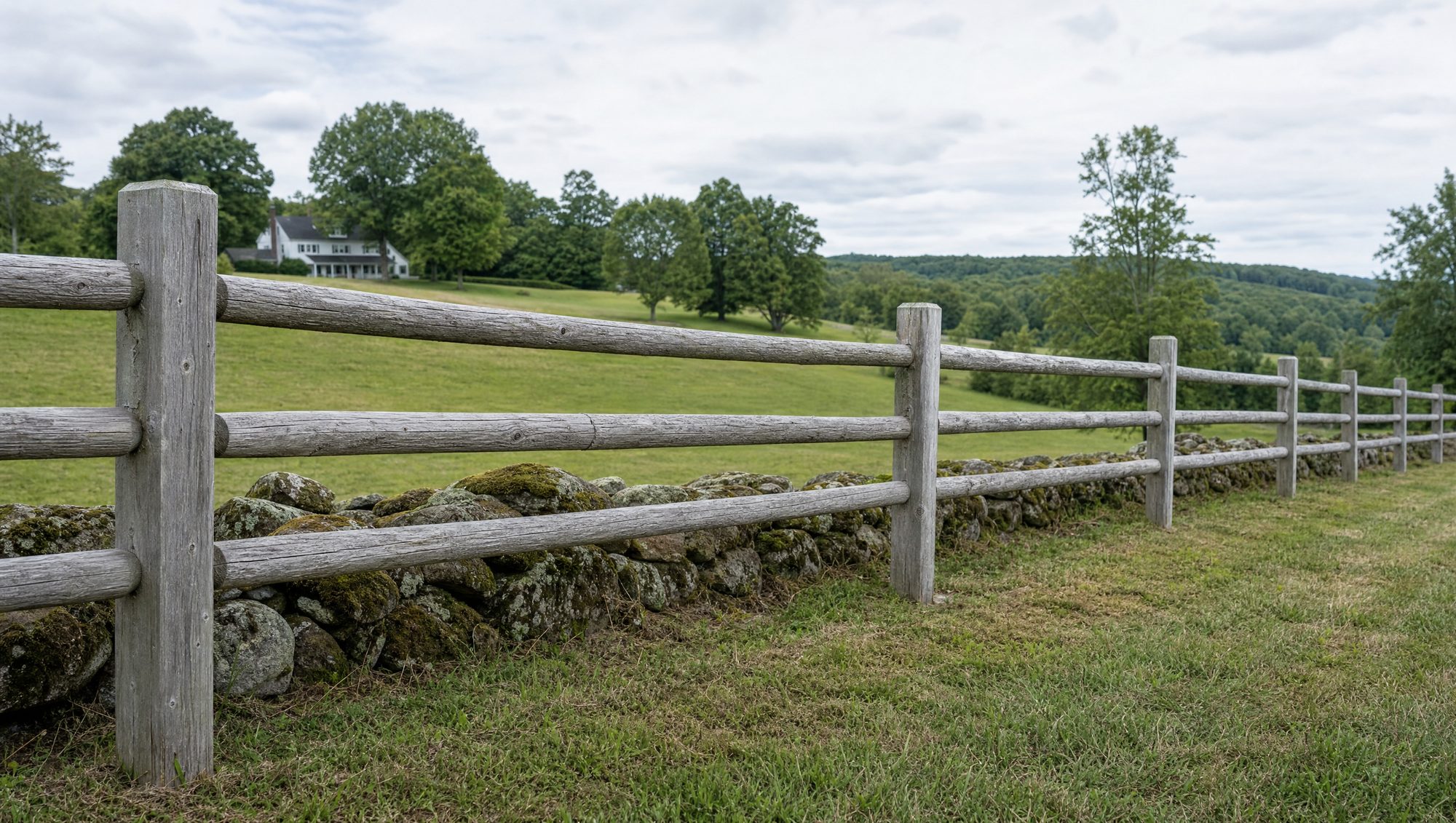
You want a fence, and the yard is not the hard part. Everything you have to settle before anyone touches the yard is the hard part. Fence installation in Sherman, CT runs into questions most homeowners never see coming: whether the town wants a zoning permit, whether the line you have mowed for ten years is actually your line, and whether the posts will still stand straight after a season of freezing and thawing. Then the estimates come in, and the numbers sit so far apart that you cannot tell who is being straight with you. That worry is earned, because the two most expensive fence mistakes in this town both happen before the first panel goes up. A fence set on the wrong side of a boundary has to be moved, and a post set shallow in the wrong soil will let you know about it by March. Put the decisions in the right order and most of that risk goes away on its own.
Key Takeaways
Two permits, two different answers
Sherman handles fences through Planning and Zoning, and the town's fee schedule lists a zoning permit for fences, so a building-permit exemption does not end the conversation.
Pool barriers follow their own rules
A fence enclosing a pool needs a permit regardless of height, and the gates and openings get reviewed, not just the panels.
Your ground sets your price
Ledge, slope, roots, access, gates, footage, material, and old-fence removal move the number more than anything you pick from a brochure.
Posts decide whether the fence lasts
Depth, drainage, soil, height, wind exposure, and gate load together determine whether the line holds through freeze-thaw cycles.
Confirm the line and mark the utilities first
Connecticut Call Before You Dig is free and required before excavation, and an old wall or mowing line is not a legal boundary.
What Should You Settle Before You Pick a Material?
Sherman properties do not sit still for a standard plan. Some homes are on open suburban lots, and others run along wooded edges, sloped grade, exposed ledge, drainage swales, lake-area soil, or long rural stretches that need more than one gate. A layout that drops in easily on a flat lot can fight you the whole way on a rocky or steep one. So, the first question is not wood or vinyl. It is what the fence is actually being asked to do.
The Job Decides the Height, the Openness, and the Layout
Privacy from a neighboring house is a different plan than pet containment, pool safety, boundary definition, curb appeal, security around equipment, or keeping animals in on rural acreage. A solid privacy run carries real wind load and has to solve every grade change along the way, while an open aluminum or chain-link line reads lighter and treats the same slope differently. A pet fence has to be planned around how your dog jumps, digs, and pushes at gaps, not around a label. Once the purpose is settled, height, spacing, gate design, hardware, and placement start answering themselves.
Replacement Is Not Automatically the Same Line
A new fence installation in Sherman often starts with a failing wood, chain-link, vinyl, or ornamental fence that has stood for decades, and it is tempting to treat the old run as the plan and just swap the parts. That line may sit in the wrong place, block a swale, or cross ground that has shifted since, and the rules that applied when it went in may not be the rules now. Reusing a line is a decision worth making on purpose, not by default.
Do You Need a Permit for a Fence in Sherman?
This is where a lot of fence advice stops one step too early. Sherman routes fence work through its Planning and Zoning Department, and the town's fee schedule lists fences under miscellaneous structures and equipment with a zoning permit fee. Sherman also publishes its current zoning regulations, and they get revised, which is a good reminder that the answer you heard two years ago may not be the answer today. Confirm the current height, placement, setback, road-visibility, wetlands, pool-barrier, and gate requirements with the town before you order anything.
The Building Permit Question and the Zoning Question Are Separate
Sherman routes fences through its Planning and Zoning Department, and the town fee schedule lists a zoning permit for fences. That settles one question and leaves several open. Placement in the front, side, or rear yard, sight lines at a road or driveway, an unclear property boundary, a recorded easement, inland wetlands and watercourse setbacks, retaining conditions or grade changes, security extensions, and private association or deed restrictions can all still apply to a fence nobody needs a building permit for. The honest summary is that you can often skip the building permit and still owe the town a zoning review, and the building department and Planning and Zoning are where you find out which applies to your lot.
A Pool Barrier Is Its Own Project
A fence used as a swimming pool barrier is the clear exception. It requires a permit regardless of height, and the review covers the whole barrier system rather than just the panels. Gate swing direction, self-closing operation, self-latching hardware, opening sizes, clearances, and how the barrier ties into the house or a deck all get measured against the applicable code. If the fence is protecting water, treat pool fencing as its own approval with its own timeline, not as a yard fence with a different gate.
How Do You Know Where Your Property Actually Ends?
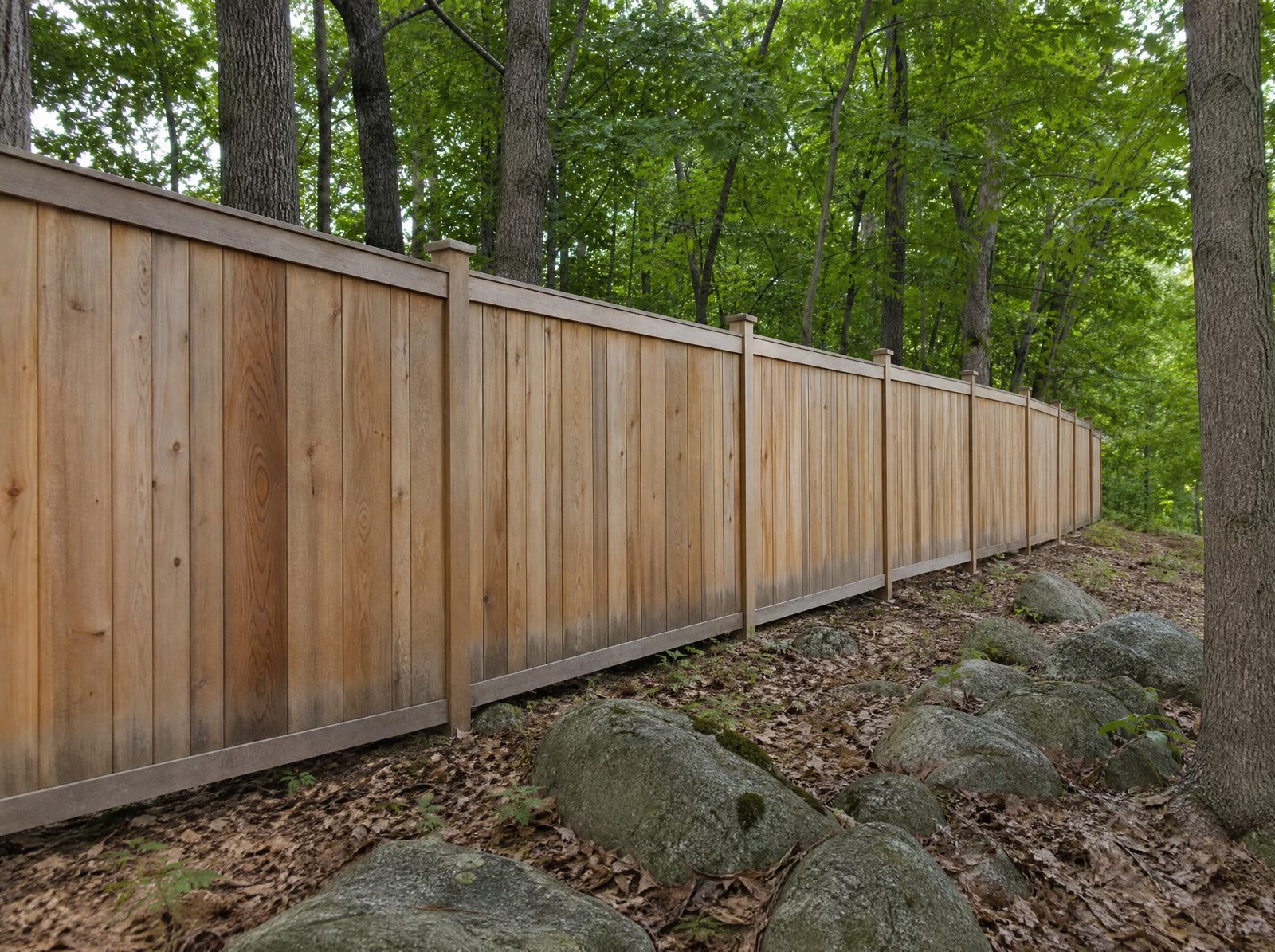
Fence installation should never start from an assumption. Mowing lines, tree rows, hedges, old stone walls, leftover posts, and a friendly understanding with the previous owner are not the legal boundary, and a fence in the wrong place is an expensive thing to relocate and an ugly thing to argue about. A fence company can measure the yard and propose a layout, but only a licensed surveyor establishes or confirms a legal line. Keeping those two jobs separate in your head protects you and your neighbor.
When a Survey Earns Its Cost
A survey is worth it when the corner markers are gone, when the fence will sit close to the boundary, when an older fence looks misplaced, when a neighbor has questioned the location, when the lot has irregular boundaries, or when an access or utility easement may run through the yard. Road curves, corner lots, shared drives, lake frontage, and wetland edges are all good reasons to confirm before you dig. Recorded plans and deeds often live with the town clerk, which is a reasonable first stop before you pay for anything.
Who Calls 811 Before the First Post Hole
Setting posts means excavating, so buried lines get handled first. Connecticut's Call Before You Dig service is free and required by law before excavation, and a request goes in by calling 811 or 1-800-922-4455. Public marking does not cover everything, though, and that gap is where people get hurt. Septic lines, invisible pet-fence wire, irrigation, yard lighting, propane and generator lines, private electrical service, drainage pipe, well lines, and pool equipment lines are often privately owned and need a separate private locate. Public marking and private locating are two different tasks, and your contract should say plainly who handles each.
What Actually Drives Fence Installation Cost in Sherman?
No single price fits every Sherman project, and any homeowner who has collected three estimates already knows it. Connecticut cost guides show wide installed ranges precisely because material, layout, gates, terrain, removal, and labor swing so far from lot to lot, so treat a published average as general market context and nothing more. What follows is where the money actually goes, so you can look at your own yard and see which levers are pulling.
Footage, Height, and Material Set the Floor
Linear footage is the first lever, because a longer run needs more posts, more panels or fabric, more hardware, and more hours. Material is the second: pressure-treated wood, cedar, vinyl, aluminum, ornamental steel, chain link, and agricultural wire all price out differently in both product and installation. Height and style stack on top of those two, since a tall solid privacy fence uses more of everything and takes more wind than a shorter open line. Independent breakdowns like Angi's fence cost research show how far those basics alone can spread a total.
Gates Are Never Just an Opening
Every gate is a small structure inside the fence. Walk gates, double gates, cantilever gates, and driveway and estate gates each need their own posts, footings, hinges, and latches, and an automated gate adds power and controls to the list. Width matters too, because a wider leaf puts more strain on the hinge post. Gates get used more than any other part of the fence, so paying for the right hardware once tends to cost less than adjusting the wrong hardware every season.
Ledge, Slopes, and Access Are the Wild Cards
Sherman ground does not always cooperate. Rock and ledge can slow excavation, sometimes force a different tool, and occasionally shift the layout, and that belongs in the estimate as a named site condition rather than buried inside a vague number. Slopes add work too, since panels either step down in level sections or rack to follow the grade. Wet soil, heavy roots and stumps, narrow equipment access, and a long carry from the truck to the line all add hours that no online calculator knows about. Property preparation like clearing, grading, or a private utility locate can be its own cost as well.
Taking the Old Fence Out Is Its Own Line Item
If a failing fence has to come out first, that is labor and disposal stacked on top of the new install. A clear estimate spells out removing panels or fabric, pulling posts and concrete footings, hauling debris, clearing brush, and restoring the disturbed ground. When you compare bids, make sure every one of them handles the old fence the same way, or you are not comparing the same job. Customization works the same way: decorative caps, lattice, custom colors, privacy slats, and specialty latches all move the number, and made-to-order gates can move the schedule too.
Hover or tap a row to highlight it.
| Cost Driver | Why It Matters |
|---|---|
| Linear footage | Longer runs need more posts, panels or fabric, hardware, and labor hours. |
| Material and height | Wood, vinyl, aluminum, and chain link price differently, and a tall solid fence uses more of everything. |
| Gates | Walk, double, and driveway gates each need their own posts, footings, and hardware, and automation adds more. |
| Ledge and terrain | Rock, slopes, wet soil, and roots slow excavation and can change the layout. |
| Equipment access | Narrow access and a long carry from the truck to the line add hours nothing online accounts for. |
| Old-fence removal | Pulling posts and concrete, hauling debris, and restoring the ground is its own line item. |
| Customization | Caps, lattice, custom colors, privacy slats, and made-to-order gates raise both cost and lead time. |
Why Do Some Fences Lean After One Winter?
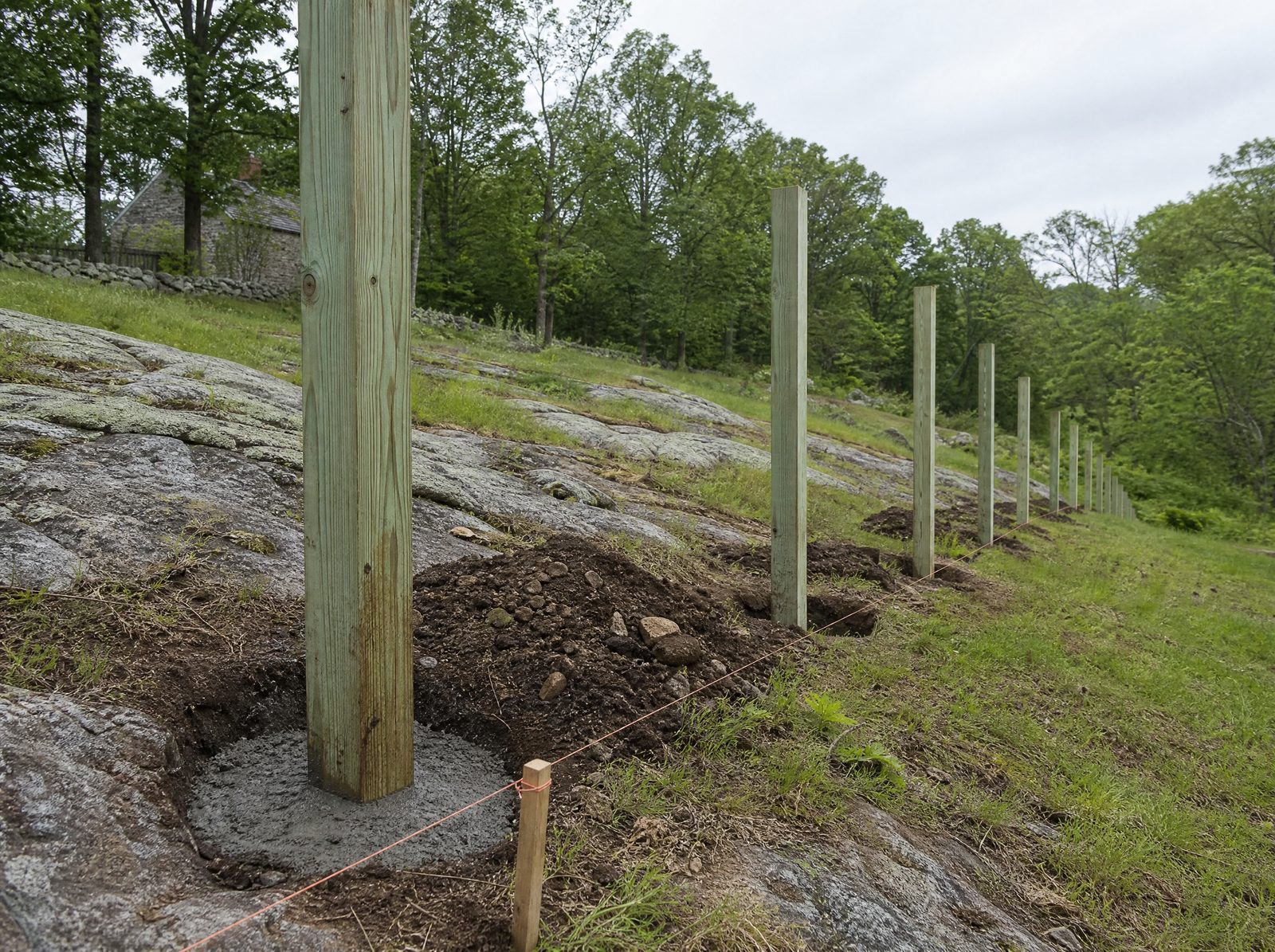
Sherman gets real winter, and repeated freeze-thaw cycles push hard on anything set shallow or set where water sits. A fence that heaves, leans, or racks a year after installation almost always traces back to how the posts went in, not to the panels bolted onto them. There is no single correct depth for every fence, and a contractor who quotes you one number for every situation is telling you something useful about how they work. Connecticut's residential code for foundations requires permanent supports of regulated structures to be protected from frost, and while a typical fence is not always regulated like a building footing, the principle is exactly why poorly set posts move.
What Actually Sets Post Depth and Support
Proper depth and support come out of the whole picture: fence height, whether the design is solid or open, the material and panel type, post size and hole diameter, soil and ledge conditions, drainage, wind exposure, gate loads, manufacturer specifications, and local frost conditions. Corner posts, terminal posts, and any post carrying a solid privacy panel usually need more than a light in-line post gets. Drainage under the post matters as much as the number on the tape, because water that collects and freezes is what does the damage.
Gates Show the Shortcuts First
A gate that sags, drops its latch out of alignment, or drags after the first frost heave was almost always hung on an undersized post or a thin footing. Gate width, hinge load, latch alignment, and seasonal ground movement all feed into what that post has to be and what has to go under it. This is the least forgiving part of the fence, and it is the part you touch every day.
Which Fence Actually Fits a Sherman Property?
Once the purpose, the site, and the rules are clear, the material conversation gets much shorter. Each option trades privacy, upkeep, appearance, and cost differently, and residential fence installation in Sherman tends to sort itself by outcome rather than by product. Here is how the common choices land on real properties around town.
Vinyl for Privacy Without the Staining
Vinyl fencing suits homeowners who want privacy and do not want to stain anything, but low maintenance is not the same as low stakes on installation day. Solid panels carry serious wind load, so post setting, gate reinforcement, and grade transitions still decide how the run holds up. Product quality and impact exposure matter too, and a solid panel should never be treated as interchangeable with open picket just because both are white.
Wood for a Natural Look That Bends to the Terrain
Wood fencing gives a natural appearance and adapts well to irregular ground, from board-on-board and stockade privacy to picket, split rail, and post and rail along a field. Species, grade, treatment, fasteners, post protection, airflow, and drainage all shape how long it holds, and it trades ongoing staining and component replacement for that look. Custom transitions around stone walls and mature plantings are where wood earns its keep.
Aluminum and Ornamental for Open Views
Aluminum fencing and ornamental styles work where you want to see through the fence: a front yard, a pool area you need to watch, a garden, or an estate entrance. They rack to follow grade and lean on picket spacing, finish quality, gate hardware, and post support rather than mass, and they define a property without building a solid wall across the view.
Chain Link and Agricultural for Function
Chain-link fencing stays practical for long runs, dog yards, commercial areas, and equipment enclosures, with gauge, mesh, coating, tensioning, and bottom restraint driving the difference between basic residential fabric and heavier commercial work. Larger rural properties may instead need agricultural fencing planned around the specific animals, the acreage, and the pressure the fence will take, which is a different exercise from running residential fence a longer distance. Any yard with a dog deserves pet fencing planned around bottom clearance, picket spacing, gate gaps, and the weak transition points an escape artist finds first.
What Does the Installation Actually Look Like, Step by Step?
A clean install runs in a predictable order, and knowing that order is how you spot a crew skipping steps. It starts with a walk of the property and ends with a walkthrough you are part of, with the compliance and utility checks built in where they belong rather than bolted on at the end. Fence installers in Sherman who work this way are rarely the ones surprising you with a change order in week two. The sequence below is how a fence should come together on a Sherman lot.
The Sherman Fence Installation Process
- 1
Step 1: Property Consultation and Measurement
We walk the line and define the goal, the approximate footage, the fence type, the gate locations, and the site constraints.
- 2
Step 2: Boundary and Compliance Review
Surveys, property lines, zoning, permits, wetlands, easements, and any pool requirements get reviewed before anything is ordered.
- 3
Step 3: Written Estimate and Material Selection
The scope documents materials, dimensions, post details, gates, hardware, removal, cleanup, and who is responsible for what.
- 4
Step 4: Utility Marking and Site Prep
The Call Before You Dig request goes in, private lines are identified, and the approved path is cleared without wrecking trees, walls, or drainage.
- 5
Step 5: Post and Fence Installation
Posts are set for the soil, grade, and gate loads, then panels, rails, fabric, pickets, or wire go up to suit the system.
- 6
Step 6: Gates, Adjustments, and Walkthrough
Hinges and latches are set, bottom gaps checked, transitions inspected, the site cleaned, and the job walked with you.
How Do You Vet a Fence Contractor in Sherman?
Connecticut law requires home improvement contractors, including fence installers, to register with the Department of Consumer Protection, so registration and insurance are the floor, not a selling point. The state explains why that registration protects you, and checking any contractor's status takes a couple of minutes before you sign anything. My Fence Guy is a family-owned fence company with an office right here in Sherman, we are licensed and insured, and our estimates are free. Past the paperwork, look for a crew that knows the town's zoning process, puts the whole scope in writing, and tells you up front how it prices hidden conditions like ledge instead of discovering them later.
What a Written Fence Contract Should Cover
A complete written scope is what separates a real bid from a number on a business card, and Connecticut's contracting guidance is a good checklist to hold any estimate against. The state says a home improvement contract must include the contractor's name, address, and registration number, the signatures, the date of signing, and the date by which you may cancel. Before work starts, the scope should also spell out:
- Fence footage and height: The measured run and the finished height, not a rounded guess.
- Material details: Manufacturer, grade, style, and color, not just "wood" or "vinyl."
- Post and gate specifications: Post sizes, footings, gate widths, and hardware.
- Removal and disposal: Who pulls the old fence and concrete and hauls the debris.
- Permit and utility responsibility: Who handles the zoning question and who files the 811 request.
- Schedule and payments: Timeline, material lead times, and a payment schedule.
- Change orders and cleanup: How surprises like ledge get priced, plus the final cleanup.
- Warranty: Workmanship terms and manufacturer warranty information in writing.
Frequently Asked Questions About fence installation sherman ct
Q: Do I need a permit to install a fence in Sherman, CT?
A: Sherman handles fences through Planning and Zoning, and the town's fee schedule lists a zoning permit for fences. Sherman lists a zoning permit for fences on its current fee schedule, but a pool barrier requires a permit regardless of height, and placement, setbacks, easements, and wetlands rules may still apply. Confirm the current requirements with the town before installation.
Q: How much does fence installation cost in Sherman?
A: Cost depends on footage, material, height, gates, old-fence removal, terrain, ledge, roots, access, permits, and customization. A site-specific estimate is far more reliable than a broad online average, which is why a free on-site visit is the honest way to price a fence installation in Sherman, Connecticut.
Q: Should I get a survey before installing a fence?
A: A survey is worth it when the boundary is uncertain, the fence will sit close to the line, an easement may be present, or a neighbor has questioned the location. A fence contractor can lay out the run, but a licensed surveyor is the professional who establishes the legal boundary.
Q: Who contacts 811 before fence installation?
A: Whoever is doing the digging is responsible for making sure a valid Connecticut Call Before You Dig request is completed before excavation. The contract should state clearly who submits and manages the request so it never gets missed.
Q: Can a fence be installed on a sloped Sherman yard?
A: Yes. Depending on the fence system and the grade, installers either rack the fence to follow the slope continuously or step level sections down the hill. Appearance, bottom gaps, pet containment, and the manufacturer's limits should guide which method fits.
Q: How deep should fence posts be in Connecticut?
A: There is no single correct depth for every fence. Depth and support depend on fence height, post size, material, soil and ledge, drainage, frost conditions, wind exposure, gate loads, and manufacturer specifications, which is why shallow or poorly drained posts are the ones that move.
Q: Can a fence cross a drainage swale?
A: A fence should not block a drainage swale or trap soil against wood or metal components. Low points need attention during layout, especially when the fence is meant to contain a small dog, since that is where the gap under the fence usually shows up.
Q: Can My Fence Guy remove an existing fence before installing the new one?
A: Yes, removal can be built into the project scope. The estimate should specify taking out the panels or fabric, posts, concrete, and gates, hauling the debris away, and any restoration of the disturbed ground that is included.
Test Your Sherman Fence Knowledge
1. How does Sherman handle fence applications?
2. Which fence needs a permit no matter how tall it is?
3. What has to happen before any post hole is dug in Connecticut?
4. Does an old stone wall or mowing line establish your property line?
5. What most often explains a fence that leans after one Sherman winter?
Pick an answer to begin.
Final Thoughts
A fence in Sherman comes down to a short list of decisions made in the right order: settle what the fence is for, check the zoning question along with the building-permit question, confirm the legal line, mark the utilities, choose a material that suits the site, and set the posts for the soil and the winter they will actually face. Get that sequence right and the material choice and the price both stop feeling like guesses. The homeowners who slow down at the planning stage are the ones who never have to move a fence or fight a sagging gate.
Done right, a fence quietly does its job for decades, keeping pets in, defining the yard, adding privacy, and holding its line through every freeze-thaw cycle without asking for attention. That is the return on planning it out instead of rushing to dig.
If you are planning a new fence, we would be glad to walk your property and give you a straight answer. My Fence Guy is a family-owned contractor with an office right here in Sherman, CT, and we install residential, commercial, industrial, and agricultural fencing in wood, vinyl, aluminum, chain link, and ornamental styles, plus pool fencing, pet fencing, gates, and railings. We handle the layout, the permit and utility questions, and the site conditions that decide whether a fence stays straight. Call us at (203) 746-1100 for a free estimate, or reach out through our contact page.
Fence Installation Key Terms
Tap a term to see what it means.
Zoning Permit. The land-use approval a town issues for a structure like a fence; Sherman's fee schedule lists fences under miscellaneous structures and equipment.
More about fences
Do You Need a Permit for Fence Installation in CT?
You've finally decided to fence in your backyard, picked out materials, and scheduled a contractor, only to hear that town hall might need weeks to review...
Read the guide to Do You Need a Permit for Fence Installation in CT?Fence Installation in Southbury, CT: Plan It Before You Dig
Before you pick a material, settle the line. Fence installation in Southbury, CT: the survey, the zoning review, the slope, and setting posts that hold.
Read the guide to Fence Installation in Southbury, CTFence Installation in New Fairfield, CT: What to Know First
Fence installation in New Fairfield, CT: what a permit actually covers, what drives the price, and how to tell a real contractor from a cheap bid.
Read the guide to Fence Installation in New Fairfield, CT