
Storm or Tree Damage to Your Fence: How Homeowners Insurance Claims Work in Connecticut
By Tony Pellicone13 min readPublished
- fence repair
- fence replacement
- connecticut
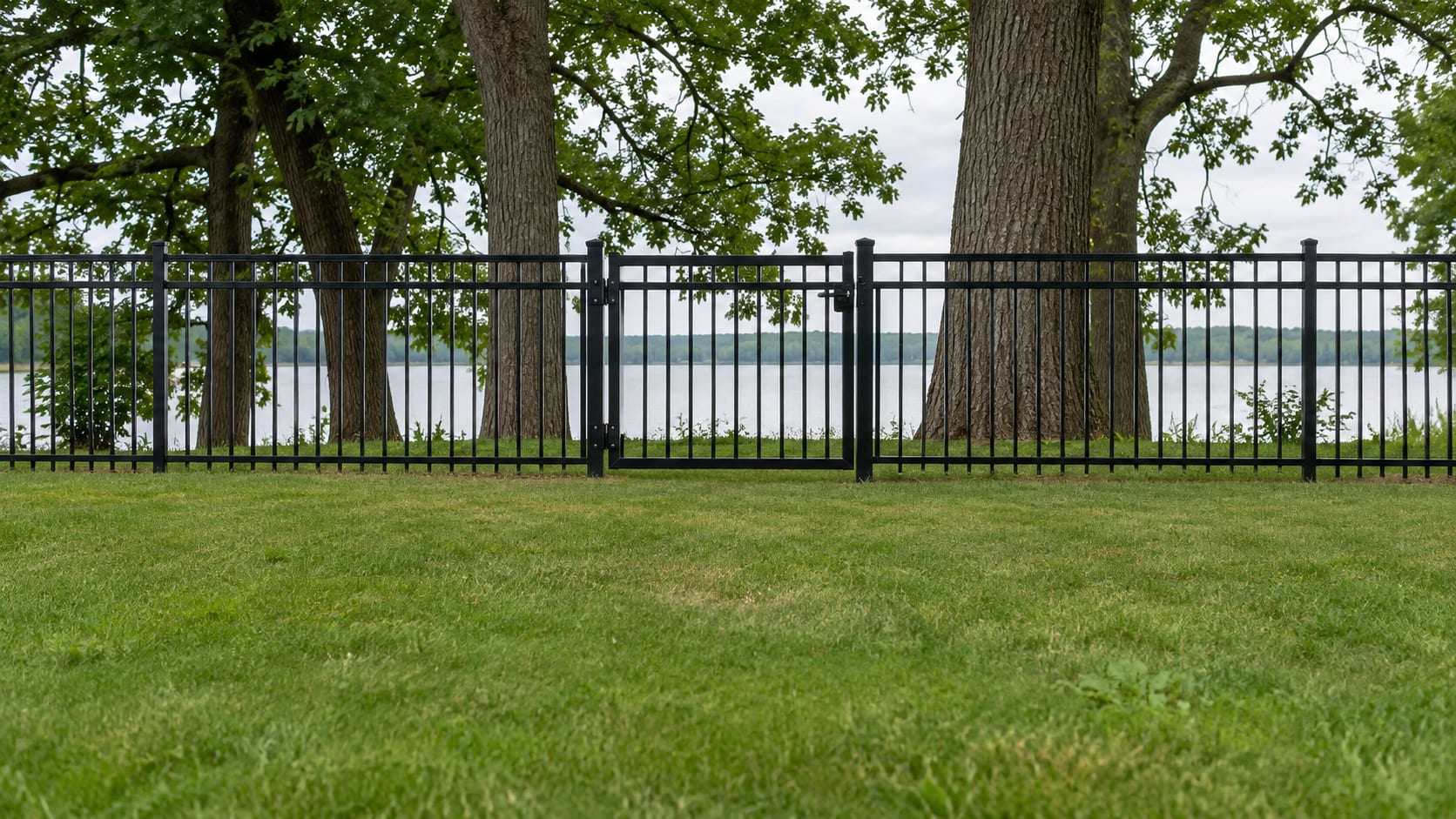
Homeowners insurance may cover a fence damaged by wind, hail, fire, vandalism, or a falling tree or limb, because a fence is commonly treated as an “other structure” under Coverage B. Payment still depends on your deductible, Coverage B limit, exclusions, damage condition, and whether your policy pays actual cash value or replacement cost.
If a neighbor’s healthy tree falls during a storm, you will usually start with your own homeowners insurer. The neighbor is not automatically responsible simply because the tree grew on their property. A different result may apply when the tree was visibly dead, diseased, damaged, or dangerous and the neighbor knew, or reasonably should have known, about the condition.
Key Takeaways
Coverage
A fence is commonly insured as an other structure under Coverage B.
Cause
Storm damage and falling objects may be covered, while rot, insects, wear, and neglect commonly create coverage problems.
Deductible
Compare your repair estimate with the deductible before deciding whether to file a claim.
Tree liability
A neighbor may become responsible when known dangerous tree conditions were not reasonably addressed.
Documentation
Photograph the fence and tree, make safe temporary repairs, save receipts, and notify the insurer promptly.
Local rules
Permit, zoning, pool-barrier, setback, and wetlands requirements depend on the town and property.
How homeowners insurance treats a damaged fence
A standard homeowners policy commonly places a detached fence under Coverage B, which covers other structures separated from the dwelling by clear space. A common Coverage B limit is 10 percent of Coverage A, the dwelling limit, but your declarations page and endorsements control. The Connecticut Insurance Department’s homeowner insurance information and the ISO HO-3 sample policy provide useful starting points for reading that structure.
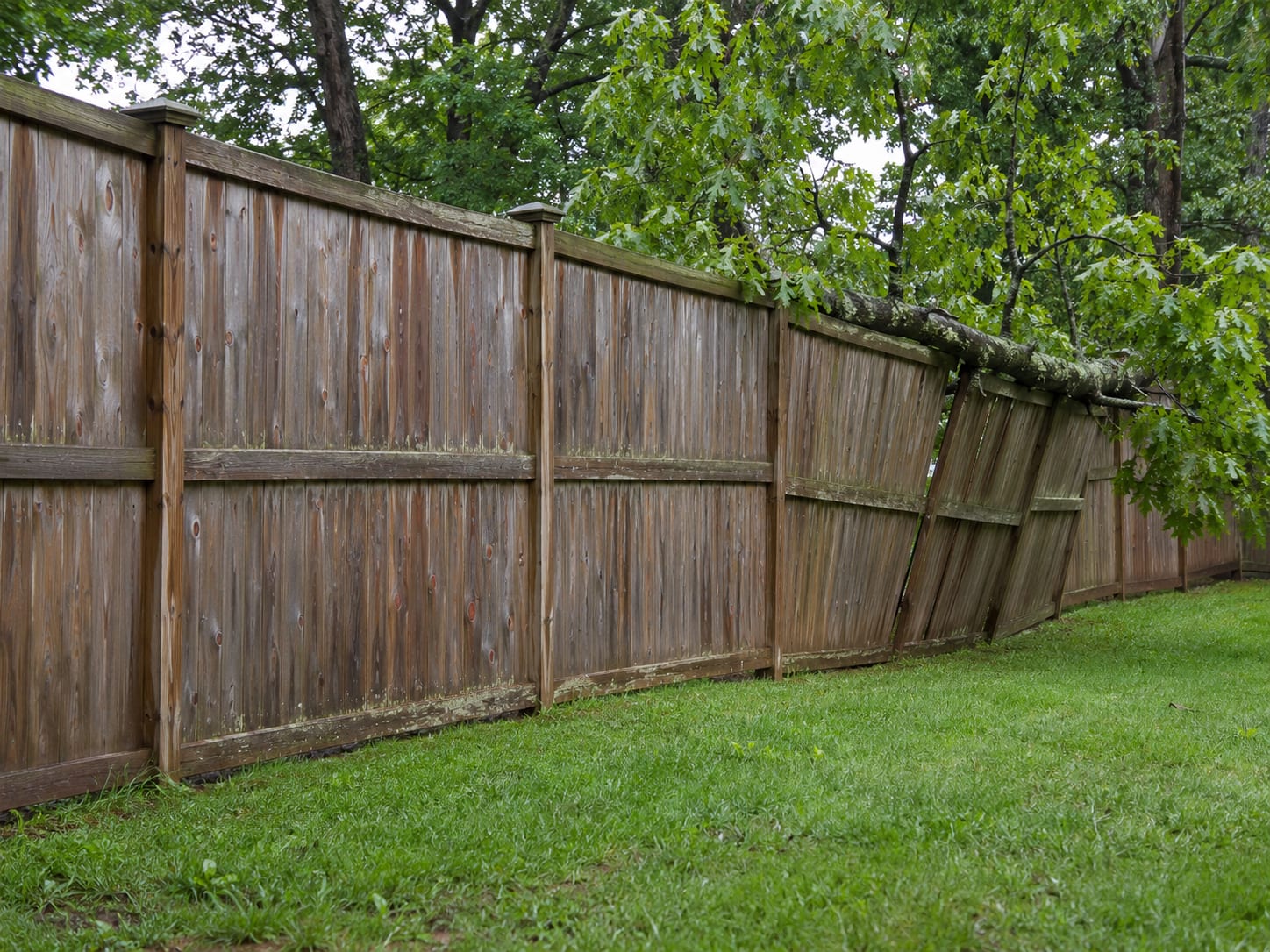
Windstorm, hail, fire, vandalism, and falling objects are common covered structure perils. A tree or limb that falls onto a fence may therefore create a covered loss when the policy does not exclude the particular cause or condition. Your deductible and Coverage B limit still apply.
A 10 percent limit is only a common starting point. A long agricultural fence, a large ornamental fence, an estate gate, or a costly pool enclosure may use more coverage than a basic residential fence. Ask your agent whether the Coverage B amount fits the replacement cost of the structures on your property, and ask whether an endorsement or higher limit is available.
The policy may treat the fence differently depending on the cause of damage. A storm can damage sound posts and panels in one event, while an older fence may have hidden rot that affects the insurer’s estimate. The Insurance Information Institute’s explanation of standard home policy coverage and Travelers’ fence coverage discussion describe the general structure of these claims.
Hover or tap a row to highlight it.
| Item | Figure or rule | What it means |
|---|---|---|
| Common Coverage B starting point | 10% of Coverage A | Your declarations page and endorsements control |
| Common Connecticut deductibles | $500 or $1,000 | Amounts vary by insurer and policy |
| National average fence repair | $618 per project | Angi’s 2026 figure is national, not Connecticut-specific |
| Most national repair projects | $304 to $948 per project | Angi’s reported national range |
| Approximate national repair cost | $30 per linear foot | The amount varies with material, access, posts, gates, and damage |
The Connecticut Insurance Department’s homeowner FAQ notes that common deductibles include $500 and $1,000, although your policy may use a different amount or a separate wind or hail deductible. Angi’s 2026 national fence-repair figures are useful for rough comparison, but they are not a Connecticut quote. A written estimate should show removal, disposal, posts, panels, gates, labor, materials, and any access work.
When a neighbor’s tree falls on your fence
The usual Connecticut result is that the fence owner files under the fence owner’s own homeowners policy when a healthy tree falls during a storm. Tree ownership alone does not normally make the neighbor responsible.
The answer can change when the tree was visibly dead, diseased, damaged, or otherwise dangerous, and the neighbor knew or reasonably should have known about the condition but failed to take reasonable steps. In that situation, negligence may support recovery from the neighbor or the neighbor’s liability insurer.
Save evidence before cleanup if it is safe. Take photographs of the full tree, broken limbs, trunk condition, fence impact point, root area, and any earlier damage. Keep arborist opinions, written warnings, text messages, emails, and prior notices about the tree. If your insurer pays the claim, the insurer may pursue recovery from a negligent neighbor and may seek recovery of your deductible as part of that process.
Connecticut tree-fall liability is largely governed by common law. The Connecticut Office of Legislative Research report on trees falling onto neighboring land explains the general rule and the limits of automatic responsibility. A specific dispute may depend on facts about notice, danger, property lines, prior communications, and reasonable care. For a serious disagreement, speak with a Connecticut real estate attorney.
Exclusions, deductibles, and the repair decision
A policy may cover a storm-damaged fence even when it would not cover replacing a fence that failed because of long-term rot or insect damage. Common exclusions or limitations include wear and tear, ordinary aging, deterioration, rot, rust, insects, lack of maintenance, flood, surface water, earth movement, preexisting damage, and certain losses caused by neglect or failure to protect property from further damage.
The cause and the condition of the fence are separate questions. A strong wind may knock down a fence that was in sound condition. The same wind may expose posts weakened by years of rot. Your insurer’s policy language and claim investigation determine how those facts affect payment.
Compare the written estimate with the deductible. If the repair is below the deductible, the policy may not issue payment. If the estimate is only slightly higher, the claim may produce a limited payment after the deductible. You should still report the loss when the damage may exceed the deductible or when you need the insurer to evaluate the cause, but ask how the applicable deductible works before authorizing permanent work.
Repairing one section may be reasonable when the remaining fence is sound and the replacement material can be matched. A broader replacement may be considered when multiple posts, rails, panels, or gates were damaged. The estimate should separate emergency work, repair work, replacement work, and improvements that were not caused by the covered event.
For a wood fence, the difference between sound cedar and rotted posts can affect the scope. For chain link, a bent top rail, damaged fabric, and broken posts may be priced separately. For aluminum or ornamental metal, the availability of matching sections and the condition of connected posts may affect the repair decision. The guide to Wood Fence Repair: Broken Boards, Rotted Rails and Loose Pickets can help you compare section repair with replacement, while the insurer decides the covered amount under the policy.
What to do before cleanup or permanent replacement
Safety comes first. Keep people and pets away from unstable panels, sharp metal, hanging limbs, exposed wires, and damaged gates. If a pool barrier is open or below the required standard, restrict access and contact the local building official about restoring a compliant barrier.
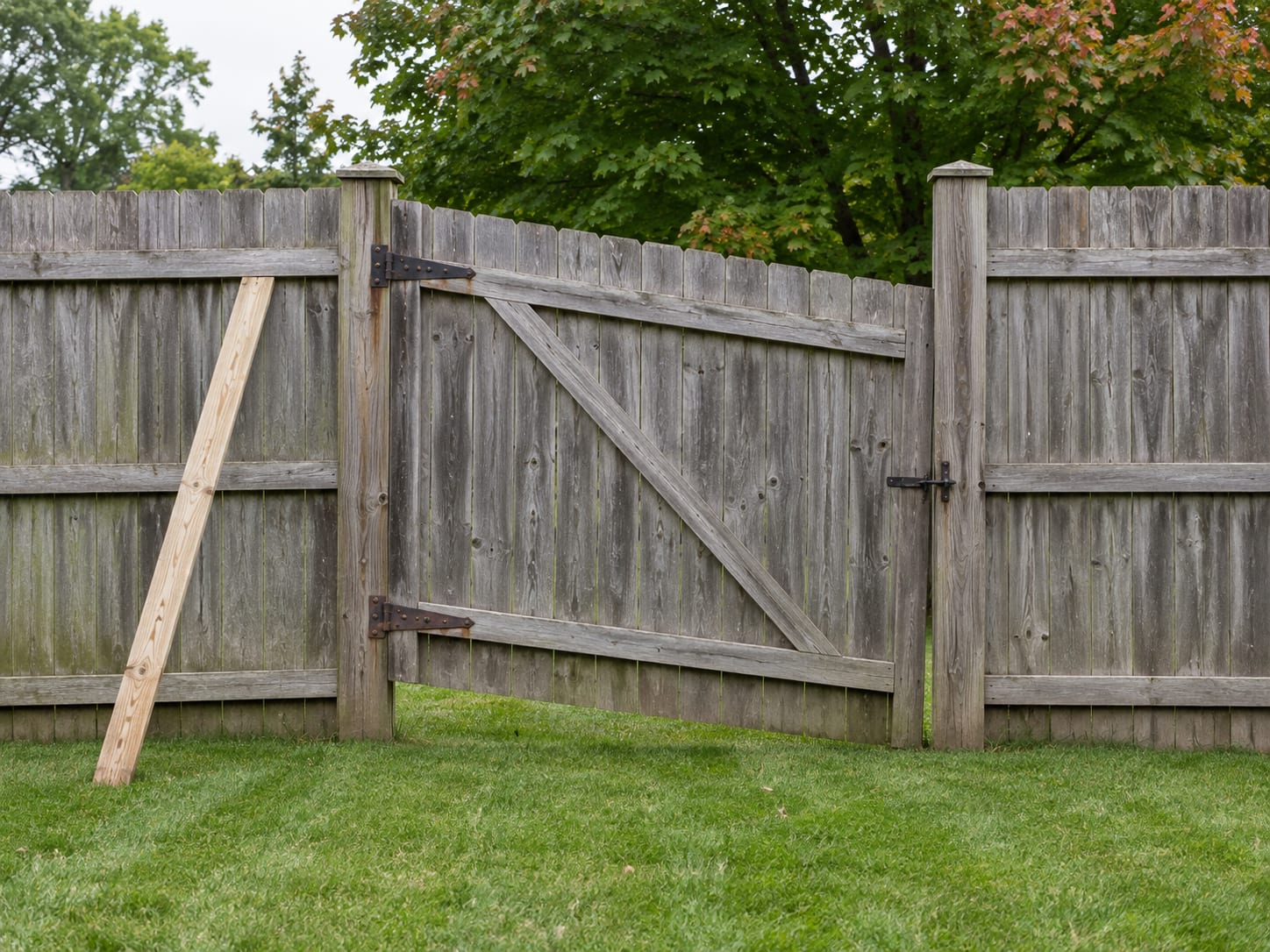
If it is safe, photograph and video the fence, tree, limb, ground, gates, posts, nearby structures, and visible property conditions before moving material. Make temporary repairs to prevent additional damage, such as securing a loose panel or closing an opening. Keep receipts for emergency materials and labor.
The Connecticut Insurance Department storm recovery notice advises homeowners to contact the insurer or agent promptly, preserve damaged property when reasonably possible, prepare a list of damaged structures, provide photographs and estimates, and keep written claim communications. Give the insurer an opportunity to inspect before permanent repairs. If the scope is agreed but the amount is disputed, check the policy for an appraisal clause and ask the insurer to explain its estimate and payment.
Fence Damage Claim Steps
- 1
Make the area safe
Keep people, pets, and vehicles away from unstable fence sections and fallen limbs.
- 2
Document the loss
Photograph and video the fence, tree, cause of damage, and surrounding conditions before cleanup when safe.
- 3
Notify the insurer
Provide the policy number if available, loss date, location, cause, photographs, and videos.
- 4
Prevent more damage
Make temporary repairs and save receipts for emergency work.
- 5
Arrange inspection
Keep damaged materials when practical and let the insurer inspect before permanent replacement.
- 6
Get a written estimate
Separate removal, disposal, posts, panels, gates, labor, materials, and temporary work.
- 7
Confirm settlement terms
Ask about the deductible, Coverage B limit, depreciation, matching, and replacement deadlines.
- 8
Choose the repair path
Compare the insurer’s position, written estimates, local approvals, and the fence’s actual condition.
If the insurer denies part of the claim, request the explanation in writing. Ask which policy provision applies, what evidence would change the evaluation, and how the insurer calculated the payment. You can file a complaint with the Connecticut Insurance Department if you believe the claim is being handled unfairly.
Replacement cost, matching, and the contractor
A replacement-cost policy may first pay actual cash value, meaning replacement cost minus depreciation. After the fence is repaired or replaced and the work is documented, the insurer may pay additional eligible replacement-cost amounts. An actual-cash-value policy generally pays the depreciated value.
A mismatched section does not automatically require replacement of the entire fence. The insurer may limit payment to the damaged sections unless the policy, applicable law, or claim facts require broader work. Ask in writing whether the fence is settled at actual cash value or replacement cost, and whether the policy covers only damaged sections or also matching undamaged ones.
Also ask what documents are needed to recover withheld depreciation, whether an endorsement addresses matching or uniform appearance, and whether the proposed material is like kind and quality. Find out the deadline for completing replacement.
The insurer’s estimate is not necessarily the final payment. Keep the contractor’s estimate, material description, photographs, invoices, change orders, inspection records, and completion documents together.
For residential fence repair or replacement in Connecticut, a contractor who contracts with a homeowner generally must be registered with the Connecticut Department of Consumer Protection as a Home Improvement Contractor. DCP identifies fences as home improvement work. Verify active registration through Connecticut DCP’s contractor information.
Connecticut requires a written, signed, and dated home-improvement contract. It should identify the contractor, address, HIC registration number, work, materials, price, payment schedule, start date, completion date, permit responsibility, and the homeowner’s three-business-day cancellation right and notice. Changes should be in writing. HIC registration does not determine insurance coverage or claim payment, and commercial property work may follow different requirements under the Home Improvement Act.
When we prepare a fence repair or replacement quote, the useful details are the damaged sections, post condition, gate work, removal and disposal, proposed material, access conditions, permit responsibility, payment schedule, and any work that is outside the insurance estimate.
Town approvals before you rebuild
Connecticut fence requirements are set by each town, so the town that issued your permit, or would issue one, decides what the rebuild needs.
Before permanent repair or replacement, contact the town zoning or land-use office and building department. Bring the property address, a sketch or survey, proposed fence location, height, materials, gates, and distances from property lines.
Ask whether the work is treated as a repair, replacement, new location, or taller fence. Ask about zoning approval, a certificate of zoning compliance, building permits, front-yard rules, corner-lot sight lines, setbacks, finished-side requirements, surveys, wetlands review, historic districts, conservation, floodplain, subdivision conditions, and who will obtain permits.
The statewide guide, Do You Need a Permit for Fence Installation in CT?, can help you prepare those questions. New Milford’s zoning permit instructions ask for a survey or plot plan showing the proposed structure, dimensions, and distances to property lines, and recommend contacting Building, Inland Wetlands, Health, and Sewer before submitting an application.
If digging is required, submit a Call Before You Dig request at least two full working days and no more than 30 days before excavation. Private utility lines may require a private locator. If the fence is near a pool, ask the building department about barrier height, openings, self-closing gates, and self-latching hardware. Connecticut’s State Building Code generally requires residential pool barriers to be at least 48 inches high, with restricted openings and compliant gates.
A boundary agreement with a neighbor should be in writing. Address the fence location, ownership, access, cost sharing, removal, materials, gates, and maintenance. If the claim involves a serious boundary or tree-liability dispute, speak with a Connecticut real estate attorney.
For a damaged fence decision that involves section repair, broader replacement, or changing the material, see Fence Repair or Replacement? How to Tell Which Your Fence Needs and the practical points in Who Should Fix a Broken Fence? Handyman, Fence Contractor or Doing It Yourself. If the replacement changes the fence location or height, review Do You Need a Permit to Replace a Fence in Connecticut?.
Frequently Asked Questions
Will insurance pay for a damaged fence?
Possibly. A fence is commonly covered as an other structure under Coverage B when windstorm, a falling tree, hail, fire, vandalism, or another covered cause creates direct physical damage. Payment remains subject to the deductible, Coverage B limit, exclusions, depreciation, and policy endorsements.
How to get insurance to pay for a new fence?
Document the damage, notify the insurer promptly, preserve damaged materials when practical, and provide a detailed written estimate. Ask whether the claim uses actual cash value or replacement cost, what documents are needed for withheld depreciation, and why any amount was excluded.
Who is responsible for a damaged fence when a tree falls?
Usually, the fence owner starts with the fence owner’s homeowners insurer when a healthy neighbor’s tree falls during a storm. A neighbor may face liability when the tree was visibly dangerous and the neighbor knew, or reasonably should have known, about the condition and failed to take reasonable steps.
Will homeowners insurance cover fence replacement?
It may cover replacement when a covered event causes direct physical damage, but the insurer may approve repair of damaged sections instead of replacing the entire fence. The result depends on the policy’s settlement language, the fence’s prior condition, matching provisions, deductible, limit, and documentation.
If my fence falls down, do I have to replace it?
Insurance does not generally require replacement merely because the fence fell down. Local zoning, building, pool-barrier, property-maintenance, easement, neighbor-agreement, or court-related duties may affect what you need to do next.
How do I know if my fence is covered by insurance?
Check the declarations page and policy for Coverage B, the Coverage B limit, deductibles, covered causes, exclusions, settlement language, endorsements, inspection requirements, proof-of-loss requirements, and repair deadlines. Ask the insurer whether tree removal, disposal, matching sections, and the proposed material are included.
Does a fence lower homeowners insurance?
A fence does not automatically lower your premium. Ask the insurer whether the specific fence, pool barrier, gate, property use, liability exposure, or available discount changes underwriting or price, and request any premium change in writing.
Test Your Fence Claim Knowledge
1. What coverage commonly applies to a detached residential fence?
2. What should you do before permanent fence cleanup when it is safe?
3. When may a neighbor become responsible for a fallen tree?
4. What should a Connecticut residential home-improvement contract identify?
Pick an answer to begin.
Final Thoughts
Start with safety, photographs, temporary stabilization, prompt notice to the insurer, and a written estimate. Then compare the damage with your deductible and Coverage B limit, ask how the claim will be settled, and confirm the town’s approval path before permanent work begins.
A clear contract, written claim questions, and local permit confirmation can keep the repair moving when a storm or falling tree changes your plans. My Fence Guy can help document the fence work and prepare a written estimate for the repair or replacement decision. Call us at (203) 746-1100 for a free estimate, or reach out through our contact page.
Fence Insurance Claim Terms
Tap a term to see what it means.
Actual cash value. Replacement cost minus depreciation.
More about fences
Fence Repair in Fairfield, CT: Coastal Storms, Salt Air and What the Town Requires
Fence repair in Fairfield, CT: when a repair needs town review, how salt air and coastal storms wear posts and fasteners, and what to settle before work starts.
Read the guide to Fence Repair in Fairfield, CTWho Should Fix a Broken Fence? Handyman, Fence Contractor or Doing It Yourself
A loose picket or latch is often a DIY job; posts, concrete and chain link tensioning call for a crew. Who should fix a broken fence, and Connecticut HIC rules.
Read the guide to Who Should Fix a Broken Fence? Handyman, Fence Contractor or Doing It YourselfDo You Need a Permit to Replace a Fence in Connecticut?
Replacing a fence in the same spot in Connecticut: when towns treat it as new work, what happens to a grandfathered fence, and what to check before you start.
Read the guide to Do You Need a Permit to Replace a Fence in Connecticut?