
Residential Fencing in New Fairfield, CT: Choose the Right Fence
By Tony Pellicone18 min readPublished
- residential fencing
- new fairfield ct
- wood fencing
- connecticut
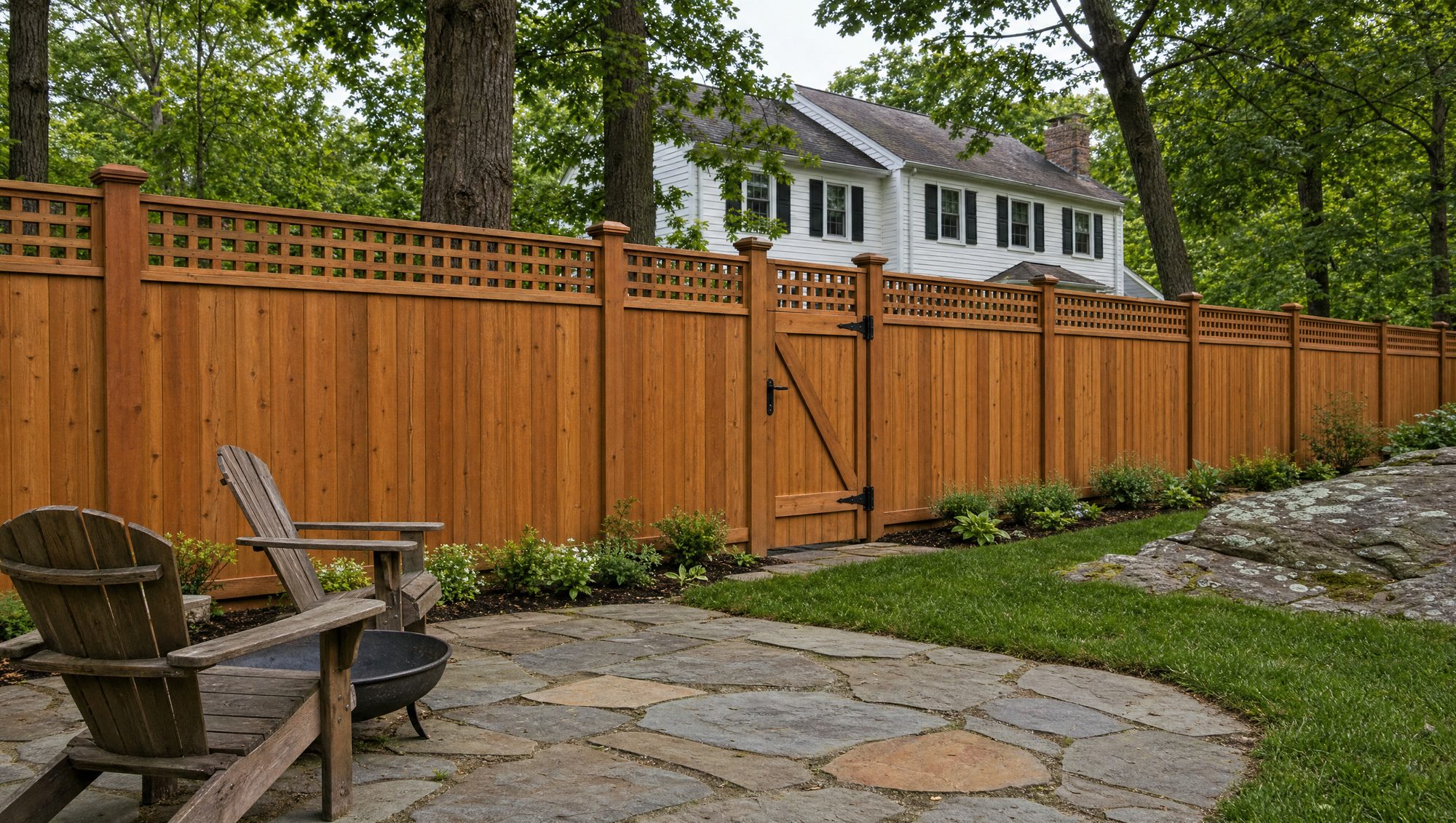
Most fence projects start in the wrong place. You stand in the backyard, look at the neighbor's deck or the road noise or the dog, and the question that forms is wood or vinyl. Then come the product pages, the cost calculators, and three opinions from people who each have a favorite panel. None of that answers the one question that decides whether you still like the fence in ten years, which is what the fence is actually for. Residential fencing in New Fairfield, CT has to work on a real lot, with real ledge, a real slope, a real dog, and a real neighbor on the other side of the line. A solid privacy run that saves one yard can close in another and block the view the owner bought the house for. Settle the purpose and read the property, and the material stops being a coin flip. Sort those two out in order, and you will know what you want before anyone hands you a brochure.
Key Takeaways
Purpose sets the spec
Privacy, pet containment, pool safety, and curb appeal each point toward a different height, spacing, gate plan, and material, so name the job before shopping panels.
The lot gets a vote
Slope, ledge, wooded edges, drainage swales, and lake-area grade decide what installs cleanly, which is why a fence that fits one New Fairfield yard fails two streets over.
A pool barrier is its own project
New Fairfield generally exempts fences up to seven feet from a building permit, but a fence used as a pool barrier requires one regardless of height.
Dogs find the weak spot
Bottom gaps, picket spacing, gate clearances, and low points in the grade decide containment far more than any pet-friendly label on a panel.
Cost tracks the site, not the catalog
Footage, height, material, gates, ledge, access, and old-fence removal move the number, which is why a walk of the property beats an online average.
What the Fence Is For Decides Everything Else
Every good fence answers a question the homeowner already has. Privacy from a neighboring house is one question. Keeping a dog off the road is another. Meeting a pool barrier requirement, defining a boundary, screening the trash bins, or making the front of the house look finished are all different questions with different answers. The mistake is picking the answer first and then trying to make it fit the question.
Name the Fence's Job in One Sentence
If you can say out loud what the fence has to do, most of the spec writes itself. "Keep our two dogs in the back half of the yard and stop people cutting through" points at a height, a spacing, a gate location, and a bottom detail. "Screen the patio from the neighbor's driveway without losing the view down the hill" points somewhere else entirely, probably a short run of solid fence rather than a full perimeter. Height, openness, spacing, gate design, hardware, and placement all follow from the purpose. When a fence gets designed material-first, those details get decided by whatever the panel happens to come as.
The Property Gets a Vote
New Fairfield yards are not interchangeable. Some homes sit on flat, open suburban lots. Others back into wooded edges, run down a slope, hit ledge a foot under the grass, sit on lake-area soil, follow an old stone wall, or need two or three gates just to reach the whole property. A layout that drops in cleanly on level ground can fight you the whole way on a rocky or steep one. So, the second pass is a walk of the actual line: where the grade changes, where water moves after a storm, where the septic and the well sit, where a truck can and cannot get to, and where the trees will be in fifteen years.
A Backyard Fence Has to Work Around the Yard You Already Have
A backyard fence in New Fairfield rarely gets an empty canvas. It has to coordinate with patios, decks, sheds, play areas, gardens, pool equipment, septic components, drainage swales, stone walls, mature trees, and whatever the neighbor already built on their side. Most of the regret in fence projects is not about the panel at all. It is about a gate in the wrong place or a run that made the yard harder to use.
Gates Get Used Every Day, So Place Them for Real Life
Gates are where the fence meets your routine, and they are the part people short-change first. Think about the mower and the wheelbarrow, not just the walk from the driveway. A walk gate wide enough for a person is useless if the only way to the back is through it with a lawn tractor. Trash bins need a path on trash day. Septic service needs access. Snow gets pushed somewhere, and if that somewhere is against a gate, the gate is closed all winter. Wider driveway and estate gates carry more weight and need their own posts, footings, and hardware, so they belong in the plan from the start rather than as a late addition.
Slope Decides Whether Panels Step or Rack
Grade is the quiet decider on a lot of New Fairfield lots. On a slope, a fence either steps down in level sections or racks to follow the ground continuously. Stepping keeps each section level and leaves triangular gaps under the panels at the low end. Racking follows the grade and closes those gaps, but not every system racks, and each one has a limit. The right answer depends on the material, the steepness, how the bottom gap affects a pet, and what you want it to look like from the house. Low points and drainage swales get special attention, because a fence should not dam water or hold soil against wood or metal.
Privacy Is a Design Problem, Not Just a Taller Fence
Privacy is the most requested job and the one most often solved with brute force. Taller and more solid is not automatically better. A solid panel takes real wind load, changes how the yard feels, and can hand your neighbor a blank wall to look at, which is a conversation worth having before it goes up rather than after. The better plan usually screens the spot you actually sit in and leaves the rest open. Here is how the common privacy options behave on a New Fairfield property.
Vinyl Screens Fully and Asks for a Serious Install
Vinyl fencing gives full visual screening with no staining, which is why it is the default request for a private backyard. Low routine maintenance is a real advantage, but it does not mean the installation can be casual. Solid vinyl panels catch wind like a sail, so post setting, gate reinforcement, and grade transitions decide whether the run stays true. Impact damage and bottom gaps deserve the same attention they would on any other material.
Wood Bends to the Terrain and Trades That for Upkeep
Wood fencing is the flexible one. Board-on-board, stockade, shadowbox, picket, and split rail all come out of the same material, and wood adapts to irregular ground and custom transitions around stone walls better than most panel systems. The trade is maintenance and moisture. Species, grade, treatment, fasteners, drainage, and airflow all affect how long it lasts, and the USDA Forest Products Laboratory's wood handbook is a good reminder that keeping wood out of standing soil contact matters more than any finish you put on it.
Chain Link With Slats Screens Partly and Breathes
Chain-link fencing with privacy slats is the middle option that gets overlooked. It gives partial screening and airflow over a durable frame, and it costs less to run long distances than solid panels. The catch is that slats add wind load to a system that was designed to let air through, so posts and rails may need to be heavier than a bare chain-link run would use. Some properties do best with a mix: open or ornamental fencing where the house shows, privacy where people sit.
A Dog Finds the Weakest Gap Before You Do
Pet containment is where generic fence advice fails hardest. The fence does not have to beat your dog everywhere. It has to beat your dog at the one place your dog is going to try, which is almost never the middle of a panel. It is the gate clearance, the gap where the grade dips, the spot beside the shed, or the picket spacing a determined small dog can work through. The American Kennel Club's guidance on dog-proofing a fence makes the point plainly: the animal's size, jumping ability, digging habit, and tendency to push at gaps set the design, not the label on the product.
That means the useful questions are specific. How high can this dog actually get? Does it dig at the base, and does the bottom need a dig barrier or a tighter ground detail? Will it push through a picket gap or a slat opening? Is the latch reachable from the inside by a paw or a nose? A run of pet fencing that gets those details right will hold a dog that walks straight through a taller fence with a two-inch gap under the gate.
A Pool Fence Is the One Yard Fence With Its Own Permit
Most residential fencing in New Fairfield does not need a building permit. The town states that fences not over seven feet high are generally exempt, and that keeps a typical privacy or boundary fence simple. A fence used as a swimming pool barrier is the exception, and it is a firm one: it requires a permit regardless of height. Confirm the current requirements with New Fairfield's building permit page before ordering anything, since local rules change and zoning questions like placement, sight lines, and easements are separate from the building permit.
What makes pool fencing different is that the whole barrier gets reviewed, not just the panels. Gate swing direction, self-closing operation, self-latching hardware, latch height, opening sizes, and clearances at the top and bottom all matter, and the Consumer Product Safety Commission's pool barrier guidelines explain why each of those exists. Climbability counts too, so a nearby chair, a retaining wall, or a horizontal rail in the wrong spot can undo an otherwise compliant fence. Treat the pool barrier as its own project with its own approval.
The Front Yard Is About the Line, Not the Wall
Front-yard fencing does a different job than backyard fencing, and the same material rarely serves both well. A home fence in New Fairfield that faces the street is usually there to define the property, hold a garden, frame an entrance, or make the house read as finished. Solid privacy at the road tends to look defensive and can run into sight-line limits near driveways and corners anyway. Openness is the point out front.
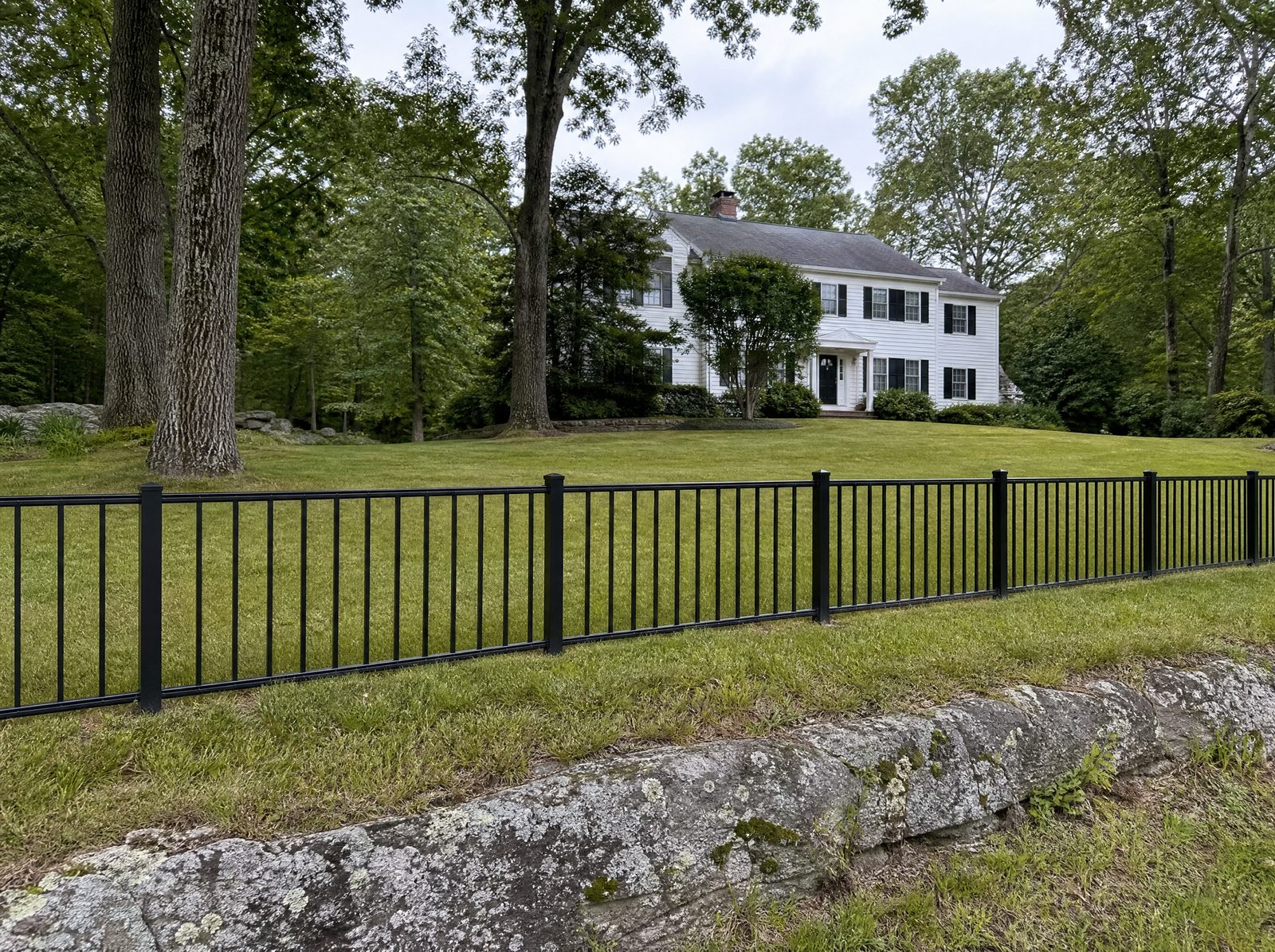
Aluminum and Ornamental Keep the View
Aluminum fencing and ornamental styles work where you want to see through the fence: a front boundary, a garden, a pool surround, an entrance. They rack to follow grade, they are lighter than traditional iron, and their strength comes from good post support and gate hardware rather than mass. Picket spacing, finish quality, and hinge and latch choice are where the real differences between systems show up.
Split Rail and Picket Draw a Softer Boundary
Not every front boundary needs metal. Picket, split rail, and post-and-rail read as a property line without closing anything off, and they suit New Fairfield's more rural and wooded frontages. They also cost less per foot on long runs than ornamental systems. If containment matters behind them, wire mesh can be added on the inside face, which keeps the look while doing a second job.
What Residential Fence Cost in New Fairfield Really Tracks
There is no honest single price for a residential fence, and any homeowner who has collected estimates already knows it. Connecticut cost guides show wide installed ranges precisely because material, layout, gates, terrain, and removal swing so much from lot to lot. Independent breakdowns like Angi's fence cost guide are useful as general market background and nothing more. Treat any published average as background for the conversation, not a quote for your yard.
Footage, Height, and Material Set the Floor
Linear footage is the first lever, because more feet means more posts, more panels, more hardware, and more hours. Material is the second: vinyl, wood, aluminum, ornamental steel, chain link, and wire all price out differently, and grade matters within each one. Height and openness stack on top, since a tall solid fence uses more material and carries more wind than a shorter open line. Two estimates for "a wood fence" can describe very different fences, which is why the material brand, style, grade, and height belong in writing.
Gates and Site Conditions Move the Rest
After the basics, the yard takes over. Every gate is its own small project with its own posts, footings, and hardware, so gate count and width move the number more than people expect. Ledge and rock can slow excavation or force a shifted layout, and that belongs on the estimate as a named site condition rather than buried in a vague total. Slopes, roots, wet ground, and a long carry from the truck to the line all add labor. If an old fence has to come out first, the panels, posts, concrete, disposal, and restoring the disturbed ground are their own line item, and bids that handle it differently are not comparable.
Hover or tap a row to highlight it.
| Cost Driver | Why It Matters |
|---|---|
| Linear footage and height | More feet and more height mean more posts, panels, hardware, and labor hours. |
| Material and grade | Vinyl, wood, aluminum, ornamental steel, and chain link price differently, and grade varies within each one. |
| Privacy versus open design | Solid panels use more material and carry more wind than an open line of the same height. |
| Gate count and width | Each gate needs its own posts, footings, and hardware, and driveway gates need more of all three. |
| Ledge, slope, and access | Rock, grade, wet ground, roots, and a long carry from the truck all add hours. |
| Old-fence removal | Panels, posts, concrete, disposal, and restoring the ground are a separate line item. |
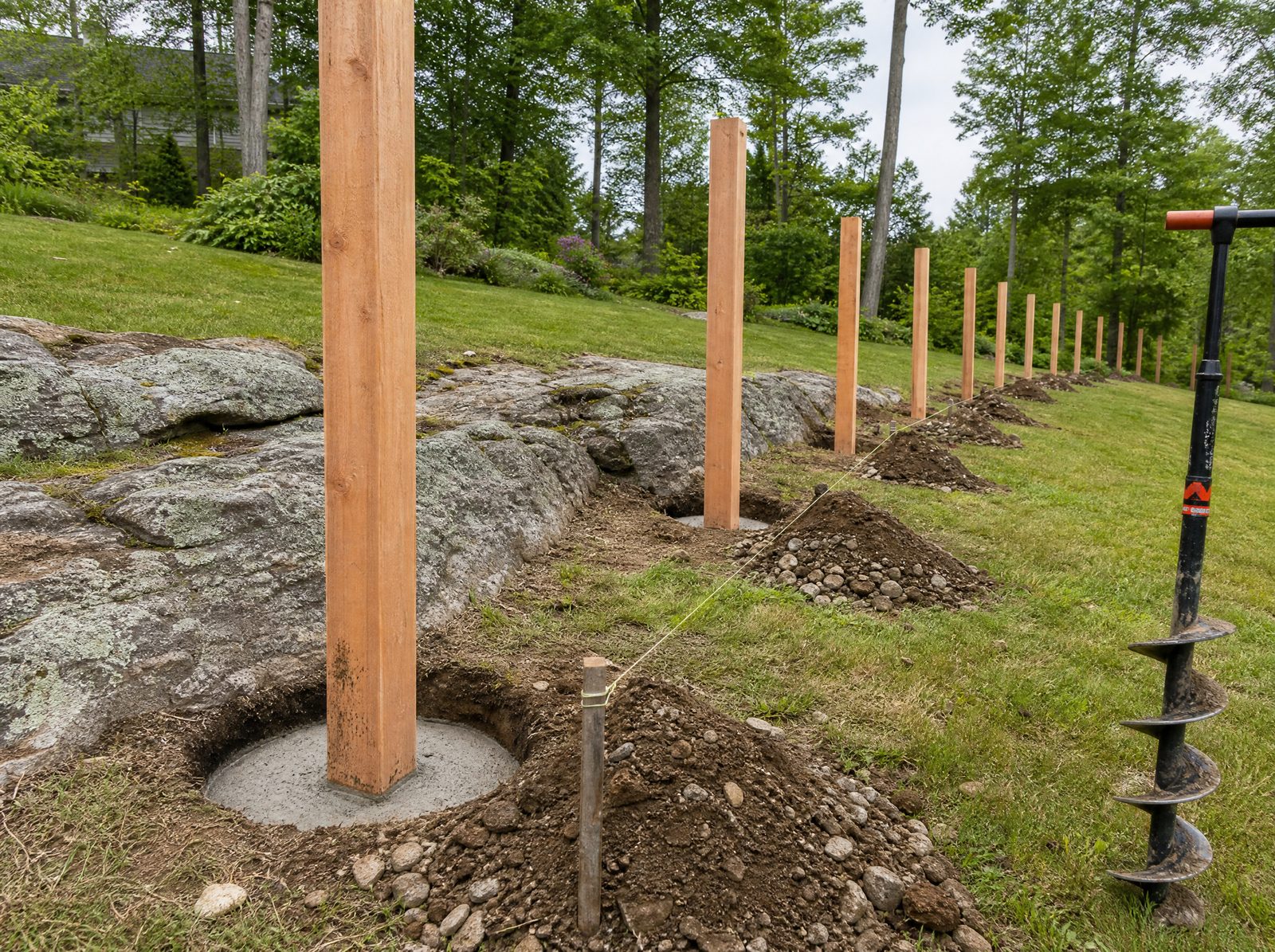
How a Residential Fence Installation in New Fairfield Comes Together
Once the purpose is settled and the material fits the site, the work runs in a predictable order, and knowing that order tells you whether a crew is skipping steps. The compliance and utility checks sit early, before anything is ordered or dug, because that is where they are cheap. Connecticut's Call Before You Dig service is free and required by law before excavation, and a request goes in by calling 811. Note that public marking does not cover privately owned lines like septic, irrigation, propane, well lines, or invisible pet-fence wire, which may need a separate private locate. The sequence below is what a residential fence installation in New Fairfield should look like from the homeowner's side.
From First Question to Finished Fence
- 1
Step 1: Define the Job
Name what the fence has to do, whether that is privacy, pets, a pool barrier, a boundary, curb appeal, or a combination.
- 2
Step 2: Walk the Property
Trace the proposed line and note slope, ledge, drainage, trees, stone walls, septic and well components, access, and where gates need to go.
- 3
Step 3: Confirm the Line and the Town Rules
Review the survey and boundary questions, then check zoning, pool-barrier, wetlands, and easement requirements before anything is ordered.
- 4
Step 4: Lock the Written Scope
Document material grade, style, height, post and gate details, grade handling, removal, cleanup, schedule, and who is responsible for what.
- 5
Step 5: Mark Utilities and Prep the Site
A Call Before You Dig request goes in, private lines get identified, and the approved path is cleared.
- 6
Step 6: Set Posts, Hang Gates, and Walk It
Posts are set for the soil, grade, and gate loads, panels or fabric go up, hardware is adjusted, and the finished job is walked with you.
A Contractor Worth Hiring Asks What the Yard Is For
The clearest signal in a first meeting is the direction of the questions. A residential fence contractor who measures the run and quotes a standard fence is selling a product. One who asks about the dog, the pool, the slope, the gates you will actually use, and the neighbor's sight line is designing a fence. Connecticut law requires home improvement contractors, including fence installers, to register with the Department of Consumer Protection, so registration and insurance are the floor rather than a selling point. The state explains why that registration protects you, and you can check any contractor's standing through the state's license verification in about a minute. My Fence Guy is a family-owned contractor with its office right here in New Fairfield, licensed and insured, and we give free estimates.
Past the paperwork, hold every bid to the same written detail. Before work starts, the scope should cover:
- Purpose and layout: What the fence is for, the measured run, and where the line sits.
- Material specifics: Manufacturer, style, grade, color, and height, not just "wood" or "vinyl."
- Post and gate details: Post sizes, footings, gate widths, swing direction, and hardware.
- Grade handling: Whether panels step or rack, and how bottom gaps get treated.
- Removal and disposal: Who takes out the old fence and hauls the debris.
- Permit and utility responsibility: Who confirms any permit and who files the 811 request.
- Schedule and payments: Timeline, material lead times, and a payment schedule.
- Change orders: How hidden conditions like ledge get priced when they turn up.
- Warranty: Workmanship and manufacturer terms in writing.
Frequently Asked Questions About residential fencing new fairfield ct
Q: What type of residential fence is best?
A: There is no single best material. The right pick depends on what the fence has to do, then on the property. Vinyl and wood handle privacy, aluminum and ornamental keep views open, chain link is practical for long runs and pets, and split rail defines a boundary without closing it. Purpose, slope, maintenance tolerance, gates, and budget narrow it quickly.
Q: Does a residential fence require a permit in New Fairfield?
A: New Fairfield generally exempts fences not over seven feet from a building permit, but a fence used as a pool barrier requires a permit regardless of height. Zoning, placement, easements, and wetlands rules can still apply, so confirm the current requirements with the town before installation.
Q: What is the best privacy fence for a backyard?
A: Vinyl and wood are the common full-privacy choices, and chain link with slats gives partial screening with airflow. The better question is how much of the yard actually needs screening. Wind exposure, grade, maintenance, and the view you want to keep usually decide it.
Q: How much does residential fencing cost in New Fairfield?
A: Cost depends on footage, height, material and grade, privacy level, gate count and width, slopes, ledge, access, old-fence removal, and custom work. A site visit prices those honestly, which is why an online average is background reading rather than an estimate.
Q: Can residential fencing contain a dog that digs or jumps?
A: Usually, when the fence is designed around that specific dog. Height, picket or mesh spacing, bottom clearance, dig protection, gate gaps, and latch placement matter more than a pet-friendly product label. Dogs test the weakest point, not the strongest one.
Q: Can a fence be installed on a sloped New Fairfield yard?
A: Yes. Depending on the system and the grade, panels either rack to follow the slope or step down in level sections. Bottom gaps, pet containment, appearance, and the manufacturer's racking limit should guide which method fits.
Q: Is residential fencing in New Fairfield Connecticut different from a commercial job?
A: The compliance basics are similar, but the design goals are not. Residential work is built around how a family uses a yard: privacy where you sit, safety around a pool, containment for pets, and a front boundary that suits the house. Commercial work leans toward security, access control, and durability over long runs.
Is Your Fence Plan Ready?
1. What should decide a residential fence first?
2. Which residential fence needs a permit in New Fairfield no matter its height?
3. On a sloped yard, what are the two ways a fence handles the grade?
4. Where does a dog usually get through a fence?
5. What do privacy slats add to a chain-link fence besides screening?
Pick an answer to begin.
Final Thoughts
A residential fence works out when the decisions happen in the right order: name the job, walk the property, let the site conditions narrow the field, then pick the material that serves both. Privacy, pets, pool safety, and curb appeal each pull the design somewhere different, and the ground under the fence has an opinion about all of it. Handle the pool barrier as its own permitted project, get the gates where you will actually use them, and put the material grade and post details in writing. The panel was never the hard part.
The payoff is a fence you stop thinking about. It holds the dog, screens the patio, keeps the front of the house looking right, and stays true through New England winters, year after year, without a single argument about where it should have gone.
If you are planning a fence in New Fairfield, we would be glad to walk your property and tell you what it actually needs. My Fence Guy is a family-owned contractor with its headquarters office in New Fairfield, CT, and we install residential, commercial, industrial, and agricultural fencing in wood, vinyl, aluminum, chain link, and ornamental styles, plus pool fencing, pet fencing, gates, and railings. We start with what your yard is for, not with what is on the truck. Call us at (203) 746-1100 for a free estimate, or reach out through our contact page.
Residential Fencing Key Terms
Tap a term to see what it means.
Board-on-Board. A wood privacy style where boards overlap on alternating sides of the rail, giving full screening with room for the wood to move.
More about fences
Wood Fencing in New Fairfield, CT: What Lasts and What Warps
Cedar or pressure treated? Wood fencing in New Fairfield, CT, plus the privacy styles, fasteners, and the staining cadence that keeps a fence straight.
Read the guide to Wood Fencing in New Fairfield, CTResidential Fencing in Southbury, CT: What Fits Your Yard
Privacy, pets, pool, or curb appeal? Residential fencing in Southbury, CT, and how the answer changes the material, the height, and the gate you need.
Read the guide to Residential Fencing in Southbury, CTResidential Fencing in Sherman, CT: Choose by Purpose First
Your lot picks the fence as much as you do. Residential fencing in Sherman, CT: how slope, trees, wet ground, and the property line shape the layout.
Read the guide to Residential Fencing in Sherman, CT