
Residential Fencing in Southbury, CT: What Fits Your Yard
By Tony Pellicone19 min readPublished
- residential fencing
- southbury ct
- wood fencing
- connecticut
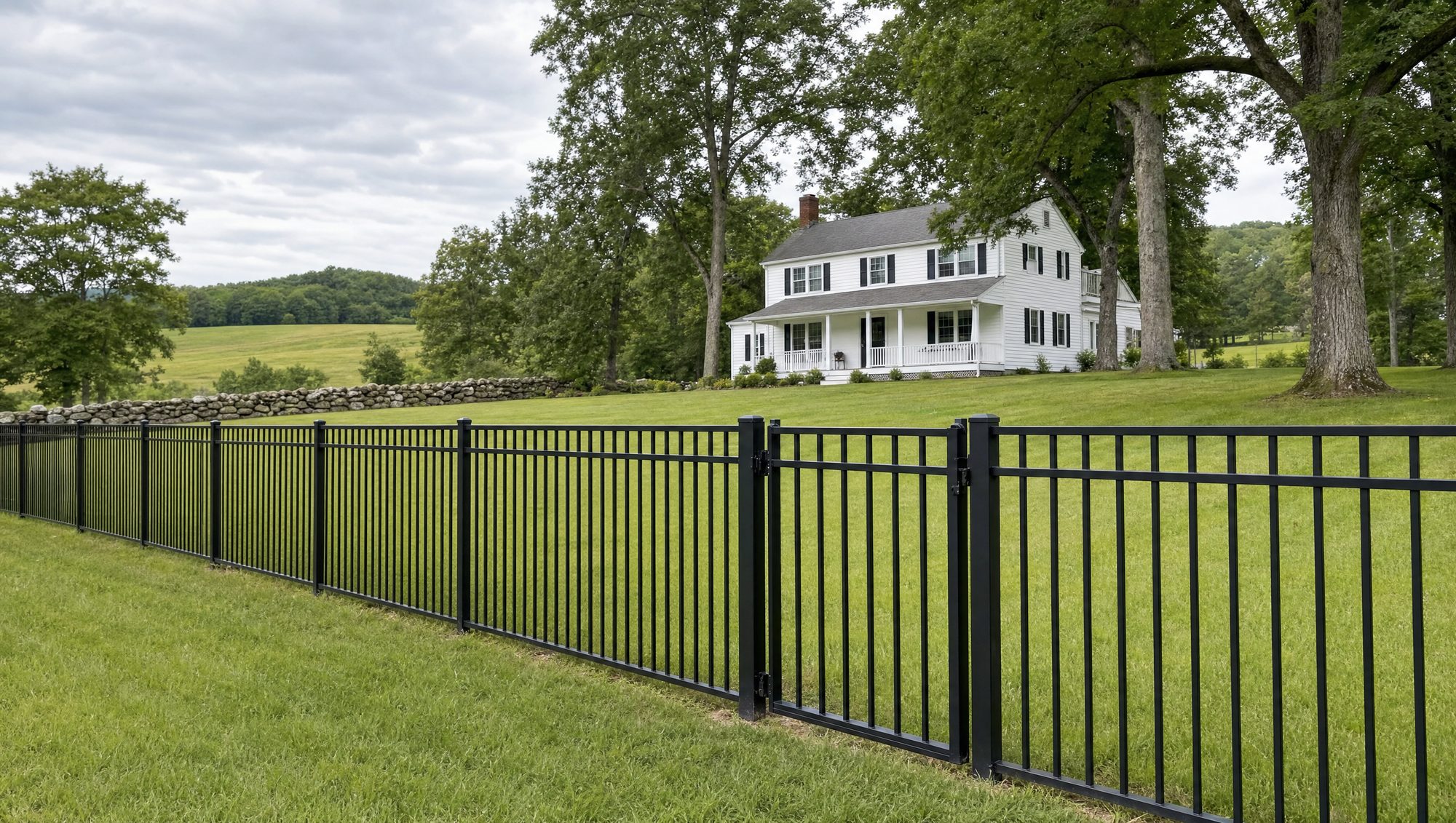
Residential fencing in Southbury, CT gets sold to you as a material question. Vinyl or wood. Aluminum or chain link. So, you read the comparisons, pick whichever one sounded best, and a year later the dog still slips out at the low corner by the stone wall, the privacy panel has blocked the one view you actually liked, and the gate sits on the wrong side of the yard for the mower. The fence stands. It just does not do the job you bought it for. That happens because material is the second question and almost every guide answers it first. The first question is what the fence is for, and right behind it is what your particular lot does to that plan. Settle those two and the material choice mostly answers itself. Walk your own yard with them in hand and you will already be ahead of most of the estimates you are about to collect.
Key Takeaways
Purpose sets the spec
What you are containing, screening, or framing decides height, spacing, gate placement, and layout long before a material comparison is useful.
Your lot gets a vote
Wooded edges, ledge, slopes, drainage swales, and older stone boundaries can rewrite a clean plan, so the site walk matters as much as the catalog.
One permit is not every permit
Southbury takes building and zoning applications online and reviews fences property by property, a pool barrier needs a permit regardless of height, and zoning still governs placement.
Pets and pools are design problems
Bottom gaps, spacing, and latch behavior decide whether a pet fence holds, and a pool barrier is a whole system rather than a panel choice.
Cost tracks the site, not a price per foot
Footage and material set the floor, while ledge, slopes, access, gates, and removal move the number.
Name the Job Before You Name the Material
Every fence is built to answer a question, and most disappointing fences answered the wrong one. A homeowner who says "I want a six-foot vinyl fence" has skipped a step, because six feet of solid vinyl is a fine answer to screening a neighbor's deck and a mediocre answer to containing a terrier that digs. Naming the job first is not a formality. It is the decision that quietly sets height, openness, picket spacing, gate count, gate placement, hardware, and the route the fence takes across the yard.
What the Fence Is Actually Holding, Screening, or Framing
Residential fences in Southbury usually do one of a handful of jobs: privacy from a neighboring home or a road, pet containment, pool safety, boundary definition, curb appeal, garden protection, or keeping animals in on rural acreage. Some yards need two or three of those at once, in different places. A fence has to hold something in, keep something out, block a sight line, or draw a line, and each of those pulls the design a different direction. A privacy run carries real wind load and has to solve grade transitions. An open aluminum line reads lighter and lets you keep the view. A pet fence gets designed around one specific animal's habits. Write down the job for each side of the yard, not for the yard as a whole, and the plan starts to look different from the catalog.
How Your Southbury Lot Votes on the Plan
Southbury properties do not share a shape. Some homes sit on open suburban lots, while others back into wooded edges, sloped grade, exposed ledge, lake-area soil, old stone walls, or long rural runs that need more than one gate. A layout that drops in cleanly on a flat development lot will fight you on a steep or rocky property, and that is not a contractor being difficult. Ledge can slow excavation and sometimes shift the post spacing or the route itself. Slopes force a choice between racking panels to follow the grade and stepping level sections down the hill, and that choice changes the gaps at the bottom. Drainage swales, roots, wet ground, and limited equipment access all get a vote too. The yard is the second half of the brief.
Design the Backyard Fence Around How the Week Actually Goes
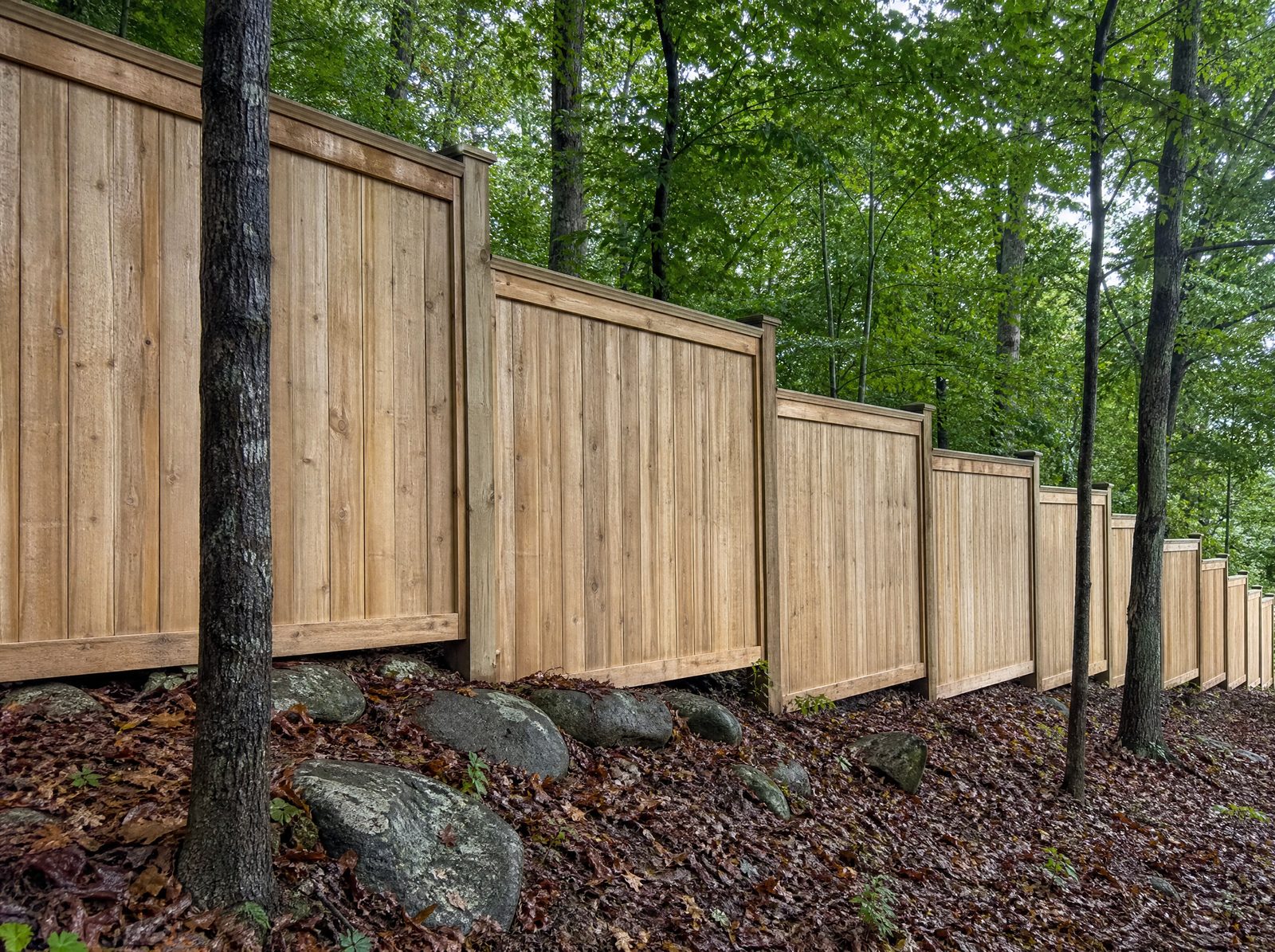
A backyard fence in Southbury has to coexist with everything already back there: patios, decks, pools, play areas, sheds, septic components, wells, gardens, stone walls, mature trees, drainage, and the neighbor's fence. The layout that looks clean on paper is the one that traps the mower behind a single narrow gate or blocks the path the trash bins take every week. The useful questions are boring and specific. Is privacy needed on every side, or only where the deck looks across? Where does snow get pushed, and will it pile against a gate you need in February? Can service equipment reach the pool pad and the septic access once the line is closed? Answer those before anyone measures.
Pets Need a Bottom Line, Not a Top Line
Most pet-fence failures happen at the bottom, not the top. The height gets all the attention while the dog goes under a low spot where the grade dips, through a gap at a gate, or past a corner where the fence meets an old wall. The right design depends on the specific animal's size, jumping ability, digging habit, and willingness to push at a weak point, which is why generic "pet-friendly" labels do not mean much. The American Kennel Club's guidance on dog-proofing a fence is a good reality check on how much of this is behavior rather than product. Bottom clearance, picket spacing, gate gaps, latch height, and the transitions where the fence changes direction deserve more attention than the panel style, and any pet fencing plan should name them.
A Pool Turns the Fence Into a Safety System
A pool barrier is not a yard fence that happens to be near water. It is a system, and it gets reviewed as one: gate swing direction, self-closing operation, self-latching hardware, latch height, opening sizes, clearances underneath, and how the barrier meets nearby structures. The federal safety barrier guidelines for home pools walk through why each of those exists, and none of them are optional details you can trade for a nicer panel. Treat pool fencing as its own project with its own approval rather than a section of the backyard run.
The Neighbor-Facing Side Is a Design Decision
Every fence has two sides, and one of them belongs to someone else's view. Deciding which way the finished face points, how the fence meets an existing neighboring fence, and whether the run sits inside your line or right on it are conversations worth having before the posts go in rather than after. Board-on-board and shadowbox styles look the same from both sides, which removes the question entirely. If the fence will sit close to the boundary, that is also the moment to be sure the boundary is where you think it is.
Choose a Privacy Fence That Southbury Winter Will Not Argue With
Once you know which sides need screening, privacy becomes a real comparison instead of a preference. The three common answers on a home fence in Southbury are solid vinyl, wood, and chain link with slats, and they trade differently on maintenance, appearance, repairability, and how much wind they catch. Anything solid is a sail, and that matters here, because wind load is carried by the posts and shows up first at the gates. The material you pick decides what the fence looks like; the way it gets set decides whether it still looks that way in five winters.
Vinyl, Wood, and Slatted Chain Link
Vinyl fencing gives full screening without staining, but low routine maintenance is not the same as a forgiving installation, since solid panels carry heavy wind load and slope transitions still have to be solved. Wood fencing gives a natural appearance and adapts to irregular terrain, from board-on-board privacy to split rail along a field, with species, grade, treatment, fasteners, drainage, and airflow driving how long it lasts. The Forest Products Laboratory's wood handbook is the honest technical source on why moisture and soil contact, not age alone, are what end a wood fence. Chain-link fencing with slats screens partially while letting air through and keeping a durable frame, though the slats add wind load and can call for stronger posts and rails.
Open in Front, Private in Back
Plenty of Southbury homes do not need one answer for the whole property. Open aluminum fencing or ornamental styles define a front yard, a garden, or a driveway approach without building a wall across the curb, and they rack to follow grade rather than fighting it. Privacy then does its work along the side and rear where the deck, patio, or pool actually is. Larger rural lots may need agricultural fencing planned around the animals and the acreage instead, which is a different discipline from residential work rather than the same fence run longer.
Know Which Southbury Approvals Apply Before You Order Panels
Southbury handles fence approvals more simply than most people expect, but simple is not the same as none. The town takes building and zoning applications through its online permitting system and keeps separate resources for zoning, inland wetlands and watercourses, aquifer protection, and historic-district review. Southbury's zoning regulations are also going through a full update, so an old forum post or a neighbor's memory is not a source. Confirm the current requirements for your lot and your design with the town before you order anything.
The Building Permit Answers One Question
Southbury takes building and zoning applications online and reviews fences property by property, so the building-permit question is only the first one you have to answer. Placement near a street or a driveway, sight lines at a corner, an unclear property line, a recorded easement, wetlands or watercourse setbacks, aquifer protection areas, historic-district visibility, and private association or deed restrictions can all still apply. The safe read is that you may skip the building permit and still owe the town a zoning check.
Pool Barriers Are Permit-Controlled Regardless of Height
The clearest case is the pool barrier, which requires a permit no matter how tall it is. That follows from the barrier being a safety system rather than a boundary, and the review looks at the whole system, not the panels. If the fence protects a pool, plan for its own approval and its own timeline.
Confirm the Line, Then Mark What Is Under It
An old mowing line, a hedge, a tree row, a stone wall, or a handshake with the previous owner is not the legal boundary, and a fence set in the wrong place is expensive to move. A contractor can measure and lay out a run, but a licensed surveyor is the professional who establishes the line, and recorded plans often live with the town clerk. A survey earns its cost when the corner markers are missing, the fence will sit close to the line, an easement may cross the yard, or a neighbor has already questioned the location. Once the line is settled, the digging rule takes over: Connecticut's Call Before You Dig service is free and required by law, and a request goes in by calling 811 before any excavation. Public marking does not cover everything, though, so septic lines, invisible pet-fence wire, irrigation, propane, and pool equipment may need a separate private locate.
Understand What Residential Fence Cost in Southbury Actually Tracks
No single number describes every Southbury fence project, and any homeowner who has collected three estimates already knows it. Connecticut cost guides show wide installed ranges precisely because material, layout, gates, terrain, removal, and labor swing so far from lot to lot, so treat a published average as market context rather than a quote. What follows is where the money actually lives, which is more useful than a per-foot figure that assumes a yard you do not have.
The Quantities Set the Floor
Linear footage is the first lever, since longer runs mean more posts, more panels or fabric, more hardware, and more hours. Material is the second, because pressure-treated wood, cedar, vinyl, aluminum, ornamental steel, chain link, and wire all price out differently. Height and style stack on top, since a tall solid privacy fence uses more of everything and catches more wind than a shorter open line. Independent breakdowns like Angi's fence cost guide show how far those basics alone can spread a total before the site is even considered.
The Site Sets the Labor
This is where two identical fences stop costing the same. Ledge and rock slow excavation and sometimes force a different tool or a shifted layout, and that belongs on the estimate as a real site condition rather than hidden inside a vague allowance. Slopes add work whether you rack or step. Wet ground, heavy roots, brush clearing, a long carry from the truck, and a gate that a machine cannot reach all add hours. Gates cost more than fence, because walk gates, double gates, and driveway and estate gates each need their own posts, footings, and hardware.
Removal Is Its Own Line Item
If a failing fence has to come out first, that is labor and disposal before the new work starts, covering the panels, the posts and concrete footings, the debris, and the disturbed ground. When you compare bids, check that they all treat the old fence the same way, or you are not comparing the same job.
Hover or tap a row to highlight it.
| Cost Driver | Why It Matters |
|---|---|
| Linear footage | Longer runs mean more posts, panels, hardware, and hours. |
| Material and height | Wood, vinyl, aluminum, ornamental steel, and chain link price differently, and taller solid fences use more of everything. |
| Gates | Walk, double, and driveway gates each need their own posts, footings, and hardware. |
| Ledge and slopes | Rock slows excavation, and grade forces racking or stepping, both of which add labor. |
| Access and site conditions | Wet ground, roots, brush, and a long carry from the truck all add time. |
| Old-fence removal | Pulling posts and concrete, hauling debris, and restoring the ground is its own line item. |
Make the Posts and Gates Carry the Purpose You Paid For
Southbury sees real winter, with repeated freeze-thaw cycles that push on anything set shallow or poorly drained. A fence that leans, heaves, or racks a year after install almost always traces back to how the posts went in, which is why the least visible part of the job is the part that decides the outcome. Connecticut's residential code for foundations requires permanent supports of regulated structures to be protected from frost, and while a typical fence is not always regulated like a building footing, the principle explains what goes wrong.
What Decides Depth and Support
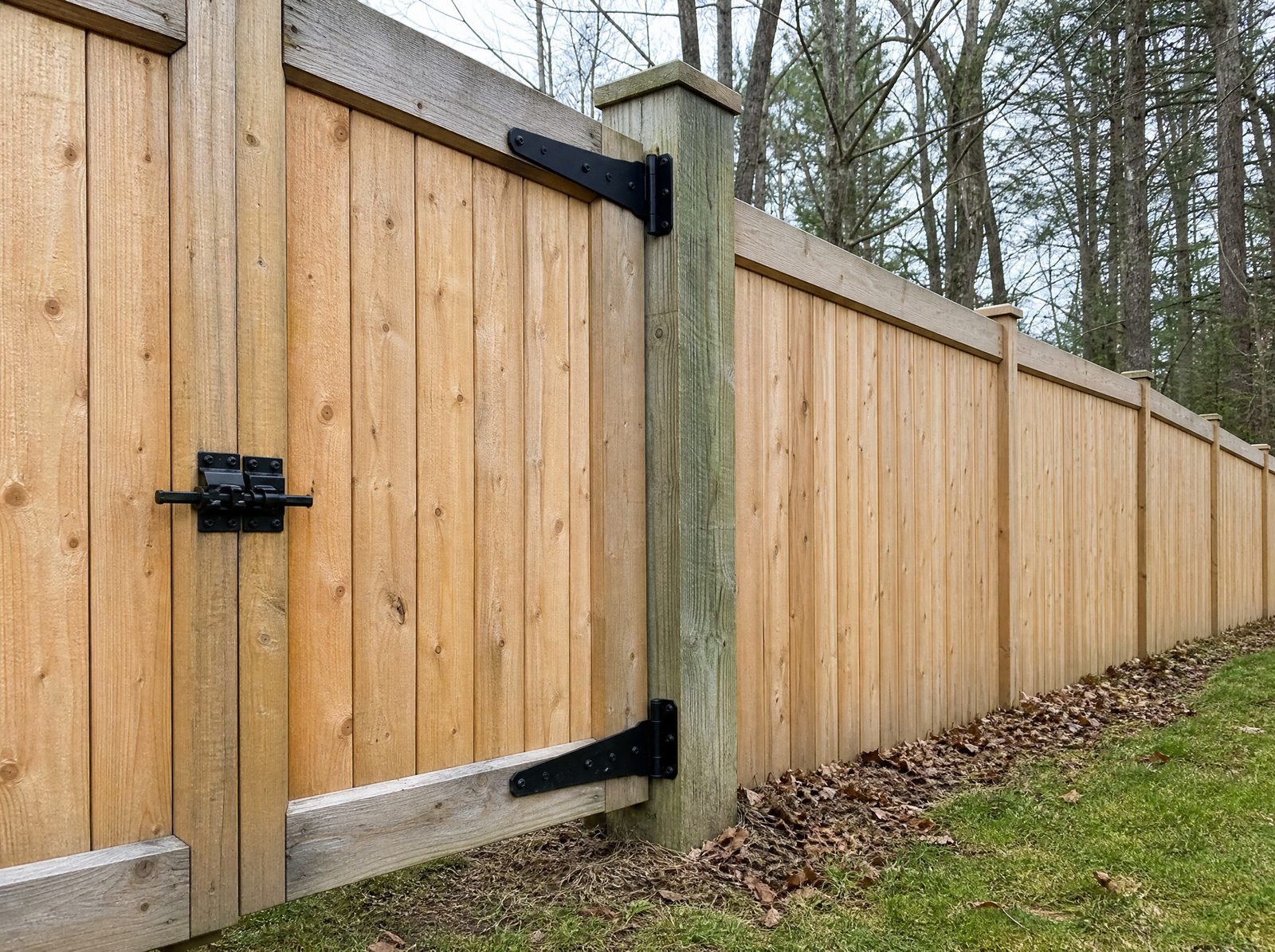
There is no single correct post depth for every fence, and anyone quoting one number for everything is guessing. Proper depth and support come from the whole picture: fence height, solid or open design, material, post size, gate load, soil and ledge conditions, drainage, wind exposure, local frost conditions, and the manufacturer's specifications. Corner posts, end posts, and any post carrying a solid privacy panel usually need more than a light in-line post. Drainage under the post matters as much as depth, since water that sits and freezes is what does the damage.
Gates Fail First
Gates are where a fence gets used hardest and where a shortcut shows up soonest. A gate that sags, drops its latch out of alignment, or drags after the first frost heave was almost always hung on an undersized post or a weak footing. Gate width, hinge load, latch alignment, and frost movement all feed into post size and the concrete under it. On a pet fence, the gate is also the most common escape point, and on a pool barrier it is the part the code cares about most.
What a Residential Fence Installation in Southbury Looks Like Step by Step
A clean installation runs in a predictable order, and knowing that order helps you spot a crew that skips steps. It starts with a walk of the property and ends with a walkthrough you are part of, with the compliance and utility checks built in where they belong rather than bolted on. The sequence below is how residential fence installation in Southbury should come together, and any deviation should have a reason you can hear out loud.
The Southbury Residential Fence Process
- 1
Step 1: Property Consultation
We walk the line, define the job for each side of the yard, and note slopes, walls, ledge, drainage, trees, access, and where gates need to be.
- 2
Step 2: Boundary and Compliance Review
We review the survey, confirm the line, and check zoning, permits, wetlands, easements, and pool requirements before anything is ordered.
- 3
Step 3: Written Estimate and Materials
The scope documents footage, height, material, post details, gates, hardware, removal, cleanup, and who is responsible for what.
- 4
Step 4: Utility Marking and Site Prep
A Call Before You Dig request goes in, private lines are identified, and the approved path is cleared without wrecking trees, walls, or drainage.
- 5
Step 5: Post and Panel Installation
Posts are set for the soil, grade, wind, and gate loads on the property, then panels, rails, fabric, or pickets go up.
- 6
Step 6: Gates, Adjustments, and Walkthrough
Hinges and latches are set, bottom gaps and transitions checked, the site cleaned, and the finished line walked with you.
Hire a Residential Fence Contractor You Can Hold to a Scope
Connecticut law requires home improvement contractors, including fence installers, to register with the Department of Consumer Protection, so registration and insurance are the floor rather than a selling point. The state explains why that registration protects you, and confirming any contractor's standing takes only a few minutes on the state's license verification page. Past that, a residential fence contractor in Southbury worth hiring can tell you how they handle the things that are not on the panel: how they set posts on ledge, how they price a surprise, and how they document the job. The contract is where all of that becomes real.
What a Written Fence Contract Should Cover
Connecticut's contracting guidance is a good checklist to hold any bid against, and the state is direct that a home improvement contract must carry the contractor's name, address, and registration number, signatures, the signing date, and the date by which you may cancel. Beyond that baseline, the scope should spell out:
- Material details: Manufacturer, style, grade, and color, not just "wood" or "vinyl."
- Post and gate specifications: Post sizes, footings, gate widths, and hardware.
- Removal and disposal: Who takes the old fence out, and who hauls the debris.
- Permit and utility responsibility: Who pulls any permit and who files the 811 request.
- Change orders: How hidden conditions like ledge get priced once they show up.
- Cleanup and warranty: Final restoration, plus workmanship and manufacturer terms in writing.
Frequently Asked Questions About residential fencing southbury ct
Q: Do I need a permit for residential fencing in Southbury, CT?
A: Southbury takes building and zoning applications online and reviews fences property by property, but a fence used as a pool barrier requires a permit regardless of height. Zoning, placement, easements, wetlands, and other site-specific rules may still apply, so confirm the current requirements with the town before installation.
Q: What type of residential fence is best for my property?
A: It depends on the job. Privacy, pets, pools, curb appeal, maintenance tolerance, slope, and gates each push toward different answers, and vinyl, wood, aluminum, ornamental steel, and chain link solve different problems. Naming the purpose for each side of the yard makes the material comparison useful instead of abstract.
Q: How much does residential fencing in Southbury Connecticut cost?
A: Cost tracks footage, height, material, privacy level, gates, slopes, ledge, roots, access, old-fence removal, permits, and custom work. A site-specific estimate is far more reliable than a published average, which is why an on-site visit is the honest way to price a yard.
Q: How do I keep a dog from getting under a fence?
A: Focus on the bottom rather than the height. Grade dips, gate gaps, spacing, and the transitions where the fence meets a wall or changes direction are the usual escape points, and the right fix depends on the specific dog's size, digging habit, and behavior.
Q: Can a fence be installed on a sloped Southbury yard?
A: Yes. Depending on the system and the grade, installers either rack the fence to follow the slope continuously or step level sections down the hill. Appearance, bottom gaps, pet containment, and the manufacturer's limits should decide which method fits.
Q: How deep should residential fence posts be in Connecticut?
A: There is no single correct depth for every fence. Depth and support depend on fence height, post size, material, soil and ledge, drainage, frost conditions, wind exposure, gate loads, and manufacturer specifications, which is why shallow or poorly drained posts are the ones that move.
Test Your Southbury Residential Fencing Knowledge
1. What should decide your fence design first?
2. Does a pool barrier in Southbury need a permit?
3. Where do most pet-fence failures happen?
4. What does a slope force you to choose between?
5. Does Call Before You Dig mark privately owned lines?
Pick an answer to begin.
Final Thoughts
Residential fencing in Southbury comes down to a short list of decisions taken in the right order: name the job for each side of the yard, let the property have its say on slopes and ledge and drainage, confirm the permit and zoning questions, verify the line, mark the utilities, and then pick a material that suits both the purpose and the site. Posts and gates carry whatever you decided, so they are worth more attention than the panel style. Do it in that order and the fence stops being a gamble.
Done right, a fence quietly earns its keep for decades, holding the dog in, screening the deck, framing the front yard, and standing straight through every freeze-thaw cycle without asking for anything. That is the return on planning it out instead of ordering panels first.
If you are planning a fence in Southbury, we would be glad to walk your property and give you a straight answer about what fits it. My Fence Guy is a family-owned contractor with an office right here in Southbury, licensed and insured, and we install residential, commercial, industrial, and agricultural fencing in wood, vinyl, aluminum, chain link, and ornamental styles, plus pool fencing, pet fencing, gates, and railings. We handle the layout, the permit and utility questions, and the site conditions that decide how a fence holds up. Call us at (203) 746-1100 for a free estimate, or reach out through our contact page.
Residential Fencing Key Terms
Tap a term to see what it means.
Zoning Review. Southbury's separate look at where a fence sits, which applies alongside any building permit question and governs placement, setbacks, and sight lines.
More about fences
Wood Fencing in Southbury, CT: What the Estimate Leaves Out
A two word estimate hides most of the fence. Wood fencing in Southbury, CT: what cedar, grade, post treatment, and fasteners mean before you sign.
Read the guide to Wood Fencing in Southbury, CTResidential Fencing in Sherman, CT: Choose by Purpose First
Your lot picks the fence as much as you do. Residential fencing in Sherman, CT: how slope, trees, wet ground, and the property line shape the layout.
Read the guide to Residential Fencing in Sherman, CTResidential Fencing in New Fairfield, CT: Choose the Right Fence
The fence you want and the fence your yard needs are rarely the same. Residential fencing in New Fairfield, CT: materials, heights, gates, and cost.
Read the guide to Residential Fencing in New Fairfield, CT