Agricultural Fencing in Southbury, CT: Start With the Animals
By Tony Pellicone18 min readPublished
- agricultural fencing
- southbury ct
- farm fencing
- connecticut
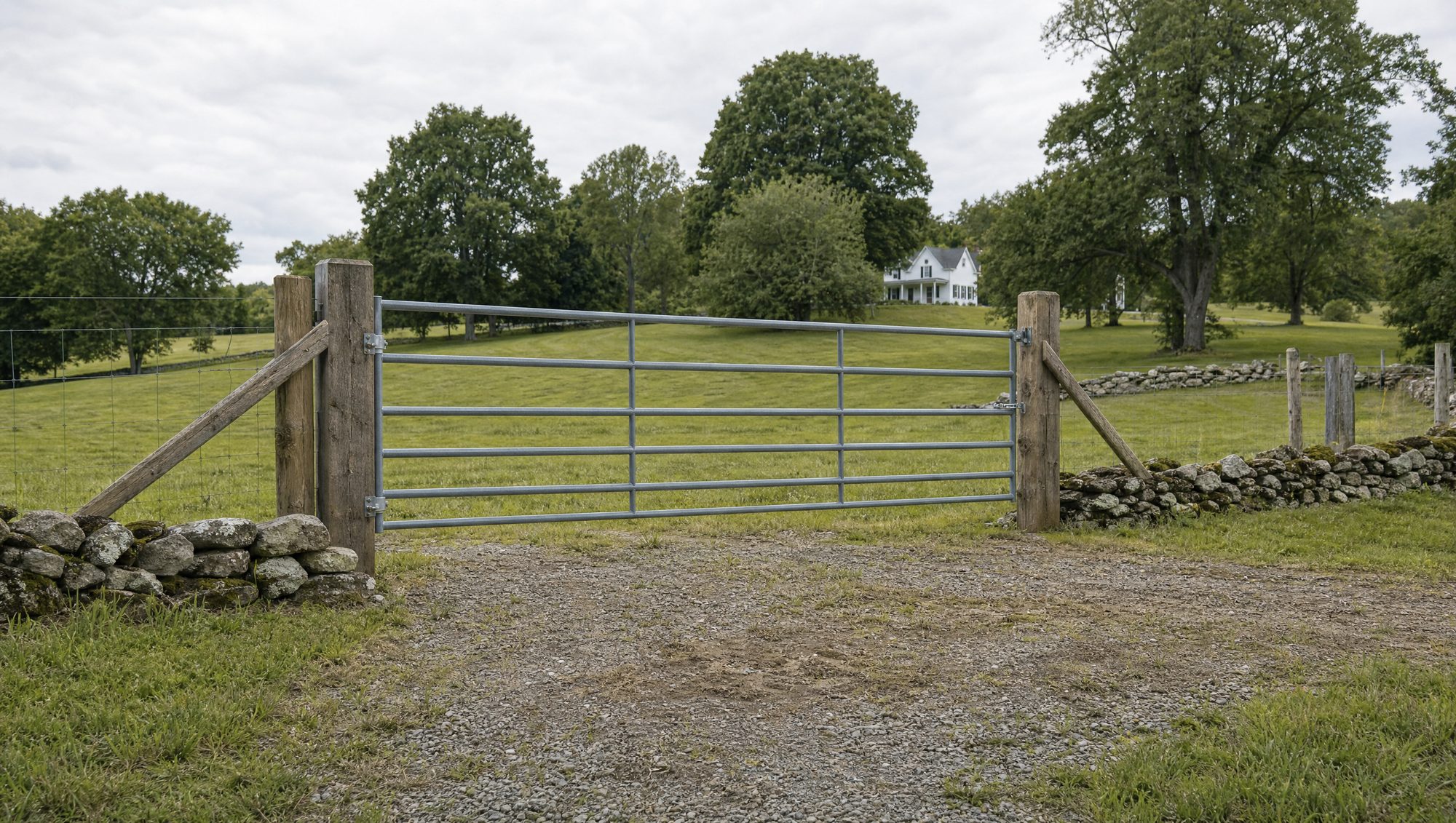
The animals tell you first. A gate that will not swing because the low spot beside it turned to mud, a goat picking its way over a corner that sagged in its first season, a horse standing on a road it should never have reached. That is how most people find out they built the wrong fence. Agricultural fencing in Southbury, CT is not a backyard project scaled up, it is a working piece of equipment you handle every day, and it fails in ways a privacy panel never does. The frustrating part is that most fencing advice opens with materials and prices by the foot, as if a goat pen and a cattle perimeter were the same job. They are not. What holds stock on a sloped Southbury pasture with ledge under the topsoil has very little to do with what a roll of wire costs. The decisions do come in an order, though, and once you can see the order, the choices get much easier to make. Here is how a farm fence gets planned on real Southbury ground.
Key Takeaways
Design around the animals
Cattle, horses, goats, sheep, pigs, and poultry each put different pressure on a fence, so the stock comes before the material.
Build the perimeter first
The permanent boundary carries the containment risk, and interior paddocks and temporary fencing work best inside it.
Plan gates and lanes early
Tractors, trailers, hay delivery, snow equipment, and daily animal movement decide gate width and placement long before the wire goes up.
Southbury ground drives the build
Ledge, rocky glacial soil, slopes, wet spots, wooded edges, and freeze-thaw movement all shape posts, braces, and tension.
Confirm the town's current requirements
Southbury takes zoning and building applications online, the review depends on your property and fence design, and the zoning regulations are being updated.
The Animals Decide the Fence Before the Materials Do
A fence line drawn before anyone names the animals is a guess. Agricultural fencing is a land-management system rather than a boundary marker, and it may have to contain stock, exclude predators or deer, divide pasture, support rotational grazing, and still let a tractor through. The USDA conservation practice standard for fences treats a fence as a planned structure with a defined purpose for exactly this reason. Get the purpose wrong and every decision after it inherits the error.
Start With the Hardest Animal to Hold
Species, age, and temperament set the specification, and the perimeter has to answer the most difficult animal on the property, not the average one. A yearling tests a fence differently than a bred cow. Goats climb and push where cattle lean and rub. Lambs and kids find bottom gaps that adult stock walk past without noticing. University extension guidance on fences for the farm makes the same point from the other direction: the fence that works is the one matched to the animal, its size, and its habits.
The Fence Has a Job Beyond Containment
Containment is only part of the assignment. The same line has to account for roads and neighboring property, predator pressure, the grazing system, water and shade, equipment routes, snow, drainage, and inspection access. Southbury properties add their own complications, including wooded lots, sloped ground, rocky soil, wetlands, stone walls, and rural road frontage. A layout that ignores where the water and the shelter sit will fight you every day for years.
A Secure Perimeter First, Then the Paddocks
Interior fencing is a management tool. The perimeter is the safety system. Treating them as the same fence is one of the more expensive mistakes on a working property, and it usually shows up the first time an animal is out on a road.
The Permanent Perimeter Carries the Risk
The boundary holds the greatest containment responsibility, so it generally needs stronger corner, end, gate, and brace assemblies than anything inside it. Perimeter planning should account for the most difficult animal, road exposure, neighboring property, wildlife, emergency access, long-term maintenance, future subdivision, and visibility near roads. This is the part of the system that has to hold on the worst day, not the average one.
Interior Paddocks and Rotational Grazing
Inside a secure boundary, paddock fencing in Southbury can be permanent, semi-permanent, or temporary, and it earns its keep by dividing pasture, separating animals, and protecting resting ground. Temporary fencing suits strip grazing, short-term exclusion, adjusting paddock size, and moving small ruminants or poultry, and extension grazing management resources cover how those rotations are planned. What temporary fencing is not is a substitute for a permanent perimeter. It divides ground that is already secure.
Matching Livestock Fencing to Your Stock
Livestock fencing in Southbury comes down to species, age, temperament, stocking density, and management. The systems below are the common starting points, but none of them is a default. Each one has a failure mode that shows up when it is used on the wrong animal.
Cattle
Common options include high-tensile wire, woven wire, electric reinforcement, and heavy gates. Strong corner and brace assemblies matter more here than almost anywhere else, because long wire runs put substantial tension on the terminals and a weak brace lets the whole line go slack. Calves, bull containment, roadside boundaries, water access, gate width, and electric-fence training all belong in the design.
Goats and Sheep
Goats climb, push, and test every gap, so woven wire with a suitable mesh opening is often more appropriate than widely spaced strands alone. Horned versus polled animals, mesh size, bottom gaps, climbing pressure, and predator exclusion all change the answer, and extension guidance on grazing goats covers the containment side in detail. Sheep fencing often uses woven wire or electrified systems, with lambs making low openings and bottom clearance the details that matter most.
Pigs and Poultry
Pigs root beneath a fence and apply their pressure low, so a properly designed low electric strand or a reinforced bottom may be part of the system. Poultry fencing often prioritizes predator exclusion as much as containment, which puts mesh size, overhead threats, digging predators, and nighttime housing into the plan.
Horse Fence Options That Put Safety First
Horse fence in Southbury deserves separate planning, because horses can run into a fence, lean on it, paw at it, or become entangled in it. The priorities are visibility, smooth surfaces, limited snag points, appropriate height, openings sized to reduce hoof or head entrapment, strong gates and latches, no protruding fasteners, and no loose wire. Barbed wire is generally a poor choice around horses because of the injury risk. There is no single best horse fence, and the right pick depends on the horses, stocking density, paddock size, terrain, and maintenance.
Post-and-Rail for Visibility
Post-and-rail is visible, suits rural property, adapts to uneven ground, and lets you replace a single rail rather than a run. The trade-offs are real: open rails may not hold small livestock, wood fencing needs maintenance, horses may chew it, and mesh or an electric offset is sometimes added to cover the gaps.
Horse-Safe Mesh and Coated Wire
Coated high-tensile systems designed for horses, horse-safe woven mesh, vinyl or polymer rail with proper reinforcement, and hybrid systems with electric offsets are the other common paths. Each depends on product strength, post installation, rail retention, and how much pressure the horses actually put on the fence.
Field Fencing and Woven Wire for Long Runs
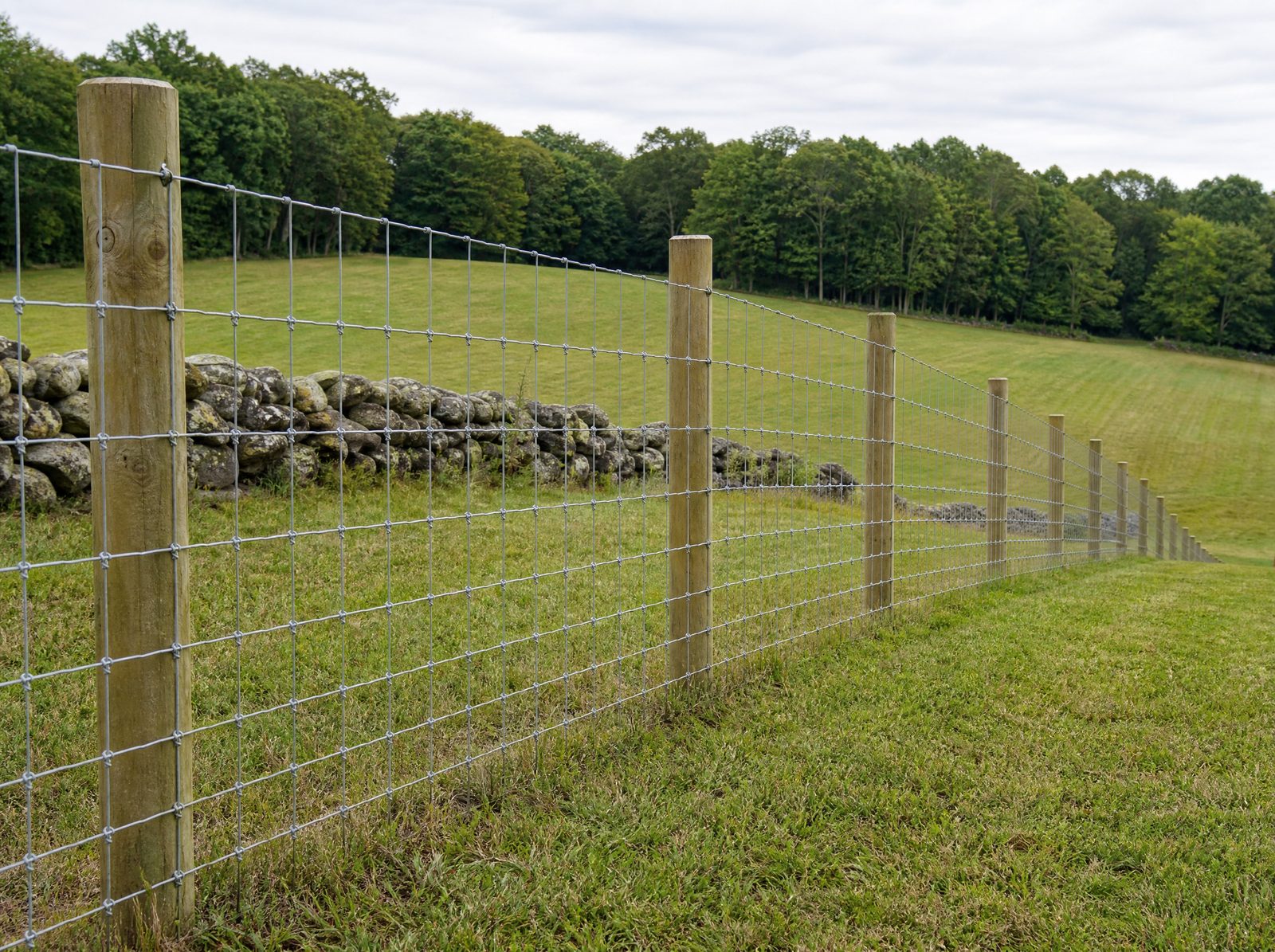
Field fencing in Southbury usually means woven wire, and it covers a lot of ground: livestock, gardens, deer exclusion, and general rural containment. Specifications vary in height, gauge, knot type, spacing, coating, and intended animal, so animal size, predator and deer pressure, bottom opening size, post spacing, terrain, tension, and repairability all steer the choice. The mistake worth avoiding is selecting field fence by roll price. Corner assemblies, braces, posts, staples or clips, and correct tension determine whether the fence still works in five years, and none of those show up on the price tag of the wire.
Electric Fencing Only Works When the Circuit Does
Electric fencing is a psychological barrier, not a physical one, and it earns its reputation both ways. Done well it supports rotational grazing, reinforces physical fencing, and takes pressure off rails or woven wire. Done poorly it is a wire that animals learn to ignore. Performance depends on energizer capacity, grounding, soil moisture, insulators, vegetation contact, animal training, power reliability, and routine voltage testing, and extension write-ups on grazing equipment walk through how those pieces fit together. Vegetation on the wire, weak grounding, broken insulators, snow, and dry soil all drain performance. It is not maintenance-free, and placement near roads, public access, or a neighbor's property is worth confirming with the town.
Southbury Zoning, Boundaries, and Utility Marking
This is the part people want to skip, and it is the part that moves a fence line after it is built. Southbury accepts both building and zoning permit applications through its online permitting system, and the Zoning Department processes land-use applications and reviews compliance. There is no blanket rule that every agricultural fence is exempt, so before you order material, confirm whether a zoning permit, building permit, wetlands review, aquifer review, site plan, or other approval applies to your specific property and fence design. Height and design, placement in required yards, sight lines, easements, wetlands, aquifer protection areas, electric fence placement, and gates near roads can all come into it. Southbury's zoning regulations are undergoing a full update, which is a good reason to check the current rule rather than an older dimensional number someone remembers.
An Old Stone Wall Is Not a Property Line
Agricultural fences follow long, irregular routes, and the temptation is to follow whatever is already there. An old wire line, stone wall, tree row, mowing edge, or abandoned post line does not establish the legal boundary. Confirming the line is worth it when the fence sits close to it, monuments are missing, the parcel is irregular, an easement may exist, a neighbor has questioned the route, or gate placement depends on road frontage. A fence contractor can lay out the proposed run, but a licensed surveyor is the professional who establishes a legal boundary.
Call 811 Before the First Post Hole
Setting posts means digging, and Connecticut requires excavators to contact Call Before You Dig before excavation, at 811 or 1-800-922-4455. Under current provisions, excavators using power-operated equipment must contact the clearinghouse at least two full days, excluding weekends and holidays, and not more than 30 days before excavation, except for emergencies. Public marking does not cover private systems, and farms have plenty: well lines, barn electrical feeds, water lines to troughs, septic lines, drainage tile, irrigation, propane, and old pet-fence wire. The written scope should say who submits the request and how private lines get located.
Southbury Ground Decides the Posts and Braces
Rocky glacial soil, ledge, sloped pasture, wooded edges, wet ground, stone walls, limited machine access, snow, and freeze-thaw movement are all normal here, and every one of them touches post type, brace construction, wire tension, gate placement, labor, and cost. Woven wire and high-tensile systems have to hold tension across grade changes, wood rails may need stepped or custom transitions, and bottom gaps matter most for goats, sheep, poultry, and young stock. Ledge can mean drilling, different equipment, adjusted post positions, or alternative anchoring, and an honest estimate explains how concealed rock will be handled rather than burying it in a number. One habit worth breaking: living trees should not serve as fence posts, because growth, movement, roots, falling limbs, and eventual removal all damage the fence.
Corners and Braces Hold the Whole Line
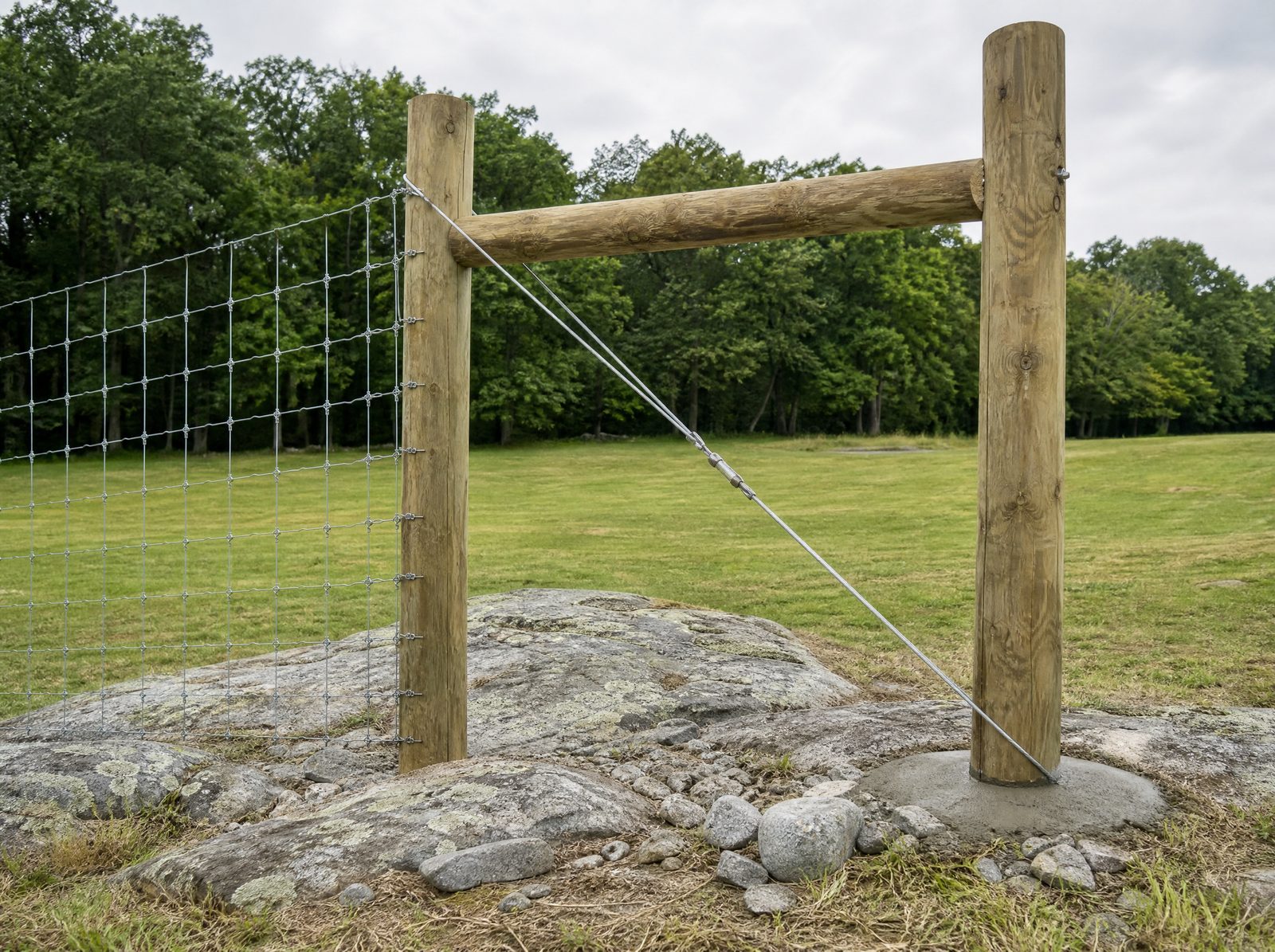
Agricultural fence performance lives in the terminal construction. Corner, end, and gate assemblies resist the tension of long wire runs, and weak bracing lets the entire line sag no matter how good the wire is. Post and brace design depends on fence type, wire tension, run length, soil, ledge, slope, gate load, frost, animal pressure, and manufacturer specifications. There is no universal post depth for every agricultural fence, which is why a single number quoted for the whole property is a warning sign. Southbury winters make drainage and soil support matter, and gate posts and high-tension corners routinely need more than intermediate posts.
Gates and the Mud That Finds Them
Gates take the most use and the most abuse. Width should be set by the largest tractor, mower, trailer, delivery vehicle, snow equipment, or emergency vehicle that has to pass, and turning radius matters as much as the opening itself. Placement is the other half. A gate at the bottom of a slope or in a drainage path becomes mud, and extension guidance on winter mud and pasture damage shows how quickly heavy-traffic areas break down. Lanes should move animals between pasture, shelter, and water without sharp corners or bottlenecks. Larger properties often add estate and driveway gates where the farm meets the road.
What Actually Drives Agricultural Fencing Cost in Southbury
No single dollar figure fits every Southbury agricultural fence, and anyone who offers one before walking the property is guessing. Cost moves with total footage, fence type, animal requirements, corners and braces, gate quantity and size, slopes, ledge, wet ground, clearing and old-fence removal, equipment access, electric components, permitting, and future paddock expansion. Published consumer guides on horse fencing cost and woven wire fence cost show broad ranges, and those ranges are general market context, not a Southbury quote. The comparison that actually protects you is specification against specification. Two bids with different gauges, coatings, post types, or brace systems are not the same fence at two prices, they are two different fences, and the cheaper one is often the one you rebuild.
Hover or tap a row to highlight it.
| Cost Driver | Why It Matters |
|---|---|
| Total footage | Long rural runs multiply posts, wire or rail, hardware, and labor. |
| Fence system and animal requirements | A goat-tight woven wire, a horse-safe rail, and a cattle high-tensile line are different builds at different costs. |
| Corners, braces, and gates | Terminal assemblies carry the tension, and every gate needs its own posts, footings, and hardware. |
| Terrain and access | Ledge, slopes, wet ground, wooded edges, and a long carry from the truck all add hours. |
| Clearing and old-fence removal | Brush, old wire, and abandoned posts are labor and disposal on top of the new fence. |
| Electric components | Energizer, grounding, insulators, and testing are a system, not an add-on wire. |
What Sets an Agricultural Fence Contractor Apart
Connecticut requires home improvement contractors to register with the Department of Consumer Protection, and the state's guidance for consumers explains why that registration exists. My Fence Guy is licensed and insured. Registration is the floor, though, not the qualification. An agricultural fence contractor in Southbury should understand animal behavior, perimeter versus paddock design, wire and mesh specifications, brace construction, gate loads, terrain, electric-fence integration, town permitting, utility requests, drainage, and future expansion. Plenty of good fence builders have never held a goat in.
What the Written Scope Should Cover
Connecticut's contracting guidance is a useful checklist to hold a bid against. At a minimum, the scope should spell out:
- Total footage and fence type: The measured run, the system, and the finished height.
- Wire, mesh, or rail specifications: Gauge, mesh opening, knot type, and coating, not just "field fence."
- Posts, corners, and braces: Post types and sizes, brace assemblies, and footings.
- Gates and hardware: Widths, weights, hinges, and latches for each opening.
- Electric components: Energizer, grounding, insulators, and who tests voltage.
- Clearing and old-fence removal: Brush, old wire, abandoned posts, and disposal.
- Permit and utility responsibility: Who confirms Southbury requirements and who files the 811 request.
- Hidden conditions: How ledge and other concealed conditions get priced when they appear.
- Schedule, payments, and cleanup: Timeline, material lead times, payment schedule, and final cleanup.
- Warranty and change orders: Workmanship and manufacturer terms, and how changes are handled.
How an Agricultural Fence Project Comes Together
A good agricultural fence job runs in a predictable order, and the order is the quality control. Every step below exists because skipping it costs more later than doing it costs now.
The Southbury Agricultural Fence Process
- 1
Step 1: Animals and Goals
We define the species, numbers, temperament, and exactly what the fence has to do before anything is drawn.
- 2
Step 2: Property Mapping
We walk the boundaries, water, shelter, lanes, equipment routes, and the ground conditions along the proposed run.
- 3
Step 3: Boundary and Southbury Review
Survey questions, easements, zoning, wetlands, and permit requirements get settled before material is ordered.
- 4
Step 4: Utility Marking and Route Prep
A Call Before You Dig request goes in, private farm lines are identified, and the fence line is cleared.
- 5
Step 5: Corners, Ends, Braces, and Gates
The terminal assemblies that carry the tension go in first, sized for the soil, the slope, and the gate loads.
- 6
Step 6: Fence, Tension, and Final Inspection
Line posts and fencing go up and get tensioned, gates and any electric components are tested, and we walk the finished system with you.
Frequently Asked Questions About agricultural fencing southbury ct
Q: What type of agricultural fence is best for my property?
A: There is no single best system. The right fence depends on the animals, terrain, perimeter risk, maintenance, gates, and budget. Horses need visible, low-snag fencing, while goats often require tight woven wire and careful bottom clearances. Cattle may use high-tensile, woven wire, electric, or hybrid systems.
Q: Does Southbury require a permit for agricultural fencing?
A: Southbury accepts zoning and building applications through its online permitting system, and the applicable review depends on the fence and the site. Confirm the current dimensional and site-specific requirements with the town before installation, especially since the zoning regulations are being updated.
Q: Is woven field fence suitable for goats?
A: Woven wire is often used for goats, but mesh size, height, bottom clearance, horns, climbing behavior, and gate gaps all have to be considered. Goats find the gap you did not plan for.
Q: What is the safest horse fence?
A: A safe horse fence is visible, smooth, strong, free of protrusions, and designed to reduce entanglement. Post-and-rail, horse-safe mesh, coated wire, and hybrid systems may all work depending on the horses and the property. Barbed wire is generally a poor choice around horses.
Q: Can temporary electric fencing be used for paddocks?
A: Yes. Temporary electric fencing can divide pasture for rotational grazing or short-term exclusion. It works best inside a secure permanent perimeter and requires effective grounding, voltage, vegetation control, and animal training.
Q: How much does agricultural fencing cost in Southbury?
A: Cost depends on footage, fence system, posts, braces, gates, animals, clearing, ledge, slopes, wet ground, access, electric components, and permits. A property visit is needed for a meaningful estimate, which is why a free on-site look beats any figure from a calculator.
Q: How wide should a farm gate be?
A: Gate width should be based on the largest tractor, mower, trailer, delivery vehicle, snow equipment, or emergency vehicle that must pass through. Turning radius matters as much as the opening width.
Q: Who contacts 811 before agricultural fence installation?
A: The party doing the digging should make sure a valid Connecticut Call Before You Dig request is completed before post excavation. The contract should state who submits and manages it so it never gets missed.
Q: How often should agricultural fencing be inspected?
A: Inspect routinely and after storms, heavy snow, ice, fallen limbs, flooding, freeze-thaw periods, animal escapes, or machinery contact. Check corners and braces, wire tension, broken strands, staples and clips, insulators, voltage, gate hinges and latches, bottom gaps, and sharp edges.
Test Your Southbury Farm Fence Knowledge
1. What should decide the fence system before anything else?
2. Can temporary electric fencing replace a permanent perimeter?
3. Is every agricultural fence in Southbury exempt from review?
4. What most often lets an entire wire fence go slack?
5. Why is barbed wire generally a poor choice around horses?
Pick an answer to begin.
Final Thoughts
Agricultural fencing in Southbury Connecticut comes down to a sequence rather than a shopping list. Name the animals and the land use, secure the permanent perimeter, plan the gates and lanes around the equipment you actually run, then confirm the boundary, the town's current requirements, and the utility marking before anyone digs. Only then does the choice between woven wire, high-tensile, post-and-rail, or an electric system start to answer itself. The ground does the rest of the talking, because ledge, slope, wet spots, and freeze-thaw movement decide what your posts and braces have to be.
Done in that order, a farm fence stops being a recurring problem and becomes infrastructure. It holds through the winter, it lets the tractor through where you need it, it keeps your animals off the road, and it gives you back the hours you would have spent chasing stock and patching corners.
If you are planning agricultural fencing in Southbury, we would be glad to walk your property and give you a straight answer. My Fence Guy is a family-owned contractor with a local office right here in Southbury, CT, and we install agricultural, residential, commercial, and industrial fencing, including farm and livestock systems, pet fencing, gates, and railings across Connecticut and New York. We handle the layout, the terrain, the permit and utility questions, and the corners and braces that decide whether the line holds. Call us at (203) 746-1100 for a free estimate, or reach out through our contact page.
Agricultural Fencing Key Terms
Tap a term to see what it means.
Permanent Perimeter. The secure outer boundary of a property, built with the strongest corners, braces, and gates because it carries the containment risk.
More about fences
Farm and Livestock Fence Types: What Works for Goats, Sheep, Cattle and Poultry
Fencing for goats, sheep, cattle, pigs and poultry: woven wire, cattle panels, electric netting, predator protection in Connecticut and NRCS cost-share.
Read the guide to Farm and Livestock Fence TypesHorse Fence Options: Board, Vinyl, Wire and Electric
Horse fence options compared: board, vinyl rail, no-climb wire, high-tensile and electric tape, with safe heights, visibility, post spacing, gates and costs.
Read the guide to Horse Fence OptionsElectric Fencing for Horses and Livestock: How It Works and What It Takes
How electric fencing for horses and livestock works: energizers, joules and ground rods, warning signs and town rules, common faults and cost compared to wire.
Read the guide to Electric Fencing for Horses and Livestock