
Gate Hardware: Choosing Hinges, Latches and Locks
By Tony Pellicone14 min readPublished
- gates
- fence installation
- homeowner guide
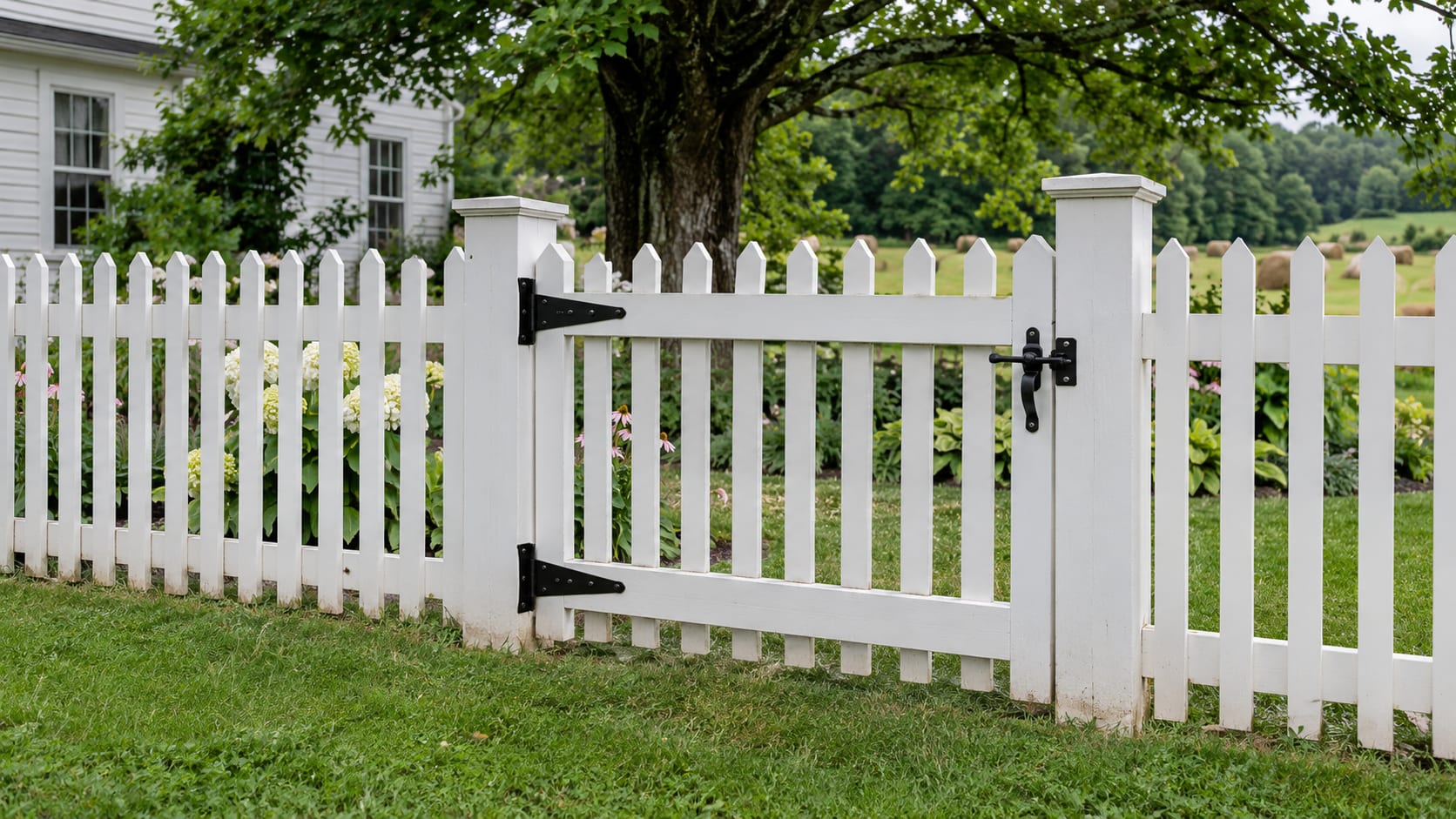
The right gate hardware starts with the complete gate weight, width, material, post construction and purpose. Use hinges rated above the finished gate weight, then choose a latch that matches ordinary access, security, child safety or pool-barrier requirements.
A light garden gate may use a gravity latch and strap hinges. A wide wood gate may need T hinges, reinforced posts and a gate stop. A pool gate needs self-closing hinges and a self-latching device arranged to meet the Connecticut State Building Code. The hardware should be identified by model, rating, finish and warranty in the written estimate.
Key Takeaways
Hinge rating
Select a hinge pair rated above the complete gate weight and confirm the rating basis.
Gate purpose
Garden, driveway, farm, commercial and pool gates need different latching arrangements.
Heavy gates
Reinforced posts, larger fasteners, a gate stop, drop rod or wheel may be needed.
Pool gates
The gate must open outward, self-close, self-latch and accommodate a locking device.
Corrosion resistance
Type 316 stainless steel is generally better than Type 304 near road salt or salt air.
Written quote
Ask for the exact hardware model, rating, finish, labor and related post work.
Start with the Gate, Not the Hardware Aisle
Before choosing hinges, record the gate width and height, frame material, cladding, swing direction and complete finished weight. Include decorative boards, rails, mesh, hinges, latch and other hardware. A gate that looks light before installation can become much heavier after privacy boards, metal framing or a solid panel are added.
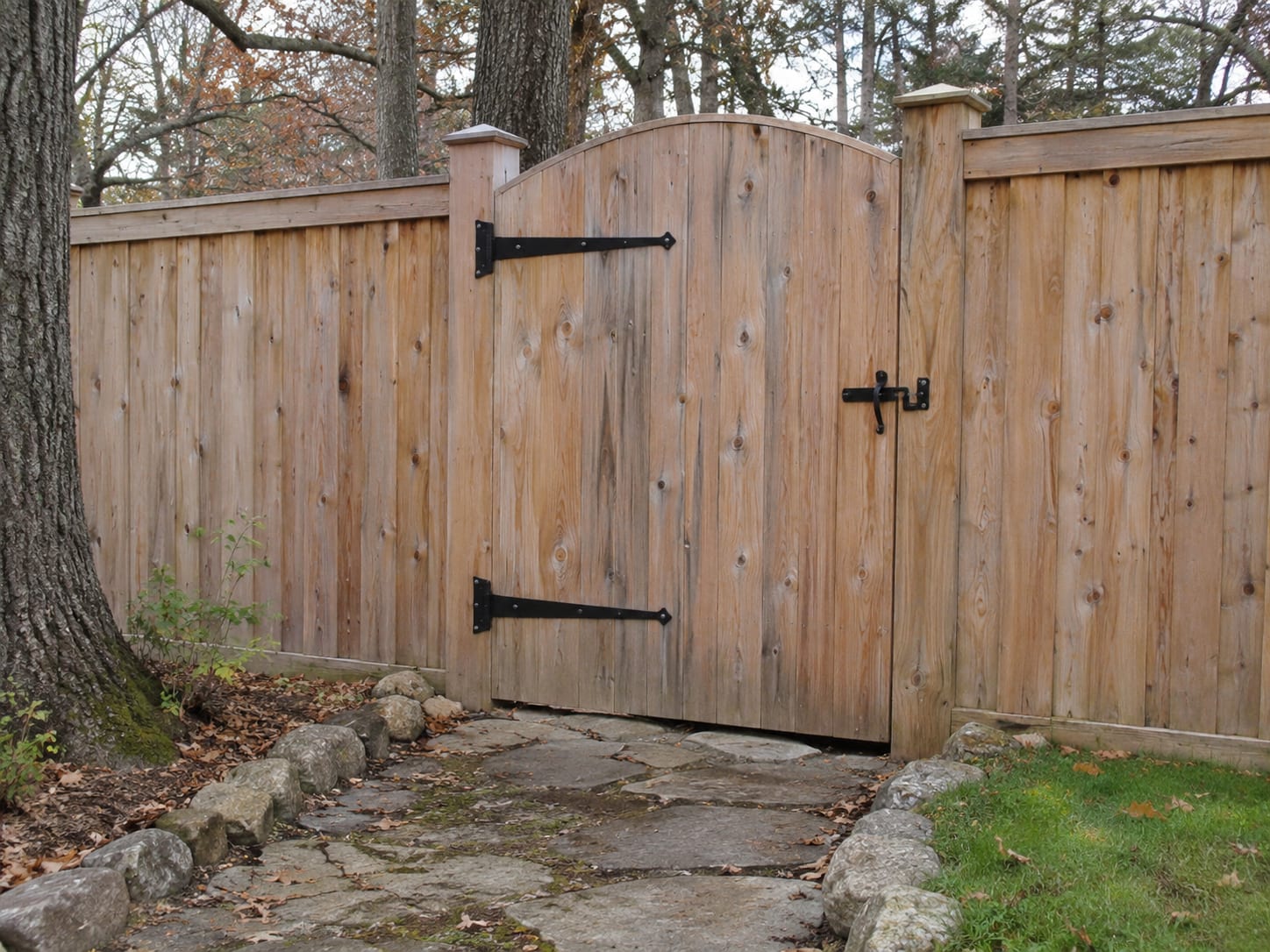
The posts matter as much as the hinges. A properly rated hinge cannot correct a post that bends, twists or moves in the ground. In western Connecticut, frost heave can shift a post enough to make a latch miss its keeper even when the hinge hardware is sound. If a gate drags, check the post, hinge alignment, frame and ground clearance before replacing only the latch.
For a wood gate, wood fencing and gate construction options can be paired with strap, T or adjustable hardware. Vinyl and aluminum gates often use compact surface-mounted hinges or manufacturer-specific hardware. A gate connected to an ornamental-metal fence may need weld-on, barrel, bearing or commercial hinges.
A crew handling this work should measure the opening, inspect the posts, check the gate frame, identify the hardware and test the finished swing. A written quote should separate the gate, hinges, latch or lock, post reinforcement, labor and any related work.
Hinge Types and Weight Ratings
Hinges carry the gate and control its movement. The most useful comparison is not simply the hinge shape. It is the published weight rating, the gate width covered by that rating, the number of hinges used and the mounting method.
Strap and T Hinges
Strap hinges have long arms that spread the load along the gate rail. Boerboel lists 8-inch standard half-strap and double-strap pairs for wood gates up to 60 pounds and 72 inches wide. Timco lists medium strap-hinge pairs at a maximum gate weight of 20 kilograms.
T hinges use a long strap with a perpendicular mounting plate. They suit wood, agricultural and utility gates where the strap can distribute force along the rail. Timco rates its Scotch Tee Hinge from 10 to 100 kilograms, depending on band length.
A longer strap can spread force over more of the gate, but it does not automatically raise the allowed gate weight. Match the product rating and mounting instructions to the actual gate.
Butterfly and Spring Hinges
Butterfly hinges are compact surface-mounted hinges often used on light wood, vinyl and aluminum gates. A Home Depot Barrette 3.125-inch heavy-duty butterfly hinge is sold as a two-pack. Use the manufacturer’s published rating when one is provided, and ask for the product specification before assigning a capacity.
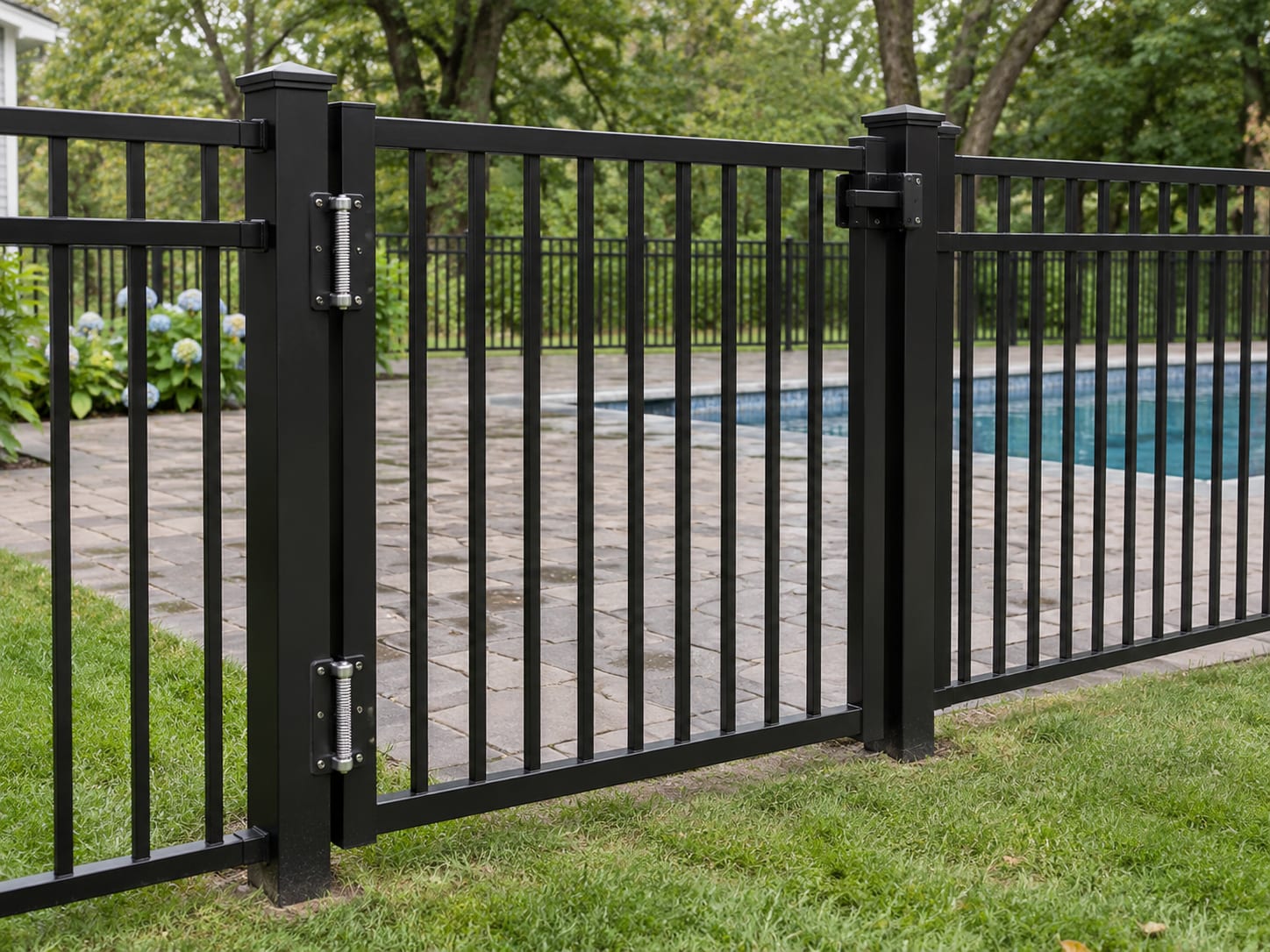
Self-closing spring hinges close the gate as the spring returns to its resting position. D&D Technologies lists TruClose Regular hinges for gates up to 30 kilograms based on one pair. Its TruClose Heavy Duty range is rated for gates up to 70 kilograms.
Spring hinges need accurate alignment. If the gate rubs on the ground or post, the spring may not close it fully. If the latch keeper is out of position, the gate may close without latching.
Heavy-Duty and Adjustable Hinges
Large steel, ornamental-metal, driveway and high-traffic gates may use barrel, bearing, weld-on or commercial hinges. Locks 4 Gates lists certain strap and barrel hinges with a maximum gate weight of 1,500 pounds and a maximum gate load of 3,000 pounds. Those figures apply to specified products and installation conditions, not to every hinge with the same general shape.
Adjustable hinges may provide horizontal, vertical, tension or three-way adjustment. D&D TruClose Multi-Adjust hinges permit alignment and closing-tension adjustments. Adjustment can help correct minor movement and sag, but it does not increase the manufacturer’s weight rating.
Hover or tap a row to highlight it.
| Hinge type or product | Published rating or detail | Practical use |
|---|---|---|
| Boerboel 8-inch strap hinge pair | Up to 60 pounds and 72 inches wide | Wood gates |
| Timco medium strap-hinge pair | Up to 20 kilograms | Light to medium gates |
| Timco Scotch Tee Hinge | 10 to 100 kilograms, depending on band length | Wood, agricultural and utility gates |
| D&D TruClose Regular pair | Up to 30 kilograms | Self-closing gates |
| D&D TruClose Heavy Duty range | Up to 70 kilograms | Heavier self-closing gates |
| Locks 4 Gates strap and barrel examples | Up to 1,500 pounds maximum gate weight | Large gate applications |
Ratings are not interchangeable. Confirm whether the rating applies to one hinge or a pair, the maximum gate width and height, the post size, the fixing method and the swing direction. D&D states that its TruClose weight ratings are based on one pair of hinges.
A heavy gate may also need reinforced posts, larger fasteners, a gate stop, a drop rod or a wheel. For double driveway gates, a drop rod or cane bolt can secure the inactive leaf while the main latch controls the active leaf.
For more on gate layout, opening direction and installation details, see Gate Installation: Walk Gates, Double Gates and Driveway Gates, Step by Step. If an existing gate sags or drags, the repair may involve the post and frame rather than a new latch alone, as covered in Gate Won't Latch or Close? Fixing Sagging, Dragging and Gapped Gates.
Latches for Garden, Driveway and Pool Gates
A latch controls access and keeps the closed gate aligned with the keeper. Choose it after deciding who needs to operate the gate, whether access must work from both sides, whether the gate must lock and whether the gate is part of a pool barrier.
Gravity, Thumb and Magnetic Latches
A gravity latch uses a bolt that drops into a keeper when the gate closes. It is common on garden and utility gates because the design is simple and easy to operate.
A thumb latch uses a thumb-operated handle to retract the latch. It works well for an ordinary walk gate used from both sides, but it is not automatically compliant for a pool barrier.
A magnetic latch engages when the gate reaches the keeper. D&D Technologies MagnaLatch models are adjustable and available with locking versions. Magnetic engagement can be useful when the gate needs reliable latching after ordinary use, provided the gate and posts stay aligned.
Two-way latches permit operation from both sides. They can suit a side-yard or garden gate, but a pool gate still has to meet the required release location and other barrier provisions.
Keyed Latches, Locks and Drop Bolts
A keyed latch combines latching with key access. It may suit a driveway, side gate or business entrance where you need controlled access. Check whether the lock operates from one or both sides, whether the gate can close without lifting, and whether the hardware fits the gate gap and post.
A hasp with a weather-resistant padlock is another option for a utility or farm gate. A drop bolt is useful on a double gate or as secondary security. It is generally not the only pedestrian pool-gate latch.
If you are comparing a chain link gate, see chain link fence gates for walk, double, rolling and sliding openings. Vinyl and aluminum gates often need hardware matched to their frame and post system, as explained in gates for vinyl and aluminum fences.
Pool-Safety Latches
Connecticut’s 2022 State Building Code adopts the 2021 International Swimming Pool and Spa Code. For a pedestrian pool gate, the code requires the gate to open outward away from the pool, self-close, have a self-latching device and accommodate a locking device. If the self-latching release is less than 54 inches above the bottom of the gate, the release must be on the pool side, at least 3 inches below the top of the gate, and openings within 18 inches of the release cannot exceed one-half inch.
See the 2022 Connecticut State Building Code and Connecticut pool-safety guidance.
A gravity, thumb, magnetic or keyed latch may qualify only when the complete gate installation satisfies the self-closing, self-latching, locking, opening-direction and release-location requirements. D&D MagnaLatch products are designed for safety gates and list magnetic engagement, vertical and horizontal adjustment, corrosion resistance and pool-gate applications.
For a separate explanation of the barrier requirements, read Connecticut pool fence requirements. A pool owner should ask the building official or code official to confirm the applicable code provisions and inspection procedure before ordering hardware.
Finish Choices for Road Salt and Wet Ground
Hot-dip galvanized steel, stainless steel and powder-coated steel can all resist corrosion, but they protect the metal in different ways.
Hot-dip galvanizing bonds a zinc coating to steel. The zinc forms a barrier and provides sacrificial protection when the surface is scratched. The American Galvanizers Association reports long service performance for hot-dip galvanized steel in highway and guardrail applications exposed to road salt. Salt remains aggressive, so washing and inspection help the hardware last.
Stainless steel does not depend on a separate coating, but the grade matters. World Stainless states that Type 316 performs better than Type 304 in salt environments because molybdenum improves resistance to chloride corrosion. Type 304 may develop surface staining with coastal or deicing-salt exposure. Type 316 is generally the better choice for hinges, screws and latch parts exposed to road spray or salt air.
Powder coating supplies a colored protective finish over metal. It can perform well when the steel preparation, pretreatment, coating thickness and edge coverage are suitable. A scratch, cut edge or trapped moisture can allow corrosion beneath the coating. Powder coating is a finish system, not proof that the steel below is stainless or galvanized.
For a gate near a heavily salted road, ask whether the hardware is hot-dip galvanized, zinc-plated, powder-coated or stainless steel. Zinc-plated hardware is not the same as hot-dip galvanized steel. Ask for stainless fasteners when the hinge and latch will receive repeated salt spray.
Hover or tap a row to highlight it.
| Finish or material | How it resists corrosion | Where it fits |
|---|---|---|
| Hot-dip galvanized steel | Zinc barrier and sacrificial protection | Outdoor steel hardware and road-salt exposure |
| Type 304 stainless steel | Corrosion-resistant stainless alloy | General outdoor use with moderate exposure |
| Type 316 stainless steel | Molybdenum improves chloride resistance | Road spray, deicing salt and salt air |
| Powder-coated steel | Colored protective coating over prepared metal | Gates where finish color and surface protection matter |
| Zinc-plated steel | Thin zinc coating over steel | Lighter outdoor exposure, with product limits |
Cost, Scope and the Written Estimate
Retail prices vary by material, gate weight, finish and whether hardware is sold individually, as a pair or as a kit. The examples below are national retail listing prices from 2026, not Connecticut installed prices.
A basic gravity latch was listed at $8.61 each, and a heavy-duty stainless-steel latch at $19.04 each. A standard butterfly hinge was listed at $67.11 per two-pack, while a heavy-duty butterfly hinge was $48.40 per two-pack. Self-closing polymer hinges were listed at $69.95 per pair, and heavy-duty spring hinges at $82.94 per set.
A locking pool-safety latch was listed at $98.93 each. A latch, self-closing hinges and pull combination was listed at $105.48 per kit. Decorative self-closing spring hardware was $13.90 each, and a decorative hinge and latch set was $28.75 per set. A heavy-duty decorative T hinge was $20.24 per set. These examples come from Home Depot gate hardware listings.
Angi’s 2026 national gate-installation guide gives a national allowance of $100 to $1,500 per project for hinges, locks, handles and posts. It reports a national average gate-installation cost of $2,318 per project in 2026, covering the gate and installation rather than hardware alone. A local quote can differ when posts, framing, excavation, reinforcement or removal are involved.
Ask the contractor to identify each hardware unit clearly, such as one hinge, one hinge pair, one latch, one lock, one drop rod, one wheel kit or one complete hardware package. The estimate should separate hardware, labor, post work, permits and related repairs.
Fence rules are set by each town, so ask the town zoning or building office about the proposed location, height, setback, sight line and permit or approval requirements before ordering materials, and review Do You Need a Permit for Fence Installation in CT?. For excavation, Connecticut requires Call Before You Dig notification at least two full working days before using power or mechanized equipment, as explained by Connecticut PURA.
A Practical Hardware Selection Process
The gate should be inspected in the same order it will be built. That keeps a new latch from being installed on a post that cannot carry the load.
Gate Hardware Selection and Installation
- 1
Measure
Record the gate width, height, swing direction, material and complete finished weight.
- 2
Inspect
Check the posts, frame, ground clearance, hinges, keeper and surrounding fence.
- 3
Match
Select hinges rated above the gate weight and suitable for the post and fixing method.
- 4
Choose
Select a gravity, thumb, magnetic, keyed, locking or pool-safety latch for the intended use.
- 5
Protect
Specify hot-dip galvanized, stainless or powder-coated hardware for the exposure.
- 6
Install
Mount the hinges, align the gate, set the keeper and add a stop, drop rod or wheel when needed.
- 7
Test
Open and release the gate from several positions, then confirm closing, latching and locking.
If the gate is near an old stone wall, the post location may need to shift or the foundation may need a different approach. If the gate sits near wet ground, the post and fasteners need attention as well as the latch. The material and site conditions change the hardware decision because they change alignment, loading and corrosion exposure.
A written contract from a Connecticut home-improvement contractor should identify the contractor, work dates, price, materials and permit responsibility. The Connecticut Department of Consumer Protection contract guidance also addresses written, signed and dated home-improvement contracts.
Frequently Asked Questions
What is the best latch for a gate?
The best latch matches the gate’s purpose, material, gap, swing, security need and closing action. Use a gravity latch for a simple garden gate, a thumb or two-way latch for convenient ordinary access, a keyed latch for controlled entry, and a pool-safety magnetic latch when the gate serves a pool barrier.
What hinges are best for a heavy gate?
Heavy gates need strap, T, barrel, bearing, weld-on or commercial hinges with a published rating above the complete gate weight. Confirm the rating basis, gate width, post requirements and fixing method, because a strong hinge does not correct an undersized post or weak frame.
How do I make a gate self-closing?
Install a manufacturer-rated pair of self-closing spring or adjustable hinges, align the gate and post, set the closing tension, position the keeper and test the latch from several open positions. D&D TruClose Regular hinges are rated for gates up to 30 kilograms based on one pair.
What latch is required for a pool gate?
Connecticut requires a pedestrian pool gate to open outward away from the pool, self-close, self-latch and accommodate a locking device. The release mechanism must meet the code’s height, side and opening requirements, so confirm the complete installation with the building official.
How do you lock a fence gate?
Use a locking latch, keyed gate latch, hasp with a weather-resistant padlock or a gate lock designed for the frame. A double driveway or farm gate may also need a drop rod for the inactive leaf, while a pool gate must retain its required self-closing and self-latching functions.
Gate Hardware Check
1. Which hinge rating should you choose?
2. Which finish generally performs better than Type 304 near deicing salt?
3. What does a gravity latch do?
4. Which feature is required for a Connecticut pedestrian pool gate?
Pick an answer to begin.
Final Thoughts
Choose hinges from the complete gate weight and choose the latch from the way the gate will be used. For a pool gate, treat the hinge, latch, keeper, swing direction and release location as one safety assembly. For a driveway, farm or commercial gate, check the posts, frame, stop, drop rod and lock along with the main hinges.
Bring the gate width, material, photos of the posts, intended use and any pool or driveway details to the estimate. We can identify the hardware scope, explain the finish choice and put the model, rating and related work in writing. Call us at (203) 746-1100 for a free estimate, or reach out through our contact page.
Gate Hardware Terms
Tap a term to see what it means.
Strap hinge. A long hinge strap that spreads load along a gate rail.
More about fences
Gate Installation: Walk Gates, Double Gates and Driveway Gates, Step by Step
Size a gate from the widest thing that must pass through, then set heavier posts and the right hinges. Walk, double and driveway gates, step by step.
Read the guide to Gate InstallationEstate Gate Columns and Pillars: Stone, Brick and Steel Posts for Driveway Gates
Steel posts, brick or stone pillars for a driveway gate: footings below Connecticut frost depth, hinge plates and anchors, conduit for an opener, and costs.
Read the guide to Estate Gate Columns and PillarsHow Long Do Metal Fence Posts Last? Steel, Galvanized and Aluminum Posts in Connecticut Ground
Hot-dip galvanized steel posts can last 75 years in average soil and far less in wet or salty ground. How metal fence posts age and how to set them to last.
Read the guide to How Long Do Metal Fence Posts Last? Steel, Galvanized and Aluminum Posts in Connecticut Ground