
How Long Do Metal Fence Posts Last? Steel, Galvanized and Aluminum Posts in Connecticut Ground
By Tony Pellicone13 min readPublished
- fence installation
- chain link fencing
- homeowner guide
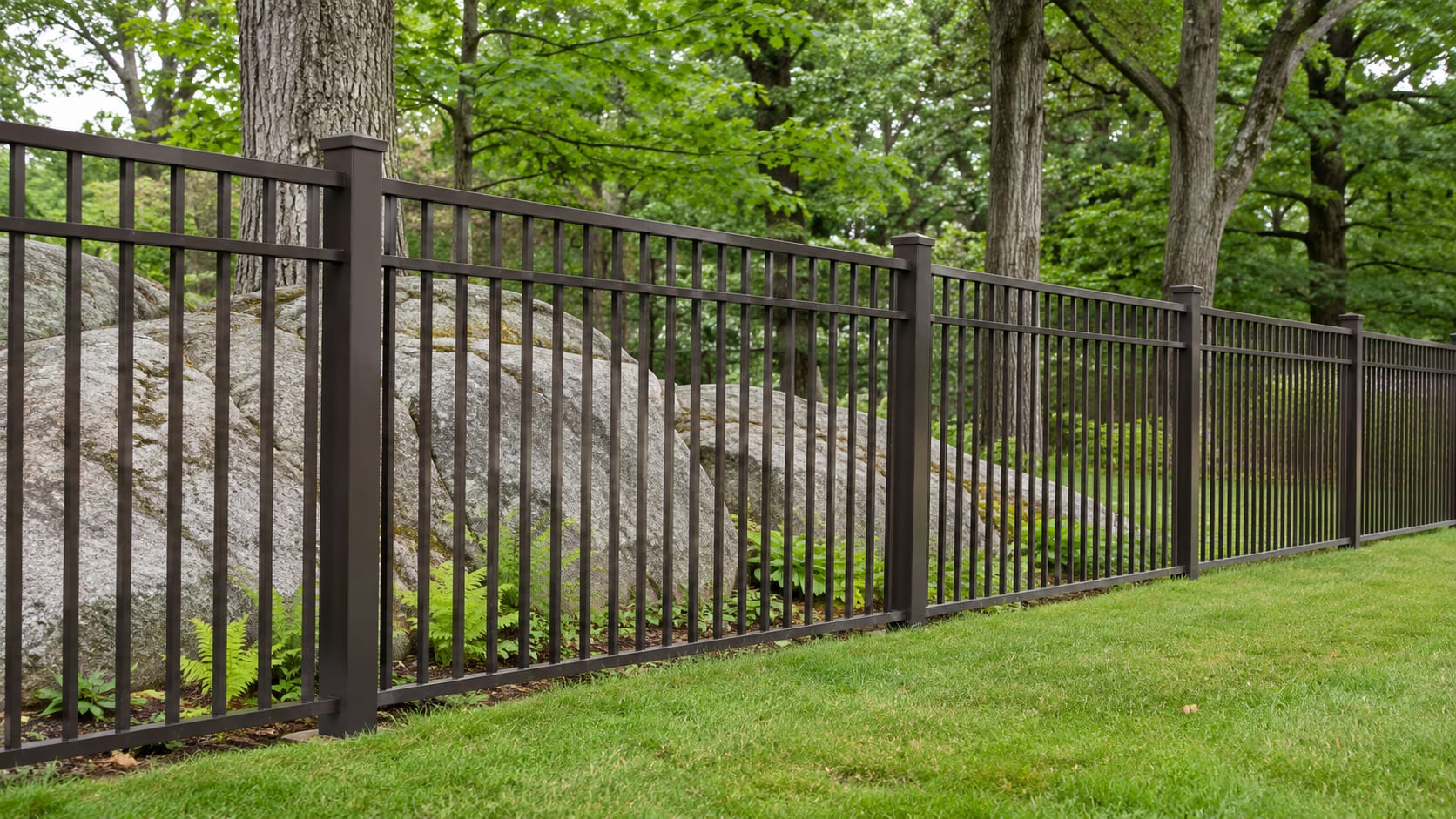
Hot-dip galvanized steel fence posts commonly last more than 75 years in favorable or average soil conditions. In wet, acidic or chloride-rich soil, estimated service life can fall to approximately 35 to 50 years.
Aluminum posts can remain serviceable for several decades because they form a protective oxide layer instead of red rust. The post material matters, but drainage, soil chemistry, coating protection, footing design and installation often decide how long the fence remains structurally useful.
Before you order materials, ask your town whether the proposed height, location and fence type require zoning approval, a zoning compliance certificate or a building permit. Then have the installer identify the post specification, coating, embedment, footing and drainage detail in writing.
Key Takeaways
Galvanized steel
More than 75 years is common in favorable or average soil, while aggressive soil can reduce estimates to approximately 35 to 50 years.
Soil conditions
Moisture, pH and chlorides are the leading soil variables affecting buried galvanized steel.
Aluminum
Aluminum resists red rust and commonly carries warranties ranging from 10 years to limited lifetime, depending on the product.
Installation
Post depth, frost protection, drainage, footing design and coating care affect service life as much as the visible fence style.
Town rules
Connecticut fence requirements are set by the municipality, zoning district, fence type and property conditions.
Galvanized Steel Posts and Soil Life
The American Galvanizers Association describes galvanized-steel service life in soil as the time until the zinc coating is consumed, plus an additional 25 percent of the base steel's life. In ordinary soil, hot-dip galvanized structural steel commonly provides more than 75 years of service. In aggressive soil with persistent moisture, low pH and chloride exposure, estimates can fall to approximately 35 to 50 years, with some combinations producing shorter estimates.
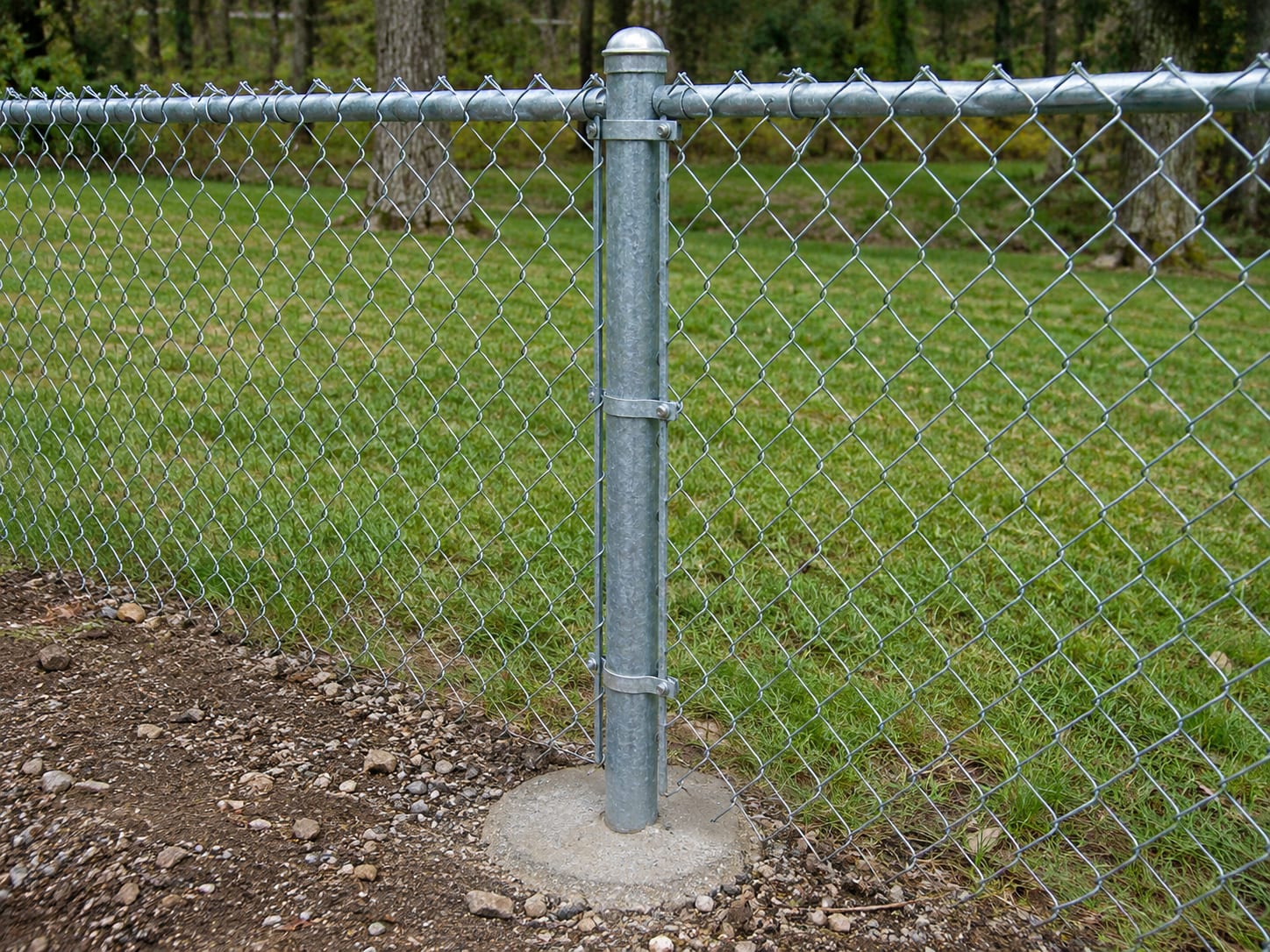
The main variables are soil moisture, pH and chlorides. Aeration, soil resistivity, temperature and texture also affect corrosion. A post in coarse, well-drained soil usually spends less time surrounded by water than a post in dense clay or wet silt. A fence near a salted driveway or road edge can receive additional chloride exposure from snowmelt.
Zinc coating weight describes how much zinc protects a given surface area. A thicker coating generally lasts longer because zinc is consumed gradually. The AGA states that 1 mil of zinc thickness equals approximately 0.56 ounces per square foot.
For chain-link posts and rails, ASTM F1083 commonly specifies hot-dip galvanized pipe with approximately 1.8 ounces per square foot of zinc on both the inside and outside surfaces for standard Schedule 40 pipe. ASTM A123 covers hot-dip galvanizing of fabricated iron and steel products. These specifications help you compare materials, and the lifespan you can expect then depends on the soil and installation at your property.
Read a coating specification together with the soil and installation details. The same galvanized post can perform differently in a dry, gravelly upland hole and in a saturated clay pocket.
Hover or tap a row to highlight it.
| Material or condition | Published range or figure | What it tells you |
|---|---|---|
| Hot-dip galvanized steel in most soil conditions | More than 75 years | AGA estimate for common structural galvanized steel service |
| Galvanized steel in aggressive soil | Approximately 35 to 50 years | Wet, acidic and chloride-rich conditions shorten coating life |
| Zinc thickness conversion | 1 mil equals approximately 0.56 ounces per square foot | AGA measure for relating coating thickness to coating weight |
| Chain-link galvanized pipe | Approximately 1.8 ounces per square foot on inside and outside surfaces | Common ASTM F1083 Schedule 40 specification |
| Pressure-treated fence posts | Approximately 5 to 25 years | USDA Forest Service range that varies by species and treatment |
For a new chain-link project, review the chain-link fencing product options with the post size, coating and footing included in the written estimate. Chain-link posts may last longer than the fabric if they are protected from impact and installed with suitable drainage.
Aluminum, Powder-Coated Steel and Vinyl-Sleeved Posts
Aluminum does not rust like carbon steel because it forms a protective oxide layer. Aluminum fence products commonly carry warranties of 10 years, 20 years or limited lifetime, depending on the manufacturer and product line. The actual service life depends on alloy, wall thickness, gate loading, impact, fasteners, soil exposure and finish damage.
A powder coat protects the visible surface of steel, but it is only one part of the corrosion system. Scratches, cut ends, drilled holes, welds and damaged areas can expose steel to moisture. A galvanized layer or other corrosion protection underneath the powder coat can add protection, but it does not remove the need to repair damaged areas.
A vinyl sleeve can protect the visible exterior of a steel post from weather and contact. The buried steel core still matters. Corrosion can begin at the bottom opening, fastener holes, cut ends, damaged sections or the transition near grade. A sleeve is a finish and protection detail, not a substitute for suitable structural steel and drainage.
Read warranties carefully. A warranty may cover finish defects or material problems for a stated period while excluding installation, soil movement, impact, storm damage or underground corrosion. Treat the warranty as a product commitment, then ask what parts of the installed fence are covered and for how long.
For ornamental gates, railings and rigid panels, the post must also handle movement and repeated loading. A gate post can become loose or bent from hinge loads long before corrosion consumes the steel. That is why post size, footing and gate hardware belong in the same conversation as finish and warranty.
What Shortens a Buried Metal Post's Life
Persistent moisture is the first condition to examine. Wet clay and silt can hold water against the post and provide less aeration than coarse, sandy or gravelly soil. Road salt and snowmelt can increase chloride exposure near driveways, parking areas and road edges. Repeated fertilizer applications near a fence line can alter soil chemistry and add salts.
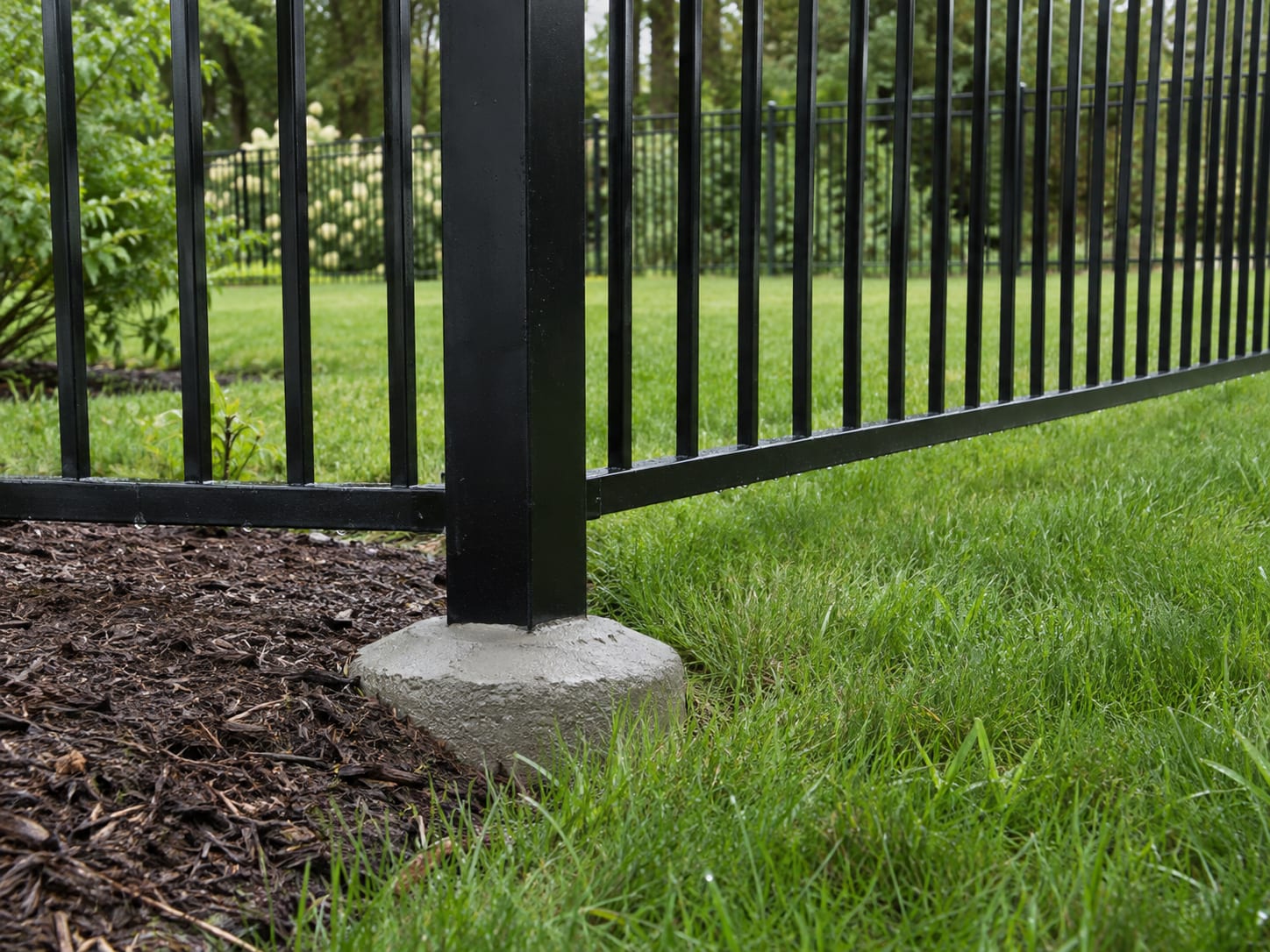
Concrete does not automatically prevent corrosion. A flat concrete depression around a post can hold water at the post-concrete interface. A sloped or crowned concrete top sheds water away from the post and reduces that exposure. The detail and drainage determine the risk.
Contact between different metals can create galvanic corrosion when moisture and an electrolyte are present. Use compatible fasteners and avoid leaving dissimilar-metal connections wet for long periods. If a coated post is cut or drilled, repair the exposed area with a product compatible with the manufacturer's coating system.
The buried transition zone near grade receives repeated wetting, drying, oxygen changes and freeze-thaw movement. Inspect this area when an older fence begins to lean. Surface rust does not automatically mean that a post has lost its structural capacity, but deep pitting, perforation, severe section loss or movement calls for repair or replacement.
A chain link fence repair guide can help you separate a fabric problem from a post, footing or gate problem. If the post itself is damaged below grade, a surface patch may not restore the strength needed for wind, animals or gate movement.
Connecticut Soil, Frost and Excavation
Many Connecticut soils are naturally acidic, and western Connecticut uplands commonly contain glacial till derived from granite, schist and gneiss. Local soil series range from somewhat excessively drained to poorly drained, and from shallow soil over bedrock to deep, rapidly permeable sandy or gravelly soil.
That variation changes the installation. A rocky upland lot may drain quickly but require careful excavation around ledge. A depression, wetland edge or dense till area may retain water around the post. A mapped soil series can help with planning, but the installer still needs to report groundwater, ledge, dense till, unstable fill and drainage conditions encountered in the actual holes.
The 2022 Connecticut State Building Code includes a 42-inch minimum frost-protection depth for foundations and other permanent supports of buildings and structures unless an approved alternative applies. That provision is not automatically a universal fence-post depth rule for every residential fence. Ask the local building or zoning office whether it applies to your project.
For a fence in frost country, the required embedment depends on post height, wind exposure, fence type, soil, footing and local requirements. The hole should not bear on frozen soil. Where shallow ledge or difficult excavation changes the planned depth, the design may need to account for rock, engineered fill or another frost-protection method.
A free-draining aggregate zone may help where appropriate, but gravel does not replace the structural footing required for the fence design. The contractor should record post size, steel or aluminum specification, coating, hole depth, hole diameter, concrete or aggregate details and any changes caused by site conditions.
Read How Deep Should Fence Posts Be in Connecticut? Frost Line and Footings before approving a proposal that lists only a post depth without describing the soil and footing.
A Practical Installation Sequence
- 1
Town review
Ask the zoning or land-use office and building department about height, permits, setbacks, wetlands, sightlines, inspections and required plans.
- 2
Property layout
Mark the fence line, gates, roads, property lines and nearby watercourses before excavation.
- 3
Utility locating
Call Connecticut's Call Before You Dig system at 811 before digging.
- 4
Test excavation
Identify ledge, groundwater, dense till, unstable fill and drainage conditions in the actual post holes.
- 5
Post installation
Set posts to the approved design, keep them plumb and protect the coating during cutting, drilling and assembly.
- 6
Footing and drainage
Shape concrete to shed water away from the post, or follow the approved driven-post or aggregate detail.
- 7
Final review
Confirm alignment, gate operation, finish repairs, permits and any required inspection or certificate.
Choosing Steel or Aluminum for Your Property
Metal posts usually avoid fungal decay and insect damage, which are major causes of wood-post failure. Their service life depends on corrosion protection, soil chemistry, structural loading and installation.
The USDA Forest Service gives pressure-treated fence posts an expected life of approximately 5 to 25 years, depending on species and treatment. Its table lists pressure-treated western redcedar at approximately 20 to 25 years, pressure-treated lodgepole pine at approximately 20 to 25 years and untreated western redcedar at approximately 12 to 15 years. A British Columbia agriculture guide lists first-growth untreated cedar posts at approximately 20 to 30 years and describes decay around the groundline, where moisture, oxygen and temperature support fungal activity.
Galvanized steel is a strong choice when you want a post with long service in the ground and resistance to rot. Aluminum is useful where low weight and resistance to red rust matter, but the post still needs suitable dimensions and footing for the fence and gate loads. Powder-coated steel can work well when the coating and underlying protection remain intact.
The right comparison is the complete system, not the visible material alone. Ask for the post dimensions, alloy or steel grade, coating standard, coating weight, footing detail, fasteners, gate loads, warranty exclusions and expected maintenance.
For wood panels or privacy sections, the surrounding post system can have a different service life from the boards. Wood Fencing in Fairfield, CT: Styles, Coastal Wear and Town Rules explains why coastal exposure and local rules can change the material decision. On wooded properties, Wood Fencing in Wilton, CT: Privacy, Picket and Post-and-Rail Styles for Wooded Lots covers privacy, picket and post-and-rail choices where access and excavation may be affected by trees, stones and uneven ground.
Permits, Town Rules and Your Written Estimate
Connecticut fence rules are set by each town and can vary by zoning district, lot location and fence type. Before installation, bring the property address, a sketch showing the fence line, proposed height and materials, approximate distances from property lines, gate locations, nearby roads and any wetlands or watercourses.
Ask the zoning and building offices whether the proposed height is allowed at your location and whether you need a zoning permit, a zoning compliance certificate or a building permit. Ask whether front-yard, side-yard, rear-yard, corner-lot or sightline rules differ, and whether the property sits in or near an inland wetland, watercourse, lake, floodplain, historic district or conservation area. Find out what survey or plot plan must accompany an application, whether the town has its own rules for pool barriers, commercial fencing, agricultural fencing or gates, and whether fees, inspections or certificates of completion apply.
New Milford publishes an eight-foot fence-height provision and may require a survey or plot plan showing the proposed structure and distances to property lines. Danbury publishes zoning regulations through its Planning and Zoning Department and advises property owners to rely on adopted regulations and amendments.
For a statewide permit overview, read Do You Need a Permit for Fence Installation in CT?. The town with jurisdiction over your property decides the local requirement.
Call 811 before excavation. The Connecticut Department of Consumer Protection advises homeowners to verify an active contractor registration. For residential home-improvement work, the written contract should identify the contractor, price, scope, materials, start and completion dates, payment schedule, warranty and responsibility for permits and utility locating.
My Fence Guy can write an estimate that names the post material, coating, depth, footing, gates, difficult-soil work, permits and finish repairs. National 2026 figures reported by Angi place installed metal fencing at approximately $20 to $100 per linear foot, with a national average project cost of $5,100. Those are national context figures, not Connecticut prices. Ask every local contractor to state whether a price is per linear foot or per project and what the unit includes.
Frequently Asked Questions
How long do metal fence posts last?
Galvanized steel posts commonly last more than 75 years in favorable or average soil, while aggressive soil can reduce estimates to approximately 35 to 50 years. Aluminum, powder-coated steel and vinyl-sleeved steel can also last for several decades when the structural material, finish, drainage and installation remain suitable.
Do galvanized fence posts rust?
Yes, galvanized fence posts can eventually rust, but the zinc coating delays corrosion and protects exposed steel sacrificially. Rust often begins at cut ends, drilled holes, scratches, damaged coating, fasteners or the groundline transition.
Do fence-post repair kits or post menders work on a broken post?
A post mender can work when the original post still has enough sound material to receive fasteners and the repair member can transfer loads into stable soil or concrete. Replacement is usually more appropriate when the post is perforated, badly corroded, fractured below grade, loose in failing concrete or carrying a heavily loaded gate.
Should metal fence posts be set in concrete?
Often, yes, especially for rigid panels, end posts, corner posts and gate posts. The correct footing depends on fence height, wind exposure, soil, post section, gate loads and local requirements, and some proprietary systems use driven posts or other installation methods.
Are metal fence posts better than wood?
Metal posts are usually better where resistance to rot, insects and groundline decay is the main goal. Properly treated wood can still suit agricultural, rustic or heavy-snow fencing, while poorly protected metal can fail early in wet, acidic or chloride-rich soil.
How long do aluminum fence posts last?
Aluminum posts can last for several decades because aluminum forms a protective oxide layer instead of red-rusting like carbon steel. Published manufacturer warranties range from 10 years to limited lifetime, but actual service life depends on alloy, wall thickness, loading, impact, fasteners, finish and installation.
What is the lifespan of a chain-link fence post?
A hot-dip galvanized chain-link post can commonly provide more than 75 years in favorable or average soil, while harsh soil can reduce estimates to approximately 35 to 50 years. The zinc coating on the inside and outside of the pipe, groundline protection, footing, soil moisture and gate loading all affect the result.
Metal Fence Post Check
1. What soil conditions shorten galvanized-steel service life?
2. What does zinc coating weight describe?
3. What should a concrete top around a metal post do?
4. Who decides the local fence permit requirement?
Pick an answer to begin.
Final Thoughts
A metal post can remain useful for decades, but the answer depends on the material, coating, soil, water, frost movement, footing and loads placed on the fence. Ask the town about the local rule, call 811 before digging, and have the estimate state the post specification, depth, footing, drainage, gates, permits and warranty terms.
If the property has wet clay or a salted driveway, tell the installer before the proposal is written. That information can change excavation, post depth, drainage and the material selected. Call us at (203) 746-1100 for a free estimate, or reach out through our contact page.
Metal Fence Post Terms
Tap a term to see what it means.
Hot-dip galvanizing. Applying a zinc coating to steel to protect it from corrosion.
More about fences
Gate Installation: Walk Gates, Double Gates and Driveway Gates, Step by Step
Size a gate from the widest thing that must pass through, then set heavier posts and the right hinges. Walk, double and driveway gates, step by step.
Read the guide to Gate InstallationChain Link Fence Repair: Bent Top Rails, Loose Fabric and Damaged Posts
A bent top rail, loose fabric or one leaning post can usually be fixed. How chain link fence repair works, what it costs and when replacement makes more sense.
Read the guide to Chain Link Fence RepairHow Deep Should Fence Posts Be in Connecticut? Frost Line and Footings
How deep to set fence posts in Connecticut: frost depth, manufacturer depth rules by fence height, concrete or gravel, and how frost heave lifts posts.
Read the guide to How Deep Should Fence Posts Be in Connecticut? Frost Line and Footings