
Wood Fencing in Fairfield, CT: Styles, Coastal Wear and Town Rules
By Tony Pellicone13 min readPublished
- wood fencing
- fairfield ct
- connecticut
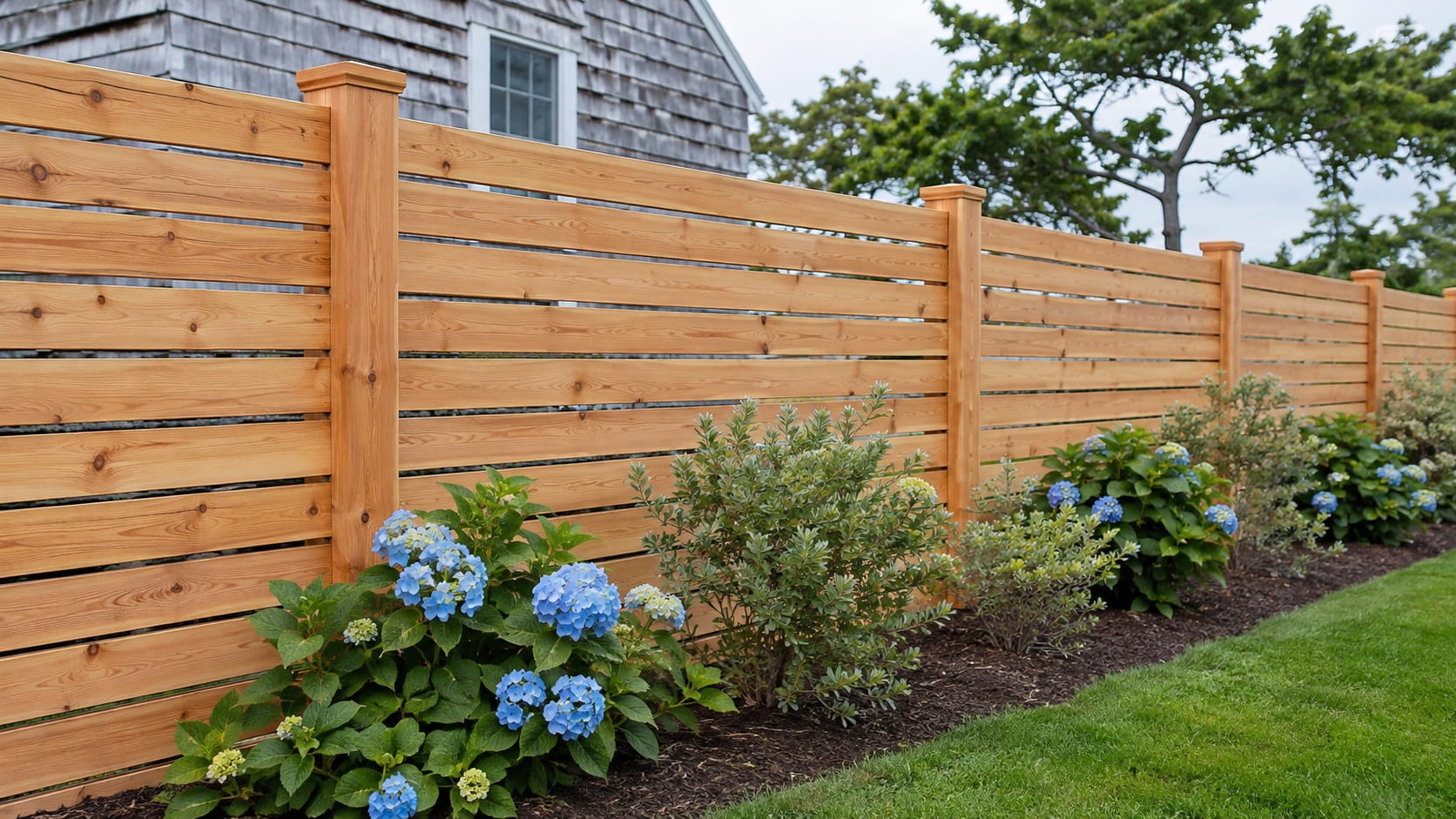
The right wood fence for a Fairfield property depends on the privacy you want, the wind and water exposure at the site, and the town approvals tied to its height and location. A 6-foot privacy fence often costs about $25 to $55 per linear foot nationally, and Fairfield pricing shifts with gates, removal and site conditions.
Before choosing boards, call Fairfield Town Plan and Zoning with the address, proposed height, fence line and a simple sketch. Then confirm whether you need a Certificate of Zoning Compliance, building review, coastal review, floodplain review, wetlands review or historic-district approval.
Key Takeaways
Style
Board on board and stockade provide strong privacy, while picket and post-and-rail allow more air through.
Materials
UC4A pressure-treated pine is a practical choice for buried posts, with cedar or UC3B-treated boards above soil.
Coastal exposure
Salt air, stormwater and flood debris call for sound drainage, strong framing and corrosion-resistant fasteners.
Fairfield rules
Height and placement depend on the zoning district, yard, corner-lot conditions, coastal boundary, floodplain and property use.
Cost
National 6-foot wood privacy benchmarks run from $25 to $55 per linear foot, before site-specific extras.
First call
Fairfield Town Plan and Zoning can identify the approval path for your address at 203-256-3050.
Choose the wood fence style around privacy and airflow
A fence style sets how much lumber you buy, how much wind reaches the posts and rails, and how much of the yard stays visible from an angle.
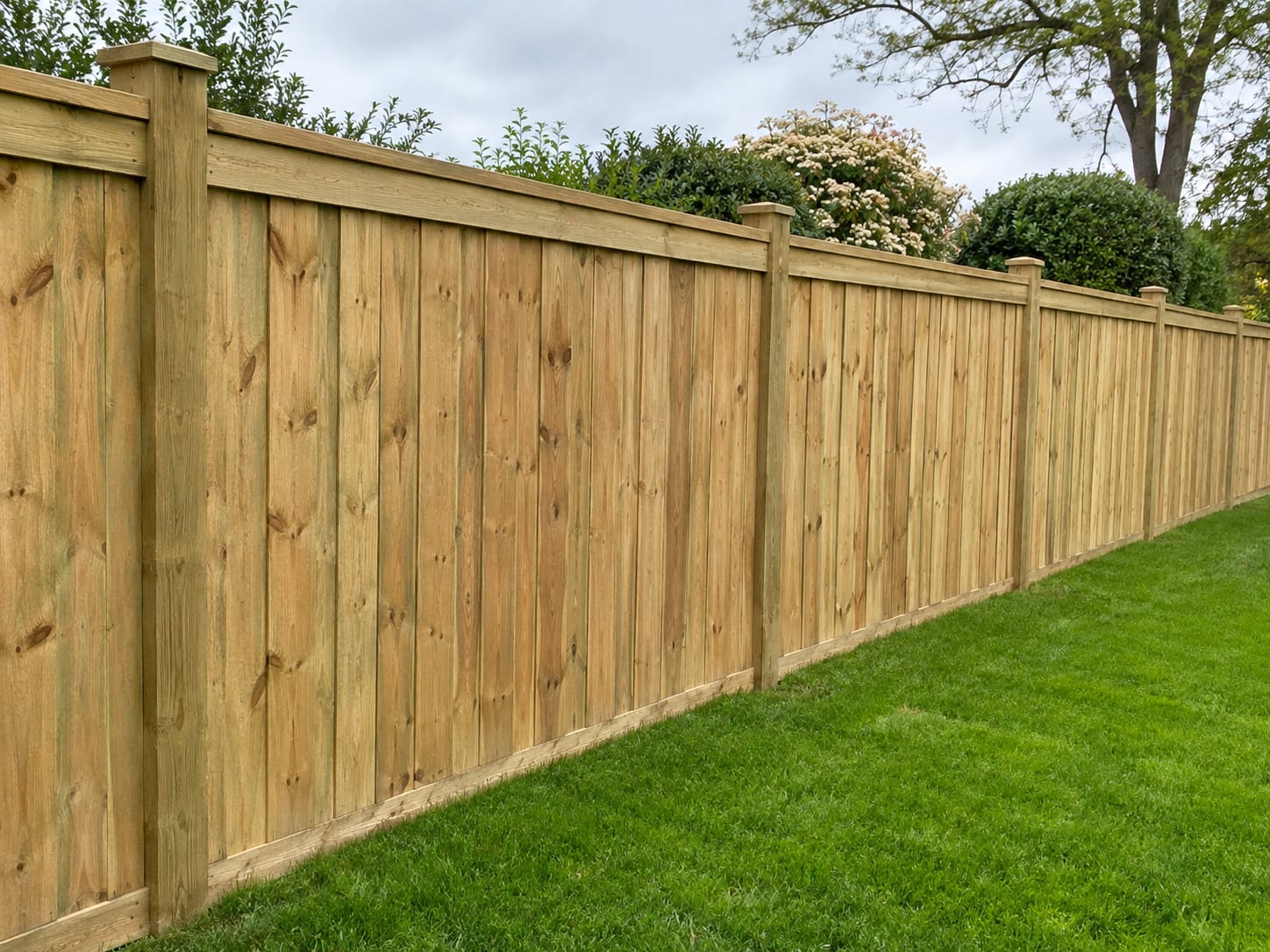
Board on board uses overlapping vertical boards attached across the rails. The overlap removes direct sightlines from normal viewing angles, so it is one of the stronger choices for privacy around a yard, pool area or outdoor living space. It uses roughly twice the picket material of a single-sided solid fence, which raises the material cost. The broad, continuous surface also catches substantial wind, so post spacing, rail size, footing depth and soil conditions matter.
Shadowbox fencing places alternating boards on opposite sides of the rails. From a straight-on view, it provides strong screening, while the gaps between boards allow more ventilation than a solid panel. It uses more lumber than stockade because boards cover both sides of the rails. The alternating layout can work well when you want privacy without making the fence a fully solid wall.
Stockade fencing uses closely spaced vertical pickets to form a solid privacy panel. It generally uses less lumber than board on board, making it a common budget choice for a 6-foot privacy fence. Its continuous face still carries more wind exposure than an open picket or post-and-rail fence. A stockade fence on a wet, exposed or sloped property needs careful post placement and drainage.
Picket fencing uses spaced vertical boards on horizontal rails. It gives a property a defined edge while allowing substantial airflow and visibility. It uses less lumber than solid privacy styles, but it provides limited privacy. Picket spacing can be useful when you want to contain a dog, mark a boundary or keep a front yard open.
Horizontal slat fencing turns the boards sideways. Controlled spacing can provide partial screening, and tighter spacing increases privacy. The tradeoff is more lumber and greater wind load. Long horizontal boards can transfer wind forces into the rails and posts, so the frame needs careful design rather than simply switching the direction of the boards.
Post and rail fencing uses two or three horizontal rails between posts. It provides boundary definition with little privacy and relatively low wind resistance because it is open. It is often a practical choice for larger properties, horse areas, rural boundaries and mixed wood-and-wire systems.
ASTM F537-01(2014) defines solid board, spaced board, shadowbox and picket fence types. Wind performance still depends on height, post spacing, soil, footings, rails, openings and exposure.
Hover or tap a row to highlight it.
| Style | Privacy | Airflow | Lumber and wind considerations |
|---|---|---|---|
| Board on board | High from normal angles | Low | Roughly twice the picket material of a single-sided solid fence, with a large wind-catching surface |
| Shadowbox | Angled privacy | Moderate | More lumber than stockade, with boards mounted on both sides of the rails |
| Stockade | High | Low | Generally less lumber than board on board, but a continuous panel catches wind |
| Picket | Limited | High | Less lumber and substantial airflow |
| Horizontal slat | Moderate to high, depending on spacing | Low to moderate | Tighter spacing increases lumber use and wind load on long boards and frame |
| Post and rail | Low | High | Relatively little lumber and low wind resistance because the fence is open |
Cedar, pressure-treated pine and the parts below grade
Cedar and pressure-treated pine solve different problems. Western redcedar heartwood has natural decay resistance, while sapwood from nearly all species has low decay resistance. Pressure-treated pine depends on preservative penetration and retention rather than natural durability.
For a Connecticut fence, the treatment category should match the location of each component. AWPA UC3B covers exposed exterior wood above ground, including fence pickets and components that can dry. UC4A covers ground-contact wood for general use, including sawn fence posts. UC4B covers heavier ground-contact exposure, including high decay potential and salt-water splash conditions.
A practical specification is UC4A pressure-treated pine for buried posts, with UC3B-treated or naturally durable cedar boards and rails kept above soil. Cedar is lighter and naturally decay resistant, but pressure-treated pine is usually less expensive for structural posts. Cedar boards and pressure-treated pine posts can be combined when the fasteners are compatible with both materials.
The cedar versus pressure-treated fence comparison explains the material choice in more detail. The short version is that the buried post deserves a ground-contact rating, while the visible boards and rails need protection from repeated wetting, drying and soil contact.
USDA Forest Service fence-post data reports an expected life of approximately 12 to 15 years for untreated western redcedar posts and approximately 20 to 25 years for pressure-treated western redcedar posts. Untreated lodgepole or ponderosa pine posts are listed at approximately 2 to 4 years, while pressure-treated versions are listed at approximately 20 to 25 years. These figures describe posts; boards can weather, split or need replacement before the posts do.
Fairfield coastal exposure changes the hardware and layout
Fairfield is within Connecticut’s statutory coastal area. The Connecticut Department of Energy and Environmental Protection identifies Fairfield’s coastal jurisdiction line at approximately elevation 5.2 feet NAVD88. Coastal conditions can increase wetting, drying, wind pressure, salt deposits and corrosion of metal fasteners.
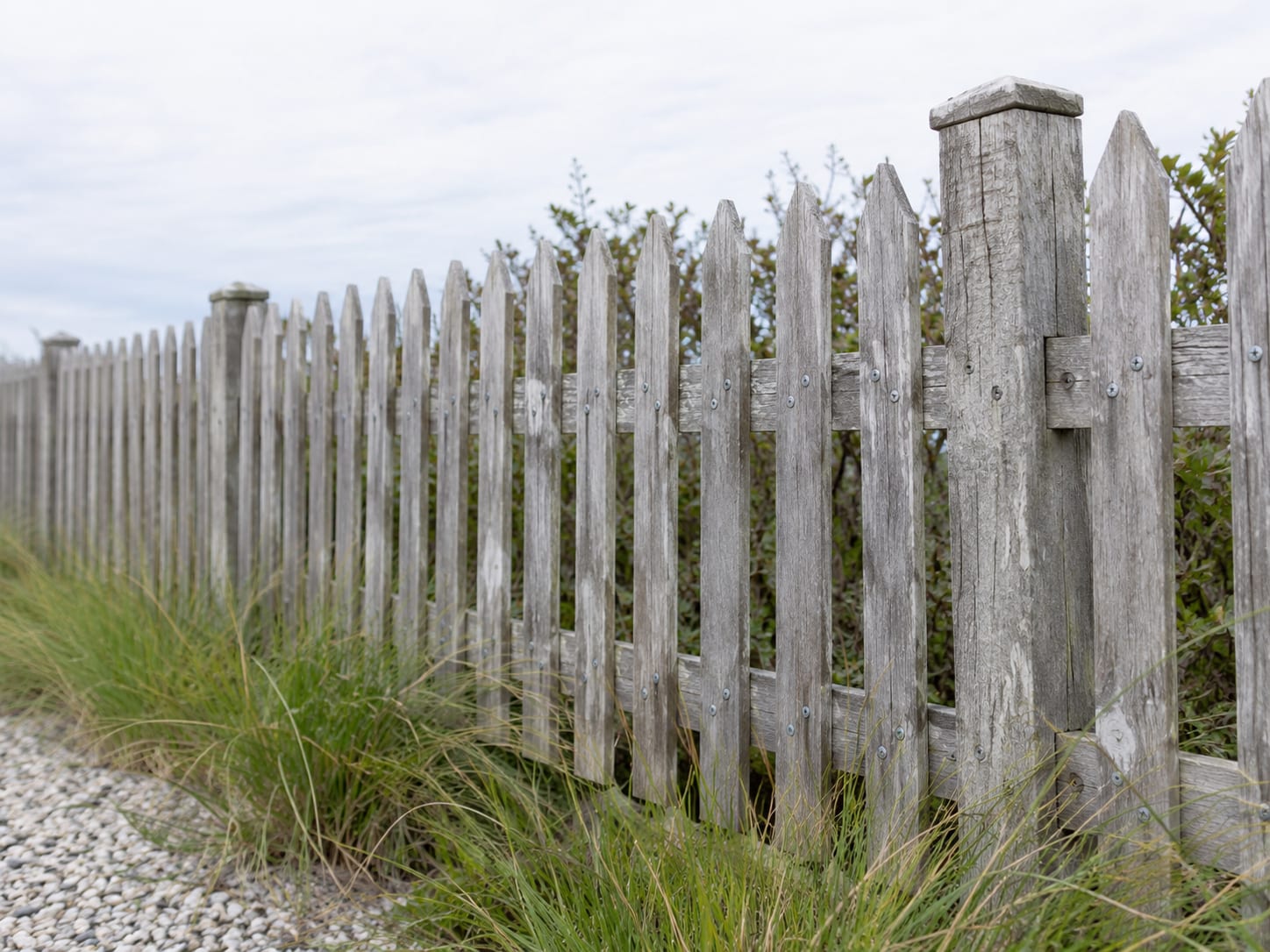
A property near Long Island Sound or exposed to frequent salt spray deserves corrosion-resistant exterior fasteners. Hot-dip galvanized fasteners are a recognized exterior option. Type 316 stainless steel provides greater resistance in chloride-heavy conditions and is the stronger choice for oceanfront exposure, frequent salt spray or treated lumber containing copper preservatives. Ordinary light zinc coatings are more vulnerable to coastal corrosion and can react poorly with copper-treated wood.
Storm surge and floodwater can push laterally against a fence, carry debris and saturate posts and lower rails. A fence in a flood-prone area should be laid out with flow, debris, erosion and local floodplain requirements in mind. Fairfield Section 32.0 incorporates FEMA flood mapping, and FEMA Zone VE areas carry coastal flood and wave hazards.
Fairfield Section 2.14.1 places structures fully or partly within the coastal boundary under coastal site plan review, subject to the exceptions in the regulation. A minor fence may fall within an exception, but the exact location and effect on coastal resources still need to be reviewed with Fairfield.
For a pool, a wood privacy fence is not automatically a compliant barrier. Connecticut’s State Building Code generally requires a pool barrier at least 48 inches high, with limits on openings, bottom clearance, gates and climbing features. The pool fence installation steps in Connecticut cover the sequence, and Fairfield zoning and building procedures still apply to the address.
Fairfield rules that apply to the fence line
Fairfield’s zoning regulations require a Certificate of Zoning Compliance before a building or other structure is constructed, reconstructed, enlarged, extended, moved or structurally altered under Section 2.1. Section 2.21 requires applications involving residential districts or the Beach District to be submitted before construction or alteration of a building or other structure.
The proposed fence height and location should be reviewed before materials are ordered. Fairfield’s regulations address coastal sites under Section 2.14, special flood-hazard areas under Section 32.0 and corner lots under Section 31.2.7. A corner lot is defined there as a lot with an interior angle of less than 135 degrees where two streets meet. A curved street can also create a corner lot when its central angle exceeds 45 degrees.
Section 12.10.3 contains a designed-business rule for ornamental fence and wall combinations up to 42 inches. Fences above 42 inches used for screening or security require Commission approval under Section 25.7.6. That rule is tied to the commercial or designed-business setting described in the regulation, so a homeowner should not apply it automatically to every residential property.
Historic districts add another review point. Fairfield Historic District Commission filing instructions include fences within the definition of structures requiring review. If the property is in a local historic district, ask whether a Certificate of Appropriateness is needed before construction.
Wetlands and watercourses can change the fence line and the approval path. Fairfield Conservation or Inland Wetlands should review a project where construction, obstruction, grading, excavation or deposition could affect regulated areas. A low or open fence may still need review if its posts, access route or grading affect a wetland or watercourse.
Soil and terrain affect the installation itself. Fairfield has relatively level coastal areas and more varied inland slopes. A sloped lot may need stepped or racked panels, additional post work and drainage attention. Ledge or shallow bedrock may require a different post location, drilling, rock excavation or an engineered solution. USDA Web Soil Survey data can help with planning, but parcel conditions and field investigation control the final post method.
The statewide Connecticut fence permit overview is a useful starting point for state-level questions. Fairfield’s own zoning, building, coastal, wetlands, floodplain and historic requirements still control the property.
Price the fence by the installed details
National figures give a starting point for a Fairfield budget. The installed price changes with height, style, wood species, treatment, post spacing, gate count, removal, access, short-run minimums and the site conditions on your lot.
Hover or tap a row to highlight it.
| Fence type and height | Installed cost | Source and scope |
|---|---|---|
| 6-foot solid board, horizontal or vertical | $29.00 to $44.25 per linear foot | 2025 Marshall & Swift/Boeckh unit-in-place data, complete installation |
| 6-foot stockade, half-pole | $21.90 to $29.00 per linear foot | 2025 Marshall & Swift/Boeckh, complete installation |
| 6-foot stockade, whole pole | $30.75 to $37.00 per linear foot | 2025 Marshall & Swift/Boeckh, complete installation |
| 5-foot solid board | $26.50 to $39.25 per linear foot | 2025 Marshall & Swift/Boeckh, complete installation |
| 50 to 60-inch wood picket | $28.75 to $40.25 per linear foot | 2025 Marshall & Swift/Boeckh, complete installation |
| Two-rail split rail, 24 to 36 inches | $14.40 to $20.75 per linear foot | 2025 Marshall & Swift/Boeckh, complete installation |
| Three-rail split rail, 36 to 48 inches | $15.95 to $23.20 per linear foot | 2025 Marshall & Swift/Boeckh, complete installation |
| Typical national wood fence installation, common styles | $10 to $30 per linear foot | Angi, 2026 national range |
| National 6-foot wood privacy fence | $25 to $55 per linear foot | CalcFence, 2026 national range |
For a Fairfield estimate, ask for the linear footage, height, style, wood species, treatment category, post size, fasteners, gates, demolition, excavation, staining and approval work to be shown clearly. A written quote should also say whether difficult digging, wet areas, survey work or access limitations can change the price.
My Fence Guy puts the fence line, post locations, gate swing, excavation method and cleanup in the written quote, and the contract states the scope and payment terms. The company is licensed and insured.
Put the installation in the right order
A good fence installation starts with the property and approval questions, then moves to the physical work. That order matters on a Fairfield lot where a street corner, wet area, flood zone, historic district or buried utility can change the plan.
Fairfield Wood Fence Planning Sequence
- 1
Property line
Use a current boundary survey when the fence is near a property line, street line, corner, water feature or irregular lot.
- 2
Town review
Call Fairfield Town Plan and Zoning at 203-256-3050 with the address, height, style, location and a simple sketch.
- 3
Building and site review
Ask the Building Department at 203-256-3036 about permits and pool barriers, and ask Conservation or Inland Wetlands at 203-256-3072 about regulated areas.
- 4
Coastal and flood check
Ask whether Section 2.14 or Section 32.0 applies, and review FEMA flood-zone mapping for the parcel.
- 5
Underground utilities
Call 811 or 1-800-922-4455 before powered excavation. Connecticut requires notice at least two full working days before digging with power-operated equipment.
- 6
Written scope
Confirm the exact fence line, height, style, wood species, treatment category, fasteners, post spacing, gates, cleanup, removal, approvals and warranty.
- 7
Installation
Set posts for the soil and exposure, keep boards clear of soil, provide drainage and install gates with the required clearances.
- 8
Final check
Confirm the finished fence against the approved location, pool-barrier requirements and any historic-district or wetlands conditions.
If a neighbor shares the fence, put the line, access, cost sharing, finished-side orientation, maintenance and ownership in writing. A private agreement does not replace zoning, wetlands, building-code or boundary requirements. For a property dispute, speak with a Connecticut real estate attorney.
Fence Repair in Fairfield, CT can help when the existing fence has failed in sections rather than requiring full replacement. If you are comparing a different material for the same boundary, Wood vs Vinyl Fence: Cost, Upkeep and Lifespan in Connecticut covers the basic maintenance and appearance tradeoffs.
Frequently Asked Questions
How long does a wood fence last?
A wood fence often lasts according to the condition of its posts, drainage, fasteners, boards and maintenance. USDA Forest Service figures place western redcedar fence posts at approximately 12 to 15 years untreated and 20 to 25 years pressure treated, while untreated lodgepole or ponderosa pine posts are listed at approximately 2 to 4 years.
Is cedar or pressure-treated better for a fence?
Each material suits a different part of the fence. Cedar is lighter and naturally decay resistant in its heartwood, while pressure-treated pine is usually the more economical choice for buried UC4A posts. A common combination is pressure-treated posts with cedar boards and rails above soil.
How much does a 6-foot wood privacy fence cost?
A 6-foot wood privacy fence costs approximately $25 to $55 per linear foot in the national 2026 CalcFence benchmark. Fairfield pricing depends on the style, gates, removal, access, approvals and excavation.
How tall can a fence be in Fairfield CT?
Fairfield fence height depends on the zoning district, yard location, corner-lot conditions and property use, with added review near the coast, in a floodplain or in a historic district. Ask Town Plan and Zoning at 203-256-3050 to confirm the proposed height and location before ordering materials.
Should I stain a new wood fence?
Staining is optional, but it can reduce weathering and help maintain the wood’s color. Wait until the wood is dry enough for the selected product, follow the manufacturer’s label and technical data, and remember that stain does not replace ground-contact treatment, drainage or corrosion-resistant fasteners.
Wood Fence Planning Check
1. Which style provides the most privacy from normal viewing angles?
2. Which AWPA use category fits general ground-contact sawn fence posts?
3. Which fastener offers stronger chloride resistance near Long Island Sound?
4. Which Fairfield office should you call first about fence height and location?
5. How far in advance should you call before powered excavation?
Pick an answer to begin.
Final Thoughts
Wood fencing can give you privacy, pet control, pool screening or a clear property edge. Match the style to the airflow you need, match the treatment to the location of each piece, and confirm Fairfield’s requirements before construction. A careful quote should account for the fence line, soil, gates, fasteners, approvals and the conditions that make your property different from a flat, dry lot.
My Fence Guy can help you compare the styles and prepare a written scope for the actual site. Call us at (203) 746-1100 for a free estimate, or reach out through our contact page.
Wood Fencing Terms
Tap a term to see what it means.
Board on board. Overlapping vertical boards that remove direct sightlines from normal angles.
More about fences
Wood Fencing in Wilton, CT: Privacy, Picket and Post-and-Rail Styles for Wooded Lots
Wood fencing for wooded Wilton lots: privacy, picket and post-and-rail styles, building beside old stone walls, cedar or pine in the shade, and town contacts.
Read the guide to Wood Fencing in Wilton, CTFence Repair in Fairfield, CT: Coastal Storms, Salt Air and What the Town Requires
Fence repair in Fairfield, CT: when a repair needs town review, how salt air and coastal storms wear posts and fasteners, and what to settle before work starts.
Read the guide to Fence Repair in Fairfield, CTWood vs Vinyl Fence: Cost, Upkeep and Lifespan in Connecticut
Wood or vinyl fence in Connecticut: installed cost, lifespan in freeze-thaw winters, staining and cleaning, storm repairs and how each looks over the years.
Read the guide to Wood vs Vinyl Fence