
Wood Fencing in Wilton, CT: Privacy, Picket and Post-and-Rail Styles for Wooded Lots
By Tony Pellicone11 min readPublished
- wood fencing
- wilton ct
- connecticut
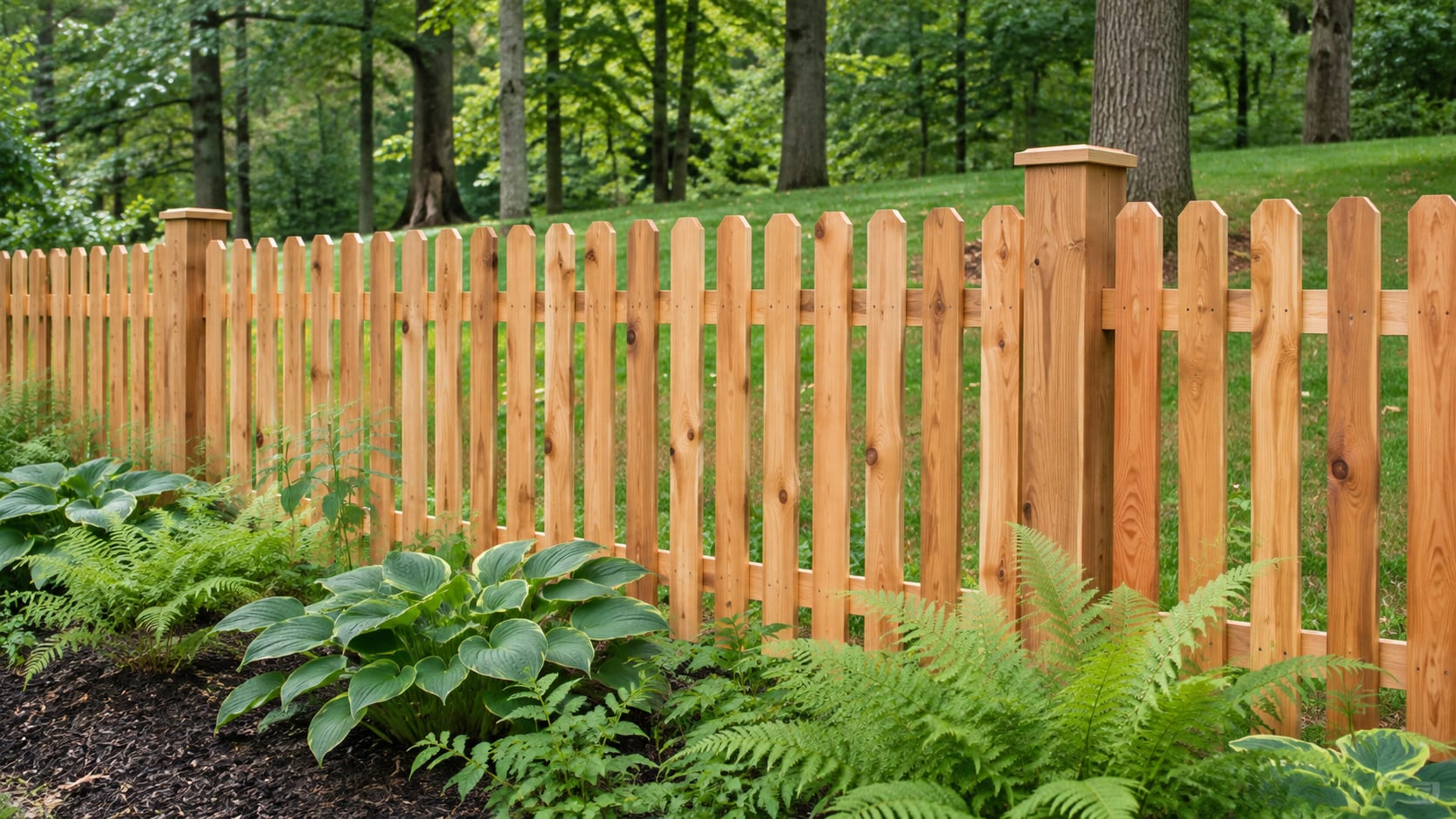
For a wooded Wilton lot, the right wood fence depends first on what it has to do: screen a patio, mark a boundary, keep a dog in or let deer and wind pass through. Board on board, stockade and solid horizontal designs give privacy, shadowbox gives privacy with more airflow, picket defines an edge, and post-and-rail gives open containment.
Cedar usually suits the visible boards and rails, while properly treated pine is the safer choice for posts set in soil.
Wilton sets its own rules for fence height in required yards, corner lots, fences over six feet, pools, historic properties and regulated wet areas, so check them before you pick a style.
Key Takeaways
Choose by purpose
Privacy, pets, pools, gardens, livestock, and boundary definition call for different fence styles.
Match wood to exposure
Cedar works well for visible boards, while ground-contact posts need the proper pressure treatment.
Plan for wind
Tall, solid fences place more demand on posts, footings, rails, and connections.
Check the line first
Use a current survey before placing a fence near a property line, stone wall, wetland, or watercourse.
Ask Wilton early
Planning and Zoning, the Building Department, Inland Wetlands, and historic review may each apply to different site conditions.
Price the whole job
Gates, ledge, slope, removal, and access can change the installed cost per linear foot.
Start with the job the fence has to do
A wood fence should settle a property question before it becomes a style decision. A privacy fence can screen a patio or pool area, a picket fence can define a front boundary without closing in the yard, and post-and-rail can mark a rural property while letting deer and wind pass through. Dog containment, garden protection, and livestock control may call for wire mesh added to an open wood frame.
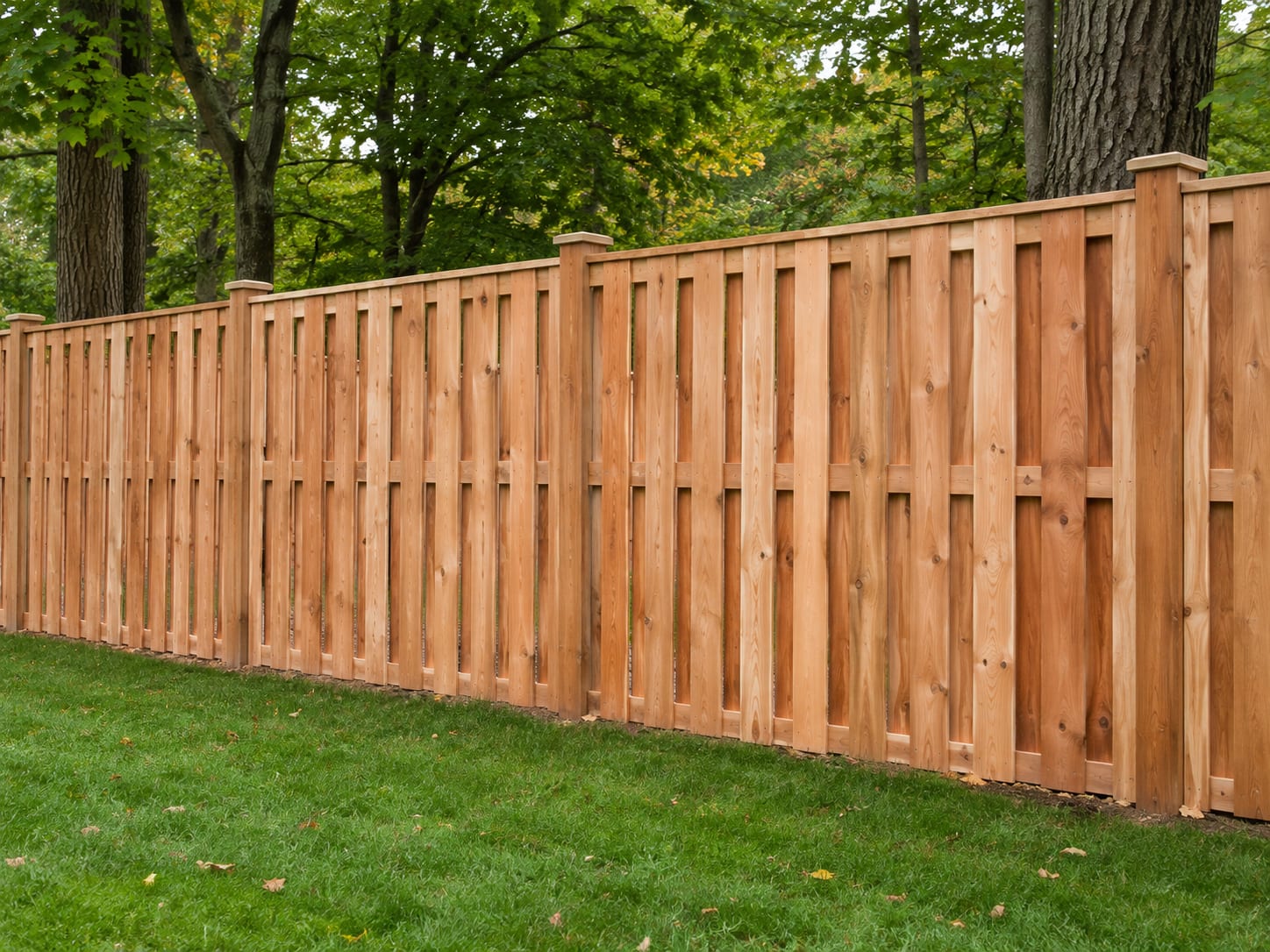
Board on board builds a near-solid visual barrier from overlapping vertical boards. The overlap uses more lumber than a standard spaced fence, and the broad surface takes more wind pressure, so post size, spacing, footings, rail connections, and gate construction deserve close attention.
Shadowbox boards alternate from one side of the rails to the other. You get substantial privacy from most angles, some airflow, and a finished look on both sides. It uses more lumber than a simple picket or rail fence, but it reads as less solid than board on board.
Stockade fencing sets boards close together, with overlapping or tightly abutting edges. It gives high privacy, but it also takes high wind exposure and a good deal of lumber. In a wooded setting, leave room for inspection and maintenance where leaves and vegetation collect.
Picket fencing leaves open space between vertical boards. That cuts wind pressure and lumber use, but it gives little privacy. It suits boundary definition, garden separation, or light containment where you want to keep the view.
Horizontal slat fencing can be open screening or nearly solid privacy. Closely spaced slats use more wood and create more wind exposure. On a sloped lot, the installer may need stepped sections or a custom layout so the horizontal lines stay orderly.
Post-and-rail fencing uses two, three, or four horizontal rails and gives very little privacy. It uses relatively little lumber and passes plenty of air. Wire mesh can be added when the fence must hold dogs, goats, horses, or other animals.
The University of Minnesota Extension identifies windbreak density as a major design factor, and Trex describes board-on-board and shadowbox designs as solid or semi-solid privacy systems. Wind demand also depends on height, open area, board direction, post spacing, footing size, terrain, exposure, and gate openings. You can compare the material choices for this type of project on our wood fencing product page.
Matching cedar and treated pine to each part of the fence
Cedar heartwood has natural resistance to decay, and the USDA Forest Products Laboratory places cedars generally in the resistant or very resistant groups. Cedar is also dimensionally stable, which is useful for visible boards and rails. Sapwood is less durable than heartwood, so the word cedar alone does not describe every board’s decay resistance.
Cedar posts can perform well above ground, but a post set in soil sits in a more severe moisture exposure. The Forest Products Laboratory states that wood members in ground contact should be pressure treated. A cedar post is not automatically equal to a properly labeled ground-contact post.
Pressure treatment protects decay-susceptible pine from fungi and insects. It is commonly used for rails, posts, and boards where cost and ground-contact protection matter. A post installed in soil should carry the appropriate AWPA Use Category for its exposure. UC4A is a general ground-contact category, with UC4B and UC4C applying to more severe or critical conditions. Above-ground exterior components have different categories, including UC3A and UC3B.
For many Wilton fences, a practical combination is cedar for visible boards and rails with pressure-treated ground-contact posts. Pressure-treated pine throughout can also make sense when budget and ground-contact protection are the main priorities. The right specification depends on whether the component is above ground or in soil, the drainage, the desired appearance, and the maintenance plan.
The USDA Wood Handbook explains natural decay resistance, while its chapter on wood preservation covers treatment and exposure. The American Wood Protection Association homeowner information is useful when you are comparing treatment labels. For a side-by-side look, see Cedar vs Pressure-Treated Wood Fence: Which Lasts Longer?.
Shade, stone walls, and wet ground change the fence line
Shade slows drying. Leaf litter, moss, mulch, and vegetation can hold moisture against the bottom of boards and around posts. Wood close to soil, lower board ends, post bases, rails near grade, and joints where water stays trapped deserve regular attention.
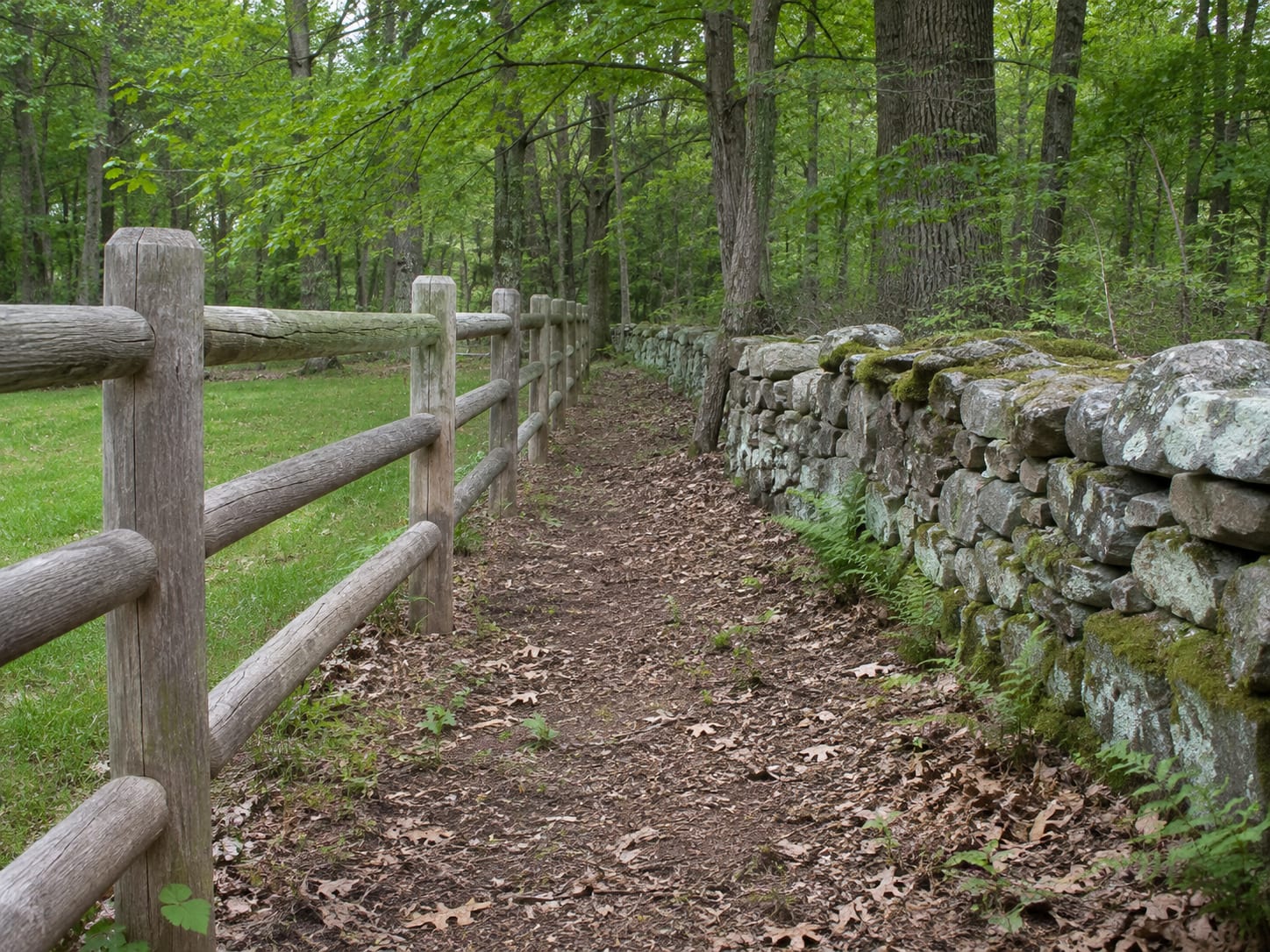
A fence along an old stone wall needs a boundary and drainage decision before construction. Do not assume the centerline of the wall is the legal property line. Connecticut’s division-fence statutes address adjoining owners, but a stone wall by itself does not settle a boundary dispute. Use a current survey or other reliable boundary evidence before placing posts near the wall. For more detail on this condition, see Fences and Old Stone Walls: Building Alongside, Behind or On Top.
Wood should not be buried against damp masonry or pressed directly into it. Leave enough working and drainage space to inspect both the fence and wall, and do not excavate posts in a way that could destabilize the wall. Depending on the survey, access, drainage, and wall condition, the fence may run beside the wall with posts on your side, or behind it while the wall remains a separate feature.
Wilton regulates construction, excavation, grading, filling, and other alterations in wetlands, watercourses, and regulated areas. A fence line near a wet area may require an Inland Wetlands determination or permit before excavation. Contact Wilton Inland Wetlands and Environmental Affairs at 203-563-0180 when the proposed line is near a wetland or watercourse.
A shaded fence has no single fixed service life. The result depends on species, heartwood content, treatment, ground contact, drainage, post installation, board clearance, fasteners, coatings, and maintenance. Keep leaves and soil away from the fence and inspect post bases, rail ends, and lower boards as it ages.
Wilton height and location rules
Wilton’s zoning regulations contain the main local provisions affecting ordinary wood fencing.
Section 29-2.B, definition 157, includes fences or walls more than six feet high in the definition of “structure.” Section 29-4.E.5 states that required-yard rules do not prohibit a fence or wall up to six feet high, measured above finished grade. A fence or wall higher than six feet may be in a required yard when the portion over six feet is at least three-fourths open construction.
Corner lots need special attention. Section 29-4.B.2.a treats each street line on a corner lot as a front lot line, and the required yard along both street frontages is the required front yard. That can make a street-facing side yard subject to front-yard treatment. Section 29-4.E.6 also addresses increased front-yard requirements on a street right-of-way narrower than 50 feet.
Start with Wilton Planning and Zoning for height, front-yard treatment, corner-lot conditions, setbacks, zoning interpretation, and whether zoning review is needed. Reach them at 203-563-0185, Town Hall Annex, 238 Danbury Road, Wilton, CT 06897. Fence Permits in Wilton, CT: Height Limits, Zoning and Who to Call lays out the questions to bring.
For building-permit questions, contact the Wilton Building Department at 203-563-0177 or building@wiltonct.gov. For a pool, remember that the fence is a safety barrier as well as a property boundary. Connecticut State Building Code requirements include limits on openings, self-closing and locking gates, and the four-inch sphere rule for residential pool barriers. Review the Connecticut fence permit overview before ordering materials.
A visible new fence, gate, or stone wall in a designated historic district or on a historic property may require review by the Historic District and Properties Commission. A project visible from a public right-of-way should be discussed with that commission before work begins.
From survey to final walk-through
The cleanest fence projects settle the line and local questions before materials arrive.
Planning a Wilton Wood Fence
- 1
Confirm the boundary
Use a current survey or reliable boundary evidence, especially near a stone wall, old fence, hedge, or neighboring driveway.
- 2
Map the site
Mark the proposed fence, gates, pool, streets, wetlands, watercourses, easements, and driveway entrances.
- 3
Call Wilton offices
Ask Planning and Zoning about height, yards, corner-lot treatment, setbacks, and zoning review. Ask the Building Department about building permits, and Inland Wetlands about regulated areas.
- 4
Check historic review
Contact the Historic District and Properties Commission when a new or substantially changed fence will be visible from a public right-of-way in a designated district or property.
- 5
Submit the utility request
The person excavating must submit a Connecticut Call Before You Dig request at least two full working days and no more than 30 days before digging. Private utility lines may need a separate locator.
- 6
Set the fence specification
Put the style, height, linear footage, wood species, post treatment, gates, hardware, finish, removal, cleanup, price, and permit responsibilities in writing.
- 7
Build and inspect
Install posts and footings, rails, boards, and gates according to the agreed layout, then review drainage, clearances, gate operation, and cleanup.
For residential fence work, the Connecticut Department of Consumer Protection says a contractor generally must be registered as a Home Improvement Contractor. A written contract should identify the contractor, registration number, work dates, price, materials, and responsibility for permits. My Fence Guy can put the scope of a Wilton fence in writing before work begins.
What wood fencing costs nationally
The figures below are national installed ranges for 2026, not Wilton or Connecticut contractor pricing.
Hover or tap a row to highlight it.
| Style and approximate height | Installed national range | Unit and date |
|---|---|---|
| Picket, commonly 3 to 4 feet | $5 to $30 | Per linear foot, Angi, 2026 |
| Rail or post-and-rail | $5 to $30 | Per linear foot, Angi, 2026 |
| Solid board, commonly 4 to 6 feet | $5 to $20 | Per linear foot, Angi, 2026 |
| Shadowbox, commonly 6 feet | $10 to $35 | Per linear foot, Angi, 2026 |
| Wood privacy fence, commonly 6 feet | $10 to $30 | Per linear foot, Angi, 2026 |
| Six-foot wood privacy fence | $25 to $50 | Per linear foot, HomeGuide, 2025 |
| Eight-foot wood privacy fence | Up to approximately $75 | Per linear foot, HomeGuide, 2025 |
Angi reports a typical national wood-fence project range of about $1,919 to $4,949 per project, with an average of $3,312 per project in its 2026 data. Those figures are a budgeting starting point for Wilton, not a quote.
A local estimate moves with short runs, multiple gates, old-fence removal, ledge, steep slopes, difficult access, and post treatment. Ask for a written estimate that separates linear footage, height, style, species, post material, gates, demolition, excavation, and any review or permit costs.
Frequently Asked Questions
How long does a wood fence last in the shade?
A shaded wood fence has no single fixed lifespan. Shade keeps boards and posts damp longer, especially where leaves, moss, mulch, or vegetation touch the wood. Service life depends on species, treatment, drainage, ground contact, installation, and maintenance.
What is the best wood for a fence in New England?
Cedar is a strong choice for visible boards and rails because its heartwood resists decay and remains dimensionally stable. Pressure-treated pine is a practical choice for posts and other components where ground-contact protection and cost matter. Many fences combine cedar boards with properly treated ground-contact posts.
How much does a wood fence cost per foot?
National 2026 installed figures range from about $5 to $30 per linear foot for picket or rail fencing, $10 to $35 per linear foot for shadowbox, and $10 to $30 per linear foot for wood fencing overall in Angi’s data. HomeGuide lists about $25 to $50 per linear foot for a six-foot wood privacy fence. Gates, ledge, slope, access, and removal can change a Wilton project price.
Do I need a permit for a fence in Wilton CT?
The answer depends on the fence height, location, and site conditions. Wilton allows fences and walls up to six feet high in required yards under Section 29-4.E.5, while fences or walls over six feet are included in the structure definition under Section 29-2.B.157. Contact Planning and Zoning at 203-563-0185 and the Building Department at 203-563-0177 for a project-specific determination before construction.
Which side of the fence faces out?
Which way the finished side faces is usually settled locally. Settle the orientation with the neighbor, subdivision, homeowners association, or applicable local review, and put it in the contractor’s written scope. Board-on-board and shadowbox designs can provide a finished appearance on both sides.
Wilton Wood Fence Check
1. Which style provides the most open airflow?
2. Which wood is commonly suited to visible boards because its heartwood has natural decay resistance?
3. What should you confirm before placing a fence near an old stone wall?
4. Which Wilton office handles zoning questions about height, front yards, and corner lots?
Pick an answer to begin.
Final Thoughts
A good Wilton wood fence begins with the purpose, the boundary, and the site conditions. Choose open, semi-solid, or solid construction based on privacy, containment, airflow, and the amount of maintenance the wooded lot will require. Then confirm the height, street frontage, wet areas, historic visibility, utilities, and material specification before digging.
My Fence Guy can help organize the fence line, posts, boards, gates, and removal into a written estimate that you can review before work begins. Call us at (203) 746-1100 for a free estimate, or reach out through our contact page.
Wilton Wood Fence Terms
Tap a term to see what it means.
Board on board. A near-solid barrier built from overlapping vertical boards.
More about fences
Wood Fencing in Fairfield, CT: Styles, Coastal Wear and Town Rules
Wood fencing in Fairfield, CT: board on board and picket styles, cedar or pine near salt air, the fasteners that hold up on the coast, town rules and costs.
Read the guide to Wood Fencing in Fairfield, CTAluminum Fencing in Wilton, CT: Styles, Pool Barriers and Town Rules
Wilton allows aluminum fences up to 6 feet in required yards. Compare slope options, pool barrier rules, footing depths and 2026 cost ranges.
Read the guide to Aluminum Fencing in Wilton, CTWood vs Vinyl Fence: Cost, Upkeep and Lifespan in Connecticut
Wood or vinyl fence in Connecticut: installed cost, lifespan in freeze-thaw winters, staining and cleaning, storm repairs and how each looks over the years.
Read the guide to Wood vs Vinyl Fence