
Chain Link Fence Repair: Bent Top Rails, Loose Fabric and Damaged Posts
By Tony Pellicone13 min readPublished
- fence repair
- chain link fencing
- homeowner guide
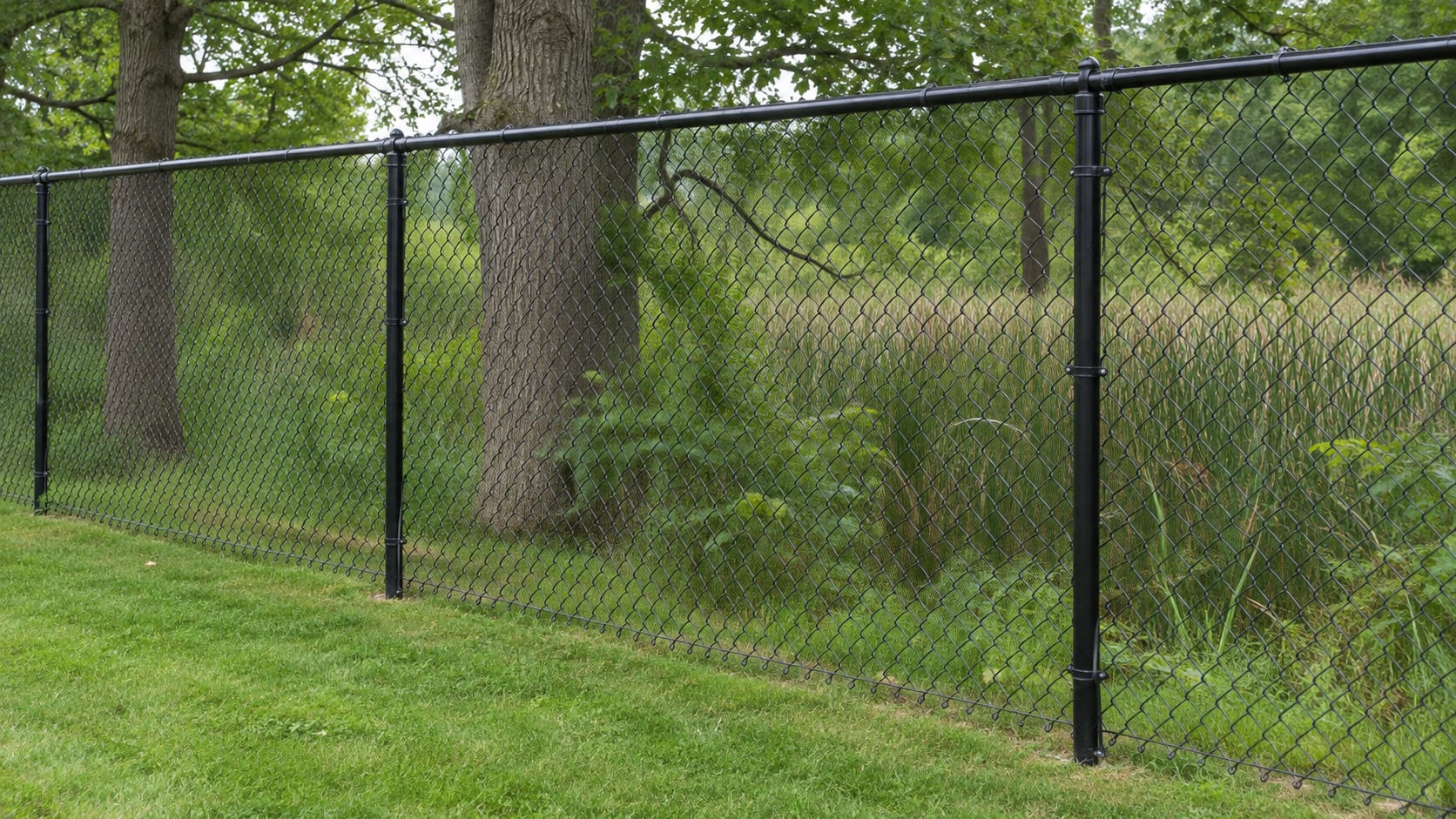
Chain link fence repair usually makes sense when the damage is limited to one rail, a small section of fabric, missing ties, a loose tension wire or one post with a sound footing. Replacement becomes the better choice when rust, leaning posts, failed footings and damaged gates affect several connected parts.
The cost depends mostly on how much fabric, rail, hardware, excavation and concrete work are involved, not simply on the fence’s age.
Before work starts, ask your building official whether the repair requires a permit, then ask planning and zoning about height, setbacks, sight lines and the fence’s location on the property. If posts will be dug out, call Connecticut Call Before You Dig first.
Key Takeaways
Repair or replace
Localized damage with sound posts and fabric is often repairable, while widespread rust and movement point toward replacement.
Fence parts
Terminal posts carry the pull, line posts support the run, and top rail, tension bars, ties and fabric work together.
Spacing
ASTM F567-23 limits normal line-post spacing to 10 feet on center.
Frost and salt
Freeze-thaw movement and road salt can loosen posts and speed corrosion near grade.
Local rules
Connecticut towns set different zoning and permit procedures, so confirm the work with the responsible town office.
Cost
National estimates place chain link repair around $250 to $803 per project, depending on the scope.
Start with the damaged part and the force around it
A chain link fence is a tensioned system. The diamond-shaped fabric is stretched between terminal posts, then held to the top rail, line posts and bottom tension wire with ties and fittings. When one piece fails, the pull can transfer stress to the next post, rail or connection.
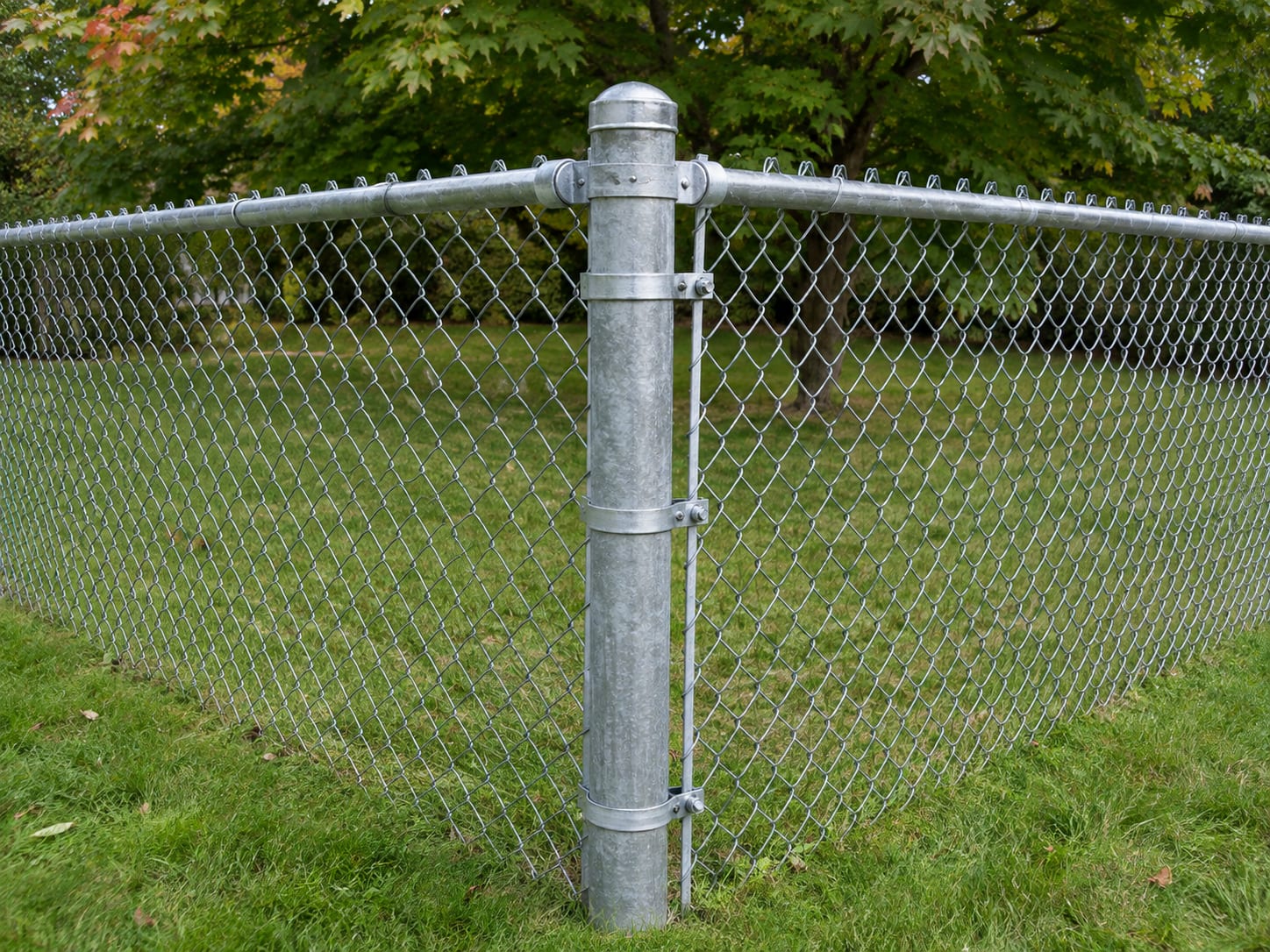
Terminal posts are the end, corner, pull and gate posts. They receive the horizontal pull created when the fabric is stretched. Line posts sit between terminal posts and support the fence run. ASTM F567-23 limits normal line-post spacing to 10 feet on center, with terminal posts at ends, corners, gates and abrupt changes in alignment.
The top rail runs continuously through the tops of the line posts and braces the fence horizontally. Rail sections are joined with sleeves or couplings. Tension bars, sometimes called stretcher bars, are vertical bars woven through the fabric at terminal posts. Tension bands connect those bars to the terminal posts and spread the pulling force.
The fabric’s gauge identifies wire thickness. Lower gauge numbers generally mean thicker wire. Mesh size, gauge, coating and selvage style all matter when you order a replacement section. A heavier or lighter patch may fit physically while looking different and behaving differently under tension.
The chain link fencing product page shows the type of system that is being repaired, but the existing fence still needs to be measured before material is ordered.
Hover or tap a row to highlight it.
| Part | What it does |
|---|---|
| Terminal post | Anchors ends, corners, gates and pull points |
| Line post | Supports the fence between terminal posts |
| Top rail | Braces the fence across the top |
| Fabric | Forms the woven diamond barrier |
| Tension bar and bands | Connect fabric to terminal posts |
| Tension wire | Limits movement along the bottom |
| Ties and fittings | Attach fabric and rail to the posts |
Repairs for bent rails, torn fabric and sagging mesh
A bent top rail is normally repaired by removing the fabric ties from the affected section, cutting out the bent rail, inserting a matching replacement section and joining it to the existing rail with sleeves or couplings. The fabric is then brought back into alignment, reattached and retensioned.
A sharply kinked rail should not simply be forced straight if the pipe has buckled, split or lost its round shape. Check the line posts, post caps, terminal connections and gate alignment as well. An impact that bends the rail may have shifted the post carrying it.
ASTM F567-23 calls for top rail sections to be joined with sleeves or couplings so the rail can accommodate expansion and contraction. The finished rail should remain continuous and supported at every line post.
A torn section of fabric can be spliced by removing one vertical picket wire from the edge of a replacement section. Align the diamonds, then weave that picket through both fabric edges. This recreates the continuous mesh. ASTM F567-19 describes joining rolls by weaving a single picket through the ends.
Small holes may be patched with matching fabric. If rust has removed much of the wire or several spots have torn, replacing the affected span is usually a better use of the new material. Match the mesh size, gauge, coating and edge style before cutting anything.
Sagging fabric needs more than a few new ties. First inspect the terminal posts and their footings. If those posts are sound, release enough ties and terminal-post tension hardware to permit restretching. A fence stretcher pulls the fabric toward the opposite terminal post.
A new tension bar is attached with tension bands, excess fabric is removed by unwinding a vertical picket, and the fabric is retied to the rail, line posts and bottom tension wire.
CLFMI recommends fabric that gives only slightly when squeezed by hand and aluminum ties at approximately 18-inch intervals. ASTM specifications commonly use closer attachment intervals at posts and wider intervals at rails or tension wire, depending on the system.
If a gate is dragging or will not latch, inspect its hinges, frame, latch, gate posts and nearby fabric tension. A gate problem can come from post movement rather than the latch itself. For related gate symptoms, see Gate Won't Latch or Close? Fixing Sagging, Dragging and Gapped Gates.
Typical Chain Link Repair Sequence
- 1
Inspect
Locate the damage and check the fabric, rail, posts, footings, gate and fittings around it.
- 2
Release tension
Remove enough ties and terminal hardware to work without transferring force into nearby posts.
- 3
Replace or splice
Install matching rail or fabric, using sleeves, couplings or a woven picket splice.
- 4
Reset posts if needed
Remove failed concrete, install a matching plumb post and place a properly sized footing.
- 5
Retension
Pull the fabric smooth, attach the tension bar and remove excess fabric.
- 6
Reattach
Replace ties, reconnect the rail and tension wire, then test the gate and alignment.
Rust, coatings, frost heave and road salt
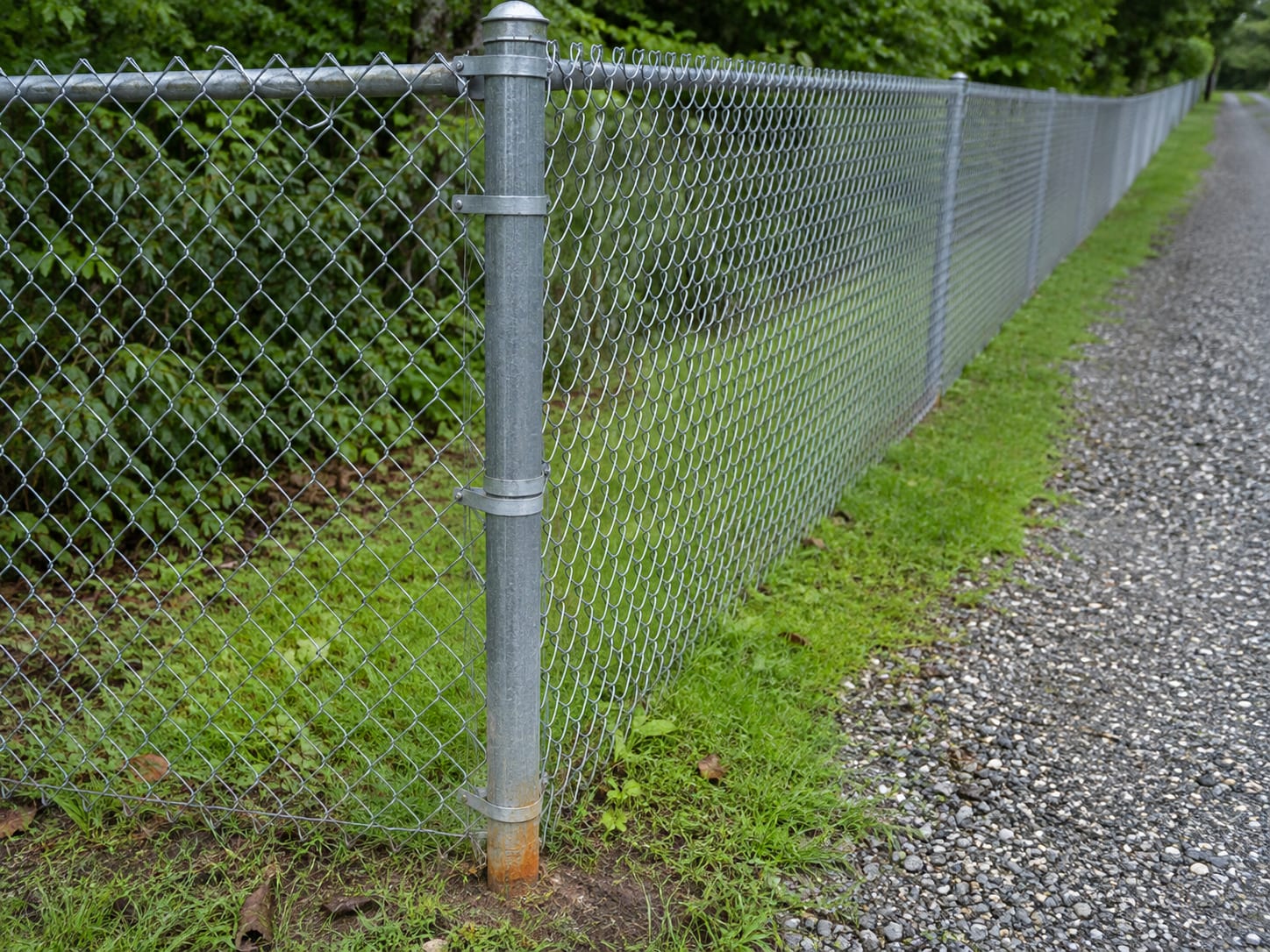
Galvanized chain link uses a zinc coating over steel wire or steel posts and rails. Zinc provides sacrificial corrosion protection, but moisture, soil, abrasion and salt gradually consume that protection. Rust often becomes more visible at cut ends, damaged areas, joints, post bases and places where wet leaves or salt-laden snow remain trapped.
Vinyl-coated fabric normally has a galvanized steel core with PVC or another polymer coating over it. The coating adds color and a second barrier against moisture and abrasion. The galvanized core still matters because a scratch, cut or exposed end can allow corrosion to begin. The Whole Building Design Guide fencing reference identifies damaged PVC coating and unprotected cut ends as places where corrosion can spread below the coating and cause separation.
Vinyl-coated posts, rails and fittings are usually galvanized steel with a factory-applied polymer or powder coating. A black, green or brown patch may be close without being exact. Older coatings fade, and production runs can differ in shade, gloss and thickness. Use coated ties and fittings when appearance and corrosion compatibility matter.
Product warranties provide reference points for individual systems. Merchants Metals lists a 15-year warranty against rust or corrosion for one PVC-coated fabric product, while other manufacturers publish different terms. A product warranty speaks only to that product, not to every fence.
Frost heave occurs when freezing soil expands and lifts or shifts embedded objects. Repeated freezing and thawing can leave a post higher, lower, tilted or loose beside its neighbors. Frost-sensitive soil and shallow embedment increase the risk. On a western Connecticut property with shallow ledge, the footing may also be difficult to excavate and may need a site-specific repair plan.
ASTM F567-23 gives a general minimum post-hole depth of 24 inches, plus 3 inches for each foot of fence height over 4 feet, subject to local conditions and a stated maximum depth of 60 inches. The same standard says footing dimensions depend on intended use and local conditions.
Use the existing fence height, post type, soil, footing condition and town requirements when deciding how to reset a post. The discussion in How Deep Should Fence Posts Be in Connecticut? Frost Line and Footings can help you prepare questions.
Connecticut DEEP identifies sodium chloride as the most common road salt used in the state. Salt dissolved in snowmelt or runoff accelerates corrosion of zinc coatings and exposed steel. Inspect the lower portion of posts near grade, especially beside a salted road or driveway. A post can look sound above ground while losing section at the soil line.
When repair makes sense and when replacement is better
Repair is usually appropriate when the damage is localized and the remaining system is structurally sound. One bent rail, a small torn area, missing ties, a loose tension wire or one post with a repairable footing can often be handled without replacing the whole fence.
Replacement becomes more practical when fabric is rusted through in several places, wire has lost substantial section, coating is peeling across broad areas, multiple posts are leaning, terminal footings have failed, or the gate and rail are also failing. A new patch will not restore strength to adjacent fabric or posts that are already close to failure.
Fabric gauge matters because thinner wire is less resistant to impact and long-term deformation. Before ordering a patch, identify the existing gauge and mesh size. Also check whether the fence is galvanized or vinyl-coated. Reusing sound posts and fabric can lower the scope, but the remaining material must still carry the pull of the repaired run.
For a fair comparison, request two prices when the condition is mixed: a targeted repair and replacement of the affected run or full system. Include removal, disposal, excavation, concrete, fabric, rail, fittings, gate work and restoration. To see where simple hardware work ends and tensioning or excavation begins, read Who Should Fix a Broken Fence? Handyman, Fence Contractor or Doing It Yourself.
Hover or tap a row to highlight it.
| Repair item | National estimate and unit |
|---|---|
| Complete chain link repair | $545 average per project, typical range $295 to $803, Angi, 2026 |
| Common repair range | $10 to $25 per linear foot, Angi, 2026 |
| Mesh patch or replacement | $75 to $400 per project, Angi, 2026 |
| Post replacement | $100 to $300 per post, Angi, 2026 |
| Top or bottom rail | $50 to $200 per rail, Angi, 2026 |
| Gate repair | $100 to $350 per gate, Angi, 2026 |
| Tension wire or hardware | $50 to $150 per project, Angi, 2026 |
| Complete repair range | $250 to $750 per project, approximately $500 average, Fixr, 2025 |
These are national figures, not Connecticut prices. Angi’s approximately $22 per linear foot figure for new chain link rail is a national material estimate, not a complete installed repair price. Excavation, concrete removal, access, disposal, gates, privacy slats, travel and multiple posts can change a local estimate.
Town questions, permits and digging
Height and setback rules for fences are set by each Connecticut town. The State Building Code provides a statewide building-permit exemption for fences other than swimming-pool barriers that are not over 7 feet high in the cited code edition. Local zoning approval, wetlands review, visibility restrictions and other town requirements can still apply. The statewide permit overview, Do You Need a Permit for Fence Installation in CT?, is a useful starting point.
Brookfield’s zoning regulations approved in 2024 state that fences under 8 feet may be constructed in residential districts without zoning approval. Fences 8 feet or higher require zoning approval before construction and a certificate of zoning compliance afterward. Brookfield also addresses finished sides, fence maintenance and traffic sight lines.
Ridgefield publishes zoning regulations through its Planning and Zoning Department, with amendments through 2026. Ask the office for the provision that applies to your lot, yard location, height and repair scope.
Milford’s published fence guidance gives a different example. It states that visible fences such as chain link may be 4 feet high in a front yard, side and rear fences may be 6 feet high, fences may be placed up to a surveyed property line, and fences up to 6 feet high do not require a building permit under the city’s stated guidance. Corner-lot visibility rules also apply.
For any Connecticut town, ask whether replacing fabric or a top rail counts as ordinary repair, and whether replacing a post and footing requires a building permit. Ask whether changing height, color, mesh, privacy slats or location triggers zoning review.
Also ask what rules apply to a corner lot, driveway sight line or property line, and whether a survey, wetlands review or a certificate of zoning compliance is required afterward.
Ask the municipal inland wetlands agency before excavating, grading, filling or placing posts in or near regulated wetlands or watercourses. Call Connecticut Call Before You Dig before digging post holes. CBYD states that calling before digging is required by Connecticut law.
If the fence surrounds a pool, ask the building official whether the repaired barrier remains compliant with the Connecticut State Building Code and current pool-barrier provisions. If a boundary dispute remains after the town questions are answered, talk with a Connecticut real estate attorney.
For residential work, verify an active Home Improvement Contractor registration with the Connecticut Department of Consumer Protection. A written quote should identify the repair area, fabric gauge and mesh size, rail and post sizes, coating, excavation, concrete, disposal, permits, payment schedule, warranty and any work required to align a gate. My Fence Guy can evaluate the damaged run and put the scope and material choices into a written estimate.
Frequently Asked Questions
How do you fix a bent chain link fence top rail?
A bent top rail is usually repaired by removing the fabric ties, cutting out the damaged section, installing a matching rail and joining it with a sleeve or coupling. The fabric is then aligned, retensioned and retied. Inspect nearby posts and the gate because impact may have moved more than the rail.
Can you splice chain link fence fabric?
Yes, you can splice chain link fabric by removing one vertical picket wire from a replacement section and weaving it through the diamonds at both fabric edges. Match the mesh size, gauge, coating and selvage style before stretching the splice into place.
How do you tighten a sagging chain link fence?
You tighten sagging fabric by releasing enough ties and terminal hardware to restretch it with a fence stretcher. Attach a tension bar and bands, remove excess fabric by unwinding one vertical picket, then replace ties at the rail, line posts and bottom tension wire. Correct a leaning post before pulling the fabric tight.
What is the lifespan of a chain link fence?
The lifespan depends on gauge, coating, drainage, soil moisture, impacts, freeze-thaw movement, road salt and maintenance. Product warranties provide system-specific reference points, including 12-year and 15-year examples, but current fabric, post and coating condition tells you more than age alone.
How do you fix a leaning chain link fence post?
First determine whether the post is bent, corroded, frost-shifted, loose in its footing or pulled by fabric tension. A failed post normally requires removal of the fabric and concrete, installation of a matching plumb post, a properly sized footing and retensioning after the concrete cures.
How much does chain link fence repair cost?
National estimates range from $250 to $750 per project from Fixr, with Angi reporting a $545 national average and a typical range of $295 to $803 per project. A Connecticut quote should state whether the price is per post, rail, gate, linear foot or complete project, and should identify excavation, concrete, disposal and materials.
Chain Link Repair Check
1. What is the normal maximum spacing for chain link line posts under ASTM F567-23?
2. What joins sections of chain link top rail?
3. What is the usual way to splice chain link fabric?
4. Which condition points toward replacement instead of a limited repair?
Pick an answer to begin.
Final Thoughts
A sound chain link repair starts with the part that failed and the force carried by the surrounding posts, rail and fabric. Check the town requirements before excavation, match the existing material, and compare a focused repair with replacement when several connected components are deteriorated.
A careful estimate should tell you what will be reused, what will be removed, how the post or fabric will be reset, and what each part of the price covers. Call us at (203) 746-1100 for a free estimate, or reach out through our contact page.
Chain Link Fence Repair Terms
Tap a term to see what it means.
Chain link fabric. The woven wire mesh that forms the diamond-shaped fence barrier.
More about fences
How Long Do Metal Fence Posts Last? Steel, Galvanized and Aluminum Posts in Connecticut Ground
Hot-dip galvanized steel posts can last 75 years in average soil and far less in wet or salty ground. How metal fence posts age and how to set them to last.
Read the guide to How Long Do Metal Fence Posts Last? Steel, Galvanized and Aluminum Posts in Connecticut GroundWood Fence Repair: Broken Boards, Rotted Rails and Loose Pickets
Wood fence repair starts with the posts and rails. Replacing broken boards, fixing rotted rails and loose pickets, choosing rated lumber and fasteners, costs.
Read the guide to Wood Fence RepairVinyl Fence Repair: Cracked Panels, Loose Rails and Leaning Posts
Cracked panels, rails popped from posts and leaning posts: how vinyl fence repair works, why cold makes vinyl crack, matching older parts and what it costs.
Read the guide to Vinyl Fence Repair