
Vinyl Fence Repair: Cracked Panels, Loose Rails and Leaning Posts
By Tony Pellicone13 min readPublished
- fence repair
- vinyl fencing
- homeowner guide
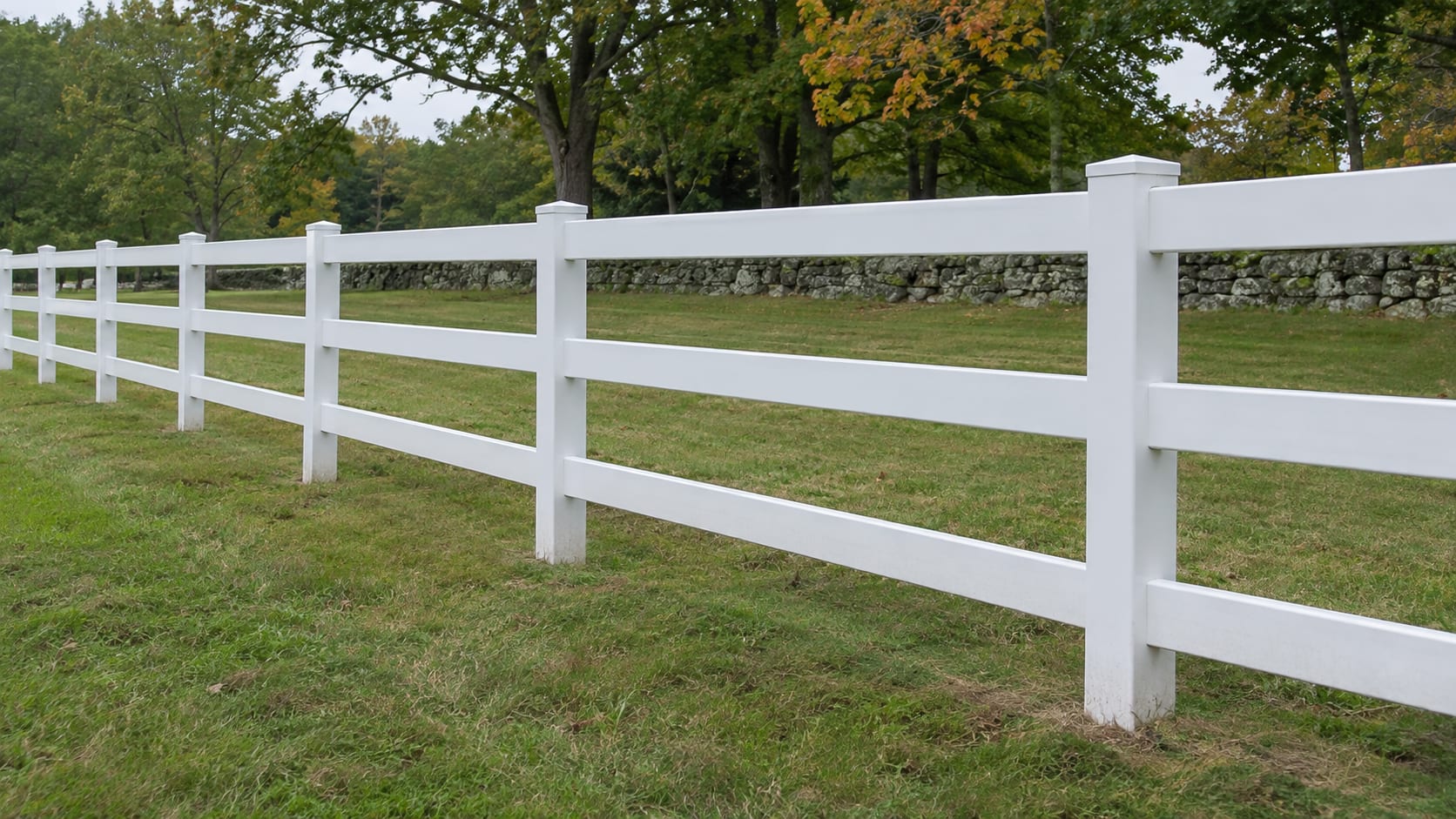
Most vinyl fence damage can be repaired by replacing the failed picket, rail, panel, post cap or post, but the repair only lasts when the surrounding connections and footing are sound. A cracked post or leaning gate post is structural work, while a broken picket or missing cap may be a smaller component replacement.
The cost depends mainly on the damaged part, matching material, excavation, concrete work and whether the original product is still available.
Before ordering parts, check whether the post is plumb and stable, whether the rails still fit their openings, and whether the damage reaches a gate, corner or terminal post. Then ask your town about height, setbacks, zoning approval, wetlands review and any building permit. For general Connecticut permit questions, see Do You Need a Permit for Fence Installation in CT?.
Key Takeaways
Start with the post
A replacement panel will not correct a cracked, loose or leaning post.
Match the system
Rail sizes, routed openings, picket profiles, caps and brackets vary by manufacturer.
Cold weather matters
PVC becomes more rigid in winter, so impacts and forced bending can cause cracks.
One section may be enough
A single bay can usually be replaced when its posts, rails and footing remain sound.
Ask the town first
Fence requirements differ by municipality, zoning district, height and location.
Get the repair in writing
The estimate should identify materials, labor, excavation, disposal, permits and the pricing unit.
How vinyl fence sections are put together
Vinyl fences are assembled from separate parts, so the visible damage does not always identify the failed support. A common privacy section uses hollow PVC posts with factory-routed openings. Horizontal rails slide into those openings, and vertical tongue-and-groove pickets sit between the rails and PVC U-channels. Some systems use galvanized steel or aluminum inside a bottom rail or another structural rail.
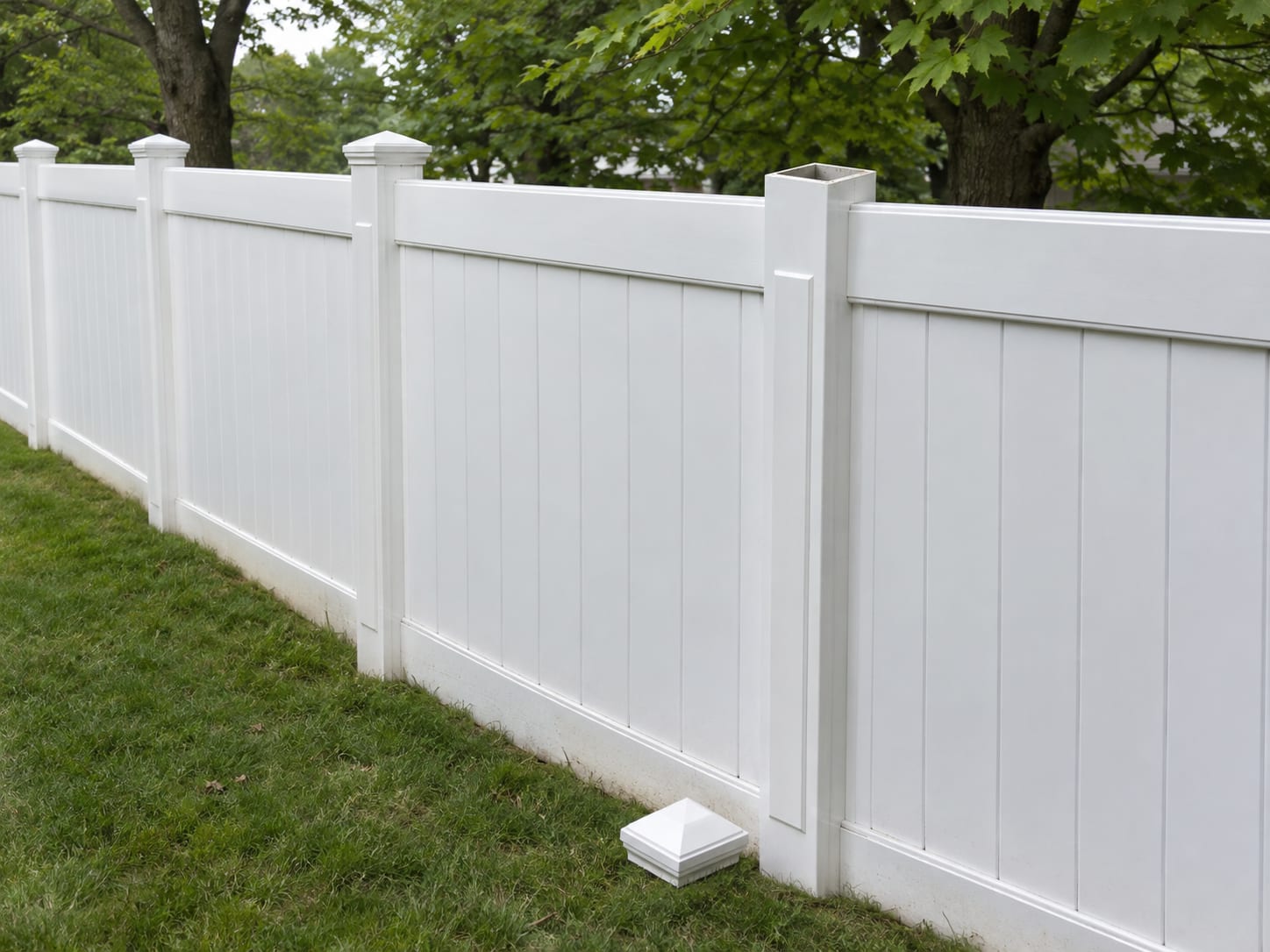
Picket and semi-privacy styles may use rails with routed openings through which individual pickets pass. Other systems attach rails with brackets screwed to the faces of the posts. That difference matters when you remove a damaged section because a part designed for a bracket system may not fit a routed post.
Gate, corner and terminal posts often receive an aluminum or steel stiffener. Rails may also be reinforced where wind loads, long spans or gate hardware place more stress on the vinyl. A gate hinge post carries more force than an ordinary line post, so a cracked sleeve or shifted gate connection deserves a closer inspection.
One manufacturer installation guide gives these example dimensions:
Hover or tap a row to highlight it.
| Component | Example dimension or material |
|---|---|
| Routed rail | 1-1/2 inches by 5-1/2 inches |
| Tongue-and-groove picket | 7/8 inch by 6 inches |
| PVC U-channel | 7/8 inch |
| Rail insert | Galvanized steel |
| Fasteners | Stainless steel screws |
| Specified assembly material | PVC adhesive |
Those measurements are examples, not universal replacement sizes. Exact post openings, rail dimensions, picket widths, inserts and attachment methods vary by product line. The vinyl fencing product page can help you compare styles, but the damaged fence still needs to be matched to its original system.
What to check before replacing a part
Start at the damaged area and work outward. Check whether the post is plumb, whether the footing has shifted, and whether the rails are cracked or pulled out of their openings. Look at retaining tabs, clips, bracket screws and rail ends. If the fence was hit by a mower, string trimmer, snowblower, vehicle, branch, ball or tool, inspect the nearby connections for damage that may not be visible from the yard side.

A broken picket or panel is usually removed and replaced with the same manufacturer’s part. In a routed-post system, the installer may need to remove a post cap, release or cut retaining tabs, remove the top rail, take out the damaged pickets or panel, and reinstall the rail and cap according to the product instructions.
A rail that popped out is treated differently. If the rail is intact and the post remains aligned, it may be reseated in the routed opening or bracket. The specified screw, clip or rail-lock method should be restored. If the rail is cracked, permanently bent, or repeatedly pulls free, replacing the rail alone may not solve the cause.
A cracked post generally requires removing the connected rails and panel, removing or cutting around the old post and footing, installing a compatible replacement post, and rebuilding the section. If the post carries a gate, an internal stiffener may be needed. A leaning post is not corrected by patching the vinyl sleeve. The post and footing must be made plumb and stable.
For a second opinion on whether repair makes sense, Fence Repair or Replacement? How to Tell Which Your Fence Needs covers the broader choice between localized work and replacement.
Repair steps for common vinyl fence damage
The repair sequence depends on the failed component and the way the fence was assembled. The manufacturer’s installation instructions control the screws, clips, tabs, adhesive and cap attachment.
Typical Vinyl Fence Repair Process
- 1
Identify the system
Find the manufacturer, product line, fence height, color, rail profile and picket shape.
- 2
Inspect the support
Check the post, footing, rails, brackets, gate hardware and adjacent sections.
- 3
Remove the damaged part
Release the cap, rail, pickets, panel or hardware using the system’s specified method.
- 4
Correct the structure
Reset or replace a post and footing when the support is loose, leaning or cracked.
- 5
Install the replacement
Fit the matching part, restore the required fasteners or locks, and keep rails level.
- 6
Check the finished section
Confirm that posts are plumb, rails are seated, gates align and caps are secure.
A post cap is normally replaced with a matching cap. Weatherables advises using clear silicone inside the cap rather than permanently gluing it, which allows later removal. Follow the instructions for the exact product because cap designs and attachment methods differ.
A replacement section works best when both adjacent posts and their footings are sound. The installer must match post spacing, rail dimensions, openings or brackets, picket profile, height, color and cap style. If one post is leaning or cracked, correct it before installing the replacement panel.
Cold vinyl should not be forced into place. PVC becomes more rigid as temperatures fall, so bending, drilling, twisting or striking a cold component can create a new crack. Weatherables and Midland Vinyl Products both describe cold-weather rigidity and the use of impact modifiers intended to help vinyl withstand ordinary temperature changes. That protection does not make a fence immune to a direct impact.
When snow or ice builds up against a fence, clear it without striking the rails or pickets. Ice and snow place more stress on a fence that already has a loose connection or leaning support. Weatherables recommends following the product-specific installation instructions, including high-wind instructions where they apply.
For a different fence material, Chain Link Fence Repair: Bent Top Rails, Loose Fabric and Damaged Posts explains how repairs differ when the fence uses fabric and steel posts.
Matching parts, color and warranty coverage
Matching an older vinyl fence can be harder than the repair itself. Manufacturers use different rail sizes, post openings, picket widths, tongue-and-groove shapes, brackets and cap designs. A replacement that looks similar may not fit the routed holes or brackets in the existing fence.
Before ordering, record the manufacturer, product name, fence height, rail size, picket width, post dimensions, post spacing, cap shape and color. Photograph the damaged part and inspect hidden surfaces, including the underside of a rail or the inside of a post cap, for identifying marks.
Older products, colors and profiles may have been discontinued or changed. Daytona Vinyl Manufacturing states that it may discontinue or modify a product line or color and may provide an equal-value or equal-quality replacement when the original is unavailable. A replacement can also differ in shade because the existing fence has weathered in sunlight, shade, dirt and uneven exposure. Weatherables treats normal weathering, including non-uniform fading, as excluded from its warranty. Daytona also excludes color or pattern variation between replacement products and the original fence.
Some manufacturer warranties cover defective vinyl material and provide repair or replacement of the defective part. They usually do not cover every repair expense. Weatherables lists qualifying material and manufacturing defects, including specified cracking, while excluding improper installation, impact damage, vandalism, soil movement, settlement, misuse, improper care, failure to make reasonable repairs, normal weathering, incompatible products, harmful chemicals and unusual heat.
Daytona provides residential lifetime coverage and a 30-year warranty for many nonresidential properties. Its coverage applies to material and workmanship defects under normal use, with exclusions for improper installation, inadequate reinforcement, impact, misuse, neglect, ground movement, settlement, weather events, incompatible accessories, heat distortion, normal weathering and applied coatings. Barrette Outdoor Living also publishes vinyl warranty terms for qualifying defects under normal conditions.
Labor for removal, installation or reinstallation may be handled separately. A claim may require proof of purchase, photographs and warranty registration. Painting or coating the vinyl may affect coverage. Ask the manufacturer whether the proposed replacement preserves the warranty and whether the new part will match the weathered fence.
If the issue is a broader age decision, How Long Does a Fence Last? Lifespan by Material in New England discusses when material condition and repeated repairs point toward replacement.
What vinyl fence repair costs
The figures below are national figures, not Connecticut contractor prices. Your estimate may be higher when the work involves a short service call, difficult excavation, concrete removal, rock or ledge, a discontinued profile, a gate post, several connected sections or disposal.
Hover or tap a row to highlight it.
| Source and year | Reported figure | Unit |
|---|---|---|
| HomeAdvisor, 2026 | $290 to $1,076, average $657 | Per project |
| HomeAdvisor, 2026 | About $5 for replacement pickets | Per picket |
| HomeAdvisor, 2026 | About $70 to $170 for vinyl panels | Per panel |
| Angi, 2026 | About $30 | Per linear foot |
| Angi, 2026 | $125 to $500 for most repairs | Per project |
| Angi, 2026 | About $125 for a simple hole or crack | Per project |
| Angi, 2026 | About $400 for multiple holes or large cracks | Per project |
| Angi, 2026 | About $500 for a leaning-fence repair | Per project |
| Home Depot Pro Referral, 2026 | $100 to $200 for a broken slat | Per project |
| Home Depot Pro Referral, 2026 | $500 or more for a large damaged section | Per project |
HomeAdvisor reported national vinyl repair projects from $290 to $1,076, with an average of $657. Angi reported approximately $30 per linear foot for vinyl and PVC, while also listing common project prices from $125 to $500. Home Depot’s national repair guidance places a minor broken-slat repair at about $100 to $200 and a large damaged or fallen section at $500 or more.
A written local estimate should state whether the price is per picket, rail, post, panel, linear foot or project. It should also separate material, labor, excavation, concrete removal, disposal and permit costs. My Fence Guy can inspect the failed component and identify whether the quote needs to include adjacent rails, a footing, gate hardware or a full section.
Connecticut town approvals and digging
Fence rules are set by the municipality and may change by zoning district, lot type, location and height. Ask the zoning or land-use office about fence height, setbacks, location, visibility, zoning approval and any certificate of zoning compliance. Ask the building department whether a building permit is required for installation, replacement or structural repair.
Brookfield’s FAQ states that fences under seven feet do not require a permit, while taller fences require a building permit. Brookfield’s zoning regulations state that fences under eight feet may be constructed in residential districts without zoning approval, while fences eight feet or higher require zoning approval and a certificate of zoning compliance. Before work begins, reconcile those published provisions with the current department determination for your property.
Brookfield also states that work within 75 feet of wetland soils, 100 feet of a watercourse or 200 feet of the mean waterline of certain lakes requires wetlands approval. If your fence is near a wetland or watercourse, contact the municipal inland wetlands agency before digging. Connecticut DEEP states that municipal inland wetlands agencies regulate most private inland-wetland activities and decide whether an activity is regulated or nonregulated. The applicable state provisions are in Connecticut General Statutes Chapter 823.
New Milford’s zoning regulations address fence height, sight lines and hazardous fencing. Its zoning office recommends contacting Building, Inland Wetlands, Health and Sewer departments because separate approvals or sign-offs may apply. A zoning permit application requires a survey or plot plan showing the proposed structure and distances to property lines.
Danbury publishes its zoning regulations separately and identifies the online version as a reference, with printed regulations and adopted amendments controlling when there is a discrepancy. Ask the Planning and Zoning Department and Building Department about the exact fence location, height, district and permit path.
Before digging, use Connecticut Call Before You Dig. CBYD requires notice at least two full working days before digging, and the excavator performing the work is responsible for obtaining the location request. Irrigation, septic, pool, propane and privately installed electrical lines may require a private locator.
For residential work, Connecticut DCP says a home improvement contractor must be registered when contracting with a consumer for residential work. The written contract should identify the contractor, registration information, signatures, dates, scope, price, materials, payment schedule, start and completion dates, permit responsibility and cancellation notice.
If the fence is near a pool, compare the proposed repair with How Much Does a Pool Fence Cost in Connecticut? and confirm the town’s requirements before changing the barrier.
Frequently Asked Questions
How do you fix a cracked vinyl fence?
Identify whether the crack is limited to a picket, rail or panel, or whether it reaches a post connection. Replace a structural crack, split rail, shattered picket or damaged rail end with a compatible part, then inspect the nearby posts and footing before reinstalling the section.
Can you replace one section of a vinyl fence?
Yes, you can replace one section when the adjacent posts, rails and footings are sound and the replacement matches the existing system. Confirm post spacing, rail dimensions, openings or brackets, picket profile, height, color and cap style before ordering.
How do you fix a vinyl fence rail that popped out?
Inspect the rail, post opening, retaining tabs, clips, bracket screws and post alignment. If the rail is intact and the post has not moved, reseat the rail and restore the specified lock or fastener. A cracked rail, damaged opening or leaning post requires additional repair.
Why does vinyl fence crack in winter?
Vinyl becomes less flexible and more rigid in cold temperatures, so a strike from a snowblower, shovel, branch, vehicle or other object can crack it more readily. Ice and snow can add stress when a rail is loose or a post is already leaning.
Can a vinyl fence be repaired?
Yes, localized damage to a picket, rail, panel, cap or stable post can often be repaired without replacing the entire fence. Replacement becomes more likely when several connected parts are damaged, the ground has shifted, the product is discontinued or matching parts cannot be sourced.
How do you straighten a leaning vinyl fence post?
Support the section, release the connected rails and panels, excavate around the footing, and determine whether the post, insert and concrete can be reused. A lasting repair usually requires resetting or replacing the post and footing so the assembly is plumb, then reinstalling the rails and hardware.
Vinyl Fence Repair Check
1. What should you inspect before replacing a damaged vinyl panel?
2. What can cause vinyl to crack more easily in winter?
3. When can one vinyl fence section usually be replaced?
4. What should you do before excavating for a fence post?
Pick an answer to begin.
Final Thoughts
A damaged vinyl fence does not automatically call for full replacement. Start by identifying the failed component, then check the post, rail connections and footing before choosing a part. Matching the original profile and confirming the town’s approval path will prevent a small repair from becoming a section that has to be removed twice.
A written estimate from My Fence Guy should explain the repair unit, matching material, labor, excavation, concrete work, disposal, permits and any gate or reinforcement work. Call us at (203) 746-1100 for a free estimate, or reach out through our contact page.
Vinyl Fence Repair Terms
Tap a term to see what it means.
Routed post. A vinyl post manufactured with openings that receive horizontal rails.
More about fences
Wood Fence Repair: Broken Boards, Rotted Rails and Loose Pickets
Wood fence repair starts with the posts and rails. Replacing broken boards, fixing rotted rails and loose pickets, choosing rated lumber and fasteners, costs.
Read the guide to Wood Fence RepairChain Link Fence Repair: Bent Top Rails, Loose Fabric and Damaged Posts
A bent top rail, loose fabric or one leaning post can usually be fixed. How chain link fence repair works, what it costs and when replacement makes more sense.
Read the guide to Chain Link Fence RepairGate Won't Latch or Close? Fixing Sagging, Dragging and Gapped Gates
A gate that won't latch usually needs an alignment fix first. Check the hinge post, hinges, frame and clearance, then brace, rehang or reset the post.
Read the guide to Gate Won't Latch or Close? Fixing Sagging, Dragging and Gapped Gates