
How Much Does a Pool Fence Cost in Connecticut?
By Tony Pellicone12 min readPublished
- pool fencing
- pool safety
- connecticut
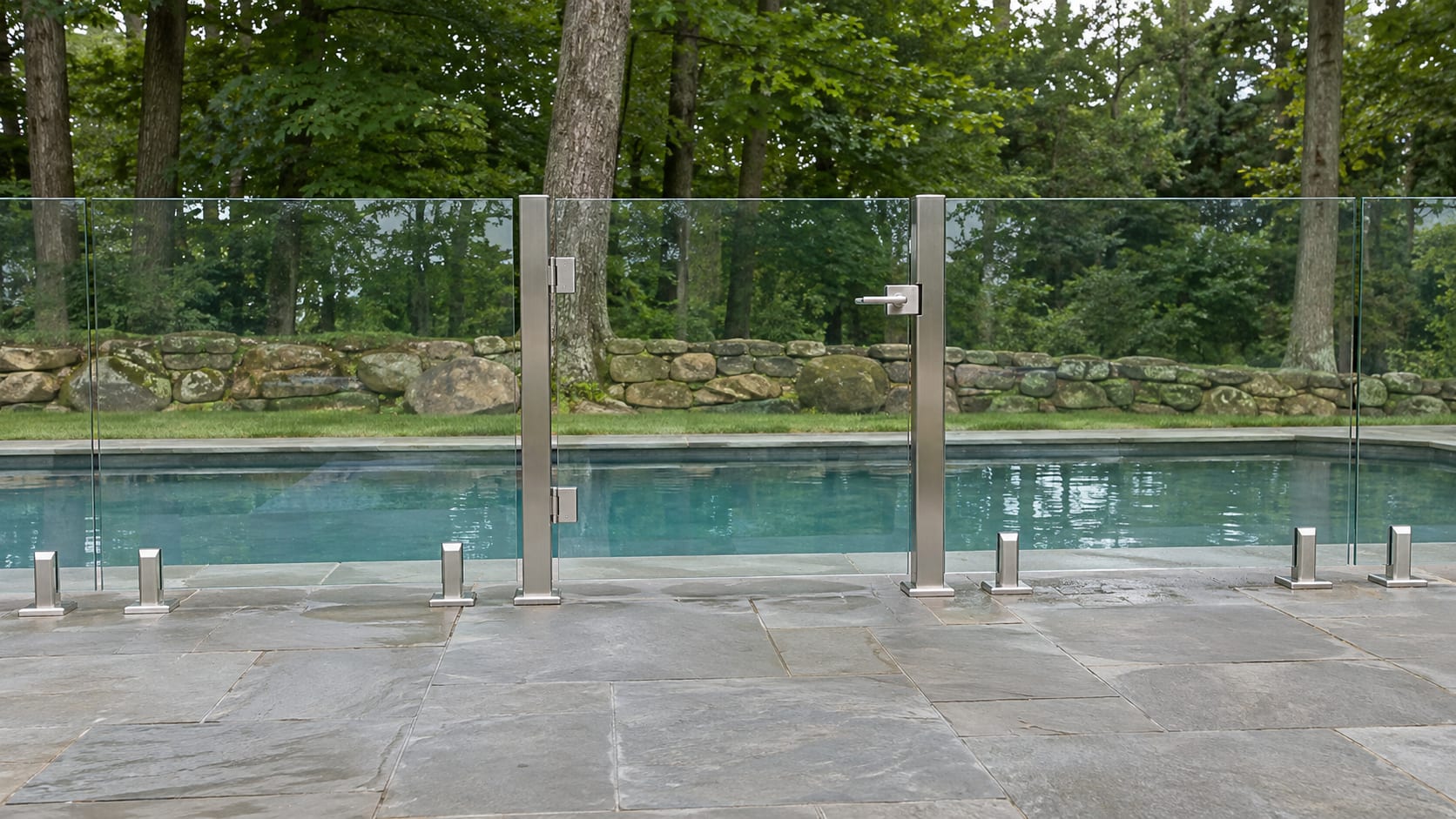
National 2026 installed prices for a pool fence run about $10 to $30 per linear foot for removable mesh, $30 to $45 for aluminum or vinyl, $50 to $85 for wrought iron and $120 to $500 for tempered glass panels. Your actual price depends first on measured barrier length, then on gates, ground conditions, concrete or masonry, removal, permits and the barrier layout required for your pool.
For a western Connecticut project, use a dated national range as a planning number, not as a contractor quote. The town must approve the permit path, and the finished design must meet Connecticut pool-barrier rules.
Key Takeaways
Starting number
Measure the full barrier route in linear feet before comparing prices.
Lowest national range
Removable mesh is reported at $10 to $30 per linear foot installed in 2026.
Aluminum range
Aluminum is reported at $30 to $45 per linear foot installed nationally in 2026.
Code height
A residential pool barrier must generally be at least 48 inches above grade.
Gates
Pedestrian gates must open away from the pool, close by themselves and latch securely.
Local approval
Building, zoning, wetlands and health requirements depend on the town and property.
The national cost ranges you can use for planning
HomeGuide's 2026 national installed-cost ranges put removable mesh at $10 to $30 per linear foot, aluminum at $30 to $45, vinyl at $30 to $45, wrought iron at $50 to $85 and tempered glass panels at $120 to $500 per linear foot. These figures include installed pricing in the national guide, but they are not Connecticut contractor quotes.
Angi's 2026 national material ranges are presented differently because its table separates material from labor. It reports mesh at $7 to $10 per linear foot, vinyl at $15 to $40, wrought iron at $20 to $35 and tempered glass at $100 to $600 per linear foot. Use those figures as material comparisons, not as a complete installed price.
Hover or tap a row to highlight it.
| Pool-fence type | National installed cost |
|---|---|
| Removable mesh | $10 to $30 per linear foot |
| Aluminum | $30 to $45 per linear foot |
| Vinyl | $30 to $45 per linear foot |
| Wrought iron | $50 to $85 per linear foot |
| Tempered glass panel | $120 to $500 per linear foot |
The first calculation is simple:
> Measured barrier length multiplied by the selected installed price range, plus separate costs for gates, removal, difficult excavation, permits and restoration.
For example, 100 linear feet of aluminum at the national 2026 range equals approximately $3,000 to $4,500 before separate project additions. One hundred linear feet of removable mesh equals approximately $1,000 to $3,000. A glass system at 100 linear feet equals approximately $12,000 to $50,000.
The price can change when the fence has several corners, a narrow passage, a sloped route or a gate at each access point. Concrete pool decks may require surface-mounted hardware or core drilling. Rocky soil or ledge can change post installation and excavation time. An old fence may add removal and disposal costs.
What Connecticut requires from the barrier
The 2022 Connecticut State Building Code applies to permit applications filed from 2022 onward and adopts the 2021 International Swimming Pool and Spa Code. The residential pool-barrier provisions generally require a barrier at least 48 inches high, measured from the side facing away from the pool. The space below the barrier must be no more than 2 inches from grade, and openings must not allow passage of a 4-inch-diameter sphere.
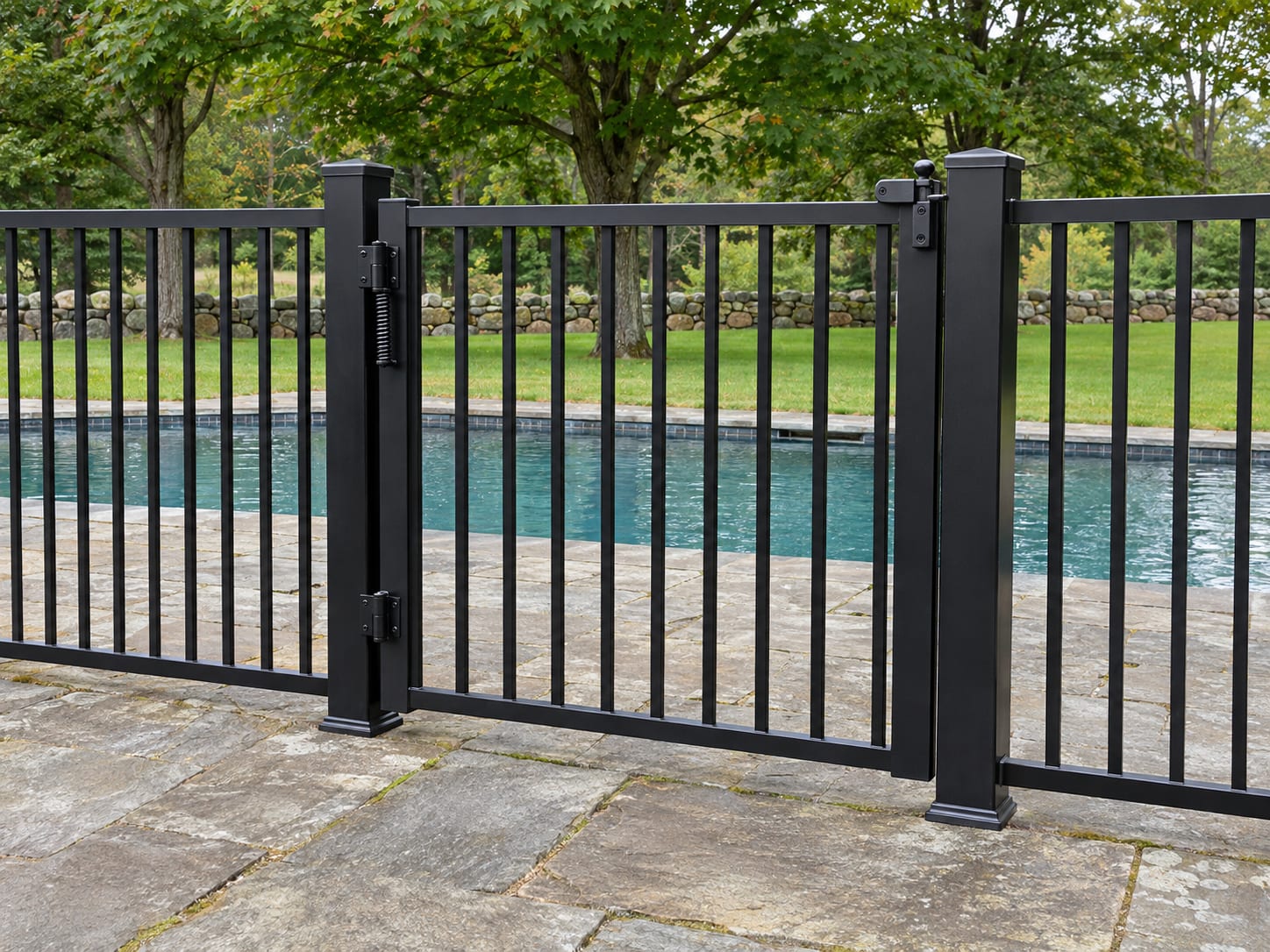
The barrier also needs a layout that prevents climbing. Permanent structures, equipment and similar objects cannot be placed where they can be used to climb over the barrier. This matters when a pool fence runs beside a deck, retaining wall, shed, ladder, patio furniture area or raised planting bed.
A pedestrian gate must open outward, away from the pool. It must be self-closing, have a self-latching device and accommodate a locking device. The location of the release hardware affects the allowed openings near the release.
A house wall can form part of the barrier in some designs, but the doors with direct access to the pool need an approved safety arrangement. Options include an audible UL 2017-listed door alarm, a compliant power safety cover or self-closing and self-latching doors with the release mechanism at least 54 inches above the threshold. The town building official should confirm the proposed configuration before installation.
Above-ground pools have additional details. A barrier mounted on the pool structure may have no more than 4 inches between the pool structure and the bottom of the barrier. The ladder or steps also need a compliant barrier when the pool structure serves as the barrier.
Connecticut General Statutes §29-265a requires a pool alarm for a residential swimming pool construction or substantial alteration before a building permit can be issued. The statutory water-entry alarm must emit at least 50 decibels when a person or object weighing 15 pounds or more enters the water. This water-entry alarm is separate from the door-alarm option used when a house wall forms part of the barrier.
Read the earlier explanation, Connecticut Pool Fence Requirements: Height, Gates and Permits, when you are comparing a new barrier with an existing one. An above-ground pool may have a different layout question, so Does an Above-Ground Pool Need a Fence in Connecticut? is useful for that situation.
How the yard changes the price
The measured footage is the starting point, but the route itself determines much of the installation work. A short, straight fence on open soil is priced differently from a longer route around a pool deck with several gates and changes in grade.
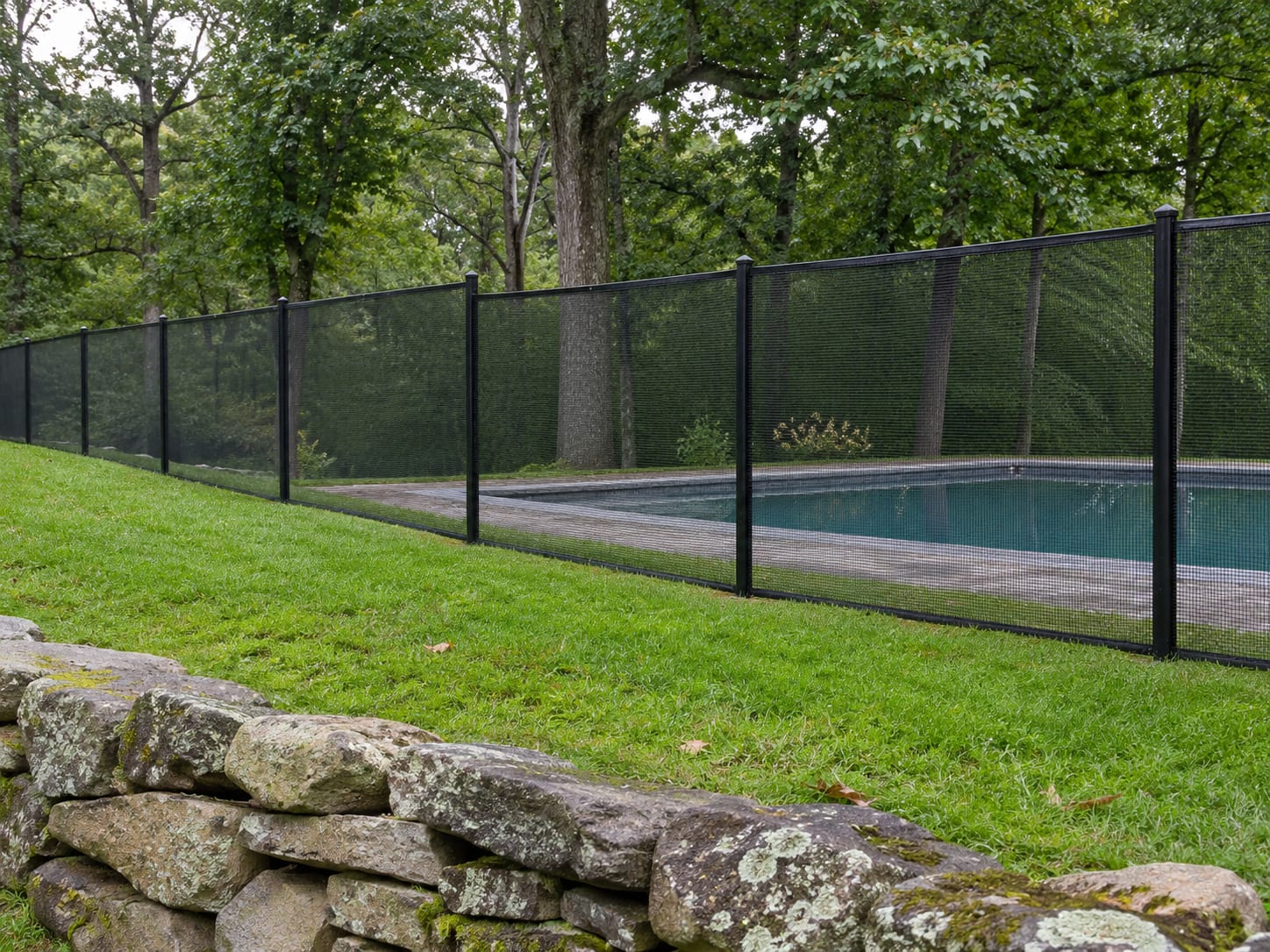
A sloped yard may require stepped sections, a racked panel system or extra layout work to keep openings within the required limits. In western Connecticut, ledge can affect footing depth and post placement. If excavation meets rock, the quote should identify whether the work includes drilling, removal or a revised anchoring method.
Concrete and masonry need their own line item. Ask whether posts will be core-drilled, surface-mounted or attached with another approved anchoring method. The same question applies to a retaining wall or a deck that forms part of the barrier.
The pool shape affects the number of posts, corners and transitions. A fence with several direction changes usually takes more layout and hardware than a simple rectangle. Each pedestrian gate adds hardware and installation work. The gate width and location should appear on the plan.
An old barrier can add demolition, footing removal and disposal. If the old fence damaged a deck, masonry surface or retaining wall, ask for repair pricing separately. Drainage, roots, boulders and access for delivery equipment can also change the work.
My Fence Guy can prepare a written quote around measured footage, the selected material, the gate hardware and the actual site conditions. Ask for the price per linear foot and the total project price, with gates, demolition, difficult digging, permits and optional work listed separately.
Permits and town rules
Connecticut uses local permitting and zoning procedures in addition to the statewide building-code barrier requirements. Start by asking the town Building Department whether the fence requires a building permit, whether the pool permit covers the barrier and what inspection is required. Do You Need a Permit for Fence Installation in CT? explains the broader permit process.
Then contact Planning and Zoning about fence height, setbacks, property-line placement and zoning approval. If the work is in or near wetlands or a watercourse, contact the town Inland Wetlands agency. If the property uses septic or the town requires health review for the pool, ask the Health Department what information is needed.
The fee and approval path can change from one town to another:
- Danbury's 2025 permit-price list states that a pool permit costs a $100 application fee, including the first $1,000 of construction value, plus $16 for each additional $1,000 or part thereof. Ask the Permit Center whether the fence has a separate permit or zoning charge.
- Brookfield states that fences under 7 feet do not require a permit, while fences taller than 7 feet require a building permit. That is a Brookfield rule, not a statewide pool-fence exemption. Its zoning fee schedule lists $350 plus a $60 state fee for construction of an outbuilding or swimming pool on a lot with an existing house.
- Ridgefield states that pools and fences may require a zoning permit, building permit or both. Its process can involve Planning and Zoning, Building, Inland Wetlands, Historic District and Health Department approvals.
- Newtown's pool permitting package calls for survey information showing structures, property lines, watercourses, wells, septic areas and setbacks.
- New Milford's Building Department reviews plans for code compliance, determines required inspections and performs the required permit work.
Before the fence is installed
- 1
Measure
Confirm the pool dimensions and measure the proposed barrier route in linear feet.
- 2
Review the site
Mark decks, house walls, retaining walls, septic areas, wells, wetlands, slopes and existing fence sections.
- 3
Call the town
Ask Building, Planning and Zoning, Inland Wetlands and Health whether separate approvals apply.
- 4
Call 811
Submit an 811 or E-Ticket request at least two full working days before planned digging.
- 5
Confirm the design
Review height, openings, gates, alarms and any house-wall or pool-structure connection with the building official.
- 6
Install and inspect
Complete posts, panels, gates and hardware, then follow the town's inspection process.
What to ask about insurance
A pool adds personal-liability exposure because someone can be injured in or around it. The Connecticut Insurance Department advises pool owners to comply with state code, including a surrounding fence, and to review personal-liability limits with their insurance professional. The Insurance Information Institute recommends notifying the insurer, reviewing liability limits and using a fence with self-closing gates or another barrier on all sides of the pool.
Policy requirements vary by insurer. Ask whether your policy requires a compliant barrier, self-closing and self-latching gates, a pool alarm, house-door alarms, a safety cover, inspection records or increased liability limits. Also ask whether the insurer wants proof of permits or inspections.
A pool can affect the premium, but the amount depends on the policy, insurer, property, pool, liability limits and other underwriting factors. Ask the insurer before installation so the fence design and alarm plan match the policy requirements.
The water-entry alarm required by Connecticut law is separate from a door alarm used when a house wall forms part of the barrier. A powered safety cover does not replace the required barrier under the 2024 state legislation.
What a written quote should show
A useful pool-fence quote should let you compare complete projects. It should identify the measured linear footage, material, height, finish, post type, panel or mesh specification and gate locations.
Ask the contractor to show a scaled layout with the pool, fence line, gates, house walls, decks, retaining walls and other parts of the barrier. The quote should explain how the design meets Connecticut barrier requirements, including opening sizes, gate swing, self-closing operation, self-latching hardware and locking provisions.
The installation details should cover post spacing, footing or anchoring method and expected excavation depth. It should state whether concrete or masonry requires surface mounting or core drilling. Ask how the price handles slopes, ledge, rocks, roots and drainage.
The contract should separate material, labor, delivery, disposal and tax costs. It should also show separate prices for gates, old-fence removal, difficult digging, permits and optional work. Include the start date, completion date, payment schedule, warranty terms and change-order procedure.
Connecticut's Department of Consumer Protection says a home-improvement contract must identify the contractor and registration number, signatures, contract and cancellation dates, start and completion dates, the complete agreement and price. It also recommends stating material quality or brand, cleanup responsibility, permit responsibility and payment schedule.
Use Pool Fence Materials Compared: Aluminum, Mesh, Glass and Vinyl when you are deciding between mesh, aluminum, vinyl and glass. If you are comparing the project with other residential fence work, How Much Does a Fence Cost in Connecticut? What Drives the Price puts the pricing categories in context.
Frequently Asked Questions
What is the average cost of a pool fence?
The national 2026 average reported by HomeGuide is $7,800, with a typical installed range of $2,000 to $13,500 for 200 to 300 linear feet. For your Connecticut budget, multiply measured footage by the selected national installed range, then add gates, removal, difficult excavation, permits and site repairs.
What is the cheapest way to fence a pool?
Removable mesh is generally the lowest-cost listed material, with a national 2026 installed range of $10 to $30 per linear foot. The complete price still depends on required height, openings, anchoring, gates, concrete drilling, ledge, removal and local approvals.
How much does an aluminum pool fence cost?
HomeGuide reports a national 2026 installed range of $30 to $45 per linear foot for aluminum. At that range, 100 linear feet costs approximately $3,000 to $4,500 before separate gates, permits, removal and site-work charges.
Does homeowners insurance require a fence around a pool?
Some policies may require a compliant fence or other safety measures for coverage or renewal. Ask your insurer whether it requires a four-foot barrier, self-closing and self-latching gates, alarms, a safety cover, inspection records or higher liability limits.
Does a pool raise homeowners insurance?
A pool can affect liability coverage and premiums because it adds a source of injury risk. Ask your insurance professional about the pool, barrier, alarms, personal-liability limits and umbrella coverage before work begins.
How much does it cost to have 100 feet of fence installed?
Using HomeGuide's 2026 national installed ranges, 100 feet costs approximately $1,000 to $3,000 for removable mesh, $3,000 to $4,500 for aluminum or vinyl, $5,000 to $8,500 for wrought iron and $12,000 to $50,000 for tempered glass. These figures should be adjusted for gates, permits, old-fence removal, concrete, ledge, slopes and restoration.
Pool Fence Cost and Code Check
1. What is the national 2026 installed range for aluminum pool fencing?
2. How high must a residential pool barrier generally be?
3. Which material has the lowest listed national installed range?
4. What must a pedestrian pool gate do?
5. How long before planned digging should you submit an 811 or E-Ticket request?
Pick an answer to begin.
Final Thoughts
A pool-fence price starts with measured footage, but the finished project depends on the barrier route, gates, materials, ground, concrete, existing structures, permits and inspection requirements. Ask the town and insurer about their requirements before ordering materials, then compare written quotes that separate the linear-foot price from every added cost.
When the quote shows the layout, gate hardware, anchoring method, site work, approvals and contract dates, you can compare the work on the same terms. Call us at (203) 746-1100 for a free estimate, or reach out through our contact page.
Pool Fence Cost and Permit Terms
Tap a term to see what it means.
Linear foot. One foot of measured fence length used to calculate many installed prices.
More about fences
Connecticut Pool Fence Requirements: Height, Gates and Permits
Connecticut pool fence requirements under the 2022 State Building Code: 48-inch height, gaps, self-closing and self-latching gates, alarms and town permits.
Read the guide to Connecticut Pool Fence RequirementsDoes an Above-Ground Pool Need a Fence in Connecticut?
Above-ground pools in Connecticut: when the pool wall counts as the barrier, the 24-inch water depth rule, ladders and decks, and when a permit applies.
Read the guide to Does an Above-Ground Pool Need a Fence in Connecticut?Pool Fencing in Southbury, CT: Code, Gates, and Child Safety
The gate is what fails an inspection. Pool fencing in Southbury, CT: self closing hardware, latch height, the 4 inch rule, and clearance underneath.
Read the guide to Pool Fencing in Southbury, CT