
Invisible Dog Fence vs a Physical Fence: Which Holds Your Dog?
By Tony Pellicone13 min readPublished
- pet fencing
- homeowner guide
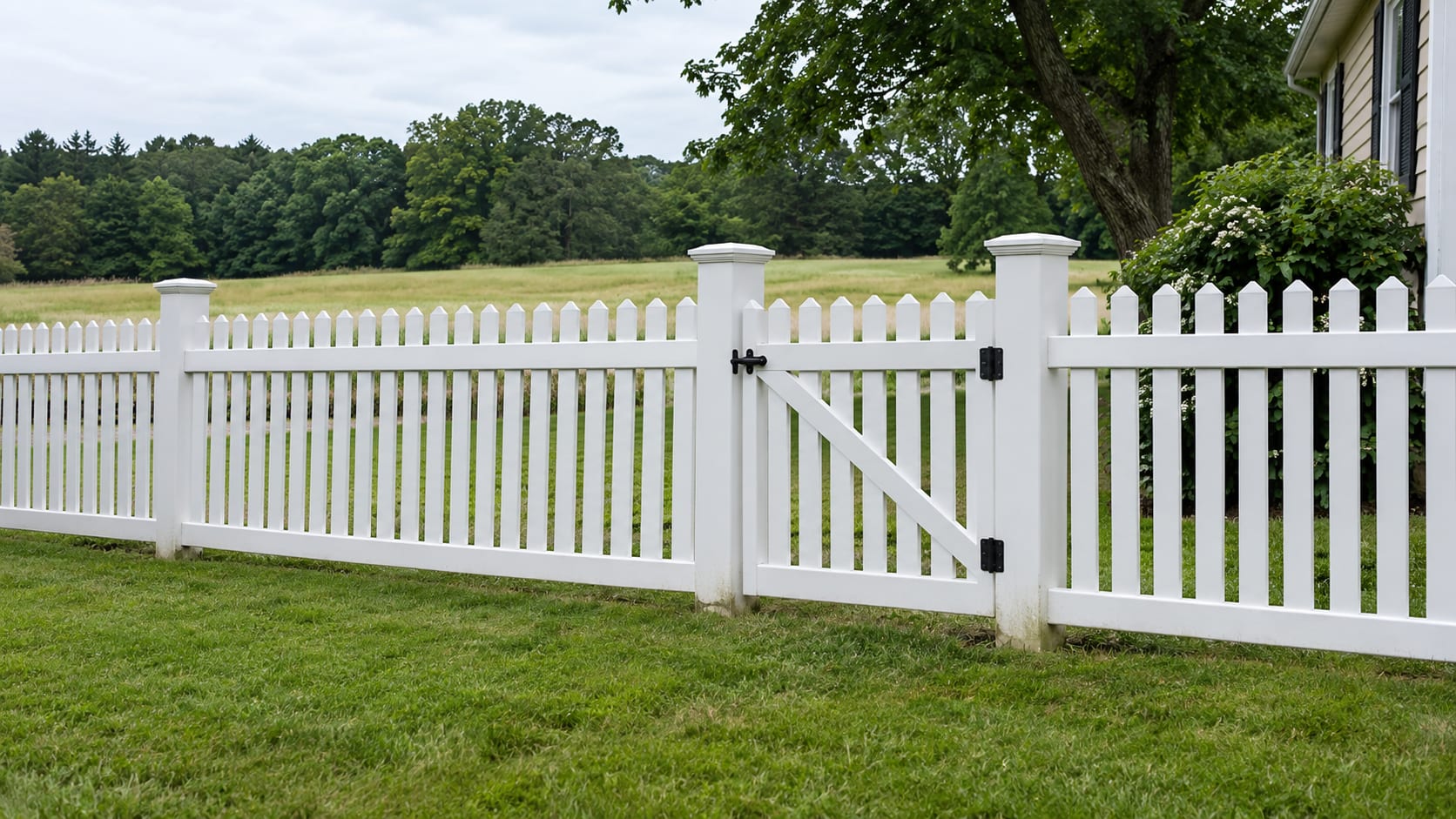
A physical fence is the better choice when your dog must stay away from a road, livestock, wildlife or visitors, because it blocks the dog and keeps people and animals out.
An underground, wireless or GPS system may cost less and fit a yard where posts are difficult, but it depends on training, power, batteries, collar fit and the dog’s willingness to stay inside the boundary.
The right choice depends on what you need to prevent, how your dog reacts to distractions, and how the boundary fits the property. A combined approach can work well, such as a physical fence near a road or pool with electronic containment in another part of the yard.
Key Takeaways
Physical barrier
A fence blocks your dog from leaving and helps keep people and animals out.
Underground system
Buried wire creates a custom boundary, but the collar and wire must work.
Wireless system
An indoor transmitter creates a circular boundary that may cross a road or neighboring property.
GPS system
A collar compares the dog’s location with a virtual boundary and may include tracking.
Training
Flags, leash work, supervision and maintenance are required for electronic containment.
Connecticut law
Connecticut General Statutes § 22-364 still applies if your dog roams without control.
Start With What Must Be Prevented
If your main concern is keeping the dog away from a public road, another property, livestock or wildlife, start with a physical barrier. A visible fence gives you a defined gate, a fixed line and a structure your dog cannot cross simply because a battery is low or a signal is interrupted. It also keeps stray dogs, coyotes, deer, trespassers, children and other people from entering the yard.
An invisible system marks a boundary for the dog wearing the receiver collar. It is not a physical barrier. VCA Animal Hospitals identifies the lack of protection against outside people and animals as a major limitation of electronic containment. The system also does not replace a leash outside the containment area, identification tags, a microchip, supervision or a plan for equipment failures.
A physical fence has limits of its own. Dogs can jump, climb, dig, squeeze through gaps, push through weak gates or chew vulnerable materials. The fence must match the individual dog, not a standard height chosen without looking at the dog’s behavior. For a broader comparison of dog-friendly fence choices, see the best fence for dogs. For one western Connecticut town’s look at physical fences, underground systems and gates for pets, read pet fencing in Brookfield, CT.
Your property also affects the choice. A steep slope or ledge can make post installation more involved. A wet area can change where a physical fence can be placed. Deer pressure or a road close to the property line may make a visible barrier more useful than an electronic boundary.
How the Three Electronic Systems Work
Underground boundary wire
An underground system uses a buried boundary wire connected to a transmitter. The receiver collar detects the signal as the dog approaches the wire. The collar normally gives an audible warning before vibration or static correction.
The boundary wire can follow a custom shape around a house, driveway, garden, pool or other area that should be excluded. That control is the main advantage over a wireless system. The tradeoff is installation work, including marking the route, burying or securing the wire, testing the loop and maintaining it after landscaping or excavation work.
The dog must be introduced to the boundary gradually. Flags mark the line, leash work helps the dog learn the warning area, and supervised practice teaches the dog how to respond. Training should continue until the dog understands the boundary in ordinary conditions and around common distractions.
A cut wire, damaged connection, dead collar battery or transmitter power loss can make the system unreliable. If the dog crosses the line, the system may not prevent re-entry. VCA notes that re-entry behavior differs by system, and some dogs may hesitate to return after receiving a correction.
Wireless radio boundary
A wireless system replaces the buried wire with an indoor transmitter that broadcasts a circular radio boundary. PetSafe describes a warning tone followed by correction if the dog continues toward the boundary.
Installation is easier because there is no boundary wire to bury. The limitation is the shape. The boundary is centered on the transmitter and can cross a driveway, road or neighboring property. Moving the transmitter changes the circle, so the usable yard may not match the property line.
A wireless system may fit a relatively open property where the entire circle stays inside the owner’s yard. Before buying, mark the proposed circle on a property sketch and check its distance from roads, neighboring parcels, water and other hazards.
GPS virtual boundary
A GPS system uses a collar to locate the dog and compare its position with a virtual boundary created through an app. Depending on the product, it may provide tracking, multiple boundaries and keep-out zones.
SpotOn describes a warning around 10 feet from the boundary, a faster warning at about 5 feet, and optional vibration or static correction at the boundary. Those details are product-specific. GPS performance can be affected by satellite reception, trees, terrain, collar fit, battery life and, for some products, cellular service.
GPS may suit a large or irregular property where burying wire would be difficult. It still requires a charged collar, accurate location data, training and a plan for service or equipment failures.
Hover or tap a row to highlight it.
| System | Boundary shape | Main installation issue | Main operating issue |
|---|---|---|---|
| Underground | Custom shape set by buried wire | Wire installation and testing | Cut wire, power loss or dead battery |
| Wireless | Circle centered on indoor transmitter | Finding a safe transmitter location | Circle may cross a road or neighboring property |
| GPS | Virtual boundary created in an app | Mapping and setup | Location accuracy, battery and possible cellular service |
Training and Welfare Matter as Much as the Equipment
Electronic containment can work for some dogs with proper installation and training, but it does not work equally well for every dog. Puppies, dogs with strong prey drive, fearful dogs, dogs that ignore corrections and dogs that repeatedly charge a boundary may be poor candidates.
The Starinsky, Lord and van de Wetering study surveyed 1,053 dogs. Owners reported escapes for 44.0% of dogs confined with electronic fencing, compared with 23.3% for dogs confined with see-through or privacy fencing.
It was an owner survey rather than a controlled trial, so the figures do not predict the result for every dog or system. Still, they support treating electronic containment as a system that needs careful training and maintenance, not as a set-and-forget boundary. The study is available through PubMed.
The Australian Veterinary Association’s 2022 policy says collars designed to cause pain, discomfort or fear should not be used unless an invisible containment system increases the animal’s safety and overall welfare. It recommends visible boundary markers and owner monitoring during training. VCA says some dogs may become fearful, agitated or reluctant to return outdoors.
If your dog shows yelping, neck irritation, fear, repeated boundary charging, aggression or reluctance to go outside, stop relying on the system alone and consult a veterinarian or qualified behavior professional. The Australian Veterinary Association policy on behavior-modifying collars and AVMA animal welfare guidance provide useful welfare context.
Training does not solve every containment problem. A dog may cross when chasing wildlife, reacting to fear, pursuing a person or another animal, or responding to a strong environmental stimulus. VCA says a highly motivated dog may ignore the correction.
Designing a Physical Fence for the Dog You Have
Jumping and climbing
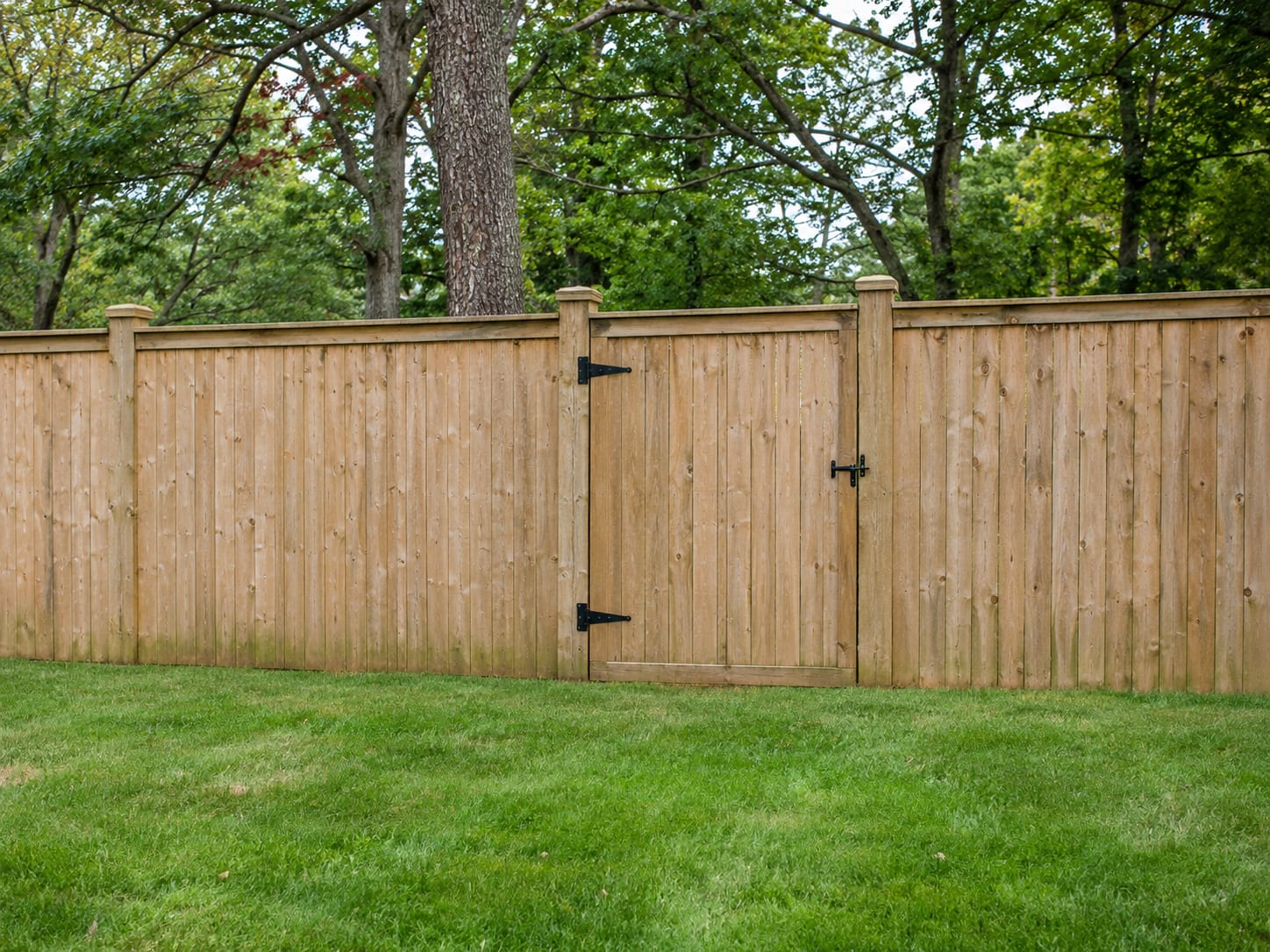
For a jumper, use a fence tall enough for the dog’s size and actual jumping ability, with a gate that is equally secure. A solid privacy fence can reduce visual triggers, but it must not create footholds. Avoid horizontal rails, stacked materials, nearby objects and landscaping that help the dog climb.
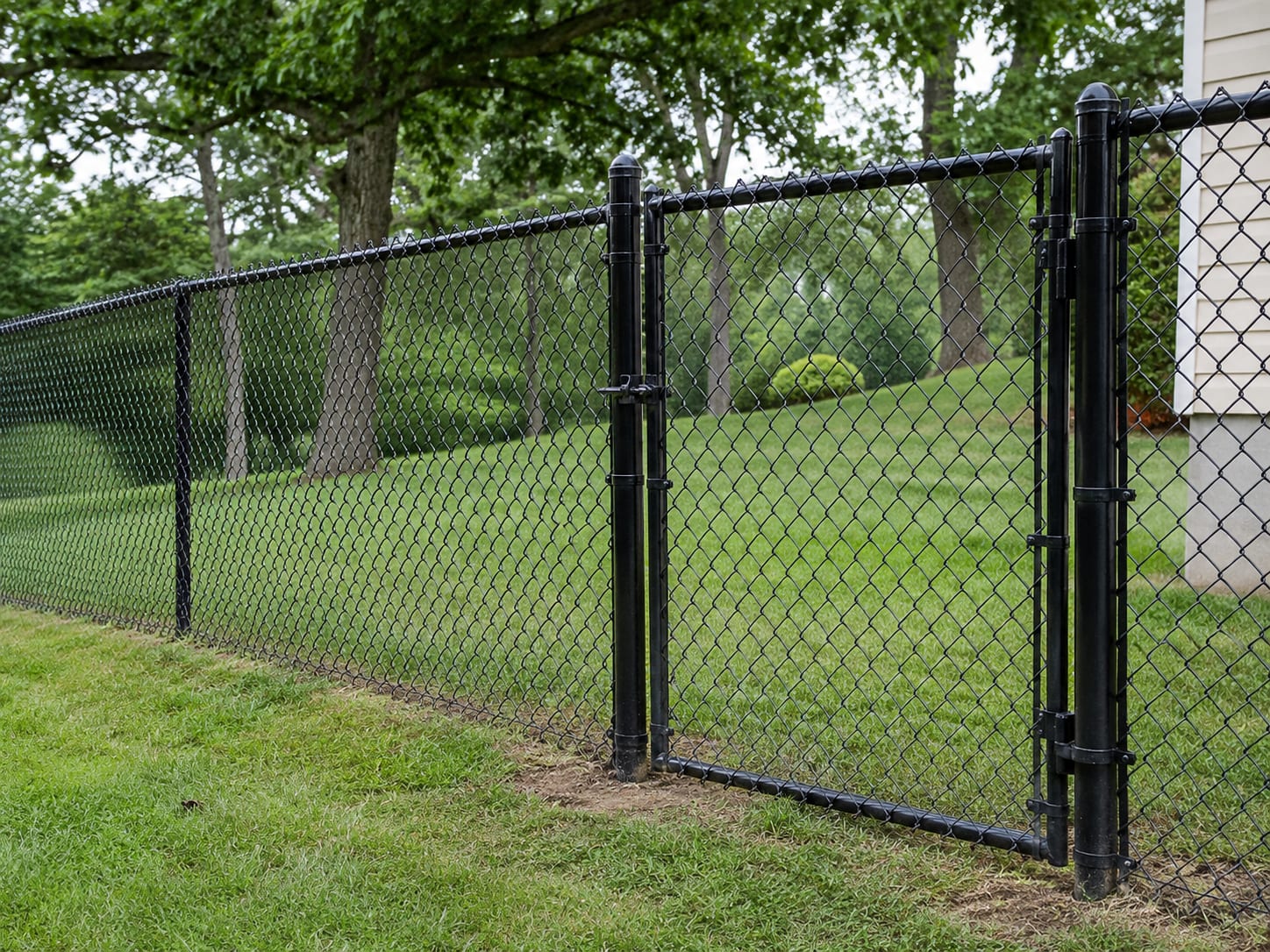
For a climber, use a smooth face or closely spaced vertical pickets without footholds. Some dogs can climb chain link. A top extension, inward-sloping coyote roller or another dog-specific change may be needed. Gates should have protected hinges and latches the dog cannot manipulate. See gate hardware, hinges, latches and locks before choosing gate hardware.
A contractor should evaluate the dog’s actual jump height and behavior rather than rely on one universal fence height. Fence height is only one part of the design. The gate, corner details, nearby objects and grade changes matter too.
Digging, squeezing and chewing
For a digger, extend the physical barrier below grade or add an anti-dig apron. The Humane Society recommends burying the bottom of a fence 1 to 2 feet, burying chicken wire with sharp edges rolled away from the dog, placing partially buried rocks or anchoring chain link flat on the ground. The right choice depends on soil, roots, drainage, ledge and the dog’s digging behavior.
For a dog that squeezes through openings, use mesh or picket spacing that prevents the dog’s head and body from passing through. Check the bottom of gates and panels where slopes or erosion can create gaps.
For a dog that chews, use materials and details that cannot be easily damaged or swallowed. Metal mesh, chain link or a well-designed solid fence may be better than exposed soft materials. Read how to stop a dog digging under a fence for additional ground-level planning.
A dog with high prey drive or a history of escaping may need a physical fence, supervised training, a secure dog run or a combined approach. Coyote-resistant fencing for dogs in Connecticut is a useful next step when wildlife is part of the problem.
A Practical Containment Plan
- 1
Assess the dog
Record jumping, climbing, digging, chewing, squeezing and chase behavior.
- 2
Map the property
Mark roads, driveways, neighboring land, pools, wetlands, gates and areas the dog must avoid.
- 3
Choose the boundary
Select a physical fence, underground wire, wireless circle, GPS boundary or a combined design.
- 4
Train and test
Use flags, leash work and supervised sessions for electronic systems, or inspect gaps and gates for a physical fence.
- 5
Maintain the system
Check batteries, collar fit, wire, power, gates, latches, posts and ground-level gaps.
Connecticut Responsibility and Local Questions
Connecticut General Statutes § 22-364 applies to the owner or keeper’s control of the dog, not to one particular fence type. The statute states:
> “No owner or keeper of any dog or livestock as defined in section 22-381 shall allow such dog or livestock to roam at large upon the land of another and not under control of the owner or keeper or the agent of the owner or keeper, nor allow such dog or livestock to roam at large on any portion of any public highway and not attended or under control of such owner or keeper or an agent of such owner or keeper…”
The statute further provides that unauthorized presence on another person’s land or on a public highway while the dog is not attended or under the owner’s or keeper’s control is prima facie evidence of a violation. A violation of subsection (a) is an infraction. Read the official Connecticut General Statutes section 22-364.
An underground wire, wireless boundary or GPS collar does not remove that responsibility if the dog leaves the property and is not under control. A physical fence does not remove it if the dog escapes through a gate, gap or damaged section. For a specific dispute, speak with a Connecticut real estate attorney.
Fence rules are set by each town, so ask the town zoning or building office about approvals before ordering materials, and review the statewide permit overview for fence installation in Connecticut. Ask whether the project needs zoning approval, a zoning permit, a survey, a setback, height compliance, sightline review or a building permit.
Bring the property address and a sketch or survey showing the fence line, height, material, gates, driveway entrances, nearby roads, wetlands, streams, pools, retaining walls and house location. Ask whether the property is in a historic district, floodplain or inland wetlands jurisdiction. The responsible office depends on the town and the project.
Call Connecticut Call Before You Dig before digging for posts or underground wire. Public marking may not cover private utility lines, so ask how those lines should be located.
If you hire a contractor, put the material, height, post and footing details, gate hardware, fence location, removal work, permit responsibility, dates, price, payment schedule, warranty, cleanup and change-order process in writing. Connecticut’s Department of Consumer Protection provides home improvement contracting information.
Cost: Invisible Systems Usually Start Lower
National figures give you a comparison point, not a Connecticut bid. Angi reports a 2026 national professional installation average of $1,600 per project, with most projects between $950 and $2,500, and underground wire at $2 to $4 per linear foot.
Angi’s separate 2026 dog-fence article reports an average invisible-fence project cost of $1,325 per project, or $2.50 per linear foot, including a collar, charger, voltage meter and batteries. The two Angi figures use different project assumptions.
Angi reports a national 2026 traditional dog-fence average of $4,700 per project, or $15 to $45 per linear foot. Its national material examples include wood at $1,000 to $4,500 per project, chain link at $1,500 to $4,000 per project, vinyl at $3,000 to $6,000 per project and aluminum at $4,500 to $6,000 per project.
A physical fence costs more at the start because it includes posts, panels or fabric, gates, footings and installation. It also supplies a visible barrier against entry and exit. An electronic system may involve replacement batteries, collars, repairs, power equipment, cellular service or a GPS subscription.
Connecticut pricing depends on linear footage, gates, height, material, slopes, ledge, access, removal and town requirements. A written estimate should state the unit, project scope, equipment, training, recurring costs, warranty and permit responsibilities. For physical dog-fence options, see pet fencing.
Hover or tap a row to highlight it.
| Option | Cost | Unit and source |
|---|---|---|
| Underground boundary wire | $2 to $4 | Per linear foot, Angi |
| Professional invisible fence | $950 to $2,500 for most projects | Per project, Angi |
| Traditional dog fence | Average $4,700 | Per project, Angi |
| Traditional dog fence | $15 to $45 | Per linear foot, Angi |
| Invisible fence, separate Angi estimate | Average $1,325 | Per project, Angi |
Frequently Asked Questions
Are invisible fences cruel?
They can cause fear or distress in some dogs, so the answer depends on the dog, collar settings, training, supervision and welfare result. The Australian Veterinary Association recommends visible markers and owner monitoring, and you should speak with a veterinarian or qualified behavior professional if your dog shows fear, pain, irritation or reluctance to go outside.
Do invisible fences work for all dogs?
No, they do not work equally well for all dogs. Dogs with strong prey drive, fear responses, poor recall or a history of ignoring corrections may cross the boundary, especially if chasing wildlife or reacting to a threat.
Is a wireless dog fence better than underground?
Neither is always better. Wireless systems are easier to install but create a circular boundary centered on the transmitter, while underground wire can follow a custom shape around roads, buildings, gardens and other hazards.
Can a dog run through an invisible fence?
Yes, a dog can run through one because of prey drive, fear, poor training, an incorrect collar fit, a dead battery, a cut wire, power loss, wireless signal changes or GPS location error. Use a leash or temporary physical enclosure while you check the system and reassess the containment plan.
Which is cheaper, invisible fence or regular fence?
An invisible fence is usually cheaper at initial installation, with national figures of $950 to $2,500 for most professional invisible-fence projects. A traditional dog fence averages $4,700 per project nationally, but the physical fence provides a barrier against both escape and entry.
Test Your Fence Decision
1. Which system creates a custom boundary around a driveway or garden?
2. What can a wireless boundary do if the transmitter is poorly located?
3. Which measure helps a dog that digs under a fence?
4. What should you check before digging for posts or underground wire?
5. What does Connecticut General Statutes § 22-364 address?
Pick an answer to begin.
Final Thoughts
Choose the containment method based on the dog, the property and the consequence of escape. A physical fence is the stronger choice when you need a barrier against both leaving and entering. Underground, wireless and GPS systems can fit particular properties, but they require training, supervision, working equipment and a backup plan.
My Fence Guy can help you compare a written physical-fence scope with the site conditions, gate needs and dog-specific details that affect the result. Call us at (203) 746-1100 for a free estimate, or reach out through our contact page.
Dog Fence Terms
Tap a term to see what it means.
Physical fence. A visible barrier made from materials such as wood, vinyl, aluminum or chain link.
More about fences
Split Rail Fence With Wire Mesh: Uses, Costs and How It Is Built
A split rail fence with wire mesh keeps dogs in and keeps the rustic look. Wire types, attaching mesh, cedar or pine rails, post depth, heights and costs.
Read the guide to Split Rail Fence With Wire MeshChoosing the Best Fence for Your Dog
Choose a fence for your dog by how it jumps, digs, climbs and chews. Heights by behavior, dig guards, gate latches, materials and invisible fences compared.
Read the guide to Choosing the Best Fence for Your DogGate Hardware: Choosing Hinges, Latches and Locks
Pick gate hinges, latches and locks by the gate's weight, width and job. See load ratings, pool latch rules, corrosion-resistant finishes and 2026 prices.
Read the guide to Gate Hardware