
Ornamental Fencing in New Fairfield, CT: Picking a Style
By Tony Pellicone21 min readPublished
- ornamental fencing
- new fairfield ct
- aluminum fencing
- connecticut
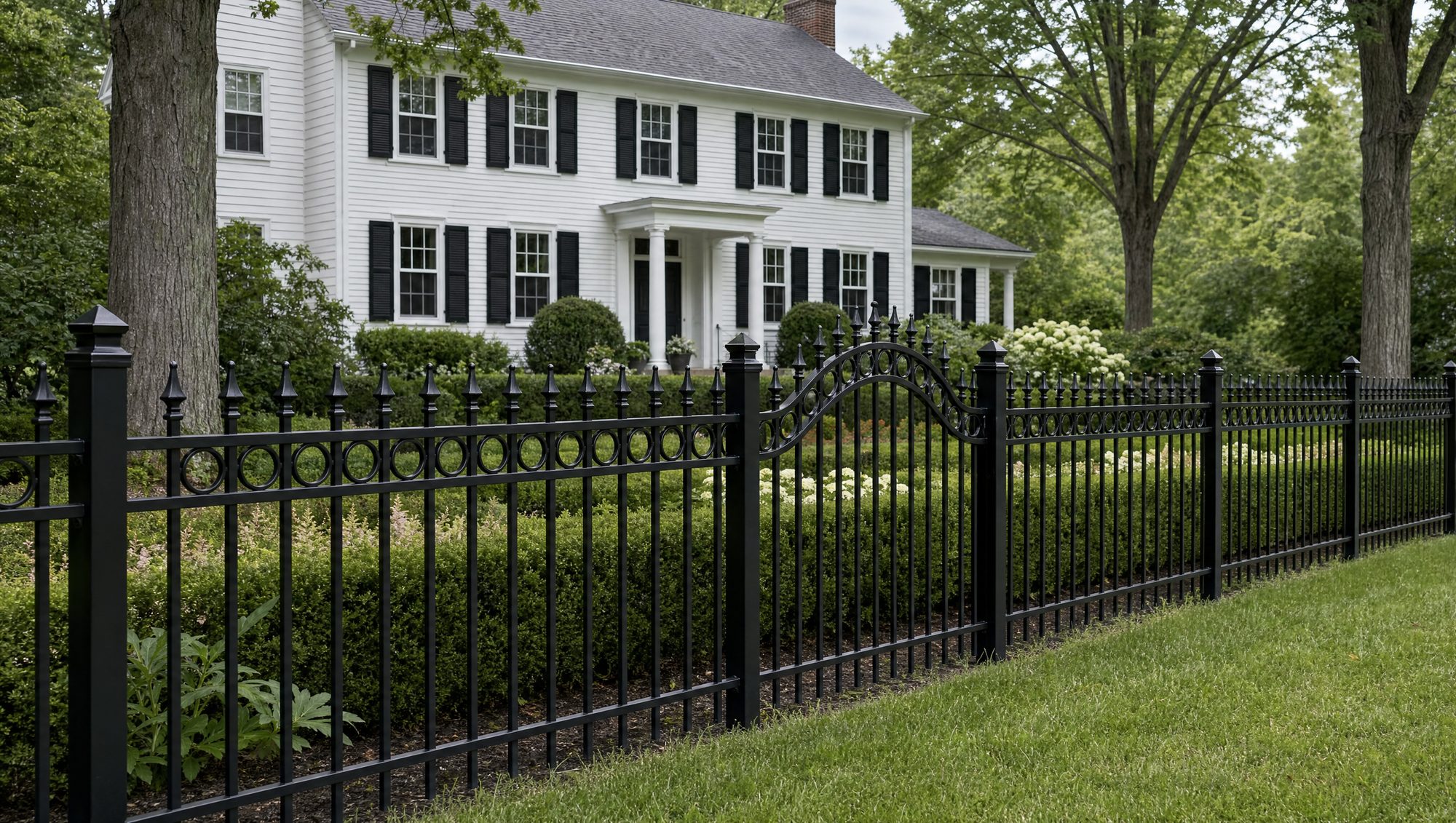
The catalog is where most ornamental fence projects quietly go sideways. You start looking into ornamental fencing in New Fairfield, CT, and what you get is page after page of black panels with names like Classic, Heritage, Regency, and Estate, every one of them photographed on the same anonymous lawn. They read as variations on a single fence. They are not. One will look like it has always belonged in front of your house, a couple will look like something a builder grabbed in a hurry, and nothing on the page tells you which is which. That gap is a design problem rather than a materials problem, and it is the part almost nobody walks you through before the concrete goes in. The vocabulary behind it is small, though. Here is what the design decisions actually are, and how a New Fairfield property should be the one making them.
Key Takeaways
Ornamental names a shape, not a metal
The word describes an open panel of vertical pickets between horizontal rails, which is why two very different products both get called ornamental.
Spacing and rail count do the quiet work
Picket gaps and whether a panel carries two or three rails set the rhythm and proportion long before a finial gets involved.
A finial repeats down the entire run
Decorative tops are not accents, they are the texture of the whole fence, so restraint usually reads as more expensive than ornament does.
Arches and scrollwork are entrance events
A rising or scalloped panel belongs at a gate or a feature section, and the long boundary runs should get quieter.
Style has to clear the rules and the grade
New Fairfield's height and pool rules, corner sight lines, zoning, and the slope of the yard all edit a design before it gets built.
What Does "Ornamental" Actually Mean on a Fence?
Ornamental is the one word in this business that describes a drawing rather than a product. It refers to an open panel built from vertical pickets running between horizontal rails, with the decorative work concentrated at the tops of the pickets, the caps of the posts, and the occasional flourish in between. There is a real standard behind the category, since ASTM F2957 sets minimum requirements for architecturally coated tubular-picket ornamental fence systems. What matters for you is narrower. When someone says ornamental, they have described the geometry and told you nothing at all about the look.
Ornamental Names a Shape, Not a Metal
The wrought iron fence New Fairfield homeowners ask for is almost always a description of a style. True wrought iron is a traditional forged material with very low carbon content, and it is uncommon in modern residential fence systems. Most of what gets sold in that visual language today is an ornamental metal fence New Fairfield properties wear well, built in either aluminum or steel and coated with modern methods to produce a similar traditional appearance.
Which metal you use, at which grade, is a separate conversation worth having with your contractor in writing. It is not the conversation that decides whether your fence looks right. A beautifully specified panel in the wrong style is still the wrong fence.
The Parts You Are Actually Choosing Between
Strip away the product names and the menu is short. Nearly every decorative fence New Fairfield homeowners consider is some arrangement of the same handful of parts:
- Pickets: The vertical members, whose size and spacing set the density of the whole run.
- Rails: The horizontal members holding the pickets, usually two or three per panel.
- The top line: Whether the pickets stop at the top rail or run past it, and whether the line is flat, arched, or scalloped.
- Finials: The decorative tips on pickets that extend above the top rail.
- Post caps: A quieter decision that shows up on every post you own.
- Rings and scrollwork: Optional decorative work set into the panel.
- Gates and columns: Where the design is allowed to become an event, in metal, masonry, or both.
Seven decisions. That is the entire language, and every catalog page is just a specific combination of them.
How Do Pickets and Rails Set the Character of a Run?
This part of the design operates below conscious notice, which is exactly why it decides so much. Nobody drives past your house and thinks about picket spacing. They register the fence as formal or relaxed, heavy or light, and never work out why. Spacing and rail count are doing almost all of that, and they are the two decisions people spend the least time on.
Picket Spacing Sets the Rhythm
Tighter gaps make a run read as denser, more formal, and more like a boundary you are meant to respect. Wider gaps let the yard through and read as lighter and more rural. The same panel style at two different spacings can suit two different houses. Spacing is not purely a taste question either, since it drives whether a small dog can slip through and whether a panel can serve as part of a pool barrier, so the decision usually gets made twice, once for the look and once for the rules.
Rail Count Changes the Proportion
A two-rail panel gives you a clean, open field of pickets. A three-rail panel adds a horizontal line that divides that field and gives the fence more visual weight, which tends to suit taller runs and more formal houses. The placement of that middle rail matters as much as its presence, because it sets where your eye cuts the panel. Taller fences generally want the third rail; a short front-yard run often looks better without it.
Flat Top or Spear Top Sets the Tone
A flat-top panel ends at the top rail with nothing above it. It is quiet, contemporary, and understated, and it is the common pick around pools, pets, and houses that do not want the fence to speak up. A spear-top panel runs the pickets past the top rail, usually with pointed or decorative finials, which is the traditional look most people are picturing when they start this search. An alternating spear-top raises every other picket instead, for a lighter rhythm that splits the difference. Where the fence is going matters here, because safety, children, pets, and pool-barrier requirements can all point you away from a spear top no matter how much you like it on the page.
What Do Finials and Scrollwork Actually Signal?
Here is the thing the brochure never says out loud: decorative detail on a fence is not an accent. A finial is not one flourish, it is a flourish repeated every few inches for the entire length of your property. Scrollwork is the same. Whatever you choose, you are choosing it several hundred times over, and that changes how you should think about it.
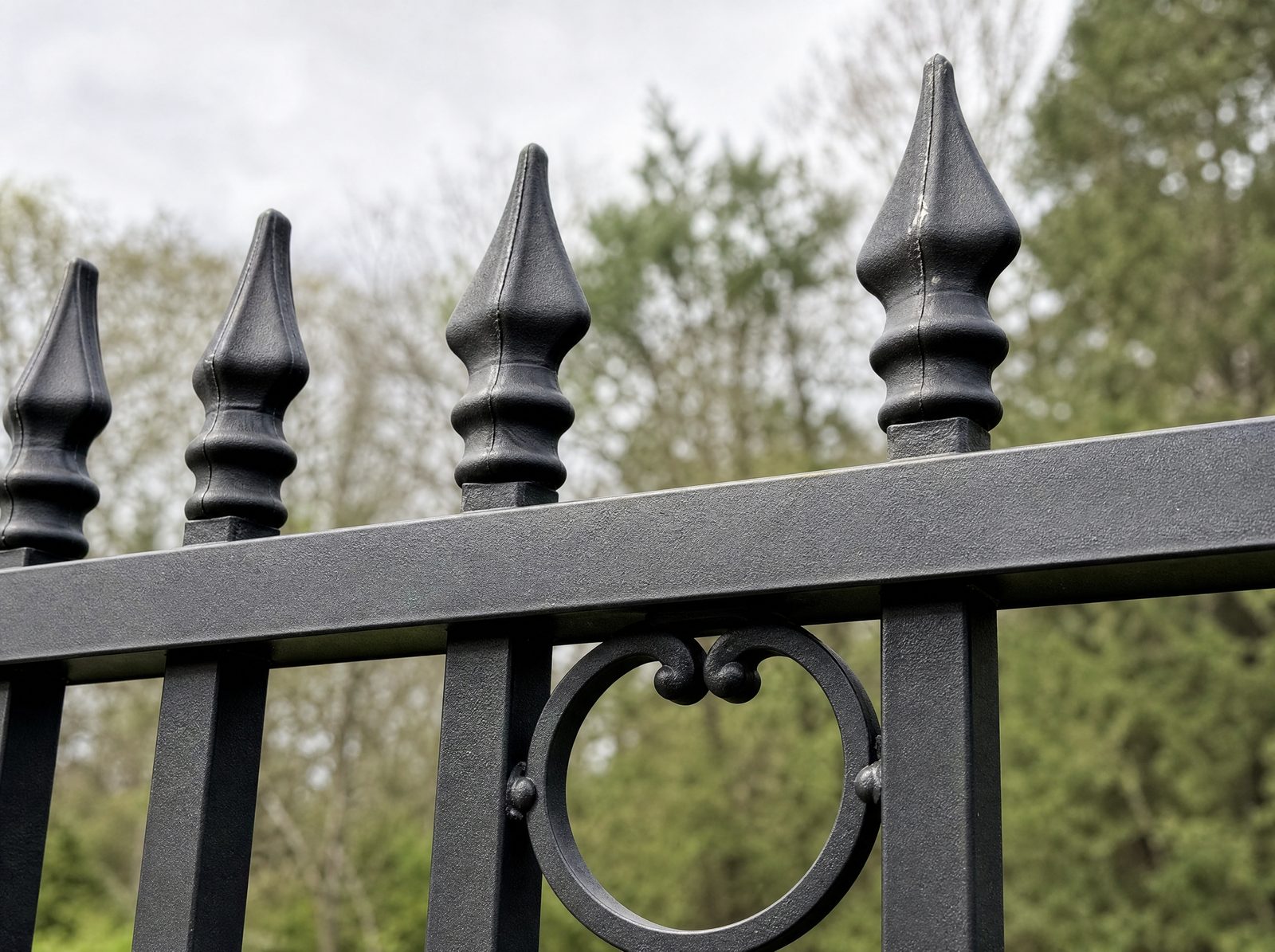
A Finial Repeats, Which Is Why Restraint Reads Better
Pick a finial in a showroom and you are looking at one of them, at eye level, on a four-foot sample. On a 200-foot run it becomes a texture. A simple, modest tip reads as crisp and intentional at that scale, while an elaborate one can read as busy from the road even when it is genuinely beautiful up close. That is not an argument against ornament, it is an argument for looking at a real installed run before you commit, which is a request any contractor should be able to honor.
Scrolls, Rings, and Decorative Panels Work in Small Doses
Decorative rings and scrollwork add weight in the middle of the panel, where the eye naturally rests. Spread across an entire boundary, that weight can turn a light fence heavy. The instinct to spread a good detail everywhere is the most common way a generous budget ends up with a fussy fence.
Arched and Scalloped Panels Are Entrance Events
An arched panel rises between its posts. A scalloped panel dips. Either one breaks the horizontal line and announces something, which is why both belong at an entrance, a gate, or a short feature section, and rarely down a whole boundary. Paired with a pedestrian or driveway gate, they become the formal entrance most people have in mind when they ask about estate gates, and those gates carry their own planning around width, weight, automation, posts, and clearance. If the entrance is doing the talking, the boundary can relax. Dropping to a simpler panel along the side and rear runs is not cutting corners, it is basic composition, and it usually costs less while looking better. Estate properties do not look the way they do because they used the fanciest panel everywhere. They saved it for the one place where it lands.
Post Caps and Columns Finish the Line
Post caps are the decision people make in thirty seconds and then look at forever. A flat cap keeps the line quiet, a pyramid or ball cap adds a small formal note, and the choice repeats on every post you own. Masonry or stone columns are the bigger move, replacing metal posts at entrances or corners and giving the run a rhythm of pauses. Columns are also a commitment, with their own foundations, drainage questions, and budget line, so they belong in the plan from the start rather than in a change order.
How Do You Match the Fence to the House Behind It?
A fence is the first piece of architecture anyone sees, and it sits in front of a building that already made its own decisions. New Fairfield has an unusually wide mix of them, from older colonials to Capes, farmhouses, lake cottages, and contemporary builds, and the same panel does not serve all of them. The test is simple: the fence should look like it came with the house.
Colonials and Older Houses Reward Symmetry
Traditional houses are organized around symmetry and repetition, and an ornamental fence speaks that language natively. A spear top with a modest finial, a three-rail panel on a taller run, and an entrance centered on the front door tend to sit right on a colonial. The discipline is in the restraint. Pairing an elaborate panel with an already detailed facade is how both end up looking anxious.
Capes, Farmhouses, and Lake Cottages Want Less Fence
Smaller and more casual houses are easy to overwhelm. A tall, dense, heavily detailed run in front of a Cape reads as a fence that arrived from a different property. Lower heights, wider spacing, flat or simple tops, and a shorter run that defines a yard without enclosing it usually do more. Near the lake, where the view is the actual amenity, the best fence is often the one you stop noticing within a week.
Contemporary Houses Want the Fence to Disappear
Modern builds tend to want the fence as a line rather than a subject. Flat tops, clean two-rail panels, no finials, and consistent spacing let the fence hold the boundary while the house keeps the attention. This is the case where the plainest page in the catalog is the correct answer, which is worth saying because it rarely feels like a decision while you are shopping.
Why Black Keeps Winning Here
Black is the default for a reason that has little to do with fashion. Against a house it reads as clean contrast, and against trees, lawn, water, and distance it more or less disappears, which is a useful trick on wooded and lakeside lots. Other colors can be right, particularly on contemporary homes, though they carry their own lead times and touch-up considerations. Whatever you pick, ask that panels, posts, and gates come from the same color run, because a mismatch is visible for the life of the fence.
Where Is Ornamental Fencing the Wrong Choice?
The honest limits are short and worth stating. Ornamental fencing is open by definition, so it gives you no privacy and no screening at all. If you want to block a neighbor's window, quiet a road, or hide equipment, an open picket panel will never do it no matter what you spend, and wood fencing or vinyl fencing is the answer instead. Long rural boundaries are the other case. Enclosing acreage in ornamental panels is an expensive way to do a job that chain-link fencing or purpose-planned agricultural fencing does better, and the ornamental budget is usually better spent on the part of the property people actually see. A good contractor should be willing to talk you out of ornamental where it does not serve you.
Where Do Style Choices Collide With Height, Code, and Grade?
Design and code get treated as two stages, style first and rules later, and that order is what produces the disappointing phone call. Height, placement, and the slope of the yard all edit a design, and they edit it more cheaply on paper than on site. Settle these alongside the look rather than after it.
The Seven-Foot Rule and the Pool Exception
New Fairfield states that fences not over seven feet high are generally exempt from a building permit. One clear exception catches people: a fence used as a swimming pool barrier requires a permit regardless of its height. That carve-out has real design consequences, because a barrier is judged as a complete system, so height, maximum openings, bottom clearance, non-climbable design, gate direction, self-closing hinges, and latch placement all get measured against the applicable code. It is why a spear top or a wide decorative spacing you love may not survive the pool line, and why pool fencing is its own project with its own approval rather than a style you pick. Local rules change, so confirm the current requirements with the town. New Fairfield's building permit page and its zoning department are where you check what your lot needs, since a building-permit exemption settles one question and not the zoning one.
Sight Lines, Setbacks, and the Line Itself
Zoning is the quieter editor. Placement near a street or intersection, visibility at a driveway, setbacks, easements, wetlands rules, and private association or deed restrictions can all limit where a fence goes and how tall it gets there, which is a design constraint even though it arrives as a rule. The property line is its own trap, since a stone wall, a hedge, or a mowing line is not the legal boundary, and a licensed surveyor is the one who establishes it. Recorded plans often live with the town clerk's land records. Once the layout is settled, digging brings its own step, because Connecticut's Call Before You Dig service is free and required by law before excavation, and privately owned lines like septic, irrigation, propane, and pet-fence wire may need a separate locate.
What a Slope Does to a Design
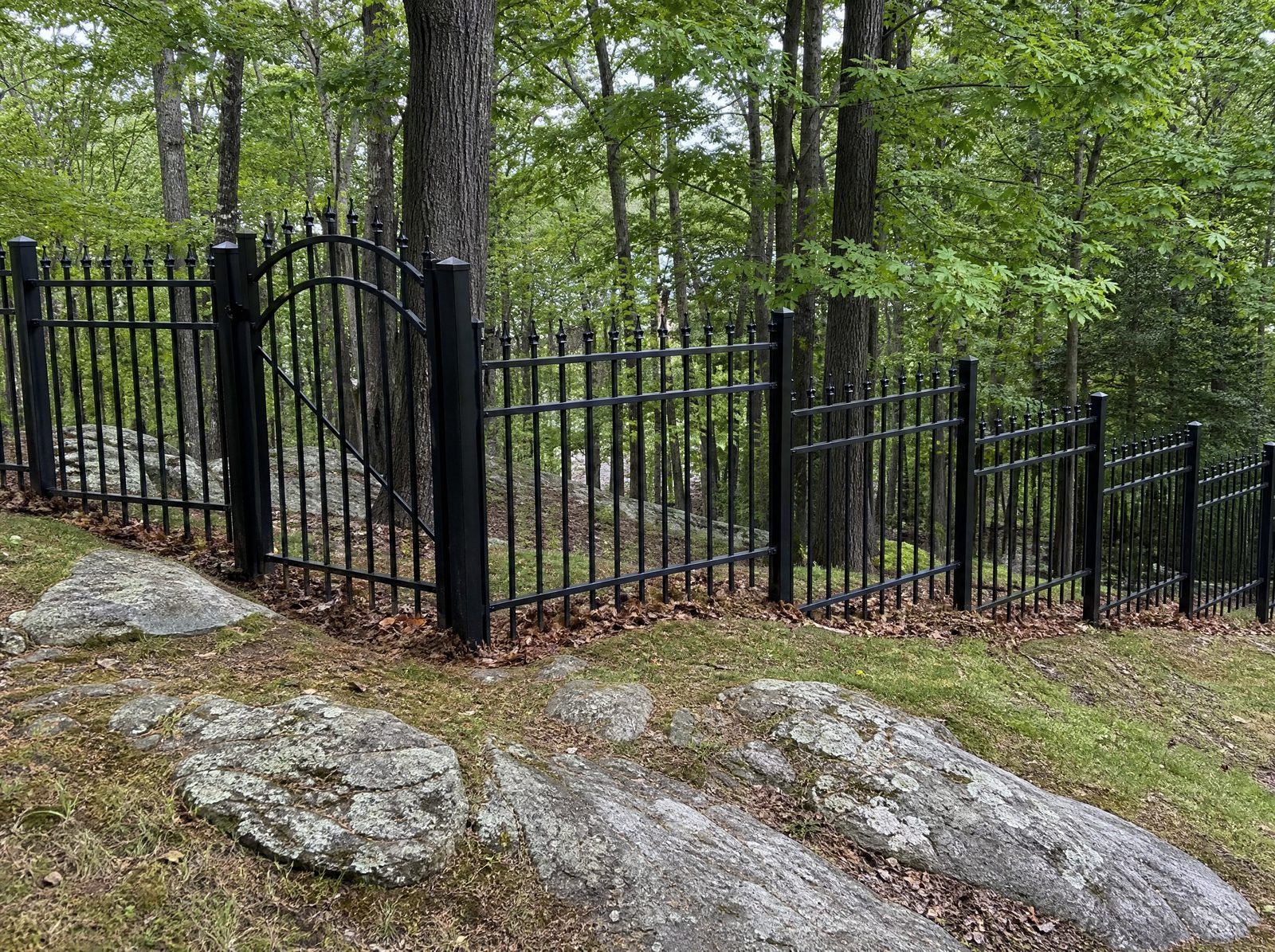
Grade is the constraint that surprises people most, because it changes the look and not just the labor. Rackable panels angle their rails with the slope while the pickets stay vertical, keeping a continuous line that suits a run you want read as one gesture. Stepped panels stay level and drop down the hill in stages, producing a deliberate staircase effect that can look correct on a formal property and awkward on a casual one. The choice also changes bottom gaps and pet containment. Where it bites hardest is decorative work, since an arched or scalloped top line fights a slope: a curve on an angle stops reading as a curve, so feature panels usually want the flattest part of the property. Sort this on the walk, not on install day.
What Moves Ornamental Fence Cost in New Fairfield?
There is no honest one-price-fits-all number for ornamental fence cost New Fairfield wide, and published consumer guides like Angi's fence cost breakdown show ranges broad enough to prove the point. Treat them as general market background, never as a quote for your yard. What is useful is knowing which of your design decisions carry a price.
Footage and height set the baseline, as they do on any fence. After that it is largely the design talking. Rail count adds material, and finials, rings, and scrollwork add both parts and labor. Arched and scalloped panels are often made to order, which costs money and, more importantly, costs time on the schedule. Every gate is its own small project with dedicated posts, footings, and hardware, and pool-compliant self-closing and self-latching hardware does not price like a standard latch. Custom colors and masonry columns each open their own line. Then the site takes its cut through slopes, rocky ground, access, and removing whatever is there now.
Hover or tap a row to highlight it.
| Cost Driver | Why It Matters |
|---|---|
| Footage and height | Sets the baseline on any fence, before the design enters the picture at all. |
| Rail count | A three-rail panel uses more material than a two-rail run of the same height. |
| Finials, rings, and scrollwork | Decorative detail adds parts and labor, and it repeats on every panel in the run. |
| Arched and scalloped panels | Often made to order, which costs money and, more importantly, costs time on the schedule. |
| Gates and pool hardware | Each gate needs dedicated posts, footings, and hardware, and self-closing, self-latching pool hardware does not price like a standard latch. |
| Custom color and masonry columns | Each opens its own line, with its own lead time and its own foundation work. |
| Slope, rock, access, and removal | The site takes its cut through grade work, hard digging, long carries, and pulling the old fence. |
How Does an Ornamental Fence Installation Come Together?
An ornamental fence installation New Fairfield crews run well starts with the house and ends with a walkthrough, and the design work sits at the front where it is still cheap to change. Knowing the order helps you spot a process that skips the part you care about most. The sequence below is how the work should come together on a local property.
The New Fairfield Ornamental Fence Process
- 1
Step 1: Walk the House, Not Just the Line
We start at the house, its period and proportions, the entrance, and the sight lines that decide where detail belongs.
- 2
Step 2: Settle the Style
Height, picket spacing, rail count, top line, finial, post caps, and where any arched or feature panels go.
- 3
Step 3: Boundary, Zoning, and Pool Review
Property lines, setbacks, corner sight lines, easements, and the pool-barrier permit question all get answered before anything is ordered.
- 4
Step 4: Written Scope and Order
The scope names the product line, style, spacing, finish, and gates, and lead times get set for custom colors or made-to-order panels.
- 5
Step 5: Utility Marking and Post Setting
A Call Before You Dig request goes in, private lines are identified, and posts are set for the soil, grade, and gate loads.
- 6
Step 6: Panels, Gates, and Walkthrough
Panels are racked or stepped to the grade, gates are hung and aligned, the site is cleaned, and the job is walked with you.
What Should You Ask an Ornamental Fence Contractor?
Connecticut requires home improvement contractors, fence installers included, to register with the Department of Consumer Protection, so registration and insurance are the floor rather than a selling point. You can verify a license in a couple of minutes, and the state's guidance on working with a contractor makes a good checklist to hold any bid against. My Fence Guy is family-owned and based right here in New Fairfield, licensed and insured. Past the paperwork, the ornamental fence contractor New Fairfield homeowners should want is the one who asks about the house before the panel.
The written scope is where a design becomes real. Ask that it name:
- The product line and panel style: The actual system and style name, not the word "ornamental."
- Height, rail count, and panel width: The proportions you agreed to, in numbers.
- Picket spacing: The gap, especially where a pool barrier or a small dog is involved.
- Top line and finial: Flat, spear, alternating, or arched, and which finial.
- Post caps and any columns: Including who builds the columns and on what foundation.
- Finish and color: The coating, matched across panels, posts, and gates.
- Gate details: Width, swing, frame, hinges, and latch, per gate.
- Racking or stepping: How the run handles your grade, decided before install day.
- Lead times and change orders: Especially for custom colors and made-to-order arched panels, plus how hidden conditions get priced.
Frequently Asked Questions About ornamental fencing new fairfield ct
Q: Is ornamental fencing the same as wrought iron?
A: Not usually. True wrought iron is a traditional forged material and is uncommon in modern residential fence systems. Most fences described casually as wrought iron are ornamental aluminum or steel systems designed to create a similar traditional appearance with modern manufacturing and coating methods.
Q: What is the difference between a flat top and a spear top?
A: A flat-top panel ends at the top rail with nothing above it, giving a quiet, understated line that suits pools, pets, and contemporary homes. A spear top runs the pickets past the rail, often with finials, for the traditional ornamental look. An alternating spear top raises every other picket for a lighter rhythm.
Q: Should an arched panel run along the whole fence?
A: Rarely. Arched and scalloped panels break the horizontal line and announce something, which is why they work at entrances, gates, and short feature sections and tend to look restless across a full boundary. Letting the long runs stay simple usually costs less and reads better.
Q: Does an ornamental fence need a permit in New Fairfield?
A: New Fairfield generally exempts fences not over seven feet high from a building permit, but a fence used as a swimming pool barrier requires a permit regardless of height. Zoning, setbacks, sight lines, easements, and site-specific restrictions may still apply, so confirm the current rules with the town before installation.
Q: Can ornamental panels follow a slope?
A: Yes. Rackable panels angle their rails with the grade while the pickets stay vertical, and stepped panels stay level and drop down the hill in stages. The method changes bottom gaps, pet containment, and appearance, and decorative top lines like arches generally do not sit well on a slope.
Q: What style suits an older colonial in New Fairfield?
A: Traditional houses tend to reward symmetry, a modest spear top, a three-rail panel on taller runs, and an entrance centered on the front door. The usual mistake is over-detailing, since a house with an already formal facade does not need the fence to compete with it.
Q: What affects ornamental fencing cost in New Fairfield, Connecticut?
A: Footage and height set the baseline, then the design drives the rest through rail count, finials, scrollwork, made-to-order arched panels, gate count and hardware, custom colors, and masonry columns. Site conditions like slopes, rock, access, and old-fence removal add their own. A site-specific estimate is far more reliable than a broad online average.
Test Your Ornamental Fence Design Knowledge
1. What does the word "ornamental" actually tell you about a fence?
2. Why does a finial deserve more thought than it usually gets?
3. Where do arched and scalloped panels belong?
4. Which New Fairfield fence needs a permit regardless of height?
5. What does a slope do to an arched top line?
Pick an answer to begin.
Final Thoughts
An ornamental fence is an architectural decision wearing a catalog's clothing. The word tells you the shape and nothing else, spacing and rail count set the character before any ornament arrives, a finial is a choice you make several hundred times, and the arches belong where the fence has something to announce. Start from the house and the yard rather than the brochure page, settle the height, pool, sight line, and grade questions alongside the look instead of after it, and the right panel usually stops being a mystery.
Done well, the payoff is that nobody compliments your fence. They register the property as looking right, they cannot say why, and it goes on quietly doing that for decades. That is what a considered design buys you, and it is available at a lot of budgets, because most of the decisions that matter here cost nothing but attention.
If you are planning ornamental fencing in New Fairfield, CT, we would be glad to walk the property and talk through what actually fits the house. My Fence Guy is a family-owned contractor based in New Fairfield, CT, and we install ornamental and aluminum fencing alongside wood, vinyl, and chain link, plus pool fencing, pet fencing, estate gates, and railings for residential, commercial, industrial, and agricultural properties. We will put the style, the spacing, the top line, the finial, the gates, and the color in writing, so what you approved on paper is what shows up on your line. Call us at (203) 746-1100 for a free estimate, or reach out through our contact page.
Ornamental Fence Design Terms
Tap a term to see what it means.
Ornamental Fence. An open panel of vertical pickets running between horizontal rails. The word describes the shape, not the metal, which is usually aluminum or steel.
More about fences
Aluminum Fencing in New Fairfield, CT: What to Compare
Aluminum fencing in New Fairfield, CT gives you the wrought iron look without the rust. The grades, the gate hardware, and the ledge under the posts.
Read the guide to Aluminum Fencing in New Fairfield, CTRailings in New Fairfield, CT: Guards, Handrails, and Code
A guard and a handrail are not the same part, and the code treats them differently. Railings in New Fairfield, CT: heights, spacing, and the 4 inch rule.
Read the guide to Railings in New Fairfield, CTOrnamental Fencing in Southbury, CT: Style That Fits the House
Spear, flat top, or scroll? Ornamental fencing in Southbury, CT, and how picket profile, finials, and height decide whether a fence flatters the house.
Read the guide to Ornamental Fencing in Southbury, CT