
Ornamental Fencing in Sherman, CT: Choosing the Right Style
By Tony Pellicone21 min readPublished
- ornamental fencing
- sherman ct
- aluminum fencing
- connecticut
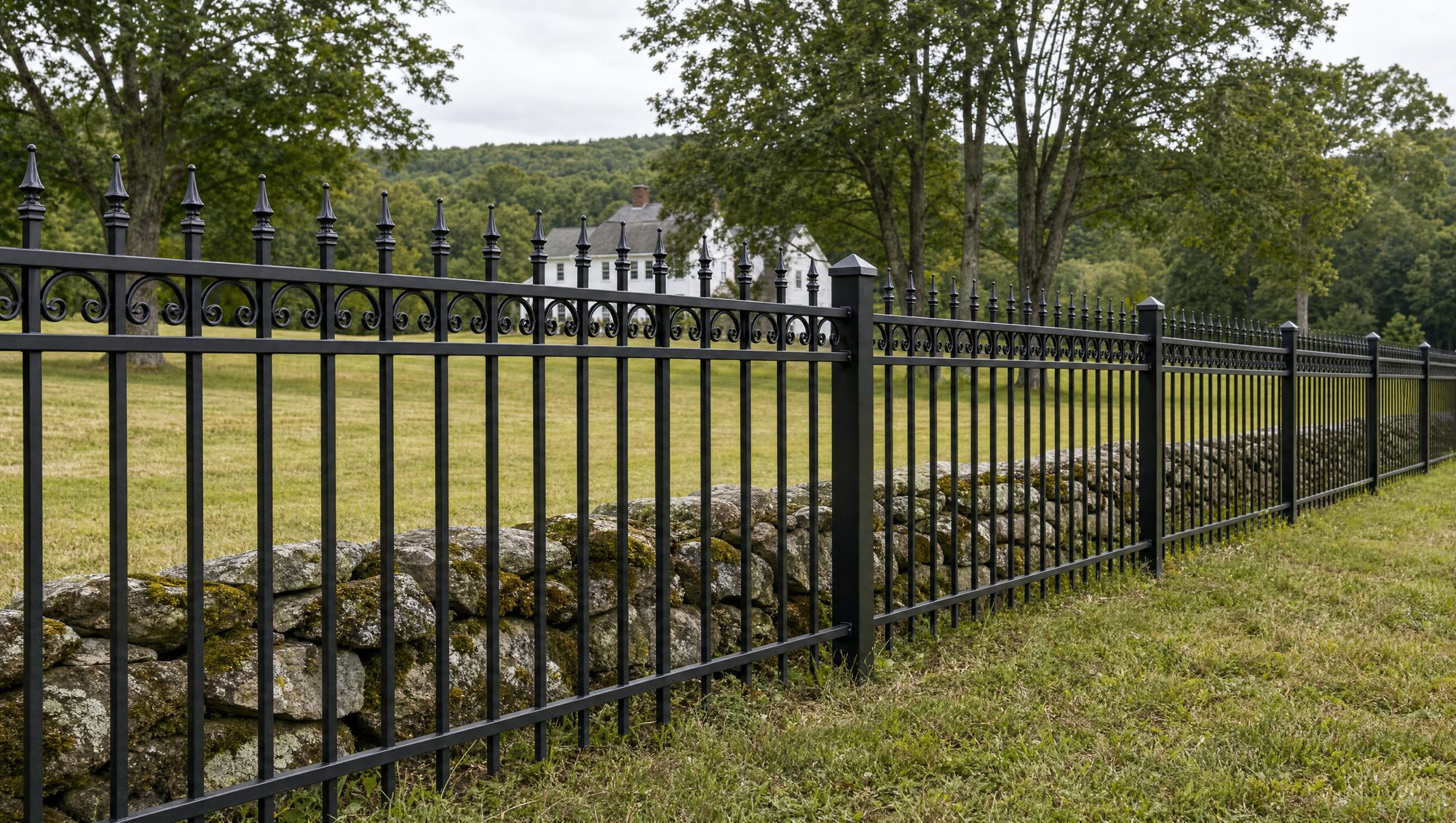
You have a picture in your head and no words for it. Somewhere on a drive through town you passed a black metal fence that looked exactly right in front of a house, and you have been trying to describe it to yourself ever since. Was it the pointed tops? The spacing between the pickets? The way it stopped at a stone column instead of just ending at a post in the grass? Ornamental fencing in Sherman, CT is one of the few home projects where the product conversation and the design conversation are almost entirely separate, and most estimates only cover the first one. That is how a homeowner ends up with a fence that is perfectly well built and still looks wrong against the house, either too plain to belong there or so decorated that it reads as somebody else's taste bolted onto your front yard. The vocabulary here is smaller than it seems. Six or seven decisions account for nearly everything you actually notice about a decorative metal fence, and once you can name them, you can steer the result instead of hoping for it.
Key Takeaways
Ornamental describes a look, not a metal
The word covers a design family of open, narrow, vertical pickets. What the panels are made of is a separate question from what they say.
The house sets the style, not the catalog
Picket profile, top treatment, height, and finial choice either agree with your home's period and lines or quietly fight them.
Decoration works in small doses
Scrollwork, arches, and rings read best concentrated at entrances and gates, with the long runs kept plain.
Sherman reviews fences through Planning and Zoning
The town's fee schedule lists a zoning permit for fences, and a pool barrier needs a permit regardless of height, so confirm current requirements with the town.
Ornamental is honest about what it cannot do
An open picket line defines a boundary and frames a view. It does not deliver privacy, and it should not be sold as if it does.
Ornamental Is a Design Category Before It Is a Product Category
Nearly every confusing conversation about this fence starts with a word problem. Ornamental is not a material, a brand, or a grade. It is a description of a look: narrow vertical members, open sight lines between them, a dark finish more often than not, and some deliberate treatment where the pickets meet the sky. That look has been built out of several different metals over a couple of centuries, which is exactly why homeowners and salespeople talk past each other.
Wrought Iron Names a Material, Not a Style
The phrase wrought iron fence in Sherman almost never describes wrought iron. True wrought iron is a traditional forged material with very low carbon content, and it is uncommon in modern residential fence systems. What people mean by it is the visual language of an older estate fence: tall dark pickets, a formal rhythm, maybe a spear or a finial on top.
Ask three contractors for a wrought iron fence and you will get three different products with no way to compare them, because each one is answering a style request with a material guess. Ask for the look you want instead, and let the material be its own decision.
What Ornamental Metal Fence in Sherman Actually Covers
Modern ornamental systems are built mostly from aluminum or steel. Ornamental aluminum is lightweight, corrosion resistant, and arrives as prefabricated panels; the Aluminum Association notes it is durable and recyclable. Ornamental steel is heavier, can offer more mass depending on the design, and tends to support more custom fabrication.
Neither is universally better, and the choice follows security needs, span, impact exposure, customization, maintenance tolerance, and budget. For design purposes, both metals can produce most of the same looks, so you can settle the style first and the metal second.
Your House Has Already Named the Style
Before you look at a single panel, look at the house. A fence is the largest object you will add to the front of the property, and it enters into a relationship with the architecture whether you plan it or not. The best ornamental fences in Sherman look inevitable, as though they came with the house, and that is not luck. It comes from reading what the building is already saying and answering in the same voice.
Colonials and Capes Reward Restraint
A traditional colonial or Cape is a symmetrical, orderly building with a limited vocabulary of its own: black shutters, white trim, a centered door. A fence in front of it should be equally disciplined. A simple picket with a modest spear or a plain flat top, two rails, and no scrollwork will look correct for decades. Add rings, curls, and alternating heights and the fence starts competing with a house that was never trying to compete with anything.
Farmhouses and Stone Walls Want the Quieter Line
Plenty of Sherman properties already have a piece of design in place: an old stone wall running the frontage. A fence set near one is in a conversation with it, and the wall usually wins, because it has been there longer and reads as part of the ground. Keep the metal plain and let it be a line rather than a statement. A heavily decorated panel next to a fieldstone wall reads as two competing centuries in one glance.
Contemporary Homes Want the Fence to Disappear
A newer house with clean lines and big glass has a different request. Here the fence is not there to be admired, it is there to define an edge without adding visual noise. Flat top, narrow pickets, three rails if the height calls for it, black or a dark bronze so the pickets recede against trees. The goal is that a visitor notices the yard and the view, not the fence that organized them.
Estate Entrances Are Where Decoration Belongs
There is one place where the ornate version earns its cost. An entrance is a designed moment: the drive narrows, the eye stops, and a pair of estate gates between columns does a job plain panels cannot. Concentrate the arches, finials, and scrollwork here, and let the fence running away from the entrance settle back into something simple. That contrast is the whole trick, and it is why an estate fence looks expensive while a fence decorated evenly along its entire length just looks busy.
Six Choices Decide What an Ornamental Fence Looks Like
Once you know the voice you are answering in, the design comes down to a short list. These are the levers a designer actually pulls, and every one of them is visible from the street. Work through them in order and you will have described a fence rather than pointed at a photo.
- Picket profile: The thickness and shape of the vertical members. Slimmer pickets read lighter and more traditional; heavier ones read more architectural. This choice changes the fence's character more than the color does.
- Picket spacing: How much air sits between the pickets. Wider spacing looks lighter and shows more of the yard; tighter spacing reads more formal. Spacing is also where design collides with pets and pool rules, so it rarely stays a pure style decision.
- Rail count and placement: Two rails or three, and where they sit in the panel's height. Three rails read sturdier and more formal, and often relate to taller heights and heavier grades. Where the lower rail sits also sets the gap at the bottom.
- Top treatment: Flat top, spear top, or alternating spear, where every other picket rises above the rail for a lighter rhythm. This is the fence's silhouette against the sky and the first thing anyone reads from a distance.
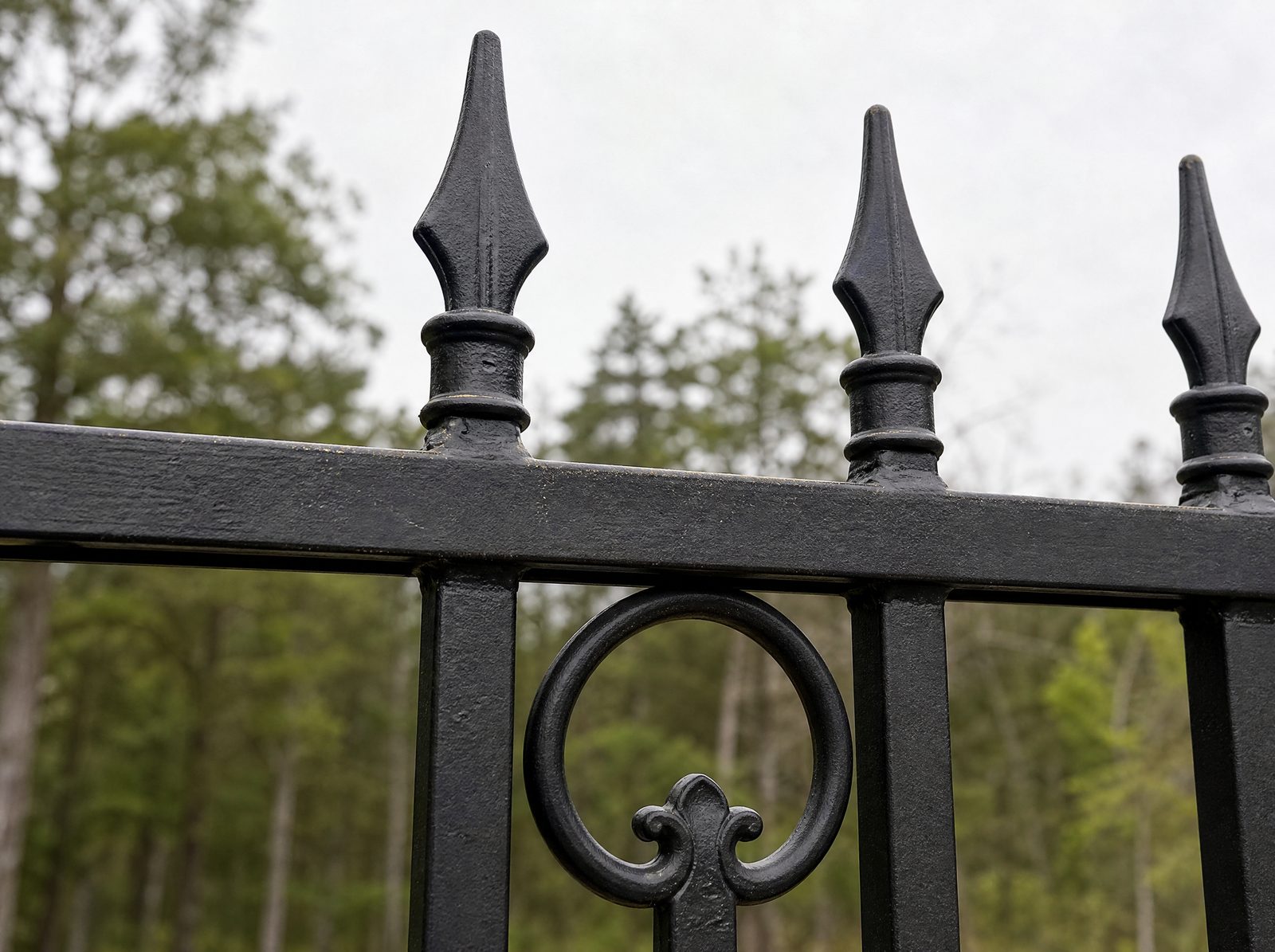
- Finials and post caps: The pieces on top of pickets and posts. A ball cap, a flat cap, a fleur de lis, a plain spear. Small parts, disproportionate effect, and the easiest place to push a fence from refined into costume.
- Panel width and rhythm: How often a post interrupts the line. Narrower panels mean more posts and a more formal beat; wider panels look calmer. On a long run this is the difference between a fence that marches and one that flows.
Scrollwork and Arches Earn Their Keep in Small Doses
This is the part of a decorative fence in Sherman that homeowners are most excited about and most likely to regret. Ornament follows a rule that catalogs never state: it works by contrast, so it needs plainness around it to register at all. A little decoration in the right place looks intentional and costly. The same decoration everywhere looks like a fence that could not decide.
Where an Arch Actually Reads
An arched or scalloped panel rises or falls between two posts and draws the eye to whatever sits underneath. That makes it right over a gate, at a garden entry, or across a feature section. Run arches down an entire boundary and the eye has nowhere to land, so the effect cancels itself out and the fence just looks wavy. One arch is a doorway. Twenty arches are wallpaper.
Rings, Scrolls, and the Five-Year Test
Decorative rings, circles, and scroll panels are the most fashion-driven pieces in the category, which makes them the most likely to look dated. A useful filter: does this detail echo anything else on the property? Scrollwork that answers a real element, an iron railing at the steps or a curve in the porch brackets, tends to age well because it belongs to something. Scrollwork chosen because it was on the sample panel usually does not.
Columns and the Places a Fence Stops
Where a fence ends matters as much as what it looks like in the middle. A run that simply stops at a post looks unfinished; a run that terminates into a masonry column, a wall, or the corner of a building looks designed. Columns at an entrance also give a lighter fence some weight. Bear in mind that masonry columns, walls, and grade changes can trigger their own review with the town, so raise them early rather than late.
Height Is a Design Choice, and Sherman Gets a Vote
Height changes the entire read of a fence. Three feet is a garden edge you look over, four feet is a boundary you see across, five or six feet starts to feel like enclosure even when it is open picket. Designers pick a height for what it does to the eye and to the proportion of the house. Sherman gets a say too, and that is where a style sheet meets a land use file.
Sherman Runs Fence Review Through Planning and Zoning
Do not assume a decorative fence is paperwork free. Sherman's Planning and Zoning Department handles fence related land use applications, and the town's fee schedule lists fences under miscellaneous structures and equipment with a zoning permit fee. Sherman also publishes its current zoning regulations. Requirements can change and can vary from one parcel to the next, so confirm the current height, placement, setback, road visibility, wetlands, and site specific requirements with the town before anything gets ordered.
The triggers that surface on a real property are predictable: height, front and side yard placement, sight lines at the road and driveway, boundaries and easements, wetlands, pool barrier use, gates near the road, masonry columns, and any association or deed restrictions. A design that ignores those does not become legal by being attractive.
Sight Lines Are Why a Front Yard Fence Gets Shorter
The most common place a design has to bend is near the road. A fence at the corner of a driveway sits exactly where a driver needs to see, and open pickets help but do not settle the question, because posts, columns, and dense finial work still block a view. That is usually good for the design rather than a compromise, since a lower frontage with the full height reserved for the sides tends to look better proportioned against a house anyway.
A Pool Barrier Overrules the Style Sheet
If the fence is enclosing a pool, safety code writes the specification and your preferences take what is left. Sherman requires a permit for a swimming pool barrier regardless of its height, and the review looks at the whole installed system against the applicable residential code: height, maximum openings, bottom clearance, non climbable design, gate swing, self closing hinges, self latching hardware, and latch placement.
Two design choices get re-examined immediately. Spear tops and finials have to be evaluated against the location and the barrier requirements rather than chosen for looks, and wider decorative picket spacing may simply not be available to you. Anything a child can use as a foothold is a climbability problem, not a detail. Treat pool fencing as its own project with its own hardware list, and let the decorative version live elsewhere on the property.
Ornamental Fencing Is the Wrong Answer More Often Than It Is Sold
An honest designer tells you where the material fails. Ornamental fencing is genuinely low upkeep and genuinely handsome, but it has a narrow job description, and forcing it outside that description is how people end up disappointed with a fence that was built correctly.
Privacy Is Not on the Menu
You can see straight through an ornamental fence, because that is the entire point of it. No picket spacing, no height, and no color makes an open metal fence private. If the goal is screening a neighbor's window or a road, the answer is wood fencing or vinyl fencing, possibly with ornamental used elsewhere where the view is worth keeping. A contractor who says tight picket spacing will give you privacy is selling, not designing.
Long Rural Runs Can Look Thin
Ornamental fencing reads best when it is framing something: a front yard, a pool, a garden, an entrance. Set a few hundred feet of it across an open rural boundary with nothing to anchor it and it can look undersized, like a formal detail that wandered away from the house. The look depends on the fence having a job the eye understands.
A Slope Will Break a Pattern You Chose on Flat Ground
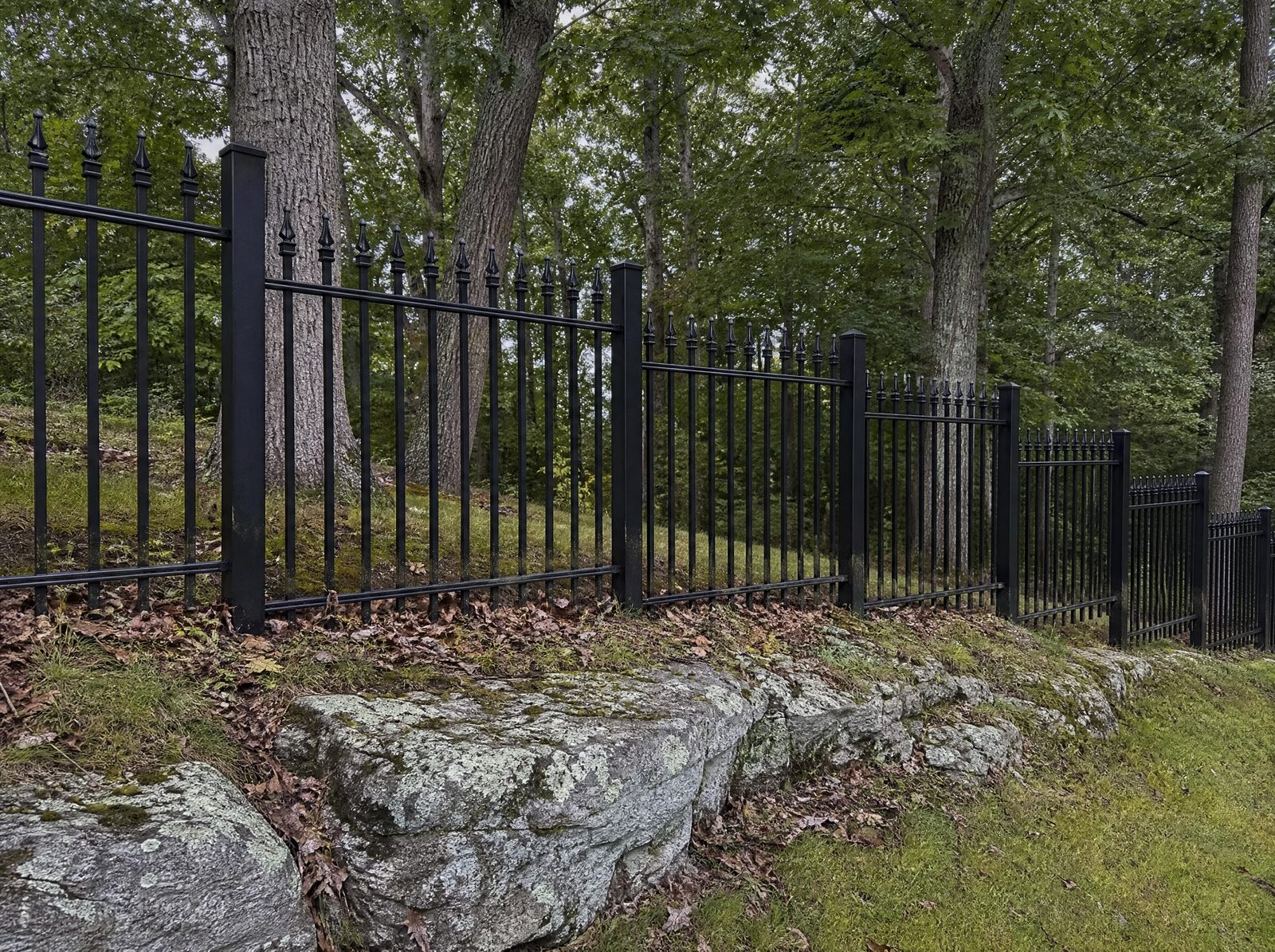
Sherman ground is rarely level. Rackable panels follow moderate grade by letting the pickets stay vertical while the rails angle with the slope; stepping sets level panels down the hill in stages instead. That is usually discussed as a technical matter, but it is a design matter too. Racking distorts an arched or scalloped panel, since the shape you picked was drawn on level ground. Stepping keeps the pattern intact and leaves a triangular gap under each section, which changes the bottom line of the fence and can matter for a small dog. Settle it on the ground, at the estimate, with the actual grade in front of you.
An Open Fence Advertises Your Property Line
There is a quiet consequence to a fence you can see through: it draws the boundary in public. A solid fence hides a slightly generous or slightly shy line, but an ornamental run states it, and both neighbors read it every day. A stone wall or an old mowing line is not the legal boundary; a licensed surveyor establishes that, and recorded plans often sit with the town clerk. Posts also mean digging, so a Call Before You Dig request goes in before excavation.
Ornamental Fence Cost in Sherman Follows the Decoration
There is no reliable one price fits all figure for ornamental fence cost in Sherman. Published consumer guides such as Angi's fence cost breakdown are worth reading as general market background, but they cannot see your slope, your product line, or how much ornament you asked for, so they are not a quote.
What is useful is knowing which parts of the design carry the money. Footage and height set the baseline. After that, most of the swing is decoration and gates, which is precisely where you have the most control. Concentrating the ornament at the entrance is a design decision and a budget decision at the same time.
Hover or tap a row to highlight it.
| Cost Driver | Why It Matters |
|---|---|
| Linear footage and height | Longer, taller runs need more posts, panels, and labor, and taller panels often move you up a product grade. |
| Top treatment and finials | Spear tops, decorative finials, and post caps add material and fabrication across every panel they touch. |
| Arched, scalloped, and scroll panels | Shaped and decorative sections are custom work, so they price well above the plain panel running beside them. |
| Gates and entrance features | Walk, double, and driveway gates each need their own posts, footings, and hardware, and masonry columns are their own trade. |
| Pool compliant hardware | Self closing hinges, self latching hardware, and the spacing the code requires are a separate line from the style you wanted. |
| Slopes, ledge, and access | Racking or stepping, rock, roots, wet soil, and a tight equipment path all add hours before any decoration is involved. |
| Custom color and made to order panels | Anything outside a stocked product line carries both cost and lead time. |
How an Ornamental Fence Installation in Sherman Comes Together
A good ornamental fence installation in Sherman runs design first and hardware second, which is the opposite of how most projects get quoted. The order below closes the style questions while they are still cheap to change, then confirms what the town allows on your parcel, and only then puts metal in the ground. A pencil is a much better place to make a mistake than a post hole.
The Sherman Ornamental Fence Design and Installation Process
- 1
Step 1: Read the House and the Property
We walk the frontage, the grade, and the entrance, and settle what the fence is framing, what it is for, and what the architecture is asking for.
- 2
Step 2: Choose the Design Vocabulary
Picket profile, spacing, rail count, top treatment, finials, panel rhythm, and height get decided together rather than one at a time off a sample board.
- 3
Step 3: Confirm Zoning and Site Requirements
Height, placement, sight lines, wetlands, easements, pool barrier rules, and any masonry features get checked with Planning and Zoning before the design is locked.
- 4
Step 4: Written Scope and Product Selection
The product line, dimensions, gates, hardware, finish, removal, cleanup, and hidden condition procedures are documented by name and number.
- 5
Step 5: Utility Marking and Layout
A Call Before You Dig request goes in, private lines are identified, and the run is staked so you can see the design on the ground before we dig.
- 6
Step 6: Posts, Panels, Gates, and Walkthrough
Posts are set for the soil, frost, and gate loads, panels rack or step to hold the planned line, then gate swing, latch alignment, and bottom gaps get checked with you.
What to Ask an Ornamental Fence Contractor in Sherman
Connecticut requires home improvement contractors, fence installers included, to register with the Department of Consumer Protection. The state's guidance for consumers is worth reading before you sign anything, and you can verify a registration in about two minutes. My Fence Guy is a family owned contractor with a local office right here in Sherman, licensed and insured, and we give free estimates. Registration is the floor, though, not the qualification.
The questions that sort out an ornamental fence contractor in Sherman are design questions, because almost anyone will answer the product questions the same way. What top treatment does this house want, and why? Where would you put the ornament, and where would you keep it plain? What happens to my arched panel when it hits that grade? How does the fence terminate at the driveway? A contractor who designs will have opinions and reasons. One who only installs will show you a brochure and ask which picture you like.
What the Written Estimate Should Include
Connecticut's contracting guidance is a good checklist to hold any bid against. For ornamental work specifically, the scope should cover:
- Manufacturer and product line: The actual system by name, with the spec sheet attached, plus any ASTM F2957 claims in writing.
- Style specification: Top treatment, finial and post cap models, rail count, picket profile and spacing, and panel width, in numbers rather than adjectives.
- Where the ornament goes: Which sections are decorative and which are plain, drawn or listed run by run.
- Height by run: Frontage, sides, and any pool enclosure, since they are often not the same.
- Gates and hardware: Widths, frames, reinforcement, hinges, latches, and pool rated hardware where it applies.
- Finish and color: The coating, the color, and its finish standards and warranty terms, including how touch ups are handled.
- Slope method: Racking or stepping by section, and what it does to bottom gaps and to any shaped panels.
- Permits, utilities, and hidden conditions: Who files with Planning and Zoning, who submits the 811 request, and how ledge gets priced through a change order.
- Timeline, payments, and warranties: Lead times on made to order panels, the payment schedule, and workmanship terms in writing.
Frequently Asked Questions About ornamental fencing sherman ct
Q: Is ornamental fencing the same as wrought iron?
A: Not usually. True wrought iron is a traditional forged material and is uncommon in modern residential fence systems. Most fences described casually as wrought iron are ornamental aluminum or steel designed to create a similar traditional appearance with modern manufacturing and coating methods.
Q: Do I need a permit for ornamental fencing in Sherman?
A: Sherman handles fences through its Planning and Zoning Department, and the town's fee schedule lists a zoning permit for fences. A pool barrier requires a permit regardless of height. Height, placement, setbacks, sight lines, wetlands, and easements may also apply to your lot, so confirm the current requirements with the town.
Q: What is the difference between flat top and spear top?
A: Flat top ends the pickets at the top rail for a clean horizontal line, which suits pools, pets, and contemporary or understated homes. Spear top extends the pickets past the rail, often with finials, for a traditional look that must be evaluated against the location, safety, and any pool barrier requirements.
Q: How much ornamental detail is too much?
A: Ornament works by contrast, so it reads best concentrated at entrances, gates, and feature sections with the long runs kept plain. Decoration applied evenly along an entire boundary tends to cancel itself out and look busy rather than expensive.
Q: Can ornamental fencing give me privacy?
A: No. An open picket fence is designed to be seen through, and no spacing, height, or color changes that. If screening is the goal, a solid material such as wood or vinyl is the honest answer, with ornamental used where the view is worth keeping.
Q: Will an arched panel still look right on a slope?
A: Not always. Racking angles the rails to follow the grade, which distorts a shape drawn on level ground, while stepping keeps the panel intact but leaves a gap under each section. Decide the method on the actual grade during the estimate, not on install day.
Q: Is ornamental fencing good for dogs?
A: It can be, but picket spacing, bottom gaps, height, gate clearances, digging, jumping, and nearby objects a dog can climb all matter. For very small dogs, standard ornamental spacing may be too wide, and puppy picket panels may fit better depending on the product.
Q: What affects ornamental fence cost in Sherman?
A: Footage and height set the baseline, then top treatment, finials, shaped or scroll panels, gates, pool hardware, slopes, ledge, removal, access, permits, and custom colors move the number. Published averages are general market background, not a quote for your property.
Test Your Ornamental Fence Design Knowledge
1. What does the word ornamental actually describe?
2. Does an ornamental fence in Sherman involve any town paperwork?
3. Where does decorative scrollwork read best?
4. Can tighter picket spacing make an ornamental fence private?
5. What happens to an arched panel when it racks down a slope?
Pick an answer to begin.
Final Thoughts
Ornamental fencing in Sherman Connecticut is a design problem wearing a product's clothes. The metal matters and the posts absolutely matter, but the reason one fence looks like it came with the house and another looks like it was ordered from a picture comes down to a handful of choices you can now name: picket profile and spacing, rail count, top treatment, finials, panel rhythm, height, and where the decoration is allowed to happen. Read the house first, keep the long runs plain, spend the ornament at the entrance, and confirm with Planning and Zoning what your lot allows before anything is ordered.
Get that order right and the fence quietly does its work for decades. It frames the yard instead of walling it off, it draws a line both neighbors can live with, and it still looks deliberate long after the trend that tempted you toward the scroll panels has passed.
If you are planning ornamental fencing in Sherman, we would be glad to walk the property and talk through the design before anyone talks price. My Fence Guy is a family owned contractor with a local office right here in Sherman, CT, and we install ornamental, aluminum, wood, vinyl, chain link, pool, pet, residential, commercial, industrial, and agricultural fencing, along with estate gates and railings, throughout Connecticut and New York. Call us at (203) 746-1100 for a free estimate, or reach out through our contact page.
Ornamental Fence Design Terms
Tap a term to see what it means.
Ornamental. A design category rather than a material, describing open panels of narrow vertical pickets, usually in a dark finish, with a deliberate treatment at the top.
More about fences
Aluminum Fencing in Sherman, CT: Styles, Cost, and Permits
Two bids can both say black aluminum, four feet, spear top, and mean different fences. How to read an aluminum fencing spec in Sherman, CT.
Read the guide to Aluminum Fencing in Sherman, CTRailings in Sherman, CT: What the Code Actually Requires
Railings almost never break in the middle. They let go where they meet the deck. What that means for railings in Sherman, CT, from ledger to post base.
Read the guide to Railings in Sherman, CTOrnamental Fencing in Southbury, CT: Style That Fits the House
Spear, flat top, or scroll? Ornamental fencing in Southbury, CT, and how picket profile, finials, and height decide whether a fence flatters the house.
Read the guide to Ornamental Fencing in Southbury, CT