
When Is the Best Time of Year to Install a Fence in Connecticut?
By Tony Pellicone13 min readPublished
- fence installation
- homeowner guide
- connecticut
- project timeline
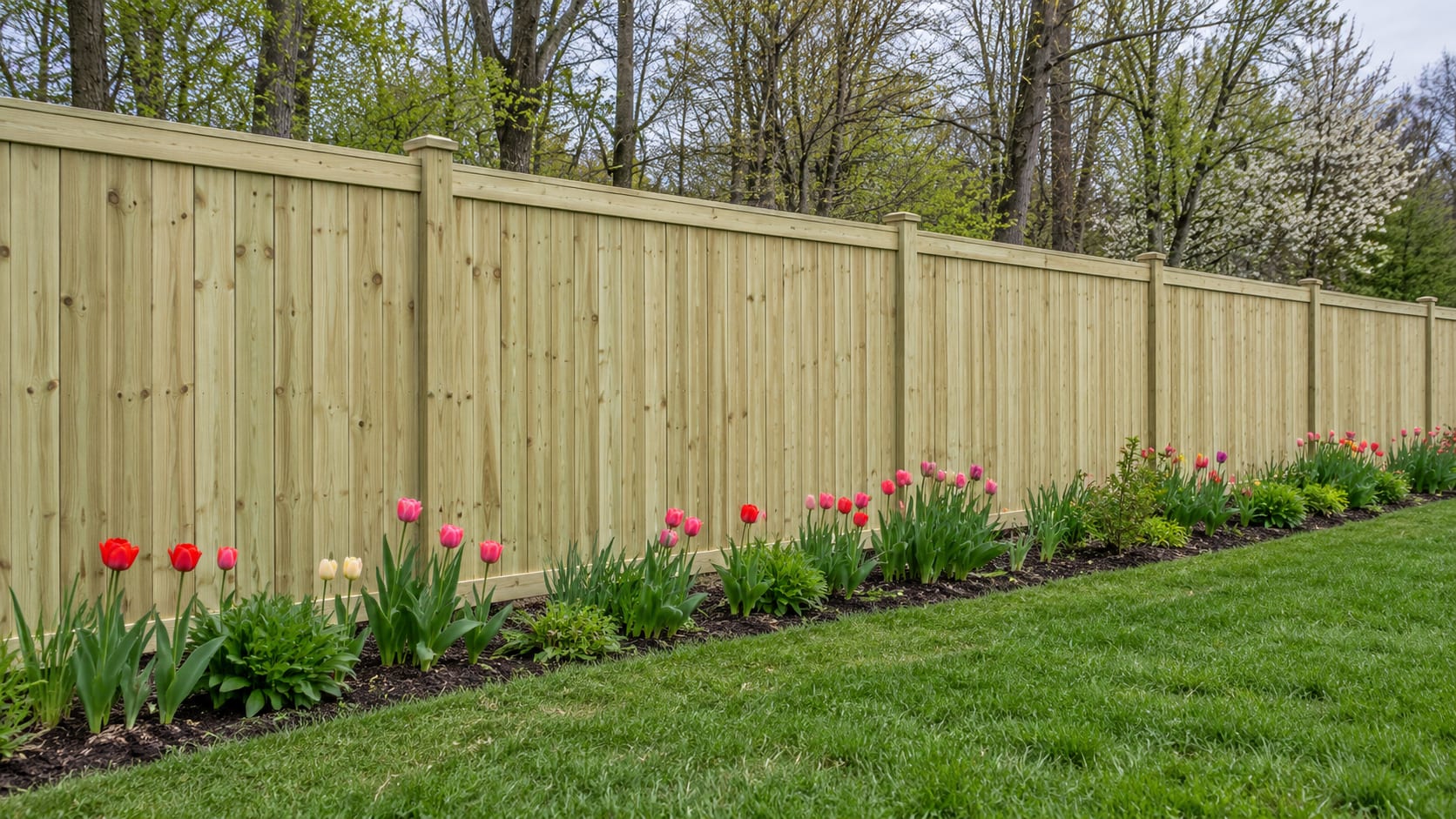
For many Connecticut properties, late spring after the ground dries or early to mid-fall before persistent freezing are the best times to install a fence. Winter installation is also possible when the soil is workable and fresh concrete can be protected from freezing. The right date depends on ground conditions, local approvals, material availability, contractor scheduling, and the date you need the fence ready.
A wet spring, frozen winter, or difficult access route can delay a project more than the calendar suggests. If you need a fence before pool season, summer events, pet access, livestock turnout, or a property closing, start planning before the busiest installation months.
Key Takeaways
Best seasons
Late spring and early to mid-fall often provide the best balance of workable soil, concrete curing, and turf recovery.
Winter work
A fence can be installed in winter when the ground is workable and fresh concrete is protected from freezing.
Local approvals
Connecticut fence requirements are set by town, so ask the zoning or land-use office before booking work.
Utility marking
Submit a Call Before You Dig ticket at least two full working days before excavation.
Scheduling
Begin two to three months ahead for a project with a firm seasonal deadline, and earlier for custom or regulated work.
Price
Winter may have more scheduling flexibility, but any discount depends on the exact project and weather conditions.
The best season depends on the ground, not just the calendar
A fence installation needs stable access for workers and equipment, post holes that can reach the planned depth, and concrete that can cure properly. Those conditions can occur in different months depending on the property.
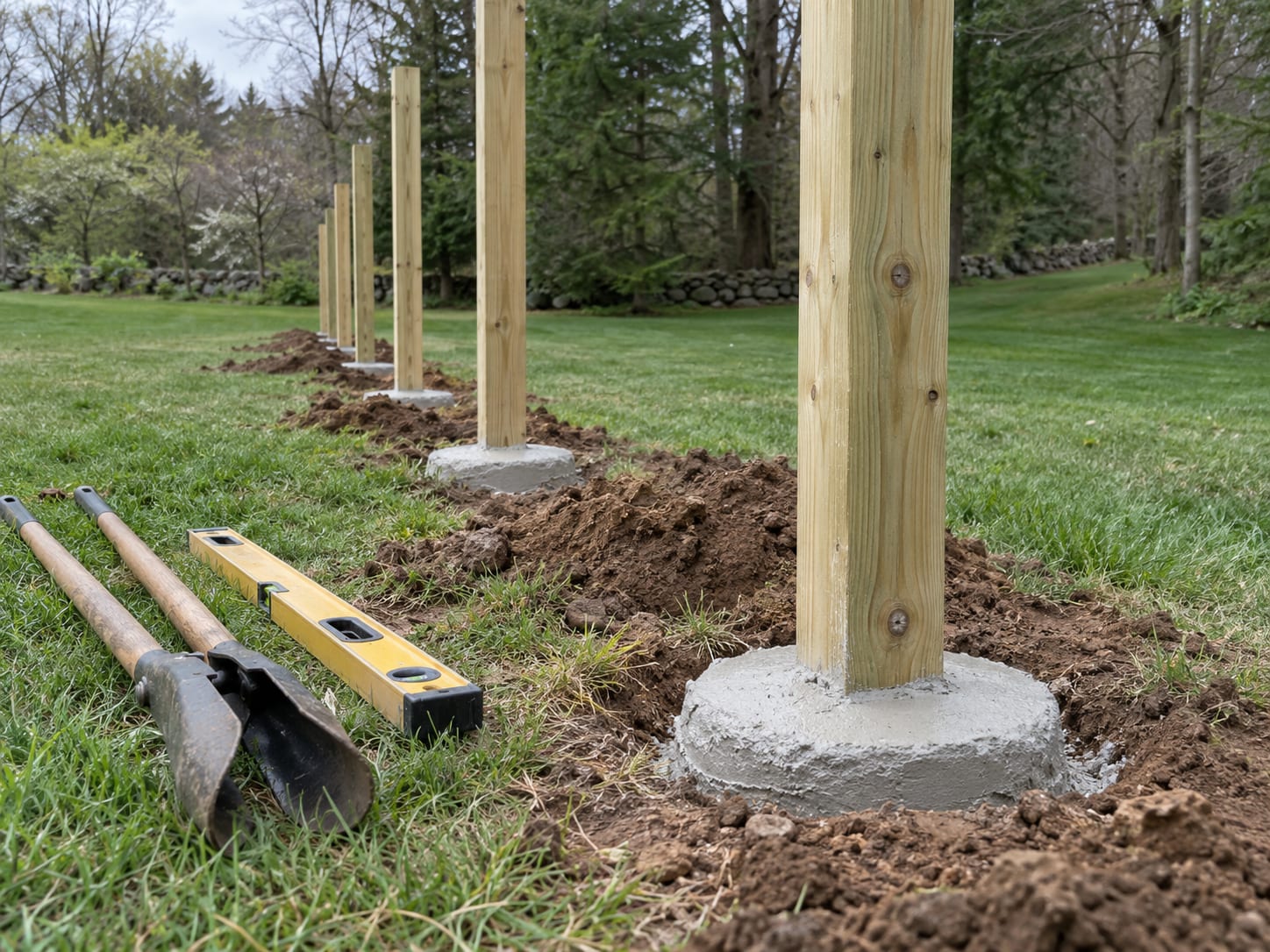
Late spring is often a practical choice after frost has left the ground and wet areas have dried enough to support equipment. Early spring can be difficult because melting snow, rain, and saturated soil can leave ruts or compact the soil. The USDA Natural Resources Conservation Service explains that wet soil is especially prone to compaction, which can restrict root growth, drainage, and aeration. After heavy rain, a contractor may need to wait or use a different access route.
Summer usually provides thawed soil and faster concrete curing. Heat, thunderstorms, drought, and established plantings can still affect the work and the condition of disturbed turf. Dry soil may be easier for equipment, but newly disturbed areas may need watering and reseeding.
Fall often brings moderate temperatures and better soil moisture than summer. UConn Extension identifies fall as a preferred season for many lawn plantings because temperatures are moderate, soil moisture is more available, and spring and summer weeds create less competition. That can make early or mid-fall a good time to repair or reseed areas disturbed by fence installation.
Late fall becomes less predictable as frost, shorter daylight, snow, and freezing temperatures arrive. If final grass work must wait until spring, the contract should explain how exposed soil and temporary stabilization will be handled.
A property near ledge or rocky soil may require more excavation time regardless of season. A narrow access route can also affect the installation date because the crew may need a different access plan.
Start with the date the fence needs to be ready
Work backward from the event or deadline that matters to you. A pool fence may need to be ready before pool use. A dog fence may be needed before bringing home a new dog. A farm fence may need to be ready before livestock turnout. A commercial or industrial perimeter may need to coordinate with construction, deliveries, or site access.
During planning, allow time for:
- Town zoning or land-use questions.
- A survey or boundary review if the fence is near a property line.
- Wetlands, conservation, historic district, or variance review when applicable.
- Material selection and supplier delivery.
- Call Before You Dig marking.
- Weather delays and site restoration.
A written estimate from My Fence Guy should identify the fence style, height, material, gates, removal, excavation assumptions, concrete work, restoration, expected installation window, and the procedure for weather delays or supplier changes.
For a fence type and scope comparison before choosing materials, see residential fencing options for Connecticut properties.
Can you install a fence in winter?
Yes, fences can go in during a Connecticut winter. The project can proceed when the ground is workable, snow and ice do not prevent safe layout and excavation, and fresh concrete can be protected from freezing.
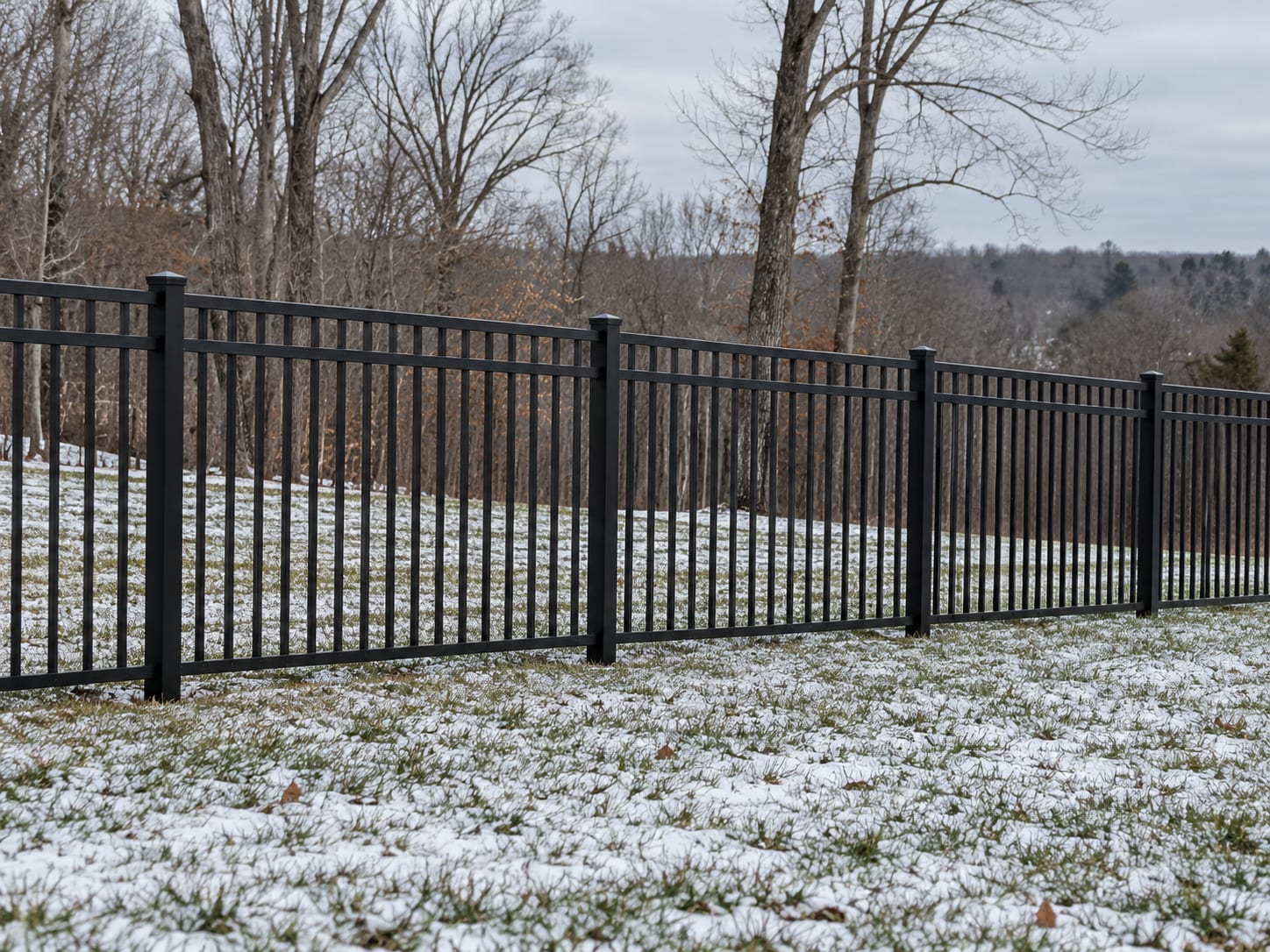
The main winter limitations are frozen soil, snow, ice, saturated ground during a thaw, and cold-weather concrete curing. Frozen soil can make it difficult to reach the planned post depth or keep the fence line aligned. Wet ground can make equipment access damaging even when temperatures are above freezing.
The American Concrete Institute defines cold-weather concreting as conditions where the air temperature has fallen to, or is expected to fall below, 40°F during the protection period. Fresh concrete must be protected from freezing until it develops adequate early strength. ACI states that freezing fresh concrete can permanently impair strength and the air-void system, and recommends protection until concrete reaches at least 500 psi for protection from a single early freeze.
Cold temperatures slow hydration and strength gain. ACI states that temperatures below 40°F greatly retard hydration. Quikrete states that concrete sets much more slowly below 50°F and stops gaining strength when concrete temperatures fall below 40°F. A cold-weather concrete product may be available for low temperatures, but product instructions still control. Sakrete’s cold-weather technical sheet warns against application when frost is present and states that colder temperatures extend set times.
A contractor should remove snow and frost from the work area, avoid placing concrete against frozen surfaces, use a suitable product and method, and protect fresh concrete from freezing. Ask how the posts and concrete will be handled before accepting a winter installation date.
Hover or tap a row to highlight it.
| Condition | What it means for the project |
|---|---|
| Workable soil | Post holes can be excavated to the planned depth and the fence line can be laid out accurately. |
| Frozen soil | Excavation, post depth, alignment, and equipment access may become difficult. |
| Air or concrete temperatures near 40°F | Cold-weather protection and a longer curing period may be needed. |
| Snow or ice | Layout, excavation, access, and safe footing may require postponement. |
| Saturated soil during a thaw | Equipment can create ruts and compact the soil, so access may need to change. |
Ask the contractor to put the weather cutoff, concrete protection, rescheduling, snow removal, and restoration terms in writing. A winter job may be workable during a mild period and unsuitable a week later.
For post depth and frost-related footing questions, see How Deep Should Fence Posts Be in Connecticut?.
How spring, summer and fall compare
Each season creates a different balance between access, curing, scheduling, and turf recovery.
Spring
Late spring can be one of the best installation periods after the ground has thawed and dried. Early spring requires more caution because frost, mud, rain, and saturated lawns can slow the work. Heavy equipment on wet soil may leave ruts and compaction, especially where the only access route crosses a lawn.
Spring and early summer are commonly busy periods for exterior construction. If you wait until the weather turns warm to request estimates, you may have fewer choices for preferred installation dates. Planning during winter gives you time to select a material, settle town questions, submit utility marking, and allow for weather changes.
Summer
Summer provides thawed ground and generally faster concrete curing. It can work well for residential, commercial, agricultural, and industrial fencing when the site has dry access.
Heat and drought can stress turf and new plantings. Thunderstorms can interrupt excavation and concrete work. Established landscaping may also require careful access planning, especially around garden beds, shrubs, irrigation, and mature trees.
Fall
Early and mid-fall often provide moderate temperatures and useful soil moisture. Fall can also be a good time to repair disturbed turf, provided there is enough time before persistent cold.
A late-fall project should include a weather cutoff. If the fence can be installed but final grass work must wait, ask how soil will be stabilized and when restoration will take place.
Practical fence scheduling sequence
- 1
Contact the town
Ask about height, location, setbacks, corner-lot visibility, finished-side, gates, and required approvals.
- 2
Confirm the site
Provide the address, parcel information if available, proposed fence line, height, material, gates, driveway, structures, easements, wetlands, and watercourses.
- 3
Select the material
Confirm supplier availability, custom fabrication needs, color, hardware, and expected delivery.
- 4
Reserve the installation window
Set a target date that allows time for approvals, utility marking, and weather changes.
- 5
Submit the CBYD ticket
Submit the request at least two full working days before excavation and coordinate it with the actual start date.
- 6
Install and restore
Complete excavation, posts, panels, gates, concrete work, cleanup, and agreed turf or soil restoration.
Permits and town rules can change the schedule
Connecticut fence requirements are local. Before booking an installation date, ask the town whether the project requires a zoning permit, building permit, zoning compliance review, wetlands review, historic district approval, survey, setback review, or variance.
The Connecticut fence permit overview explains why the town should be contacted before materials are ordered. Give the office a sketch or survey showing the proposed fence line, height, material, gates, driveway location, nearby structures, wetlands or watercourses, and easements.
Connecticut General Statutes §29-263 requires a building official to issue or refuse a building permit within 30 days after the application date. That is the statutory maximum for the building-permit decision. Zoning, wetlands, conservation, historic district, survey, and variance reviews each run on their own schedules. Ask each reviewing office for the applicable sequence, fees, meeting dates, and expected decision time.
New Fairfield’s zoning regulations effective in 2025 state that fences, walls, and fence-wall combinations generally may not exceed six feet in total height, with decorative posts allowed to extend up to 12 inches higher. The provision also addresses the finished side facing the abutting property or street. Contact the New Fairfield Zoning Department and review the local regulations before ordering materials.
Sherman’s Planning and Zoning Department specifically lists fences among the activities handled under the town’s planning and zoning regulations. Contact the Sherman Planning and Zoning Department for the current project-specific determination.
Southbury directs residents to its Zoning Department for zoning regulations, maps, online permits, conformity determinations, and possible site-plan review. Contact Southbury Zoning before choosing an installation date.
Nearby New York towns use their own rules. The Town of Kent states that a fence up to six feet high does not require a permit when it is in a side or rear yard and complies with zoning. It also addresses front-yard setbacks, fences over six feet, and corner-lot visibility. The Town of Kent fence information should be treated as a local New York rule, not a Connecticut standard.
The Town of Poughkeepsie requires a fence permit application that asks for items such as a survey or sketch, property lines, drainage patterns, easements, trees, structures, and fence specifications. Its 2025 fee schedule lists a $75 fence permit fee. Confirm the current requirements with the Town of Poughkeepsie fence permit application.
Utility marking, materials, and site preparation
Call 811 or submit a Call Before You Dig ticket before excavation. Connecticut homeowners should allow at least two full working days, excluding weekends and holidays. Fence post holes are included among projects requiring notice. A ticket may be submitted no more than 30 days before excavation, so coordinate the request with the actual start date.
The Call Before You Dig information for Connecticut fence projects explains what to ask before digging. Ask who will submit the ticket, what area will be marked, and how private lines will be handled. Irrigation, invisible dog fencing, private electric, septic components, and other owner-installed facilities may require separate identification.
Material lead times do not follow one statewide schedule. A standard product may be available sooner than a custom gate, unusual color, ornamental fabrication, or large agricultural order. Ask whether materials are in stock, ordered, reserved, or subject to supplier delay.
For farms and rural properties, the proposed fence may cover a long boundary or cross uneven ground. A contractor should confirm access, post depth, gates, corners, terrain, and the sequence for keeping livestock out of the work area. For a pool or dog fence, the gate arrangement and local requirements may control the schedule as much as the fence material.
A boundary fence deserves extra care when the line is uncertain. A survey is especially useful near a property line, an easement, or a shared driveway. Put any neighbor agreement about location, ownership, access, cost sharing, maintenance, gates, and future replacement in writing. For a boundary project, see Building a Fence on the Property Line in Connecticut.
Is winter cheaper?
Winter can sometimes bring more scheduling flexibility because spring and summer demand is lower. A national Angi article updated in 2026 states that winter or late-fall work can sometimes receive a 10% to 25% discount. That is national guidance, not Connecticut pricing, and it is not a guaranteed discount.
Winter can also add costs for snow removal, difficult excavation, concrete protection, extra mobilization, weather delays, or rescheduling. Material prices can move independently of contractor demand.
Angi reports a national average winter fence installation cost of approximately $3,150 per project in a separate 2026 article. Fixr reported a national installed fence cost of $3,000 to $7,000, with a national average of approximately $4,500, updated in 2025. These are national figures, not Connecticut estimates, and each keeps its unit because a project total cannot predict your local price.
Compare written estimates with the same linear footage, height, material, gates, removal, excavation assumptions, concrete, permits, restoration, taxes, and weather terms. Ask how long the price remains valid and whether supplier or weather changes can affect the total.
Hover or tap a row to highlight it.
| Source | Figure | Unit and scope |
|---|---|---|
| Angi, 2026 | 10% to 25% | Possible national off-season discount |
| Angi, 2026 | Approximately $3,150 | National average winter installation cost per project |
| Fixr, 2025 | $3,000 to $7,000 | National installed fence cost per project |
| Fixr, 2025 | Approximately $4,500 | National average installed fence cost per project |
The local question is simple: What is the price for this exact scope, what does it include, how long is it valid, and what happens if weather or materials change the installation date?
Frequently Asked Questions
What time of year is best to put up a fence?
Late spring after the soil has thawed and dried, or early to mid-fall before persistent freezing, usually provides a good balance of access, concrete curing, scheduling, and turf recovery. The best date still depends on the property and the deadline for using the fence.
Can you install a fence in the winter?
Yes, winter installation is possible when the ground is workable and fresh concrete can be protected from freezing. Ask the contractor about soil conditions, concrete procedures, weather cutoffs, and rescheduling terms before setting the date.
Is it cheaper to install a fence in winter?
It can be cheaper when demand is lower, but winter pricing varies by project. National guidance cites possible off-season discounts, while frozen ground, snow, concrete protection, difficult access, and extra trips can increase the price.
How far in advance should I book a fence installer?
For a firm seasonal deadline, begin planning two to three months ahead. Start earlier for custom gates, long agricultural or commercial fences, rocky soil, wetlands, property-line questions, surveys, historic district review, variances, or other local approvals.
How long before digging should I submit a Call Before You Dig ticket?
Submit the ticket at least two full working days before excavation, excluding weekends and holidays. Coordinate it with the planned digging date because CBYD permits a request no more than 30 days before excavation.
Fence Installation Timing Quiz
1. Which seasons often provide a good balance of workable soil and moderate temperatures?
2. What must happen before fence post holes are excavated in Connecticut?
3. What can permanently impair fresh concrete?
4. Who should you contact about local fence height and permit requirements?
5. What is a national winter installation figure reported by Angi in 2026?
Pick an answer to begin.
Final Thoughts
The best time to install a fence in Connecticut is the first workable window that fits the property, the required completion date, local approvals, utility marking, materials, and concrete conditions. Late spring and early to mid-fall are often practical choices, while winter can work when the soil and concrete plan are suitable.
We can help you compare the site conditions, project scope, access, material timing, and installation window before work begins. Call us at (203) 746-1100 for a free estimate, or reach out through our contact page.
Fence Installation Terms
Tap a term to see what it means.
Workable soil. Ground that can support excavation and equipment without preventing planned post depth or causing excessive damage.
More about fences
How Deep Should Fence Posts Be in Connecticut? Frost Line and Footings
How deep to set fence posts in Connecticut: frost depth, manufacturer depth rules by fence height, concrete or gravel, and how frost heave lifts posts.
Read the guide to How Deep Should Fence Posts Be in Connecticut? Frost Line and FootingsInstalling a Fence on Rocky Soil and Ledge in Western Connecticut
Rocky soil and ledge are common in western Connecticut, and fences still go in. Core drilling, pinned posts, surface mounts, and how ledge affects cost.
Read the guide to Installing a Fence on Rocky Soil and Ledge in Western ConnecticutFencing a Sloped Yard: Stepped vs Racked Fences
Fencing a sloped yard: stepped or racked panels, which materials rack and how far, handling gaps under the fence for pets and pools, and the cost of a slope.
Read the guide to Fencing a Sloped Yard