
Chain Link Fencing in Brookfield, CT: Coated Fabric, Lake Lots and Commercial Uses
By Tony Pellicone12 min readPublished
- chain link fencing
- brookfield ct
- connecticut
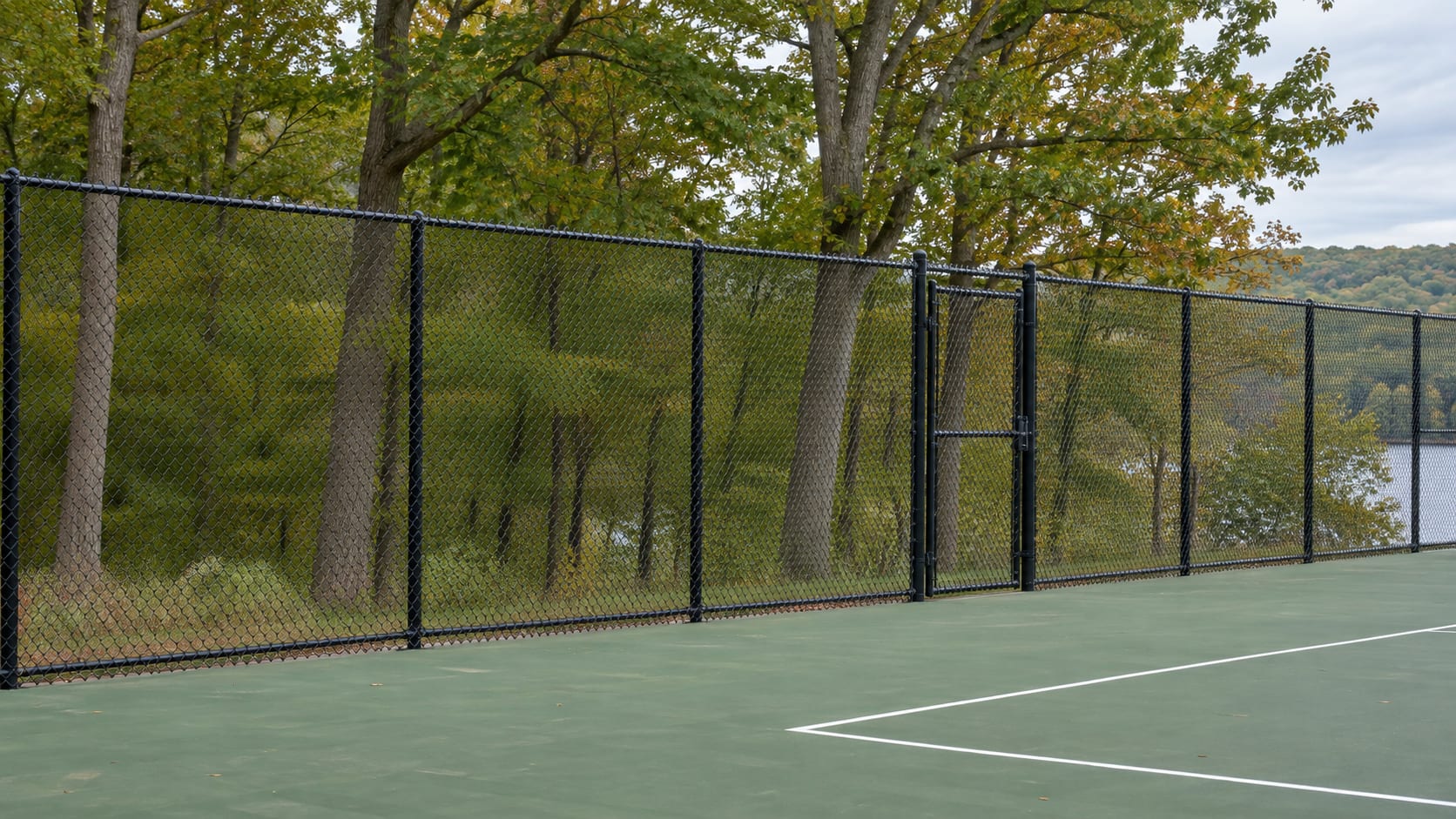
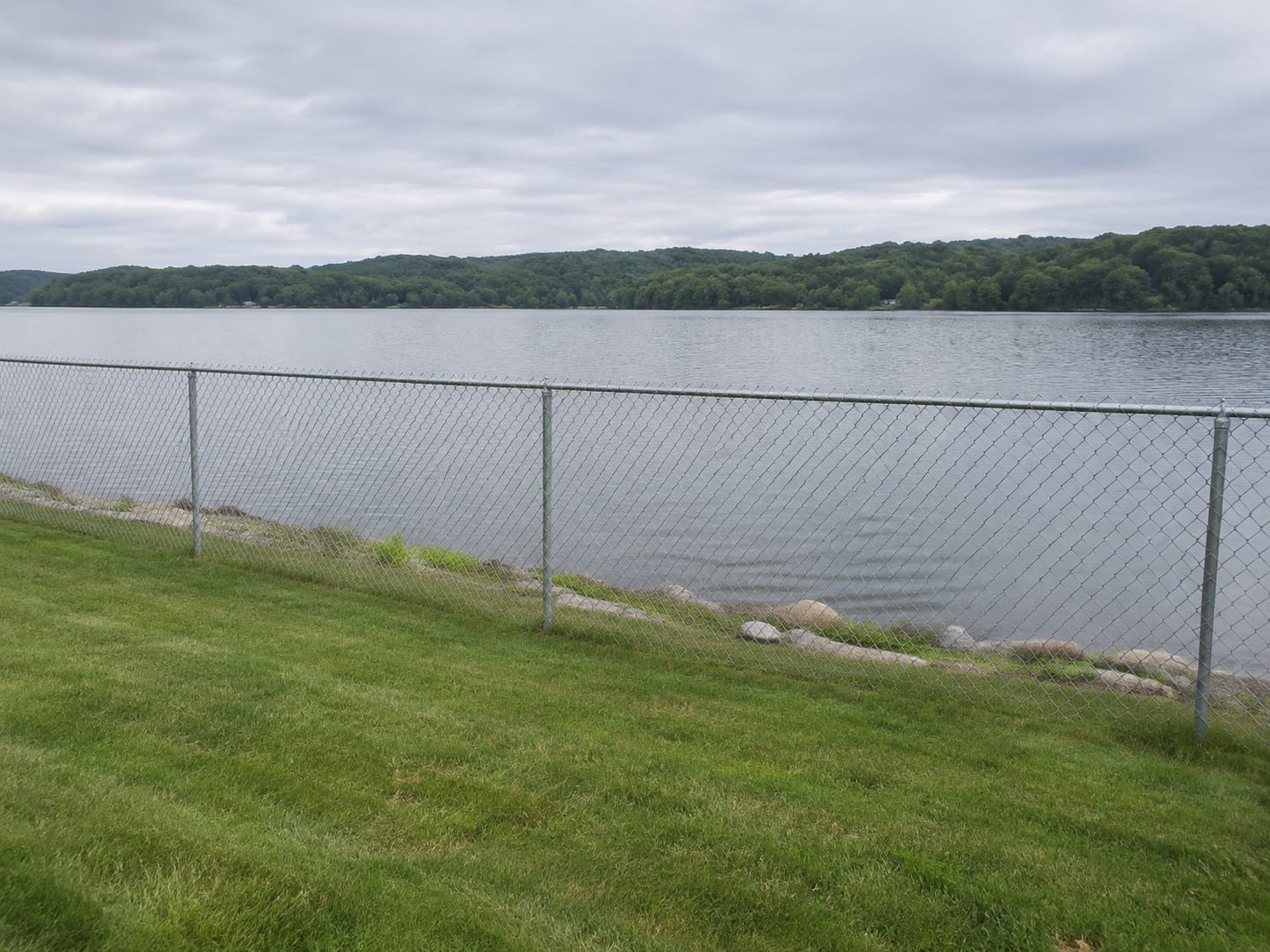
On a Candlewood Lake lot, open chain link keeps the view that a solid fence would block, while slats or screen trade some of that view for privacy. The added surface also catches more wind, so the posts, rails and concrete footings need to be chosen for that load.
The main choices are mesh opening, wire gauge, height, coating, post strength and privacy level. National 2026 installed pricing commonly runs from $8 to $40 per linear foot, depending on those choices and the site.
Before ordering materials, confirm the property line, fence height and gate locations, then ask Brookfield Land Use and the Building Department which approvals apply.
Key Takeaways
Purpose
Choose the fence around its use, such as pets, pools, sports, storage, security or a property boundary.
Mesh and gauge
Smaller openings improve security, while heavier wire such as 9 or 6 gauge provides greater strength than 11 or 11 1/2 gauge.
Appearance
Galvanized fabric has a metallic finish, while vinyl-coated fabric is available in colors such as black and green.
Privacy
Slats and screens reduce visibility but increase wind exposure and may affect Brookfield height limits.
Brookfield review
Confirm zoning, building, wetlands, historic-district and FirstLight requirements before construction.
Cost
National 2026 installed pricing varies by height, finish, gates, privacy products and site conditions.
Choosing Chain Link for a Brookfield Property
The right specification starts with the job. A basic residential dog run may use a different mesh and wire than a commercial storage yard, tennis court or high-security enclosure. Chain link can stay open for visibility, receive a colored finish, or use slats and screen for additional privacy.
A smaller mesh opening is harder to climb and can improve security. A heavier wire is stronger. In chain link specifications, 9 gauge and 6 gauge wire are heavier than 11 gauge and 11 1/2 gauge wire. For polymer-coated fabric, the gauge refers to the steel core wire, not the finished outside diameter after coating.
Hover or tap a row to highlight it.
| Application | CLFMI example |
|---|---|
| Residential | 2 1/8-inch mesh, 11 1/2 gauge; 2-inch mesh, 11 gauge |
| Residential or commercial | 2-inch mesh, 9 gauge |
| Commercial, industrial or security | 2-inch mesh, 6 gauge |
| Tennis courts | 1 3/4-inch mesh, 11 or 9 gauge |
| Heavy commercial, industrial or security | 1 3/4-inch mesh, 9 or 6 gauge |
| Residential pool fencing | 1 1/4-inch mesh, 11 or 9 gauge |
| Industrial or high security | 1-inch mesh, 11 or 9 gauge |
Galvanized fabric uses a zinc coating and has the familiar metallic appearance. Polymer-coated fabric is commonly made over zinc-coated, aluminum-coated or zinc and 5 percent aluminum alloy-coated steel wire. ASTM F668 identifies different polymer coating classes based on how the polymer is placed and bonded to the metallic coating. You can compare the coating class, steel core gauge, mesh size and complete gate and post package in a written quote.
Post and rail selection should match the fabric, height, gates, privacy additions and exposure. A fence with privacy slats or windscreen places more force on the posts than an open fence. The CLFMI product manual describes galvanized pipe options, including schedule 40 pipe, and connects post selection and spacing to the fence design.
For a product-specific starting point, see chain link fencing options. If your project includes a walk gate, double gate or driveway entrance, Gate Installation: Walk Gates, Double Gates and Driveway Gates, Step by Step explains how gate size, hinges, latches and posts affect the work.
Galvanized, Black, Green and Privacy Options
Galvanized chain link is often chosen when visibility, utility and a traditional metallic finish matter most. Black and green vinyl-coated fabric can blend more easily with a home, planting areas, recreation space or commercial property. A black coating changes the color and appearance, but it does not create privacy by itself.
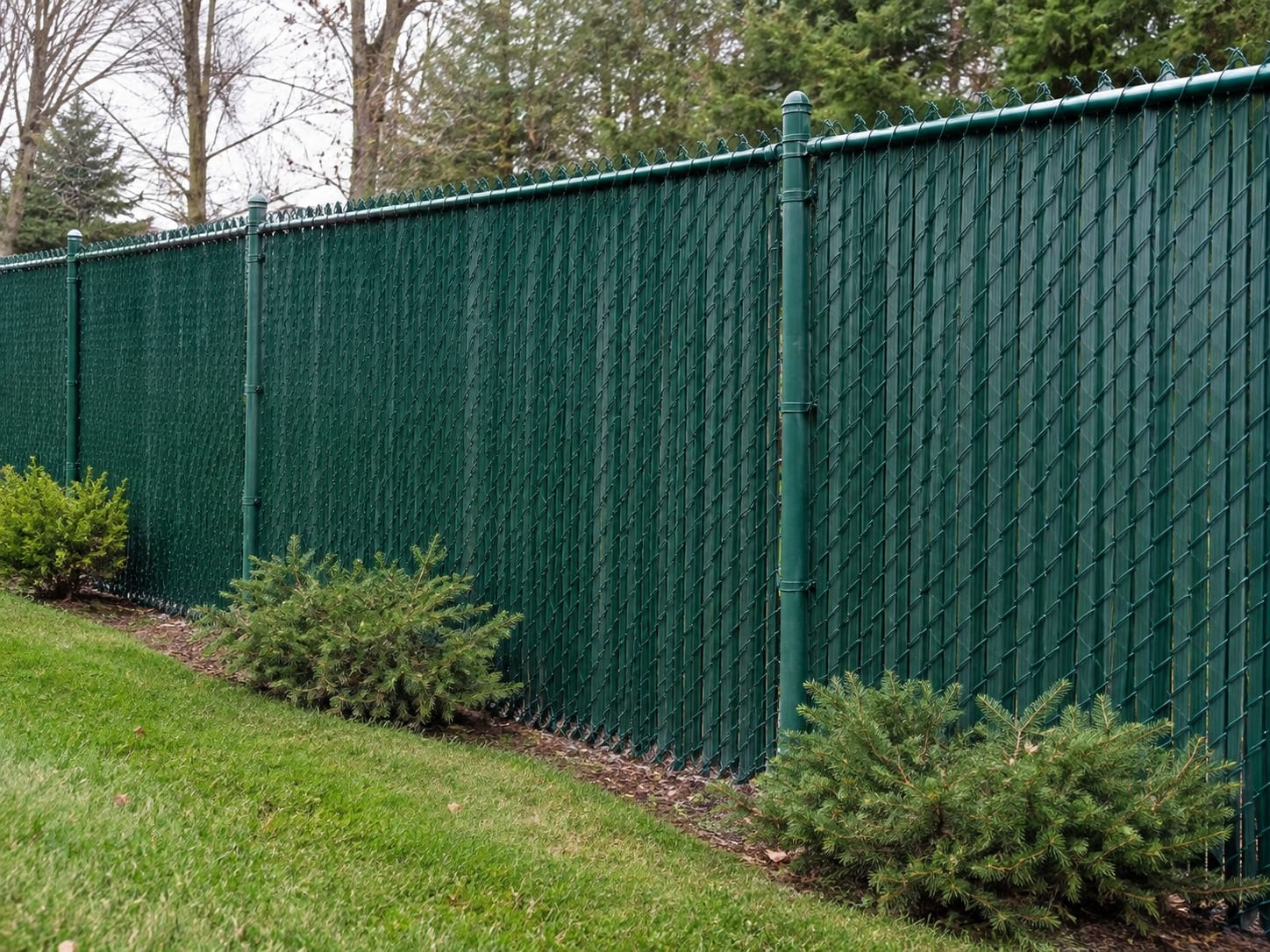
Privacy slats slide vertically through the chain link diamonds. Pexco lists systems that provide approximately 70 to 95 percent visual screening, depending on the product. Slats come in colors including black, green, brown, gray, beige, redwood and white. The slats must match the mesh opening and wire gauge.
Some slat systems are pre-woven into the fabric. Insert systems can be added to existing chain link when the mesh and wire are compatible. Chain Link Fence Privacy Options: Slats, Fabric and Coated Mesh covers those choices in more detail.
Privacy screen, sometimes called windscreen, is an open-mesh polyethylene fabric attached with ties or similar fasteners. Some products provide approximately 85 percent opacity. Slats and screen both increase wind resistance, so a contractor should review the posts, rails, fittings and footings before adding them to an existing fence.
A top rail stiffens and finishes the upper edge of the fence. Tension wire can provide lower-cost support along the top or bottom edge.
Uses on Lake Lots, Farms and Business Properties
On a Candlewood Lake residential lot, chain link can enclose dogs, children’s play areas, pools, equipment, side yards and rear yards while leaving the property visually open. A lake-facing fence with slats or screen changes that balance by reducing visibility and increasing wind exposure. The fence line should be checked carefully where access, shoreline conditions or an old stone wall affects the proposed route.
Chain link is also used for baseball backstops, tennis courts, batting cages, playgrounds and outfield fencing. The mesh, height, top rail and gate arrangement should match the sport and the area being enclosed.
Commercial and industrial properties can use chain link around equipment yards, storage areas, dumpsters, vehicle fleets and service areas. Brookfield’s 2025 Plan of Conservation and Development identifies commercial and industrial districts running north and south through town along Route 7 and Federal Road. It also identifies a Marine Commercial district along Candlewood Lake.
Commercial work may involve site-plan requirements and landscaped buffers. Brookfield zoning regulations require fences to avoid obstructing sight lines or creating traffic-safety problems. A fence that works in a rear service area may need a different layout near a driveway, road corner or public access route.
For a pool, the mesh and opening size are only part of the decision. Pool barriers must satisfy the Connecticut State Building Code. The 2022 code adopts the 2021 International Swimming Pool and Spa Code barrier requirements, including a temporary four-foot enclosure during in-ground pool construction and a four-inch sphere limitation for openings in the temporary barrier. See Pool Fence Installation in Connecticut: Steps, Timeline and Inspection before placing a fence around a new or existing pool.
Brookfield Height, Location and Approval Questions
Brookfield’s zoning regulations, revised through 2024, state in Section 6.10.A.1 that fences under eight feet may be constructed in a residential zoning district without zoning approval. Fences eight feet or higher require zoning approval before construction and a Certificate of Zoning Compliance after construction. An eight-foot-or-higher fence also requires a site-plan sketch.
Section 6.10.A.2 limits fences with visual-obscuring construction, including slats, panels and boards, to eight feet. Other fence types may reach 12 feet. Section 6.10.A.3 requires a finished side to face the exterior of the lot, with material and color harmonious with the buildings and surrounding area as determined by the Zoning Enforcement Officer. Section 6.10.A.4 prohibits barbed wire, razor wire and similar fencing in all zones.
Brookfield’s official FAQ describes a separate seven-foot threshold for building permits. Because the zoning and building materials use different thresholds, contact both offices for the particular fence before ordering materials. Fence Permits in Brookfield, CT: Height Limits, Zoning and Who to Call lists the local approval questions to bring with you.
A corner lot has two front yards and two side yards, with no rear yard under Brookfield’s zoning definitions. Sight-line and traffic-safety rules still apply. Give Brookfield Land Use the property address, a sketch or survey, proposed height, fence type, gate locations and distance to Candlewood Lake, another watercourse or a wetland.
Brookfield’s wetlands jurisdiction includes areas within 200 feet of Candlewood Lake, Lake Lillinonah and the Still River, within 100 feet of another perennial or intermittent watercourse, and within 75 feet of a wetland. Fence work may require review when it involves excavation, grading, fill or access. Contact the Brookfield Inland Wetlands Commission before digging in a regulated area.
A fence visible from a public street in a historic district may require review through the Brookfield Historic District Commission. If the fence touches FirstLight project lands, the shoreline or an area within the project boundary, ask FirstLight whether separate authorization applies. FirstLight’s shoreline plan states that fences under six feet may be permitted at its discretion when they do not interfere with public access to FirstLight lands or extend into project waters.
Site Conditions and Installation Planning
Brookfield’s soil conditions can change the installation plan. The USDA Brookfield soil series is a deep, well-drained loamy soil formed in glacial till derived mainly from schist, with reported slopes from 0 to 60 percent. On an individual property, gravel, roots, shallow rock, ledge and changing soil depth can affect post-hole excavation, concrete quantities, equipment access and the fence layout.
A field check of the actual line shows what a soil map cannot. A steep section may need a stepped layout or a different gate location. Ledge may require different excavation equipment. Wet ground near a watercourse may affect access and approval.
The installation sequence usually follows this order:
Brookfield Chain Link Installation Steps
- 1
Confirm the line
Mark the actual property boundary and review the proposed fence route, corners, gates and access.
- 2
Call before digging
Contact Connecticut Call Before You Dig at least two full working days before excavation.
- 3
Confirm approvals
Ask Brookfield Land Use, the Building Department, Inland Wetlands Commission, Historic District Commission or FirstLight about the proposed location.
- 4
Set the specifications
Select height, mesh opening, wire gauge, coating, post size, rails, gates and any slats or screen.
- 5
Prepare the site
Remove or work around old fencing, roots, rock, ledge and access obstacles identified during the field visit.
- 6
Install the posts
Excavate, set posts, place concrete and allow the support system to develop before attaching fabric as specified.
- 7
Attach fabric and gates
Stretch the mesh, secure fittings, install rails or tension wire, and hang and adjust the gates.
- 8
Complete the closeout
Confirm the finished height, gate operation, cleanup, approvals and maintenance responsibilities.
A written estimate should identify fence height, mesh, gauge, coating, posts, rails, gates, privacy products, excavation, removal, cleanup and approval responsibilities. My Fence Guy can review the fence line, account for site conditions and separate those items in the quote so you can compare proposals on the same basis.
For posts exposed to Connecticut ground conditions, How Long Do Metal Fence Posts Last? Steel, Galvanized and Aluminum Posts in Connecticut Ground explains why steel type, galvanizing, drainage and installation details matter.
Chain Link Cost in Brookfield
Angi reported national 2026 installed chain link pricing from $8 to $40 per linear foot, including materials and labor. The figures below are national budgeting ranges, not Brookfield or Connecticut quotes.
Hover or tap a row to highlight it.
| Height or style | National installed cost |
|---|---|
| 4-foot chain link | $8 to $20 per linear foot |
| 5-foot chain link | $9 to $22 per linear foot |
| 6-foot chain link | $10 to $29 per linear foot |
| 8-foot chain link | $12 to $34 per linear foot |
| 10-foot chain link | $17 to $40 per linear foot |
| Black chain link | $15 to $45 per linear foot |
| Typical residential chain link | $10 to $20 per linear foot |
For 100 linear feet, those national ranges equal $800 to $2,000 for four-foot chain link, $900 to $2,200 for five-foot chain link, $1,000 to $2,900 for six-foot chain link, $1,200 to $3,400 for eight-foot chain link, $1,700 to $4,000 for 10-foot chain link and $1,500 to $4,500 for black chain link.
Angi also reported a national average project cost of $2,420 in 2026, based on 3,993 verified projects, with a national project range of $1,297 to $3,588. Gates, privacy slats, windscreen, difficult excavation, slopes, ledge, old-fence removal, surveying and permits can change the total.
A black vinyl coating may be worth the extra cost when you prefer its appearance or want the fence to coordinate with the property. Angi’s national 2026 range for black chain link was $15 to $45 per linear foot, compared with $8 to $40 per linear foot for chain link generally. Compare the complete specification, not color alone: steel core gauge, mesh, metallic coating, polymer coating, posts, rails, fittings, gates and warranty.
Frequently Asked Questions
How much would a 100 ft chain link fence cost?
A 100-foot chain link fence has a national 2026 installed range of $800 to $2,000 for four-foot chain link, $1,000 to $2,900 for six-foot chain link and $1,500 to $4,500 for black chain link. A Brookfield quote can change with gates, privacy products, ledge, slopes, removal, surveying and permits.
Is black vinyl-coated chain link worth the extra cost?
Black vinyl-coated chain link can be worth the extra cost when the finish fits your home or business and you prefer its appearance over galvanized metal. The coating changes color and adds a polymer layer, but it does not create privacy or replace the need to choose the right steel core gauge and post system.
Does a chain link fence decrease property value?
A chain link fence does not automatically decrease property value. Condition, placement, maintenance, visibility, privacy, sight lines and the expectations of buyers for that property all affect how the fence is viewed.
What is better than a chain link fence?
The better fence depends on the purpose. Chain link often fits pets, sports, large perimeters, visibility and commercial security, while wood or vinyl may suit solid privacy, aluminum may fit an appearance-sensitive front yard or pool, and agricultural fencing may suit livestock.
Do I need a permit for a fence in Brookfield CT?
Brookfield’s zoning regulations state that fences under eight feet may be built in residential zones without zoning approval, while fences eight feet or higher require zoning approval and a Certificate of Zoning Compliance. Brookfield’s FAQ describes a separate seven-foot building-permit threshold, so confirm the current requirement with Land Use at 203-775-7316 and the Building Department at 203-775-7305 before construction. The Connecticut fence permit overview gives state-level background, but Brookfield’s offices decide the local path.
Can you put privacy slats in chain link?
Yes, privacy slats slide through the chain link diamonds when the slat matches the mesh opening and wire gauge. Products can provide approximately 70 to 95 percent screening, but the added surface increases wind load and should be considered when reviewing posts, rails, fittings and footings.
Chain Link Fencing in Brookfield
1. Which wire is heavier?
2. What does black vinyl coating do?
3. What can increase the cost of a Brookfield fence project?
4. Which Brookfield office should answer zoning height and sight-line questions?
5. What must privacy slats match?
Pick an answer to begin.
Final Thoughts
Chain link works best when the specification follows the use. Decide the fence line, height, privacy level and site conditions first, then compare galvanized or vinyl-coated fabric, mesh opening, wire gauge, posts, rails and gates. In Brookfield, confirm the local approval path before digging, especially near Candlewood Lake, a watercourse, a wetland, a historic district or FirstLight property.
A clear written quote should separate materials, excavation, gates, privacy products, removal, cleanup and approval responsibilities. That gives you a practical basis for choosing the fence and planning the work. Call us at (203) 746-1100 for a free estimate, or reach out through our contact page.
Chain Link Fencing Terms
Tap a term to see what it means.
Mesh opening. The size of the diamond opening in chain link fabric.
More about fences
Chain Link Fencing in Trumbull, CT: Residential Yards, Dogs and Commercial Lots
Trumbull limits chain link to 4 feet in front yards, 6 feet elsewhere and 3 feet near corners. Mesh, coatings, dog yards, pool barriers and Connecticut costs.
Read the guide to Chain Link Fencing in Trumbull, CTAluminum Fencing in Brookfield, CT: Lake Lots, Pools and Front Yards
On a Candlewood Lake lot, an aluminum fence in Brookfield starts with calls to Land Use and FirstLight. Grades, pool barriers, slopes and 2026 costs explained.
Read the guide to Aluminum Fencing in Brookfield, CTChain Link Fencing in New Milford, CT: Residential, Farm and Commercial Uses
Chain link fencing in New Milford, CT: wire gauge, mesh, privacy slats, town rules and 2026 national cost ranges for homes, farms and businesses.
Read the guide to Chain Link Fencing in New Milford, CT